
Western Wall and Dome of the Rock Photos: The Plaza, the Mount and the Rules
Western Wall photos and Dome of the Rock photos: what you may shoot, dress code, Shabbat, the tunnels and Temple Mount visitor hours.
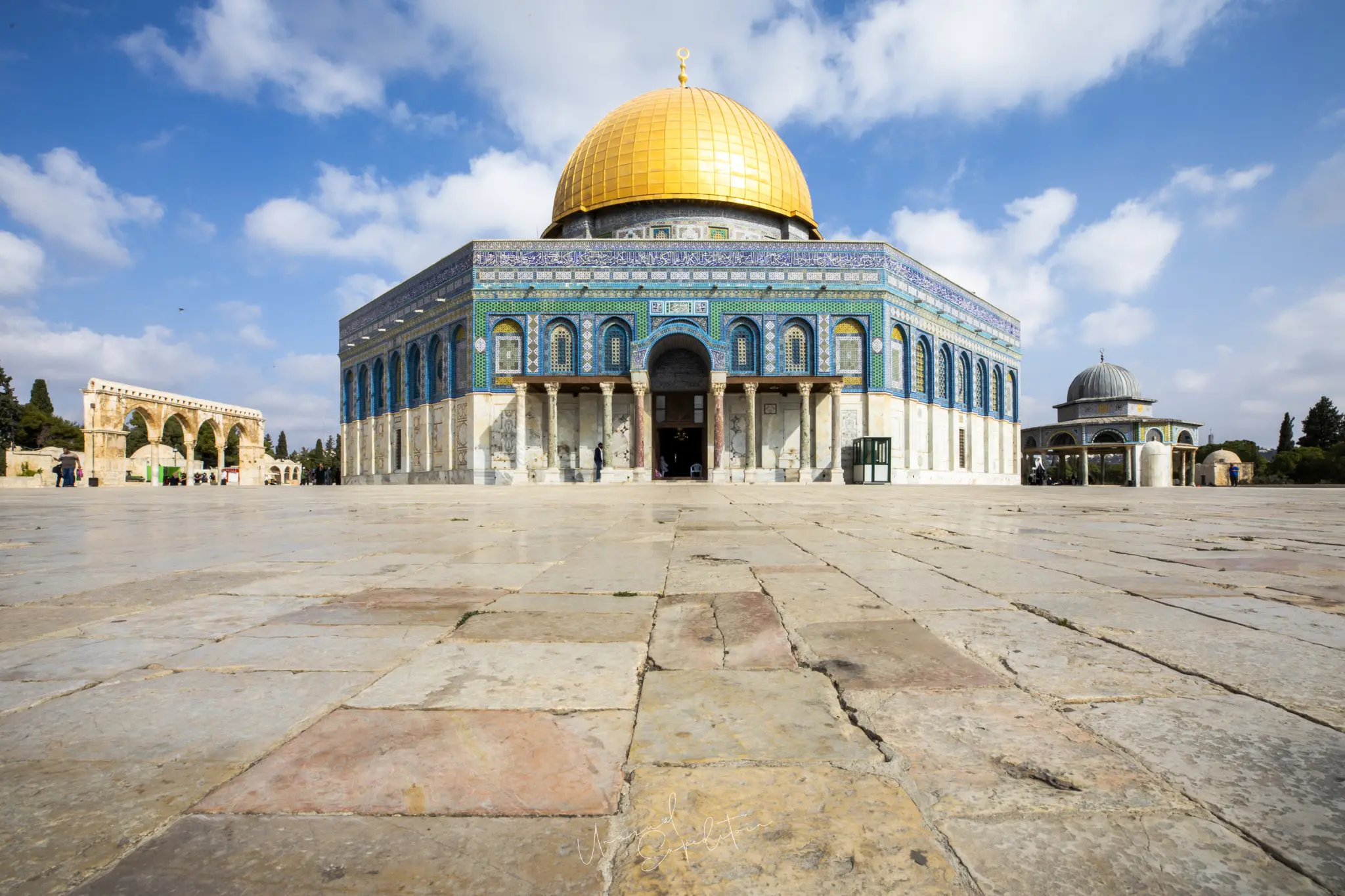
Western Wall photos are easy to take and the Dome of the Rock is harder, because the two sites run on different rules. The Western Wall plaza is open to everyone every day, and ordinary photography is welcome except on Shabbat and Jewish holidays. The Temple Mount above it, where the Dome of the Rock stands, opens to non-Muslim visitors only on limited weekday hours through one gate, and nobody but Muslims may go inside the Dome. Plan the two as separate visits.
Both sit at the heart of the Old City, so read our Jerusalem photography tour guide for how they fit with the rest of the city.
Western Wall photos: what you can photograph
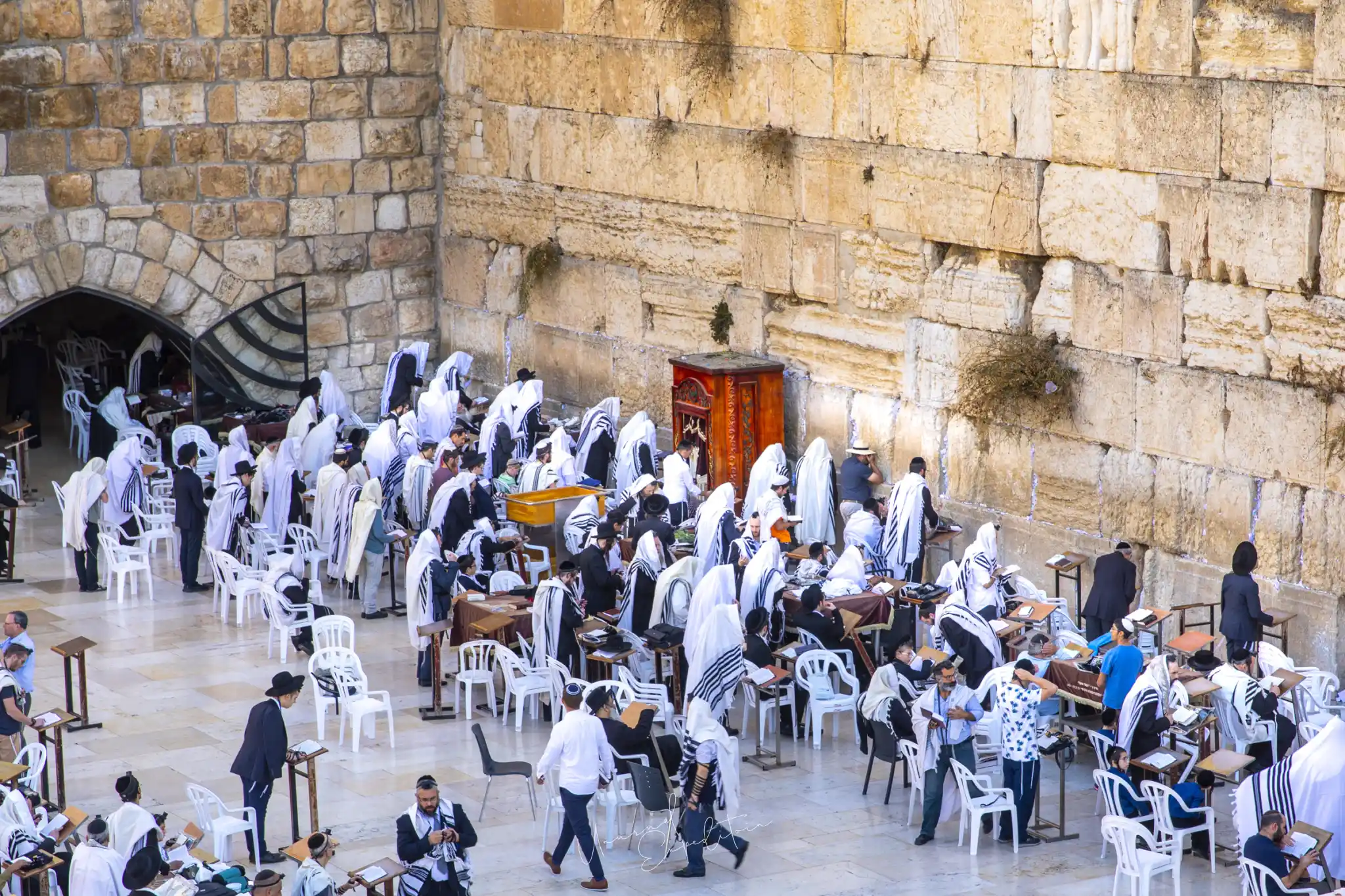
The Western Wall is the retaining wall of the platform on which the Second Temple stood, and the open plaza in front of it is a place of prayer at all hours. The Western Wall Heritage Foundation, which manages the site, allows ordinary visitors to take photographs and video at the wall, including at bar mitzvah celebrations, while professional filming needs its approval. You can stand at the back of the plaza and photograph the whole scene, or walk to the wall, where men and women pray in separate sections divided by a screen. Keep the camera low and quiet near people at prayer, and do not photograph anyone close up without asking. The best overview is from the steps coming down from the Jewish Quarter, listed in our Jerusalem Old City photos guide.
Western Wall dress code and etiquette
The Western Wall dress code is modest dress for everyone: shoulders and knees covered, and no sleeveless tops or short skirts. Men are expected to cover their heads in the men's section, and paper kippot are handed out at the entrance; women in the women's section often cover their shoulders with a scarf, which is offered at the entrance too. Phones and cameras are fine on ordinary days, but keep them quiet, and do not walk backwards into people at prayer as you frame. If a worshipper waves you off, move on.
Western Wall on Shabbat and holidays
From Friday evening until Saturday night, the Western Wall is at its fullest and most moving, with singing groups and families crowding the plaza, and it is also the one time you should leave the camera in the bag. Before Shabbat begins, announcements in several languages ask visitors to refrain from photography and phone use, and the same applies on Jewish holidays. Respect it. The best photographic days are ordinary weekday mornings, when prayer groups gather, and Mondays and Thursdays, when the Torah is read and bar mitzvah families arrive with drums, shofar horns and singing. Those processions are joyful, public and full of movement; a 24-70mm and a fast shutter catch them well. Keep children's faces out of anything you publish.
Western Wall tunnels
Most of the Western Wall is hidden underground, running north beneath the houses of the Muslim Quarter, and the Western Wall Heritage Foundation runs guided tours through the excavated tunnels along it. They show the enormous foundation stones of the platform, ancient arches and a Roman-era street, in close, low light that suits a fast prime or a wide zoom at high ISO. Tours are booked ahead with the Foundation, groups move steadily, and tripods are impractical, so brace against the rock. It is a good choice for a hot afternoon or a rainy day, and a different picture of the wall from the open plaza.
Can tourists visit Dome of the Rock?
Tourists can visit the Temple Mount and photograph the Dome of the Rock from outside, but cannot go inside. The Temple Mount, known to Muslims as Haram al-Sharif, is administered by the Jerusalem Islamic Waqf, with Israeli police at the gates. Non-Muslim visitors enter only by the wooden bridge to the Mughrabi Gate, beside the Western Wall plaza, after a security check. Visiting hours for non-Muslims are limited, usually a few hours in the morning and a short window around midday, Sunday to Thursday; the site is closed to them on Fridays, Saturdays and Muslim holidays, and it can close without notice. Dress modestly, with shoulders and knees covered, and leave religious items such as prayer books behind. Non-Muslims may walk the platform and gardens but not enter the Dome of the Rock or Al-Aqsa Mosque. Hours change, so check on the day before you queue.
Dome of the Rock photos: angles that work
The Dome of the Rock is an octagon covered in blue, green and white tilework, topped by a gilded dome, standing on a raised platform in the middle of the Temple Mount. Facing it straight on from the paved court shows the symmetry of the building; a 16-35mm from close to the steps lets the dome rise against the sky. The free-standing arcades at the top of each flight of steps make natural frames, and the smaller Dome of the Chain beside it adds a second shape. Morning light is what you will have, given the visiting hours, and the dome is so reflective that a polarising filter helps control both the glare on the gold and the blue of the sky. Avoid photographing Muslims at prayer, and ask before including anyone reading or resting in the shade.
The quieter corners of the Temple Mount
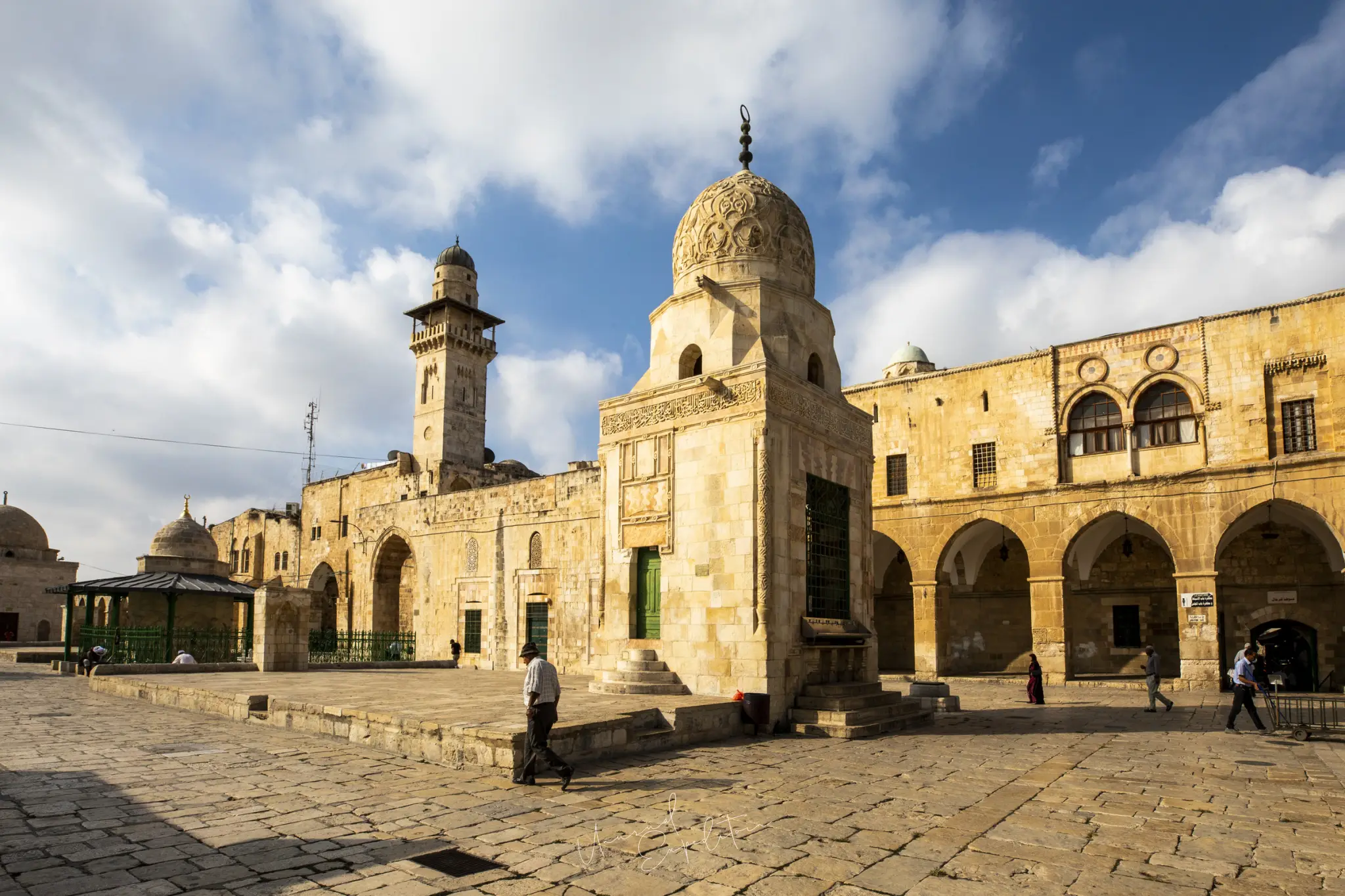
Beyond the Dome itself, the Temple Mount is a broad, tree-shaded esplanade with Mamluk and Ottoman buildings around its edges, and these are some of the best pictures on the platform. The Sabil of Qaitbay, a fifteenth-century drinking fountain with a carved stone dome, stands on the western side. Arcades and minarets line the walls, old men sit on benches under the cypresses, and the stone pavement shows the wear of centuries. Al-Aqsa Mosque closes the southern end with its grey dome and arched porch. Walk slowly and look for small scenes: a doorway, a fountain, a shadow across the paving.
Al-Aqsa and the southern walls from below
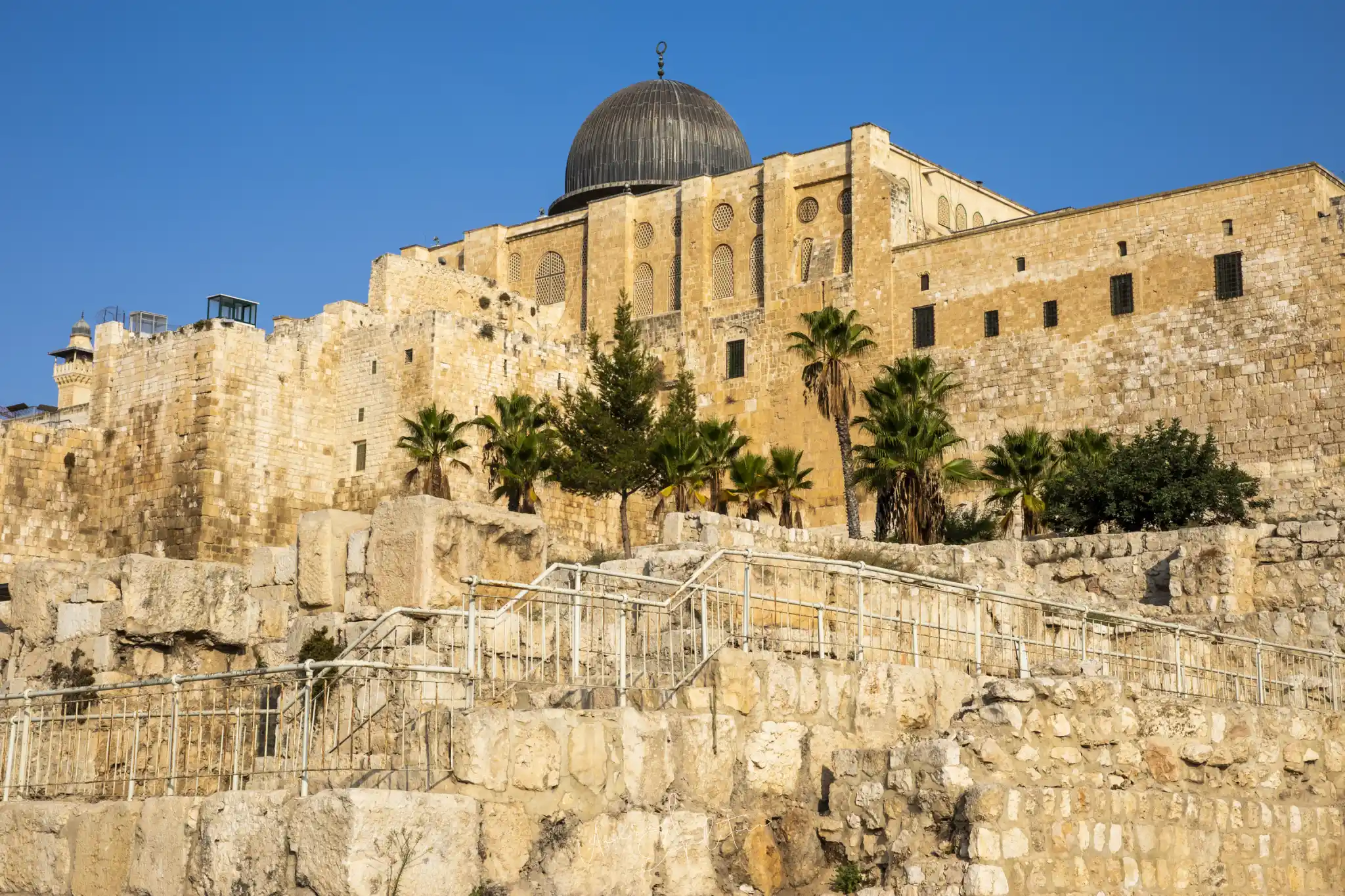
Al-Aqsa Mosque can also be seen from outside the Temple Mount. South of the Western Wall plaza, the Jerusalem Archaeological Park along the southern wall shows the massive stones of the platform, the remains of ancient streets and stairways, and above them the walls and grey dome of Al-Aqsa. Palm trees and the excavated steps give you foreground, and afternoon light from the west rakes across the stone. It is a separate ticketed site, and a good one for the hours when the Temple Mount is closed to visitors.
Western Wall and Temple Mount at a glance
| Place | Visitor access | Photography | Best time |
|---|---|---|---|
| Western Wall plaza | Open to all, every day | Allowed, not on Shabbat or holidays | Weekday mornings, Monday and Thursday for bar mitzvahs |
| Western Wall tunnels | Guided visits, booked ahead | Allowed on the tour | Any weekday |
| Temple Mount | Non-Muslims via Mughrabi Gate, limited weekday hours | Allowed outdoors, modest dress | Morning, as early as possible |
| Dome of the Rock, Al-Aqsa | Interiors for Muslims only | Exteriors only for visitors | Morning |
| Jerusalem Archaeological Park | Ticketed | Allowed | Afternoon |
Do the Temple Mount first thing and the plaza and the southern walls afterwards, and you lose nothing to the closures.
At the Western Wall I tell people to stop shooting for ten minutes and just watch. When you lift the camera again, you know which faces to leave alone and which moment to wait for.
Joseph Mak, tour leader, Unusual Expedition
Seeing both from a distance
If the queue at the Mughrabi Gate is long or the Temple Mount is closed, the Dome of the Rock still dominates the city from outside. The classic view is from the Mount of Olives, and rooftops in the Jewish Quarter and the Austrian Hospice look over it too. Our Mount of Olives sunset guide covers the panorama, and the Via Dolorosa and Holy Sepulchre guide takes you to the city's Christian holy places a few lanes away.
Photograph the Old City with us
When the travel advice allows, we run Jerusalem as a private trip on request, timed around the Temple Mount hours and the Shabbat calendar. All our Israel destination guides are on the Israel photography tours page.
Jerusalem photography tours
The next Jerusalem departure is announced on the Jerusalem photography tours page, with previous expeditions and all the planning guides.
Explore Jerusalem in depth
- Jerusalem Photography Tour Guide: The Old City, Its Walls and Its LightIsrael
- Via Dolorosa and the Church of the Holy Sepulchre: A Photographer's GuideIsrael
- Mount of Olives Sunset: The Classic View of Jerusalem and How to Shoot ItIsrael
- Jerusalem Photography FAQ: Days, Visa, Safety, Dress and BethlehemIsrael
- Jerusalem Old City Photos: The Best Spots, Walls and ViewpointsIsrael
- Jerusalem Old City Market: Photographing the Souks and Their PeopleIsrael
- City of David, Jerusalem: Is It Worth Visiting for Photographers?Israel
Upcoming Photo Tours
- Egypt Photo Tour – EgyptEgypt 12 Dec 2026 To 20 Dec 2026
- Inner Mongolia Winter Owl Photo Tour – ChinaChina 01 Jan 2027 To 04 Jan 2027
- Inner Mongolia Winter Photo Tour – ChinaChina 05 Jan 2027 To 11 Jan 2027
- Mekong And Central Highland Vietnam Photo Tour - VietnamVietnam 16 Jan 2027 To 24 Jan 2027