
Iceland Photography Tours: The Complete Guide
Iceland photography tours: winter aurora or summer midnight sun, the Golden Circle, south coast, Jokulsarlon, the north and Snaefellsnes.
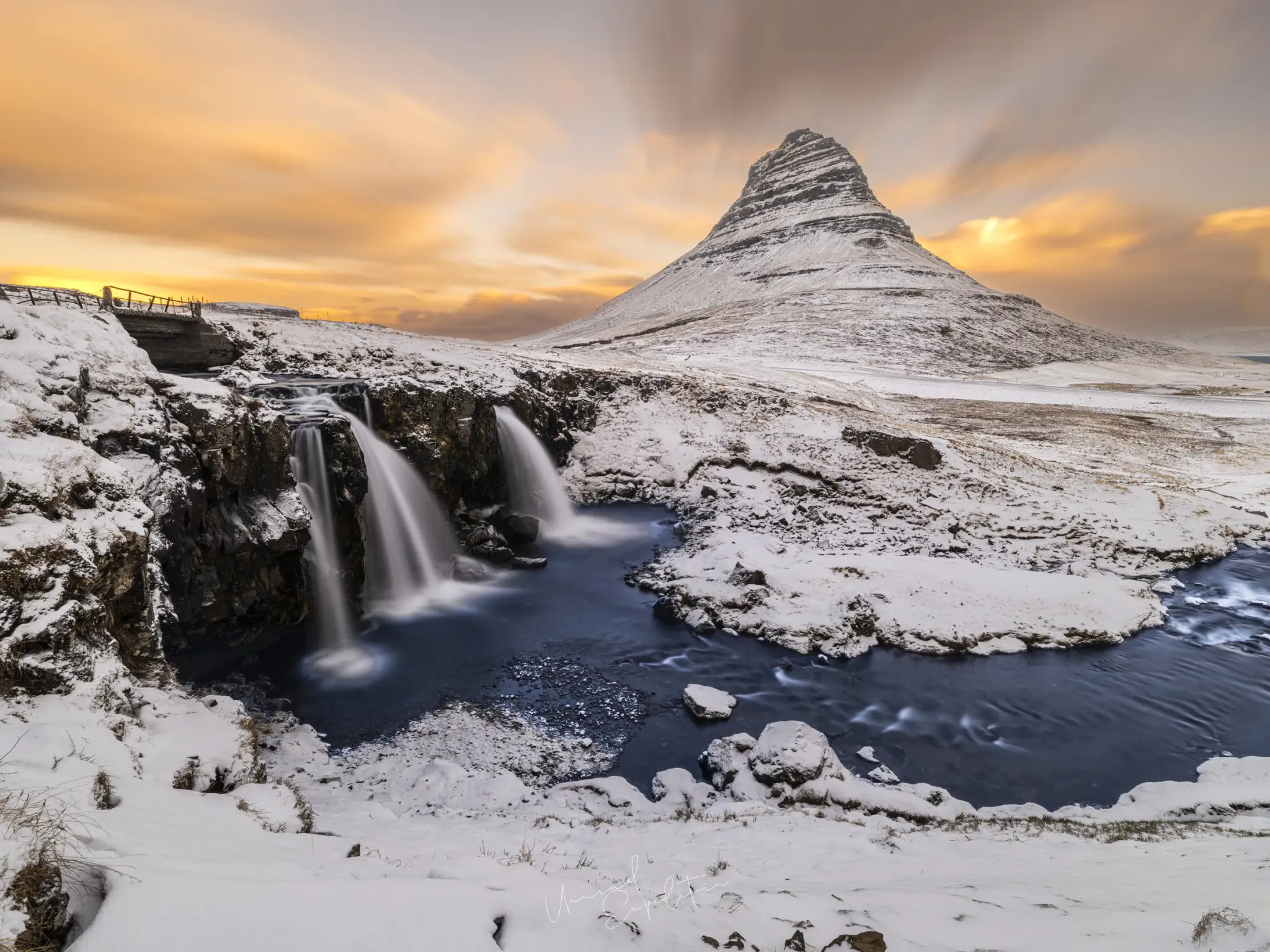
An Iceland photography tour is a trip built around light rather than sights: waterfalls, black sand, glaciers and mountains photographed when the sun is low, which in Iceland can mean all night in summer and most of the short day in winter. Winter brings snow, ice caves and the northern lights; summer brings the midnight sun, puffins and green moss. Both seasons work, and the choice decides almost everything else about the trip.
This is the starting point for our Iceland destination guides. The photographs in this guide are our own, taken on our trips here; we hold the rights to them, and the notes come from knowing these places first hand. For the light and the seasons in detail, see the best time to photograph Iceland.
What Iceland photography tours cover
Iceland packs an unusual range of subjects into a country the size of a large island: glacier lagoons, basalt sea stacks, geysers, lava fields, fishing harbours, turf-roofed buildings and waterfalls at almost every turn of the Ring Road. Iceland photography tours differ from sightseeing tours in two ways. The timing follows the light, so we arrive at Kirkjufell or Skógafoss when the sun is low and the tour buses have gone, and we stay put when a scene is working. And the group is small enough to stand at the same viewpoint without queueing for the tripod spot. The questions people ask most are answered in our Iceland photography trip FAQ.
Iceland in winter or summer?
In winter Iceland is white, the light stays low all day and the nights are long enough for the aurora. In summer the snow retreats to the glaciers and the peaks, the hills turn green, and in June and July the sun barely sets. The table below sums up the difference for a photographer.
| Season | Light | Main subjects | Trade-off |
|---|---|---|---|
| Winter | Short days, low sun, long nights | Northern lights, ice caves, snow on waterfalls, frozen lagoons | Storms and closed roads; plans change daily |
| Summer | Midnight sun, golden light for hours | Puffins, green moss and lupins, the highlands, night sessions in soft light | No aurora, no natural ice caves, busier sites |
| Spring and autumn | Balanced days and dark nights | Aurora with fewer crowds, autumn colour, migrating birds | Changeable weather, some roads closing or not yet open |
For a first visit, the season you can shoot comfortably in matters more than the subject list.
The Golden Circle: Gullfoss and Strokkur
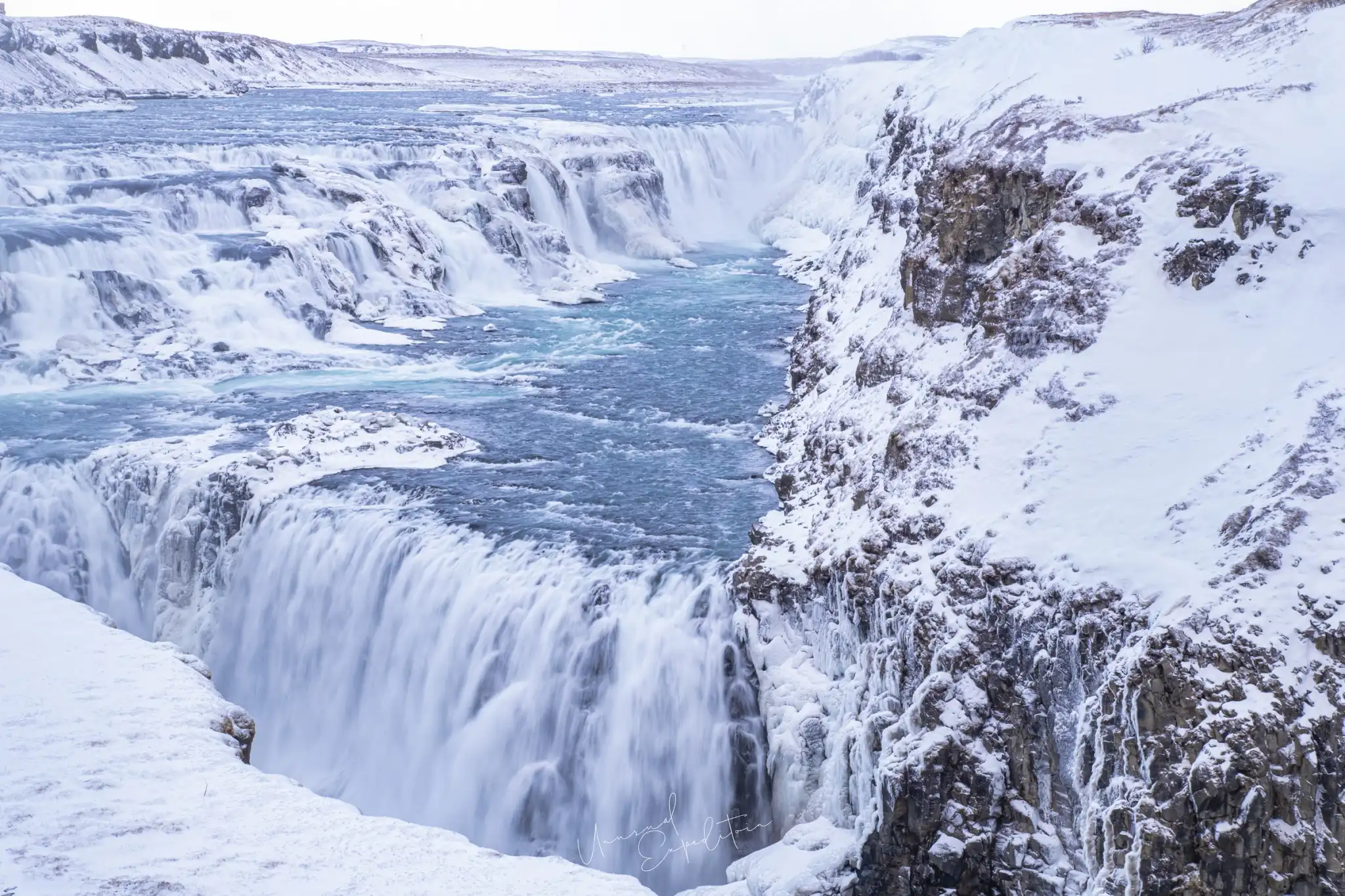
The Golden Circle, inland from Reykjavík, is the busiest route in Iceland and still worth a photographer's time. Gullfoss drops in two steps into a narrow canyon, and in winter the spray freezes onto the rock walls so that the whole gorge turns white and blue. At Haukadalur nearby, the Strokkur geyser erupts every few minutes, usually every five to ten according to Guide to Iceland, which gives you many chances to time the burst against a low sun. The third stop, Þingvellir, is where the North American and Eurasian plates pull apart. On our winter Iceland trip we reached Gullfoss in fresh snow, and the walls of the canyon were the picture as much as the falls.
The south coast: waterfalls, black sand and the plane wreck
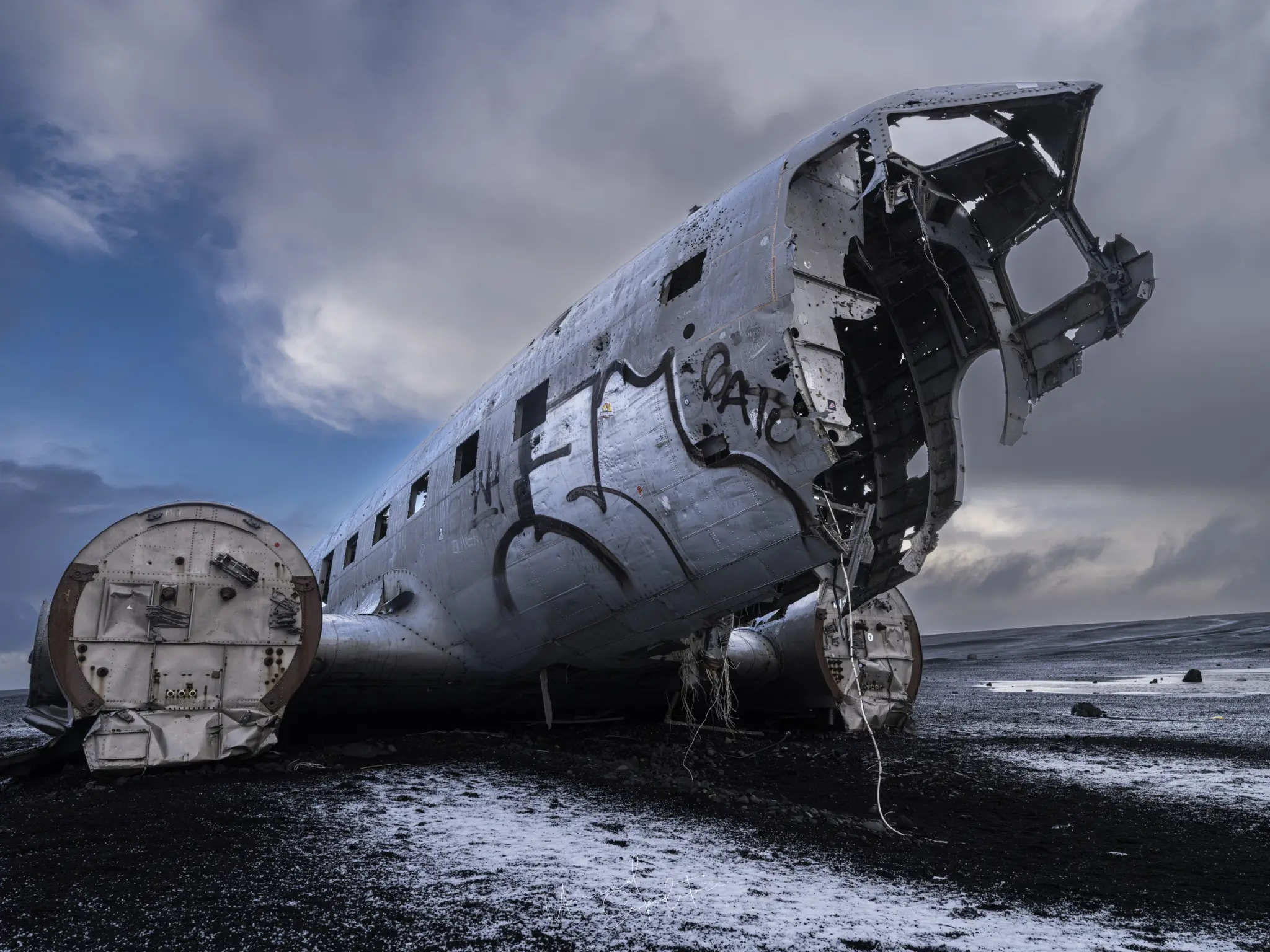
Iceland's south coast is the stretch most visitors know from pictures. Seljalandsfoss can be walked behind, Skógafoss is a broad curtain you can stand right in front of, and Reynisfjara beach near Vík looks out to the Reynisdrangar sea stacks across black sand. Reynisfjara is also the most dangerous beach in the country: Visit Iceland and Safetravel both warn about sneaker waves that run far up the sand without warning, so we work well back from the water. Inland, on the black sand plain of Sólheimasandur, lies the fuselage of a US Navy DC-3, an abstract shape against an empty horizon that photographs well in flat grey light as much as at sunset. Our South Iceland photography tour guide covers the south coast and the Golden Circle place by place, from Seljalandsfoss to Skaftafell.
Jökulsárlón, Diamond Beach and the ice caves
Jökulsárlón, the glacier lagoon below Vatnajökull, is where icebergs calve from Breiðamerkurjökull and drift out towards the sea, and where the ice that washes up on Diamond Beach glitters on black sand. In winter, guided trips go into the natural ice caves of Vatnajökull, which are only safe in the cold months and only with certified glacier guides. This is the area we know best in Iceland, from several winter and autumn trips, and it has its own full set of destination guides, starting with the Jökulsárlón photography tour guide. Further east, Vestrahorn rises above the black dunes of Stokksnes, one of the great reflection shots of the country when the tide leaves the sand wet. East of Hofn, Vestrahorn rises straight out of the black sand dunes of Stokksnes, and our Vestrahorn photography tour guide covers the beach, the low-tide reflections and the seasons.
North Iceland: Mývatn, Goðafoss and the Arctic Henge
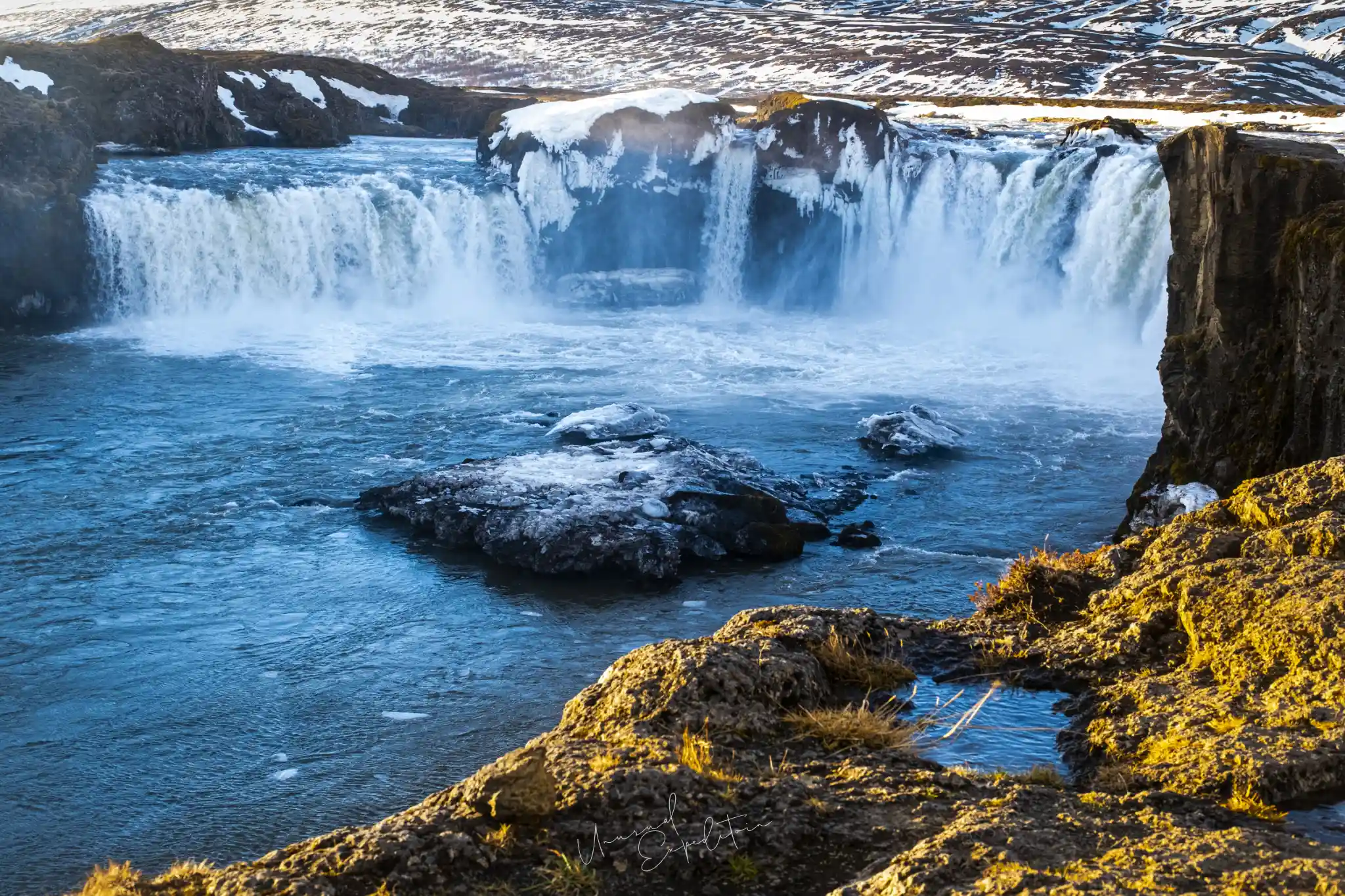
North Iceland feels emptier and colder than the south, and that is its appeal. Goðafoss, the horseshoe-shaped Waterfall of the Gods, sits beside the main road east of Akureyri and works in every season, with snow-crusted ledges in winter. Around Lake Mývatn the land steams: Hverir has mud pots and fumaroles below orange hills, and Dimmuborgir is a maze of collapsed lava. Further along the northeast coast, near Raufarhöfn, stands the Arctic Henge, a ring of stone arches built to frame the sun; we photographed it in winter with the sea and the low sky behind. Godafoss, the Hvitserkur sea stack, the steaming ground around Lake Myvatn and the Arctic Henge at Raufarhofn are covered in our North Iceland photography tour guide.
Snæfellsnes and Kirkjufell
The Snæfellsnes peninsula is often called Iceland in miniature, and for once the phrase fits. Kirkjufell, the steep mountain above Grundarfjörður, is probably the most photographed peak in Iceland, framed by the small Kirkjufellsfoss cascades in front. Búðir has a black wooden church on its own in a lava field, Arnarstapi has the sea arch of Gatklettur, and Lóndrangar's basalt stacks stand off a cliffed coast. Under Snæfellsjökull, the ice-capped volcano at the end of the peninsula, wooden racks of drying fish still hang in winter. Kirkjufell is crowded at the classic spot, so a second evening helps more than an early start. Our Snaefellsnes photography tour guide covers the peninsula in depth, from Kirkjufell and Budir black church to the Londrangar sea stacks, the Arnarstapi cliffs and the aurora in winter.
People come for Kirkjufell and leave talking about the black church at Búðir. Snæfellsnes rewards anyone who slows down; we have stood at that church in the cold waiting for the aurora to move over the roof, and it was worth it.
Joseph Mak, tour leader, Unusual Expedition
Iceland northern lights photography
Iceland northern lights photography needs three things at once: a dark sky, a clear patch of cloud and some activity overhead. The season runs roughly from September to mid-April, and the Icelandic Met Office publishes an aurora forecast with a cloud cover map that matters more than the activity index. Away from Reykjavík, a church, a mountain or a farmhouse gives the sky its scale. Bring a sturdy tripod, a fast wide lens such as a 14-24mm, and spare batteries kept warm in an inner pocket.
Iceland midnight sun photography
From late May to late July the sun dips only briefly below the horizon in the south of Iceland, and around the June solstice the island of Grímsey, on the Arctic Circle, keeps it above the horizon all night. For a photographer that means hours of golden light instead of minutes. Our scheduled tour, the Iceland Midnight Sun Photo Tour, is built around it: puffins on the cliffs of Heimaey, the south coast waterfalls, Jökulsárlón, Vestrahorn, the steaming ground of Mývatn and Kirkjufell, all photographed late in the evening and through the bright night when the crowds have gone. The fare is indicatively S$15,500 to S$19,250 per person depending on the room.
Camera gear for Iceland
A 16-35mm and a 24-70mm cover most of Iceland's landscapes, a 70-200mm picks out sea stacks and horses, and puffins need a 100-400mm. Add a solid tripod, ND filters for waterfalls and surf, and cloths for spray.
Travelling to Iceland from Singapore
There is no nonstop flight from Singapore to Iceland, so the trip starts with one connection in a European hub and a flight into Keflavík. Singapore passport holders do not need a visa for short stays, because Iceland is in the Schengen Area, according to the Singapore Ministry of Foreign Affairs. Cards are accepted almost everywhere, and Iceland stays on GMT all year, eight hours behind Singapore. The full details are in our guide to getting to Iceland.
Explore Iceland by region
- Jökulsárlón photography tour guide: the glacier lagoon, Diamond Beach and the ice caves
- South Iceland photography tour guide: the south coast waterfalls, Reynisfjara, the plane wreck and the Golden Circle
- Snaefellsnes photography tour guide: Kirkjufell, Budir black church, Londrangar and the aurora
- Vestrahorn photography tour guide: Stokksnes, the mirror beach and Hofn
- North Iceland photography tour guide: Godafoss, Hvitserkur, Myvatn and the Arctic Henge
- Best time to photograph Iceland, month by month
- Iceland photography trip FAQ
- How to get to Iceland
Photograph Iceland with us
The Iceland Midnight Sun Photo Tour is our scheduled departure; dates and the current rate are on our Iceland photography tours page. If winter and the aurora are what you are after, we can plan it as a private tour at your own pace.
Join the Iceland photography tour
Iceland Midnight Sun Photo Tour departs 05 Jul 2027 To 18 Jul 2027, led by Joseph Mak. Small group, photography first. All Iceland photography tours.
Explore Iceland in depth
- How to Get to Iceland: Flights, Visa, Trip Cost and PackingIceland
- Iceland Photography Trip FAQ: Safety, Aurora, Drones and CostIceland
- Best Time to Visit Iceland for Photography, Month by MonthIceland
Upcoming Photo Tours
- Egypt Photo Tour – EgyptEgypt 12 Dec 2026 To 20 Dec 2026
- Inner Mongolia Winter Owl Photo Tour – ChinaChina 01 Jan 2027 To 04 Jan 2027
- Inner Mongolia Winter Photo Tour – ChinaChina 05 Jan 2027 To 11 Jan 2027
- Mekong And Central Highland Vietnam Photo Tour - VietnamVietnam 16 Jan 2027 To 24 Jan 2027