
The Laos-China Railway North: Muang Xai and the Villages Beyond Luang Prabang
The Laos-China Railway north of Luang Prabang: Muang Xai, the Buddhist academy, Akha villages, lanterns at dusk, and photographing people.
The Laos-China Railway changed what a Laos photography trip can be. Since it opened in December 2021 the line runs from Vientiane north through Vang Vieng and Luang Prabang to Muang Xai and the Chinese border, and a journey that used to be a long day on mountain roads is now a few quiet hours in an air-conditioned carriage. Our Laos photography tour uses it to reach Muang Xai, the capital of Oudomxay province, where Akha, Hmong and Khmu villages, a Buddhist academy and morning mist over the hills give the pictures that nobody else on the train is going for.
What the Laos-China Railway is like
The line is standard gauge, electrified, and built to Chinese railway standards by the Laos-China Railway Company, with long tunnels and viaducts through the karst north of Vang Vieng. The fast services, numbered C8x, run at up to 160 kilometres an hour; slower K services stop at more stations. Stations sit outside the towns they serve, large and new, with security scanning on the way in and passports checked against tickets. Tickets sell out on busy days and are bought through the LCR app or at station counters a day or more ahead. Windows are clean and large, so a seat on the west side going north gives the river and the hills; the tunnels take some of the best stretches away, which is why we photograph at the stations and the villages rather than from the train.
Muang Xai: the town nobody photographs
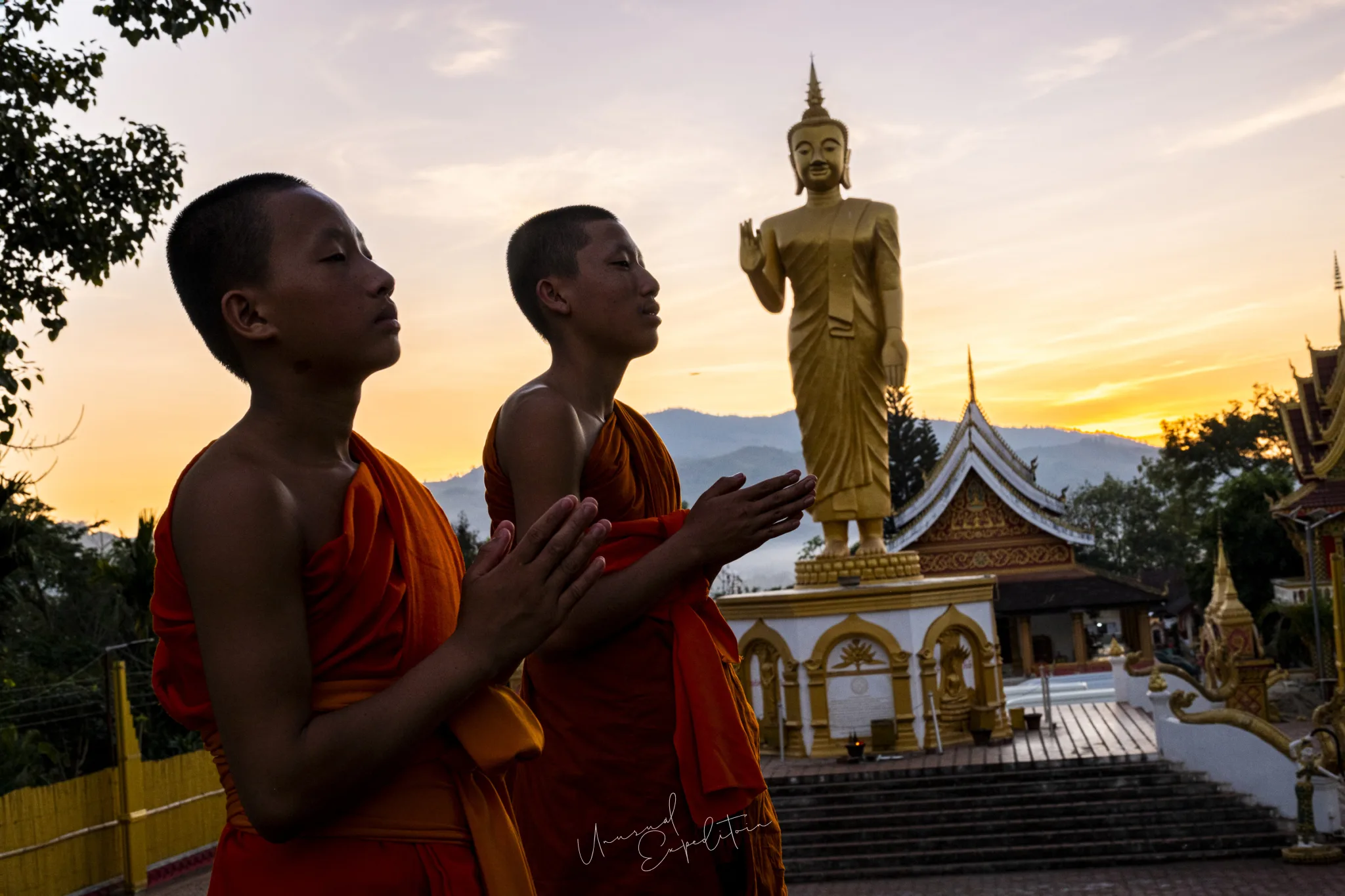
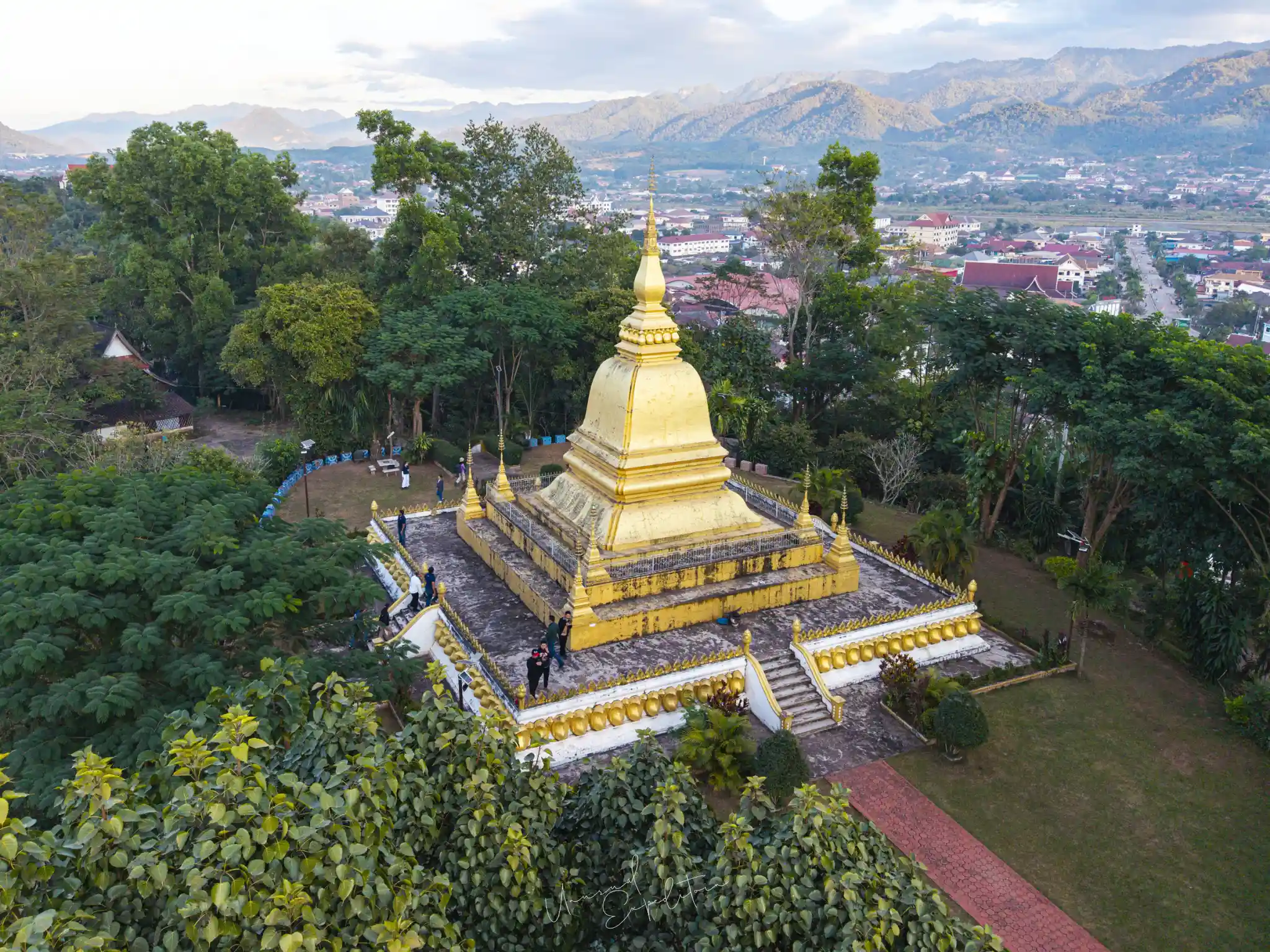
Muang Xai, also written Oudomxay after its province, is a trading town in a bowl of hills, with Chinese signage along the main road, a market that draws people from the surrounding villages, and a gold stupa on the hill above it. It is not pretty in the way Luang Prabang is pretty and that is the point: it is a working northern town where the dress in the market is still the dress of the villages and the visitors are few. The region's Buddhist academy, where novices from across the north study, sits above the town, and the evening we spend there, with the boys at their prayers before the gold Buddha and the hills behind, is one of the strongest sessions of the tour.
Laos people photos: the Akha villages
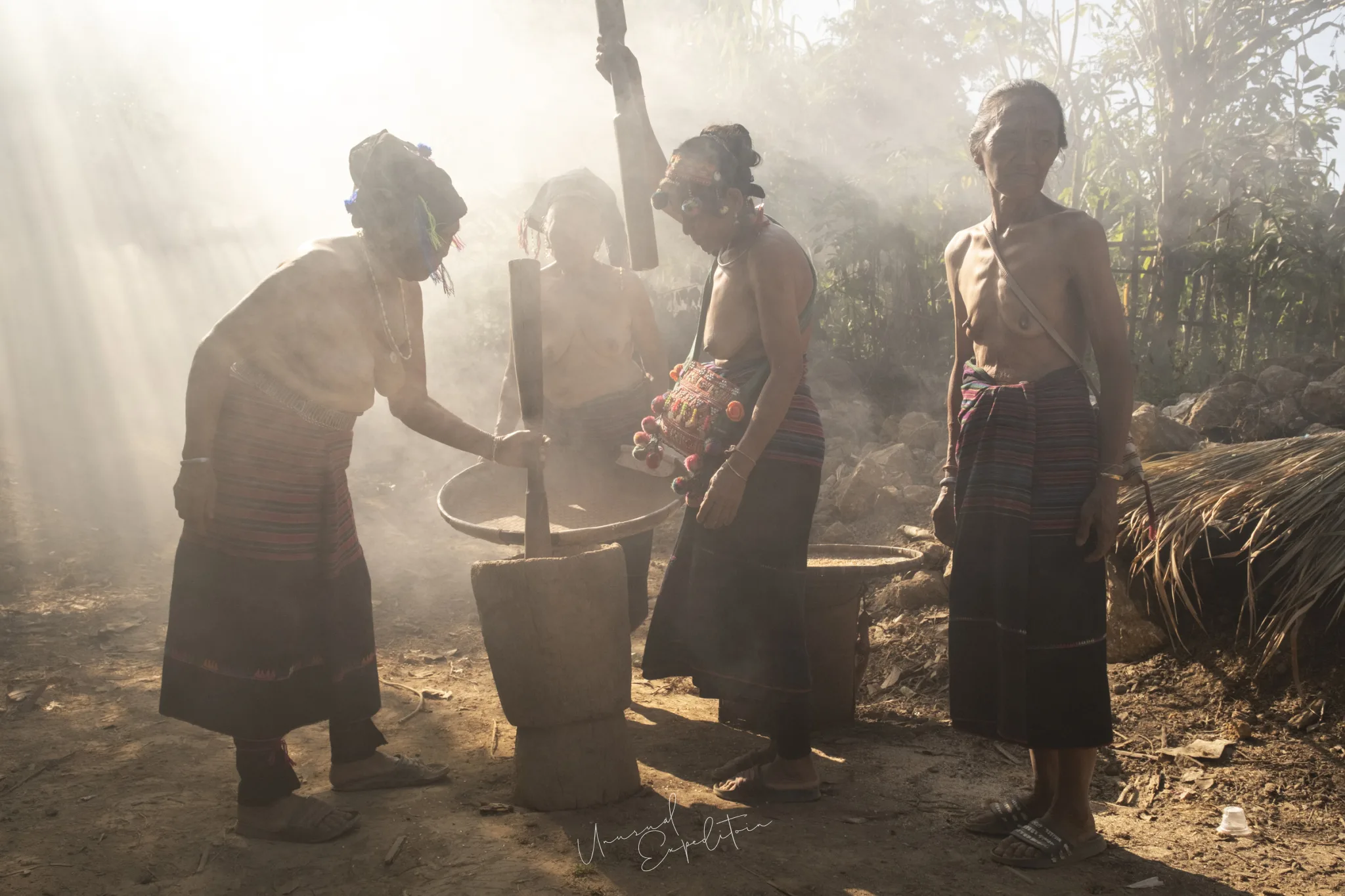
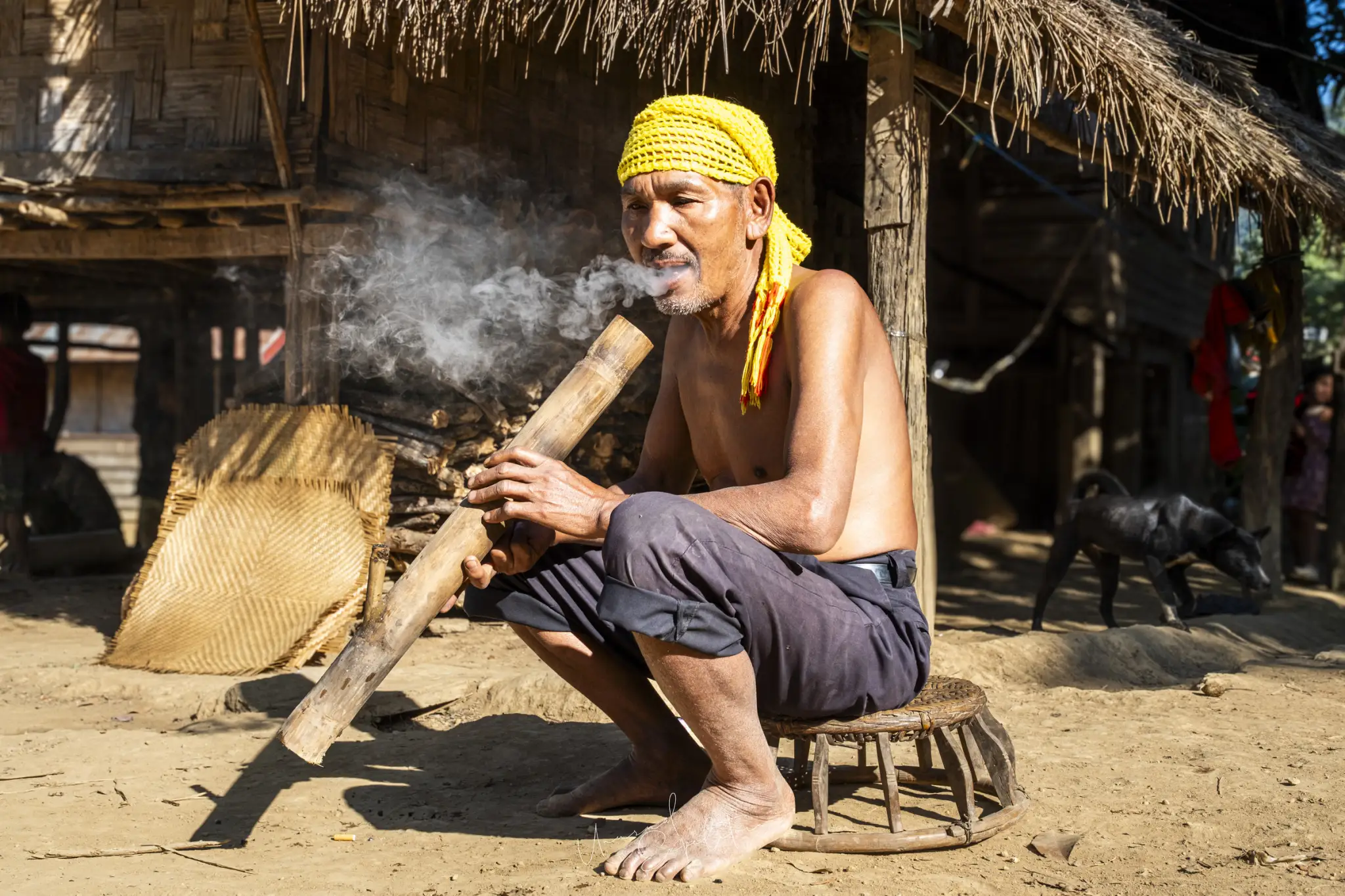
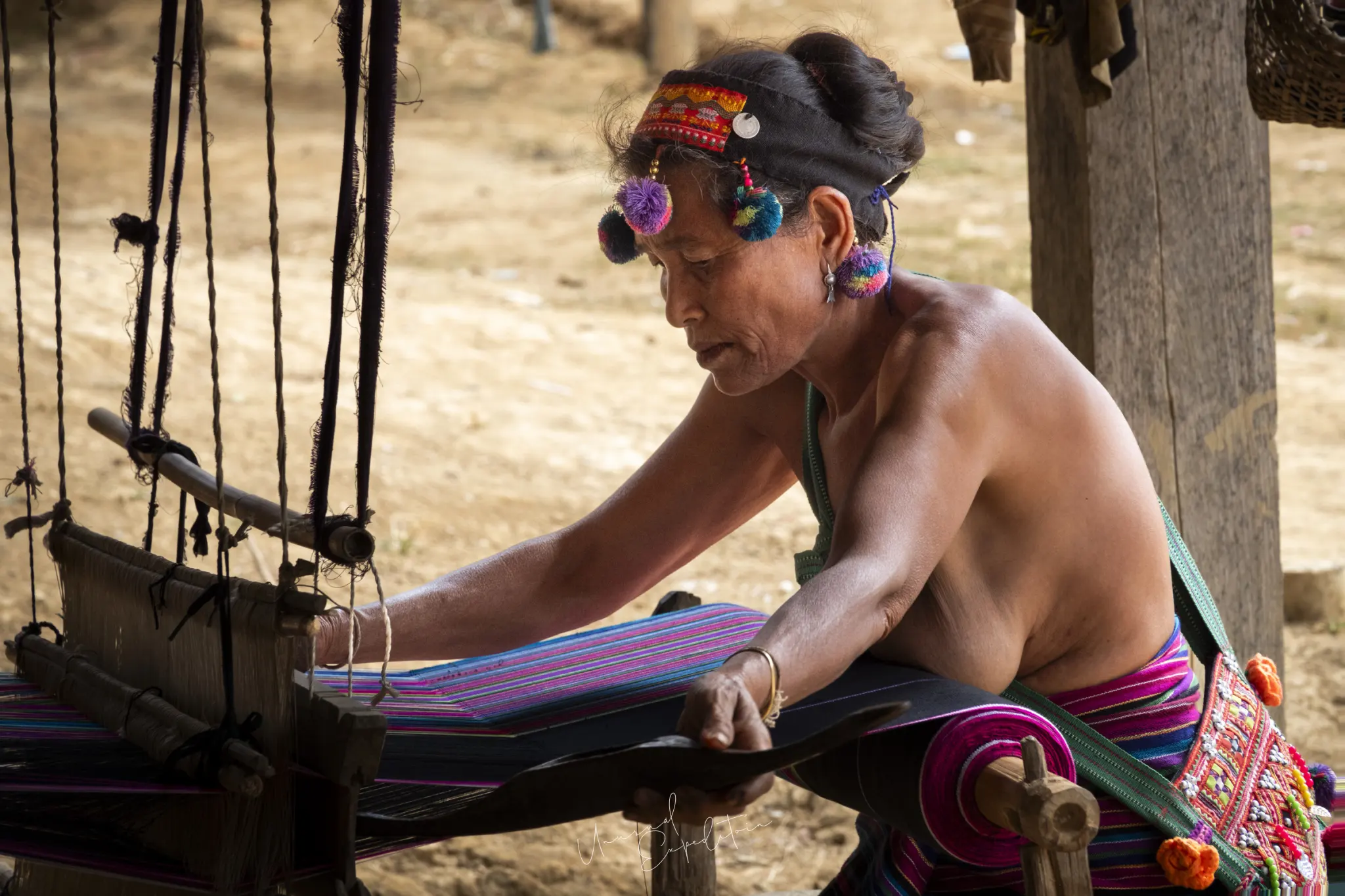
The hills around Muang Xai are home to Akha, Hmong, Khmu and Tai Lue communities, and the Akha villages are reached by a rough road up from the valley. Houses are bamboo and thatch on stilts, pigs and chickens have the run of the lanes, and the older women still wear the headdresses of silver coins and beads. We visit by arrangement with the village, with a local guide who explains who we are, and the photographs come from the morning routine: rice pounding, weaving on a back-strap loom, children on the way to the village school, a man with a long bamboo pipe outside his house. The frame below, women pounding rice in a shaft of smoky light, was made with a 24-70mm from inside the house compound, with their permission.
How to photograph in a hill village
Go with someone the village knows, arrive early when people are working, not posing, and spend the first half hour without raising the camera. Photograph activity, not costume: the loom, the mortar, the pipe, the cooking fire. Ask before any close portrait, pay for the time if the village asks, and show people their pictures on the back of the camera. Children will crowd the lens; be kind, make a few frames, and move on, and do not publish identifiable pictures of children without the family's say. A 24-70mm and a 70-200mm cover everything, and a fast prime helps indoors. The light in the cool season comes in low through the smoke of the morning fires and does most of the work.
Lanterns at dusk
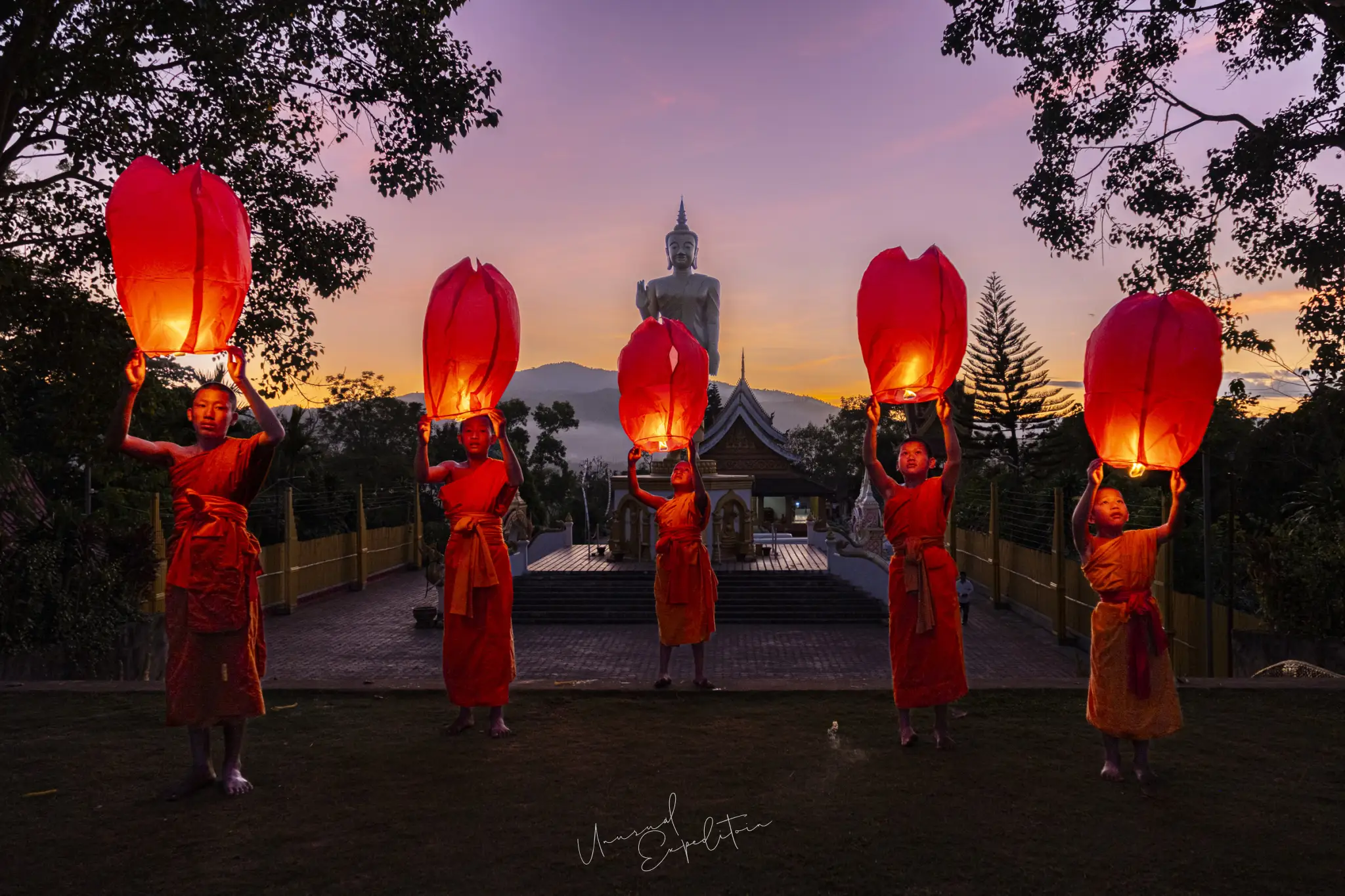
At the academy the novices release paper lanterns at dusk, a Lao and Thai tradition at festivals which the monks allow us to photograph as an arranged session. The frame is the boys in a row with the lanterns glowing orange against a violet sky and the hills behind. Expose for the lantern flames, which are the brightest thing in the frame, and let the robes fall a stop under; a 24-70mm at around ISO 1600 handheld works, or a tripod with a slower shutter if the boys stand still. It is a staged picture and we say so; the novices enjoy it as much as the photographers do. At the same hour the gold stupa on the hill above town catches the last light, which is the frame below, made from the air.
Weaving and the village economy
Most of the women in these villages weave, and a back-strap or frame loom under the house is where the finest pictures of hands and pattern are made. The cloth is for family use and for sale in the Muang Xai and Luang Prabang markets, and buying a piece directly is the fairest way to pay for the morning. The table below is what each part of the northern leg gives a photographer.
| Place | Subject | Light | Lens |
|---|---|---|---|
| Railway stations | Architecture, travellers, the train | Any, interiors bright | 24-70mm |
| Muang Xai market | Hill people trading, produce | Early morning | 24-70mm |
| Buddhist academy | Novices at study and prayer, lanterns | Late afternoon to dusk | 24-70mm, 70-200mm |
| Akha village | Rice pounding, weaving, portraits | Morning smoke and mist | 24-70mm, fast prime |
| Hills around the town | Mist, terraces, the stupa | Dawn | 70-200mm |
The north rewards early mornings and patience more than any other part of the trip.
"Everyone gets off the train at Luang Prabang. We stay on to Muang Xai, and the next morning we are the only camera in a market of three hundred people."
Joseph Mak, tour leader, Unusual Expedition
Is the railway worth it compared with the road?
For photography, yes, as long as you treat it as transport and not as a viewpoint. The old road north is spectacular and slow, and most of its best views are now also tunnels on the railway. The train gives you a rested group and a full day in the villages instead of a day on the bus, and the stations themselves, enormous and almost empty, make good frames. The one thing to plan for is luggage: bags are scanned and there is a walk from the drop-off to the platform, so pack to carry.
Ride north with us
The railway leg, the academy and the Akha village are the middle of the Laos photography tour, between Vientiane and Luang Prabang. Fares are indicatively S$2,500 to S$2,900 per person depending on the room; the Laos photography tour page has the current departure. For what comes next, see our Luang Prabang photos; for how the season affects the mist and the haze up here, the best time to visit Laos for photography.
Join the Laos photography tour
Laos Photo Tour – Laos departs 06 Mar 2027 To 13 Mar 2027, led by Joseph Mak. Small group, photography first. All Laos photography tours.
Explore Laos in depth
- Laos Photography Tour: The Complete GuideLaos
- Kuang Si Falls Photos and How to Get ThereLaos
- Laos Photography Trip FAQ: Days, Cost, Visa, Monks and ElephantsLaos
- The Best Time to Visit Laos for PhotographyLaos
- Laos Tour from Singapore: How to Get There and What to ExpectLaos
- Vientiane Photos: Is Vientiane Worth Visiting for a Photographer?Laos
- Luang Prabang Morning Market and Night Market PhotosLaos
- Sunrise and Sunset in Luang Prabang: Where to Watch and the Light by MonthLaos
- Photographing the Alms Giving Ceremony in Luang Prabang, RespectfullyLaos
- Luang Prabang Photo Tour: the Photo Spots We UseLaos
- Luang Prabang Photos: What the Old Town Really Looks LikeLaos
Upcoming Photo Tours
- Egypt Photo Tour – EgyptEgypt 12 Dec 2026 To 20 Dec 2026
- Inner Mongolia Winter Owl Photo Tour – ChinaChina 01 Jan 2027 To 04 Jan 2027
- Inner Mongolia Winter Photo Tour – ChinaChina 05 Jan 2027 To 11 Jan 2027
- Mekong And Central Highland Vietnam Photo Tour - VietnamVietnam 16 Jan 2027 To 24 Jan 2027