
Laos Photography Trip FAQ: Days, Cost, Visa, Monks and Elephants
Laos photography trip FAQ: how many days, what it costs, visa for Singaporeans, monk etiquette, the elephant sessions, gear and safety.
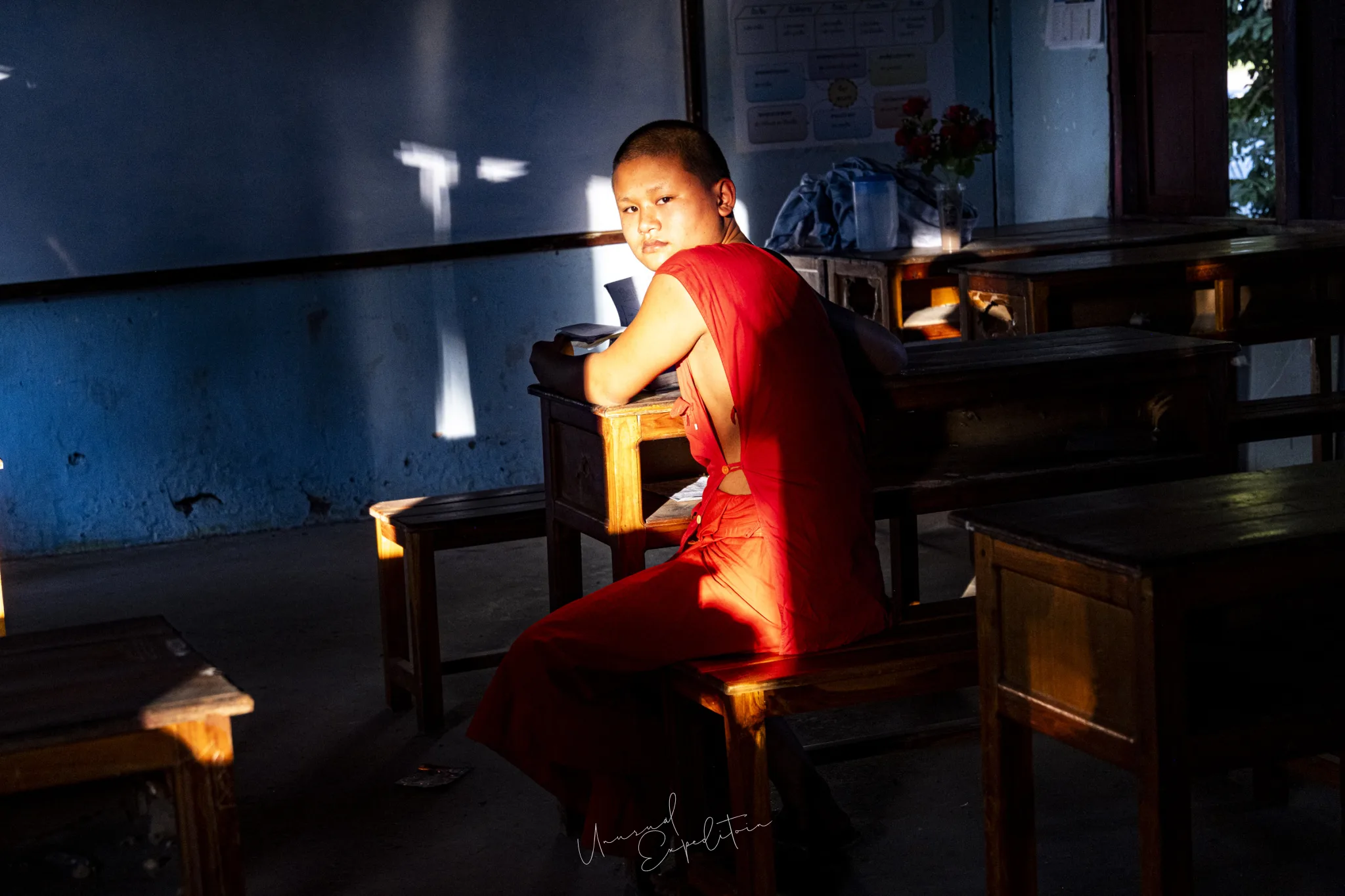
These are the questions people ask us before booking the Laos photography tour: how many days, what it costs, whether Singaporeans need a visa, how to behave around monks, whether the elephant sessions are ethical, what camera to bring and whether Laos is safe. The short answers are a week, indicatively S$2,500 to S$2,900 per person, no visa for Singapore passports, always from a distance, yes with no riding, two zooms and a fast prime, and yes. The longer answers follow.
How many days for a Laos trip?
A week covers Vientiane, the railway north, a day in the hill villages and two days in Luang Prabang without rushing, which is the shape of our tour. Add two or three days if you want Vang Vieng's karst or the river town of Nong Khiaw, and a further week for the south: the Bolaven plateau and the Four Thousand Islands. Shorter than five days and you will spend a large share of it travelling. Laos rewards slow days; the pictures come from being in a village at the right hour, not from the number of towns ticked off.
How much does a trip to Laos cost?
Laos is inexpensive on the ground: a good meal costs a few dollars, a guesthouse a few tens, and the railway from Vientiane to Luang Prabang a modest fare in first class. What costs money is arranging access, which is what a photography tour pays for: the temple that lets you photograph its novices at prayer, the village that welcomes a group at dawn, the elephant village that works without riding, the railway tickets secured in advance, a vehicle with a driver who knows the hill roads. Our fare is indicatively S$2,500 to S$2,900 per person depending on the room, with international flights extra; Laos tour from Singapore lists exactly what that covers.
Do Singaporeans need a visa for Laos?
No. Singapore passport holders enter visa-free for up to 30 days under the ASEAN arrangement; Singapore's Ministry of Foreign Affairs lists Laos accordingly and you are stamped in at Vientiane's Wattay airport. Carry a passport with six months' validity and an onward ticket. Other passports mostly qualify for the Lao e-visa, applied for online before travel, or a visa on arrival at the main airports; check the official Lao e-visa site for your nationality, not a third-party summary. The "Laos photo visa size" searches refer to the passport photograph the e-visa application asks for, which follows standard passport dimensions.
Are the monk and elephant sessions real?
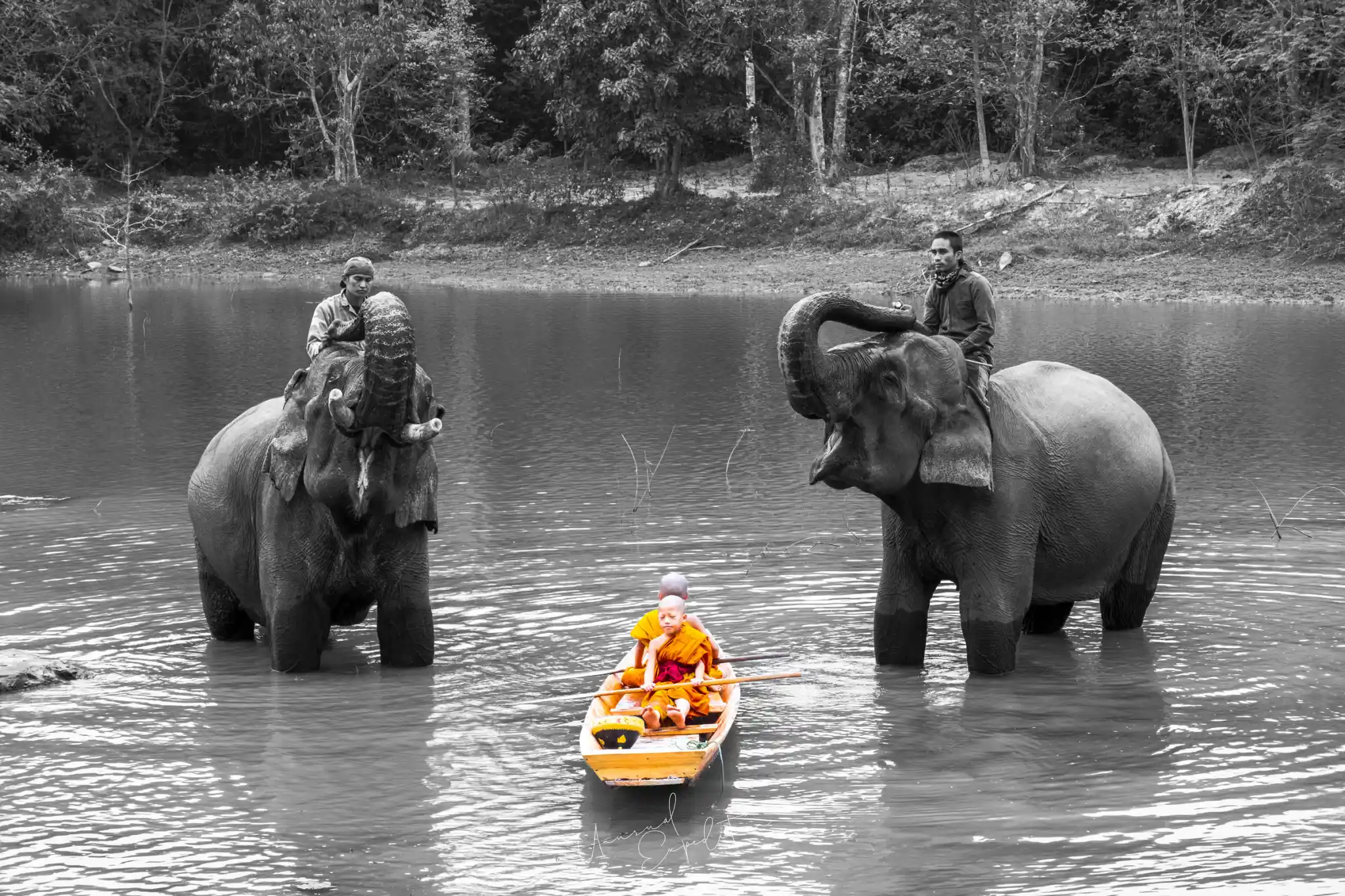
They are arranged, and we say so in every caption. The temples we work with agree in advance to let a small group photograph their novices at study, at prayer and with the lanterns; the elephant village near Vientiane keeps a few animals that live alongside a temple community, and the morning session with monks and elephants in the mist is set up with the temple's blessing. There is no riding, no performing and no chaining for the camera; the animals walk into the water because they do so every morning. The alms line, the markets and the villages are not arranged at all. If you want only candid pictures, the trip still gives you most of a week of them.
How should I behave around monks?
Keep a distance, keep quiet, never touch a monk or his robe, and women should not hand anything directly to a monk; place it down for him to pick up. Sit or kneel lower than monks who are seated. Dress with shoulders and knees covered in temples. Photograph the alms line from across the road with a long lens, no flash. Novices in the arranged sessions are used to cameras and will smile; the ones on the street are at work. Our alms giving guide goes into detail.
What camera gear should I bring to Laos?
A 24-70mm and a 70-200mm cover almost everything, with a fast prime around 35mm or 50mm for the dark dawns and the inside of houses. A small tripod earns its place at blue hour and for long exposures at Kuang Si. Bring a polariser for the waterfalls, spare batteries, a rain cover in any season, and a cloth for dust on the village roads. Drones need a permit in Laos and may not fly over temples or the alms line, so ask us before packing one. Wildlife photography in Laos is limited; the forests are thick and the animals shy, so a 600mm is dead weight on this trip.
| Subject | Lens | Settings to start |
|---|---|---|
| Alms line at dawn | 70-200mm | ISO 3200, wide open, 1/125 s; or 1/15 s braced for blur |
| Temples at blue hour | 16-35mm on a tripod | ISO 200, f/8, several seconds |
| Markets | 24-70mm | ISO 800 to 1600, expose for shaded faces |
| Village portraits | 24-70mm, fast prime | ISO 400 to 1600, eye focus, ask first |
| Kuang Si falls | 16-35mm, polariser, tripod | ISO 100, f/11, half a second to two seconds |
| Lanterns at dusk | 24-70mm | ISO 1600, expose for the flame |
Two zooms, one prime and a tripod; the rest is patience.
Is Laos safe?
Yes. Violent crime against visitors is rare, the towns are calm after dark and the people are reserved and courteous. The practical risks are traffic, rough roads in the north, stomach upsets from water and ice, and unexploded ordnance in remote rural areas, which is why you stay on paths and with guides outside the towns. Travel insurance with medical evacuation is required for our tour because hospital care beyond the basics means a flight to Bangkok.
"The question I get most is whether the elephant picture is set up. It is, with the monks' agreement and no riding, and I would rather say that than pretend we stumbled on it in the mist."
Joseph Mak, tour leader, Unusual Expedition
Can I photograph people in Laos?
Yes, with manners. Lao people are generally happy to be photographed if asked and often delighted to see the result, and a smile and a raised camera is a question most will answer clearly. Do not photograph military sites, police, airports or the inside of government buildings. In villages, go with a guide the village knows, pay for people's time where it is asked, buy the cloth the weavers make, and do not publish identifiable pictures of children without the family's agreement. The Muang Xai article describes how we work in the Akha villages.
What is the weather, and when should I go?
Cool and dry from November to February, hot and hazy from March to May, wet from June to October. Our scheduled departure is in March, and the trade-offs of that month are set out in the best time to visit Laos for photography. Mornings in the northern hills in December are cold enough for a down jacket; March afternoons in Vientiane are hot enough to plan a rest.
Still have a question?
Write to us. The Laos photography tour page has the current departure, the fare and the registration form, and Joseph answers the photography questions himself.
Join the Laos photography tour
Laos Photo Tour – Laos departs 06 Mar 2027 To 13 Mar 2027, led by Joseph Mak. Small group, photography first. All Laos photography tours.
Explore Laos in depth
- Laos Photography Tour: The Complete GuideLaos
- Kuang Si Falls Photos and How to Get ThereLaos
- The Best Time to Visit Laos for PhotographyLaos
- Laos Tour from Singapore: How to Get There and What to ExpectLaos
- The Laos-China Railway North: Muang Xai and the Villages Beyond Luang PrabangLaos
- Vientiane Photos: Is Vientiane Worth Visiting for a Photographer?Laos
- Luang Prabang Morning Market and Night Market PhotosLaos
- Sunrise and Sunset in Luang Prabang: Where to Watch and the Light by MonthLaos
- Photographing the Alms Giving Ceremony in Luang Prabang, RespectfullyLaos
- Luang Prabang Photo Tour: the Photo Spots We UseLaos
- Luang Prabang Photos: What the Old Town Really Looks LikeLaos
Upcoming Photo Tours
- Egypt Photo Tour – EgyptEgypt 12 Dec 2026 To 20 Dec 2026
- Inner Mongolia Winter Owl Photo Tour – ChinaChina 01 Jan 2027 To 04 Jan 2027
- Inner Mongolia Winter Photo Tour – ChinaChina 05 Jan 2027 To 11 Jan 2027
- Mekong And Central Highland Vietnam Photo Tour - VietnamVietnam 16 Jan 2027 To 24 Jan 2027