
Luang Prabang Photos: What the Old Town Really Looks Like
Our own Luang Prabang photos: the peninsula in mist from the air, Wat Xieng Thong at blue hour, the old quarter lanes and the night market.
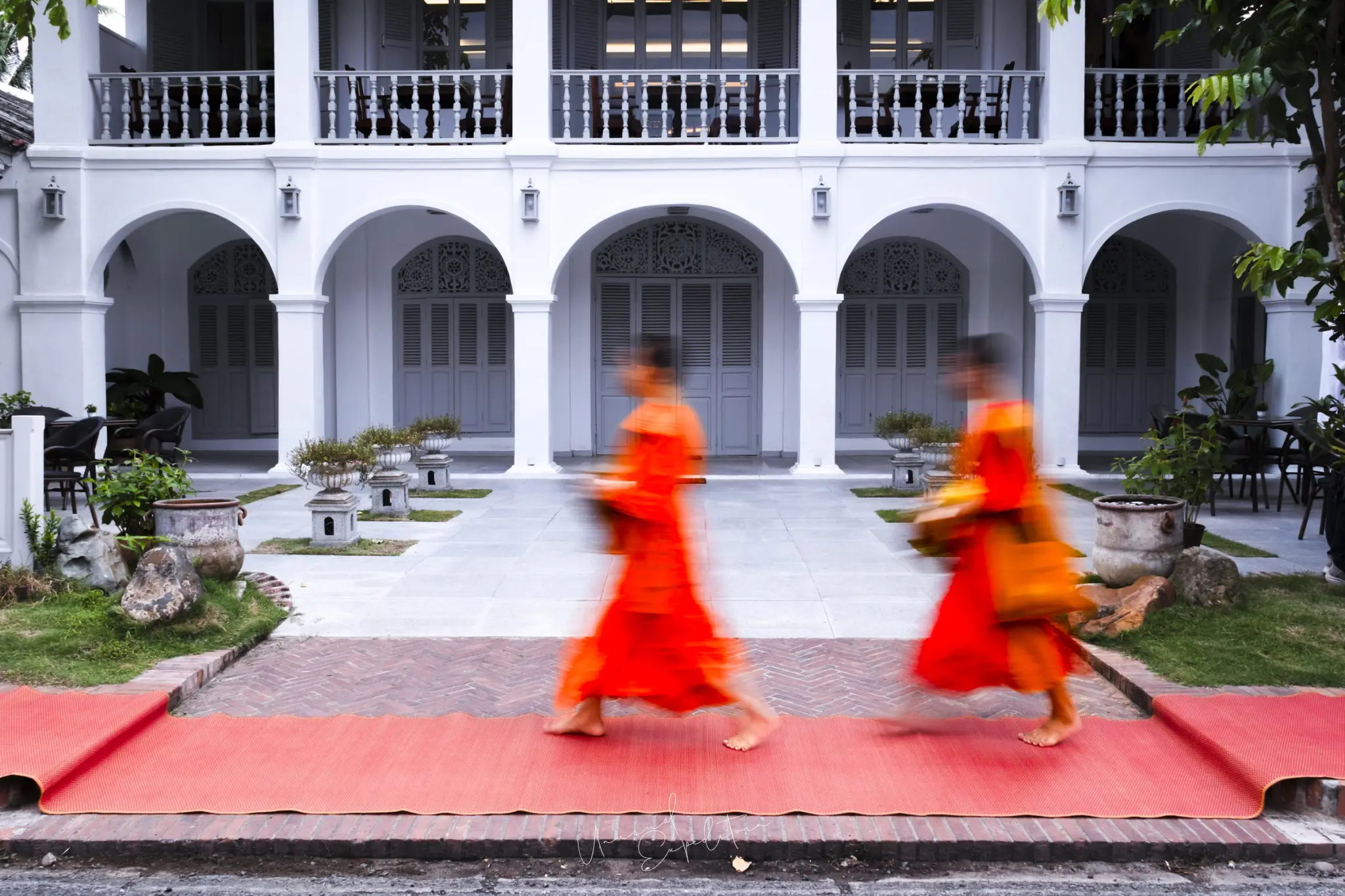
Luang Prabang photos tend to show the same three things: a line of orange robes at dawn, the gold front of Wat Xieng Thong, and the mist on the Mekong. Those pictures are real, but they are a small part of what the town looks like. These are our own frames from the Laos photography tour we lead from Singapore, taken on three visits in the cool season, and they show the old town from the air, at blue hour, in the market lanes and in its everyday streets, with a note on how each was made.
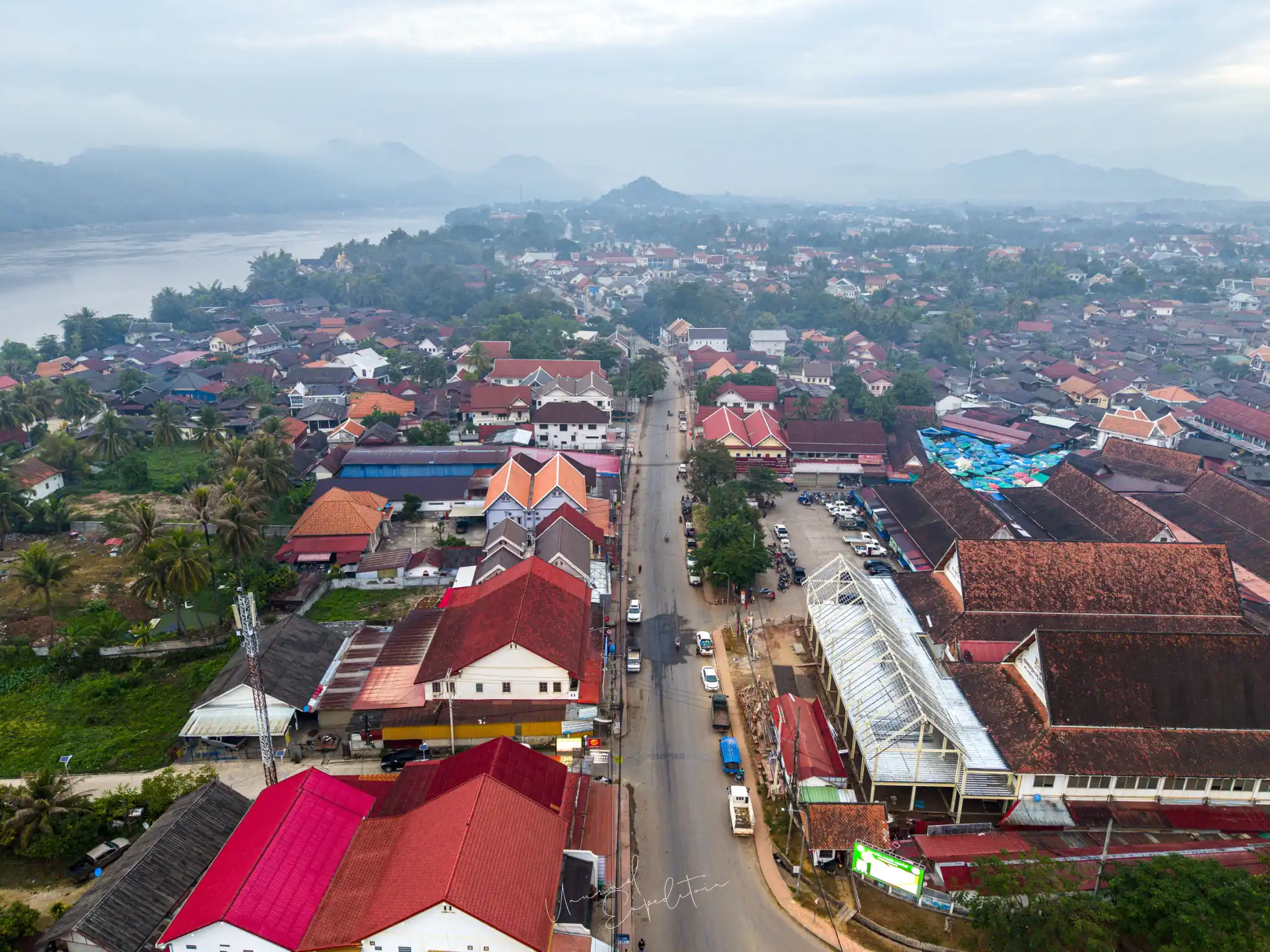
Luang Prabang photos from above: the peninsula in the mist
The old town sits on a tongue of land between the Mekong and the Nam Khan, and from the air that shape explains everything about the place. Red tile roofs, temple compounds with their gold spires, a single main street and the river on three sides. In December the valley fills with mist before sunrise and the hills behind the town float on it until the sun is well up. A drone frame at that hour, made from the Nam Khan side looking across the roofs to the ridgeline, is the picture most people think they have seen but rarely have. Drone rules in Laos require a permit and keep you away from temples and the alms line, so ask us before you pack one.
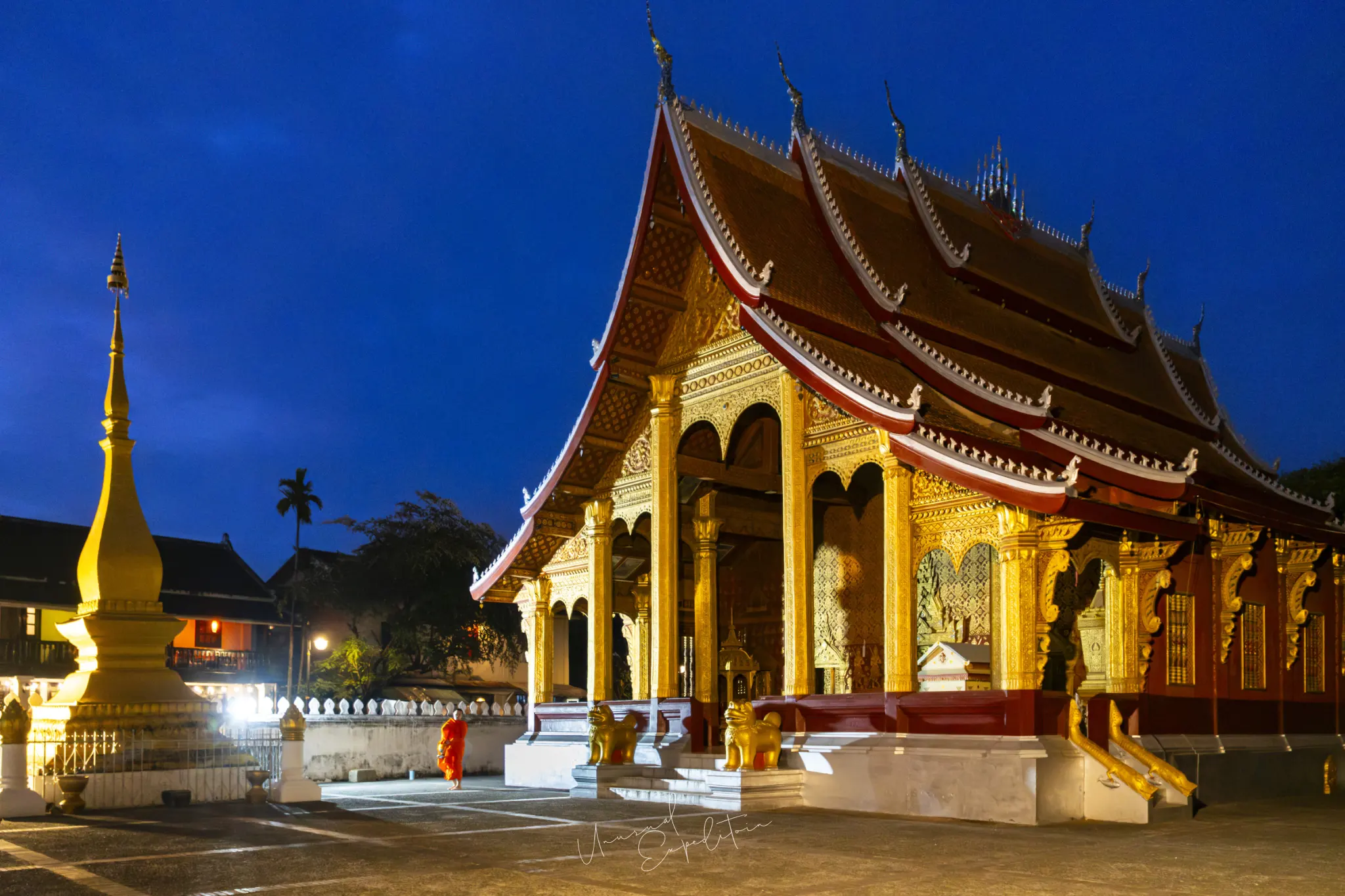
Wat Xieng Thong at blue hour
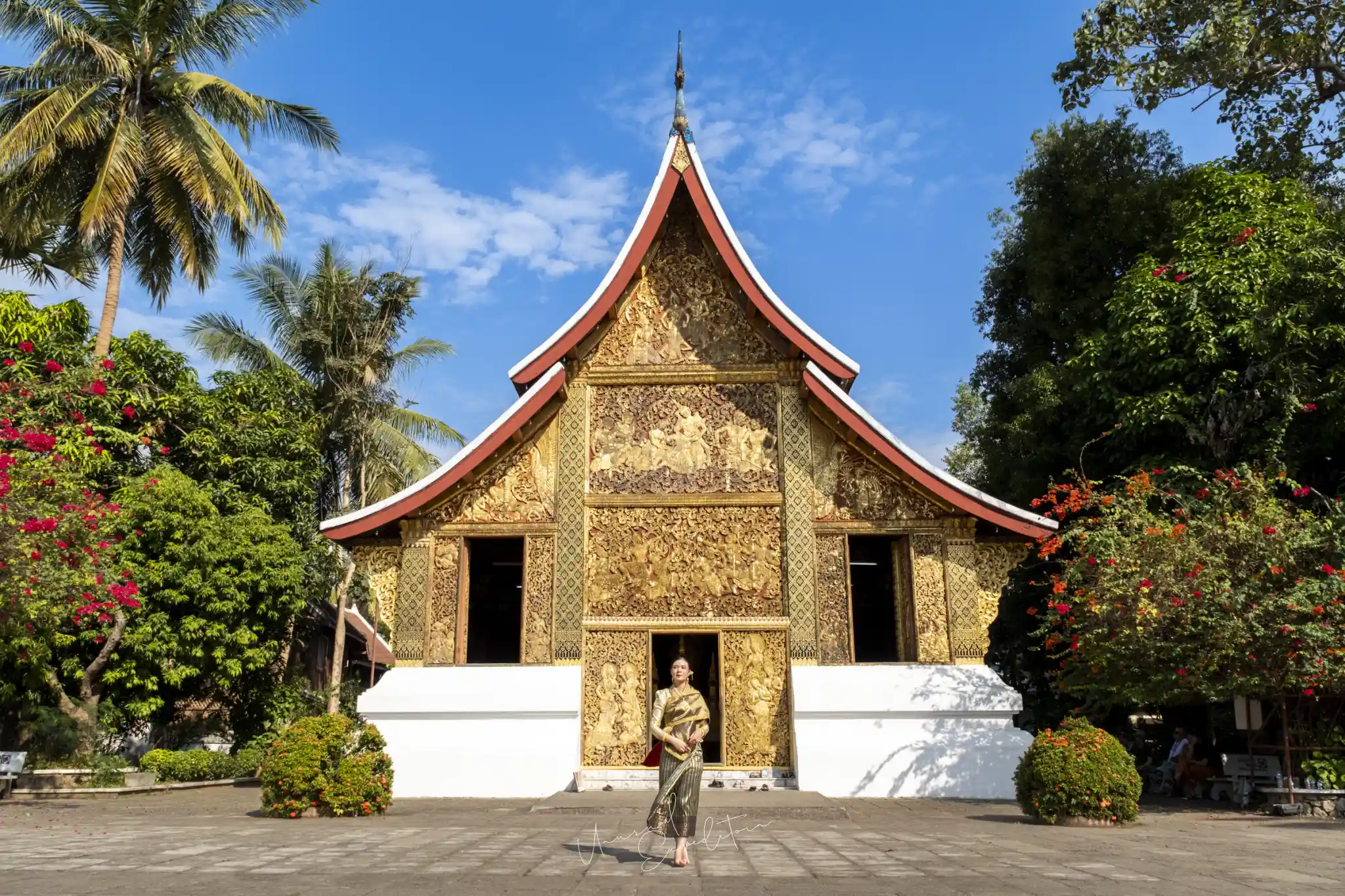
Wat Xieng Thong, built in 1560 at the tip of the peninsula, is the temple on every Luang Prabang postcard, and the postcard is usually made in the hard light of mid morning when the gold reads as yellow and the sweeping roofs throw black shadows. Come back after sunset. For about twenty minutes the sky turns deep blue, the floodlights on the sim come up, and the gold leaf glows against it. A tripod, a 16-35mm for the whole front and a 24-70mm for the tree-of-life mosaic on the rear wall are all you need. UNESCO listed the town in 1995 for exactly this blend of Lao temple architecture and French colonial streets, and this temple is the best single example of the first half of that.
Luang Prabang old quarter photos: the streets between the temples
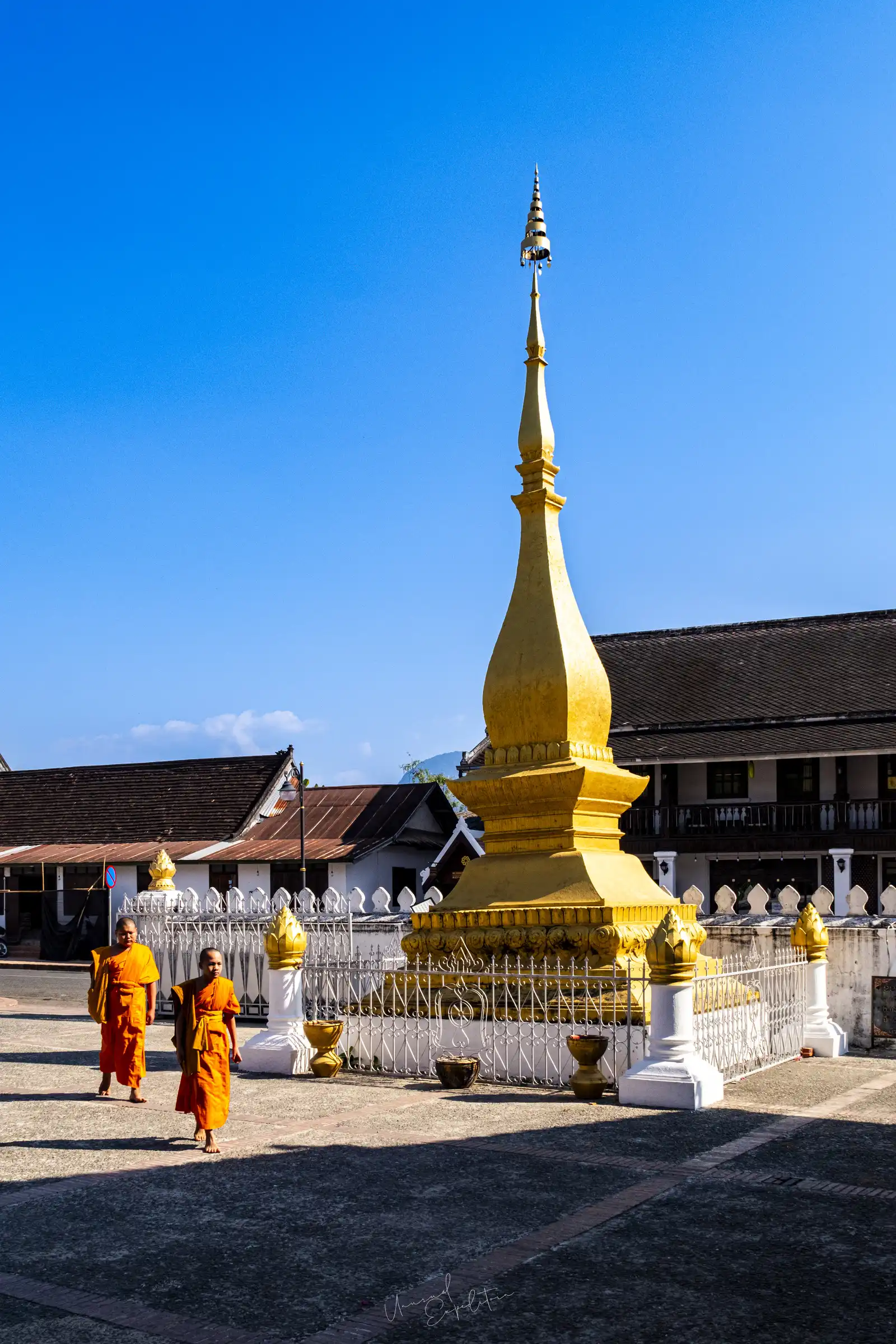
Between the big temples the old quarter is a grid of quiet lanes: whitewashed shophouses with dark timber shutters, bougainvillea over the walls, frangipani trees, bicycles, and monks crossing from one wat to the next. The light here is best early, before the tour groups, when the lanes are in shade and the tops of the temple roofs catch the sun. The frame below of a stupa with two novices walking past was made with a 70-200mm from across the street, which keeps you out of their way and compresses the gold against the white. Walk slowly, keep to the shade, and watch the gaps between buildings where the Mekong appears.
Wat Xieng Thong by day, without the crowds
The daytime picture is possible if you go when the gates open and stand back. The sim is framed by two tall trees and a low white wall, and in the first hour the sun lights the front at an angle that still shows the carving. By mid morning the tour buses arrive from the river pier and the courtyard fills. We put this temple at the start of a morning and move on to the smaller wats, Wat Mai and Wat Sene among them, which get a tenth of the visitors and the same gold.
The night market from above
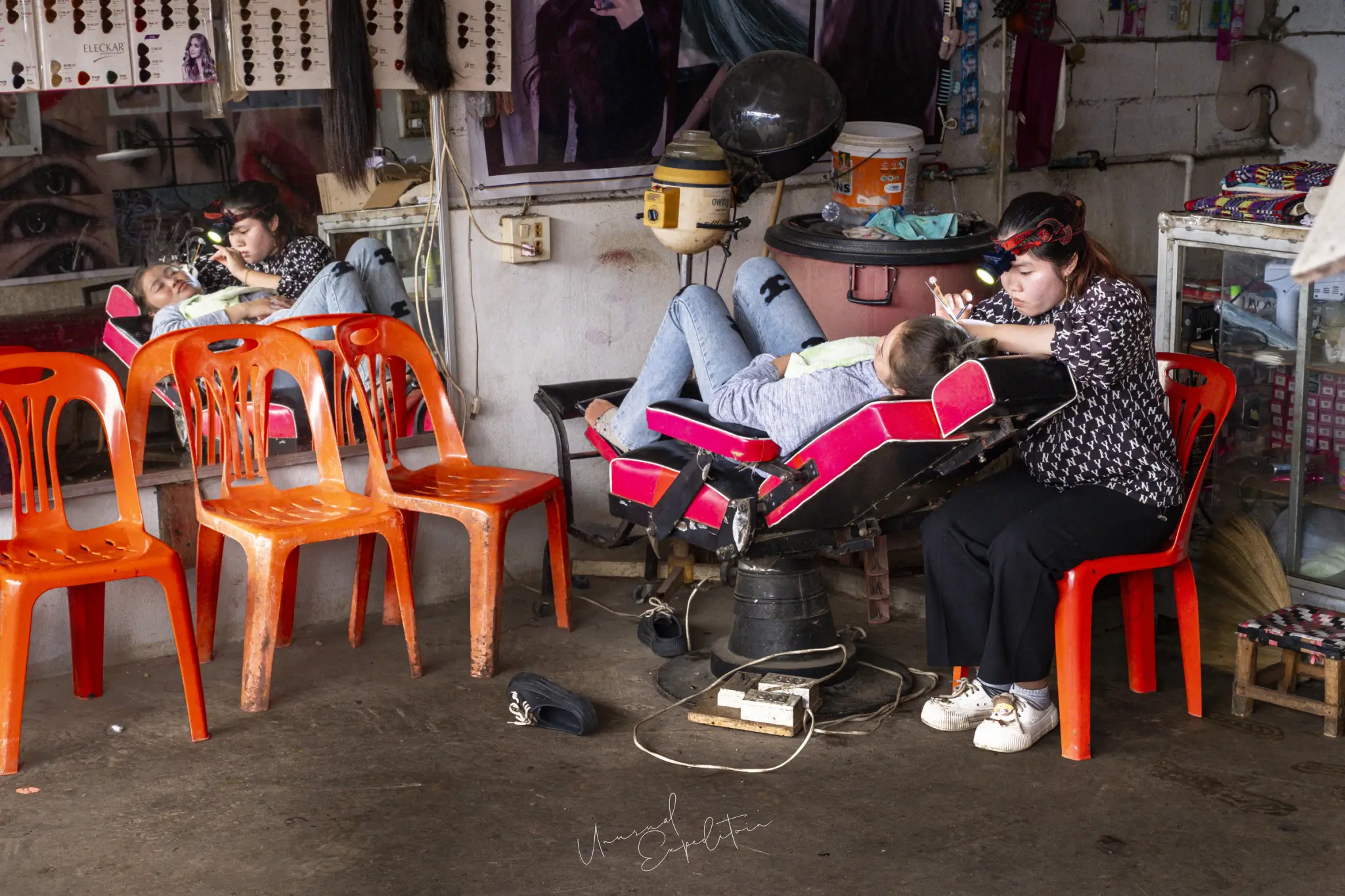
Every evening Sisavangvong Road closes to traffic and the night market goes up: red and blue awnings, textiles, lamps, paper and silver, running from the Royal Palace towards the post office. From street level it is a crowd. From the first floor of a cafe, or from the steps of the palace gate, it becomes a river of colour running past a floodlit temple. Our balcony frame of it, made with a 24-70mm at blue hour while the awnings glow from inside, is in the Luang Prabang markets article, which covers the morning market too. By day the same streets carry the small trades that visitors walk past, like the roadside beauty stall below.
What does Luang Prabang look like in the cool season?
Our frames are from December and March. In December the mornings are cool enough for a jacket, the mist is thick until mid morning and the afternoons are clear and dry. By March the air is warm and the farmers burn the hillsides, so the light turns soft and golden and the far hills fade; it suits portraits and river scenes more than wide landscapes. The table below sets out what each month gives a photographer, drawn from Lao Department of Meteorology and Hydrology averages and from our own visits.
| Months | Sky and air | What photographs well |
|---|---|---|
| November to February | Cool mornings, river mist, clear afternoons | Aerials, mist on the Mekong, blue-hour temples |
| March to May | Warm to hot, haze from field burning | Alms line, markets, portraits, waterfalls before the heat |
| June to October | Rain most days, green hills, big skies | Storm light, full rivers, Kuang Si at its loudest |
The haze months are not a reason to stay away; they are a reason to shoot closer.
"Everyone photographs Luang Prabang from the pavement. The town only makes sense from the Nam Khan side at first light, when the mist sits on the roofs and the hills come out of it one at a time."
Joseph Mak, tour leader, Unusual Expedition
Luang Prabang Laos images that are not temples
A set of Luang Prabang pictures with only temples in it misses the town. The morning market in the lanes behind the palace, the ferry crossing to the far bank, the bamboo bridge over the Nam Khan that is rebuilt every dry season, the weavers at Ban Xang Khong, the Mekong at sunset from a slow boat, and the novices sweeping the temple yards in the late afternoon all belong in the folder. The photo spots guide gives positions and light for each.
Photograph Luang Prabang with us
Our Laos photography tour spends two of its days in Luang Prabang, with the alms line, Wat Xieng Thong, the markets, a Mekong sunset cruise and Mount Phousi, and reaches the town by the new railway from the north. Fares are indicatively S$2,500 to S$2,900 per person depending on the room; the Laos photography tour page has the current departure and price. If you want to know how the town looks hour by hour, start with sunrise and sunset in Luang Prabang.
Join the Laos photography tour
Laos Photo Tour – Laos departs 06 Mar 2027 To 13 Mar 2027, led by Joseph Mak. Small group, photography first. All Laos photography tours.
Explore Laos in depth
- Laos Photography Tour: The Complete GuideLaos
- Kuang Si Falls Photos and How to Get ThereLaos
- Laos Photography Trip FAQ: Days, Cost, Visa, Monks and ElephantsLaos
- The Best Time to Visit Laos for PhotographyLaos
- Laos Tour from Singapore: How to Get There and What to ExpectLaos
- The Laos-China Railway North: Muang Xai and the Villages Beyond Luang PrabangLaos
- Vientiane Photos: Is Vientiane Worth Visiting for a Photographer?Laos
- Luang Prabang Morning Market and Night Market PhotosLaos
- Sunrise and Sunset in Luang Prabang: Where to Watch and the Light by MonthLaos
- Photographing the Alms Giving Ceremony in Luang Prabang, RespectfullyLaos
- Luang Prabang Photo Tour: the Photo Spots We UseLaos
Upcoming Photo Tours
- Egypt Photo Tour – EgyptEgypt 12 Dec 2026 To 20 Dec 2026
- Inner Mongolia Winter Owl Photo Tour – ChinaChina 01 Jan 2027 To 04 Jan 2027
- Inner Mongolia Winter Photo Tour – ChinaChina 05 Jan 2027 To 11 Jan 2027
- Mekong And Central Highland Vietnam Photo Tour - VietnamVietnam 16 Jan 2027 To 24 Jan 2027