
Madagascar or an African Safari for Wildlife Photography?
Madagascar or a Kenya and Tanzania safari for a wildlife photographer: animals, light, lenses, effort, cost and portfolio compared.
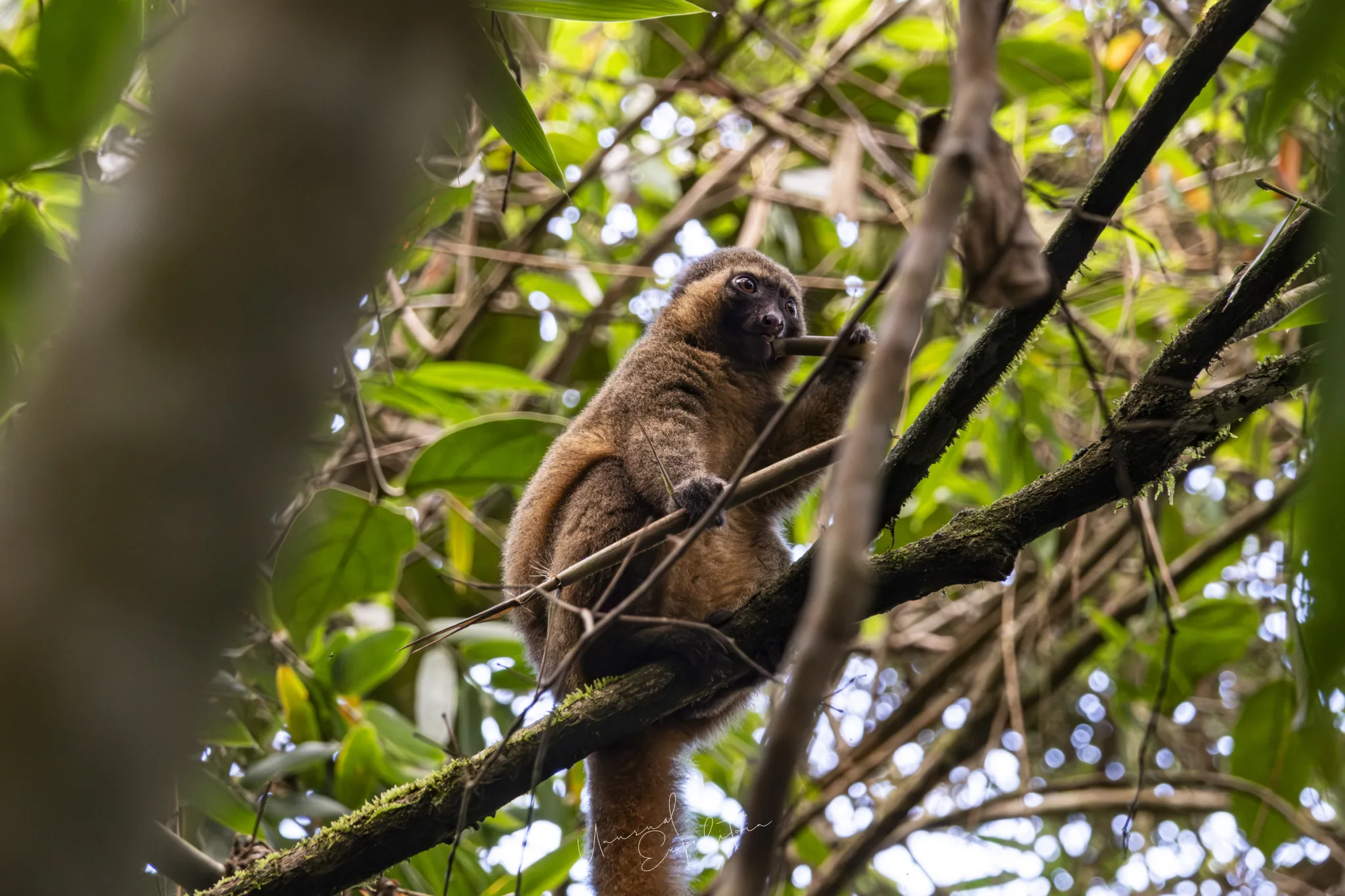
Madagascar and an East African safari are both "Africa" on the map and have almost nothing in common for a wildlife photographer. A safari in Kenya or Tanzania is big mammals on open ground, photographed from a vehicle with a long lens, in numbers, in predictable light. Madagascar is small animals in trees, photographed on foot with a mixed bag of lenses, one at a time, in a forest. This page compares the two on wildlife, light, lenses, effort, cost and the kind of pictures you bring home, so you can decide which to do first.
It is a companion to the complete Madagascar photography tour guide.
The wildlife: herds versus endemics
A safari gives you elephants, lions, giraffe, zebra, wildebeest, cheetah, leopard with luck, and the migration if you time it, often dozens of animals in a frame. Madagascar has none of these. It has over a hundred lemur species, chameleons from the size of a fingernail to the size of a cat, leaf-tailed geckos, tenrecs, fossa in a few forests, and birds found nowhere else. You see animals one or two at a time, usually close, often above you. On our April itinerary the realistic list is ring-tailed, brown, ruffed and bamboo lemurs, sifakas, indri, mouse lemurs, several chameleons, frogs and geckos, as Lemur photography at Andasibe details. A safari photographer counts species in a day; a Madagascar photographer counts them in a week and every one is unique to the island.
The light and the ground
Safari light is open savannah at dawn and dusk, warm and horizontal, with the sun behind you from a vehicle. Madagascar's wildlife light is forest canopy: soft, green, a stop or two darker, coming from everywhere, with the animal often against a bright sky. You work at higher ISO and shorter distances, and you walk. The baobab country in the west is the opposite, hard and dry, but that is landscape, not wildlife; the regional differences are in Madagascar light and weather, region by region.

Lenses
A safari is a 400-600mm trip, with a 70-200mm for the close moments, shot from a beanbag on a vehicle window. Madagascar wants a 100-400mm for the indri, a 24-70mm for the habituated lemurs a metre away, a macro lens for the night walk, a wide zoom for the baobabs and a fast prime for the Milky Way. The bag is more varied and lighter at the long end. The list is in What to pack for a Madagascar photo tour.
"On safari the vehicle does the walking and the animals do the posing. In Madagascar you walk, you look up, and the animal is the size of a cat. People who have done both tell me the safari pictures are the ones everyone has and the Madagascar pictures are the ones nobody has."
Joseph Mak, tour leader, Unusual Expedition
Effort and comfort
A safari is physically easy: lodge, vehicle, lodge. Madagascar is harder: 4x4s on sand, muddy forest trails, pre-dawn starts, simple lodges, a domestic flight that may be late. Safari lodges in Kenya and Tanzania range from comfortable to luxurious; Madagascar's are comfortable at best. For a photographer who is fit and does not mind mud, the effort buys access that no vehicle can give. For one who wants to be driven to the picture, the safari wins.
Cost
A mid-range nine-day safari in Kenya or Tanzania with a photography leader costs broadly the same as our Madagascar trip, whose indicative fare as at November 2026 is S$6,450 per person sharing; a luxury safari costs two or three times more. Madagascar's cost is driven by logistics, the domestic flights and 4x4s, rather than by lodges, so there is little to spend once there. The breakdown is in What a Madagascar photo tour costs.
Birds, the quiet third subject
Madagascar has about 300 bird species and roughly half of them are found nowhere else, including whole families such as the vangas and the ground-rollers. On our route the birds come at Andasibe, where the forest edge at dawn gives blue coua, paradise flycatchers and sunbirds, and at the Avenue, where herons and egrets work the paddies and fruit bats leave the trees at dusk. It is not a birding trip, and a safari in East Africa shows more species in a morning, but a 400mm lens carried for the lemurs earns a few extra frames here that no safari can give.
Beyond the wildlife
This is where the comparison tips. A safari is wildlife and little else. Madagascar is wildlife plus the Avenue of the Baobabs, the dhow builders of Belo sur Mer, the markets and hills of Antananarivo, rice terraces and a dark night sky. A nine-day Madagascar trip produces a portfolio with landscape, documentary, portrait and astrophotography in it; a nine-day safari produces a wildlife portfolio. Which you want is the real question.
Side by side
| East African safari | Madagascar, April tour | |
|---|---|---|
| Wildlife | Large mammals, in numbers | Lemurs, chameleons, geckos, one at a time |
| Where you shoot from | Vehicle | On foot |
| Light | Open, warm, predictable | Forest canopy; hard dry light in the west |
| Main lens | 400-600mm | 100-400mm, plus macro, wide and fast prime |
| Effort | Low | Moderate to high |
| Other subjects | Few | Baobabs, people, city, Milky Way |
| Indicative cost, 9 days | Similar to much higher | S$6,450 sharing, as at Nov 2026 |
If the table reads as two different holidays, that is because it is.
Doing both
The two combine well in one longer journey, since Ethiopian Airlines connects Antananarivo with Nairobi through Addis Ababa. A week of savannah followed by nine days of Madagascar gives the long-lens practice first and the harder subjects second, and the bag that serves the safari covers most of Madagascar with the addition of a macro lens and a fast prime.
Which first?
If you have never photographed wildlife, do a safari first; it teaches long-lens technique in easy conditions. If you have done a safari, Madagascar is the next step, and the one that gives you pictures nobody else at the club has. Our Madagascar Photo Tour, 11 to 19 April 2027 is built for the second group.
Join the Madagascar photography tour
Madagascar Photo Tour – Madagascar departs 11 Apr 2027 To 19 Apr 2027, led by Joseph Mak. Small group, photography first. All Madagascar photography tours.
Explore Madagascar in depth
- The Complete Guide to a Madagascar Photography TourMadagascar
- What to Pack for a Madagascar Photo TourMadagascar
- The Milky Way over the Baobabs: Night Photography in MadagascarMadagascar
- Madagascar Tour from Singapore: Flights, Visa and What to ExpectMadagascar
- Is Madagascar Safe? Health, Roads and Drones for PhotographersMadagascar
- What a Madagascar Photo Tour Costs, Line by LineMadagascar
- Twelve Questions Before You Book a Madagascar Photo TourMadagascar
- Madagascar Light and Weather, Region by RegionMadagascar
- Is Madagascar Worth Visiting for a Photographer? A Straight AnswerMadagascar
- Lemur Photography at Andasibe and BeyondMadagascar
- The Best Time to Visit Madagascar for PhotographyMadagascar
- Photographing the Avenue of the Baobabs: Sunset, Night and DawnMadagascar
Upcoming Photo Tours
- Egypt Photo Tour – EgyptEgypt 12 Dec 2026 To 20 Dec 2026
- Inner Mongolia Winter Owl Photo Tour – ChinaChina 01 Jan 2027 To 04 Jan 2027
- Inner Mongolia Winter Photo Tour – ChinaChina 05 Jan 2027 To 11 Jan 2027
- Mekong And Central Highland Vietnam Photo Tour - VietnamVietnam 16 Jan 2027 To 24 Jan 2027