
What to Pack for a Madagascar Photo Tour
Packing list for Madagascar: lenses for baobabs, lemurs, macro and the Milky Way, dust and rain protection, power and clothing.
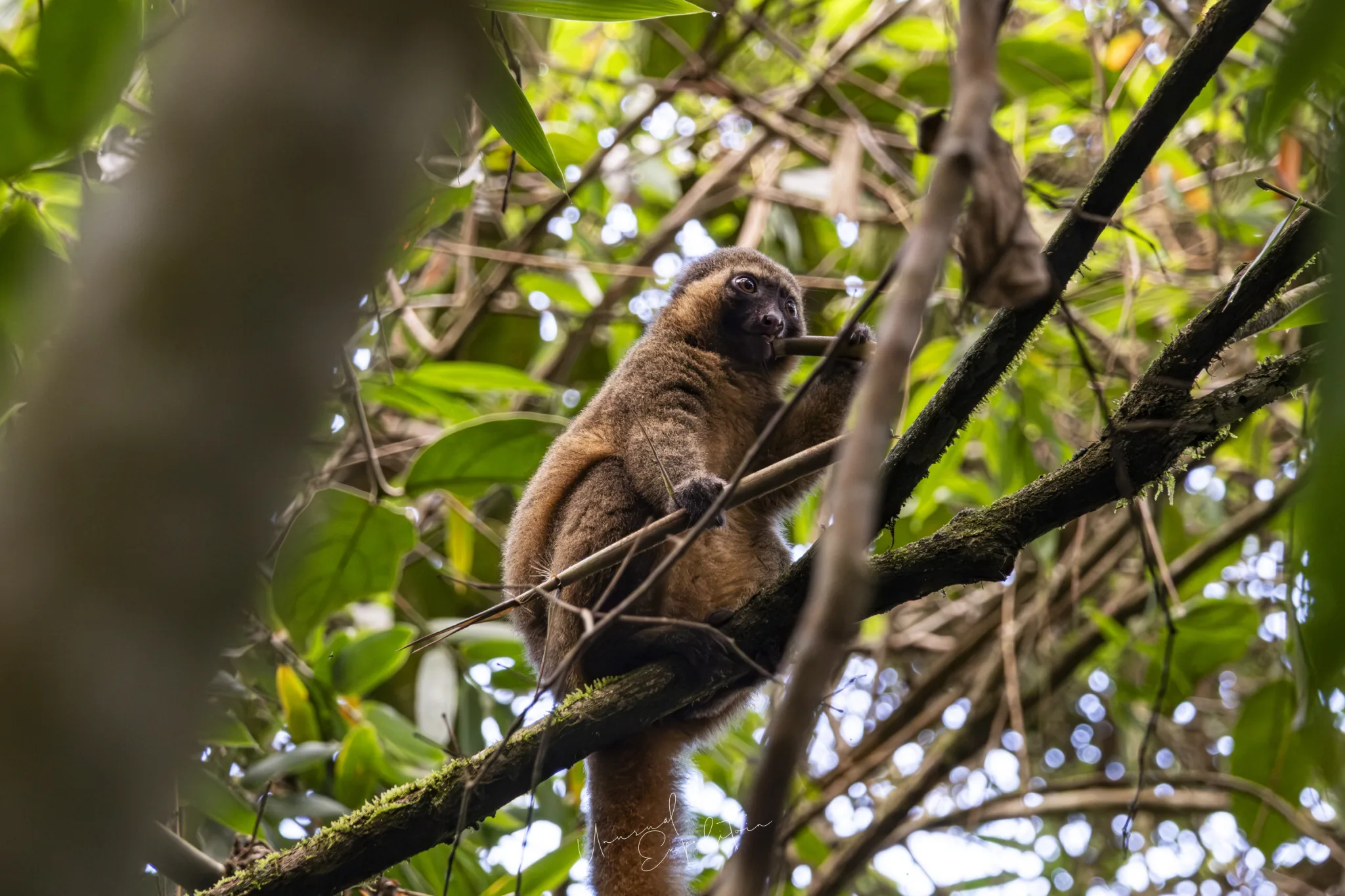
Packing for a Madagascar photo tour means covering four subjects with one bag: baobabs the size of buildings, lemurs in a dim forest, frogs and chameleons the size of a thumb on a night walk, and the Milky Way over a dark plain. Add 30 degree heat and red dust in the west, rain and humidity in the east, and a 4x4 on sand in between. This is the list we send guests before the April departure, with the reason behind each item and a note on what people bring and never use.
It is one of the practical pages behind the complete Madagascar photography tour guide.
Lenses, by the subject they are for
The baobabs want a wide zoom, 16-35mm on full frame, because the trees are close to the track and you need the whole crown and the sky. The lemurs want reach and speed: a 100-400mm or 100-500mm zoom handles the indri in the canopy and the brown lemurs on Vakona island, and a 70-200mm at f/2.8 is better still in the low light of Andasibe if you own one. The night walk wants a macro lens, 90mm or 100mm, or a standard zoom with an extension tube, for frogs and chameleons at arm's length. The Milky Way wants a fast wide prime, 14-24mm at f/1.4 to f/2.8. A 24-70mm covers the villages, the markets and the dhow yard. Five lenses is a lot; most guests manage with a wide zoom, a long zoom, a 24-70mm and either the macro or the fast prime depending on which night they care more about.
Two bodies if you have them
Dust is the reason. Changing lenses on the Avenue track with a 4x4 going past is how sensors get dirty, and there is no cleaning service nearer than Johannesburg. A wide zoom on one body and the long zoom on the other covers a whole baobab session without a lens change. The second body also carries the macro on the night walk while the first stays wide for the forest at torchlight. Full frame and crop sensor together work; the crop body gives the long lens more reach for the indri.
Tripod: you will use it twice a day
Madagascar is one of the few trips where a tripod earns its weight every single day. Both baobab sessions need it for the long exposures after sunset and before sunrise, the Milky Way needs it for every frame, and on the forest floor at night a tripod with a macro lens is the difference between a sharp frog and a blurred one. A carbon tripod with a ball head that can get low to the ground is right; a travel tripod that only extends to chest height is a handicap under a thirty-metre tree. A small beanbag helps on the 4x4 roof and the pirogue.

Dust in the west, water in the east
For Morondava and Belo sur Mer: a rocket blower, two microfibre cloths, a lens brush and a dust cover or a simple plastic bag for the camera in the vehicle. Zip-lock bags for memory cards. For Andasibe: a rain cover you can fit with wet hands, silica gel sachets in the bag, and a dry bag for the whole camera on the night walk. Lens cloths get wet fast in the forest; bring more than you think.
Light for the night walk
The Andasibe guides carry torches and will light a chameleon for you, but their beams are white and harsh. A headtorch with a red mode lets you see your controls without wrecking your night vision, and a small LED panel or a torch with a diffuser gives softer light on a frog than a bare beam. A flash with a diffuser is fine for the macro subjects; it is not fine for lemurs, and the guides will tell you so.
"What people bring and do not use: neutral density filters, drones and a second tripod. What they wish they had brought: a red headtorch, more cloths and a long-sleeved shirt for the mosquitoes at the Avenue after dark."
Joseph Mak, tour leader, Unusual Expedition
Batteries, cards and power
Heat drains batteries less than cold does, but long exposures and a night walk do. Three batteries per body and a charger that works from a vehicle socket, because the lodge at Belo sur Mer may run its generator only in the evening. Cards: a nine-day trip with two night sessions and a day of lemurs runs to several hundred gigabytes for most people. Bring a portable drive and copy every night.
Filters and what to leave at home
A polariser earns its place at Belo sur Mer, where it cuts the glare off the water and the sand, and on the rice terraces east of Tana. Graduated filters help with the baobab sunsets if you prefer them to bracketing. Neutral density filters are dead weight; there is nothing to slow down. Leave the drone unless you have arranged the permit in advance, as the twelve questions before you book explain.
Clothing that works on both coasts
Light long sleeves and long trousers in a pale colour for the west, which keep the sun and the mosquitoes off at the Avenue after dark. A light waterproof shell and quick-drying trousers for Andasibe. Closed shoes with grip for the forest, sandals for the beach at Belo sur Mer, a hat with a brim. Nights at the Avenue are warm; nights at Andasibe are cool enough for a fleece. Everything washes and dries overnight in the west and never dries in the east, so pack for the east.
Health kit
Malaria tablets from a travel clinic, repellent with DEET, rehydration salts, your usual medicines and a basic first-aid kit. The country's health picture is in Is Madagascar safe? Health, roads and drones for photographers.
The list
| Item | For | Priority |
|---|---|---|
| Wide zoom 16-35mm | Baobabs, villages | Essential |
| Long zoom 100-400mm or 100-500mm | Lemurs, indri, birds | Essential |
| Standard zoom 24-70mm | Markets, dhow yard, portraits | Essential |
| Fast wide prime 14-24mm | Milky Way | Strongly advised |
| Macro lens or extension tube | Night walk | Strongly advised |
| Second body | Dust, speed | Advised |
| Tripod, ball head, beanbag | Every day | Essential |
| Blower, cloths, brush, dust cover | West coast | Essential |
| Rain cover, dry bag, silica gel | Andasibe | Essential |
| Red headtorch, small LED | Night walk, Milky Way | Essential |
| Polariser | Coast, rice terraces | Advised |
| Three batteries per body, car charger, drive | Belo sur Mer power | Essential |
Nothing on the list is exotic; the point is to bring it all, because there is nowhere to buy any of it once you leave Tana.
Put it to work
The Madagascar Photo Tour, 11 to 19 April 2027 is where this bag gets used. Send us your kit list and we will tell you what to add and what to leave behind.
Join the Madagascar photography tour
Madagascar Photo Tour – Madagascar departs 11 Apr 2027 To 19 Apr 2027, led by Joseph Mak. Small group, photography first. All Madagascar photography tours.
Explore Madagascar in depth
- The Complete Guide to a Madagascar Photography TourMadagascar
- The Milky Way over the Baobabs: Night Photography in MadagascarMadagascar
- Madagascar Tour from Singapore: Flights, Visa and What to ExpectMadagascar
- Is Madagascar Safe? Health, Roads and Drones for PhotographersMadagascar
- What a Madagascar Photo Tour Costs, Line by LineMadagascar
- Twelve Questions Before You Book a Madagascar Photo TourMadagascar
- Madagascar or an African Safari for Wildlife Photography?Madagascar
- Madagascar Light and Weather, Region by RegionMadagascar
- Is Madagascar Worth Visiting for a Photographer? A Straight AnswerMadagascar
- Lemur Photography at Andasibe and BeyondMadagascar
- The Best Time to Visit Madagascar for PhotographyMadagascar
- Photographing the Avenue of the Baobabs: Sunset, Night and DawnMadagascar
Upcoming Photo Tours
- Egypt Photo Tour – EgyptEgypt 12 Dec 2026 To 20 Dec 2026
- Inner Mongolia Winter Owl Photo Tour – ChinaChina 01 Jan 2027 To 04 Jan 2027
- Inner Mongolia Winter Photo Tour – ChinaChina 05 Jan 2027 To 11 Jan 2027
- Mekong And Central Highland Vietnam Photo Tour - VietnamVietnam 16 Jan 2027 To 24 Jan 2027