
Medinet Habu Temple: Colour, Reliefs and Quiet on the West Bank
Medinet Habu temple on Luxor's West Bank: painted reliefs, deep carving, light in the courts and why photographers love it.
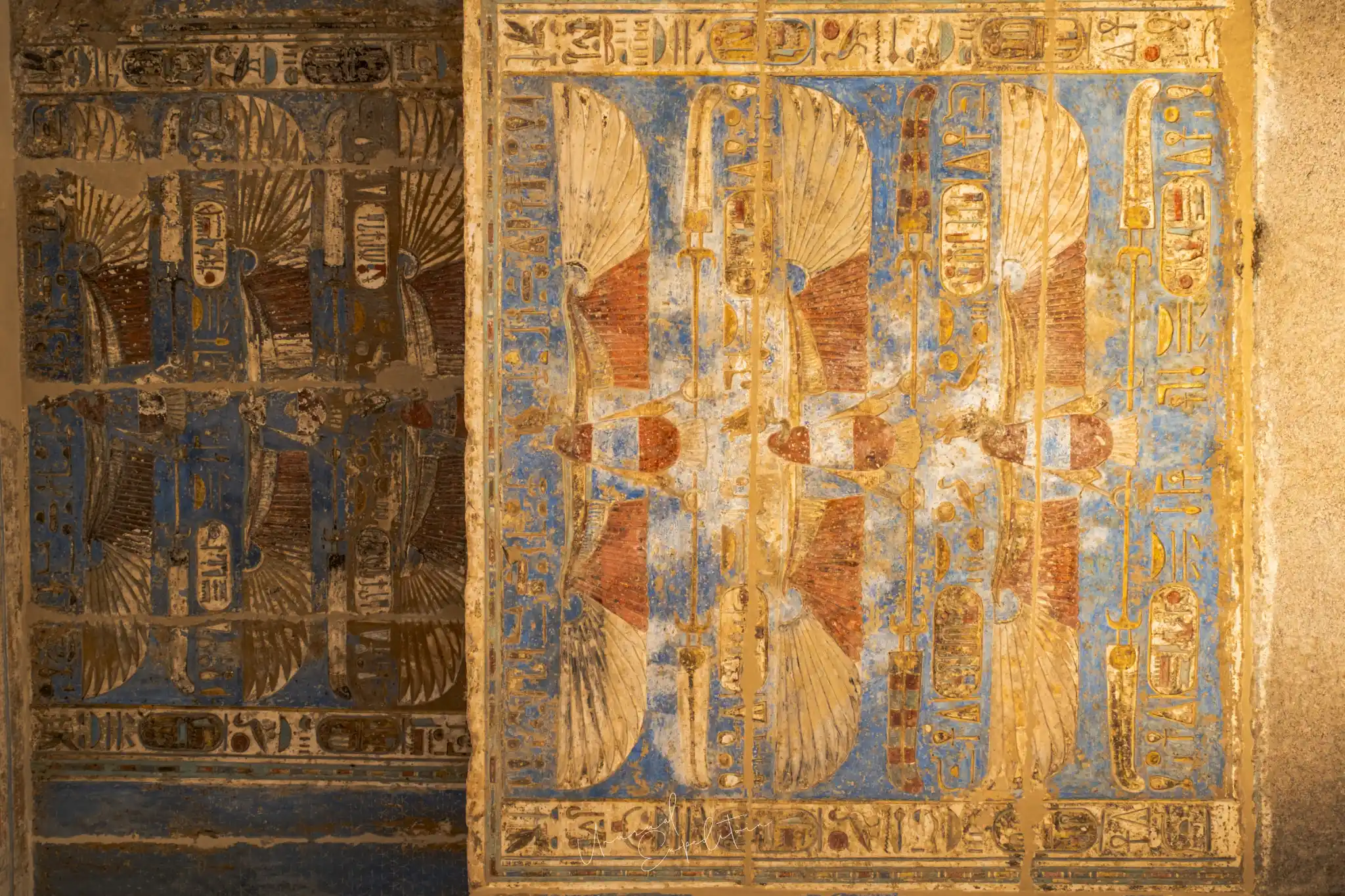
Medinet Habu temple, the mortuary temple of Ramesses III on the West Bank of Luxor, is the place to photograph ancient Egyptian colour. Its inner courts still carry painted reliefs in blue, red, ochre and white, its walls are cut deep with scenes of battles and gods, and it sees a fraction of the visitors who crowd Karnak or the Valley of the Kings. For a photographer that combination of colour, depth of carving and quiet makes it the best-kept temple in Luxor.
Medinet Habu is one of the West Bank subjects in our Luxor photography tour guide. Here we look at what to photograph inside, how the light moves through the courts and where the temple fits in a West Bank morning.
Habu temple Luxor: what it is
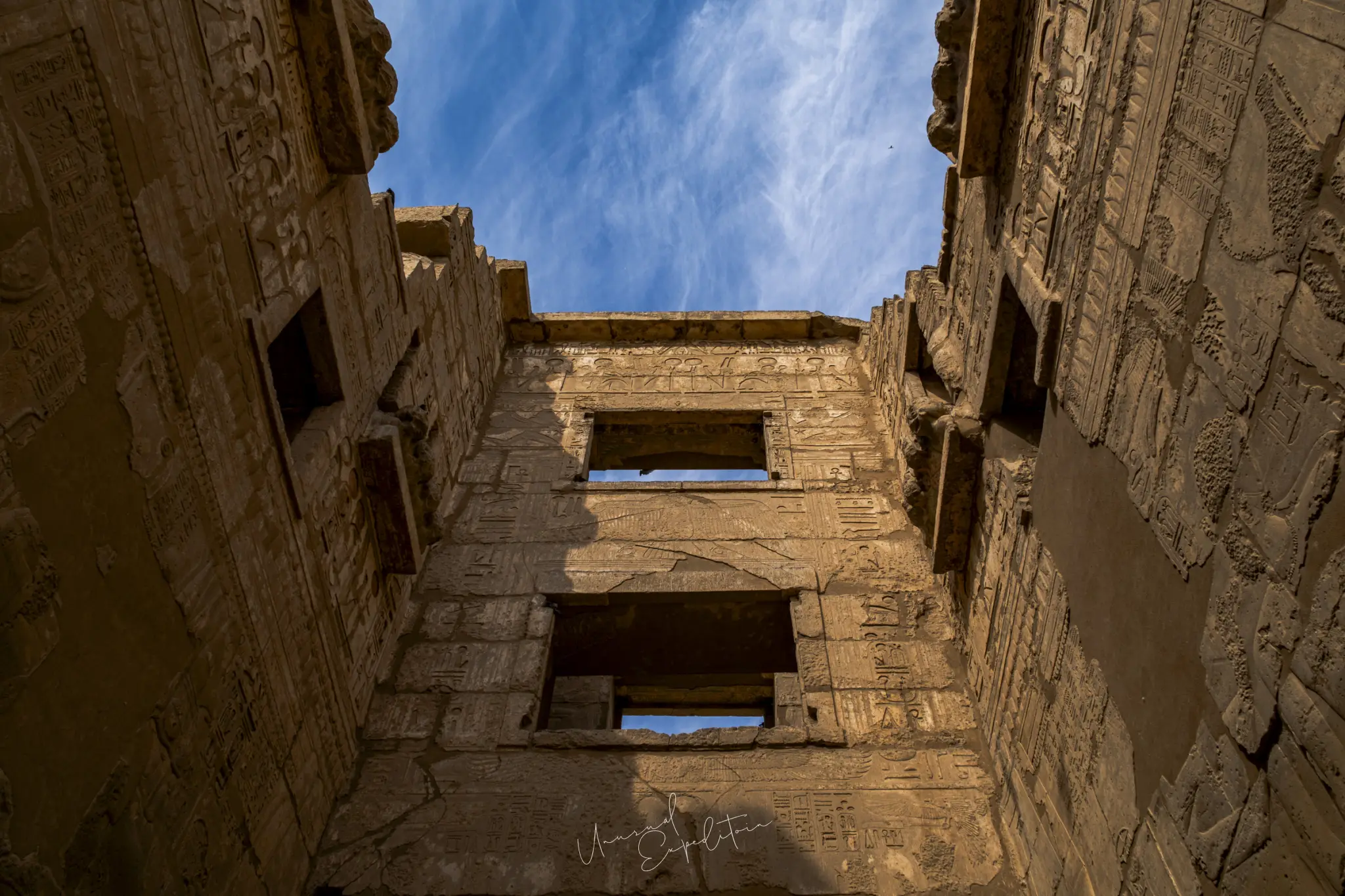
Habu temple in Luxor, properly Medinet Habu, was built for Ramesses III as his mortuary temple, the place where his cult would continue after his death, and it sits at the southern end of the line of temples along the edge of the Theban desert. Behind a high mud-brick enclosure wall, a fortified gatehouse leads to the first pylon, then two great courts lined with columns and pillars, and then the halls that once held the sanctuary. The University of Chicago's Epigraphic Survey has spent decades recording every wall of the temple in drawings and photographs, and its published volumes are the scholarly record of the site. Over the centuries a Coptic town grew up inside the walls, which helped protect parts of the decoration from the weather.
Medinet Habu reliefs: colour and carving
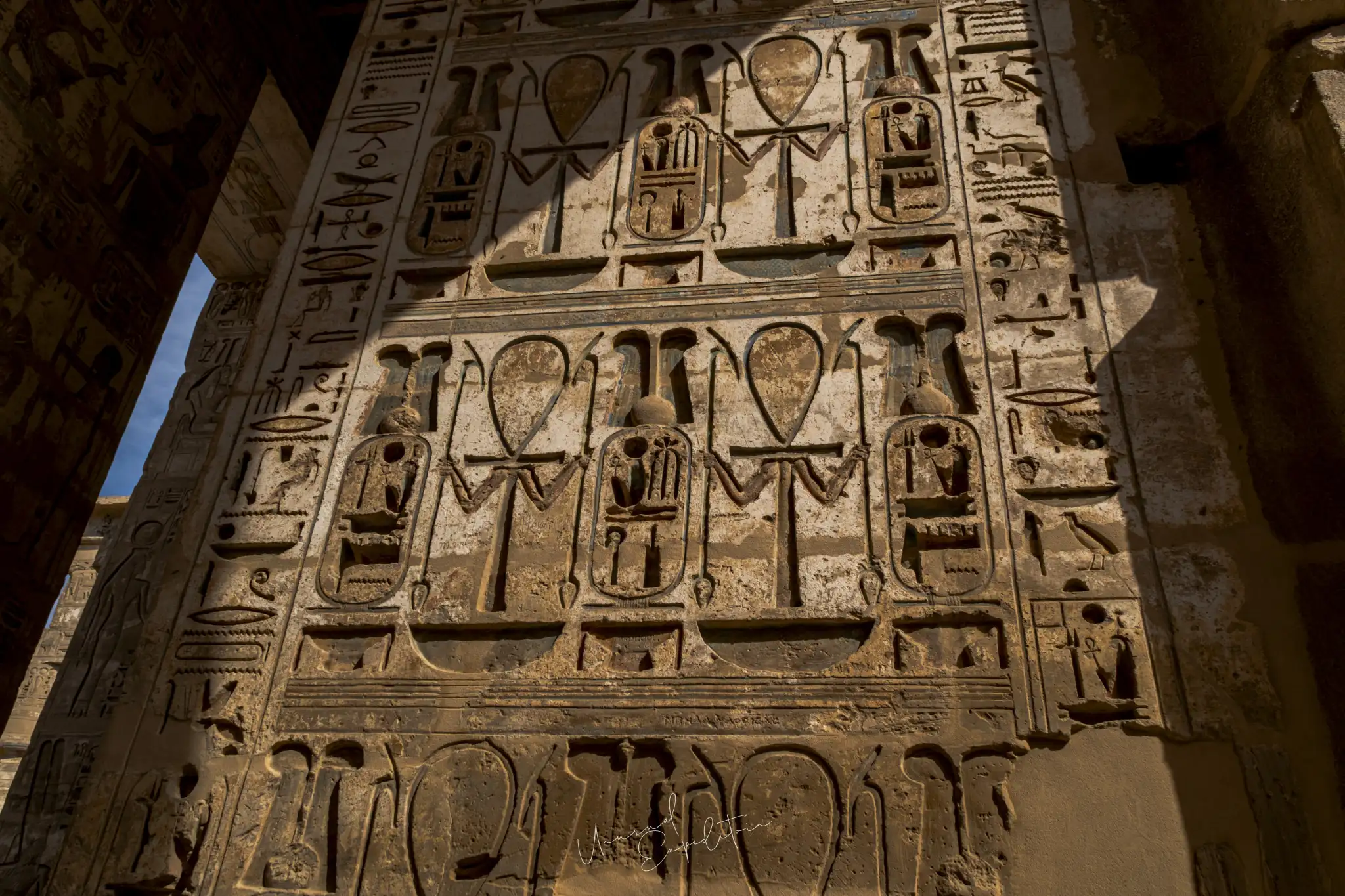
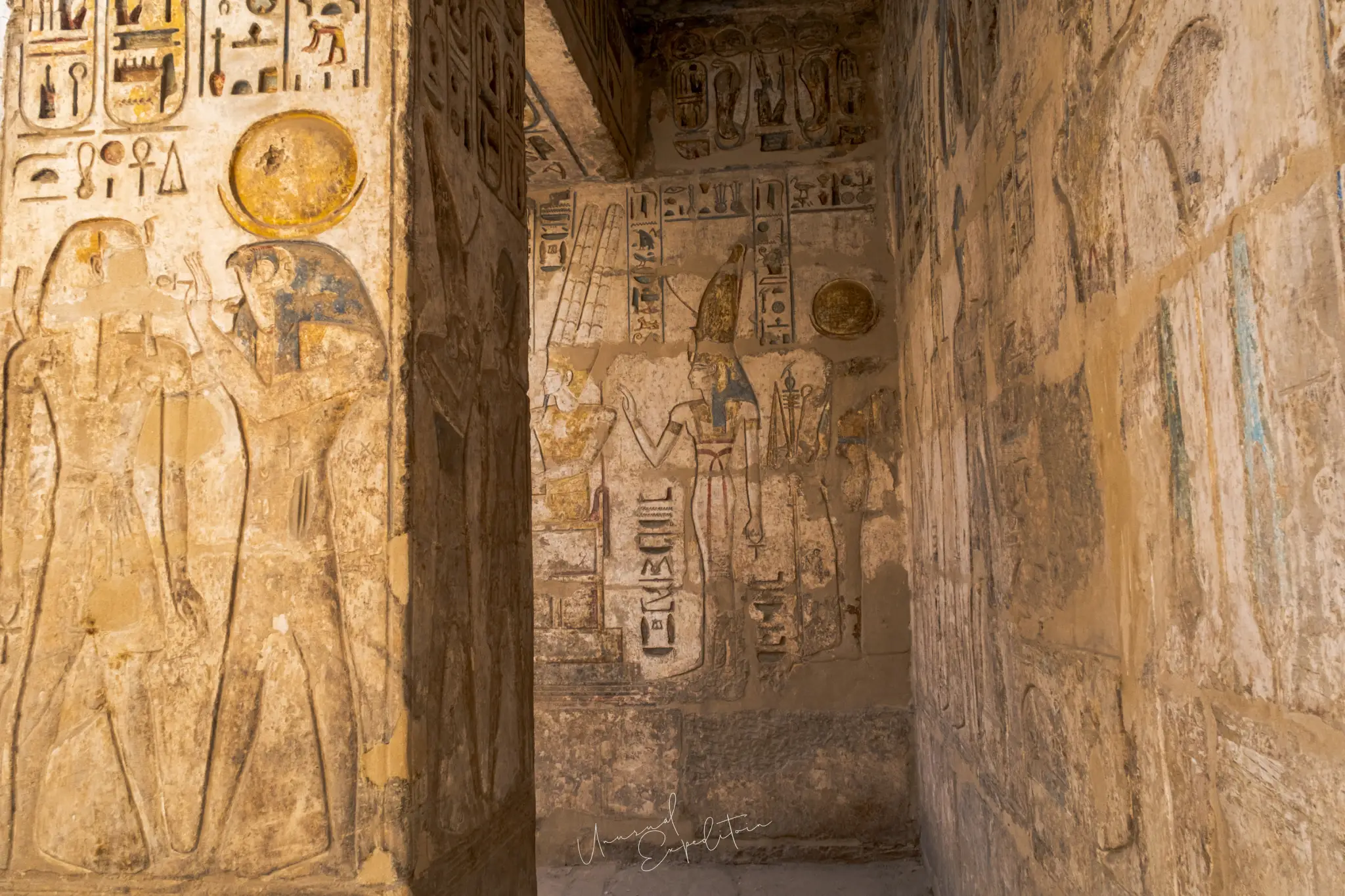
The Medinet Habu reliefs are of two kinds, and both photograph well. On the outer walls and the pylons the carving is deep sunk relief, cut so far into the stone that the figures hold strong shadows even in flat light; the famous scenes of Ramesses III fighting the Sea Peoples, including the naval battle, are on the outer face of the north wall. In the inner courts and passages the colour survives: kings and gods in blue and red, rows of cartouches, vultures with their wings spread across ceilings and lintels. The Memphis Institute of Egyptian Art and Archaeology notes that sunk relief was quicker to cut, and here it has also lasted. Frame the colour tight. A longer lens and a step back let you fill the picture with one painted figure, and the reflected light inside the courts is soft enough to keep the pigment from burning out.
Light in the courts
Medinet Habu faces east, so morning sun enters the gate and the first court while the inner courts stay in shade. The best colour comes from that shade: sun bouncing off the pale floor and the opposite wall lights the painted pillars without harsh contrast. By midday the open courts turn into hard light and black shadow, which suits graphic pictures of columns and pillars but not the paintwork. The first pylon faces east and takes the morning sun on its giant figures of the king, while the north outer wall with the Sea Peoples scenes sees little direct sun; there the carving is deep enough to read by its own shadows in soft, even light at any hour. For most visitors the temple fits after the Valley of the Kings or Hatshepsut's temple, which is when the inner courts are at their gentlest.
| Part of the temple | What to photograph | Light |
|---|---|---|
| Fortified gate | Towers and windows looking up | Morning, sky behind |
| First pylon | Giant figures of the king | Morning sun on the east face |
| North outer wall | Sea Peoples battle reliefs | Soft, even light, any hour |
| Second court | Painted pillars and figures | Mid-morning, reflected light |
| Passages and doorways | Ceilings, vultures, cartouches | Any time, shade |
The painted second court rewards patience more than any other part, so leave most of your time for it.
Is Medinet Habu temple worth it?
For a photographer Medinet Habu is worth the visit more than almost any other site on the West Bank. Karnak is bigger and the tombs are more famous, but nowhere else in Luxor gives you painted colour, deep carving and space to work without people in every frame. The guardians who look after the courts are used to photographers; some will offer to show you a corner or pose by a column, and a small tip is expected if they do. Ask before you photograph anyone, and keep it light.
Camera settings in the painted courts
The painted courts of Medinet Habu are bright at the edges and dim in the corners, which can fool a camera into washing out the colour. Expose for the painted figure, not for the sky in the corner of the frame, and if anything underexpose a little to keep the blues and reds saturated. A white balance set to shade or cloudy warms the stone gently without turning the blue green. In the side aisles, raise the ISO rather than slowing the shutter, because there is little room to brace and the guardians will not welcome a tripod. A polariser helps outside on the battle reliefs, cutting the glare off the stone and deepening the sky above the pylon.
"Medinet Habu is the temple I keep for the end of a West Bank morning, when everyone is tired of tombs. Then they walk into the second court, see the blue on the pillars, and the cameras come out again."
Joseph Mak, tour leader, Unusual Expedition
Practical notes
Medinet Habu is in the south of the West Bank near the village of Kom Lolah, a short ride from the other temples. Check at the West Bank ticket office whether the ticket is sold there or at the gate, as arrangements change. Personal photography without flash is allowed under the Supreme Council of Antiquities rules. Bring water and a hat; the outer courts are open to the sun. Our West Bank of Luxor guide covers the sites around it, and the Luxor hot air balloon flight often passes over the temple at sunrise.
Photograph Medinet Habu with us
We photographed Medinet Habu on our own Egypt trip. Our scheduled Egypt Photo Tour covers the West Bank of Luxor, Karnak, Aswan, Abu Simbel, Cairo and Giza, and we can arrange extra time at Medinet Habu on a private trip. See the Egypt photography tours page for the current departure.
Join the Luxor photography tour
Egypt Photo Tour – Egypt departs 12 Dec 2026 To 20 Dec 2026, led by Joseph Mak. Small group, photography first. All Luxor photography tours.
Explore Luxor in depth
- Luxor Photography Tour Guide: Karnak, the West Bank and the BalloonsEgypt
- West Bank of Luxor: Hatshepsut, the Valley of the Kings and Medinet HabuEgypt
- Luxor Temple Photos: Columns, Reliefs and the LightEgypt
- Luxor Hot Air Balloon at Sunrise: A Photographer's GuideEgypt
- Karnak Temple Hypostyle Hall: Photographing the ColumnsEgypt
- Best Time to Visit Luxor for Photography: Weather and LightEgypt
Upcoming Photo Tours
- Egypt Photo Tour – EgyptEgypt 12 Dec 2026 To 20 Dec 2026
- Inner Mongolia Winter Owl Photo Tour – ChinaChina 01 Jan 2027 To 04 Jan 2027
- Inner Mongolia Winter Photo Tour – ChinaChina 05 Jan 2027 To 11 Jan 2027
- Mekong And Central Highland Vietnam Photo Tour - VietnamVietnam 16 Jan 2027 To 24 Jan 2027