
Mui Ne Photo Spots and Phan Rang Viewpoints: Where to Stand on the Coast
Mui Ne things to do with a camera: the fishing village, dunes, Ke Ga, Bau Truc, Po Klong Garai, Vinh Hy bay and salt flats, with light.
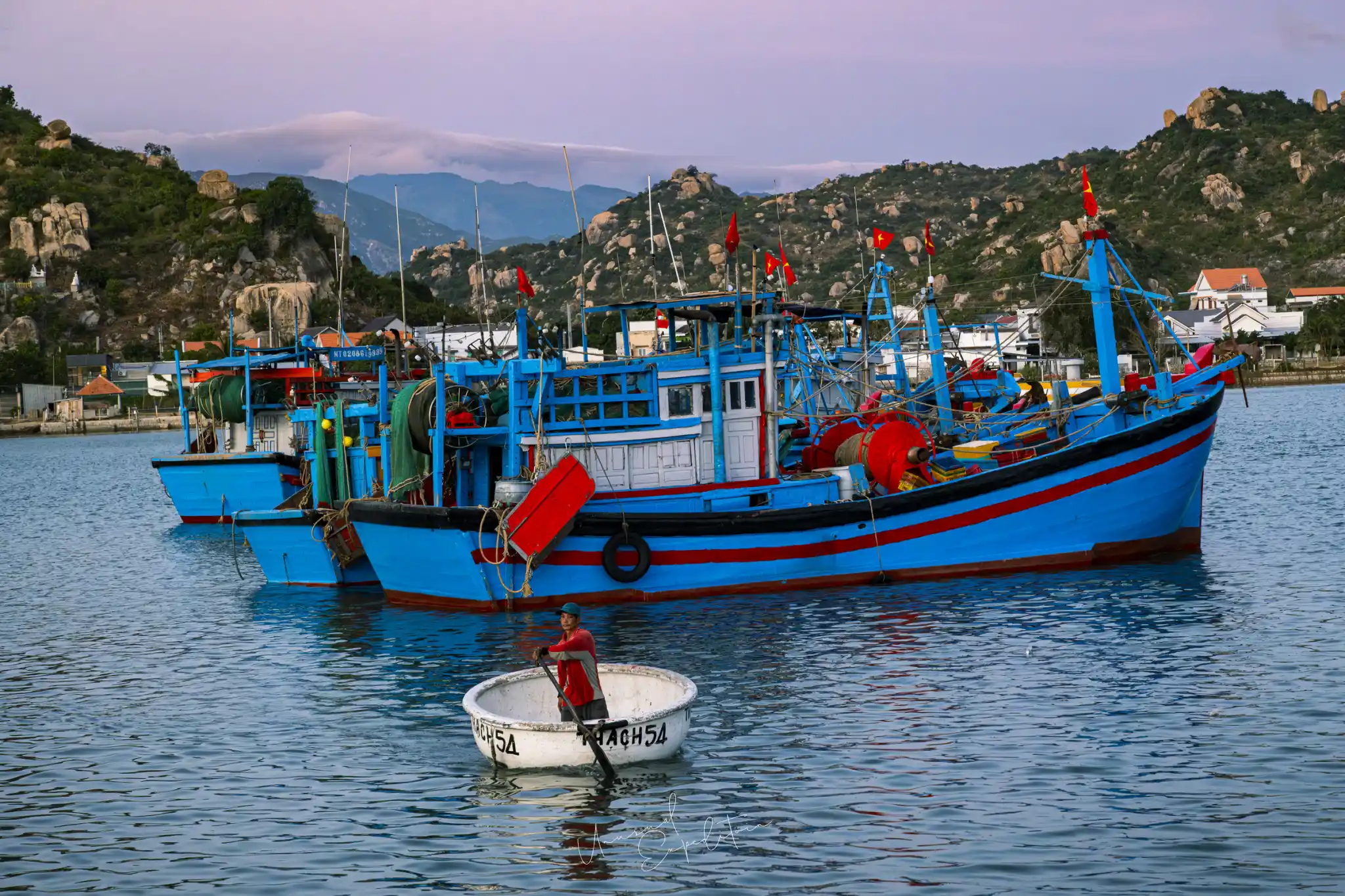
For a photographer, the Mui Ne things to do that matter most are the Mui Ne fishing village at dawn, the red and white sand dunes at sunrise, the granite shore and lighthouse at Ke Ga, and further north around Phan Rang, the Cham potters of Bau Truc, the towers of Po Klong Garai, the salt flats and the fishing boats of Vinh Hy bay. The coast rewards the two ends of the day; the middle hours are hot, bright and flat.
This is the spot list for our Mui Ne and Phan Rang photography tour guide: where to stand, which way the light falls, the lens and the crowds. Spots we have photographed lead each section with our own frames; others are described from public information. Since mid 2025 Mui Ne has been part of an enlarged Lam Dong province and Phan Rang part of an enlarged Khanh Hoa, though the old names are still used everywhere on the ground.
Where is Phan Rang, and how the coast fits together
Mui Ne is a beach town east of Phan Thiet on the south central coast, with its fishing harbour at the eastern end and the dunes behind. Ke Ga cape lies to the south of Phan Thiet. Phan Rang is further north, a dry, sunny plain between mountains and sea with vineyards, salt fields, Cham villages and the Nui Chua coast. The coast is driest roughly from December to April, which also brings the clearest skies.
Mui Ne fishing village at dawn
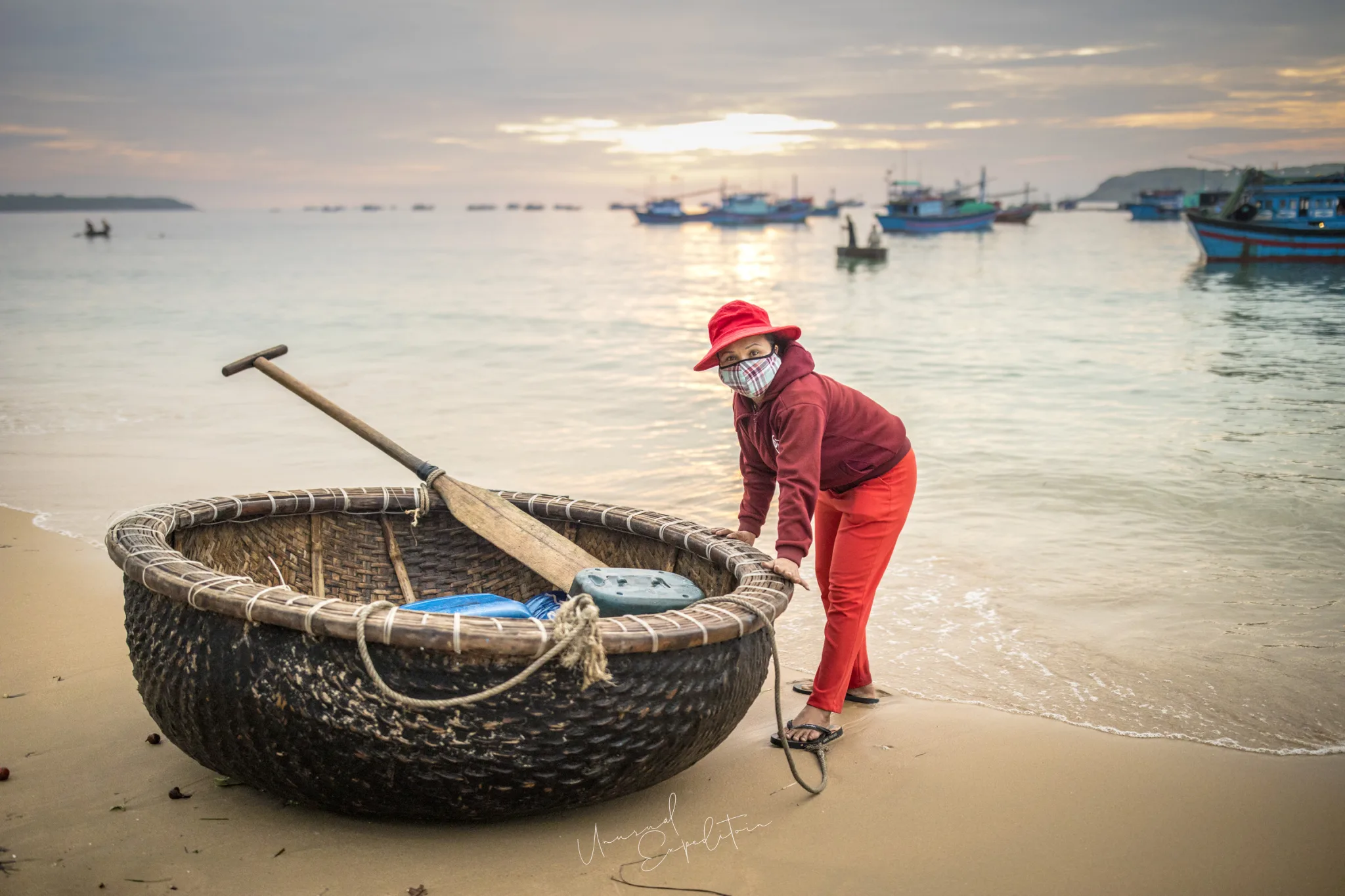
The Mui Ne fishing village is the coast's best known morning scene. Blue boats anchor in the bay, and as the sun comes up behind them round basket boats ferry the catch to the beach, where the morning market trades seafood by the basket. The sun rises over the sea, so the fleet is backlit: expose for the sky for silhouettes, or turn your back to the sun and use the warm light on the faces sorting the catch. A 24-70mm covers the beach and a 70-200mm picks faces from the waterline. Stay out of the way of the baskets coming ashore, and do not stand in a basket boat for a picture; the Vietnam Airlines travel guide also advises life jackets on the water. Our full piece is Mui Ne fishing village.
The red and white sand dunes
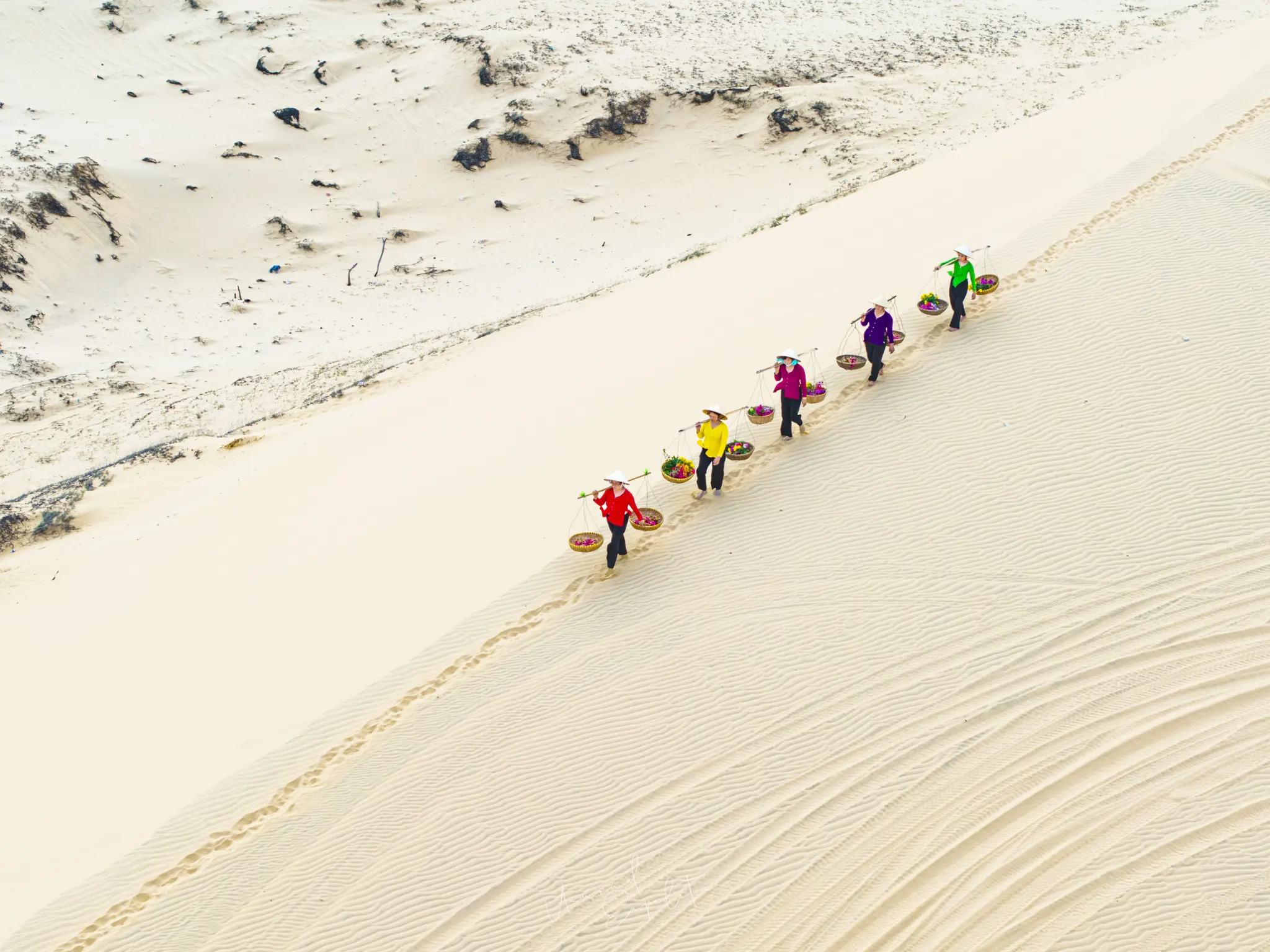
Mui Ne has two dune fields: the red dunes close to town and the larger white dunes of Bau Trang further northeast, beside a lotus lake. Both are best at sunrise, when the low light sculpts ripples and ridges and the sand is still cool. By mid morning the light flattens and jeeps and quad bikes cover the slopes with tracks. Climb high early, use a 70-200mm to compress ridge lines and a 24-70mm for wide views. Many of the dune pictures with women carrying baskets are arranged scenes set up for photographers, and we caption them that way. More is in Mui Ne sand dunes.
Ke Ga cape and lighthouse
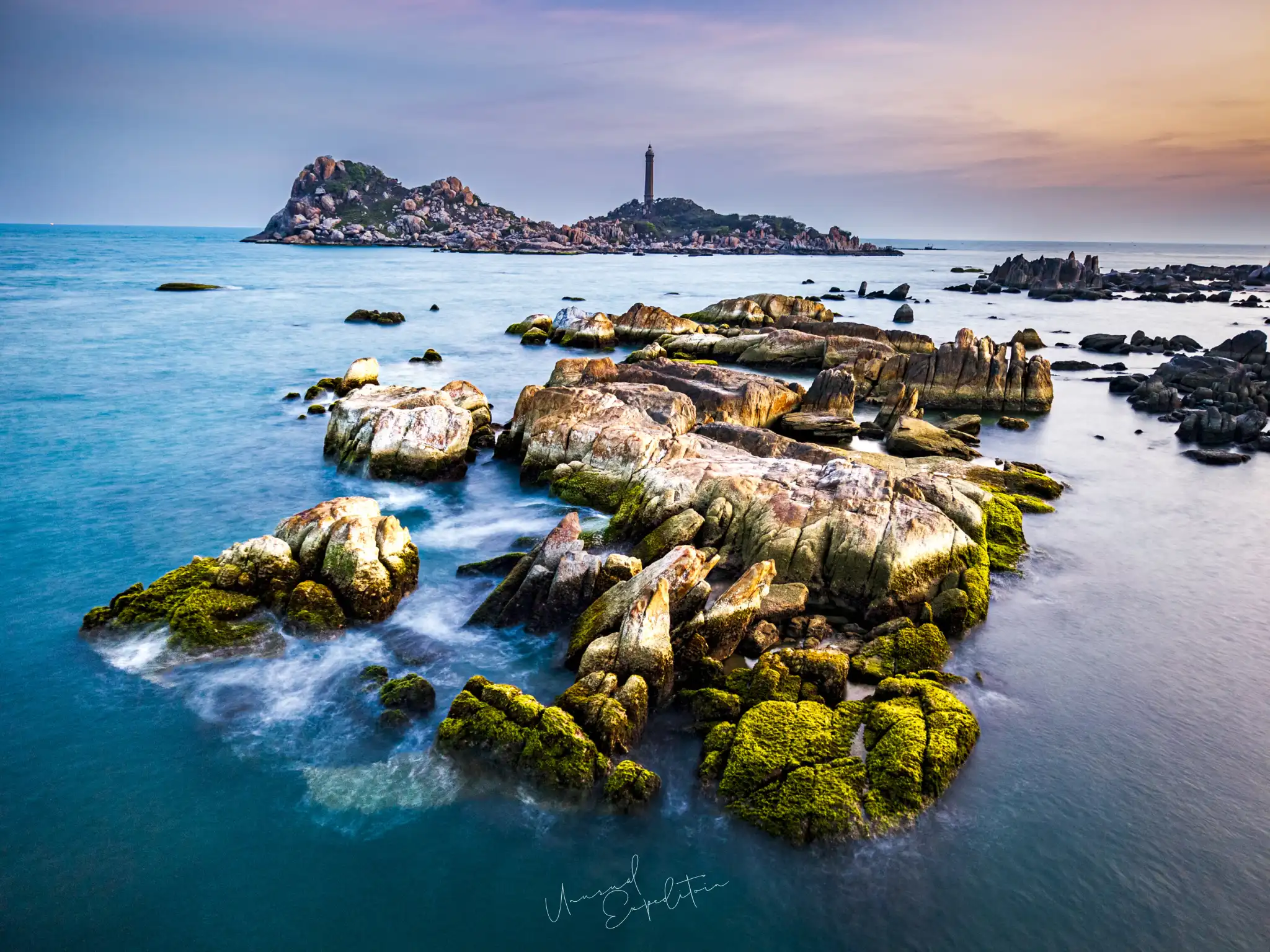
Ke Ga lighthouse, built by the French and often called the oldest in Vietnam, stands on a small island off a cape of banded granite boulders. At low tide the rocks are exposed and the shore becomes a foreground of moss-green and golden stone. Sunrise lights the boulders from the sea; dusk gives a soft sky behind the lighthouse. A tripod and a slow shutter smooth the water around the rocks. Check the tide before you go and watch your footing on wet granite. Our frames and notes are in Ke Ga lighthouse.
Bau Truc pottery village
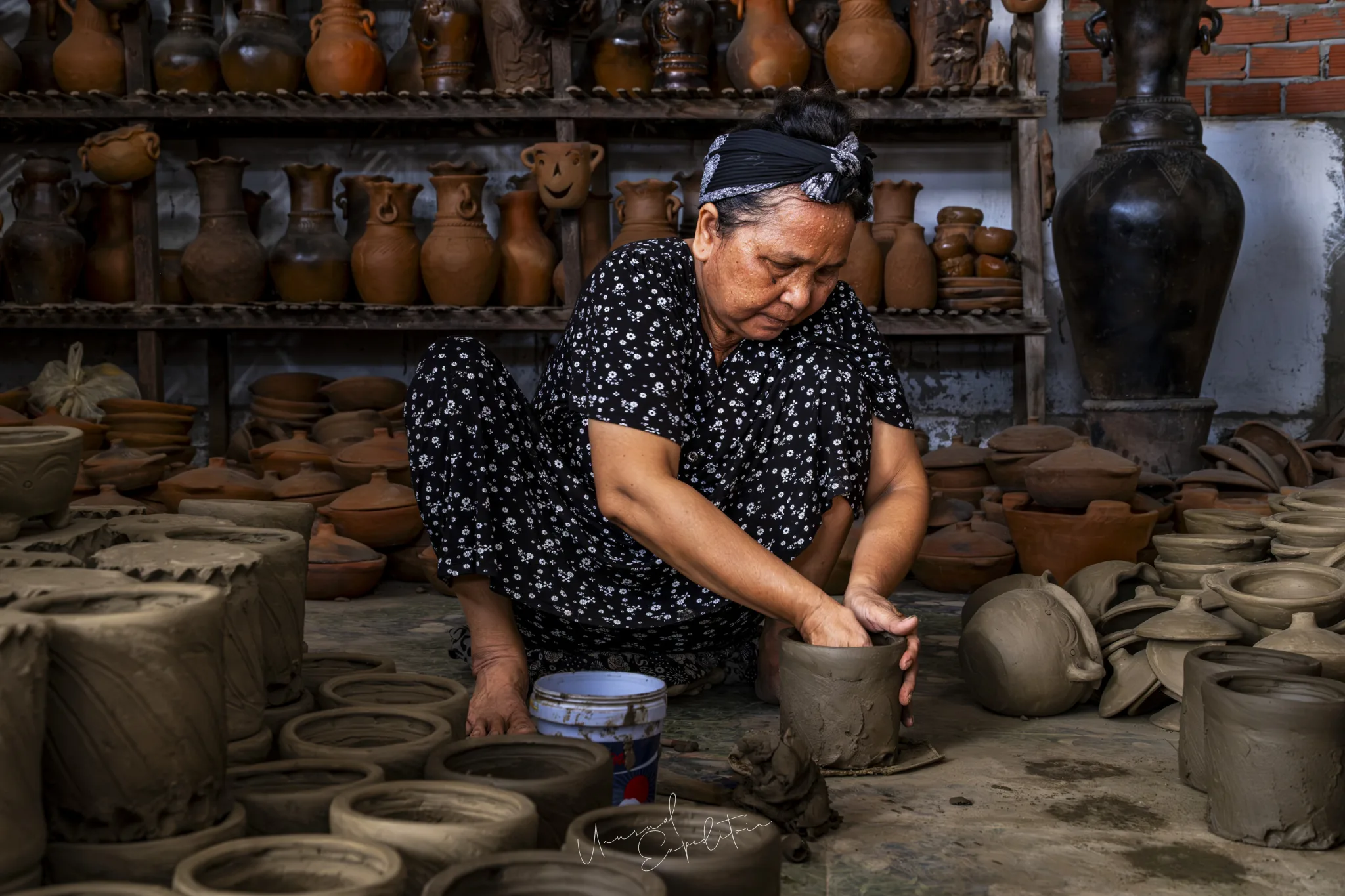
Bau Truc, near Phan Rang, is a Cham pottery village where women build pots by hand, walking around the clay instead of turning a wheel, and fire them in the open. The art of pottery making of the Cham people was inscribed on UNESCO's list of intangible heritage in need of urgent safeguarding in 2022. Inside the workshops the light comes from the door and falls on hands and clay; a 24-70mm at a wide aperture is enough. Buy a piece, ask first and keep the visit short. Our page is Bau Truc pottery village.
Po Klong Garai Cham towers
Po Klong Garai, on a hill outside Phan Rang, is a group of three brick towers built in the late 13th century, according to the Khanh Hoa tourism portal. Late afternoon gives warm light on the brick and a view over the plain. The Kate festival is held here around September or October, following the Cham calendar; check the dates locally. Dress modestly in the sanctuary and ask before photographing ceremonies.
Vinh Hy bay and the Nui Chua coast
Vinh Hy bay, inside Nui Chua National Park, which UNESCO recognised as a world biosphere reserve in 2021, is a sheltered harbour ringed by dry rocky hills. Blue fishing boats moor in the bay, and basket boats move between them. The feature frame at the top of this page was made here in the evening, when the hills turn soft and the boats still catch the light. A 24-70mm from the harbour wall works; the coast road above gives wider views.
Salt flats around Phan Rang
The salt fields at Ca Na and around Phan Rang are worked in the dry season, and the workers start early to avoid the heat. Raking and carrying happen at first light, when the pans reflect the sky. These are working fields, so ask before you walk onto the dykes and keep off the pans.
Mui Ne and Phan Rang photo spots at a glance
| Spot | Best light | Lens |
|---|---|---|
| Mui Ne fishing village | Sunrise | 24-70mm, 70-200mm |
| Red and white dunes | Sunrise | 70-200mm |
| Ke Ga cape | Sunrise or dusk, low tide | 24-70mm, tripod |
| Bau Truc | Daytime, door light | 24-70mm |
| Po Klong Garai | Late afternoon | 16-35mm |
| Vinh Hy bay | Evening | 24-70mm |
| Salt flats | First light | 70-200mm |
Four of these are sunrise spots, so the coast is best covered over several mornings, not one long day.
On this coast the alarm clock is the most important piece of kit. The boats, the dunes and the salt workers all happen at first light, and by the time it is warm the pictures are over.
Joseph Mak, tour leader, Unusual Expedition
Photograph this coast with us
Mui Ne, Ke Ga and Phan Rang are part of our Vietnam coast departures. Find the current dates on the Vietnam photography tours page.
Join the Mui Ne and Phan Rang photography tour
Mekong And Central Highland Vietnam Photo Tour - Vietnam departs 16 Jan 2027 To 24 Jan 2027, led by Joseph Mak. Small group, photography first. All Mui Ne and Phan Rang photography tours.
Explore Mui Ne and Phan Rang in depth
- Mui Ne and Phan Rang Photography Tour Guide: Dunes, Fishing Coast and Cham CountryVietnam
- Phan Rang Vietnam Photos: Sheep, Rice Paper, Dragon Temples and Vinh Hy BayVietnam
- Mui Ne Sand Dunes: White Dunes at Sunrise, Red Dunes at SunsetVietnam
- Mui Ne Fishing Village: the Basket Boat Landing at SunriseVietnam
- Ke Ga Lighthouse: Photographing the Granite Cape at Dawn and DuskVietnam
- Is Mui Ne Worth Visiting? A Photographer's AnswerVietnam
- Bau Truc Pottery Village and Po Klong Garai: Photographing Cham Phan RangVietnam
- Vietnam Salt Fields and Fishing Villages: Photos from the South Central CoastVietnam
Upcoming Photo Tours
- Egypt Photo Tour – EgyptEgypt 12 Dec 2026 To 20 Dec 2026
- Inner Mongolia Winter Owl Photo Tour – ChinaChina 01 Jan 2027 To 04 Jan 2027
- Inner Mongolia Winter Photo Tour – ChinaChina 05 Jan 2027 To 11 Jan 2027
- Mekong And Central Highland Vietnam Photo Tour - VietnamVietnam 16 Jan 2027 To 24 Jan 2027