
Nenets Camp Photo Spots: Where to Stand Between the Chum and the Herd
Nenets camp photo spots: inside the chum, the doorway at blue hour, the corral at first light, the sledges and the larch.
A Nenets camp in late winter gives a photographer seven places worth knowing: the warm, dim inside of the chum, its doorway at blue hour, the corral when the herd is driven in at first light, the line of sledges where reindeer are harnessed, the woodcutting ground in the larch, the snow pit where water is cut, and the open tundra where the teams leave. Each is a part of daily work, and the best frames come from knowing where to stand without getting in the way.
We photographed one herding family's winter camp among the larch of the forest-tundra, on a private visit in March. For the people, the season and the trip, start with our Nenets photography tour guide; for how the camp works day to day, read Nenets chum camp life, clothing and food.
Nenets camp photo spots at a glance
The Nenets are an Indigenous Samoyedic people of the Russian Arctic, just under 50,000 at the 2021 Russian census, and many still herd reindeer between winter pastures in the southern forest and summer pastures on the Yamal Peninsula. A camp is small: a few chums, the sledges, the herd nearby. The table sorts its photo spots by subject and light.
| Spot | Subject | Best light | Lens |
|---|---|---|---|
| Inside the chum | Sewing, cooking, family life | Lamplight and the smoke hole | 35mm to 45mm, fast aperture |
| Chum doorway | Lantern against a blue tent | Blue hour | 24-70mm |
| The corral | The herd in haze, the herder in it | First light, low sun | 24-70mm, 100-400mm |
| Sledge line | Harnessing, lassoes, antlers | Low sun, backlight | 35mm, 24-70mm |
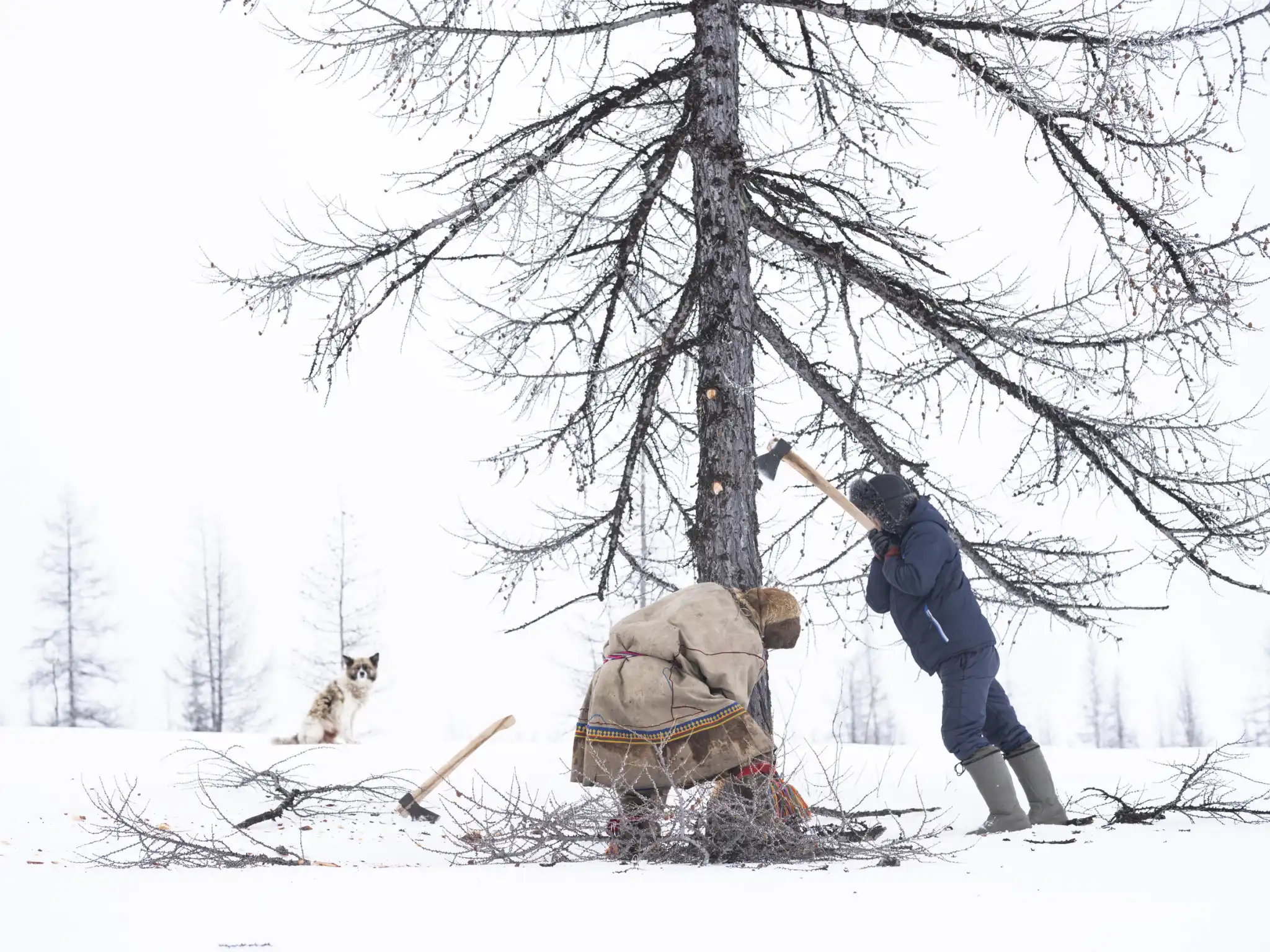
| Woodcutting ground | Felling larch, dogs, snow | Soft overcast | 24-70mm |
| Water pit | Cutting snow blocks | Any soft light | 24-70mm |
| Open tundra | Teams leaving, the herd spread out | Clear morning | 70-200mm, 100-400mm |
Most of the day the light in March is low and soft, which suits people and animals better than the hard sun of later spring.
Inside the chum
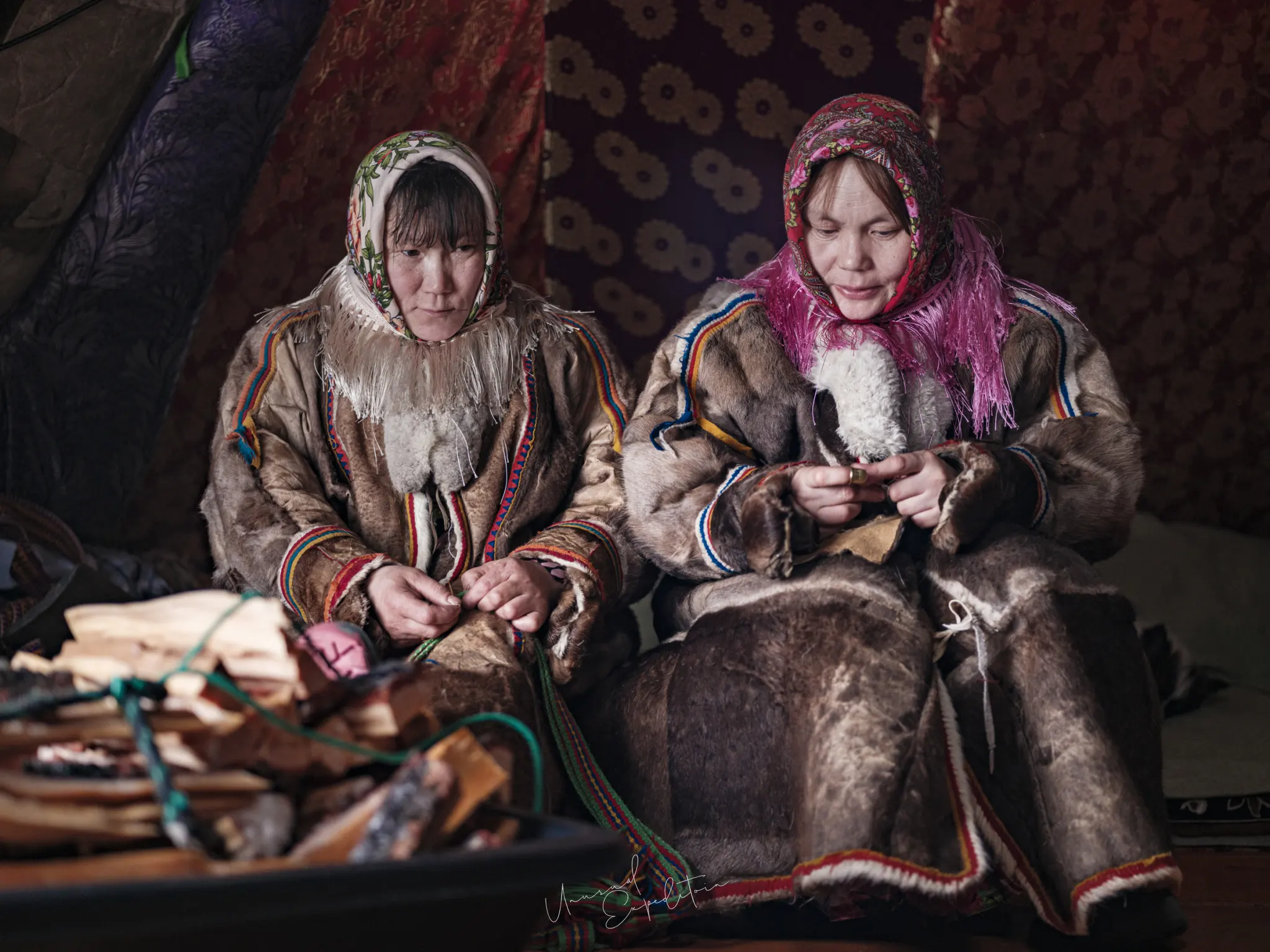
The chum is the Nenets cone tent, covered in reindeer skins over a frame of poles, and inside it is warm, dim and full of life. Women sew clothing and covers on the floor by lamplight, in fur coats and bright headscarves, and the tea is always on. Light comes from the lamp, the stove and the smoke hole at the top, so open the aperture, raise the ISO and keep the camera still against your knee. A 35mm or 45mm prime is the right length: wide enough for the space, close enough for hands at work. Sit down rather than stand, because a standing photographer fills the tent. Ask before every picture, and if the answer is no, put the camera away and simply enjoy the tea. Our guide to photographing Nenets people with respect goes into the etiquette.
The chum doorway at blue hour
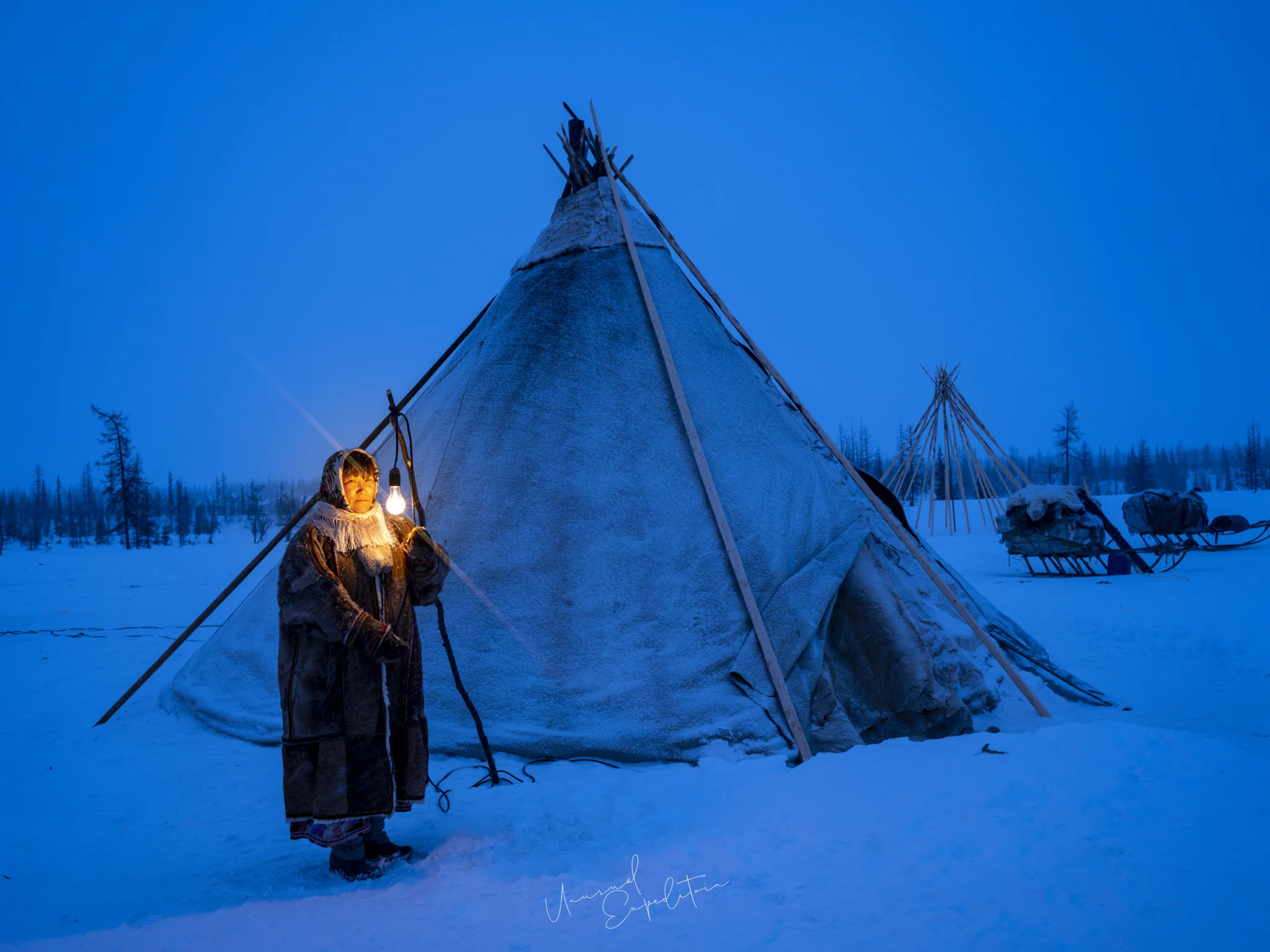
When the sun has gone, the snow and the skin covers turn deep blue, and a lantern or a bulb at the doorway glows warm against them. That colour contrast lasts only a short while. Stand back with a 24-70mm so the whole cone, the poles and the sledges beside it are in the frame, and let the person with the light stay small. A tripod helps, but the scene changes quickly as people come and go, so be ready to shoot handheld at a high ISO. Keep your own light off: a headlamp in your hand spoils everyone's picture.
The corral at first light
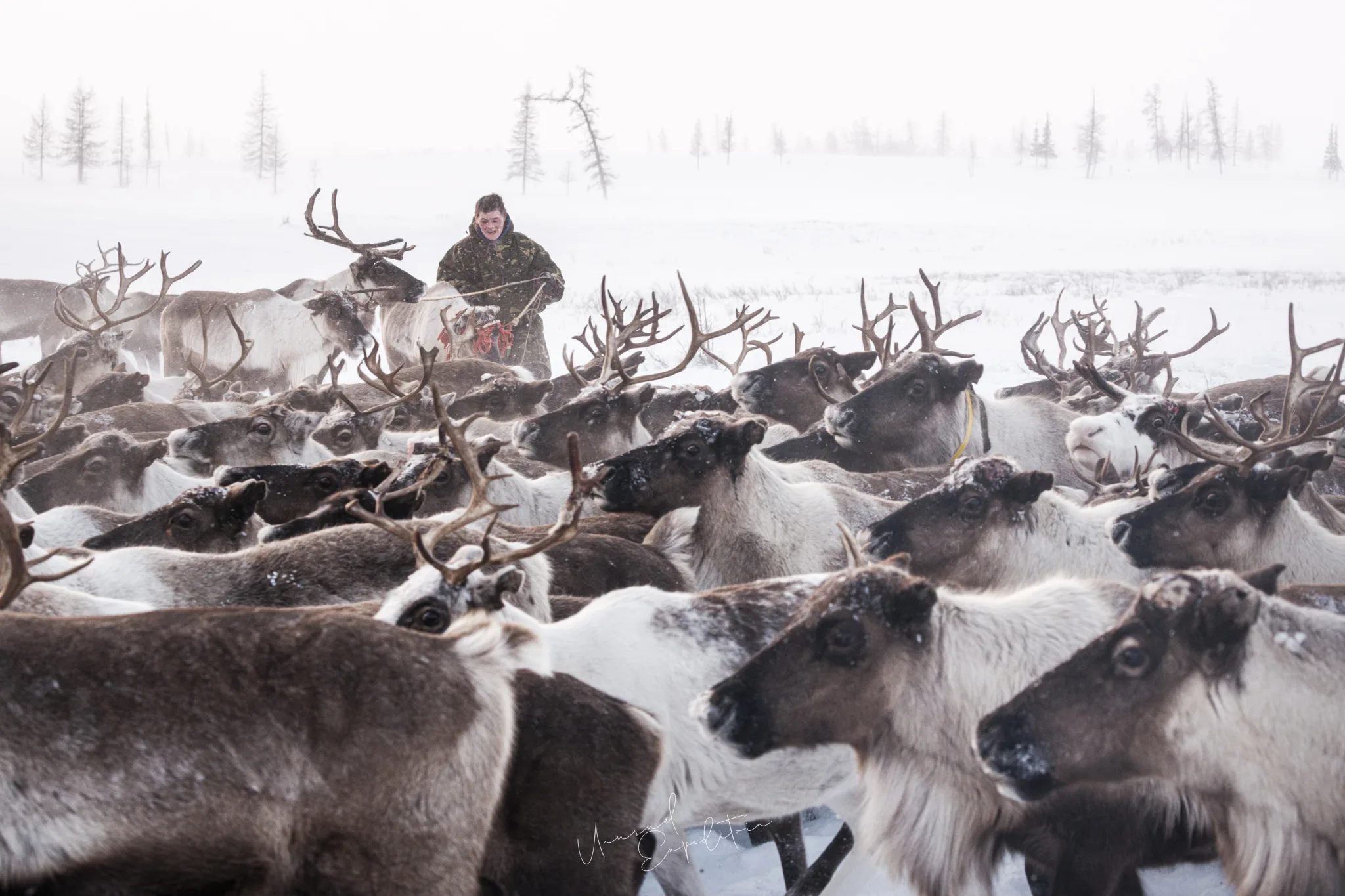
In the morning the herders drive the herd into a loose corral to catch the animals they need. The whole herd circles together, breath steaming, antlers everywhere, and haze and blowing snow soften everything behind them. Stand outside the ring, on the side where the low sun is behind the herd or slanting across it, so the steam and the snow catch the light. A 24-70mm gives the sea of antlers with a herder in the middle; a 100-400mm picks out single faces. Never walk into the circling herd. The herders are working, and a stranger in the ring scatters the animals they are trying to catch. Our Nenets reindeer herding photography article covers the herding itself.
The sledge line where teams are harnessed
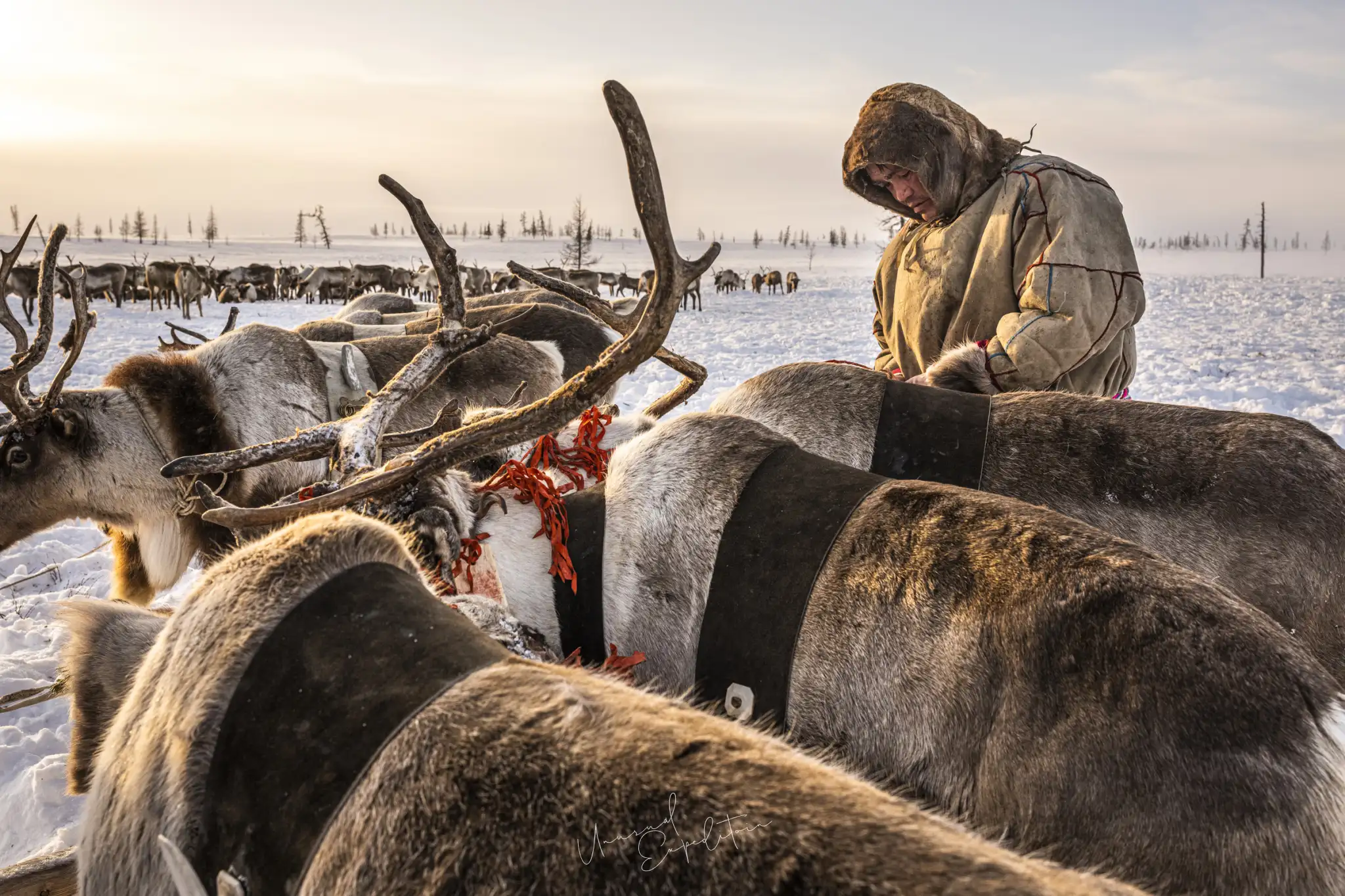
The wooden sledges, the narty, stand in a row near the chums, some loaded under covers, some ready for the day's work. Here the herders lasso reindeer, bring them in and harness them to the sledges, and you can come closer than at the corral, as long as you stay out of the line of the lasso. With the sun low behind the team, the fur, the antlers and the breath are rimmed in gold. A 35mm close to the antlers gives depth, with the herder's hands busy at the harness behind them. Watch the antlers, which swing without warning.
"In a Nenets camp you photograph work. Nobody poses, nobody waits for you. The trick is to learn the rhythm of the day, find where each job happens and be standing there, quietly, a minute before it starts."
Joseph Mak, tour leader, Unusual Expedition
The woodcutting ground in the larch
A winter camp burns a lot of wood, and the men go out among the larch to fell and split it with axe and chainsaw while the laika dogs wander around them. The bare larches against white snow make clean, almost graphic frames, especially under soft overcast light that keeps the snow from glaring. Stand back with a 24-70mm and let the tree, the worker and the dog sit in plenty of white space. Give the felling area a wide berth for safety, and if someone hands you an armful of wood, carry it: families welcome guests who help.
The water pit and the snow blocks
Water in a winter camp comes from snow and ice. Herders dig into the drifts and cut blocks with long-handled spades, then carry them back to melt on the stove. It is a short, physical scene with strong shapes: a figure bent over a spade, a stack of white blocks, the camp behind. A 24-70mm covers it. It happens at no fixed moment, so keep half an eye on the edge of camp.
The open tundra beyond the camp
When teams leave for the herd or to move supplies, the open snow beyond the chums gives the widest pictures of all: a line of reindeer pulling a sledge across an empty plain, the herd spread out among scattered larch. A 70-200mm or a 100-400mm compresses the team against the treeline. Stay near the camp unless a herder invites you along, and in a whiteout stay put. Cold is the main enemy here: keep spare batteries in an inside pocket and wear thin gloves under mittens. Our Yamal Peninsula weather and winter photography guide covers the conditions.
Practical notes for a Nenets camp
Parts of the Yamal-Nenets region are border zones that need a permit arranged through the operator weeks ahead, so a camp visit has to be planned well in advance. Drones need permission in Russia, and the family's permission as well. For entry, money and flights, read the Russia photography tour guide.
Visit a Nenets camp with us
We run the Nenets visit as a private trip and do not have a scheduled departure at present. Any dates we announce appear on our Russia photography tours page, where you can also ask us to plan a private camp visit.
Nenets photography tours
The next Nenets departure is announced on the Nenets photography tours page, with previous expeditions and all the planning guides.
Explore Nenets in depth
- Nenets Photography Tour: Visiting the Reindeer Herders of SiberiaRussia
- Yamal Peninsula Weather: Winter Light and Cold for PhotographersRussia
- Who Are the Nenets People? The Reindeer Herders of SiberiaRussia
- Photographing Nenets People: Portraits, Consent and RespectRussia
- Nenets Reindeer Herding: Photographing the Herd, the Lasso and the SledgesRussia
- Inside a Nenets Chum: Camp Life, Clothing and FoodRussia
Upcoming Photo Tours
- Egypt Photo Tour – EgyptEgypt 12 Dec 2026 To 20 Dec 2026
- Inner Mongolia Winter Owl Photo Tour – ChinaChina 01 Jan 2027 To 04 Jan 2027
- Inner Mongolia Winter Photo Tour – ChinaChina 05 Jan 2027 To 11 Jan 2027
- Mekong And Central Highland Vietnam Photo Tour - VietnamVietnam 16 Jan 2027 To 24 Jan 2027