
Ngorongoro Crater Animals: Black Rhino, Buffalo, Hyena and the Rest
Ngorongoro crater animals: what lives on the floor, the big 5, black rhino, lions and hyenas, birds and flamingos, and what is missing.
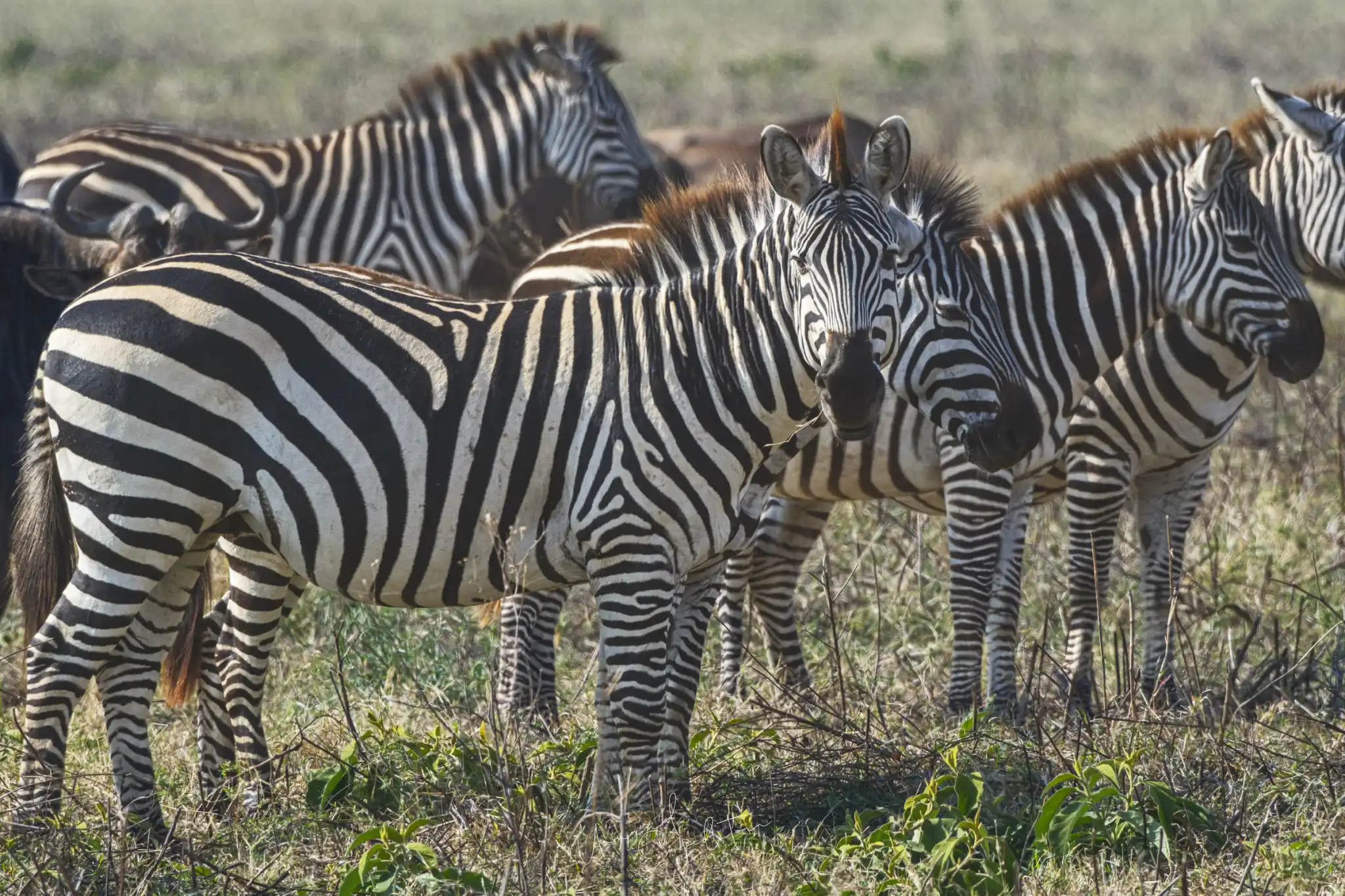
Ngorongoro crater animals are the classic East African plains species packed into one volcanic bowl: wildebeest, zebras, buffalo, gazelles, spotted hyenas, lions, a small population of black rhino, hippos in the pools, old bull elephants and a long list of birds, from crowned cranes to flamingos on the soda lake. Most of them live on the floor all year because water and grass never run out. A few familiar safari animals are missing, which surprises first-time visitors, and we list those too.
This is the wildlife chapter of our Ngorongoro photography tour guide. Below are the species we photograph on the crater floor and where on the floor we look for them.
What animals are in Ngorongoro Crater?
What animals are in Ngorongoro Crater depends a little on the season, but the residents are steady. UNESCO's description of the Ngorongoro Conservation Area counts the crater's large animals in the tens of thousands, mostly grazers, and the predators follow them. The table is our working list for a day on the floor.
| Animal | Where on the crater floor | Photo note |
|---|---|---|
| Black rhino | Open grassland, often far from the tracks | Longest lens you own, patience |
| Buffalo | Marshes and reed beds, also open grass | Low angle through the reeds |
| Zebra and wildebeest | Grassland and around the pools | Groups, patterns, dust baths |
| Spotted hyena | Short grass, near dens and carcasses | Early backlight |
| Lion | Grassland and stream beds | Often resting; wait for movement |
| Hippo | Spring-fed pools | Eyes and ears at the waterline |
| Elephant | Lerai forest and the marsh edges, mostly old bulls | Tusks against the dark forest |
| Crowned crane, egrets, flamingos | Marsh, wet grass, Lake Magadi | Expose for the whites |
Rhino and lions are the animals you plan around; everything else you will almost certainly photograph.
Ngorongoro crater big 5
The Ngorongoro crater big 5 question comes up on every trip, and the answer is four out of five on a typical good day. Buffalo, elephant and lion are all resident on the floor, and the black rhino gives the crater its reputation. The leopard is the one that rarely shows: it keeps to the forest and the slopes here, and on the open floor it is rarely seen. If the leopard matters to you, the Serengeti is the better bet, especially the trees along the rivers of the central plains; our Ngorongoro Crater vs Serengeti comparison sets out what each place does best.
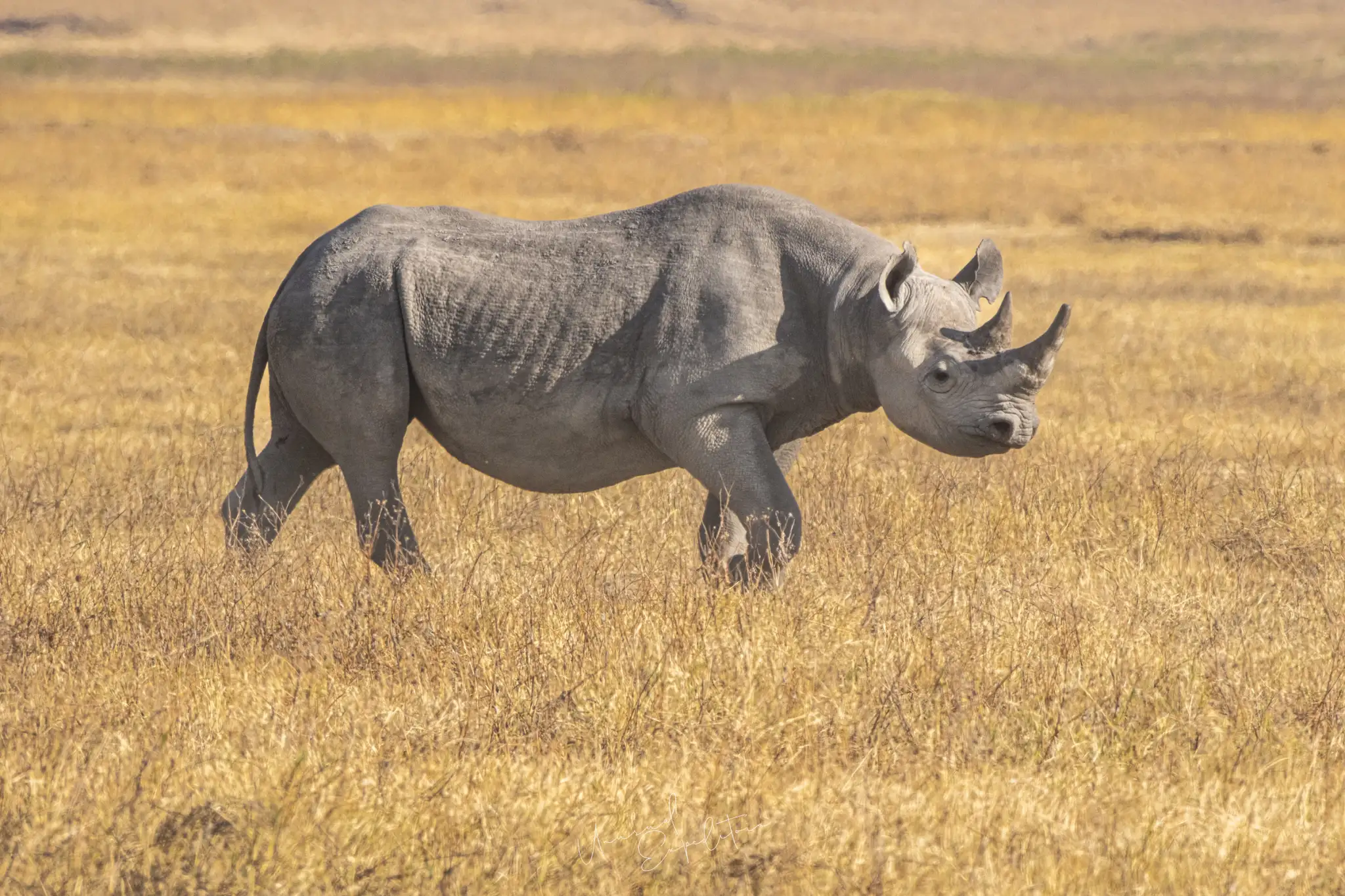
Ngorongoro crater black rhino
The Ngorongoro crater black rhino population is small and closely watched by rangers, and the crater is one of the few places in northern Tanzania where seeing one is a realistic plan. The rhino here move between the open grassland and the forest edges, and they are usually seen at a distance from the track. Once one is in view, the job is positioning: ask your driver to stop where the animal is walking toward or parallel to the track, switch off, and wait. Side-on frames show the two horns and the body shape; head-on frames need the animal to lift its head. The rule of no more than five vehicles at one animal keeps most sightings calm.
Ngorongoro crater lions and hyenas
Ngorongoro crater lions are big, well fed and used to vehicles, and like lions everywhere they spend most of the day lying down. The better pictures come at the start of the day, when prides are still moving, and around kills, where spotted hyenas arrive quickly. The hyenas in the crater are numerous and hunt for themselves as much as they scavenge; early in the morning they trot across the short grass in good light, and they are one of the easiest predators in Africa to photograph well. Our Ngorongoro crater photos page has a hyena frame and the settings we use.
Buffalo, zebras and wildebeest on the crater floor
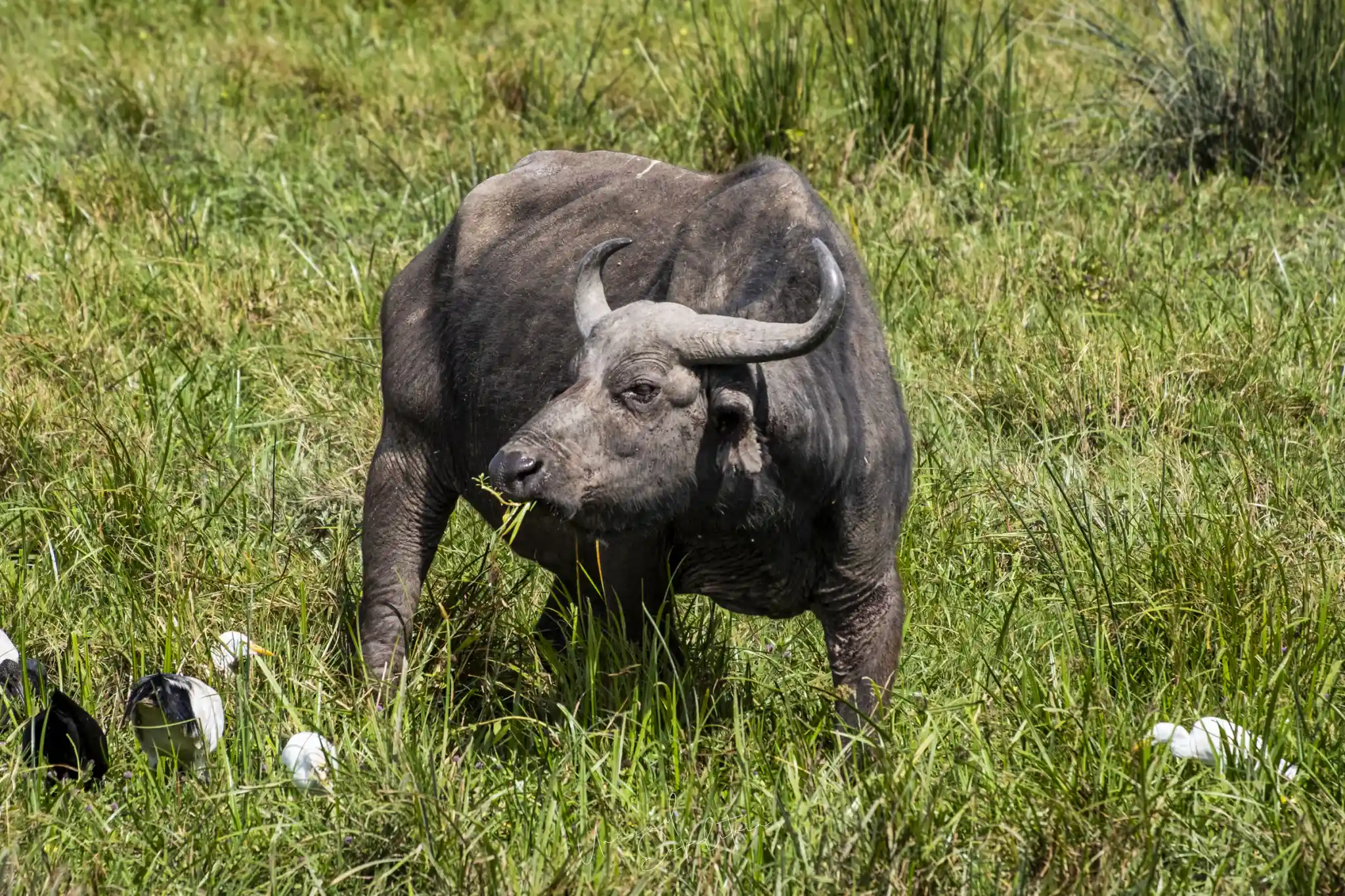
Buffalo, zebras and wildebeest make up much of the crater's animal life and most of its texture. The zebras and wildebeest graze together on the open floor and come to drink at the pools, where you can photograph them at eye level with reflections. Buffalo prefer the marshes: they stand in the reeds and mud with egrets and ibis at their feet, which gives you two subjects in one frame. These animals are not migrating, so the herds are smaller than on the Serengeti plains but closer and calmer, which suits portraits and small groups more than the big sweeping herd pictures of the migration.
Ngorongoro crater birds and flamingos
Ngorongoro crater birds are a reason to bring a teleconverter. Grey crowned cranes walk through the wet grass of the marshes, cattle egrets follow the buffalo, ostriches sit out in the open grass, and storks and ibis work the edges of the pools. Lake Magadi, the soda lake on the floor, often holds flamingos, mostly lesser flamingos, when its water level and chemistry suit them, so ask your guide on the day whether they are in. For the bigger flamingo spectacle in the region, Lake Natron to the north-east is the breeding ground; see our Lake Natron photos guide. Seasonal notes for the birds are in best time to visit Ngorongoro Crater.
Animals you will not see on the Ngorongoro crater floor
A few safari regulars are missing from the Ngorongoro crater floor. There are no giraffes, and no impala or topi either, according to the studies of the crater's mammals published by Oates and Rees in Mammal Review and in the Estes field guides. The usual explanation for the giraffe is the steep wall and the lack of the acacia browse they need on the floor. You will see giraffes in the highlands and on the drive towards the Serengeti, and the plains beyond have all three in numbers. Knowing this saves you looking for an animal that is not there, and keeps the long lens ready for the ones that are.
"The crater spoils you. You see a rhino, a pride of lions and a hundred buffalo before lunch and start to think that is normal. It is not normal anywhere else."
Joseph Mak, tour leader, Unusual Expedition
See the Ngorongoro crater animals with us
Our scheduled Tanzania trip crosses the Ngorongoro highlands on its way from the Serengeti; dates and the current fare are on the Tanzania photography tours page. For a full day of wildlife on the crater floor, we run the crater as a private trip on request.
Ask us about the Ngorongoro Crater wildlife
Join the Ngorongoro photography tour
Serengeti Photo Tour – Tanzania 2027 departs 21 Aug 2027 To 01 Sep 2027. Small group, photography first. All Ngorongoro photography tours.
Explore Ngorongoro in depth
- Ngorongoro Crater Photography: The Complete GuideTanzania
- Ngorongoro Photography FAQ: Fees, Opening Hours and Crater RulesTanzania
- Ngorongoro Crater vs Serengeti: Which to Photograph, and Is the Crater Worth ItTanzania
- Ngorongoro Crater Photos: What the Crater Really Looks LikeTanzania
- Maasai Village Ngorongoro: Visiting and Photographing with RespectTanzania
- Lake Natron Photos: The Soda Lake and Ol Doinyo LengaiTanzania
- Best Time to Visit Ngorongoro Crater for PhotographyTanzania
Upcoming Photo Tours
- Egypt Photo Tour – EgyptEgypt 12 Dec 2026 To 20 Dec 2026
- Inner Mongolia Winter Owl Photo Tour – ChinaChina 01 Jan 2027 To 04 Jan 2027
- Inner Mongolia Winter Photo Tour – ChinaChina 05 Jan 2027 To 11 Jan 2027
- Mekong And Central Highland Vietnam Photo Tour - VietnamVietnam 16 Jan 2027 To 24 Jan 2027