
Ngorongoro Crater Photos: What the Crater Really Looks Like
Ngorongoro crater photos from the floor: black rhino, buffalo in the marsh, hyenas, the rim view, and the lenses and settings we use.
Ngorongoro crater photos show a green and gold basin ringed by a steep, dark wall, with buffalo standing in the marsh, zebras and gazelles on the short grass, hyenas trotting between them and, if you are lucky, a black rhino in the open. From the rim the whole crater fits in one wide frame; from the floor the pictures are close portraits with clean backgrounds. The frames on this page are what a morning on the floor actually gives you, captioned with where each was made.
For the crater, its highlands and how a trip here works, start with our Ngorongoro photography tour guide. The photographs in this guide are our own, taken on our trips here; we hold the rights to them, and the notes come from knowing these places first hand.
Ngorongoro crater pictures: what the floor really looks like
Ngorongoro crater pictures from the floor look less like a postcard than people imagine, and better. The floor is wide and mostly flat: short grassland in the middle, the Lake Magadi soda lake to one side, spring-fed marshes with tall reeds, and the Lerai forest of yellow fever trees near the southern wall. The wall rises all round, so in most directions the horizon is a slope, not a sky. That matters for composition. A long lens compresses the wall into a soft dark band behind the animal, which places the picture instantly; a wide lens on the floor mostly shows grass and a far rim. We keep the 24-70mm for the rim and for people, and work the floor at 100-400mm and longer.
Ngorongoro crater viewpoint photos from the rim
Ngorongoro crater viewpoint photos are taken from the rim road and the lodges along it, looking down across the whole bowl. The view is clearest early, when cloud often lies on the wall and slowly lifts, and it gets hazier as the floor warms. Use a 24-70mm for the full sweep and a 70-200mm to pick out the lake, the forest or a line of vehicles on the tracks for scale. The frames on this page are all from the floor, where we spend the light; morning cloud on the rim is common, so treat the grand view as a bonus. If it matters to you, plan time on the rim apart from the game drive, as our scheduled tour does on its Ngorongoro day.
Photographing the black rhino on the crater floor
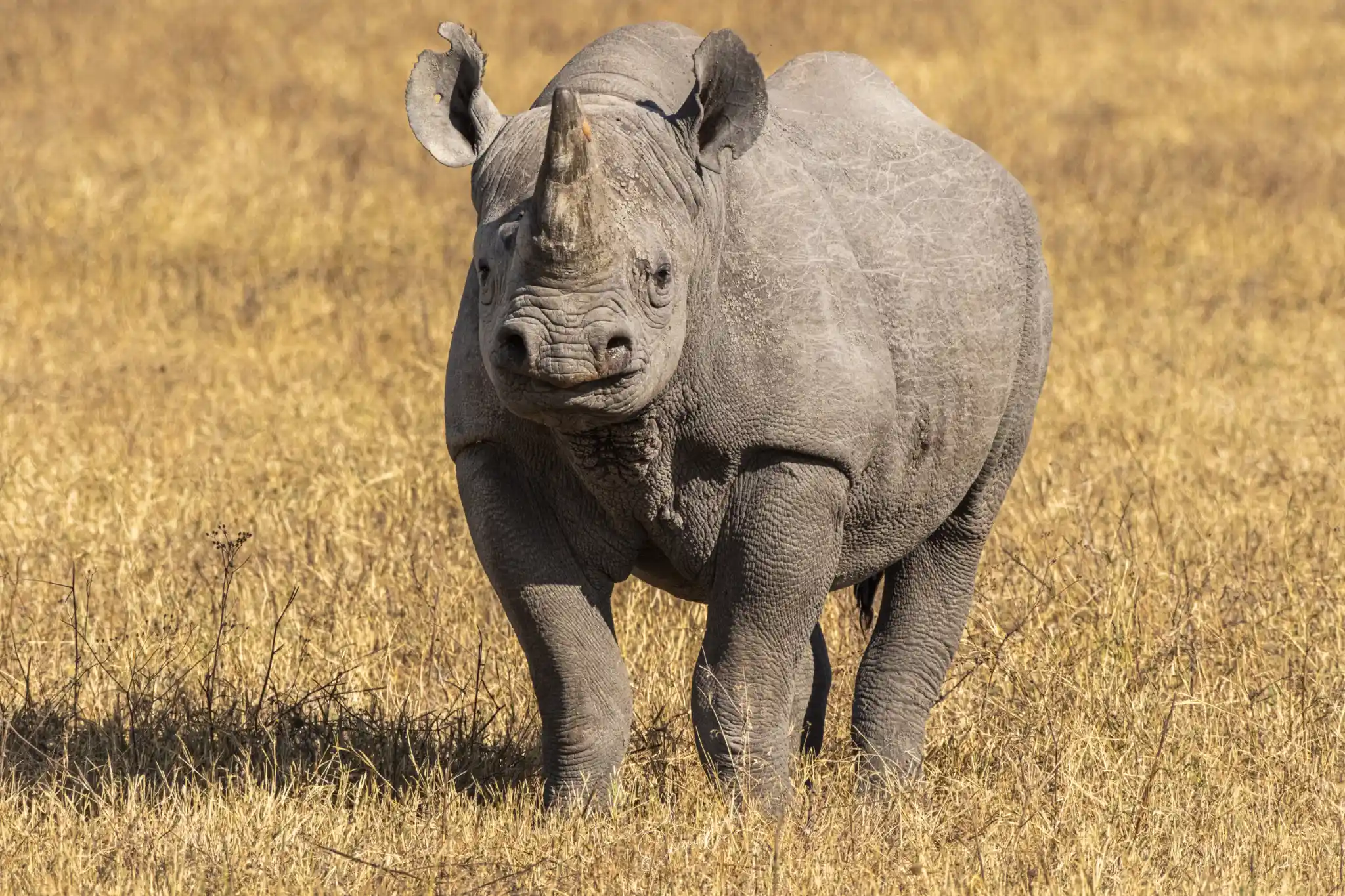
The black rhino is the frame most people want from Ngorongoro, and the crater is one of the most reliable places in Tanzania to make it. The animals are usually seen at a distance on the open grassland, and the rules keep vehicles on the tracks, so sightings are a matter of patience and position. When one walks toward the track, as the one below did, wait for the head to come up and the ears to turn forward. In the dry months the grass is golden and short, which gives the rhino a clean, warm ground. Our Ngorongoro crater animals guide covers where on the floor rhino tend to be found.
The marsh: buffalo, waterbuck and birds
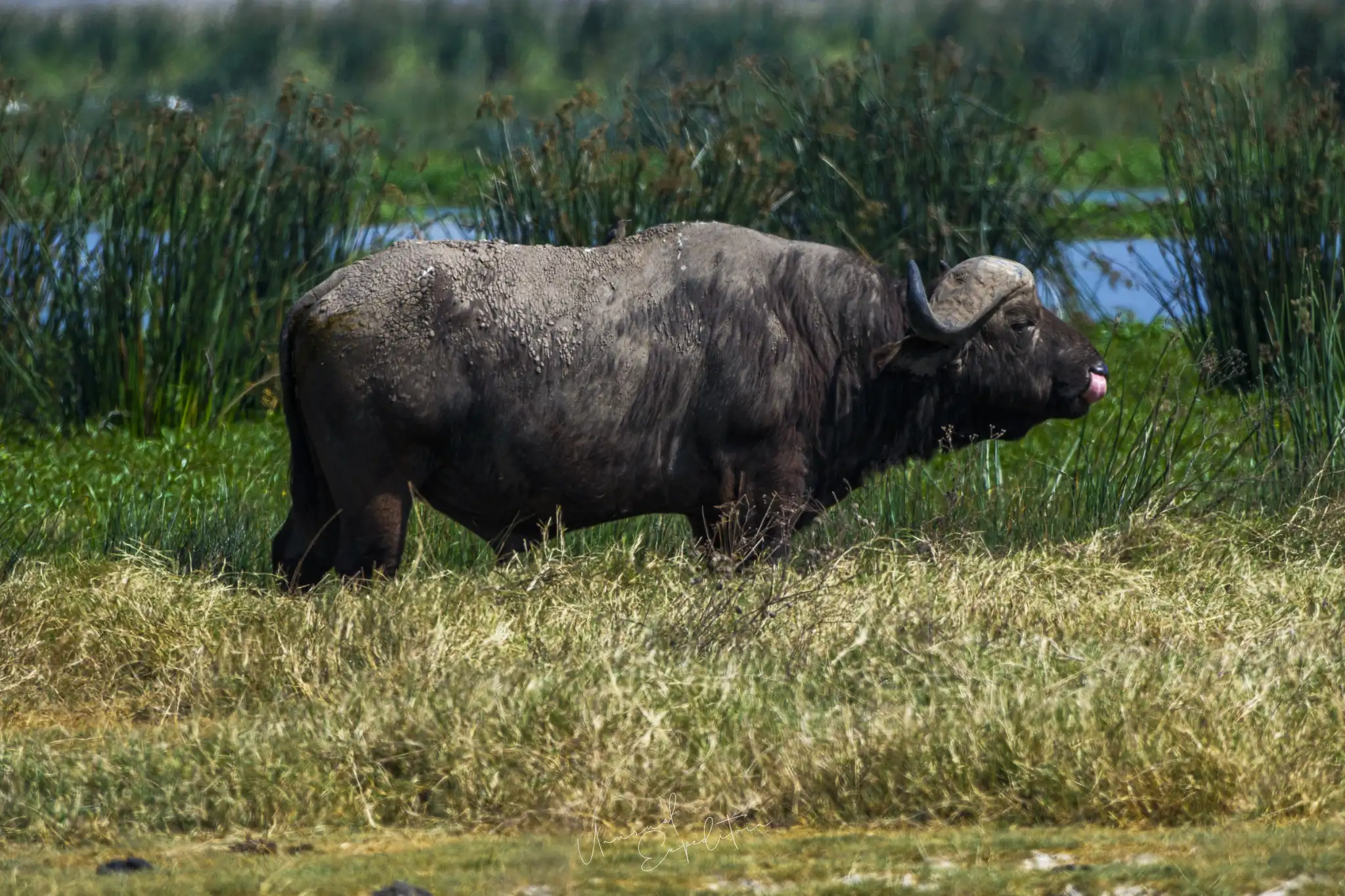
The marshes on the Ngorongoro crater floor stay green when the grassland has dried out, and they pull in buffalo, waterbuck, hippos and a constant traffic of birds. Buffalo stand in the reeds up to their bellies, and cattle egrets walk at their feet picking up insects. The light here is better than on the open grass in the middle of the day because the reeds give a dark, textured background. Shoot low from the vehicle window if you can, so the reeds blur in front of the lens and frame the animal. The buffalo on the card of this page was photographed in that kind of marsh, with the tall reeds behind and the water just out of frame.
Hyenas and warthogs on the short grass
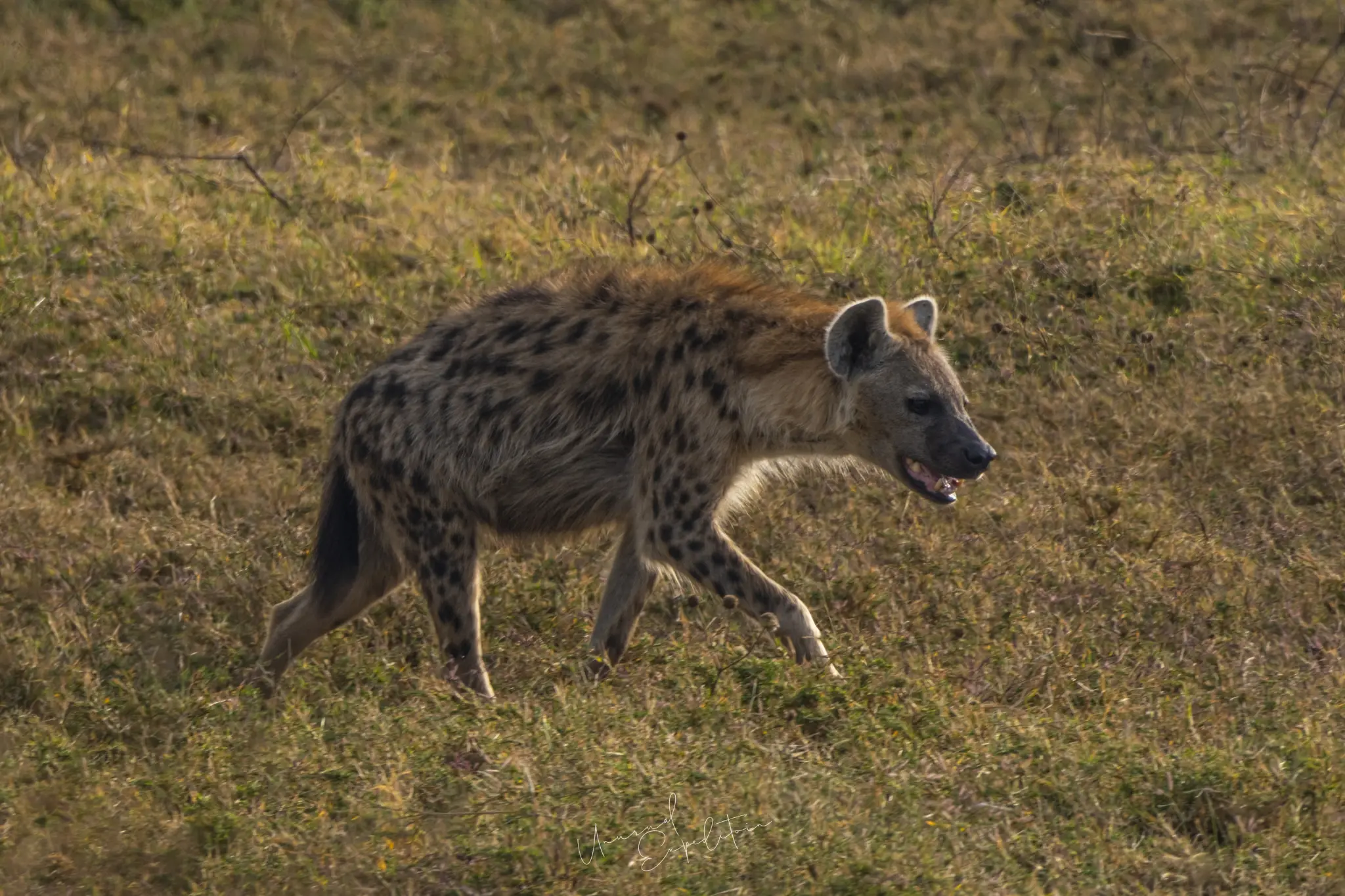
Spotted hyenas are everywhere on the Ngorongoro crater floor, and they make better pictures than their reputation suggests. In the early morning they trot between dens and carcasses with the low sun behind them, which lights the fur and puts a rim of light along the back. Warthogs graze the same short grass on their knees and fight in short pushing bouts; they are fast and low, so keep the shutter speed high and focus on the eyes. Neither animal is rare here, which is exactly why they are worth working: you have time to wait for the head turn and the clean background.
Ngorongoro crater images: lenses and settings
Ngorongoro crater images taken in the middle of the day tend to look flat, so plan the important frames for the first and last hours on the floor. These are the settings we start from.
| Subject on the crater floor | Lens | Where we start |
|---|---|---|
| Black rhino in the open | 100-400mm or 200-600mm | Fast shutter, wait for the head to lift, leave room for the wall |
| Buffalo and waterbuck in the marsh | 100-400mm | Low angle through the reeds, expose for the dark coat |
| Hyena and warthog | 100-400mm | High shutter speed, back or side light early in the day |
| Cranes and egrets | 100-400mm with a 1.4x | Expose for the white feathers, green grass behind |
| The view from the rim | 24-70mm and 70-200mm | Early, before the haze, tripod optional |
Most of the floor work happens through the window or the roof hatch, so a bean bag does more for sharpness than a tripod.
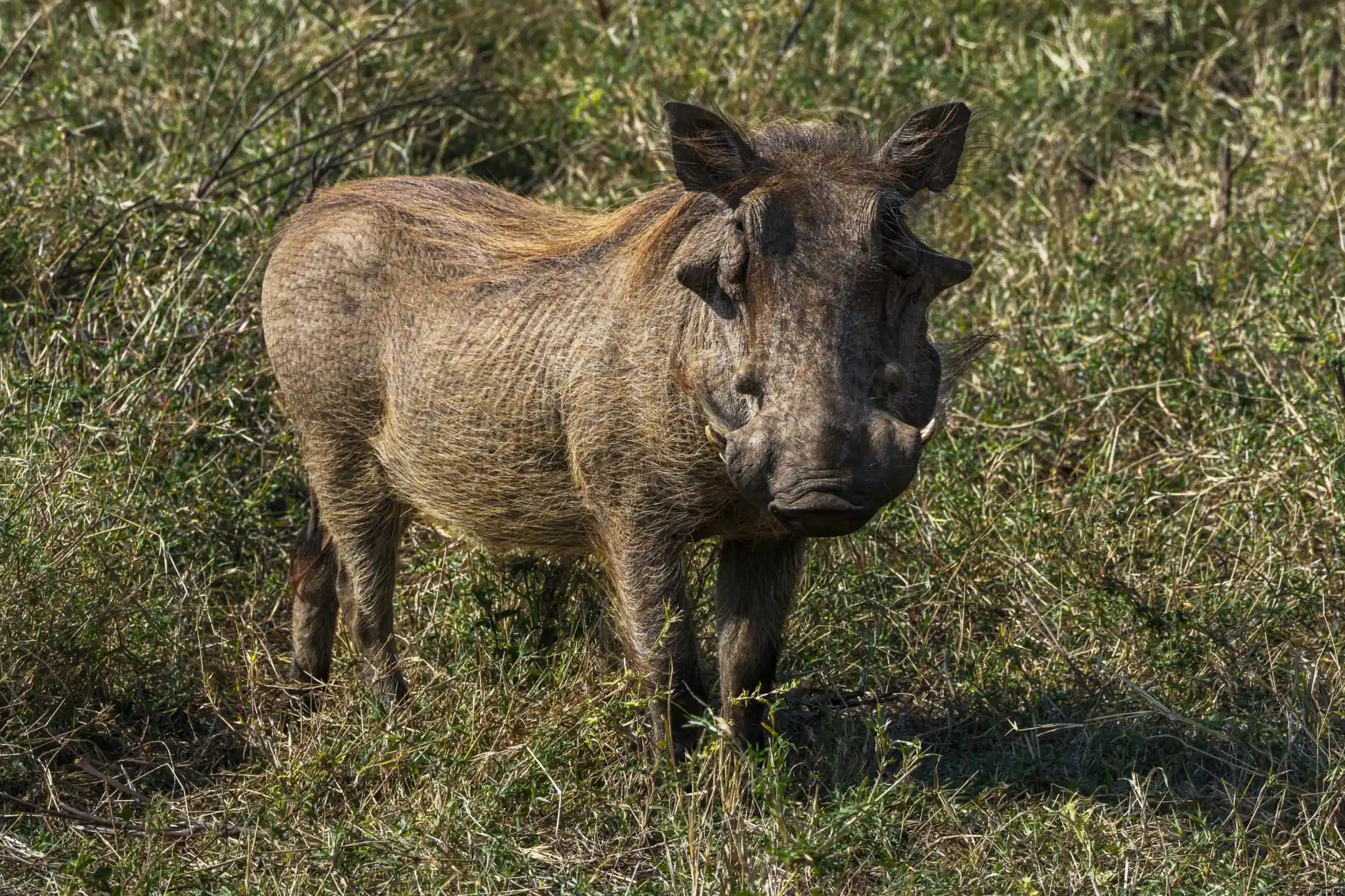
"People come down into the crater looking for the rhino and drive past the warthogs. Then the rhino stays a dot on the far side and the warthogs are the pictures they show me afterwards."
Joseph Mak, tour leader, Unusual Expedition
Where and how these Ngorongoro photos were made
Every animal frame on this page was made on the Ngorongoro crater floor, from a safari vehicle on the authorised tracks, which is the only way to photograph it: the Ngorongoro Conservation Area Authority does not allow off-road driving in the crater, and a licensed guide must be with every vehicle. That is why a long lens matters so much here. The light and the season shape the colour: golden grass in the dry months, green in the rains, as set out in our best time to visit Ngorongoro Crater guide. For a quick read on how the crater compares with the plains next door, see Ngorongoro Crater vs Serengeti.
Come and make your own Ngorongoro crater photos
Our scheduled Tanzania departure crosses the Ngorongoro highlands and the crater rim; the current dates and fare are on the Tanzania photography tours page. For a full morning on the crater floor at your pace, we arrange a private trip on request.
Ask us about Ngorongoro Crater
Join the Ngorongoro photography tour
Serengeti Photo Tour – Tanzania 2027 departs 21 Aug 2027 To 01 Sep 2027. Small group, photography first. All Ngorongoro photography tours.
Explore Ngorongoro in depth
- Ngorongoro Crater Photography: The Complete GuideTanzania
- Ngorongoro Photography FAQ: Fees, Opening Hours and Crater RulesTanzania
- Ngorongoro Crater vs Serengeti: Which to Photograph, and Is the Crater Worth ItTanzania
- Ngorongoro Crater Animals: Black Rhino, Buffalo, Hyena and the RestTanzania
- Maasai Village Ngorongoro: Visiting and Photographing with RespectTanzania
- Lake Natron Photos: The Soda Lake and Ol Doinyo LengaiTanzania
- Best Time to Visit Ngorongoro Crater for PhotographyTanzania
Upcoming Photo Tours
- Egypt Photo Tour – EgyptEgypt 12 Dec 2026 To 20 Dec 2026
- Inner Mongolia Winter Owl Photo Tour – ChinaChina 01 Jan 2027 To 04 Jan 2027
- Inner Mongolia Winter Photo Tour – ChinaChina 05 Jan 2027 To 11 Jan 2027
- Mekong And Central Highland Vietnam Photo Tour - VietnamVietnam 16 Jan 2027 To 24 Jan 2027