
What Are the Best North Iceland Attractions to Photograph?
North Iceland attractions for photographers: Arctic Henge, Myvatn, Godafoss, Hvitserkur, Dettifoss. Where to stand, light, lens, access.
The north iceland attractions that photograph best are the Arctic Henge at Raufarhofn, the geothermal ground around Lake Myvatn, Godafoss beside the Ring Road, the Hvitserkur sea stack on Vatnsnes and, when the weather allows, Dettifoss in its canyon. Each one wants a different light and a different lens, and they sit far apart across the north. Below is where to stand at each, which part of the day suits it, what to carry and the access rules that matter.
This is one of the destination guides that belong to our North Iceland photography tour guide. The photographs are our own, taken on our autumn and winter trips through the north, and the notes on where to stand come from standing there.
Arctic Henge, Raufarhofn: stand inside the circle
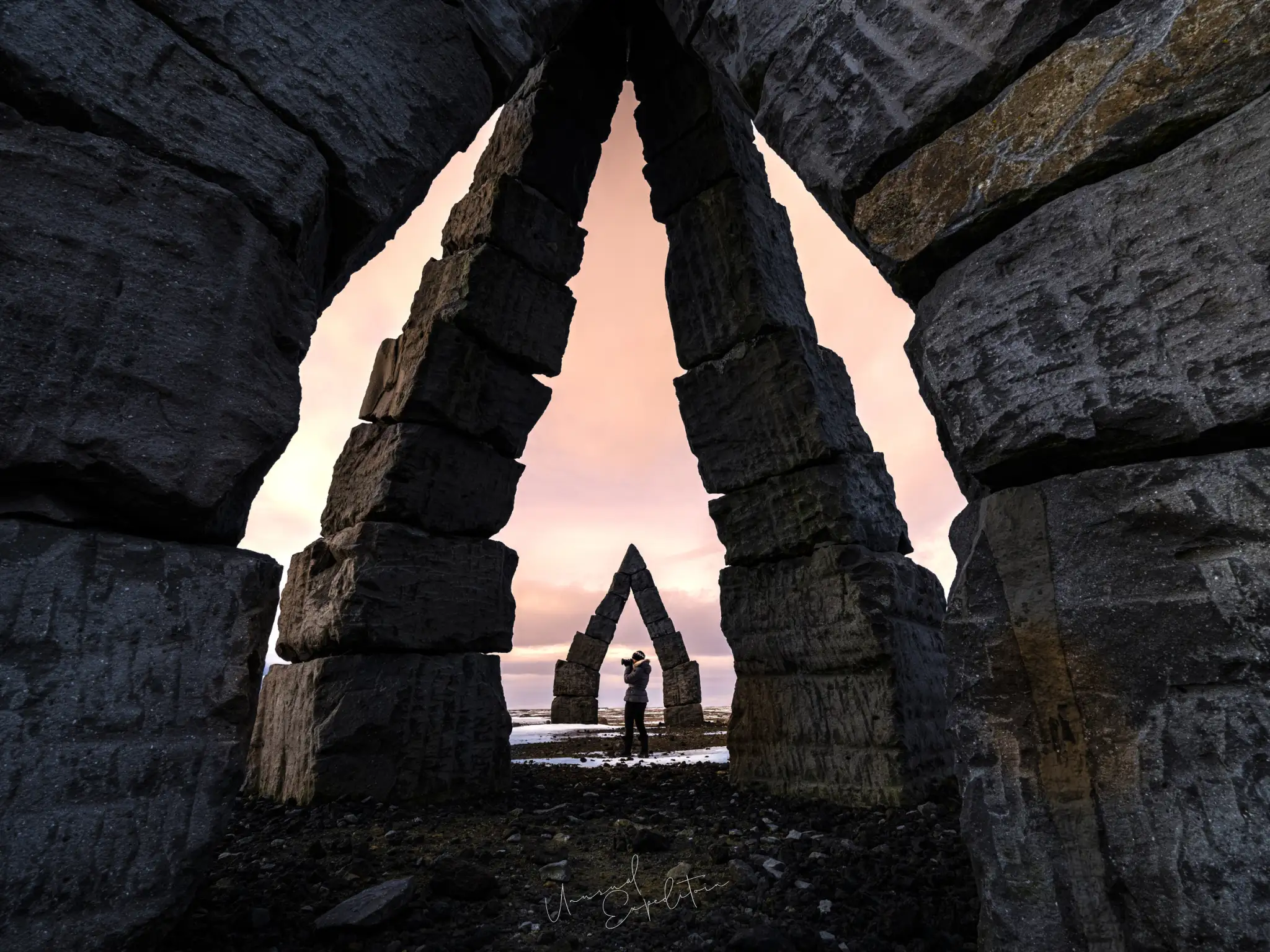
The Arctic Henge, Heimskautsgerdi in Icelandic, rises on a low hill above Raufarhofn, a small village on the north-east coast. Visit North Iceland describes it as a monument inspired by Norse mythology, astronomy and the Arctic light, laid out around the dwarves named in the old poem Voluspa, and it is still unfinished. The strongest pictures come from inside the ring, where one tall stone gate frames the next and the sky shows through both. Walk the whole circle before you set up, because the alignment you want changes with every step.
Overcast suits the grey stone, and twilight turns the gates into black shapes against colour. In winter the sky behind the gates can turn pink well before the sun shows. A 16-35mm handles the framed-gate view; a 24-70mm picks out one gate against the sea. The site is open ground with no fence, so be patient if other people are walking through the frame, and keep your tripod off the stonework.
Lake Myvatn and the geothermal ground
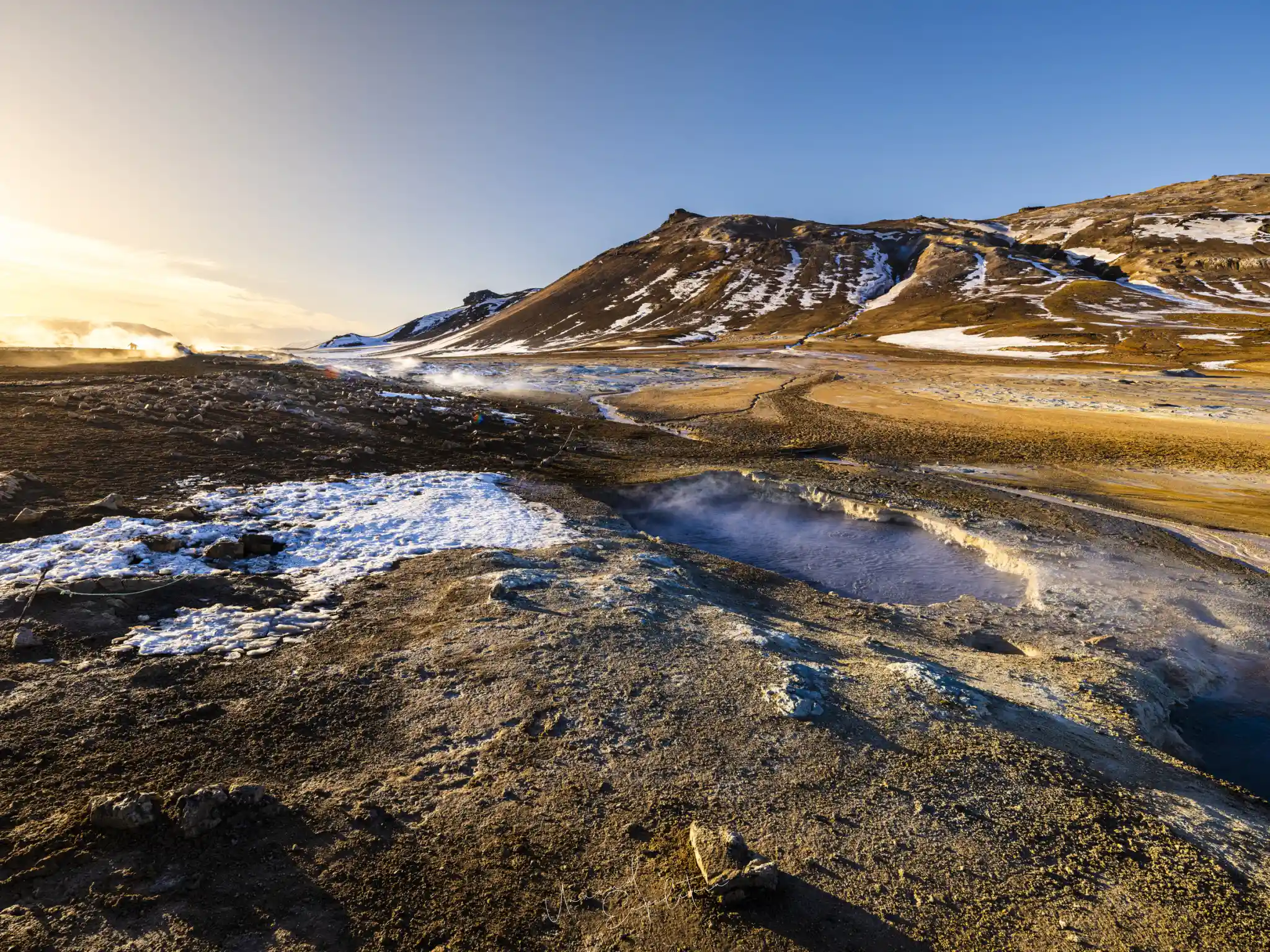
Lake Myvatn is the centre of the volcanic north. Around it lie Hverir, a field of steaming vents and mud pots below ochre slopes; the Krafla volcanic area; Dimmuborgir, a maze of lava pillars and arches; and the pseudocraters at Skutustadir on the south shore. In winter the steam stands tall in the cold air and the snow cuts the ground into black and white. Backlight is what makes steam glow, so face the low sun across the vents in the morning or late afternoon; with the sun behind you the steam goes flat and grey.
A 16-35mm takes in the vents and the slope behind; a 70-200mm isolates a plume against a dark hill. Stay on the marked paths at Hverir, because the crust near the vents can be thin and the water scalding, and keep lenses out of the sulphurous steam. Wipe the front element often.
Godafoss: two banks, two pictures
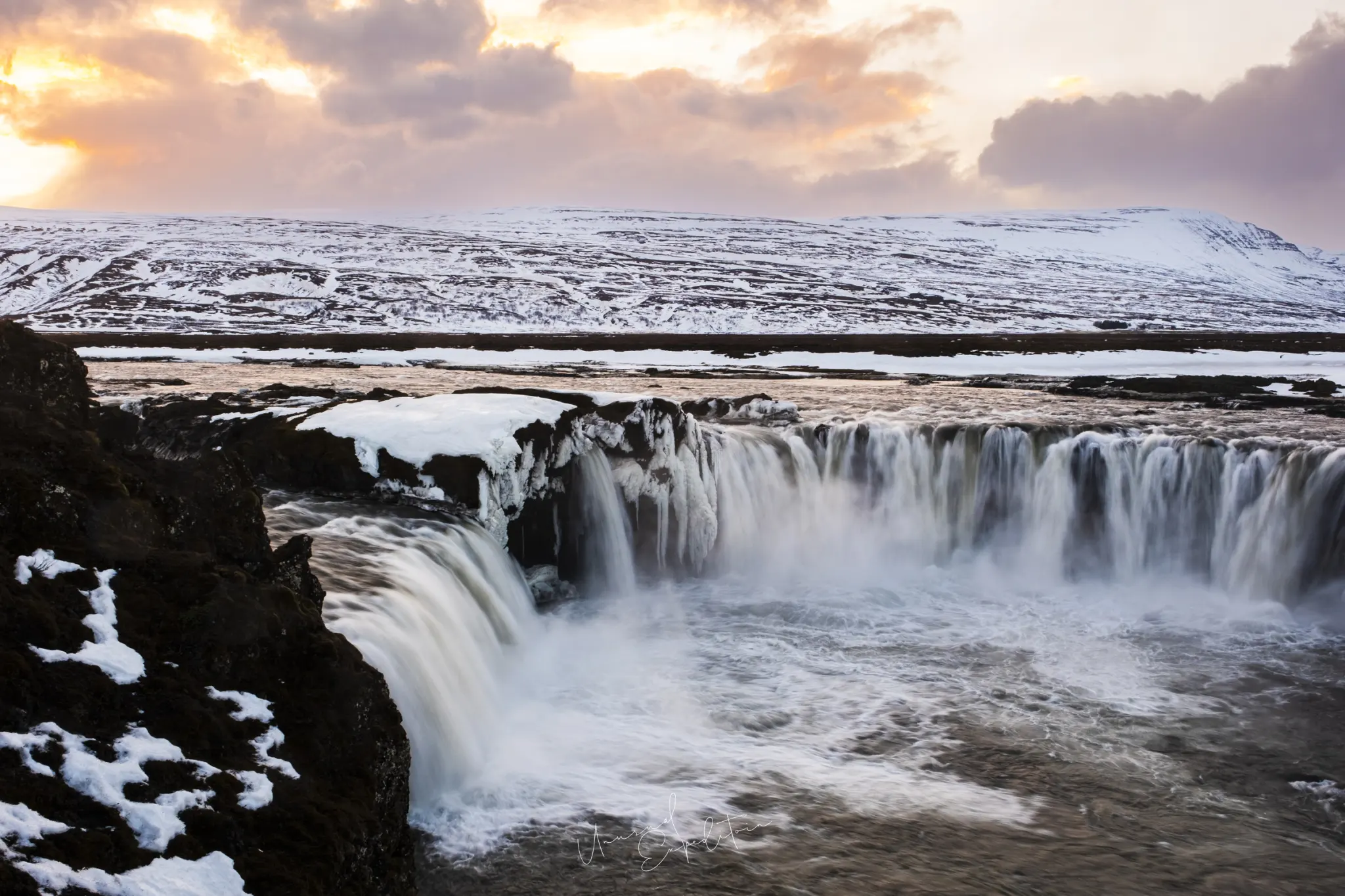
Godafoss is the easiest of the big northern sights to reach, right by Route 1, and it works in almost any weather. The falls are about 12 metres high and 30 metres wide on the river Skjalfandafljot, according to Wikipedia, and the site has been a protected natural monument since 2020, with rangers on duty, per the Environment Agency of Iceland. From the rocks beside the falls you see the full curve of the horseshoe with the snowy plateau behind; from the brink on the other bank you look down into the turquoise pool.
Late afternoon is the time to be there in winter, when low sun lights the clouds above the plateau and the spray. A 16-35mm fits the whole curve from close in; a 24-70mm frames one section of the falls. Stay behind the ropes at the edge, where the rock is icy for much of the year. Our guide to Godafoss waterfall Iceland compares the two banks and the seasons.
Hvitserkur: the viewpoint and the beach
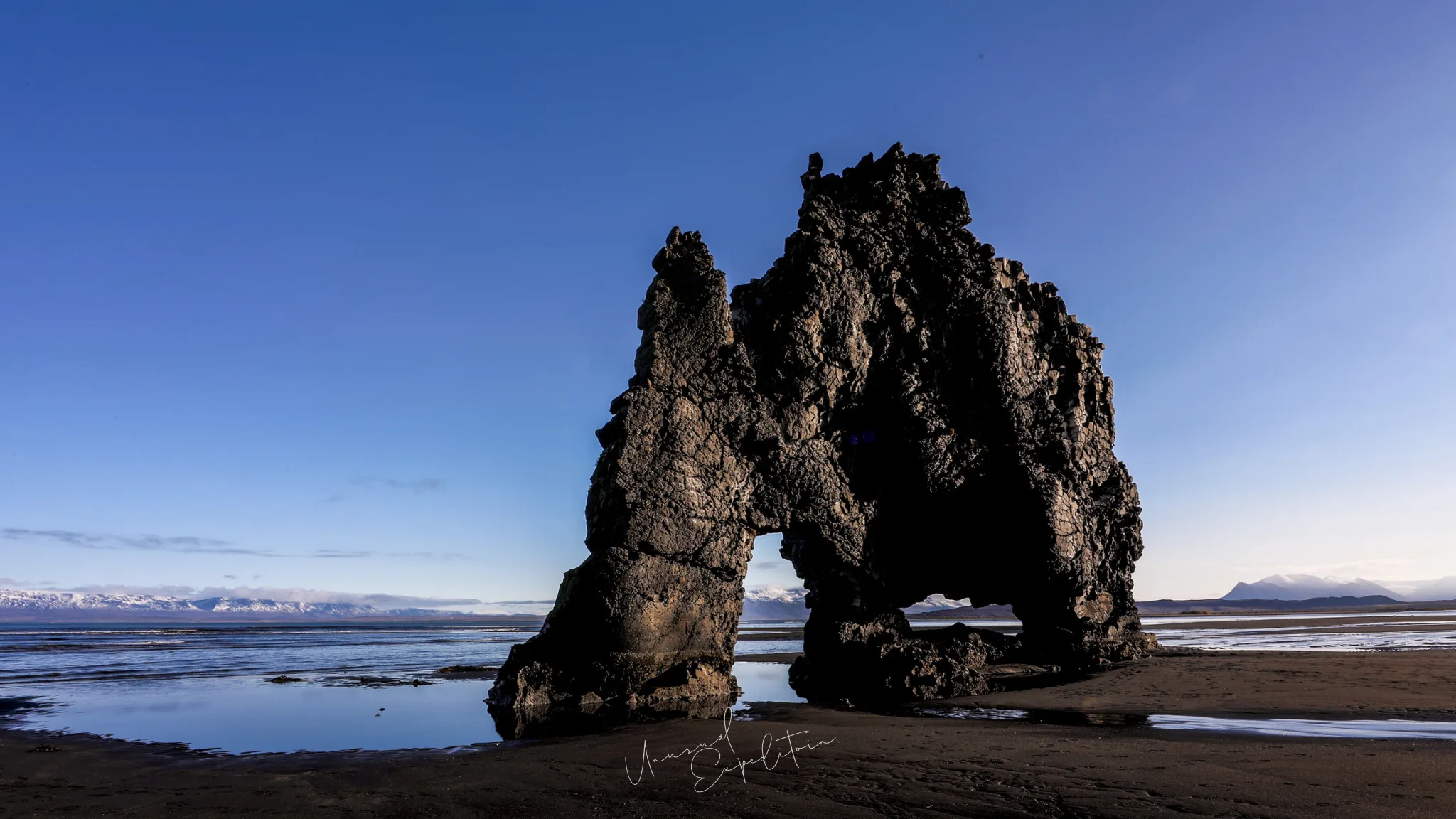
Hvitserkur is a basalt stack about 15 metres high off the east shore of the Vatnsnes peninsula, with two arches at its base, described by Wikipedia and Atlas Obscura as an old volcanic plug. There are two places to stand. The clifftop viewpoint shows the stack with the long black beach curving away; the path down leads to the sand in front of it, where at low tide its reflection doubles the shape in the wet sand.
The viewpoint looks out east across the bay, so at first light the stack is a silhouette against a bright sky, and late in the day the sun from behind you lights the rock itself. Blue hour, as in the frame below, gives the calmest colour. Check the tide table before you go, because high water covers the sand. Road 711 is gravel, and in winter a four-wheel-drive is advisable. More detail, and the troll legend, is in our Hvitserkur Iceland guide.
Dettifoss in its canyon
Dettifoss lies in Vatnajokull National Park on the Jokulsa a Fjollum, a glacial river that runs grey and heavy with silt, and it is one of the most powerful waterfalls in Europe. We have no frame of it of our own, so this is general information rather than our view. The west bank road is paved and the east bank road is gravel and closed for much of the winter; check road.is before planning either. The spray hangs over the canyon, so a lens hood and a cloth are as useful as a wide lens. A person on the far viewing platform gives the scale that a picture of moving water otherwise lacks.
Akureyri and Eyjafjordur
Akureyri, the largest town in the north, sits at the head of Eyjafjordur, a long fjord lined with mountains. It is the practical base for the region, with a domestic airport, and its waterfront and the slopes above town give you something to photograph on days when the weather keeps you close. On still days the fjord reflects the snowy ridges. Whale watching boats leave from Akureyri and from Husavik further east.
North Iceland attractions at a glance
| Photo spot | Part of the north | Best light | Main lens |
|---|---|---|---|
| Arctic Henge, Raufarhofn | North-east coast | Twilight, overcast | 16-35mm |
| Myvatn geothermal areas | Around Lake Myvatn | Low backlight on steam | 16-35mm, 70-200mm |
| Godafoss | Route 1 east of Akureyri | Late afternoon, soft overcast | 16-35mm, 24-70mm |
| Hvitserkur | Vatnsnes, north-west | First light, blue hour, low tide | 16-35mm, 70-200mm |
| Dettifoss | Vatnajokull National Park | Overcast, sun through the spray | 16-35mm |
Hvitserkur and the Arctic Henge sit at opposite ends of the north, so most trips choose one of them.
In the north the light comes and goes fast. When the sky over a farm turns green, stop where it is safe and shoot what is in front of you, because the famous spot will still be there tomorrow.
Joseph Mak, tour leader, Unusual Expedition
Farms, horses and the northern lights
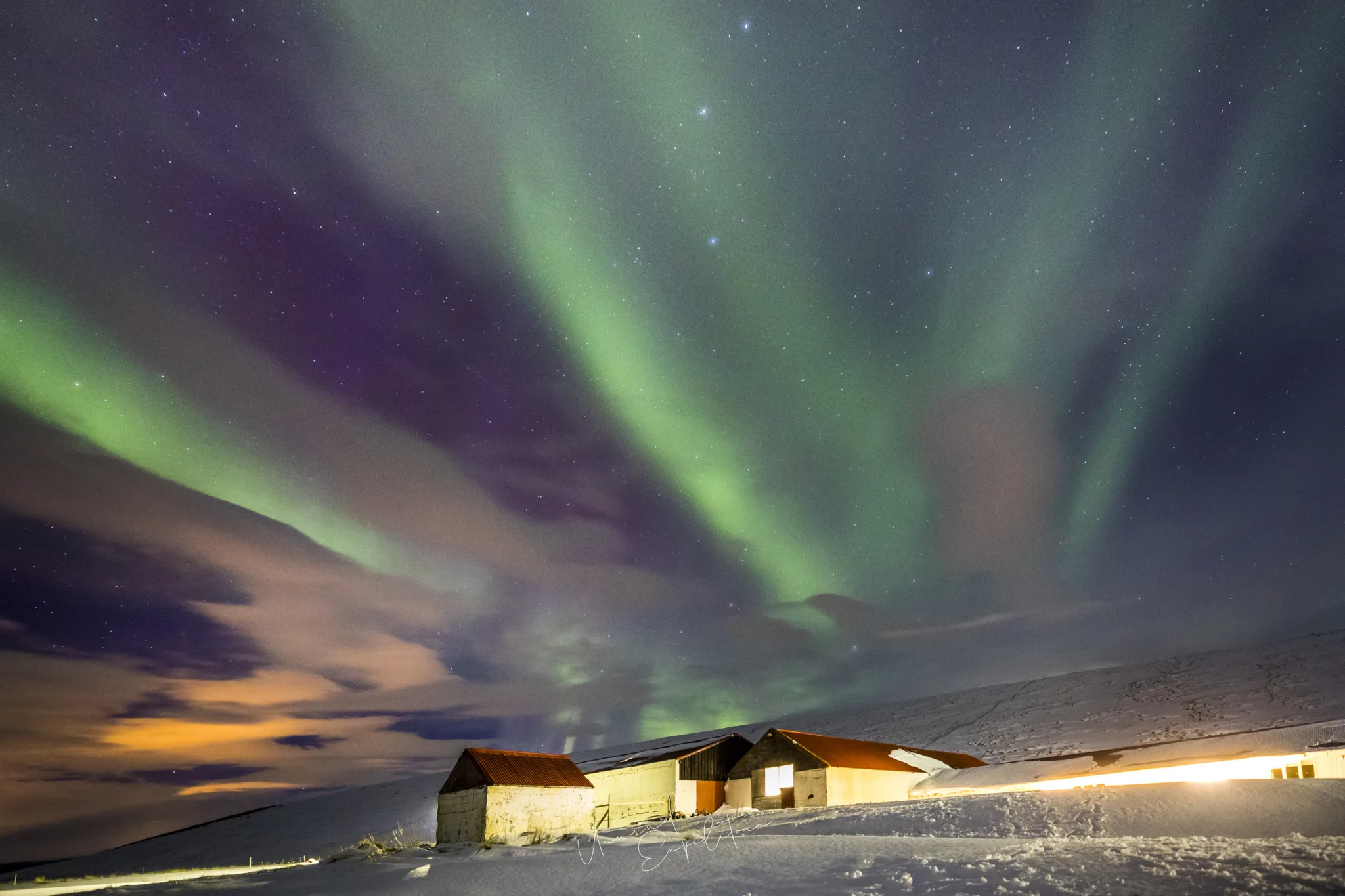
Some of the best pictures in the north are not at any named attraction. Farm buildings under the aurora, horses at a fence and frozen marshes under a pink sky turn up along every road, and the card picture for this guide is one of them: northern lights over a farm on our winter trip. Pull fully off the road before you stop, never onto a field without asking, and keep headlights off the scene. Our guides to Icelandic horses photos and North Iceland in winter cover both subjects in more depth.
Crowds, access and safety
The north is quieter than the south coast, but Godafoss and Hverir draw coach groups through the middle of the day, so arrive early or late. Hvitserkur and the Arctic Henge are rarely busy. Much of the land around the sights is private farmland: use the car parks and marked paths. Roads in winter change daily, so read road.is and the alerts on safetravel.is each morning. Drone rules and entry are covered in our Iceland photography tour guide.
Photograph the north with us
Our Iceland Midnight Sun Photo Tour takes in Godafoss, the Myvatn geothermal areas and the horses of Skagafjordur; the current departure is on our Iceland photography tours page. For the Arctic Henge, Hvitserkur or the aurora in winter, we arrange private tours.
Ask us about photographing North Iceland
Join the North Iceland photography tour
Iceland Midnight Sun Photo Tour departs 05 Jul 2027 To 18 Jul 2027, led by Joseph Mak. Small group, photography first. All North Iceland photography tours.
Explore North Iceland in depth
- North Iceland Photography Tour Guide: Godafoss, Hvitserkur, Myvatn, Arctic Henge and HorsesIceland
- North Iceland in Winter: Weather, Light, Akureyri and the Northern LightsIceland
- Icelandic Horses Photos: How to Photograph Iceland's Horses, Gaits and ColoursIceland
- Hvitserkur, Iceland: Photographing the Troll Sea Stack at Low Tide and DawnIceland
- Godafoss Waterfall, Iceland: East or West Bank, Winter Light and the LegendIceland
Upcoming Photo Tours
- Egypt Photo Tour – EgyptEgypt 12 Dec 2026 To 20 Dec 2026
- Inner Mongolia Winter Owl Photo Tour – ChinaChina 01 Jan 2027 To 04 Jan 2027
- Inner Mongolia Winter Photo Tour – ChinaChina 05 Jan 2027 To 11 Jan 2027
- Mekong And Central Highland Vietnam Photo Tour - VietnamVietnam 16 Jan 2027 To 24 Jan 2027