
Tanzania Photography Tour Guide: Serengeti, Ngorongoro and Lake Eyasi
Tanzania photography safari guide: Serengeti migration, Ngorongoro Crater, Maasai and Hadzabe, when to go and how we photograph it.
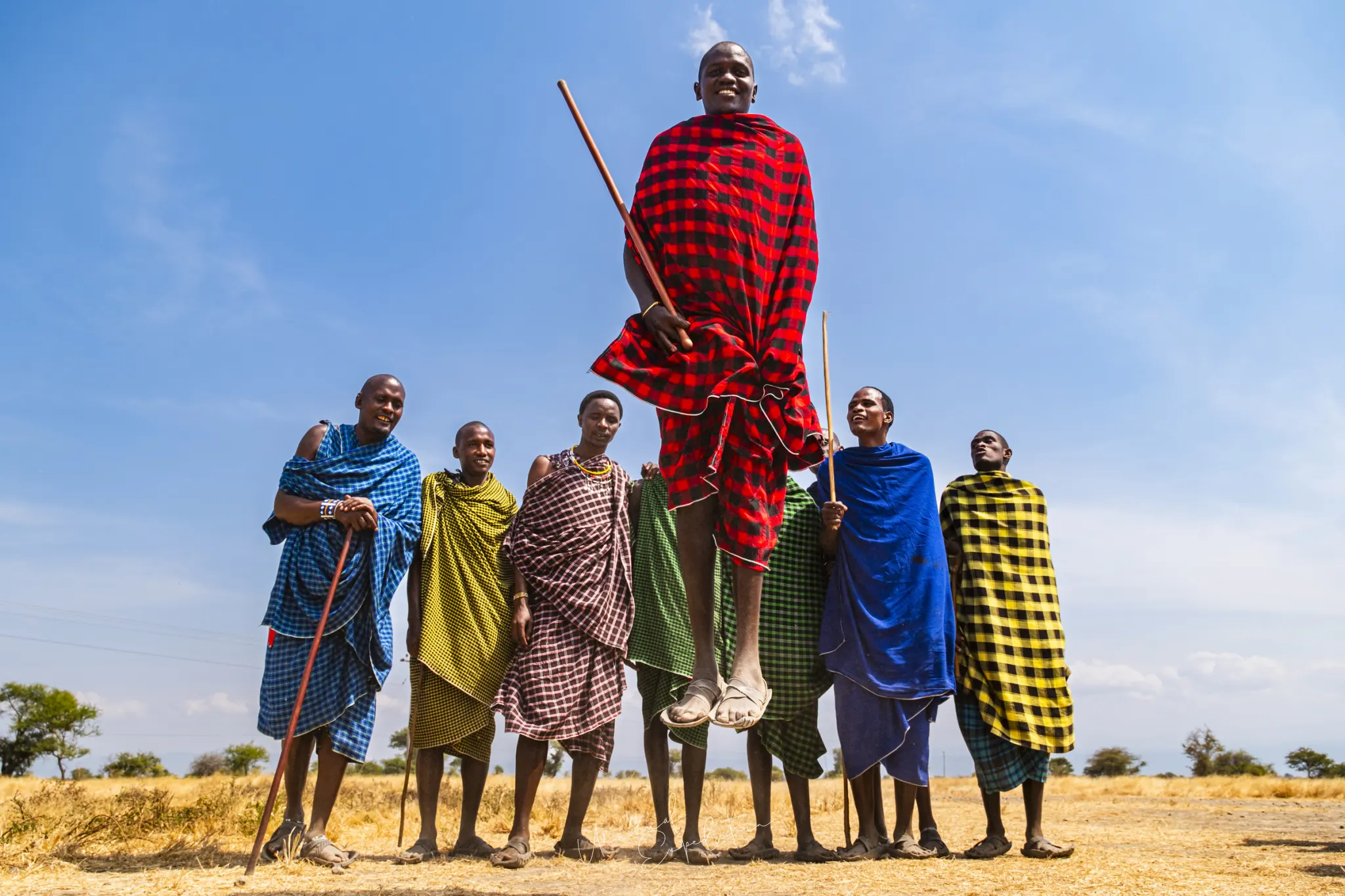
A Tanzania photography safari is the most complete wildlife trip we know: the Serengeti plains with the great migration and the big cats, the Ngorongoro Crater with black rhino and flamingo lakes, and the people of the north, Maasai herders and Hadzabe hunter-gatherers near Lake Eyasi. Most photographers fly into Kilimanjaro, spend their time in the northern parks, and come home with more frames than from any other trip. Below is how Tanzania works for photographers, region by region.
Our regional destination guides go deeper, starting with the Serengeti photography tour guide. The photographs in this guide are our own, taken on our trips here; we hold the rights to them, and the notes come from knowing these places first hand.
Tanzania wildlife photography: what you actually photograph
Tanzania wildlife photography is built on density. In the Serengeti a single morning can give you lions on a kopje, a cheetah walking the grass line, elephants with small calves and herds of wildebeest and zebra that run to the horizon. The great migration moves through the Serengeti ecosystem all year, so the herds are somewhere in Tanzania in every month; the question is only where. Predators follow the herds, and that is why Tanzania produces so many hunting and feeding sequences.
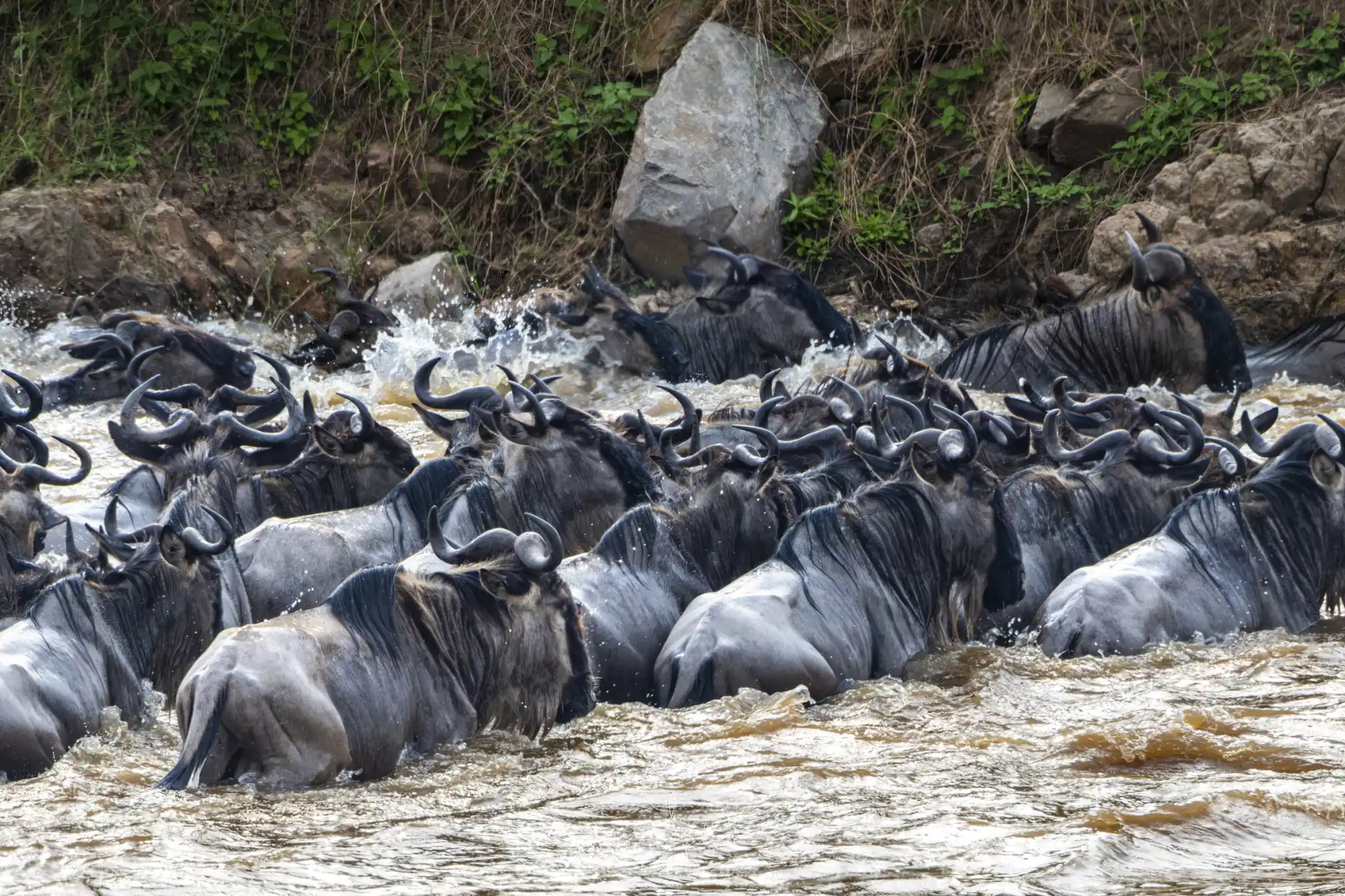
The famous set piece is the Mara River crossing in the northern Serengeti, when columns of wildebeest jump from the bank into the current and crocodiles wait below. Crossings come in bursts: long quiet spells while the herd gathers on the bank, then everything at once. The Serengeti and the Ngorongoro Conservation Area are both UNESCO World Heritage sites, and the wildlife in them is the reason most people come.
Photography tours Tanzania: how the photography works
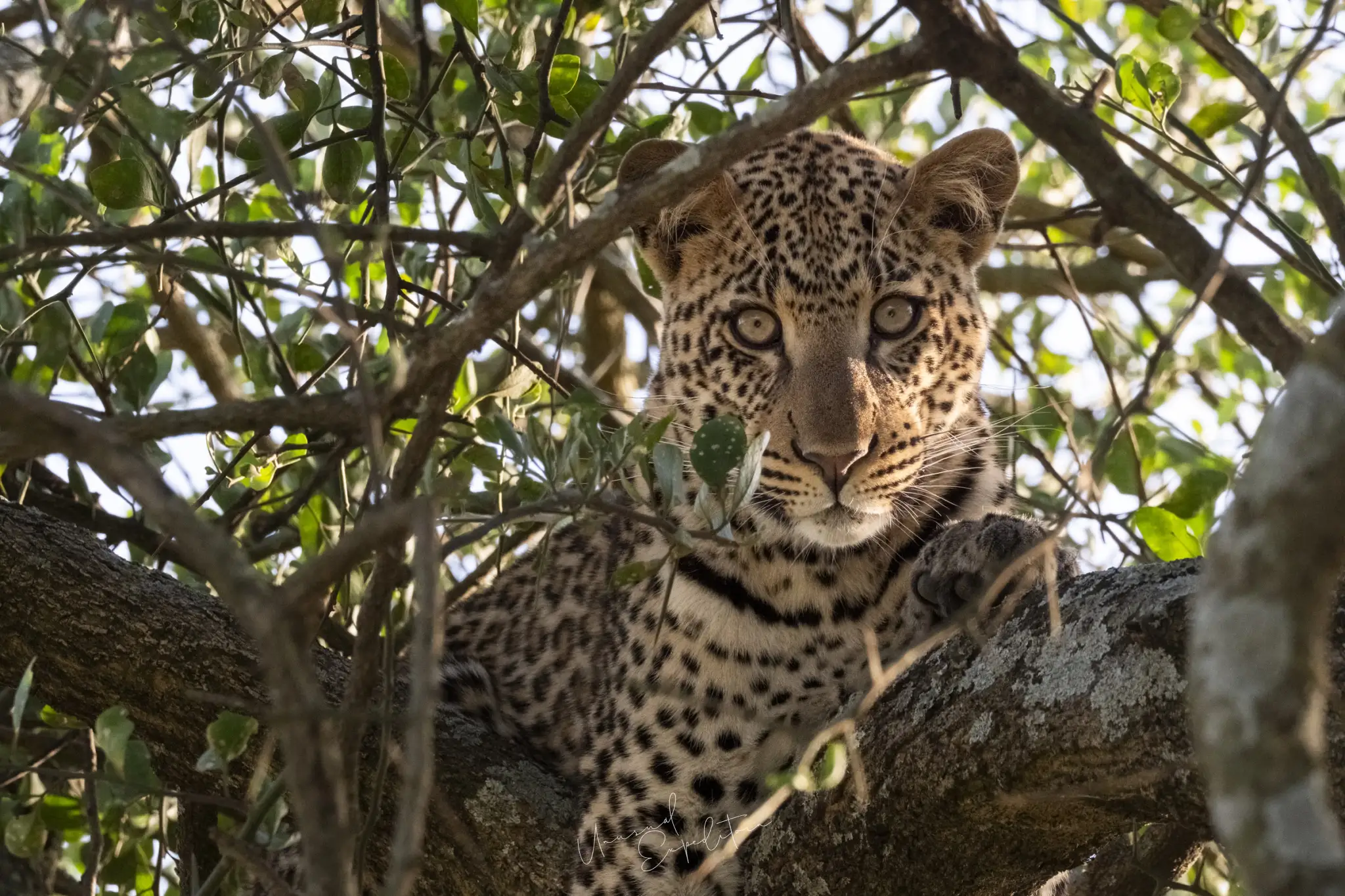
Photography tours in Tanzania are shot from a safari vehicle with an open or pop-up roof. In the national parks you stay in the vehicle, and the driver-guide positions it for light and background rather than just for a view. That is the biggest difference between a photography safari and a general one: the vehicle waits for the picture, and the group is happy to stay with one leopard while other vehicles drive on.
The working light is early and late. The Tanzanian sun is high and hard through the middle of the day, so the best frames come in the first hours after sunrise and the last hours before sunset, when the grass glows and the animals are moving. Midday is for long-lens portraits in shade, birds, or simply resting. A beanbag on the window frame does more for sharpness than any tripod.
Tanzania people photos: Maasai and Hadzabe
Tanzania people photos are the other half of the trip. In the north, Maasai communities welcome visitors to their villages, and the adumu, the jumping dance of the young men, is one of the most photographed scenes in East Africa. Women in wide beaded collars stand in a line beside them. These visits are arranged, the community is paid, and everyone knows the cameras are part of the visit, which is what makes close portraits respectful. Lake Eyasi, with the Hadza and their Datoga neighbours, has its own Lake Eyasi photography tour guide.
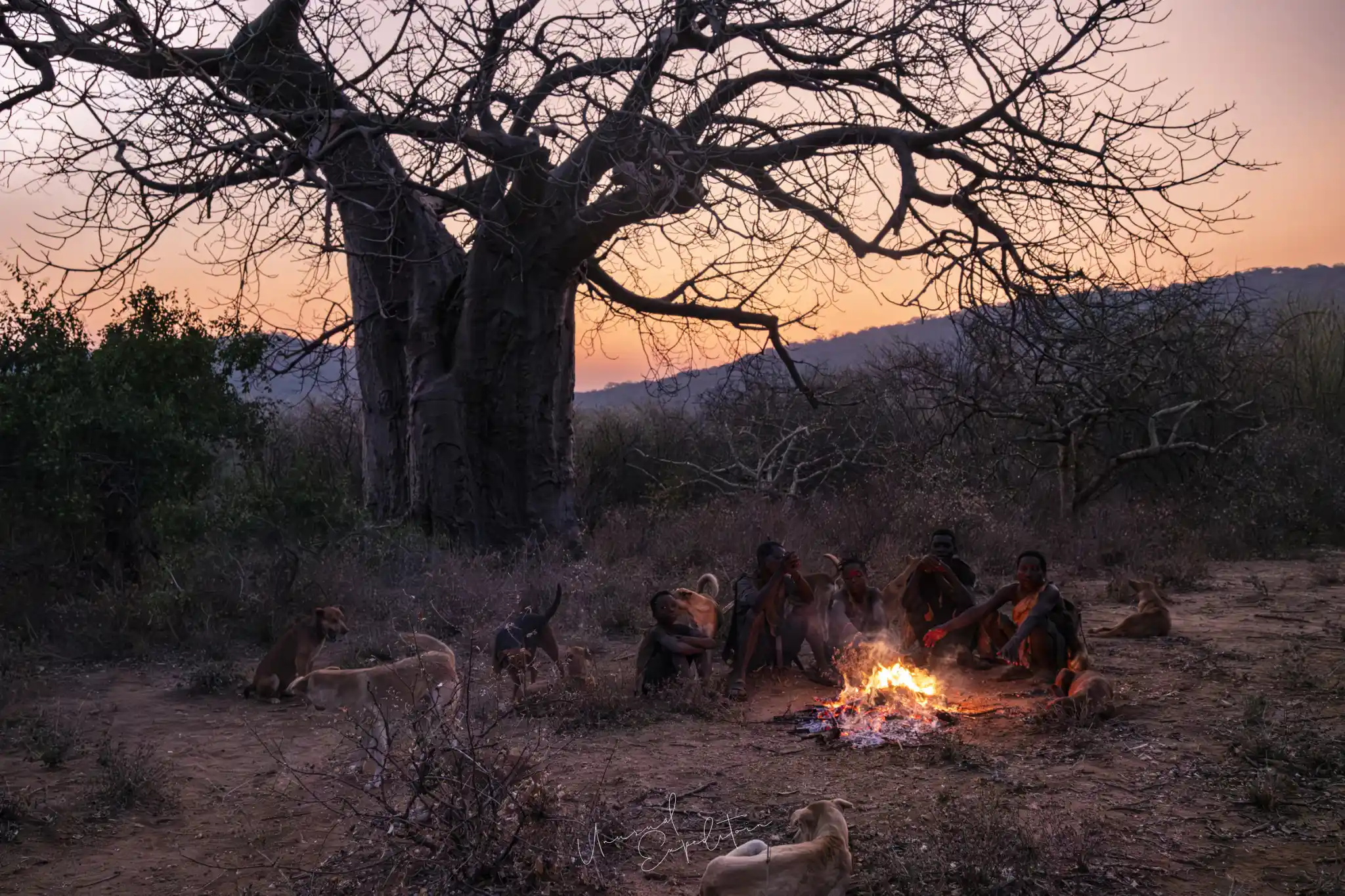
Near Lake Eyasi, in the dry bush south of the Ngorongoro highlands, small groups of Hadzabe still live largely by hunting and gathering. A visit means walking with the hunters as they track with bows through the bush, and sitting at the camp fire as dusk comes. We keep the camera low and slow there, ask before close portraits, and do not photograph children.
"Tanzania gives you too much in the first two days. Lions, elephants, a cheetah, then the herds. By the third day the group stops chasing everything and starts waiting for one animal in good light, and that is when the real pictures start."
Joseph Mak, tour leader, Unusual Expedition
Tanzania landscape photography: crater, lakes and plains
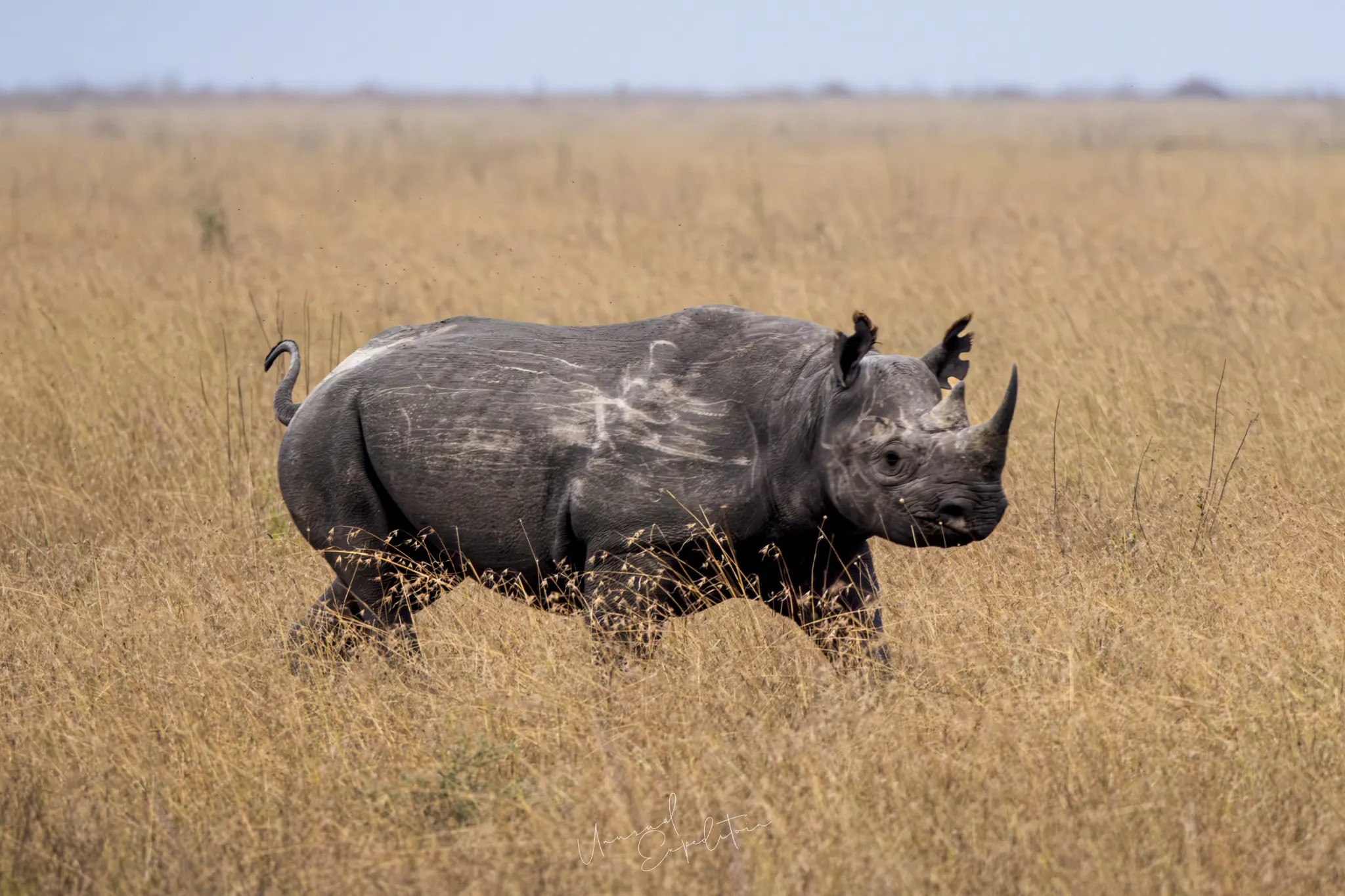
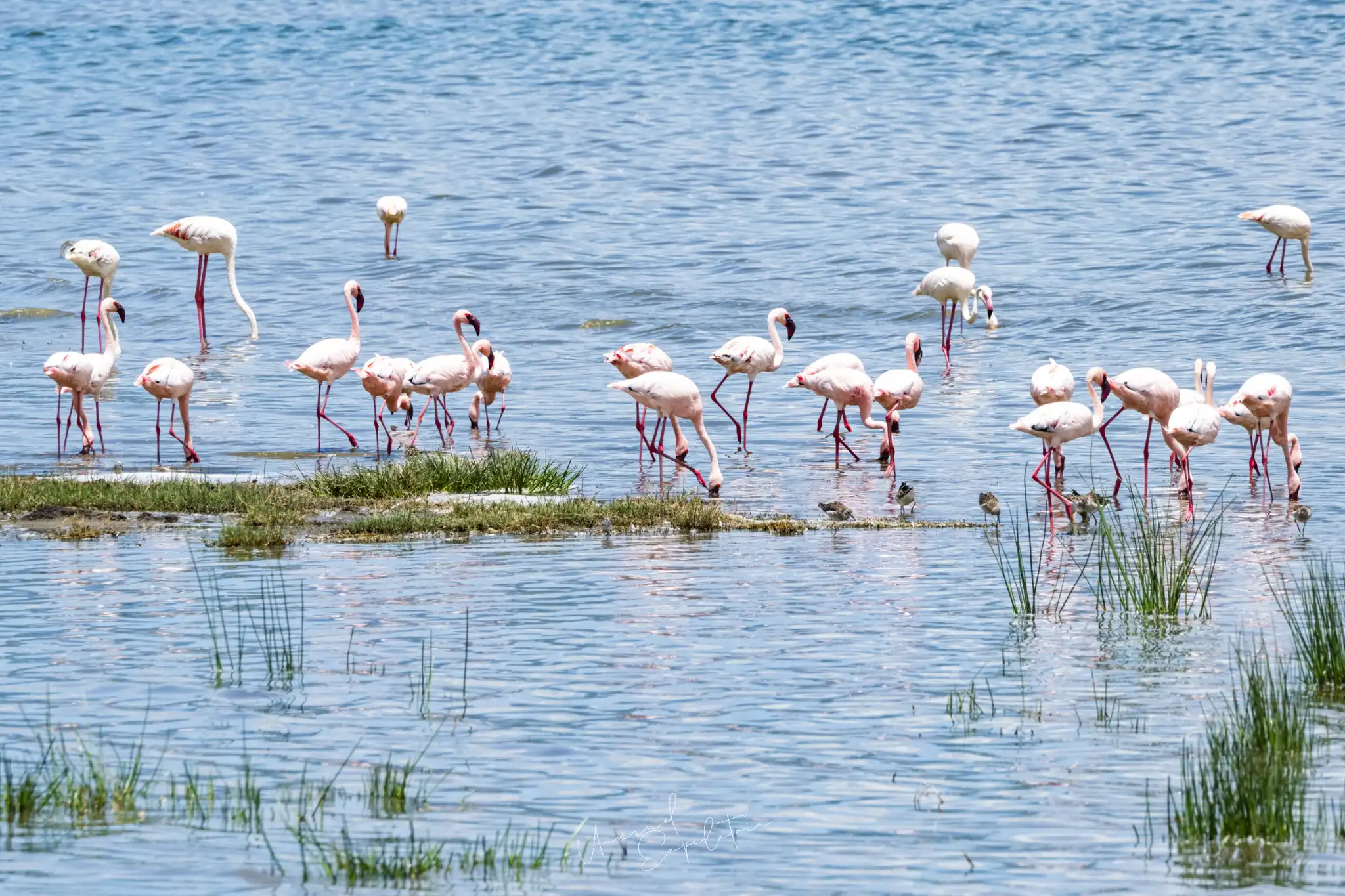
Tanzania landscape photography is often overlooked because the animals take all the attention. The Ngorongoro Crater is a collapsed volcano with a lake, swamps and grassland on its floor; from the rim you see the whole bowl, and on the floor black rhino, buffalo, hyena and crowned cranes share the same plain. The soda lakes of the north draw flamingos in long pink bands. On the Serengeti, a single umbrella acacia against a red sky is a cliche for a reason: it works every evening that the dust and cloud allow. For the crater floor, its black rhino and the Maasai bomas of the highlands, read our Ngorongoro photography tour guide.
The landscape changes with the season. After the rains the southern plains are green and lush, the sky full of cloud. In the dry months the grass turns gold, dust hangs in the air and the sun sets as a red disc. Both are good; they are simply different pictures.
When to go on a Tanzania photography safari
There is no bad month for a Tanzania photography safari, only different subjects. Between late January and March the herds calve on the southern Serengeti plains around Ndutu, as Tanzania's Daily News reported from the plains; predators are busy and the grass is green. The long rains of roughly April and May make some tracks hard going. From about July the herds reach the northern Serengeti and the Mara River, the dry season sharpens the light, and the crossing season begins. Our best time to visit Tanzania article gives the month-by-month picture across the regions. For the calving season itself, Ndutu, on the southern plains where the Serengeti meets the Ngorongoro Conservation Area, has its own Ndutu photography tour guide.
Tanzania safari photography tips and travel basics
Bring two bodies if you have them: a 100-400mm or 150-600mm for wildlife and a 24-70mm for scenes, people and vehicles in the landscape. Dust is constant, so change lenses inside the vehicle with the windows closed. Leave the drone at home: the Tanzania Civil Aviation Authority requires import and operating permits, and the parks need their own permission on top.
Singapore passport holders can visit Tanzania without a visa for up to 90 days within six months, according to the Singapore Ministry of Foreign Affairs, and since October 2026 foreign visitors to the mainland must also buy the government inbound travel insurance. Flights, the insurance rule, money and plugs are in our guide to getting to Tanzania, and safety, malaria, clothing and photographing people in the Tanzania photography trip FAQ.
Explore Tanzania by region
- Serengeti photography tour guide: the migration, the Mara River crossings and the big cats.
- Ngorongoro photography tour guide: the crater floor, black rhino, the Maasai highlands and Lake Natron.
- Ndutu photography tour guide: the calving season on the southern plains, cheetahs and the soda lakes.
- Lake Eyasi photography tour guide: Hadza hunters, Datoga herders, baobabs and fires at dusk.
- Best time to visit Tanzania for safari photography, month by month.
- Tanzania photography trip FAQ: safety, health, what to wear, people.
- How to get to Tanzania: visa, insurance, flights and money.
- Zanzibar photography tour guide: Stone Town's lanes and fish halls, the fishing village of Nungwi, and sunsets behind the dhows.
Off the coast, Zanzibar adds street and coastal photography to a safari: the lanes and markets of Stone Town and the dhows of Nungwi, covered in our Zanzibar photography tour guide.
Photograph Tanzania with us
Our scheduled Serengeti Photo Tour follows the herds in the Mara River season and adds the Ngorongoro Crater rim and Lake Eyasi, at indicatively S$10,300 to S$12,300 per person depending on the room. The current departure, what is included and the photographs from past trips are on our Tanzania photography tours page. If the dates do not suit, we also run Tanzania as a private trip for individuals, couples, families and photographers at their own pace; see private tours.
Join the Tanzania photography tour
Serengeti Photo Tour – Tanzania 2027 departs 21 Aug 2027 To 01 Sep 2027. Small group, photography first. All Tanzania photography tours.
Explore Tanzania in depth
- How to Get to Tanzania: Visa, Travel Insurance, Flights and MoneyTanzania
- Tanzania Photography Trip FAQ: Safety, Health, Clothing and Photographing PeopleTanzania
- Best Time to Visit Tanzania for Safari Photography, Month by MonthTanzania
Upcoming Photo Tours
- Egypt Photo Tour – EgyptEgypt 12 Dec 2026 To 20 Dec 2026
- Inner Mongolia Winter Owl Photo Tour – ChinaChina 01 Jan 2027 To 04 Jan 2027
- Inner Mongolia Winter Photo Tour – ChinaChina 05 Jan 2027 To 11 Jan 2027
- Mekong And Central Highland Vietnam Photo Tour - VietnamVietnam 16 Jan 2027 To 24 Jan 2027