
Serengeti Photography Tour: The Complete Guide
Serengeti photography tour: Mara River crossings, leopards, lions, cheetahs, the four regions, seasons, lenses and getting there.
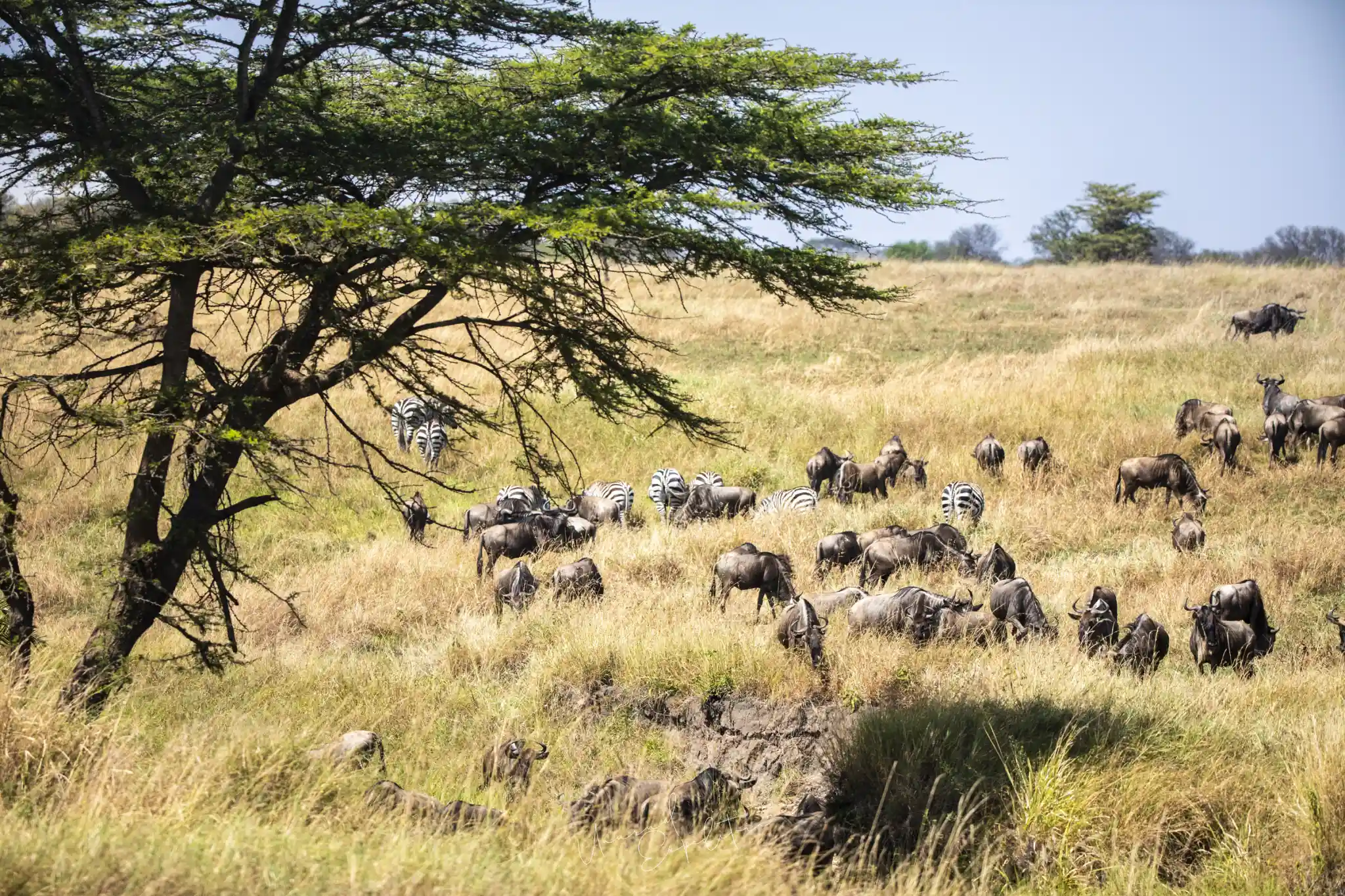
A Serengeti photography tour is a safari planned around light and animal behaviour instead of a checklist. In Tanzania's Serengeti National Park that means wildebeest herds crossing the Mara River in the north, leopards draped over trees and lions on granite kopjes in the centre, cheetahs hunting the open plains, and long golden evenings with acacias against the sky. You photograph from an open-roof vehicle, early and late, and spend the hot middle of the day waiting where the action is likely to happen.
The Serengeti is one region of our Tanzania photography tour guide, which covers entry, money and flights for the whole country. The photographs in this guide are our own, taken on our trips here; we hold the rights to them, and the notes come from knowing these places first hand.
Serengeti wildlife photography: what a trip feels like
Serengeti wildlife photography is mostly patience in a vehicle. Your driver guide reads the plains, other guides share sightings over the radio, and you sit with the long lens ready while a cheetah decides whether to stalk or a herd decides whether to cross. The best pictures come from staying with one situation long enough for it to happen, not from driving between sightings. Mornings start before sunrise so that you are out when the predators are still active and the light is low and warm. By late morning the light turns hard and the animals rest in the shade, which is the time to watch a river crossing point or a pride under a tree. Afternoons build again towards the last hour before the park closes for the night. Most guests come home with more frames of behaviour than of portraits: a yawn, a chase, a mother moving a cub, a crocodile breaking the water.
Serengeti National Park, Tanzania: the main regions
Serengeti National Park covers about 14,763 square kilometres of northern Tanzania and was listed as a World Heritage Site by UNESCO in 1981. UNESCO describes an annual migration of some two million wildebeest with hundreds of thousands of zebras and gazelles, followed by their predators. For a photographer the park splits into four areas that look and behave differently through the year.
| Area | What you photograph | When it is at its best |
|---|---|---|
| Northern Serengeti, Mara River | River crossings, crocodiles, herds on the banks | Roughly July to October |
| Central Serengeti, Seronera | Leopards in trees, lions on kopjes, cheetahs, resident game | All year |
| Southern plains, Ndutu | Calving herds, cheetahs on short grass, green landscapes | Roughly January to March |
| Western corridor, Grumeti | Herds moving west, river crocodiles | Roughly May to July |
Pick the area first and the season follows; the migration does not wait for a calendar, so treat every month in the table as a likelihood.
The Mara River crossings
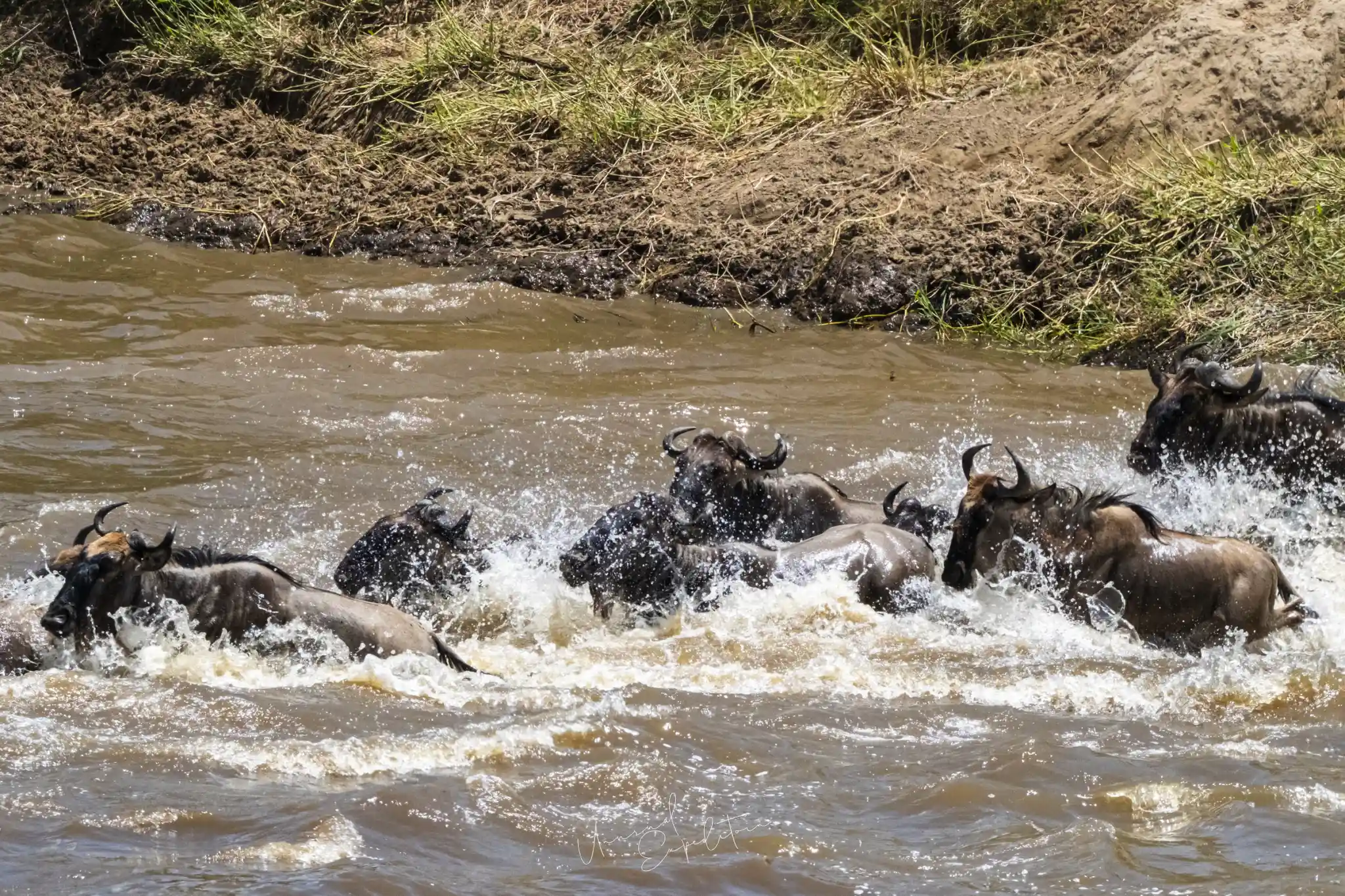
The Mara River crossings are the scene most people picture when they hear the word Serengeti. In the northern Serengeti, around Kogatende, the herds gather on the bank, hesitate, sometimes walk away, and then pour down the slope in a column of dust and spray while crocodiles wait in the current. Discover Africa's HerdTracker updates and Asilia Africa both put the main crossing season from around July into October, heaviest in August and September, with the exact timing set by the rain each year. A crossing can be over before a slow photographer has changed lenses, and a whole morning can pass with nothing. We explain the crossing points, the light and how to be ready in our Mara River crossing destination guide.
Leopards, lions and cheetahs
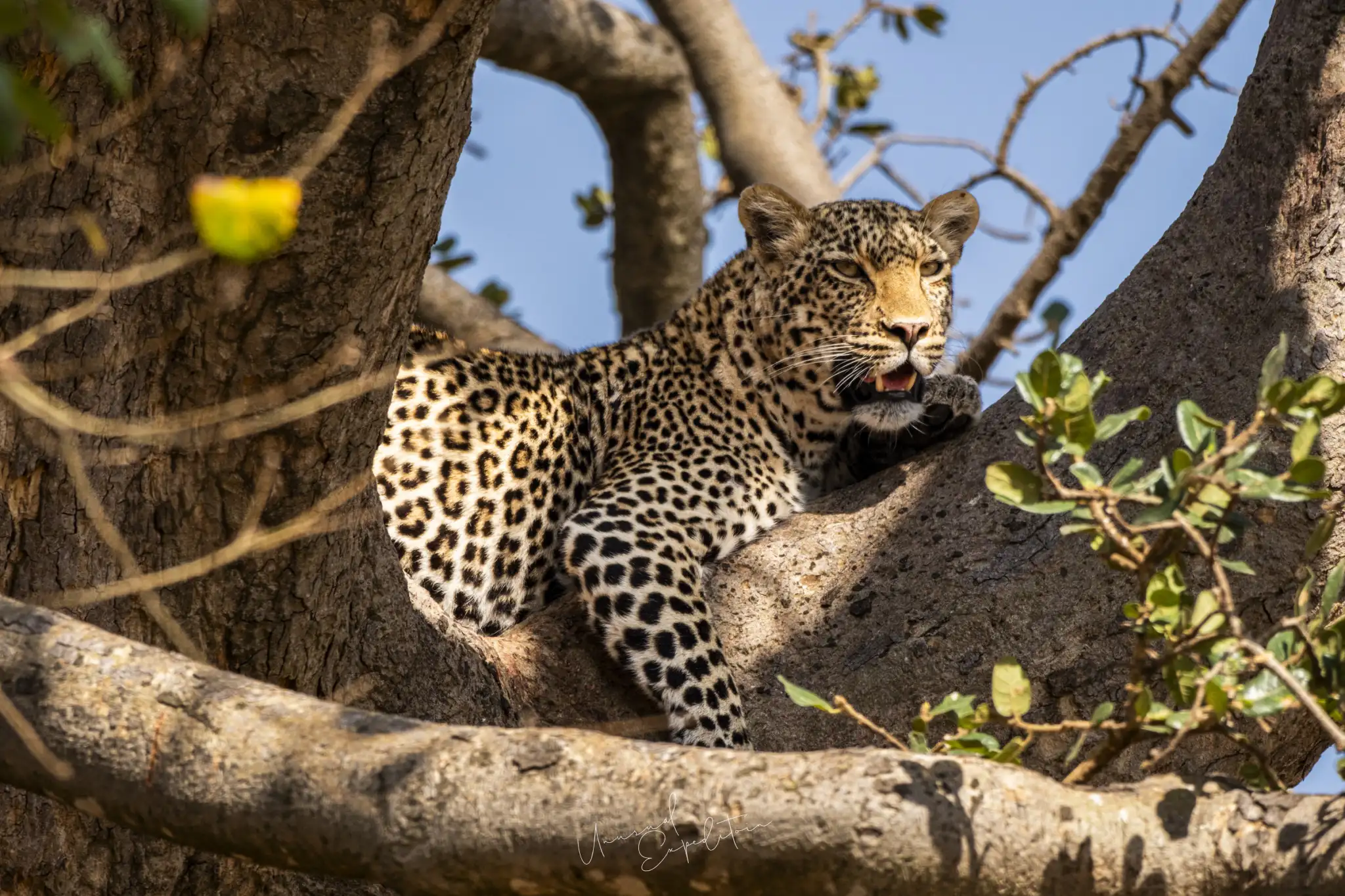
The Serengeti is one of the best places in Africa to photograph all three big cats on one trip. The Seronera valley in the central Serengeti is known for leopards resting along the river in sausage trees and acacias, and for lion prides that use the granite kopjes as lookouts and cub shelters. Cheetahs prefer open ground where they can see a long way, so they turn up on the plains and on termite mounds. Each cat needs a different approach: leopards reward a long lens and a long wait under a tree, lions give the most behaviour in the cool hours, cheetahs give you a chase if you are patient and lucky. Our Serengeti big cats article goes through each one.
Elephants, hippos, birds and the rest
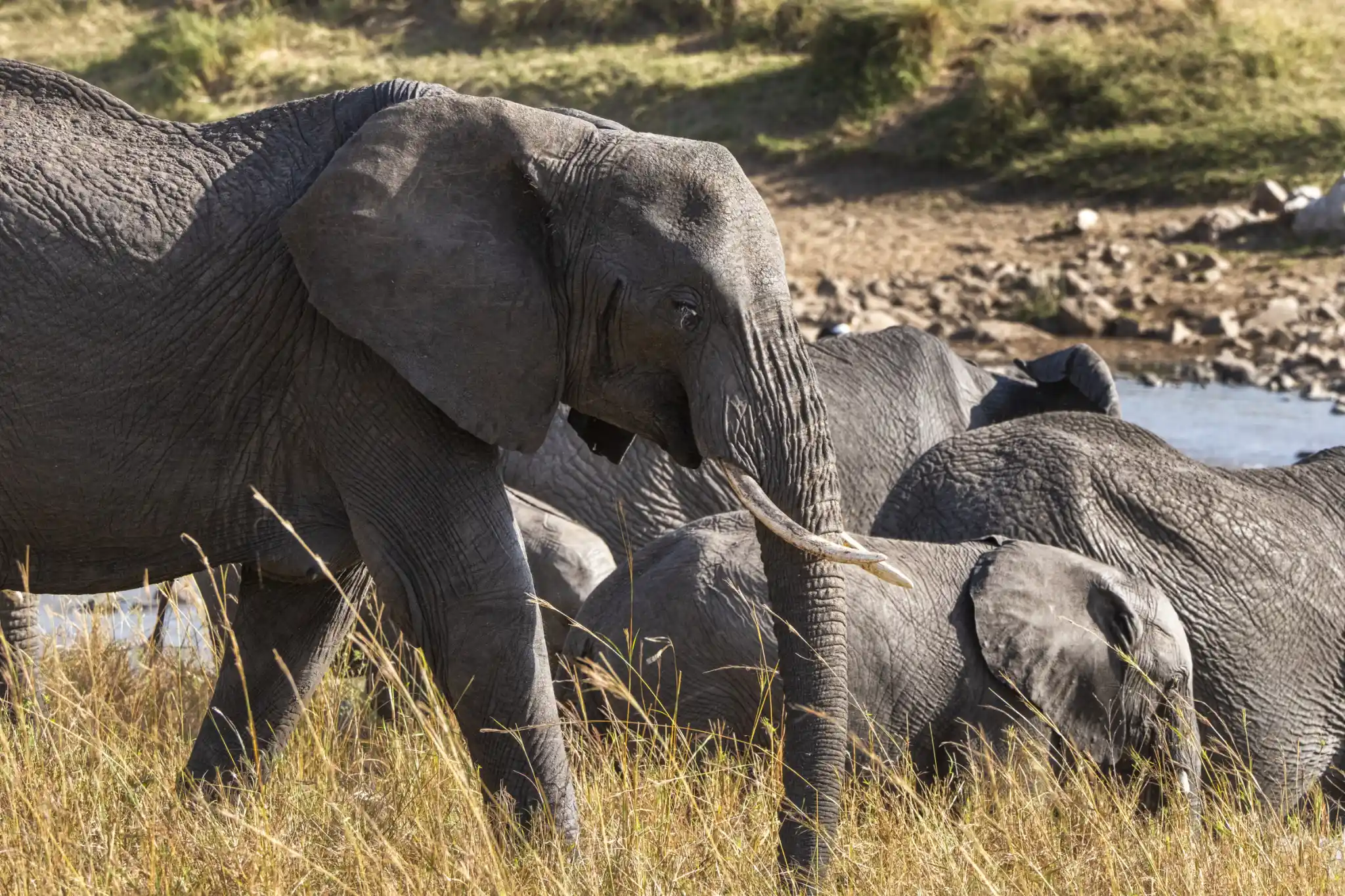
Between the headline scenes, the Serengeti keeps giving. Elephant families come down to the rivers to drink and cross, hippos pile up in the pools and grunt at each other, giraffes walk past single acacias that look placed for a postcard, and zebras make graphic black and white frames close up. The bird life is a subject of its own: lilac-breasted rollers, vultures at a carcass, storks following a grass fire. Our Serengeti National Park photos article shows what the park looks like across these subjects and how each was made.
When to go
There is no bad month for the Serengeti, only different pictures. The dry months from around June to October bring golden grass, dust, clear light and the Mara crossings. The calving season on the southern plains, broadly January to March, brings green grass, newborn wildebeest and busy predators. The long rains, around March to May, make some tracks hard going but leave the park quiet and the skies dramatic. Our best time to visit the Serengeti guide has a month-by-month table.
Sunrise, sunset and the light
The Serengeti sits close to the equator, so the sun rises and sets fast and the golden light lasts a short time at each end of the day. That short window is why game drives start in the dark. A lone acacia against a red sky, dust lit from behind as a herd walks into the low sun, a giraffe silhouetted on a ridge: these are the frames people remember. Read Serengeti sunrise and sunset photography for where to position the vehicle and how to expose.
Serengeti photography safari: lenses and the vehicle
On a Serengeti photography safari the long lens does most of the work. A 100-400mm or 200-400mm zoom covers leopards in trees and birds; a 70-200mm handles lions close to the vehicle, elephants and herds; a 24-70mm covers landscapes and the sky at sunset. Two bodies save you from changing lenses in dust at the moment a crossing begins. A bean bag on the window frame or the open roof is steadier than a tripod in a vehicle. We keep group numbers small so that everyone has a window and room to move.
The first time I watched a crossing on the Mara, I photographed the leap and missed the crocodile. Now I tell everyone to keep one camera wide on the whole river and one long on the bank where the herd is gathering.
Joseph Mak, tour leader, Unusual Expedition
Is the Serengeti worth visiting, and how do you get there?
For wildlife photography, yes: few places give this density of animals, this much predator behaviour and this much space in one park. The usual route from Singapore is a one-stop flight to Kilimanjaro, then a light aircraft to one of the park's airstrips such as Seronera or Kogatende, or the road through Ngorongoro. We cover the practical side in is the Serengeti worth visiting and in the Serengeti photography FAQ.
Explore the Serengeti in depth
- Serengeti National Park photos: what the park looks like
- Best time to visit the Serengeti for photography
- Mara River crossing in the Serengeti
- Serengeti sunrise and sunset photography
- Serengeti big cats: leopards, lions and cheetahs
- Is the Serengeti worth visiting
- Serengeti photography FAQ
- Serengeti Leopards
- Serengeti National Park Big Five
- Serengeti National Park Zebra
- Serengeti National Park Birds
For the rest of the country, including Ngorongoro, Lake Eyasi and Zanzibar, start from the Tanzania photography tour guide.
Photograph the Serengeti with us
Our Serengeti Photo Tour 2027 spends most of its time at the Mara River and in the central Serengeti, then finishes in the Ngorongoro highlands and at Lake Eyasi. The fare is indicatively S$10,300 to S$12,300 per person depending on the room; current dates and the full trip are on the Tanzania photography tours page.
Join the Serengeti photography tour
Serengeti Photo Tour – Tanzania 2027 departs 21 Aug 2027 To 01 Sep 2027. Small group, photography first. All Serengeti photography tours.
Explore Serengeti in depth
- Serengeti National Park Big Five: Where to Find and Photograph Each OneTanzania
- Serengeti National Park Zebra: Photographing the Stripes of the MigrationTanzania
- Serengeti National Park Birds: Bateleurs, Vultures, Hornbills and How to Photograph ThemTanzania
- Serengeti Leopards: Finding and Photographing Them in Seronera and on the KopjesTanzania
- Serengeti Photography FAQ: Fees, Weather, Rules and GearTanzania
- Is the Serengeti Worth Visiting? How to Get There and What to ExpectTanzania
- Serengeti Big Cats: Photographing Leopards, Lions and CheetahsTanzania
- Serengeti Sunrise and Sunset: Photographing the Golden HoursTanzania
- Mara River Crossing in the Serengeti: How to Photograph ItTanzania
- Best Time to Visit the Serengeti for Photography, Month by MonthTanzania
- Serengeti National Park Photos: What the Park Looks LikeTanzania
Upcoming Photo Tours
- Egypt Photo Tour – EgyptEgypt 12 Dec 2026 To 20 Dec 2026
- Inner Mongolia Winter Owl Photo Tour – ChinaChina 01 Jan 2027 To 04 Jan 2027
- Inner Mongolia Winter Photo Tour – ChinaChina 05 Jan 2027 To 11 Jan 2027
- Mekong And Central Highland Vietnam Photo Tour - VietnamVietnam 16 Jan 2027 To 24 Jan 2027