
Lake Eyasi Photography Tour Guide: Hadzabe, Datoga and Baobabs
Lake Eyasi, Tanzania for photographers: Hadzabe hunters, Datoga herders, baobabs and dusk fires, and how to visit with respect.
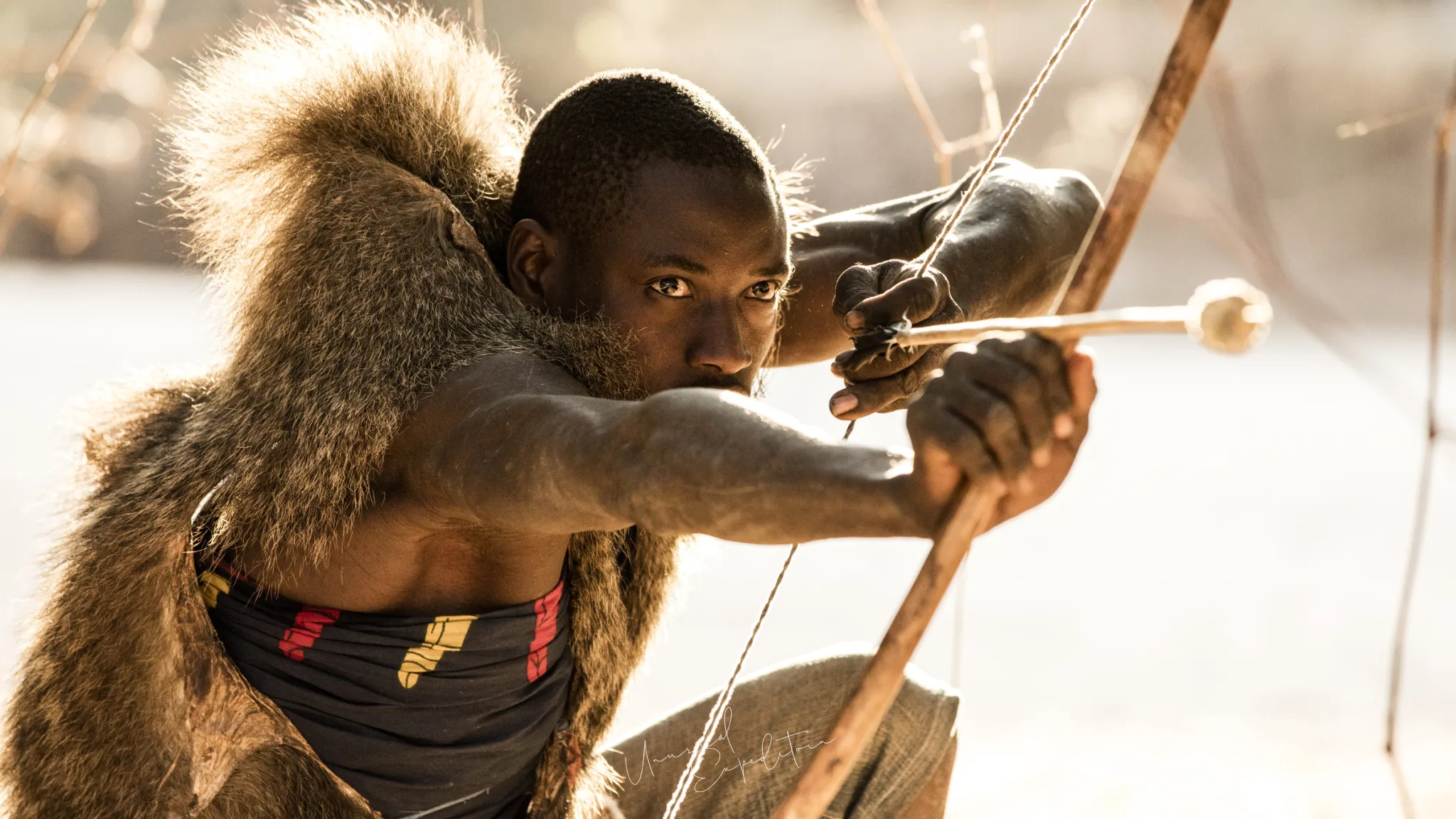
Lake Eyasi, Tanzania, is a shallow salt lake below the Ngorongoro highlands, and for photographers it is about people more than water. Hadza hunters, often called the Hadzabe, still hunt with bows in the dry bush around it, Datoga herders keep cattle and goats close by, and giant baobabs stand over both. A visit is arranged with the community and it is slow, close work: walking with hunters, sitting at a fire as the light goes, and making portraits only with permission.
Lake Eyasi is one area of our Tanzania photography tour guide, which covers entry, money and flights from Singapore once for the whole country. The photographs in this guide are our own, taken on our trips here; we hold the rights to them, and the notes come from knowing the place first hand.
Where is Lake Eyasi in Tanzania?
Lake Eyasi lies in northern Tanzania, on the floor of the Rift Valley, south-west of the Ngorongoro Crater and west of Lake Manyara. Britannica puts the lake at about 1,040 metres above sea level and describes it as filling a bowl-shaped depression in a volcanic region. The Tanzania Tourist Board calls it a seasonal, shallow salt lake: in the dry season much of it turns to white crust and the water that is left draws birds and animals to a few pools. Below the escarpment the country changes quickly from the green, cool highlands around Karatu to hot, dusty woodland of acacia, sisal-like reeds, granite boulders and baobabs. Mang'ola, the main village near the north-eastern end of the lake, is where most visits are arranged. Most travellers see the lake on the way between the Ngorongoro highlands and the Serengeti, which our Serengeti photography tour guide covers on its own.
Who lives around Lake Eyasi: Hadzabe and Datoga
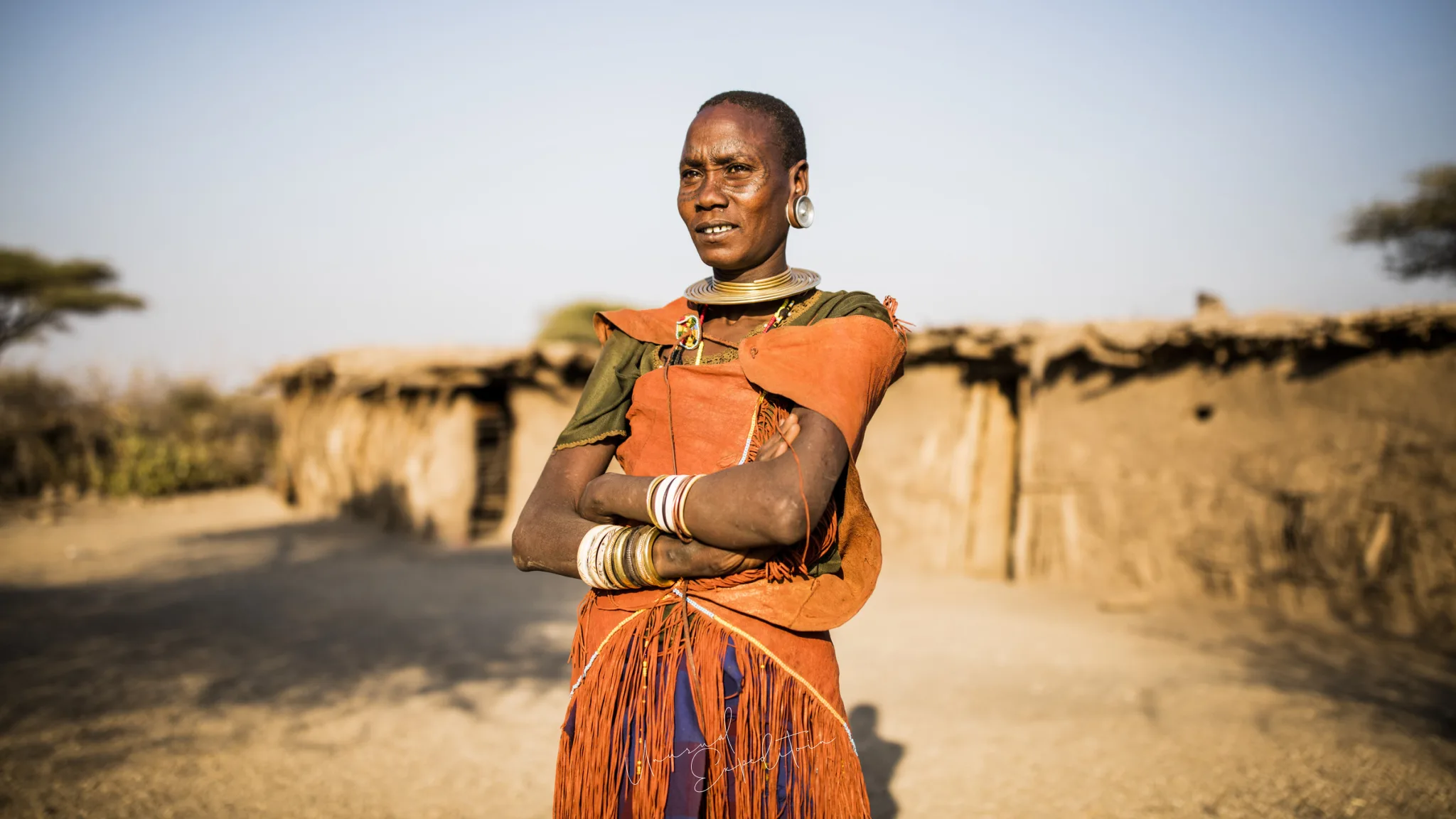
Hadzabe and Datoga are the two peoples most visitors meet at Lake Eyasi, and they live very differently. The Hadza number roughly 1,200 to 1,300 people, according to the Max Planck Institute for Evolutionary Anthropology, which runs long-term fieldwork with them, and National Geographic reported that only a minority still live mainly by hunting and gathering. They speak Hadzane, a language with click sounds, and most also speak Swahili. The Datoga are Nilotic-speaking herders of cattle, goats and donkeys, and today the largest herding community around the lake. The two trade with each other, metal and arrowheads for meat and honey, and they also argue over land and water. The Tanzania Tourist Board also names the Mbulu (Iraqw) among the peoples of the area. Our pages on the Hadzabe tribe in Tanzania and the Datoga tribe in Tanzania go into each in more depth.
What you photograph at Lake Eyasi
Lake Eyasi gives you five kinds of picture, and each needs a slightly different approach. None of them is a landscape of the lake itself in the usual sense; the lake is often a bright, hazy strip in the distance.
| Subject | Where | Light | Lens |
|---|---|---|---|
| Hadza hunters on the move | Dry woodland and reed beds | Early morning, late afternoon | 24-70mm |
| Life in a rock shelter | Granite overhangs used as camps | Dim, warm light bounced off rock | 24-70mm at a wide aperture, high ISO |
| Fires at dusk and after dark | Hadza camps | Blue hour plus firelight | 16-35mm or 24-70mm |
| Datoga homesteads and portraits | Mud houses inside thorn fences | Soft morning light, doorway light inside | 24-70mm, 70-200mm for portraits |
| Baobabs | Woodland around the camps | Clear blue sky or dusk silhouette | 16-35mm |
A single standard zoom covers most of the visit, because almost everything happens within a few metres of you.
Two subjects have their own pages: the evening fires and the baobab trees around Lake Eyasi.
How a visit with the Hadzabe works
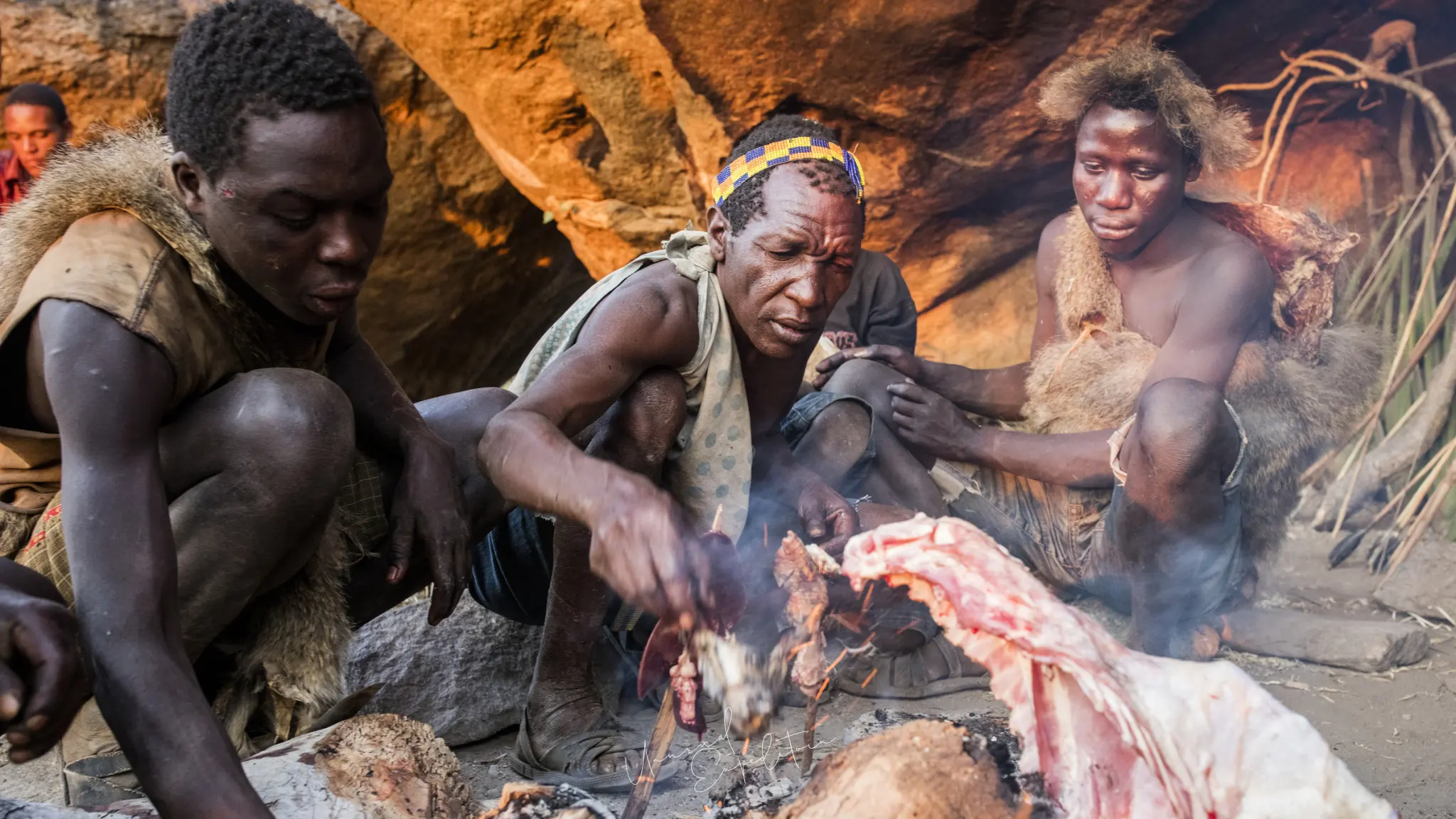
A visit to a Hadza camp near Lake Eyasi is arranged through a local guide, and in Mang'ola through the Lake Eyasi Cultural Tourism Programme, a government-registered office set up in 2011, as the researcher Yatsuka describes in the Globál e-journal. A fee goes to the community. Visits start early, when the men go out to hunt, and you walk with them through thorn scrub at their pace; there is no promise of a kill and nothing is staged for you. Back at camp, people get on with their day: mending arrows, sharing what was caught, resting in the shade of a rock or a baobab. Most of the photographs come from simply being there quietly for long enough. The Hadzabe tribe hunting page explains what to expect on the walk, and the Hadzabe tribe tour page covers how to get there and how to choose a visit that is fair to the people you meet.
At Lake Eyasi I tell people to put the long lens away and walk. The hunters move fast and quietly, and the pictures come when you keep up, stay behind them and stop asking for anything.
Joseph Mak, tour leader, Unusual Expedition
Photographing people at Lake Eyasi with respect
Photographing people at Lake Eyasi is a privilege that the visit fee does not buy outright. We ask before every close portrait, and we show people the picture on the back of the camera, which often starts a conversation. We do not photograph children. We do not ask anyone to dress up, re-enact a hunt or pose with a dead animal. Researchers who have followed tourism here, Yatsuka among them, report mixed effects: steady cash and easier access to maize flour, but also a stream of visitors that some Hadza find tiring enough to move away from. Survival International has criticised many Hadza tours as unfair to the people visited. Small groups, a local guide the community trusts, a fee paid to the camp and a quiet manner are what make a visit fair. Words matter too: the Hadza and the Datoga are peoples living now, with land titles, trade and politics, and we do not describe them as relics of the past.
Best time to visit Lake Eyasi
The best time to visit Lake Eyasi for photography is the dry season, roughly June to October, when tracks are firm, hunting is active and the low sun at either end of the day comes through dust and smoke. The Tanzania Tourist Board says almost any month works and that only April and May, the long rains, are doubtful. In the dry months the lake shrinks to a white pan; after the rains it fills, the bush turns green and the light is clearer but softer. It is hot here in every season, hotter than the highlands above, so the good photography happens early and late, with the middle of the day spent in the shade. The Lake Eyasi photography FAQ answers the practical questions on heat, clothing, gear and fees.
Explore Lake Eyasi in depth
- Hadzabe tribe in Tanzania: who the Hadza are and how to photograph them with respect.
- Hadzabe tribe hunting: bows, honey and walking with the hunters.
- Datoga tribe in Tanzania: herders, smiths and their homesteads.
- Evenings at the fire: dusk, firelight and night.
- The baobab tree in Tanzania: photographing baobabs around the lake.
- Hadzabe tribe tour: how to get there and whether it is worth it.
- Lake Eyasi photography FAQ: location, language, heat, gear and fees.
Photograph Lake Eyasi with us
Our scheduled Serengeti Photo Tour 2027 finishes in the Ngorongoro highlands with a visit to Lake Eyasi, after the Mara River and the central Serengeti; it is indicatively S$10,300 to S$12,300 per person depending on the room. Current dates are on our Tanzania photography tours page. We also run Lake Eyasi as part of a private trip for individuals, couples, families and photographers who want more time with the Hadza and Datoga at their own pace.
Join the Lake Eyasi photography tour
Serengeti Photo Tour – Tanzania 2027 departs 21 Aug 2027 To 01 Sep 2027. Small group, photography first. All Lake Eyasi photography tours.
Explore Lake Eyasi in depth
- Lake Eyasi Photography FAQ: Where the Hadzabe Live, Language, Heat and GearTanzania
- Hadzabe Tribe Tour: How to Get to Lake Eyasi and Whether It Is Worth ItTanzania
- Hadzabe Tribe in Tanzania: Who the Hadza Are and How to Photograph ThemTanzania
- Hadzabe Tribe Hunting: Bows, Honey and Photographing the HuntTanzania
- Hadza People Culture at the Fire: Photographing Evenings near Lake EyasiTanzania
- Datoga Tribe in Tanzania: Herders and Smiths of Lake EyasiTanzania
- The Baobab Tree in Tanzania: Photographing Baobabs around Lake EyasiTanzania
Upcoming Photo Tours
- Egypt Photo Tour – EgyptEgypt 12 Dec 2026 To 20 Dec 2026
- Inner Mongolia Winter Owl Photo Tour – ChinaChina 01 Jan 2027 To 04 Jan 2027
- Inner Mongolia Winter Photo Tour – ChinaChina 05 Jan 2027 To 11 Jan 2027
- Mekong And Central Highland Vietnam Photo Tour - VietnamVietnam 16 Jan 2027 To 24 Jan 2027