
Wadi Rum Camel Ride: Caravans, Herders and How to Photograph Them
Wadi Rum camel ride: what a camel tour is like, camel strings and herders, the camel races, and how to photograph camels.
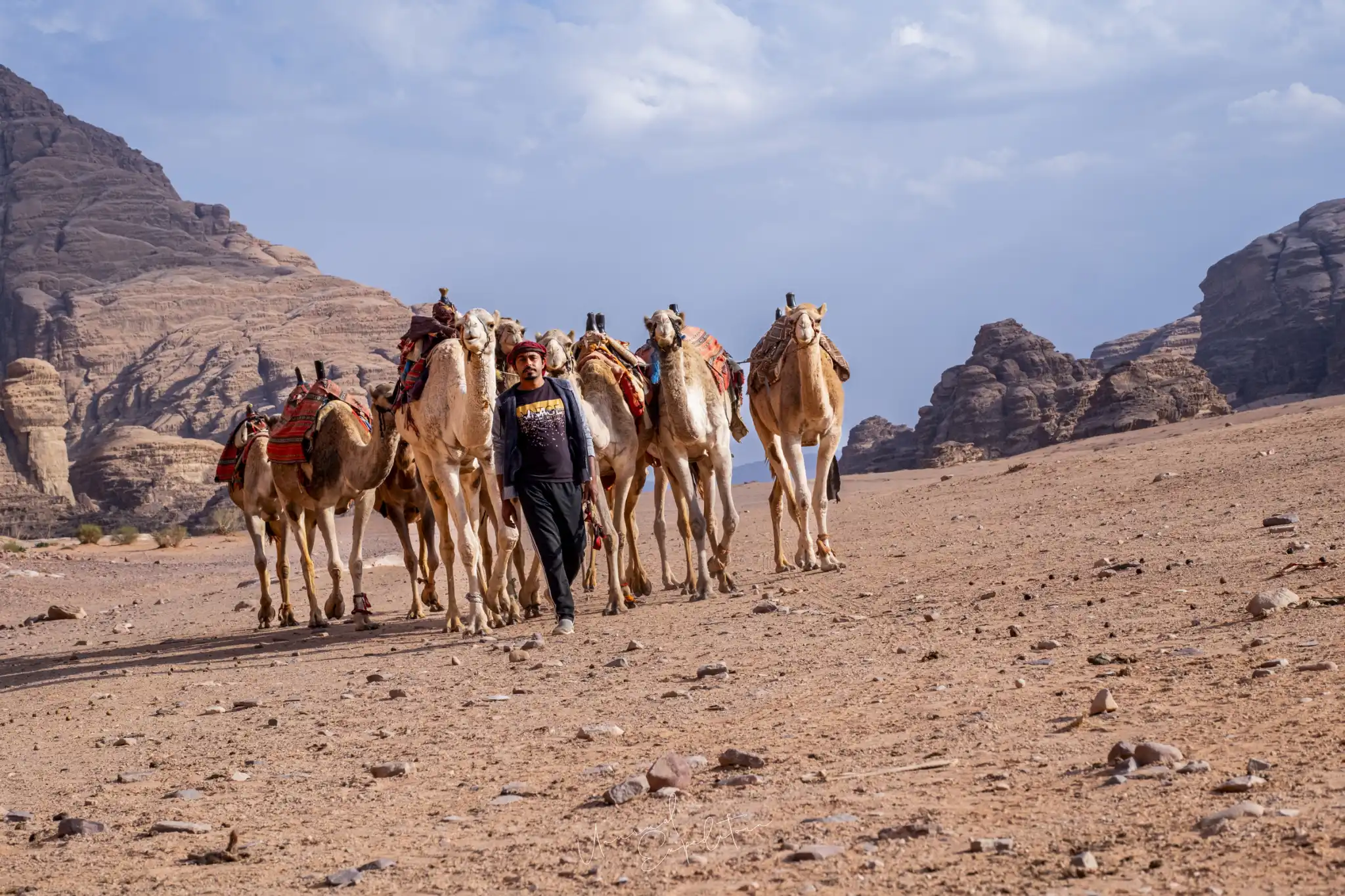
A Wadi Rum camel ride is the slow way to see the desert: you sit high on a saddled camel led by a Bedouin herder, crossing red sand between the cliffs at walking pace, either for a short ride from camp or on a longer camel trek between valleys. From the ground the camels are just as rewarding: strings led across the sand, herders with their favourites, riders against the jebels. We photograph both, and explain how in this part of our Wadi Rum photography tour guide.
Wadi Rum camel ride: what it is like
A Wadi Rum camel ride starts with the camel kneeling. You climb into the saddle, hold the pommel, and lean back as it rises back legs first, which is the only moment that feels unsteady. After that the motion is a slow rocking walk, and the herder usually leads on foot with a rope. Saddles are padded with rugs and blankets, but a long ride is hard on the legs and back if you are not used to it. Wear long trousers, sunglasses and a scarf against the sun and sand, and keep your camera on a short strap across your body, not round your neck, so it does not swing against the saddle.
Wadi Rum camel tour: short rides and longer treks
A Wadi Rum camel tour can be anything from a short ride to a sunset dune to a trek of several days between camps, sleeping out in the desert. Most visitors combine a jeep for distance with a camel for one stretch, often at the end of the day. For photography, the short ride is more useful than it sounds: it puts you in the middle of a camel string in good light, and you can get off to shoot the others. Longer treks reach parts of the protected area that jeeps rarely visit, at the cost of carrying less equipment. Book through the camp or a local operator, and tell them in advance that you want to photograph the herders.
Photographing camels and herders
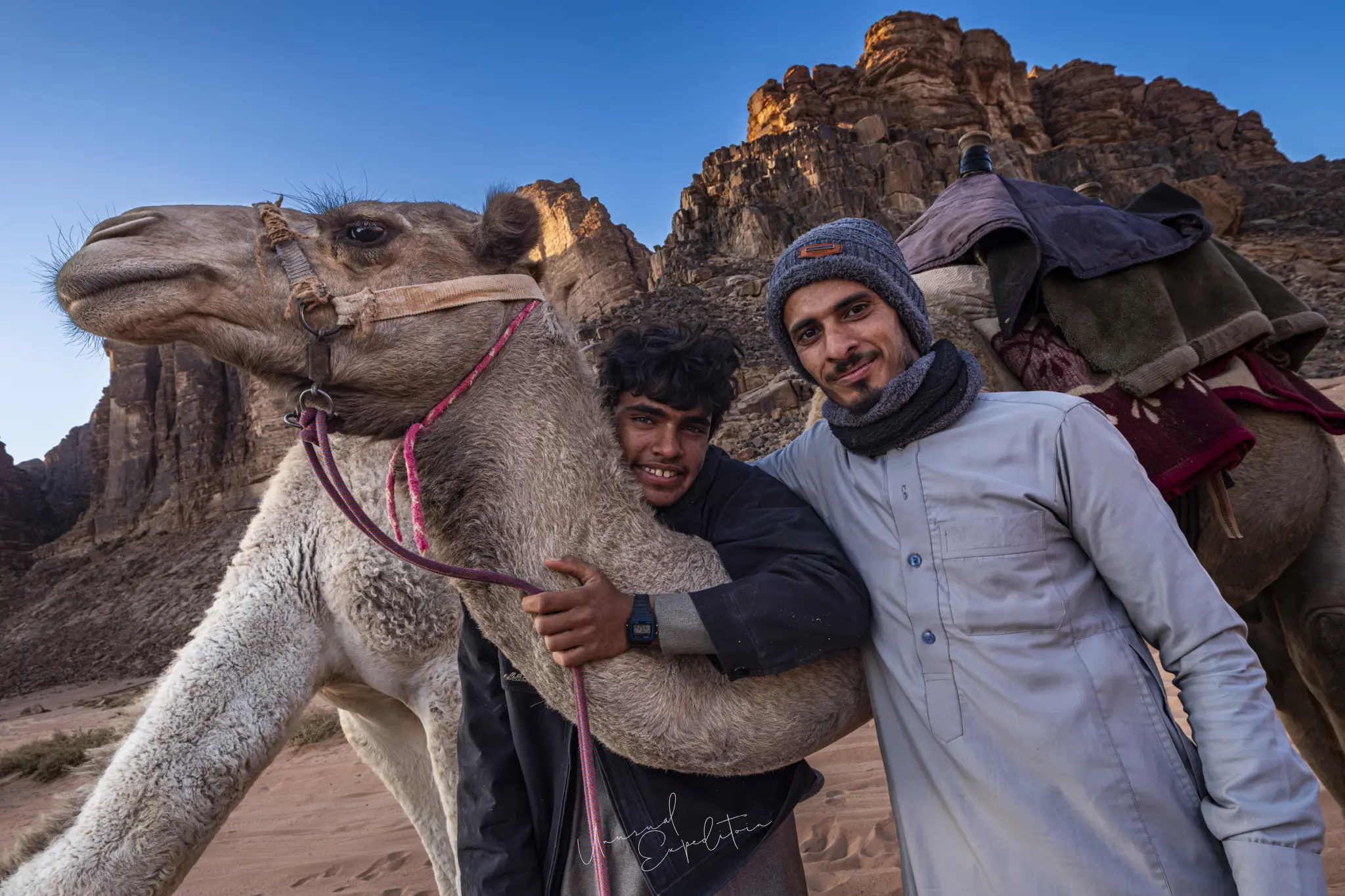
Camel strings photograph best side on or coming towards you, with a 70-200mm from far enough away that the line of animals is separate from the background. Stand where the herder will walk past with the jebel behind, and shoot a sequence as the string comes through the light. Close up, a 24-70mm or a wide lens at the camel's eye level gives the animal its character: the long lashes, the split lip, the decorated bridle. Herders are often proud of particular animals and happy to pose with them once asked; the friendliest pictures we have from Wadi Rum came from asking two young herders to stand with the camel they liked best.
Camels in Wadi Rum: the light and the time
Camels in Wadi Rum are around all day, but the light that suits them is low. In the late afternoon the sun comes across the sand at a low angle and picks out the fur and the dust kicked up by the string; early in the morning herders bring the animals out of the camps in cold, clean light. In the middle of the day the camels rest folded on the sand in the shade of the cliffs, and that is when to make quiet close-ups. Our Wadi Rum sunset and sunrise article covers where to be when the light turns.
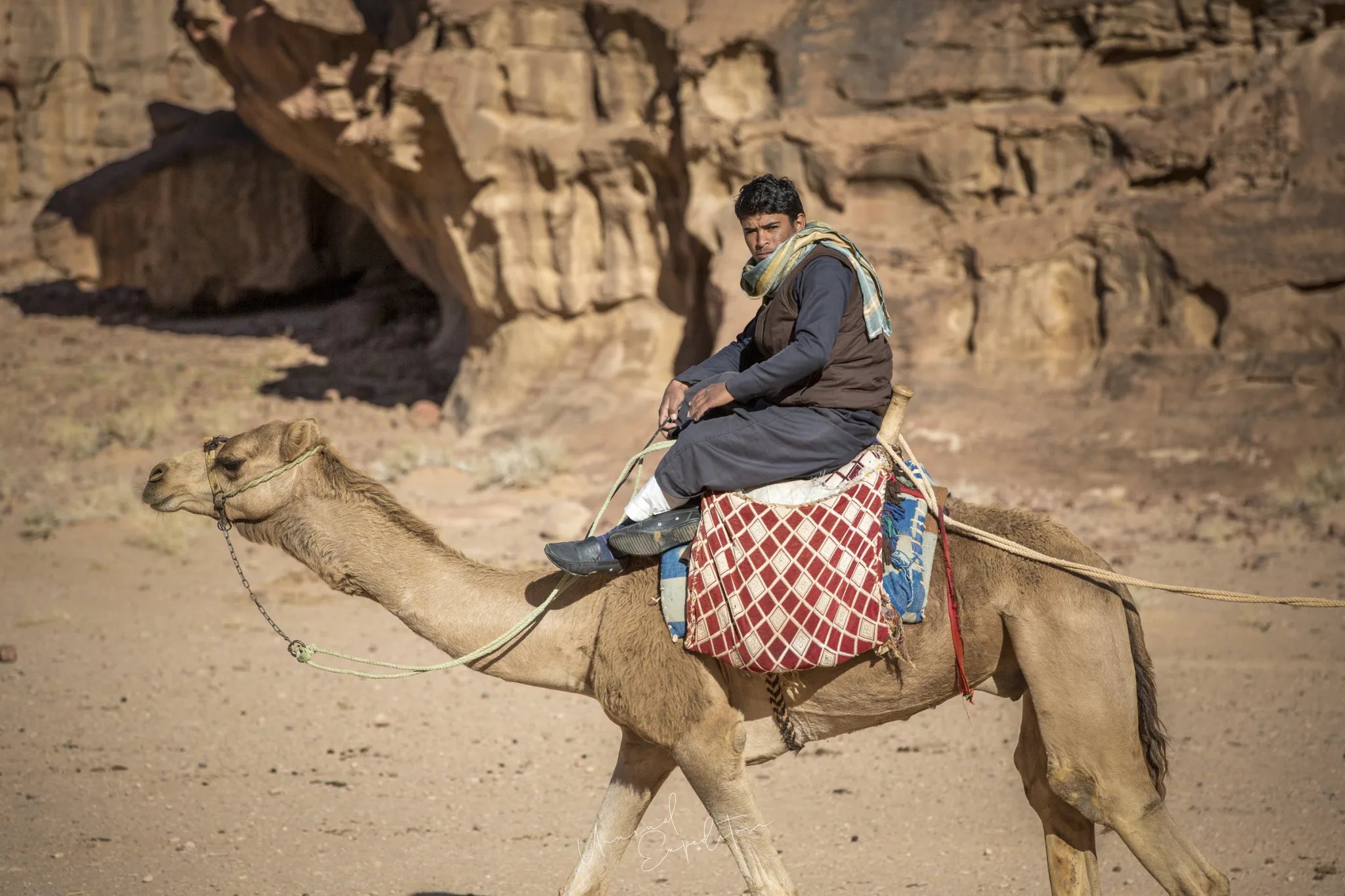
"Watch the herders more than the camels. They talk to the animals the whole time, and when a camel refuses to get up you see the patience of the desert in a single minute."
Joseph Mak, tour leader, Unusual Expedition
Wadi Rum camel race
The Wadi Rum camel race takes place on a purpose-built track near Disi, just north of the protected area. Races are held mostly in spring and autumn, and the largest meeting is a festival backed by the United Arab Emirates; The National reports that remote-controlled robot jockeys now ride the camels, while owners drive alongside the track in 4x4s urging them on. Dates are rarely announced far ahead, so ask your Bedouin host whether a race is on during your stay. The finish line is a rare chance to photograph camels at full gallop: a 70-200mm or longer, a fast shutter, and a position along the rail.
Camel ride or jeep: comparing the two
| Camel ride | Jeep | |
|---|---|---|
| Distance covered | Short, one or two valleys | The whole central area |
| Photography from the vehicle | Hard while moving; stop and dismount | Easy to stop anywhere |
| Equipment you can carry | One body and one lens | Everything |
| What you see | The desert at walking pace, herders close | Rock bridges, canyons, inscriptions |
| Best use | Late afternoon to a sunset dune | Morning and afternoon touring |
We usually suggest the jeep for the sights and the camels for one late-afternoon stretch, which gives the best of each.
Camel welfare
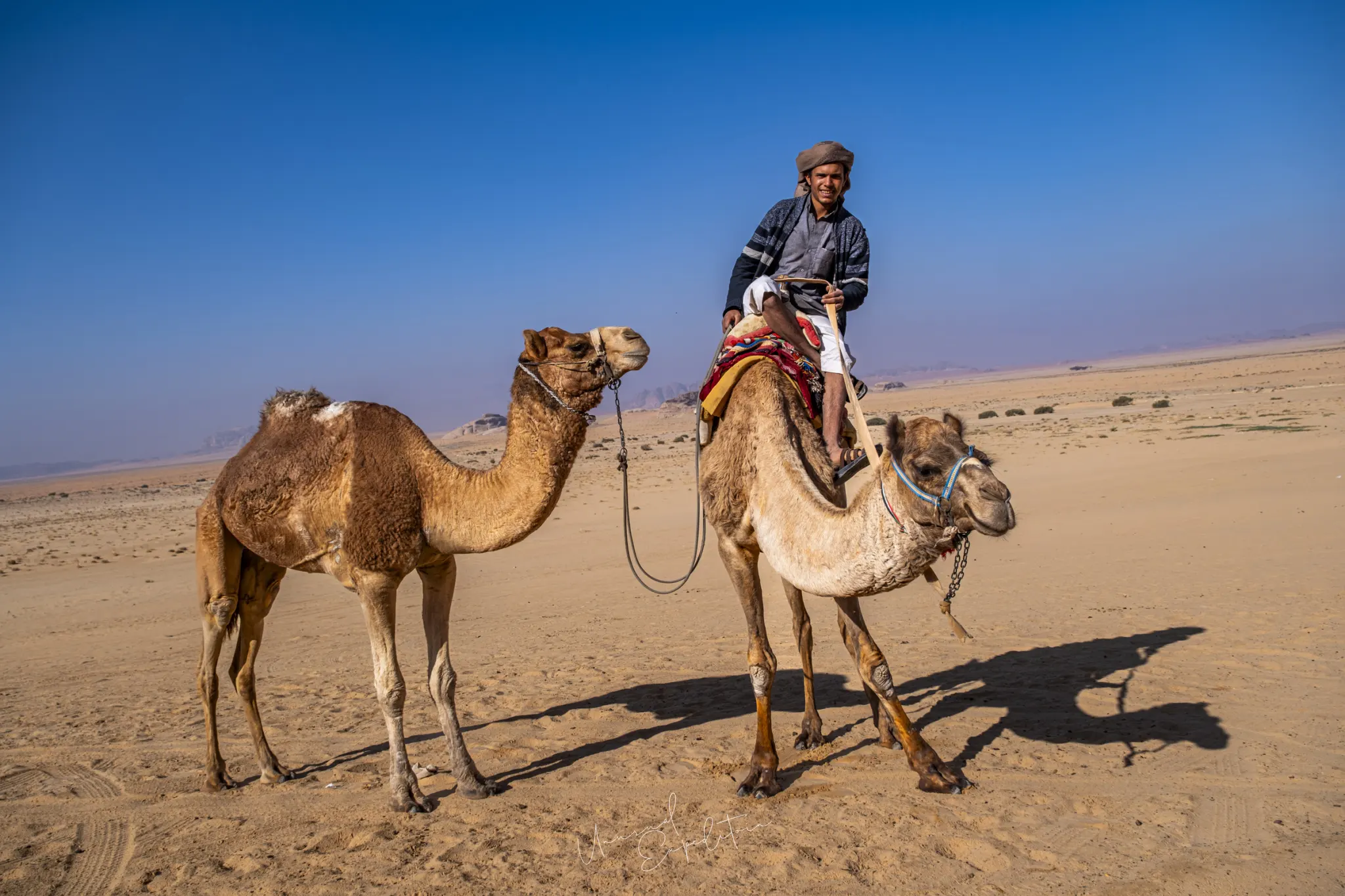
Choose a camp or operator whose camels look healthy and rested, with water nearby and saddles padded properly. A responsible herder will not let a camel carry a rider who is too heavy for it, and will rest the animals in the heat of the day. If a camel looks lame or thin, say so and do not ride it. Do not feed the camels without asking the herder, and keep away from their back legs. A good Wadi Rum desert tour treats the animals as working partners, which is how the Bedouin who own them see them. For the sights a jeep reaches, see the Wadi Rum jeep tour; for the people, Wadi Rum Bedouin.
Ride and photograph camels in Wadi Rum with us
We arrange camel rides at the times of day that suit photography, with herders who are happy to be photographed. We run Wadi Rum as a private trip on request; see private tours and the Jordan photography tours page.
Wadi Rum photography tours
The next Wadi Rum departure is announced on the Wadi Rum photography tours page, with previous expeditions and all the planning guides.
Explore Wadi Rum in depth
- Wadi Rum Photography Tour Guide: Jordan's Desert of Red Sand and StoneJordan
- Wadi Rum Sunset and Sunrise: Where and When the Light Is BestJordan
- Wadi Rum Photos: What the Desert Looks Like Through the LensJordan
- Wadi Rum Jeep Tour: Rock Bridges, Canyons and Lawrence of ArabiaJordan
- Wadi Rum Bedouin: Photographing the People of the DesertJordan
- Wadi Rum at Night: Stars, Camps and Night PhotographyJordan
- How to Visit Wadi Rum: Entry, Weather by Month and How Many NightsJordan
Upcoming Photo Tours
- Egypt Photo Tour – EgyptEgypt 12 Dec 2026 To 20 Dec 2026
- Inner Mongolia Winter Owl Photo Tour – ChinaChina 01 Jan 2027 To 04 Jan 2027
- Inner Mongolia Winter Photo Tour – ChinaChina 05 Jan 2027 To 11 Jan 2027
- Mekong And Central Highland Vietnam Photo Tour - VietnamVietnam 16 Jan 2027 To 24 Jan 2027