
Wadi Rum Photography Tour Guide: Jordan's Desert of Red Sand and Stone
Wadi Rum, Jordan: the protected desert, its cliffs, rock bridges, Bedouin camps and night skies, and how to photograph them.
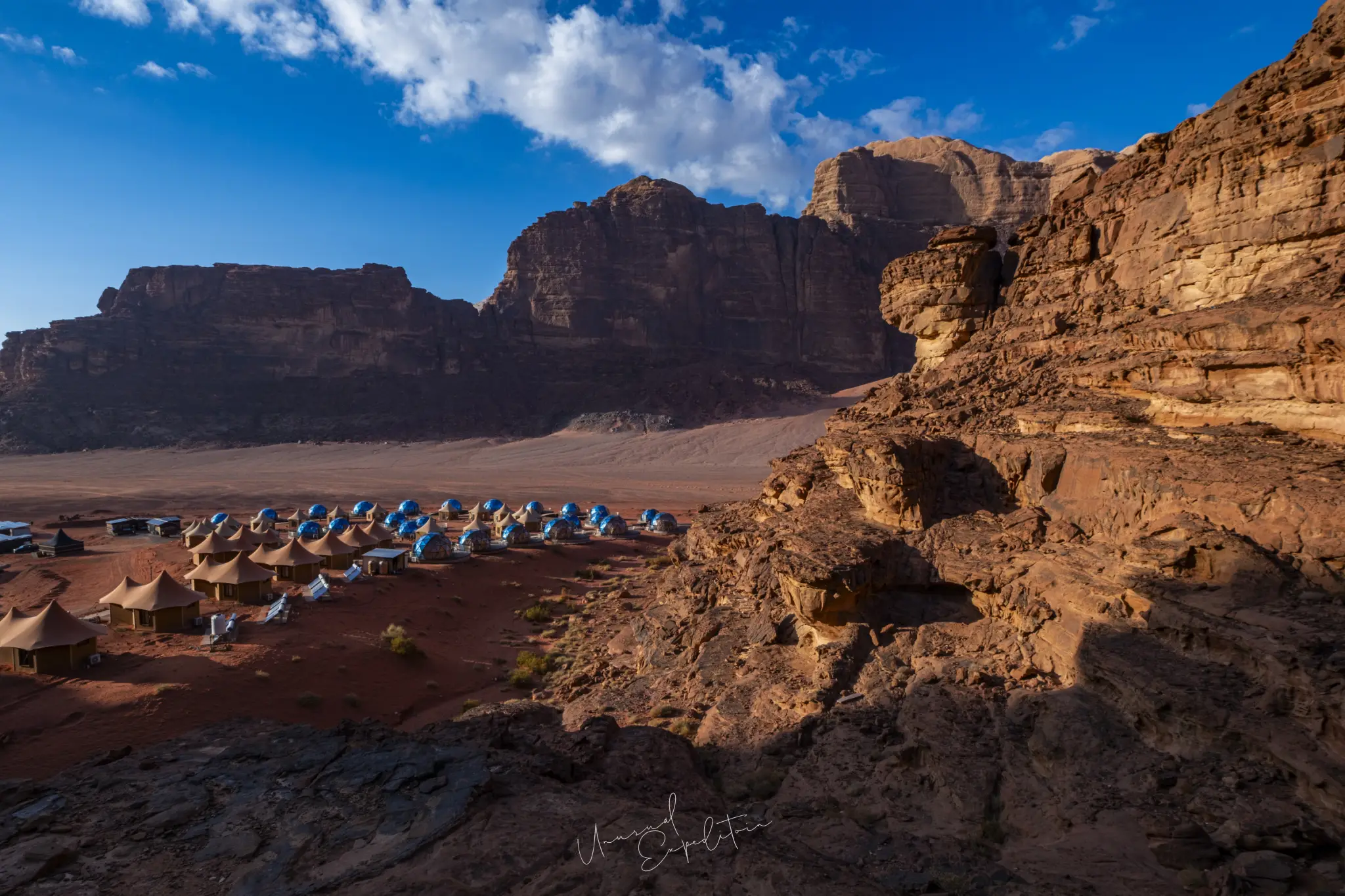
Wadi Rum, Jordan, is a protected desert of red sand and sandstone mountains in the far south of the country, a UNESCO World Heritage Site since 2011 and the landscape behind Lawrence of Arabia and The Martian. For a photographer it offers towering cliffs at dusk, rock bridges, camel strings led by Bedouin herders, tea by the fire in goat-hair tents and dark night skies away from the village. This is the Wadi Rum area guide within our Jordan photography tour guide.
The photographs in this guide are our own, taken on our trips to Wadi Rum; we hold the rights to them, and the notes come from knowing these places first hand. Each subject has its own article, listed near the end.
Wadi Rum Jordan: what it is
Wadi Rum Jordan is a wide system of sandy valleys between isolated mountains of sandstone and granite, close to the Saudi border and inland from Aqaba. The mountains, called jebels, rise straight out of the sand, so each one stands alone like a building, and the valleys between them are broad enough to drive across in any direction. Jordan's highest mountain, Jebel Umm ad Dami, is out near the southern edge. The Bedouin have grazed camels and goats here for generations, and Rum Village, at the entrance, is where most of the families who now run the camps and jeeps live. What the photographer notices first is colour: the sand runs from pale gold to deep red within a short walk, and the cliffs turn orange, then rose, then violet as the sun drops.
Wadi Rum protected area and UNESCO
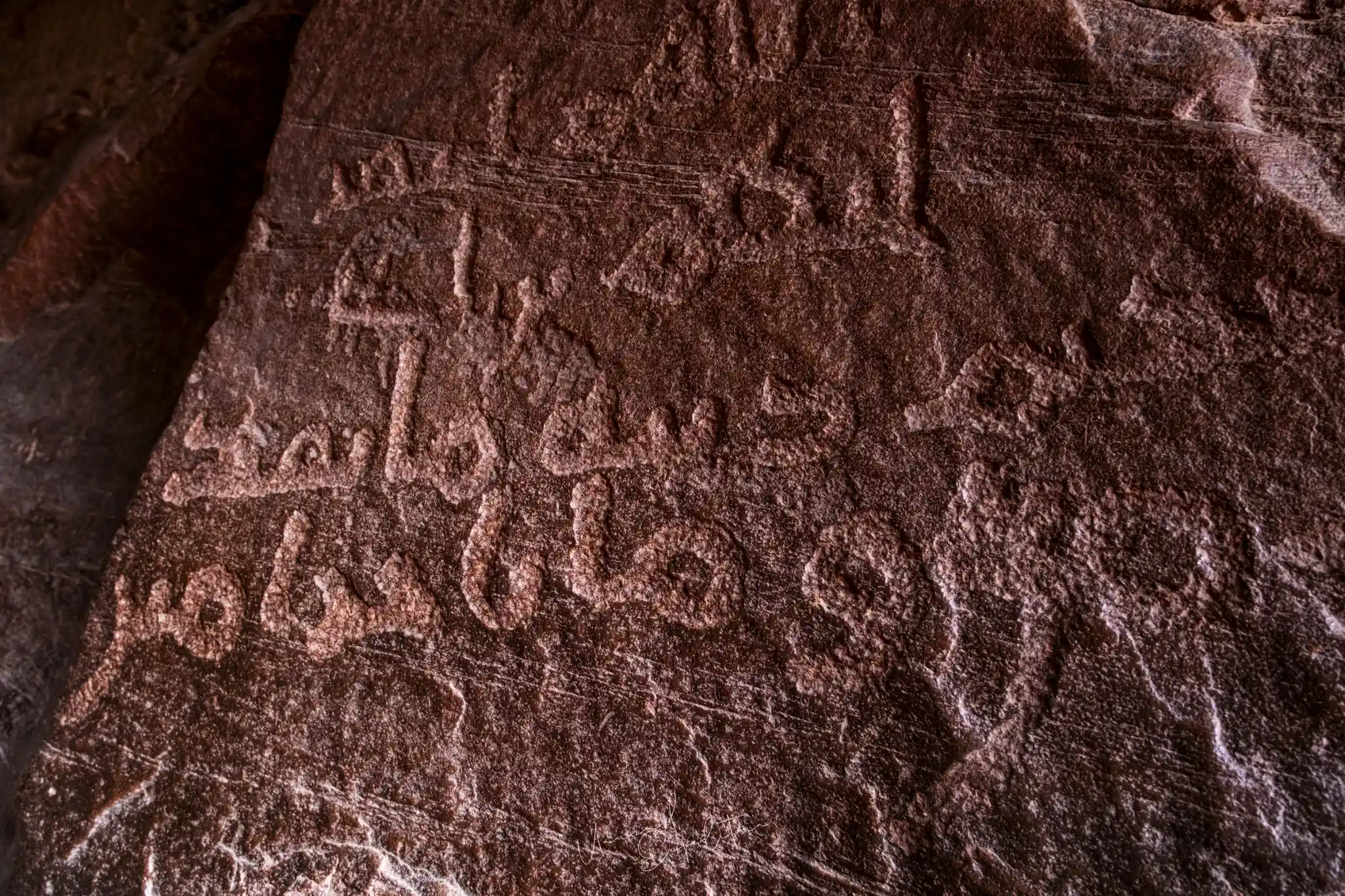
The Wadi Rum protected area covers about 74,000 hectares and is managed by the Aqaba Special Economic Zone Authority. UNESCO inscribed it in 2011 as a mixed site, natural and cultural, and describes its narrow gorges, natural arches, towering cliffs and caverns, together with some 25,000 rock carvings and 20,000 inscriptions that record about 12,000 years of people living and travelling here. The IUCN, which assesses the natural side, rates the outlook as good with some concerns and names the growth of Rum Village as one of them. For visitors this means a paid entry at the Visitor Centre, local Bedouin drivers inside the area and a few rules worth respecting: stay on existing tracks, carry rubbish out and never touch or chalk the inscriptions.
Wadi Rum desert photography: the main subjects
| Subject | What you photograph | Best light |
|---|---|---|
| The jebels and valleys | Lone sandstone mountains, red dunes, desert scrub | Late afternoon into dusk, early morning |
| Rock bridges and Mushroom Rock | Natural arches, wind-carved shapes against the sky | Morning, with blue sky behind |
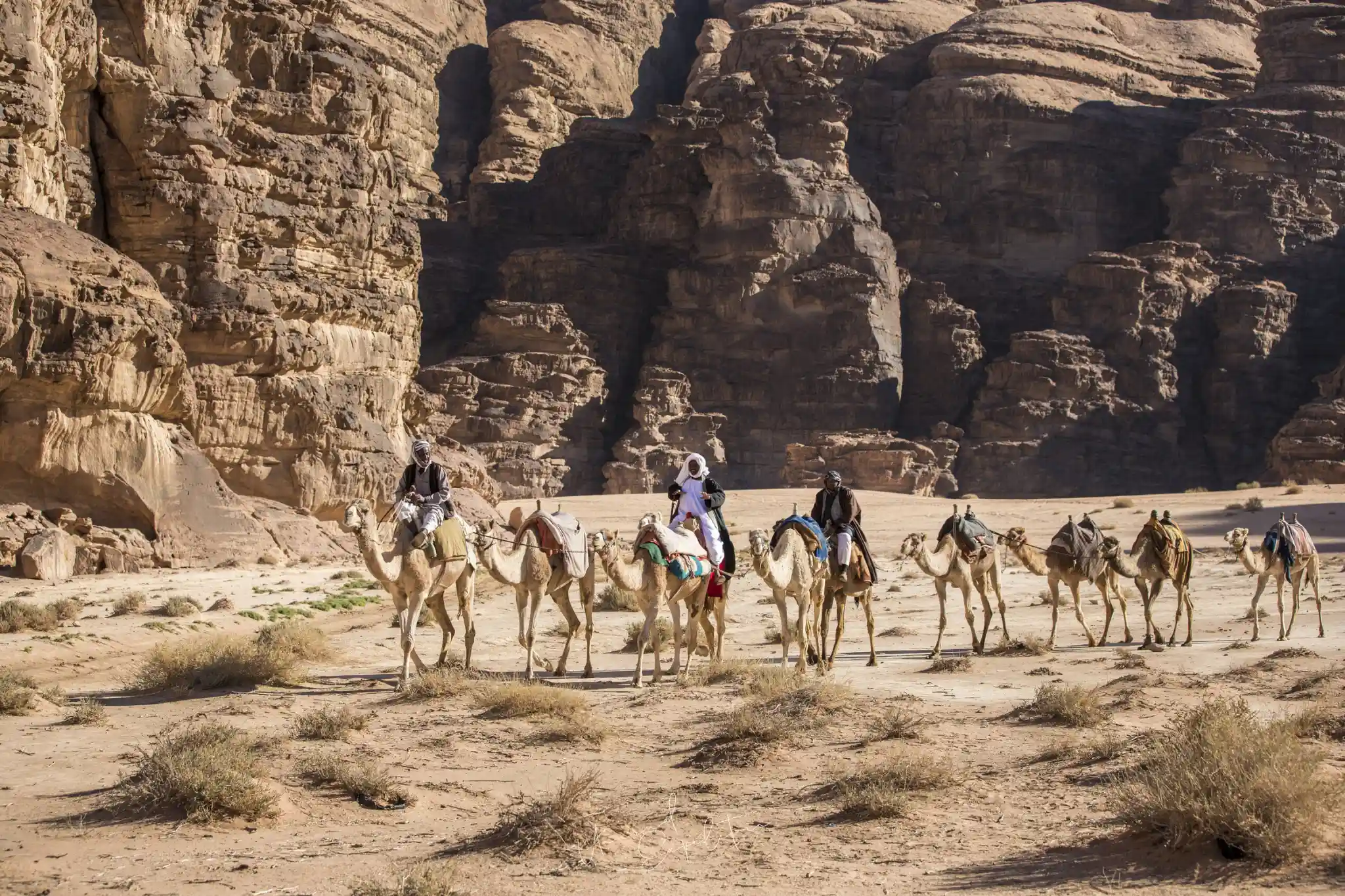
| Camels and herders | Camel strings, herders with their animals | Low sun, morning or late afternoon |
| Bedouin camps | Tea and coffee over the fire, music in the tent | Any time; firelight inside |
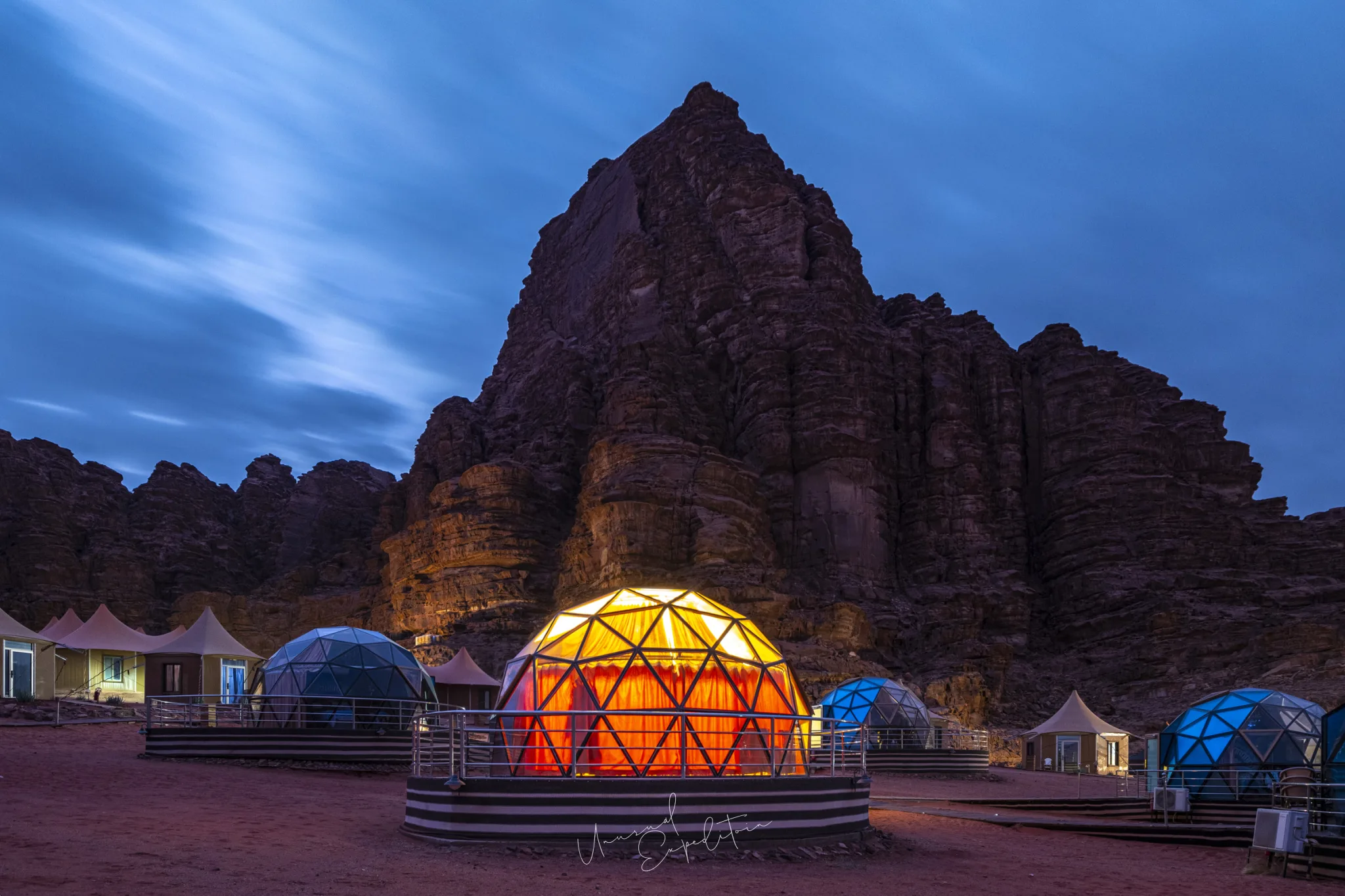
| Night | Stars over the cliffs, lit domes and tents | Blue hour and moonless nights |
| Inscriptions and Lawrence sites | Thamudic and Arabic carvings, Khazali Canyon | Soft side light |
Most of these sit within the central part of the desert, so a well planned stay of two nights covers them without rushing.
Wadi Rum photos and where to stand
Wadi Rum photos work best when they show the scale between the cliffs and anything living: a camel string, a 4x4 on a sand track, a herder walking ahead of his animals. A 24-70mm covers most of it; a 70-200mm compresses the jebels behind camels and picks out climbers and riders on the ridges; a 16-35mm earns its place inside tents and under the rock bridges. Climb a little. Even a low ridge of slickrock above a valley shows the pattern of tracks and dunes that you cannot see from the floor. Our Wadi Rum photos article goes through the scenes one by one, and the Wadi Rum jeep tour article covers the rock bridges, canyons and film locations a driver will take you to.
Wadi Rum sunset, sunrise and night
Light is the reason to stay overnight in Wadi Rum. In the last hour of the day the west-facing cliffs glow and the sand turns red; after the sun has gone the sky behind the mountains shades from orange to pink and blue, and that afterglow is often better than the sunset itself. Mornings are colder, quieter and clean. Then the stars come out: away from the village the sky is dark, and long exposures of the cliffs under stars, or of a lit tent or dome below them, are some of the best frames of a trip. See Wadi Rum sunset and sunrise and Wadi Rum at night.
"The first evening in Wadi Rum I ask everyone to keep shooting after the sun has gone. The cliffs go purple, the sand goes cold and dark, and that quarter of an hour gives us more keepers than the sunset."
Joseph Mak, tour leader, Unusual Expedition
The Bedouin of Wadi Rum
The Bedouin of Wadi Rum are hosts, drivers, guides and herders, and they are the reason a visit feels like more than scenery. UNESCO lists the "cultural space of the Bedu in Petra and Wadi Rum" as intangible heritage, naming their knowledge of desert plants and animals, camel husbandry, tent-making, tracking and climbing, and their poetry and songs. In practice you will drink sweet tea made over a fire, hear the rababa in a tent and ride or walk with camel herders. Ask before you photograph anyone, accept a refusal, and spend time first. Our Wadi Rum Bedouin and Wadi Rum camel ride articles cover the people and their animals.
Wadi Rum desert camps
Camps range from traditional black goat-hair tents to rows of transparent or lit domes, most of them run by Bedouin families. From a photography point of view the choice matters for two reasons: how far the camp sits from the lights of the village, and what it looks like at blue hour, when a lit tent or dome under a cliff becomes a subject in itself. A camp out in the open desert gives darker skies and room to walk out with a tripod. We pick camps for their position and their hosts, not their furniture.
Wadi Rum and the rest of Jordan
Most trips join Wadi Rum with Petra, to the north, and with Aqaba on the Red Sea. A typical photography trip in Jordan pairs the carved city with the open desert and adds Amman, Jerash and the Dead Sea. Each has its own area guide: the Petra photography tour guide, the Amman and Jerash photography tour guide and the Dead Sea photography tour guide. Entry, money, flights from Singapore and the current travel advisories are covered once, in the Jordan guide. As at November 2026, Singapore's Ministry of Foreign Affairs still asks Singaporeans to defer travel to the Middle East region, so read the advice there before you plan. The practical side of the desert, from the Visitor Centre to the weather by month, is in how to visit Wadi Rum.
Explore Wadi Rum in depth
- Wadi Rum photos: what the desert looks like through the lens
- Wadi Rum sunset and sunrise: where and when the light is best
- Wadi Rum at night: stars, camps and night photography
- Wadi Rum Bedouin: photographing the people of the desert
- Wadi Rum camel ride: caravans, herders and how to photograph them
- Wadi Rum jeep tour: rock bridges, canyons and Lawrence of Arabia
- How to visit Wadi Rum: entry, weather by month and how many nights
- Jordan photography tour guide
Photograph Wadi Rum with us
We have photographed Wadi Rum on more than one trip, in different seasons, and know which valleys hold the evening light. There is no scheduled Jordan departure at present, so we run Wadi Rum as a private trip on request: for individuals, couples, families or photographers, at your own pace, with every arrangement made for you and photography coaching available at extra cost. Ask at least two months ahead if you can. See private tours and the Jordan photography tours page.
Wadi Rum photography tours
The next Wadi Rum departure is announced on the Wadi Rum photography tours page, with previous expeditions and all the planning guides.
Explore Wadi Rum in depth
- Wadi Rum Sunset and Sunrise: Where and When the Light Is BestJordan
- Wadi Rum Photos: What the Desert Looks Like Through the LensJordan
- Wadi Rum Jeep Tour: Rock Bridges, Canyons and Lawrence of ArabiaJordan
- Wadi Rum Camel Ride: Caravans, Herders and How to Photograph ThemJordan
- Wadi Rum Bedouin: Photographing the People of the DesertJordan
- Wadi Rum at Night: Stars, Camps and Night PhotographyJordan
- How to Visit Wadi Rum: Entry, Weather by Month and How Many NightsJordan
Upcoming Photo Tours
- Egypt Photo Tour – EgyptEgypt 12 Dec 2026 To 20 Dec 2026
- Inner Mongolia Winter Owl Photo Tour – ChinaChina 01 Jan 2027 To 04 Jan 2027
- Inner Mongolia Winter Photo Tour – ChinaChina 05 Jan 2027 To 11 Jan 2027
- Mekong And Central Highland Vietnam Photo Tour - VietnamVietnam 16 Jan 2027 To 24 Jan 2027