
Wadi Rum Bedouin: Photographing the People of the Desert
Wadi Rum Bedouin: who they are, life in the camps, tea, coffee and the rababa, and how to photograph people with respect.
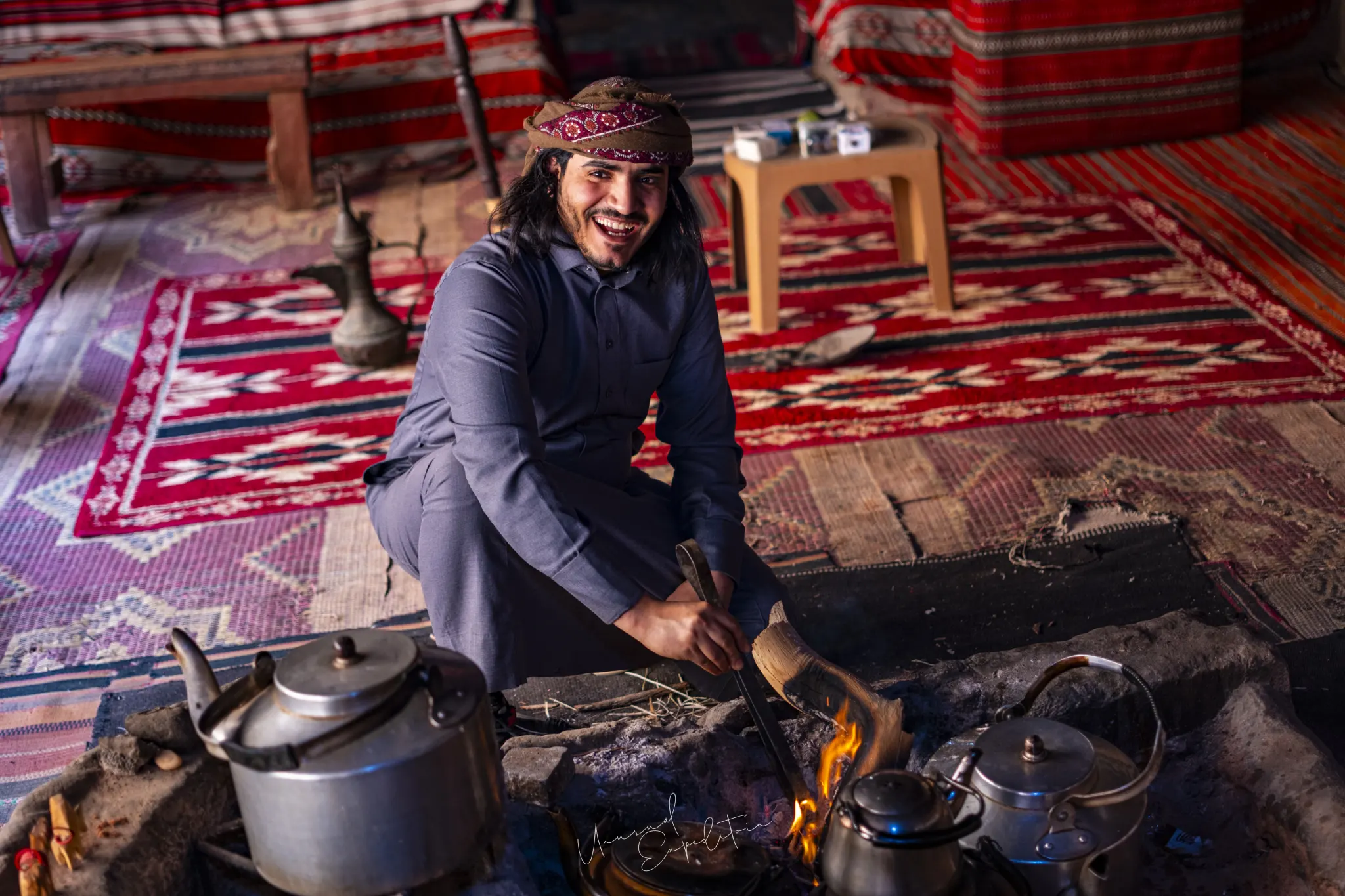
The Wadi Rum Bedouin are the tribes whose families have lived, herded and travelled in this desert for generations, and who today run most of its camps, jeeps and camel trips. For a visitor they are hosts, drivers and guides; for a photographer they are the people who make Wadi Rum more than scenery, with tea over the fire, the rababa in a tent and herders with their camels. This is how we meet and photograph them, within our Wadi Rum photography tour guide.
Wadi Rum Bedouin: who they are
The Wadi Rum Bedouin belong to several tribes. According to Rough Guides, the area around Rum Village is the land of the Zalabia, and the area around Disi, to the north, of the Zawaideh; the two run jeeps in different parts of the protected area. UNESCO recognises the "cultural space of the Bedu in Petra and Wadi Rum" on its list of intangible cultural heritage, describing their knowledge of desert plants and animals, traditional medicine, camel husbandry, tent-making, tracking and climbing, and a tradition of poetry, tales and songs tied to particular places. UNESCO also notes that settled life has worn away many of these skills, and warns that tourism's taste for an "authentic" Bedouin culture can itself do harm.
Wadi Rum nomads today
Searches for Wadi Rum nomads imagine families still moving with their herds, and a few do, but most Bedouin of Wadi Rum now live in houses in Rum Village or Disi and work in the desert by day. Goat herding and camels continue alongside tourism, and many families keep a tent in the desert where they host visitors and spend time themselves. The people you meet are often young men who grew up between the village and the sand, often speak good English, and know every track and rock by name. Treat them as the professionals they are, not as figures in a costume.
Wadi Rum Bedouin camp: tea, coffee and music
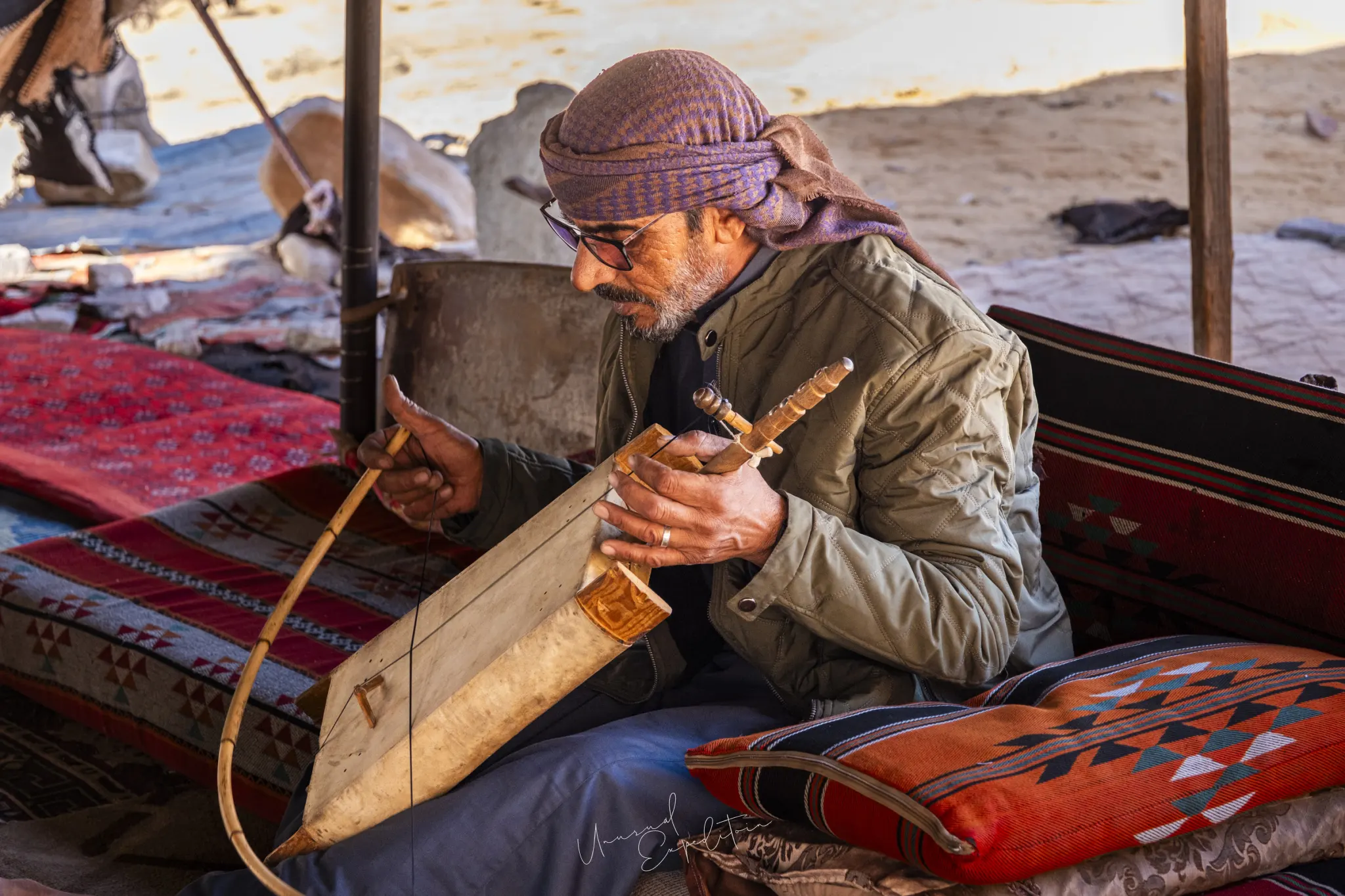
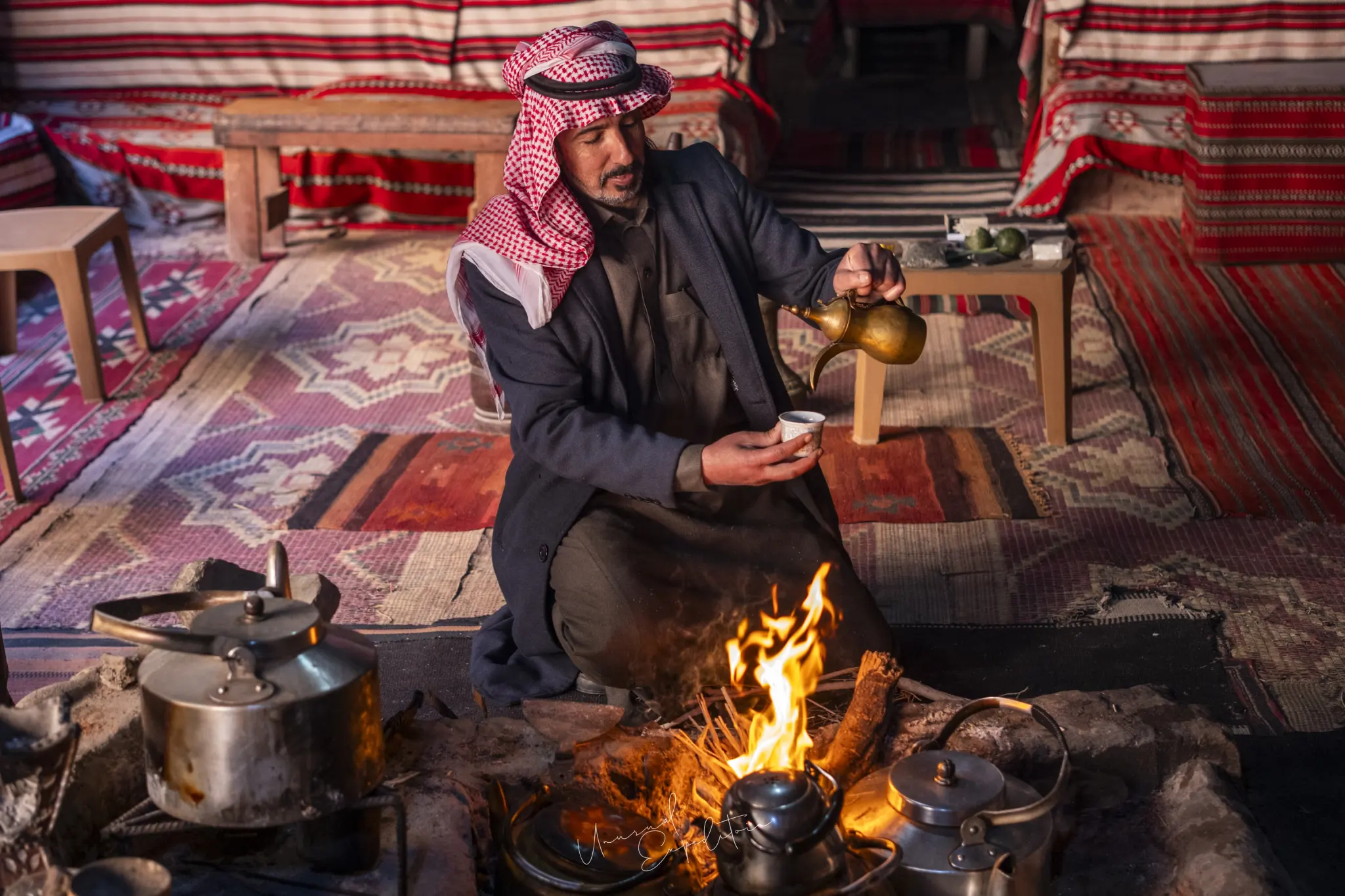
A visit to a Wadi Rum Bedouin camp starts with tea. Sweet black tea, often with sage or other desert herbs, is brewed in blackened kettles set straight into the embers of a fire in the floor of the tent, and refusing it would be strange. Coffee is a more formal matter, poured in small cups from a long-spouted pot. In the afternoon someone may bring out the rababa, the single-string fiddle of the desert, and play a slow song. These moments are good to photograph because they are real routines, not performances, and the light inside a tent, coming through the open side over carpets and cushions, is soft and warm.
Photographing inside the tents
Inside a goat-hair tent, the light comes from one open side and from the fire, so it falls off quickly into shadow. A 16-35mm or the wide end of a 24-70mm shows the whole scene: the host crouched by the fire, the kettles, the patterned rugs, the open desert beyond. A fast prime helps when the fire is the only light. Expose for the face and the flames and let the corners of the tent go dark; that is how the place looks. Sit down to shoot, at the level of the people around the fire, and keep your bag out of the way of the hearth.
"In Wadi Rum we drink the tea first, we listen, and the pictures come later. If you start with the camera, you get a pose; if you start with the tea, you get a person."
Joseph Mak, tour leader, Unusual Expedition
How to photograph the Bedouin with respect
| Do | Avoid |
|---|---|
| Ask, by gesture if not in words, and accept no | Shooting from a jeep as you pass |
| Spend time first: tea, conversation, music | Paying for staged poses |
| Show people the picture on your screen | Photographing women without clear permission |
| Send prints or files back through your driver | Photographing children |
| Dress modestly, shoulders and knees covered | Captions that call people "primitive" or "untouched" |
Most men we have met are relaxed about the camera once they know you; women in the families are generally not photographed, and that is the custom to follow.
Portraits in the desert light
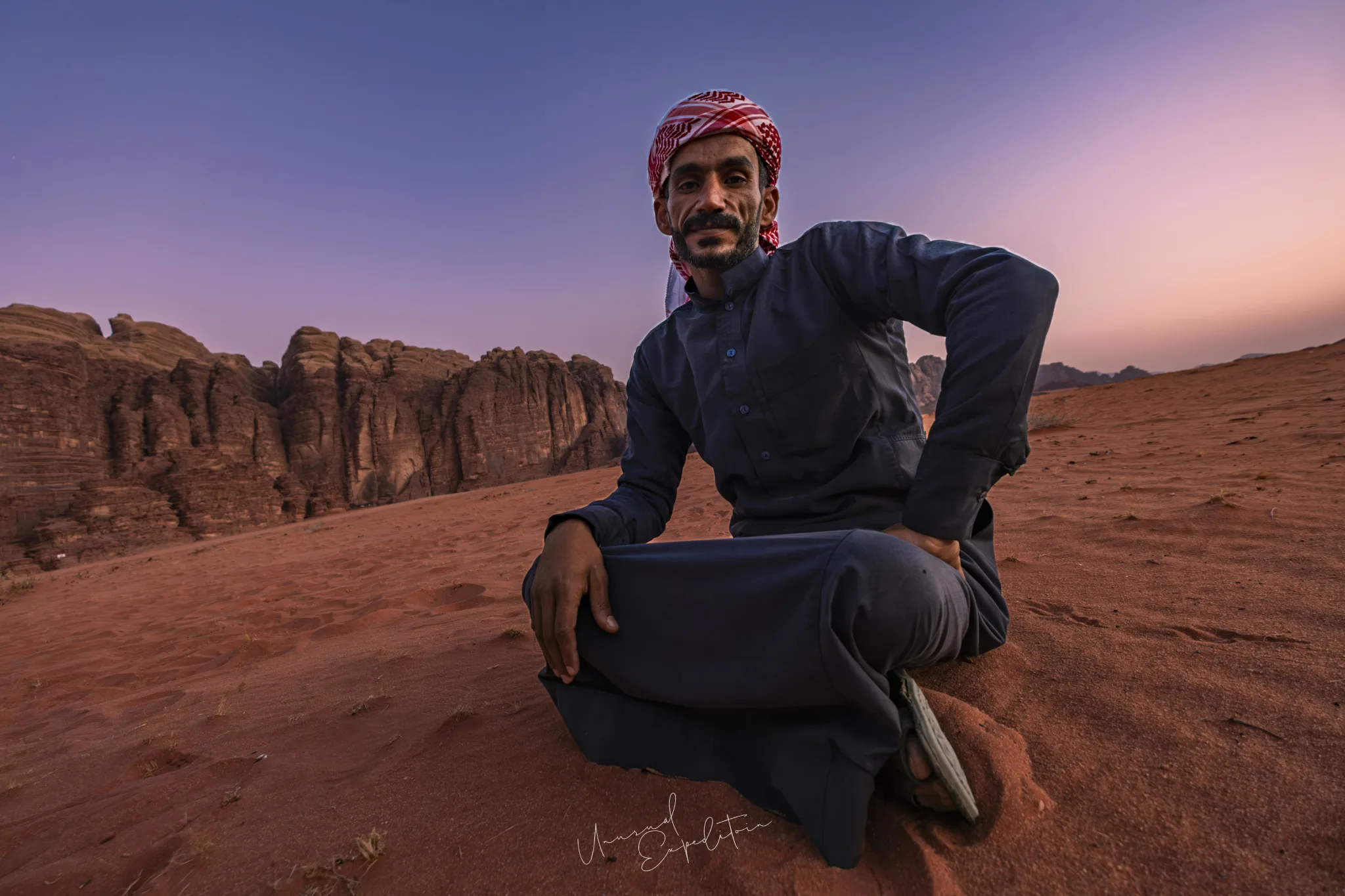
Outside the tent, the best portraits come at the ends of the day. A host who has driven you all afternoon may be happy to sit on a dune for a few frames as the light turns red, with the cliffs behind him; ask when the work is done and the tea is poured, not before. Shoot at eye level with a 24-70mm, or step back with a 70-200mm to make the cliffs a soft background. Our Wadi Rum sunset and sunrise article covers the light, and Wadi Rum camel ride covers the herders and their animals.
Wadi Rum tents and food
Wadi Rum tents are woven from black goat hair, long and low, with one side rolled up to the view; inside, mattresses and cushions line the walls around a fire pit. Many camps cook a zarb in the evening, meat and vegetables slow-cooked in a pit under the sand, and lifting the lid off the pit is a scene worth photographing, with steam rising in the lamplight. Ask the cook before you move close. Bedouin camps vary widely, from a single family tent to large camps with dozens of rooms, and the families who run the small ones are usually the best hosts for a photographer.
Meet the Bedouin of Wadi Rum with us
We choose Bedouin hosts for their camps and their company, and build time into the day for tea, music and conversation, which is where the best people pictures come from. We run Wadi Rum as a private trip on request; see private tours and the Jordan photography tours page. Petra's Bedouin are covered in our Petra photography tour guide.
Wadi Rum photography tours
The next Wadi Rum departure is announced on the Wadi Rum photography tours page, with previous expeditions and all the planning guides.
Explore Wadi Rum in depth
- Wadi Rum Photography Tour Guide: Jordan's Desert of Red Sand and StoneJordan
- Wadi Rum Sunset and Sunrise: Where and When the Light Is BestJordan
- Wadi Rum Photos: What the Desert Looks Like Through the LensJordan
- Wadi Rum Jeep Tour: Rock Bridges, Canyons and Lawrence of ArabiaJordan
- Wadi Rum Camel Ride: Caravans, Herders and How to Photograph ThemJordan
- Wadi Rum at Night: Stars, Camps and Night PhotographyJordan
- How to Visit Wadi Rum: Entry, Weather by Month and How Many NightsJordan
Upcoming Photo Tours
- Egypt Photo Tour – EgyptEgypt 12 Dec 2026 To 20 Dec 2026
- Inner Mongolia Winter Owl Photo Tour – ChinaChina 01 Jan 2027 To 04 Jan 2027
- Inner Mongolia Winter Photo Tour – ChinaChina 05 Jan 2027 To 11 Jan 2027
- Mekong And Central Highland Vietnam Photo Tour - VietnamVietnam 16 Jan 2027 To 24 Jan 2027