
What to See in Svalbard: Seven Photo Spots and Where to Stand
What to see in Svalbard with a camera: Ny-Alesund, Pyramiden, glacier ice, walrus beaches, still fjords, bird cliffs and Longyearbyen.
What to see in Svalbard, if you carry a camera: the painted research town of Ny-Alesund, the abandoned Soviet mining town of Pyramiden, glacier fronts and drifting blue ice, walrus resting on gravel beaches, still fjords that double the peaks, the seabird cliffs and Longyearbyen itself. Most of these photo spots are reached by ship and Zodiac, with armed guides ashore, and in summer the low midnight sun lights them from a different side every few hours.
The Svalbard photography tour guide explains how a voyage here works; this page is about where to stand once you are ashore or in the boat. We sailed the north-west coast of Spitsbergen on two August voyages, so the spots we photographed come first and the ones we know only from public sources are described in general terms. None of them is a fixed viewpoint with a car park: the ship, the ice and the bears decide which ones you reach.
Svalbard photo spots at a glance
| Spot | Main subject | Best light | Lens |
|---|---|---|---|
| Ny-Alesund | Coloured wooden houses, Amundsen bust, old locomotive | Clear late evening, sun from the north | 24-70mm |
| Pyramiden | Soviet buildings, emblem, coal chutes, kittiwakes | Side light in the afternoon or evening | 24-70mm, 70-200mm |
| Glacier fronts | Ice walls, blue bergs, calving | Overcast for colour, low sun for texture | 70-200mm, 100-400mm |
| Walrus haul-outs | Walrus groups with glacier behind | Soft, low light | 100-400mm |
| Calm fjords | Peaks and glaciers reflected | Windless spells, often late in the day | 24-70mm |
| Bird cliffs | Guillemots, kittiwakes, little auks | Any, from the boat | 100-400mm |
| Longyearbyen | Mining relics, houses, valley views | Late evening in summer, blue twilight in spring | 24-70mm |
The table is a list of places, not a route: on a voyage the order changes with the wind and the ice charts.
Ny-Alesund: the painted research town
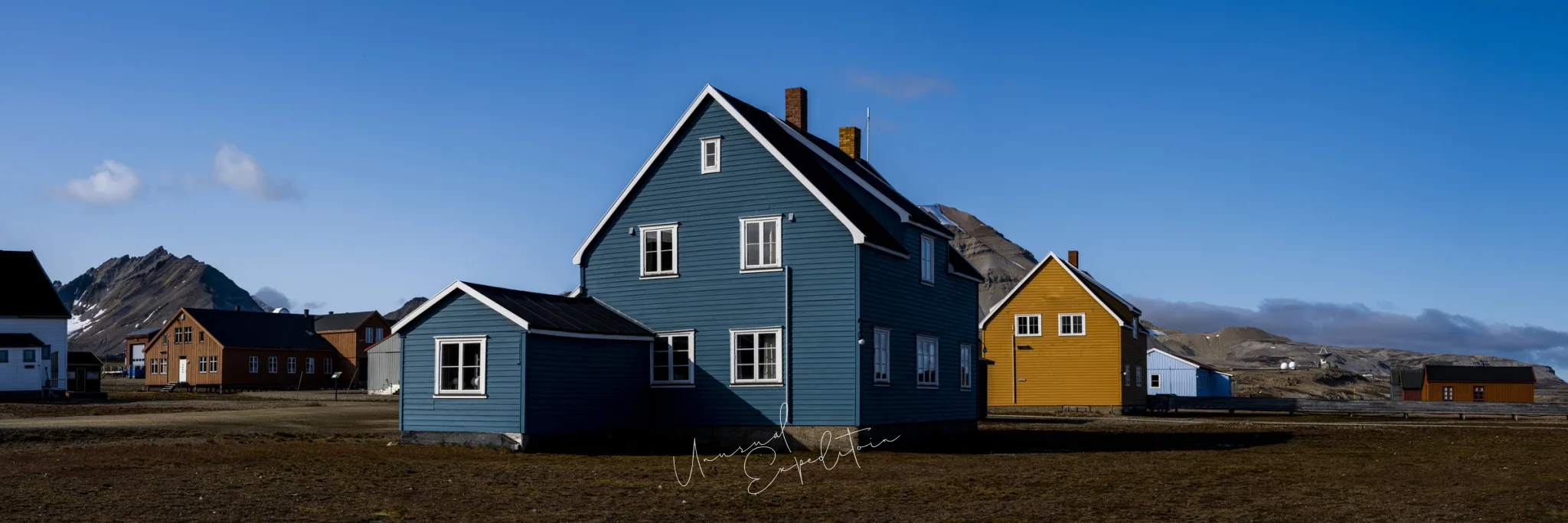
Ny-Alesund sits on Kongsfjorden at almost 79 degrees north. It began as a coal town, and since mining ended it has been a research settlement run by Kings Bay AS, with stations from several countries. The photo spots are close together: the main street of red, blue and yellow wooden houses, the bust of Roald Amundsen, the airship mast at the edge of town, the post office the Norwegian Polar Institute calls the northernmost in the world, and a small steam locomotive with its coal wagons. On a clear evening the low sun comes from the north across the fjord and lights the house fronts with the snow peaks behind them. Stand back on the gravel road and use a 24-70mm at the long end to stack houses against the mountains. The town is radio silent: phones in flight mode, Wi-Fi and Bluetooth off on the camera, no drones. Our Ny-Alesund article covers its history and rules in detail.
Pyramiden: the Soviet ghost town
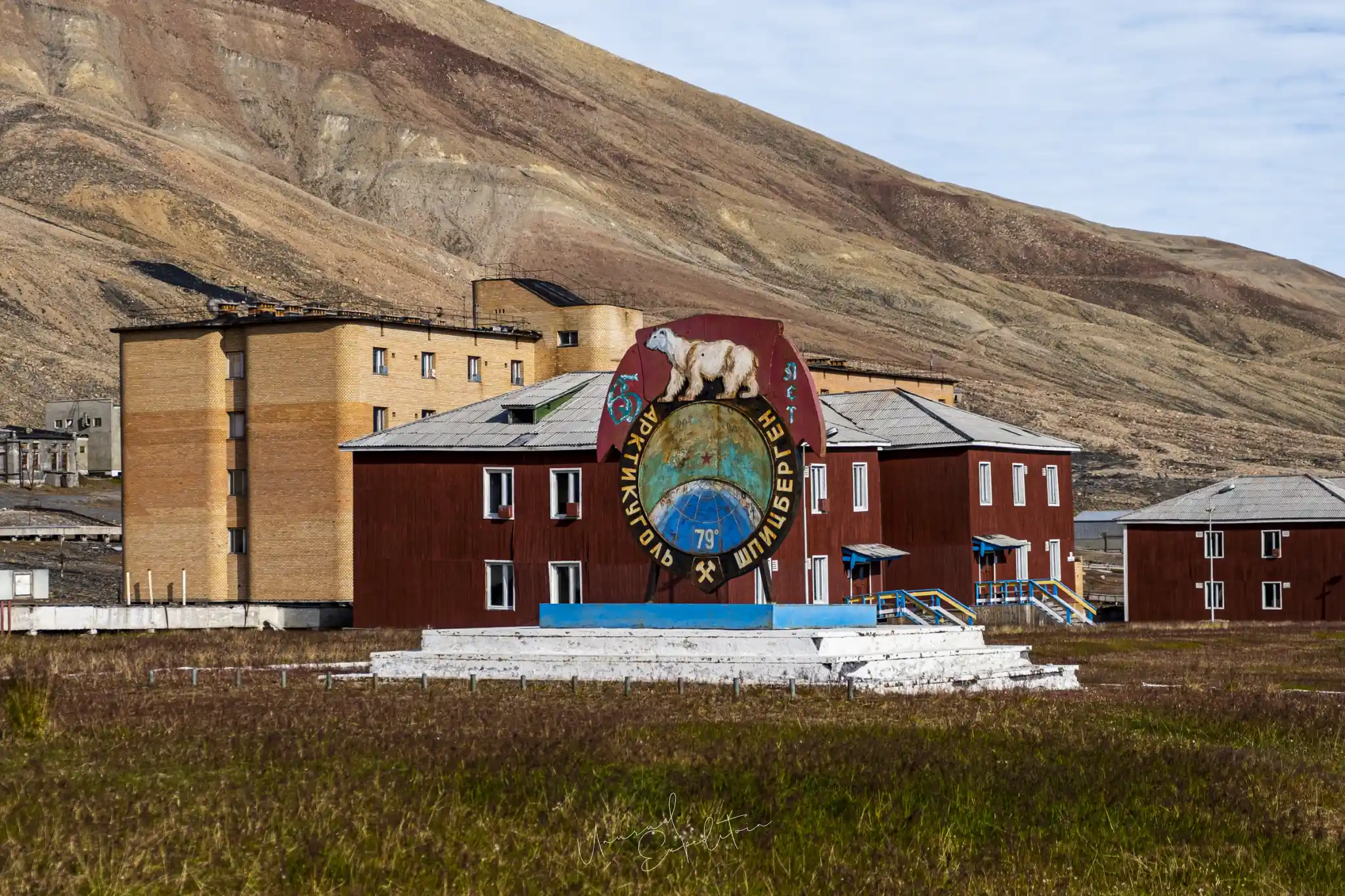
Pyramiden is the most unusual photo spot in Svalbard. The Norwegian Polar Institute's cruise handbook records coal mining here from 1955 to 1998, when the town was abandoned; it is named after the pyramid-shaped mountain above it. What remains is a Soviet town in brick and timber: the Lenin statue in front of the culture house, the circular emblem with a polar bear on the square, the town sign in Cyrillic and Latin letters, the coal chutes on the hillside and kittiwakes nesting on window sills. Visits are guided, so you move with the group. The best frames come from the square, looking along the buildings with the slope behind, in side light that brings out the brick. A 70-200mm isolates signs and windows. Read our Pyramiden guide before you go: it explains what each building was.
Glacier fronts and blue ice
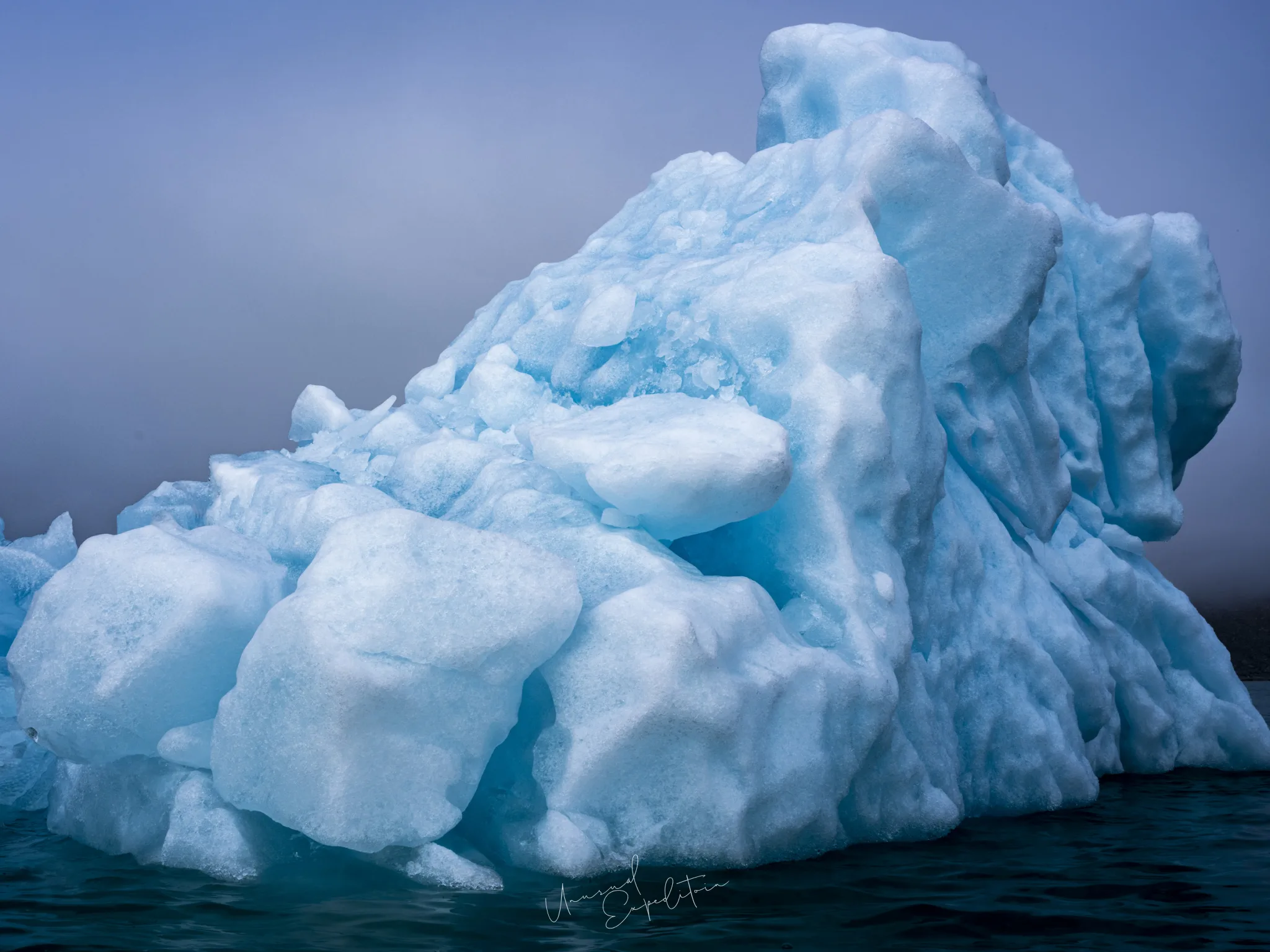
Svalbard's glaciers meet the sea in walls of white and blue ice, and the bergs that break from them drift in the fjords for days. This is the spot you photograph most often, from the Zodiac and from the deck. Overcast skies are better than sun for the colour: the blue deepens and the highlights do not burn out. When the sun does come out low, it rakes across the ice face and shows every crevasse. Keep the distance the expedition staff set, because a calving front throws waves, and use a 70-200mm or 100-400mm to pick out a single berg against dark water. Look for the bergs that have rolled, which show smooth, glassy blue sides.
Walrus haul-outs on the gravel beaches
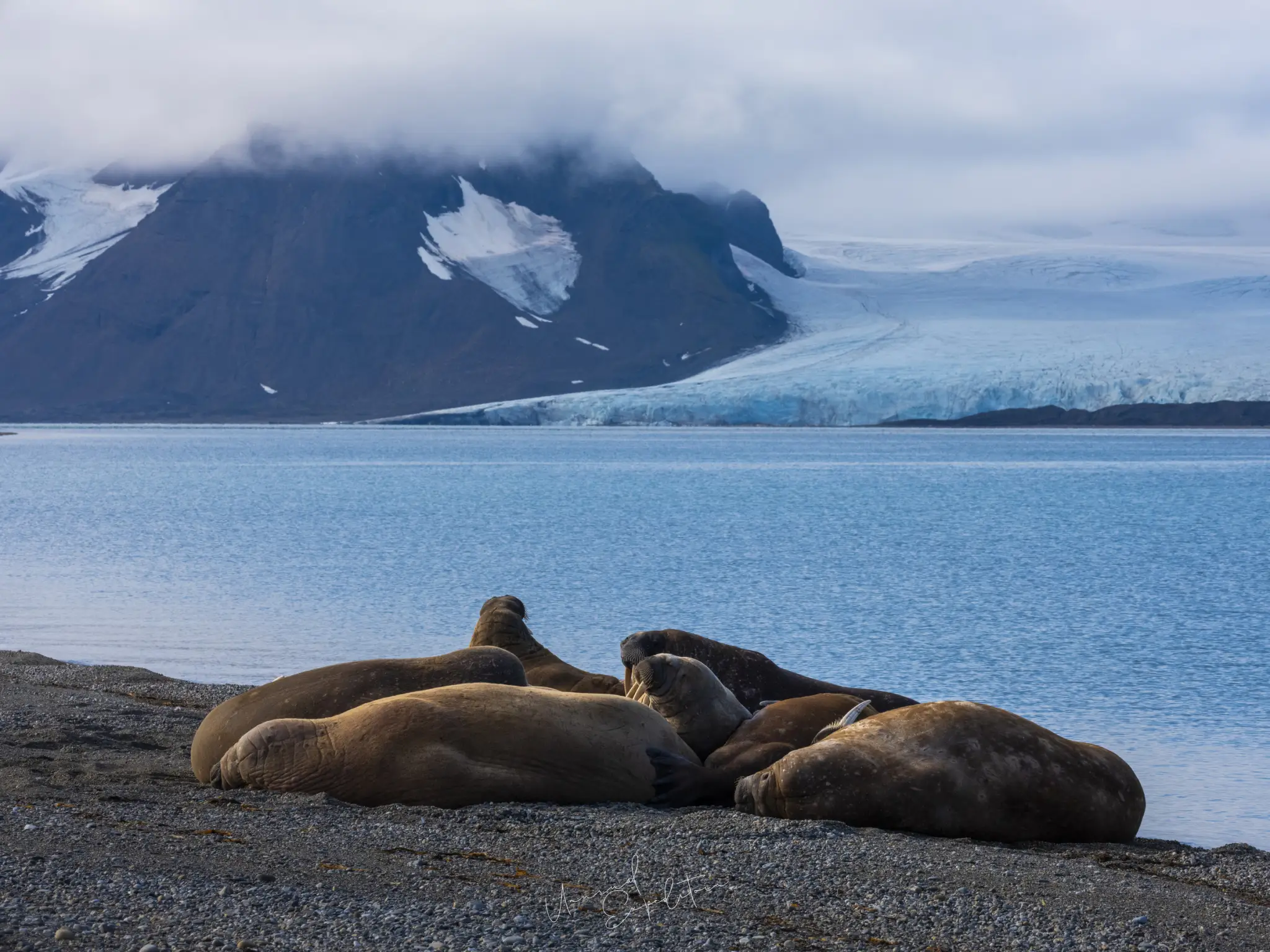
Walrus rest in tight groups on gravel spits and beaches along the coast, and some haul-outs are known landing sites. Protected in Svalbard since 1952, they are recovering after centuries of hunting, according to the MOSJ environmental monitoring programme. Since 1 January 2025 the Governor of Svalbard's regulations require visitors to keep at least 150 metres from walrus haul-out sites at sea, so most frames now come from a distance with a long lens. Low, soft light flatters the skin, and a glacier or ship behind the group gives scale. Crouch low on the beach when the guides allow a landing; a low angle puts the heads against the water instead of the gravel. More on the animals in walrus in Svalbard.
Still fjords and reflections in north-west Spitsbergen
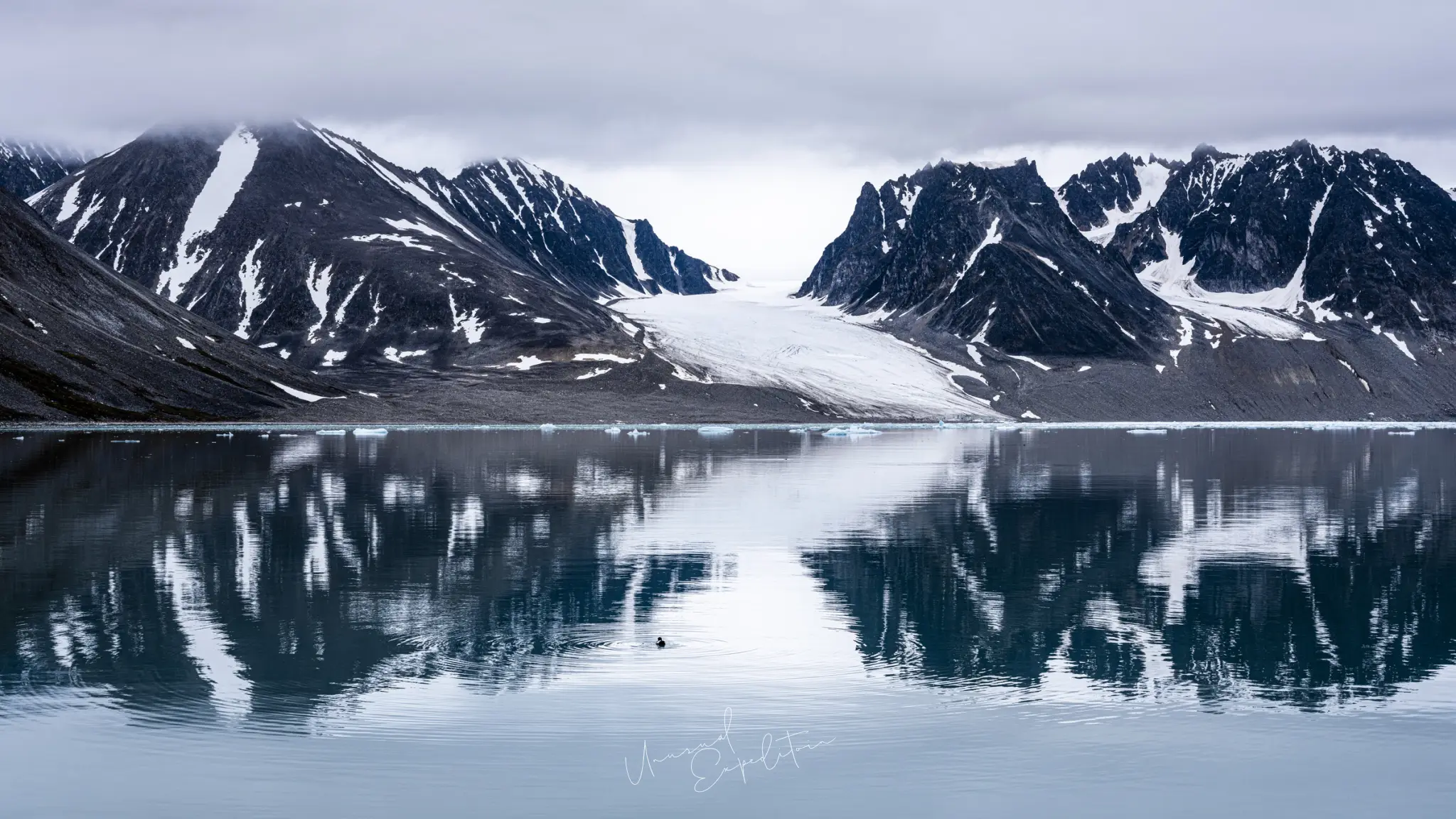
When the wind drops, the fjords of north-west Spitsbergen turn to glass and the jagged peaks and glaciers appear twice. These windless spells are short and nobody can promise them, so be on deck whenever the sea looks flat. A 24-70mm is the lens here: put the horizon in the middle of the frame and let the reflection carry the lower half, or use a strip of floating ice as a foreground. Late in the day, when the sun is low behind the ridges, the shadowed slopes go dark blue and the snow keeps its shape in the water.
Bird cliffs from the boat
Svalbard's seabird cliffs hold guillemots, kittiwakes, fulmars and, on scree slopes, little auks. We know these mostly from the water, and they are best photographed that way: the boat holds off the cliff while birds stream past. The Governor's rules set a speed limit of five knots within 500 metres of bird cliffs from 1 April to 31 August, and drones may not fly closer than 500 metres in that period. Use a 100-400mm, a fast shutter for birds in flight, and expose for the white of the birds against the dark rock.
Longyearbyen: the town where most trips begin
Longyearbyen is where flights from Oslo and Tromso land, according to Visit Svalbard, and where most voyages start and end. For a photographer it is a mining town first: the old cableway towers that carried coal down the valley still stand on the slopes, the coloured houses run up the side valleys, and the church and the museum sit in the town itself. In summer the late evening light runs along the valley; in spring the long blue twilight suits the snow and the houses. Inside the settlement you can walk freely, but the polar bear warning signs at its edges mean what they say: beyond them you go with an armed guide.
People come for the bears and leave talking about the ice. In Svalbard the strongest frames I made were of a single blue berg in a grey fjord, because there was nothing else in the picture to argue with it.
Joseph Mak, tour leader, Unusual Expedition
Where to take photos in Svalbard: rules that shape every spot
Rules shape every photo spot in Svalbard. Outside the settlements you go with guides who carry polar bear protection, as the Governor of Svalbard requires. Since 2025 visitors must keep at least 300 metres from polar bears, and 500 metres from 1 March to 30 June, and landings are limited to mapped sites. That means a long lens is essential and the closest wildlife frames come from the boat. Our polar bears in Svalbard article explains how sightings work today.
Photograph Svalbard with us
We run Svalbard as a private photography trip on request, built around the places on this page that the season and the ice allow. Tell us your dates and what you want to photograph. See private tours and the Norway photography tours page.
Svalbard photography tours
The next Svalbard departure is announced on the Svalbard photography tours page, with previous expeditions and all the planning guides.
Explore Svalbard in depth
- Svalbard Photography Tour: Polar Bears, Walrus, Ice and the Midnight SunNorway
- Arctic Cruise Ships: Small Ship Arctic Cruises to Svalbard and GreenlandNorway
- Walrus in Svalbard: Haul-Outs, Tusks and the 150-Metre RuleNorway
- Svalbard Wildlife: Reindeer, Belugas, Seals and SeabirdsNorway
- How to Get to Svalbard: Flights, Entry and What to PackNorway
- Pyramiden, Svalbard: Photographing the Soviet Ghost TownNorway
- Polar Bears in Svalbard: When and Where to See ThemNorway
- Ny-Alesund, Svalbard: The Research Town at 79 Degrees NorthNorway
- Best Time to Visit Svalbard: Midnight Sun, Ice and Light by SeasonNorway
Upcoming Photo Tours
- Egypt Photo Tour – EgyptEgypt 12 Dec 2026 To 20 Dec 2026
- Inner Mongolia Winter Owl Photo Tour – ChinaChina 01 Jan 2027 To 04 Jan 2027
- Inner Mongolia Winter Photo Tour – ChinaChina 05 Jan 2027 To 11 Jan 2027
- Mekong And Central Highland Vietnam Photo Tour - VietnamVietnam 16 Jan 2027 To 24 Jan 2027