
Xiapu Seaweed Farms: Photographing Laver and Kelp
Xiapu seaweed farms explained for photographers: dried laver, the spring kelp harvest, the poles and nets, and how to shoot them.
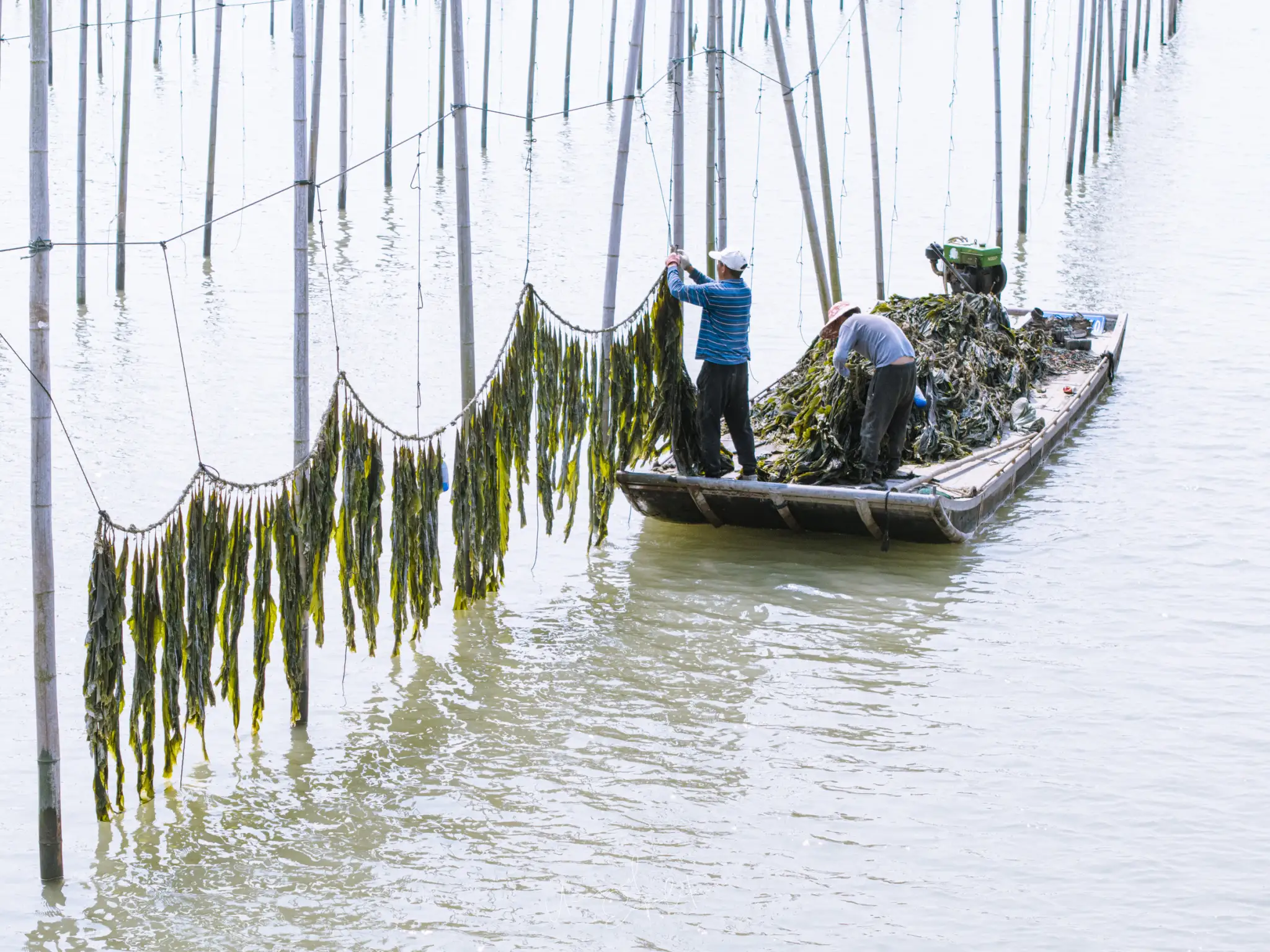
Xiapu seaweed farms are the reason the Xiapu coast looks the way it does: the bamboo poles, the dark laver strips at sunrise, the buoy lines in the bays and the boats loaded with kelp are all part of a working industry. Laver is grown and cut in the cooler months, kelp is harvested in spring, and both make strong photographs of people and pattern. This article is part of our Xiapu photography tour guide and explains what you are looking at when you photograph the farms.
Why Xiapu is called the seaweed capital
Xiapu county, on the coast of Ningde in north-east Fujian, calls itself China's seaweed capital, and the numbers support it. China Daily reported that Xiapu's kelp farms covered about 6,613 hectares in 2025 and produced around 169,000 tonnes. The Fujian provincial government described the start of the 2025 harvest across roughly 23,000 hectares of marine farms and called the industry a pillar of the county's economy. For photographers this means the farms are everywhere: almost every bay you stop at has poles, rafts or buoy lines, and someone working on them.
Xiapu dried laver: from net to market
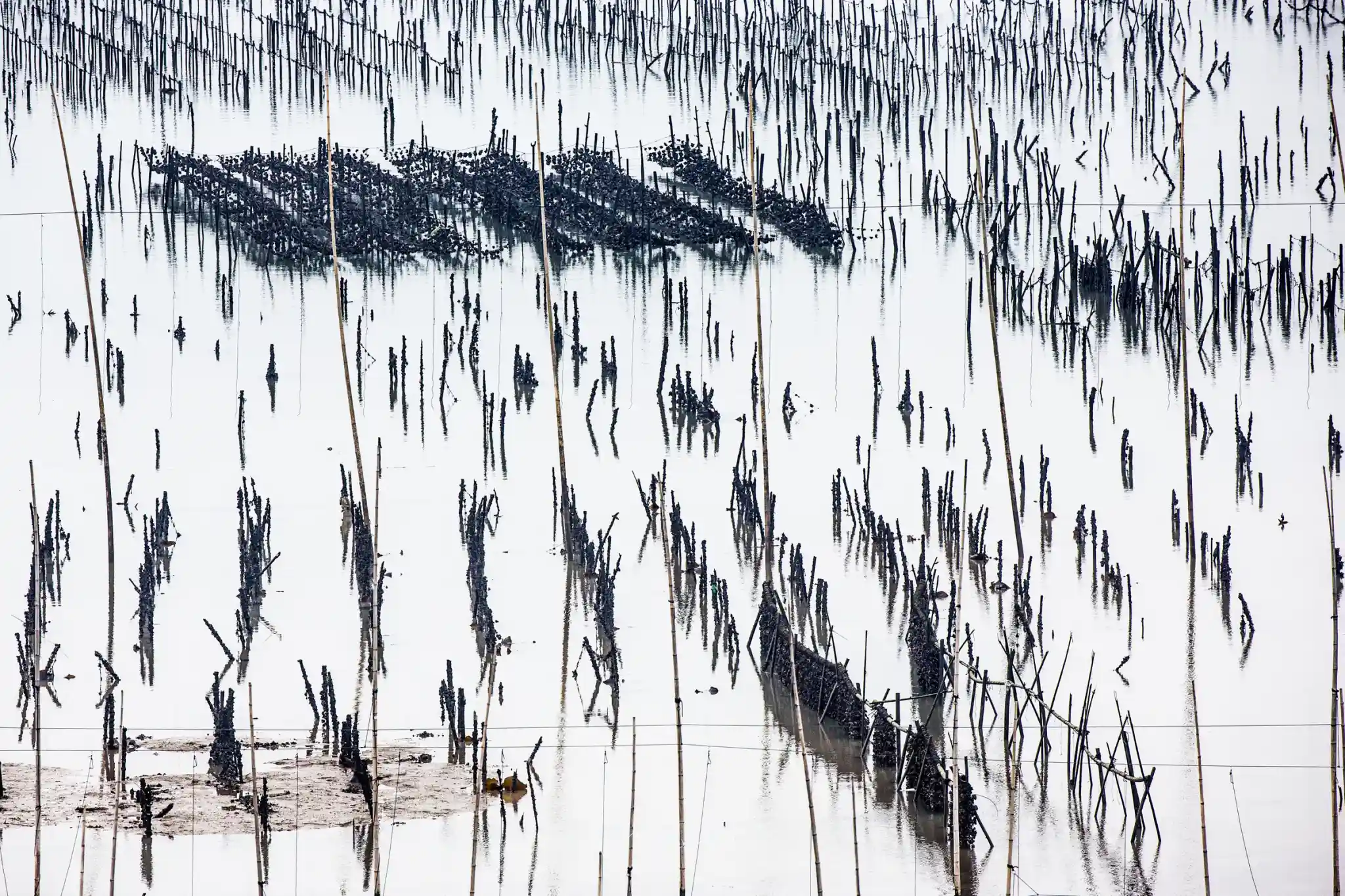
Laver, the red seaweed known in Chinese as zicai and in Japan as nori, is the crop behind the most famous Xiapu views. The spores are seeded onto nets, and the nets are stretched between rows of bamboo poles on the mudflats or hung from floating frames in deeper water. As the tide falls, the nets lie exposed on the mud as dark strips, which is what you see glowing at sunrise in the classic pictures. When the laver is ready, farmers cut it by hand or by boat, and it is washed, pressed and dried. Xiapu dried laver is sold in thin sheets and in round cakes, and you will see it in every market and roadside shop along the coast.
Xiapu kelp harvest in spring
Kelp is grown on long ropes hung from buoys and poles, and it hangs in the water like brown curtains. The harvest comes in spring, and China Daily reported that the peak of the Xiapu kelp season falls in late April. Harvest days are the busiest on the coast: farmers in small boats pull the heavy ropes up, cut the kelp loose and stack it in wet, shining piles, while larger boats carry it to the shore for drying on racks and on the beaches. These scenes are the best chance in Xiapu to photograph people at work with the farms around them, and the light reflected from the water keeps faces and hands well lit.
Photographing the farms from the shore
The classic Xiapu frame is taken from a hillside above a bay at sunrise or sunset, with a long lens, when low sun reflects in the channels between the laver strips. A 70-200mm or 100-400mm lets you isolate one boat among the poles, and a tripod helps in the half light. On flat light days, the same farms make high-key images: white sky and water, black poles, and a single farmer in a boat. These scenes need careful exposure; meter for the water and add exposure so that it stays white without losing the pole tips. Our best time for Xiapu photography article explains which months bring laver, kelp, mist and clear sunrises.
Photographing the farms from the water and the air
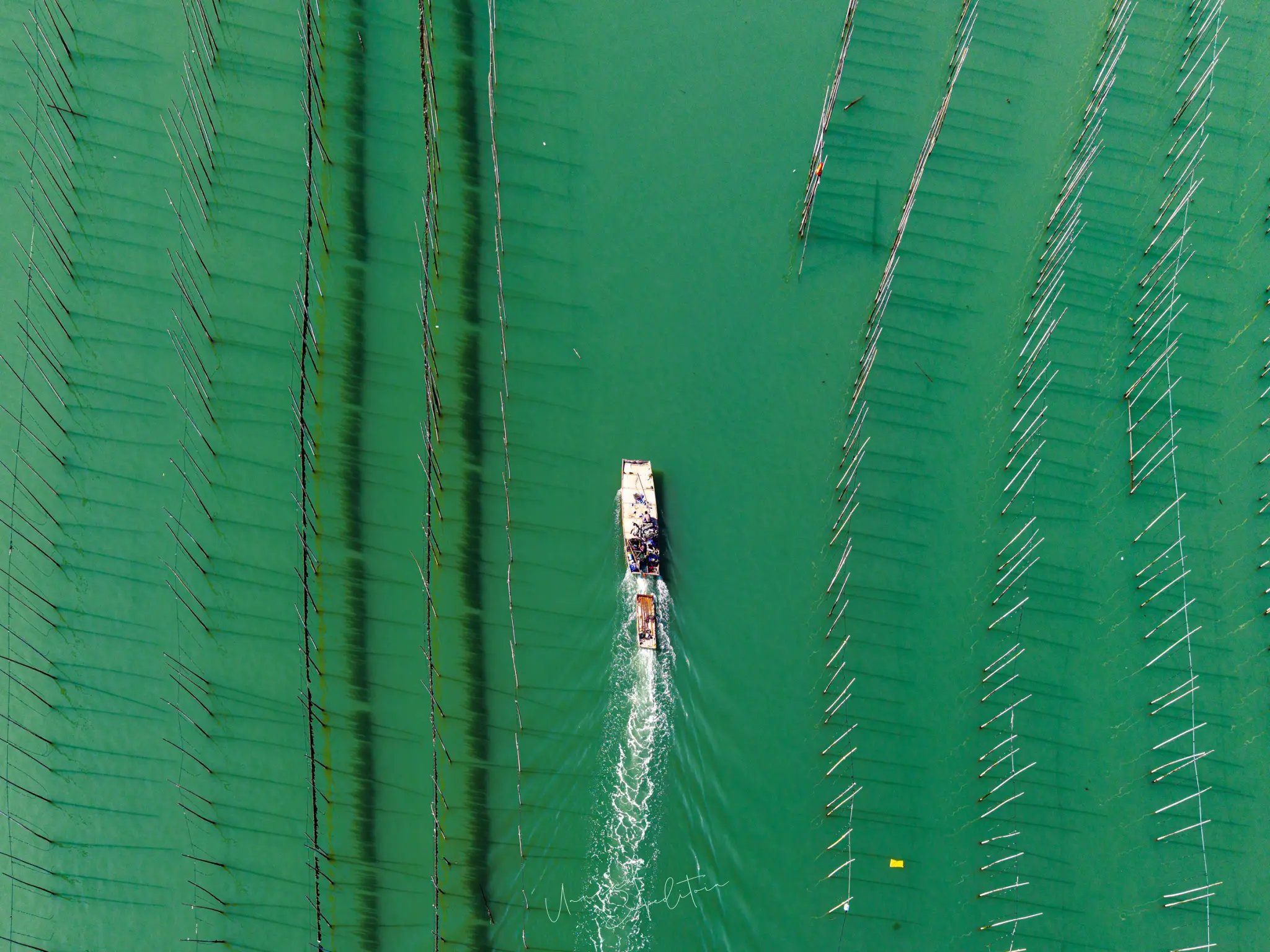
Some farmers will take a photographer out in their boat for a fee arranged locally, which puts you at eye level with the harvest and the hanging kelp. Stay out of the way of the work, keep your gear dry, and expect to get wet anyway. From the air, the farms turn into grids of lines and buoys in green and blue water, and the best frames include one boat and its wake. Seaweed lines read especially well straight down, when the green of the growing kelp shows through the water. See our Xiapu drone photography guide for the rules and the timing.
"People come to Xiapu for the light on the mudflats, but the light is only half the story. Every pole you see was put there by a family, and the best pictures happen when you stay long enough to understand what they are doing with it."
Joseph Mak, tour leader, Unusual Expedition
Seaweed season at a glance
| Crop | Season | What you see | Best approach |
|---|---|---|---|
| Laver (zicai) | Growing and cutting in the cooler months | Dark strips and nets on the mudflats | Hillside at sunrise, long lens |
| Kelp | Spring harvest | Hanging ropes, loaded boats, drying racks | From a boat or the shore, 24-70mm |
| Farm patterns | All year | Buoy lines, rafts, boat wakes | Drone, straight down |
| Drying and markets | After each harvest | Racks, sheets, round laver cakes | Street and village, 35mm |
Green water and abstract frames
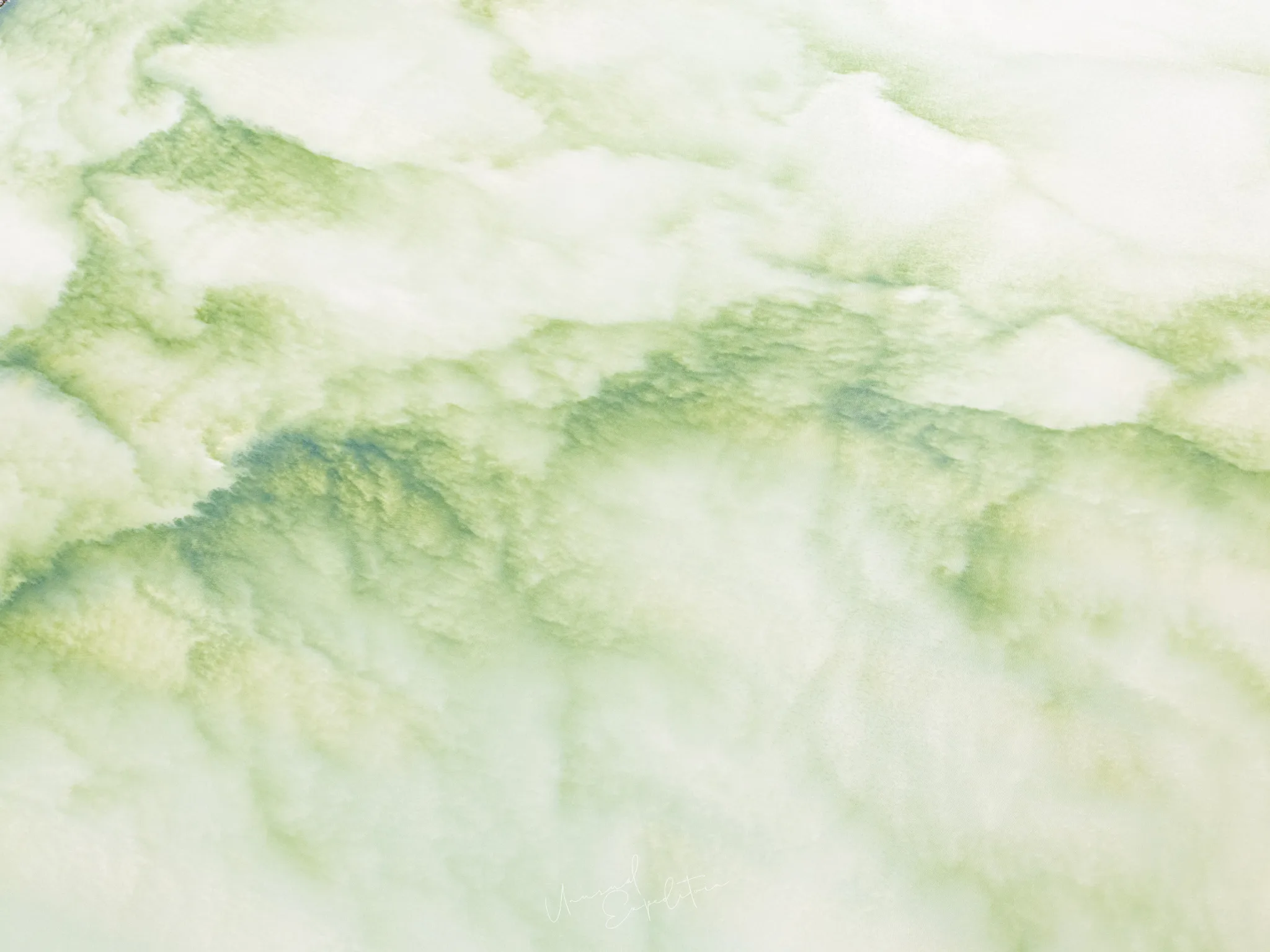
In spring the shallow bays around Xiapu often turn green, as algae and the growing crops colour the water. From the air these areas give soft, painterly abstracts with no horizon at all: pale water, darker green veins and a hint of farm lines underneath. They are easy to miss from the shore and worth a few minutes of drone time when the light is flat. On the ground, look for details that tell the same story at a small scale: coils of rope, stacks of buoys, and seaweed drying on the beach.
Respect on the farms
The farms are private property and someone's income. Do not walk on nets or poles, keep off the mudflats where farmers ask you to, and never move gear to improve a composition. In recent years some scenes along the coast have been arranged for visiting photographers, with villagers paid to pose with nets or oxen; that is part of the local economy too, and it is fine to join in, but say so if you publish the picture as documentary. Our Xiapu fishermen and She village photography article has more on working respectfully with the people of the coast.
Photograph the Xiapu farms with us
We plan our private Xiapu trips around the farm calendar and the tides. Current China departures are on the China photography tours page.
Join the Xiapu photography tour
Inner Mongolia Winter Owl Photo Tour – China departs 01 Jan 2027 To 04 Jan 2027, led by Joseph Mak. Small group, photography first. All Xiapu photography tours.
Explore Xiapu in depth
- Xiapu Photography Tour: The Complete GuideChina
- Fujian Fishing Village Photos: Xiapu Boatyards, Harbours and Raft VillagesChina
- Xiapu Drone Photography: The Fujian Coast from AboveChina
- Xiapu Photography Trip FAQ: Getting There, Visas, Drones, TidesChina
- Xiapu Mudflats Photo Spots: Sunrise, Sunset and the Pole BaysChina
- Xiapu Fishermen and She Village PhotographyChina
- Best Time for Xiapu Photography: Laver, Kelp, Mist and TidesChina
Upcoming Photo Tours
- Egypt Photo Tour – EgyptEgypt 12 Dec 2026 To 20 Dec 2026
- Inner Mongolia Winter Owl Photo Tour – ChinaChina 01 Jan 2027 To 04 Jan 2027
- Inner Mongolia Winter Photo Tour – ChinaChina 05 Jan 2027 To 11 Jan 2027
- Mekong And Central Highland Vietnam Photo Tour - VietnamVietnam 16 Jan 2027 To 24 Jan 2027