
Basilica of Guadalupe Photos: the Old and New Basilica in Mexico City
Basilica of Guadalupe photos: the old and new basilica, where to stand, what you may shoot inside and the best time to go.
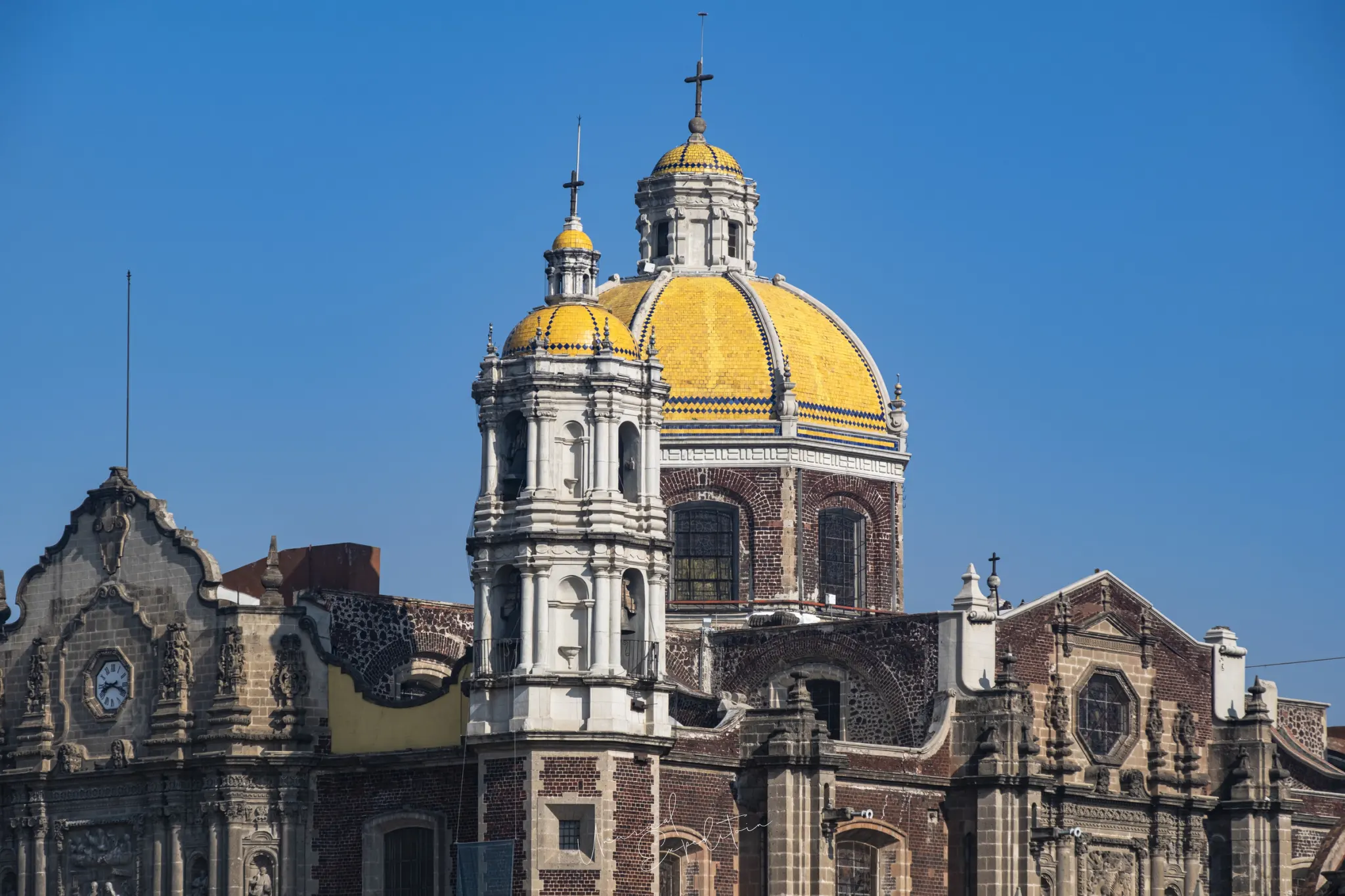
Basilica of Our Lady of Guadalupe photos come from one plaza in the north of Mexico City with two very different churches on it: the baroque old basilica, opened in 1709 and visibly sinking, and the round modern basilica of 1976 with its green copper roof. Add the domes and chapels around them, the Tepeyac hill behind and the pilgrims crossing the stones, and the plaza gives a morning of pictures without a single repeated frame.
The Basilica is one stop in our Mexico City photography tour guide, which covers the rest of the capital and its day trips. This article is the close look: what is on the plaza, where to stand, what you may photograph inside, and when to go.
Where is the Basilica of Guadalupe?
The Basilica of Guadalupe stands in the Gustavo A. Madero borough, in the north of Mexico City, at the foot of the Cerro del Tepeyac. Tradition holds that the Virgin appeared on this hill to Juan Diego in 1531, and the cloak bearing her image hangs in the modern basilica. The Metro stops La Villa-Basílica and Deportivo 18 de Marzo are a short walk away, and on festival days the Calzada de Guadalupe fills with pilgrims walking in from the city. The complex is open every day, entry is free, and it is a working shrine with masses through the day.
Basilica of Guadalupe Mexico City: two churches, one plaza
The old basilica was begun in 1695 by the architect Pedro de Arrieta and opened in 1709. Mexico City is built on a drained lake bed, and the church has been sinking unevenly for three centuries; you can see the tilt from the plaza if you line the towers up against a vertical. By the 1970s it was unsafe and far too small, and the new basilica was built beside it, a circular open-plan building by a team that included Pedro Ramírez Vázquez, dedicated in 1976. The old church is now the Templo Expiatorio a Cristo Rey. Mexico News Daily tells the story of why there are two basilicas well, and the Mexico City tourism office lists both.
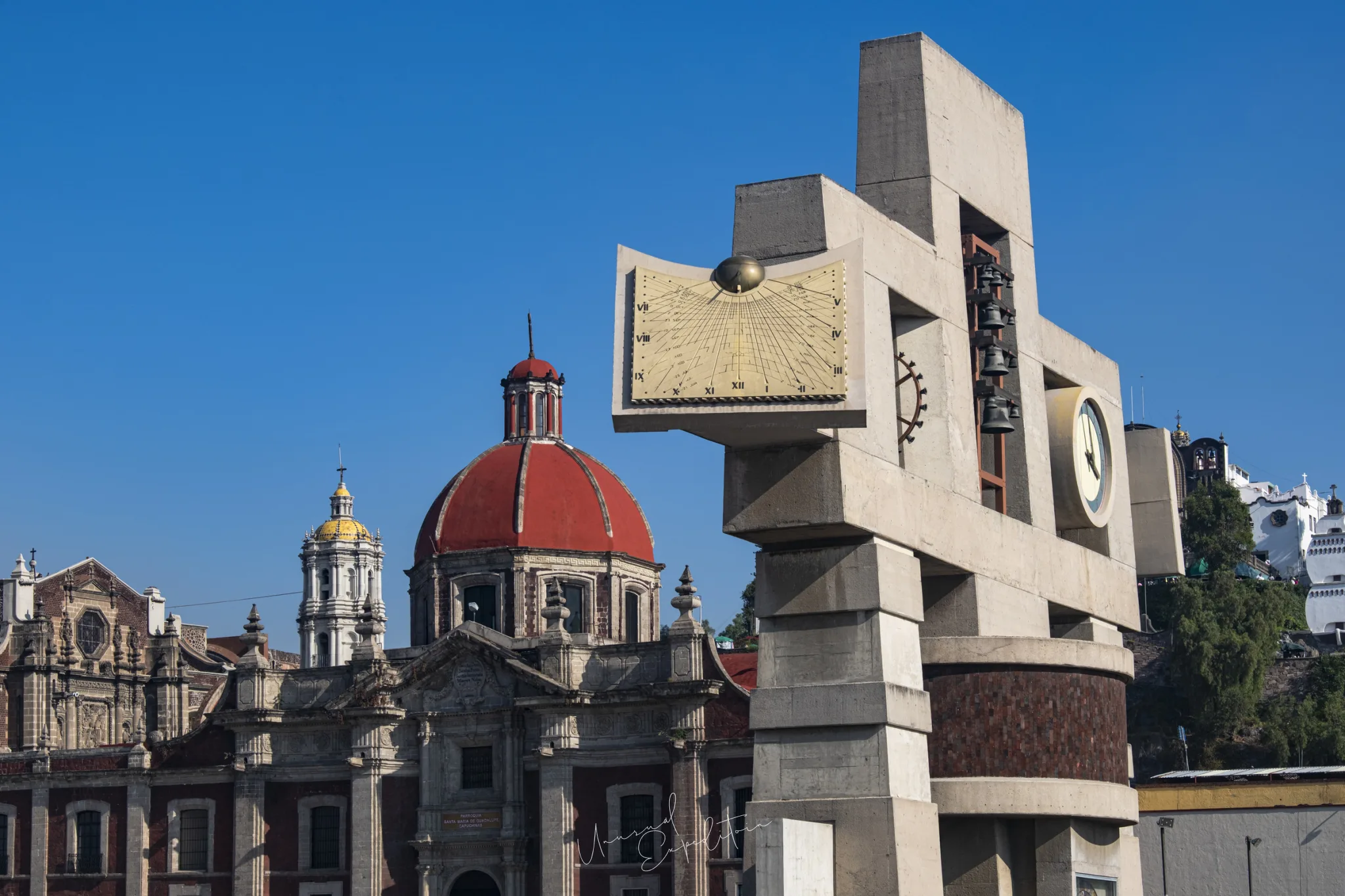
For photographs the pairing is the point: stone against concrete, baroque domes against a copper tent, an old leaning facade next to a building that holds tens of thousands. Around them stand more domes, chapels and a modern carillon tower with clock faces and a sundial.
Basilica of our lady of guadalupe photos: where to stand
The Basilica plaza is big, open and paved, so the compositions come from angles and layers rather than from finding a hidden corner.
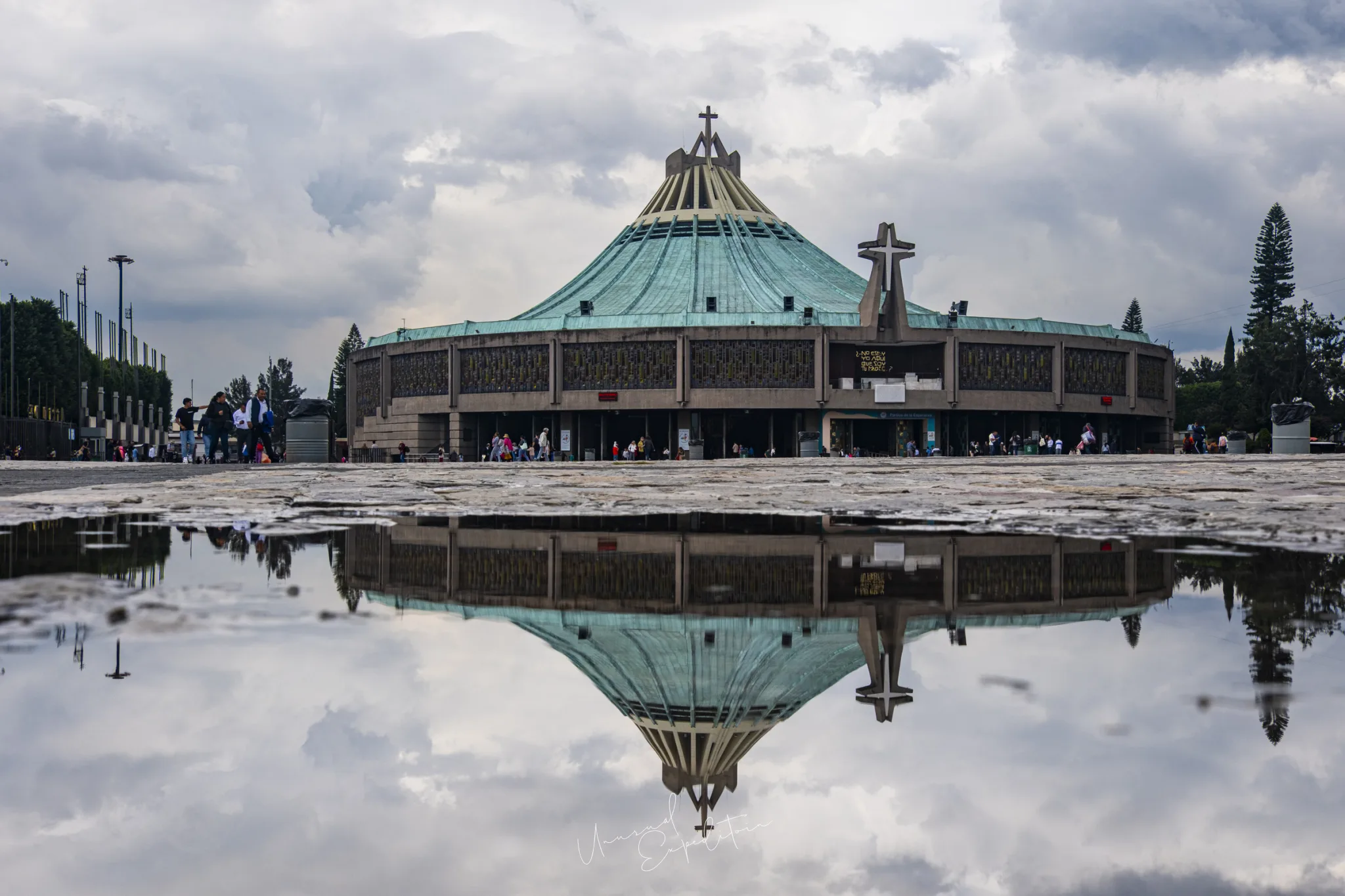
- From the middle of the plaza: the new basilica square on, its roof against the sky, with pilgrims for scale. A 16-35mm or the wide end of a 24-70mm.
- From the side of the old basilica: domes stacked behind facades, best with a longer focal length, 70mm to 135mm, to compress them into one frame. A deep blue morning sky makes the tiles glow.
- The carillon and the old domes together: modern concrete in the foreground, colonial domes behind, the clash that sums up the site.
- After rain: the paving holds shallow puddles, and with the camera almost on the ground the new basilica doubles itself in the water.
- From the Tepeyac hill: the stairs and gardens behind the complex lead up to a chapel and a view back over the plaza and the city.
What can you photograph inside?
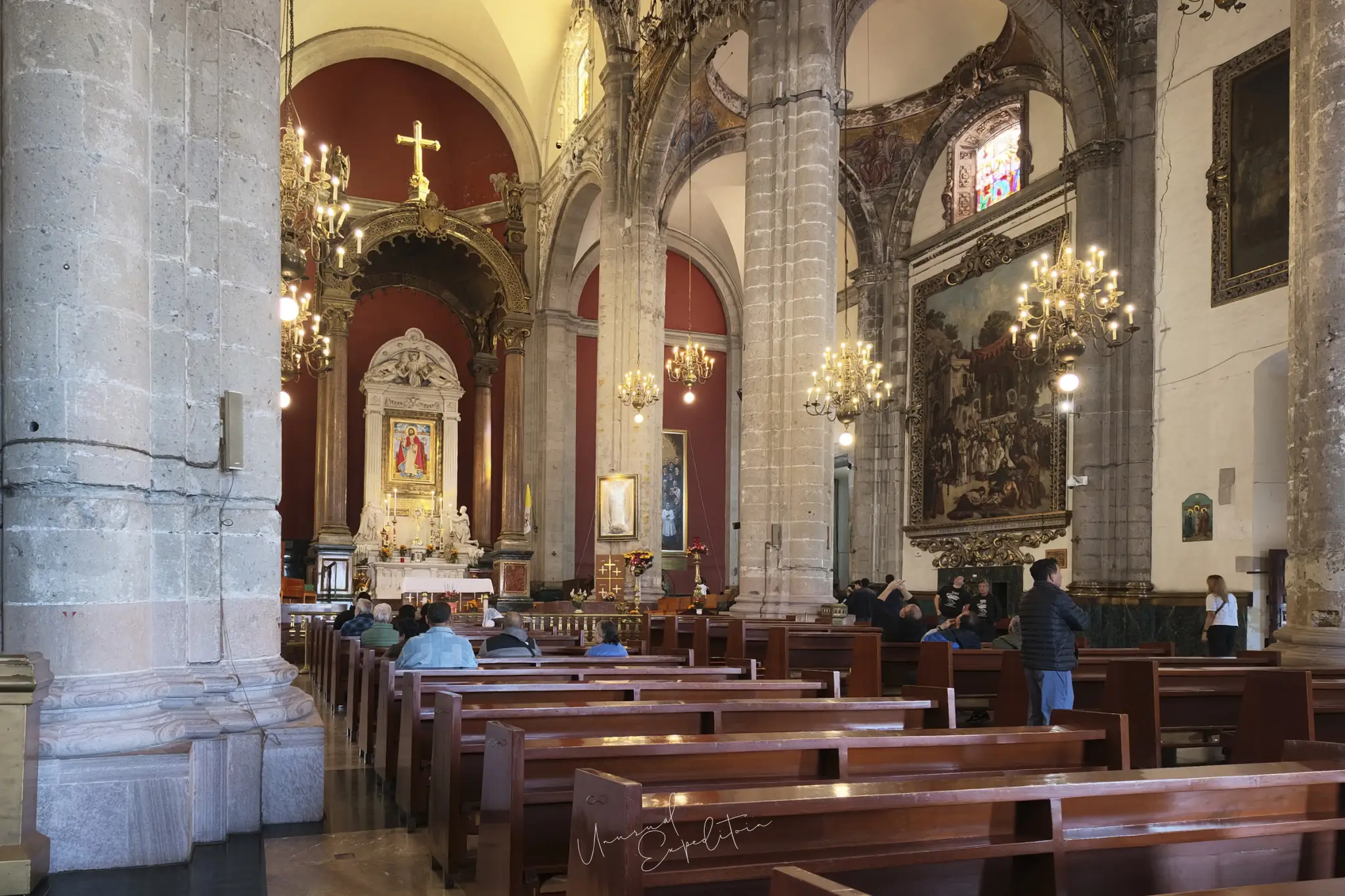
Inside the modern basilica the image of the Virgin hangs above the altar, and a moving walkway below it carries visitors past without stopping the mass. Photography without flash is generally tolerated from the walkway and the back of the church, but the rules are posted at the doors and the ushers enforce them. The older churches on the plaza are smaller and quieter: chandeliers, gilded altars, dark wooden pews and a few people praying. They need a high ISO and a steady hand, not a tripod.
The rule we work to is simple. If a mass is on, we stay at the back. We never photograph someone at prayer from the front, and we never use flash.
"At Guadalupe the best picture is often the one you do not take. People walk across that plaza on their knees. I photograph the buildings, the light and the crowd from a distance, and I leave the faces of the faithful alone unless someone smiles at the camera first."
Joseph Mak, tour leader, Unusual Expedition
When is the best time to photograph the Basilica?
Morning is best. The plaza faces the light, the crowds build through the day, and the sky over the north of the city is usually clearest early, before the haze. Weekdays are calmer than Sundays. The great feast day is 12 December, when millions of pilgrims arrive over a few days and the plaza becomes one of the largest religious gatherings in the world. It is extraordinary to witness and very hard to work in with a camera bag; if you go, travel light and expect to stand still more than you walk.
In the Day of the Dead week the Basilica pairs well with the parade: the parade starts in the afternoon, so the morning is free for Guadalupe. How that day fits together is in photographing the Day of the Dead parade in Mexico City.
Basilica de Guadalupe history in brief
| Building | What it is | What to photograph |
|---|---|---|
| Old basilica | Baroque church opened in 1709, now the Templo Expiatorio a Cristo Rey | Domes, facade, the lean |
| New basilica | Circular church dedicated in 1976, holds the image of the Virgin | The roof against the sky, reflections, the plaza with pilgrims |
| Chapels and carillon | Smaller churches and a modern bell tower with clocks | Old and new in one frame |
| Tepeyac hill | Gardens, stairs and a chapel above the complex | The view back over the plaza |
Four subjects, one morning, and all of them within a few hundred metres of each other.
How does the Basilica fit into a Mexico City photography trip?
The Basilica is a Metro ride north of the centre, so it pairs naturally with the Zócalo and the historic centre on the same day, or with the cable car neighbourhoods on the hills further north. If you have only one day in the city, the classic order is the Basilica in the morning light and the centre in the afternoon. The other places worth a camera in the capital are gathered in Mexico City photo spots, and the festival's quieter side is in Mixquic Día de Muertos photos.
What to bring and how to behave
A 24-70mm covers almost everything; add a 16-35mm for the reflections and a 70-200mm if you want to compress the domes. Dress as for any church: shoulders covered, hats off inside. Keep the camera bag in front of you in the crowds, and leave the tripod at the hotel. The Basilica is a sacred place first and a photo spot second, and the pilgrims will remind you of that if you forget.
See the Basilica with us
We include Guadalupe on our Mexico City days in the festival week. The Mexico photography tours page shows the next departure as soon as it is announced, and the full set of Mexico guides.
Mexico City photography tours
The next Mexico City departure is announced on the Mexico City photography tours page, with previous expeditions and all the planning guides.
Explore Mexico City in depth
- Mexico City Photography Tour: The Complete GuideMexico
- Mixquic Día de Muertos Photos: the Vigil and the Night MarketMexico
- Catrina Costumes at the Day of the Dead Parade in Mexico CityMexico
- Teotihuacán at Sunrise: Photos, the Balloons and How to Get ThereMexico
- Mexico City Photo Spots: The Best Places to Take PicturesMexico
- Photographing the Day of the Dead Parade in Mexico CityMexico
- Mixquic: Photographing the Day of the Dead Cemetery at NightMexico
Upcoming Photo Tours
- Egypt Photo Tour – EgyptEgypt 12 Dec 2026 To 20 Dec 2026
- Inner Mongolia Winter Owl Photo Tour – ChinaChina 01 Jan 2027 To 04 Jan 2027
- Inner Mongolia Winter Photo Tour – ChinaChina 05 Jan 2027 To 11 Jan 2027
- Mekong And Central Highland Vietnam Photo Tour - VietnamVietnam 16 Jan 2027 To 24 Jan 2027