
Mexico City Photography Tour: The Complete Guide
Mexico City photography: the centre, Guadalupe, the Day of the Dead parade, Mixquic, Teotihuacán and Xochimilco, with light and lenses.
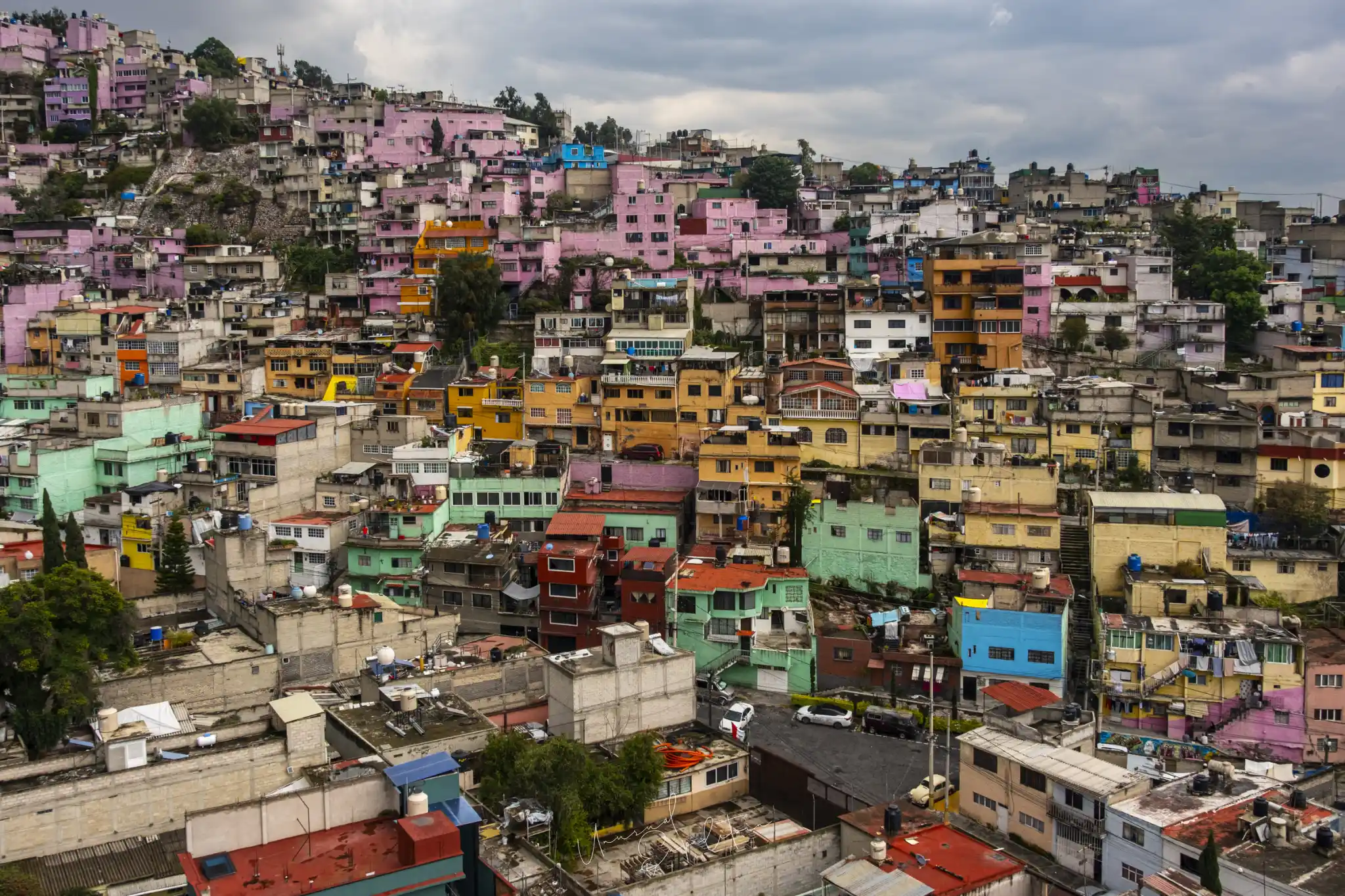
Mexico City photography rewards anyone who treats the capital as several cities at once: the colonial centre around the Zócalo, the shrine at Guadalupe in the north, the canals of Xochimilco and the village of Mixquic in the south, Teotihuacán beyond the edge, and, in the last days of October, the Day of the Dead parade on Paseo de la Reforma. This guide is the hub for all of it, with where each subject lives, the light it wants and the articles that go deeper.
Mexico City is one chapter of our Mexico photography tour guide, which covers the whole country: Guanajuato, Michoacán, Puebla and Taxco, and the Yucatán. Here we stay inside the capital and its day trips, because the city alone could fill a week of pictures and most visitors photograph a tenth of it.
Mexico City photography: what makes the capital different
Mexico City sits at 2,240 metres in a high valley ringed by volcanoes, on the bed of a drained lake. That gives three things a photographer notices at once. The air is thin and the sun is hard by mid morning, so the good light is early and late. The ground is soft, so churches and palaces lean, which turns the cathedral and the old basilica into subjects in their own right. And the city is huge, so the pictures come from choosing a few neighbourhoods and working them properly. UNESCO lists the historic centre together with Xochimilco as one World Heritage site, and Teotihuacán as another; a photographer can spend a full visit on those three and never run short.
Mexico city photos: the centre around the Zócalo
The Zócalo, the Metropolitan Cathedral, Calle Madero, the Palacio de Bellas Artes and the ruins of the Templo Mayor all sit within an easy walk of each other. They are covered spot by spot, with the light each one wants, in Mexico City photo spots. The short version: rooftop terraces on the west side of the Zócalo for the square from above, the café across from Bellas Artes for the domes, the middle of Calle Madero for street photography with the Torre Latinoamericana closing the view, and wet days for reflections on the plazas.
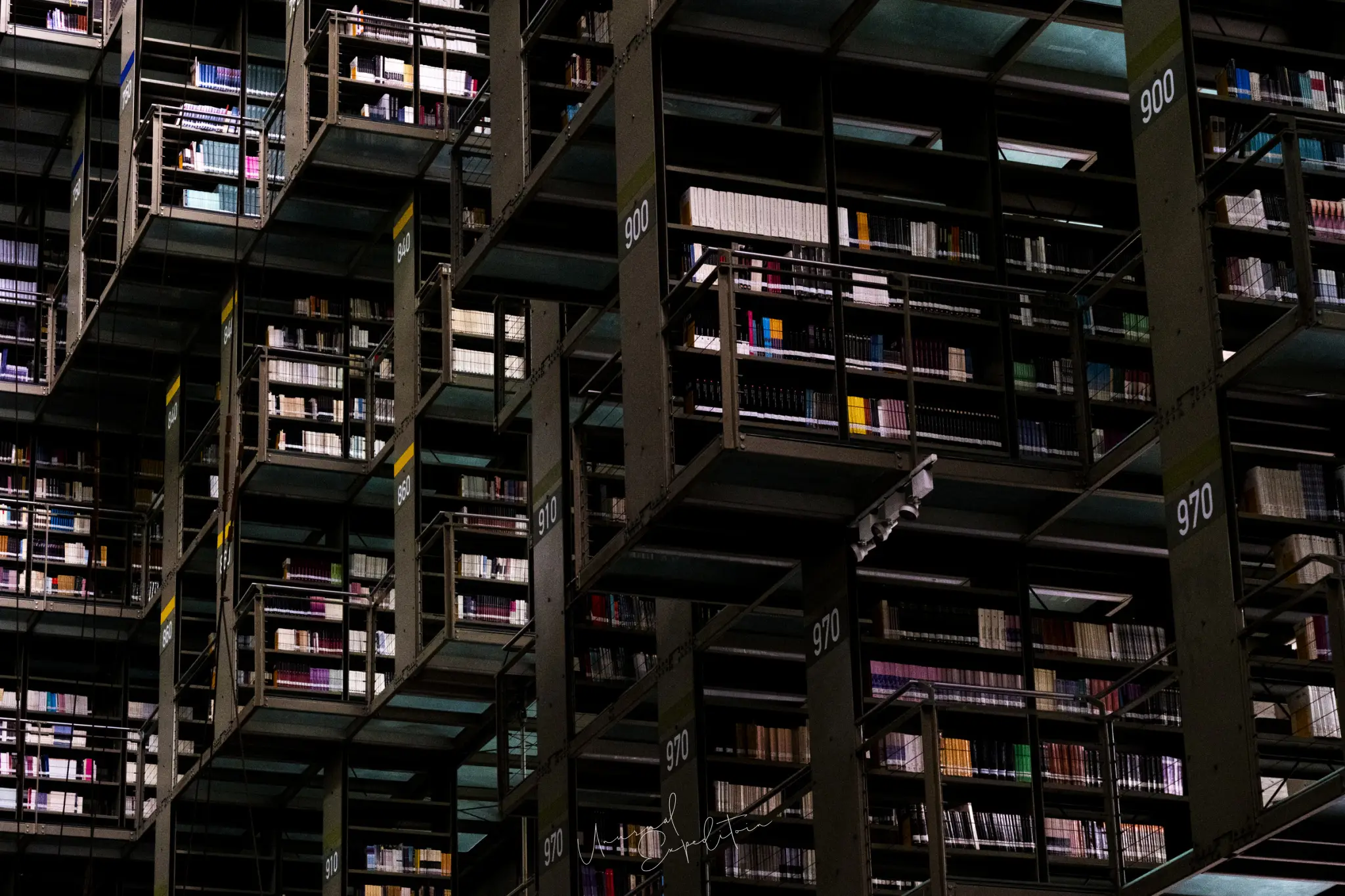
A little north of the centre, the Biblioteca Vasconcelos is one of the stranger interiors in the city: book stacks hung in tiers from the roof of a long hall, designed by Alberto Kalach. It is a public library, quiet and free, and a 24-70mm at the wide end with the camera held level is all it needs.
The Basilica of Guadalupe
The Basilica of Our Lady of Guadalupe, in the north of the city at the foot of the Tepeyac hill, is one of the most visited Catholic shrines in the world and two buildings in one frame: the baroque old basilica, sinking and leaning, and the round modern basilica beside it with its green roof. Pilgrims cross the plaza on their knees, and the photographs are made with care or not at all. Where to stand, what is inside and how to behave are in Basilica of Guadalupe photos.
The Day of the Dead in Mexico City
The festival is the reason most photographers come in late October, and Mexico City has three very different versions of it. The first is public and loud: the Gran Desfile on Paseo de la Reforma, the Catrinas and the dance troupes, and the mega-ofrenda built across the Zócalo. Position, light and lens for the parade are in photographing the Day of the Dead parade in Mexico City, and the costumes themselves, from the giant sombreros to the painted faces, in Catrina costumes at the parade.
The second version is private and quiet: the cemetery vigil at San Andrés Mixquic, in the far south of the city, where families keep the night beside their graves among candles and marigolds. The technique and the conduct are in Mixquic cemetery night photography, and the people and the night market in Mixquic Día de Muertos photos.
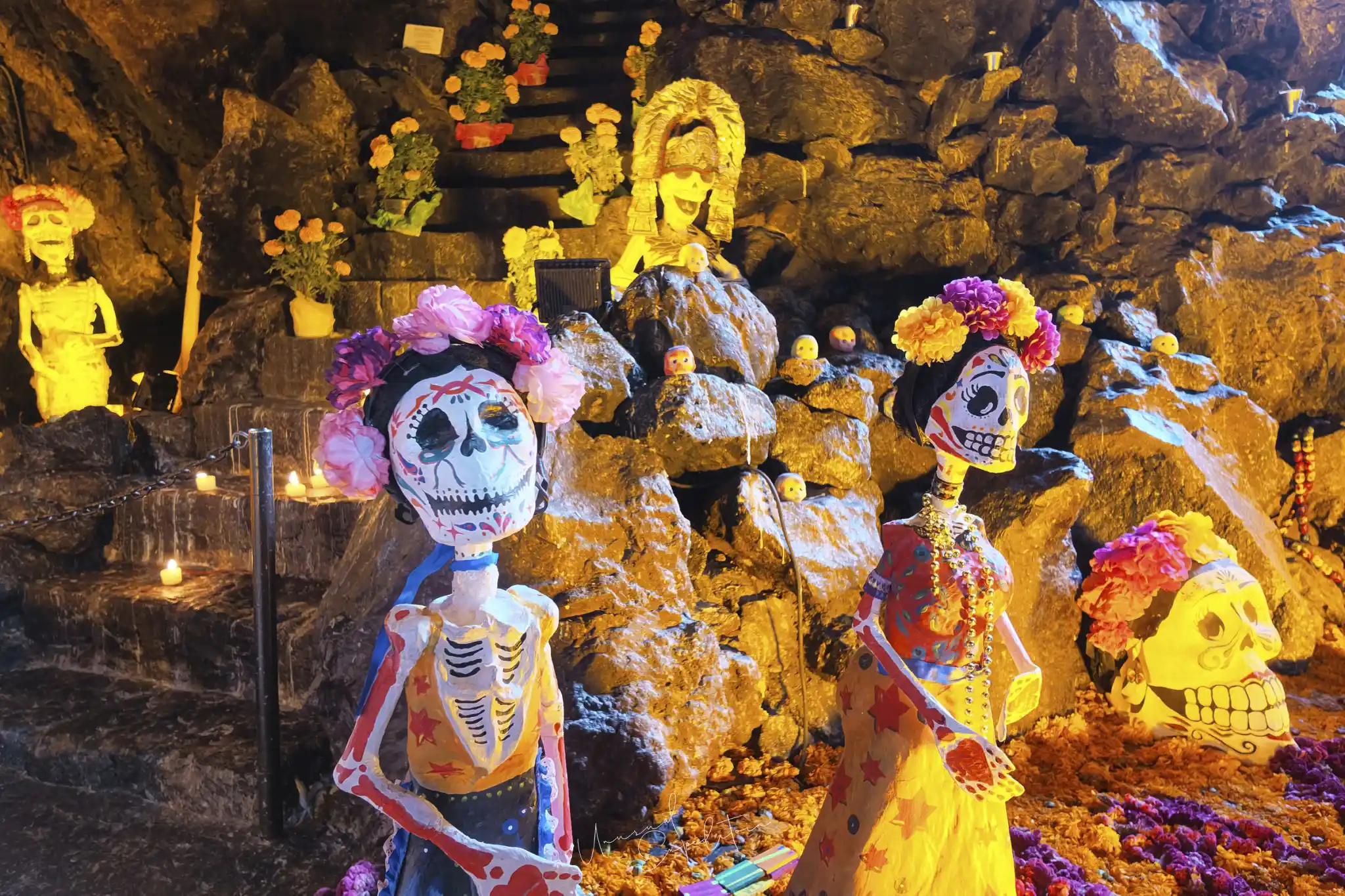
The third is everywhere else: ofrendas in shop windows, hotel lobbies, markets and even caves. Near Teotihuacán we photographed one built into the rock of a cave restaurant, skeleton dolls in flowered hats among the marigolds, lit by candles and coloured bulbs.
"Mexico City gives you the festival three ways in one week: the parade, where everyone wants to be photographed, the cemetery, where almost nobody does, and the streets in between. A good set has all three, and you shoot each of them differently."
Joseph Mak, tour leader, Unusual Expedition
Teotihuacán: the pyramids at the edge of the city
Teotihuacán lies north-east of the city, the ancient city of the Avenue of the Dead and the Pyramids of the Sun and the Moon. It is the one great archaeological site within easy reach of the capital, and the balloons that rise over it at sunrise are a picture of their own. Opening hours, how to get there and whether the balloon is worth it are in Teotihuacán at sunrise.
Xochimilco: the canals in the south
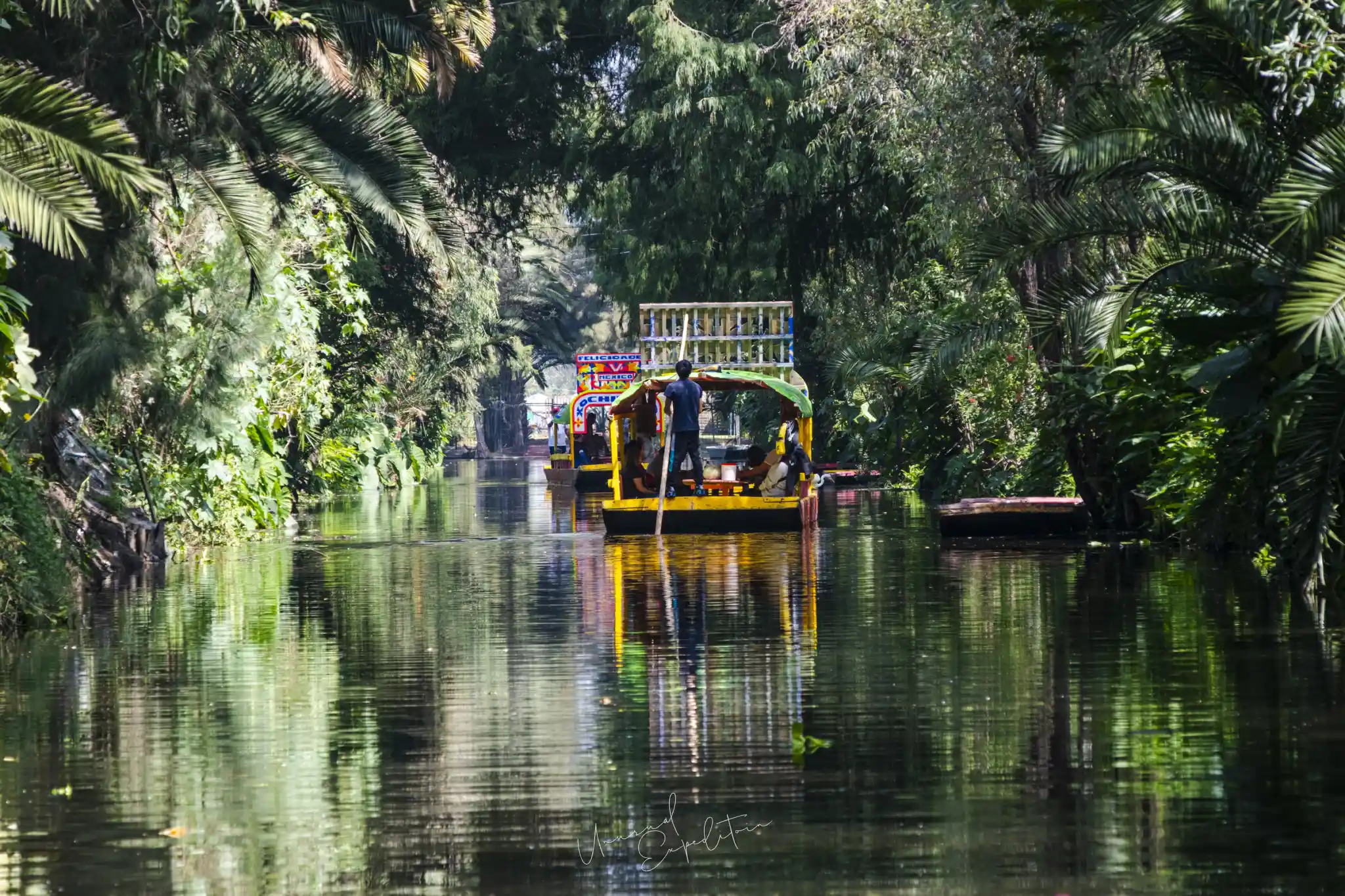
Xochimilco is what remains of the lake on which the Aztec capital was built: canals, floating gardens and the painted trajineras that carry families and visitors along them. The busy landing stages are colour and noise; the quieter canals further in are green water, overhanging trees and one boat at a time. Go in the morning, when the water is still, and take the boat beyond the crowded stretch.
The city from above: cable cars and painted hills
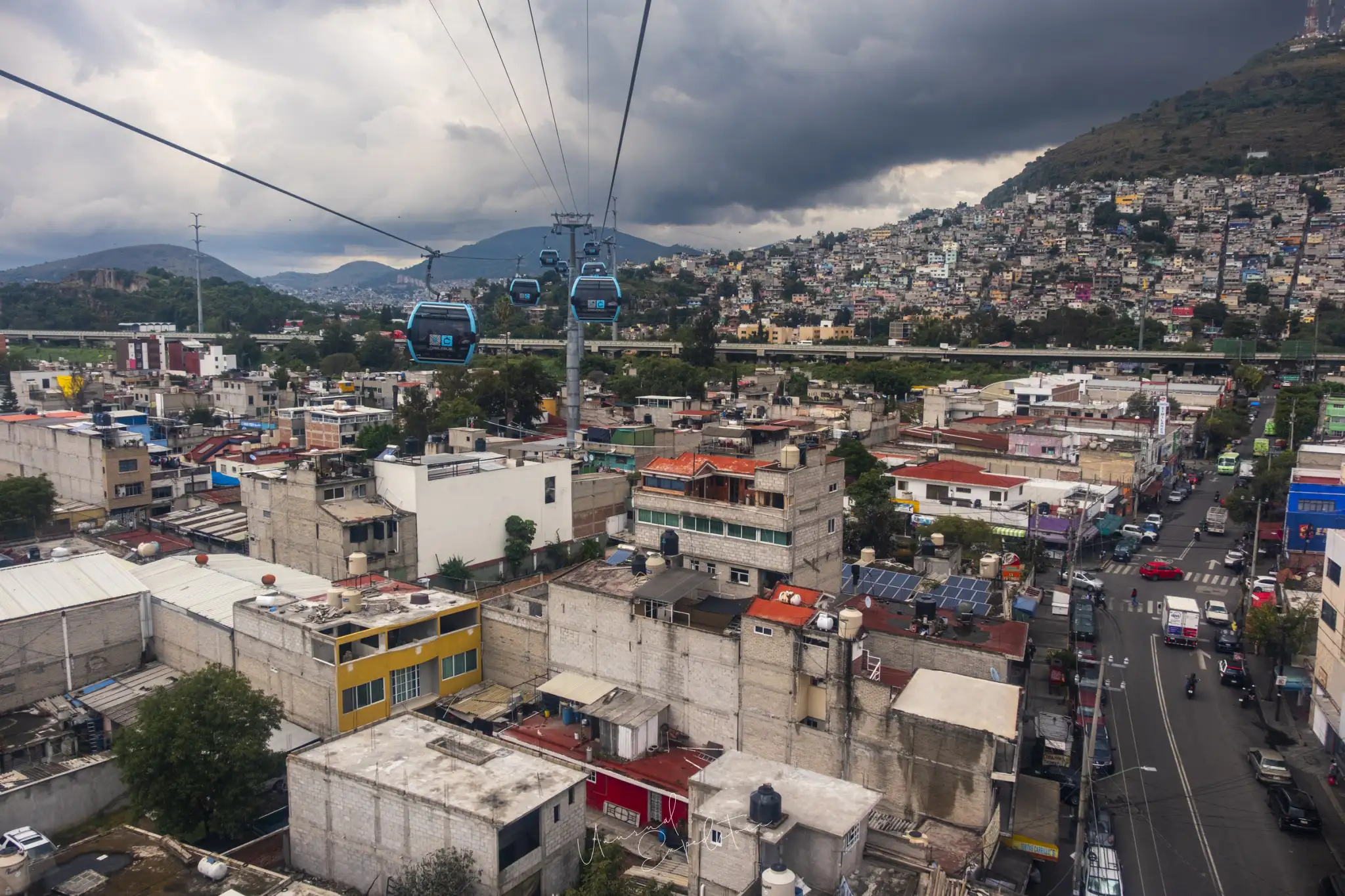
Mexico City climbs up the hills around the valley in thousands of small houses, and several of these neighbourhoods are now linked to the Metro by cable cars. A ride gives a view no rooftop does: streets running away below the cabin, the hillsides painted in pinks, greens and yellows, and the volcanoes on a clear day. A 24-70mm through the cabin window handles both the wide view and a single painted street.
When is the best time for Mexico City photography?
Mexico City is photographable all year, but the seasons decide what you get. The dry season, roughly November to April, gives clear mornings and the best chance of seeing the volcanoes, with haze building as the dry months go on. The rainy season, roughly June to September, brings afternoon storms, clean air after them and puddles that turn the plazas into mirrors. The last week of October and the first days of November are the festival: the parade, the mega-ofrenda, marigolds in every market and the vigils on the nights of 1 and 2 November. That week is crowded, and worth it. Our full country calendar is in the Mexico photography tour guide.
| Subject | Best light | Lens | Notes |
|---|---|---|---|
| Zócalo and cathedral | Late afternoon, blue hour | 16-35mm, 24-70mm | Rooftop terraces on the west side |
| Basilica of Guadalupe | Morning | 16-35mm, 24-70mm | Working shrine, no flash inside |
| Day of the Dead parade | Afternoon, last hour best | 70-200mm, 24-70mm | Shaded side of Reforma |
| Mixquic vigil | Dusk into night | Fast wide prime, 24-70mm | Ask before close portraits |
| Teotihuacán | Sunrise and early morning | 24-70mm, 70-200mm | No shade on the site |
| Xochimilco | Morning | 24-70mm | Go beyond the busy landings |
Most of the city wants a mid-range zoom; the long lens earns its weight only at the parade and Teotihuacán.
Is Mexico City safe for photographers?
The centre, Guadalupe, Reforma and the main day-trip sites are busy, policed and visited by millions. The usual city rules apply: one camera out at a time, a strap you can feel, nothing left on café tables, and a taxi or app car after dark in neighbourhoods you do not know. Read your own government's travel advice before you go; the UK Foreign Office and the US State Department both publish advice for Mexico City.
Explore Mexico City in depth
- Mexico City photo spots: the best places to take pictures
- Basilica of Guadalupe photos: the old and new basilica
- Photographing the Day of the Dead parade in Mexico City
- Catrina costumes at the Day of the Dead parade
- Mixquic: photographing the cemetery at night
- Mixquic Día de Muertos photos: the vigil and the night market
- Teotihuacán at sunrise: photos, balloons and how to get there
Photograph Mexico City with us
Mexico City is where our Day of the Dead trips begin and where the festival is at its biggest. Photographers join from any country. The Mexico photography tours page lists the next departure as soon as it is scheduled, with the full set of Mexico guides.
Mexico City photography tours
The next Mexico City departure is announced on the Mexico City photography tours page, with previous expeditions and all the planning guides.
Explore Mexico City in depth
- Mixquic Día de Muertos Photos: the Vigil and the Night MarketMexico
- Catrina Costumes at the Day of the Dead Parade in Mexico CityMexico
- Basilica of Guadalupe Photos: the Old and New Basilica in Mexico CityMexico
- Teotihuacán at Sunrise: Photos, the Balloons and How to Get ThereMexico
- Mexico City Photo Spots: The Best Places to Take PicturesMexico
- Photographing the Day of the Dead Parade in Mexico CityMexico
- Mixquic: Photographing the Day of the Dead Cemetery at NightMexico
Upcoming Photo Tours
- Egypt Photo Tour – EgyptEgypt 12 Dec 2026 To 20 Dec 2026
- Inner Mongolia Winter Owl Photo Tour – ChinaChina 01 Jan 2027 To 04 Jan 2027
- Inner Mongolia Winter Photo Tour – ChinaChina 05 Jan 2027 To 11 Jan 2027
- Mekong And Central Highland Vietnam Photo Tour - VietnamVietnam 16 Jan 2027 To 24 Jan 2027