
Catrina Costumes at the Day of the Dead Parade in Mexico City
Catrina costume photos from the Day of the Dead parade in Mexico City: hats, dresses, make-up, the Catrín and how to shoot them.
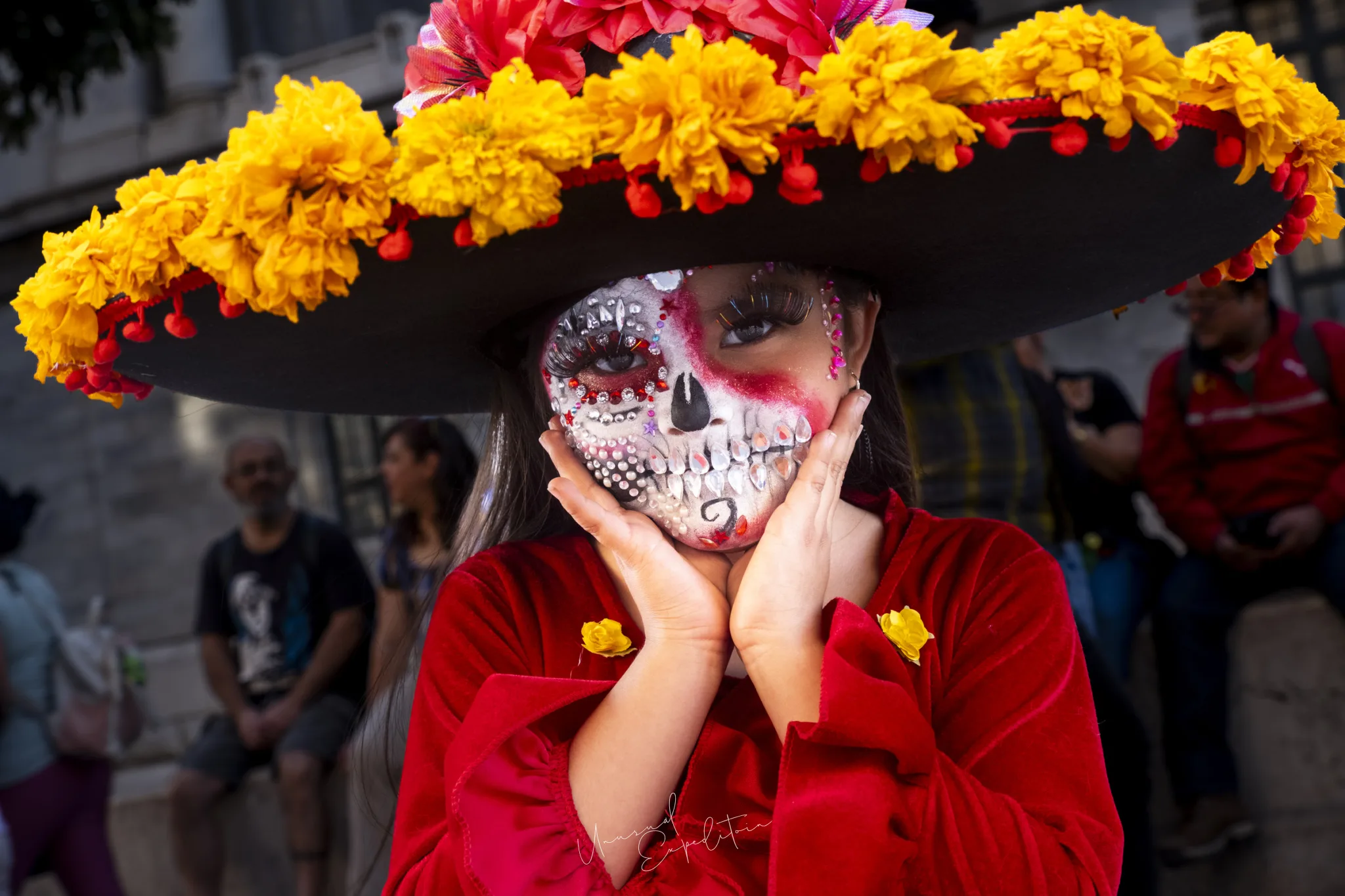
The best Catrina costume ideas in Mexico are not in a shop: they walk down Paseo de la Reforma at the Day of the Dead parade in Mexico City. Wide sombreros painted with roses or the Virgin of Guadalupe, flower crowns of marigolds, Victorian dresses in black lace or red velvet, skull faces drawn in white, black and glitter. These photos show what the Catrinas and Catrines actually wear, where the costume comes from and how to photograph it.
The parade is part of our Mexico City photography tour guide. Where to stand, which lens and when the light is best on the route are in photographing the Day of the Dead parade in Mexico City; this piece is about the costumes themselves.
Catrina day of the dead: where the figure comes from
La Catrina began as a print. Around 1910 to 1913 the Mexican engraver José Guadalupe Posada made a zinc etching of a female skeleton in a grand European hat, mocking Mexicans who dressed above their station and forgot their roots. Diego Rivera then painted her full length, arm in arm with Posada, at the centre of his mural "Sueño de una tarde dominical en la Alameda Central", finished in 1947 and now in the Museo Mural Diego Rivera beside the Alameda. That mural made her the face of the festival. PBS NewsHour has a good short history of how a satirical print became a national symbol.
Today the Catrina is everywhere in the festival week: clay figures in markets, giant statues in plazas, and thousands of people painted and dressed as her. Men dress as the Catrín, her dandy partner, in tailcoats, top hats and canes. Day of the Dead itself is on UNESCO's list of the Intangible Cultural Heritage of Humanity; the Catrina costume is the modern, urban, theatrical side of it.
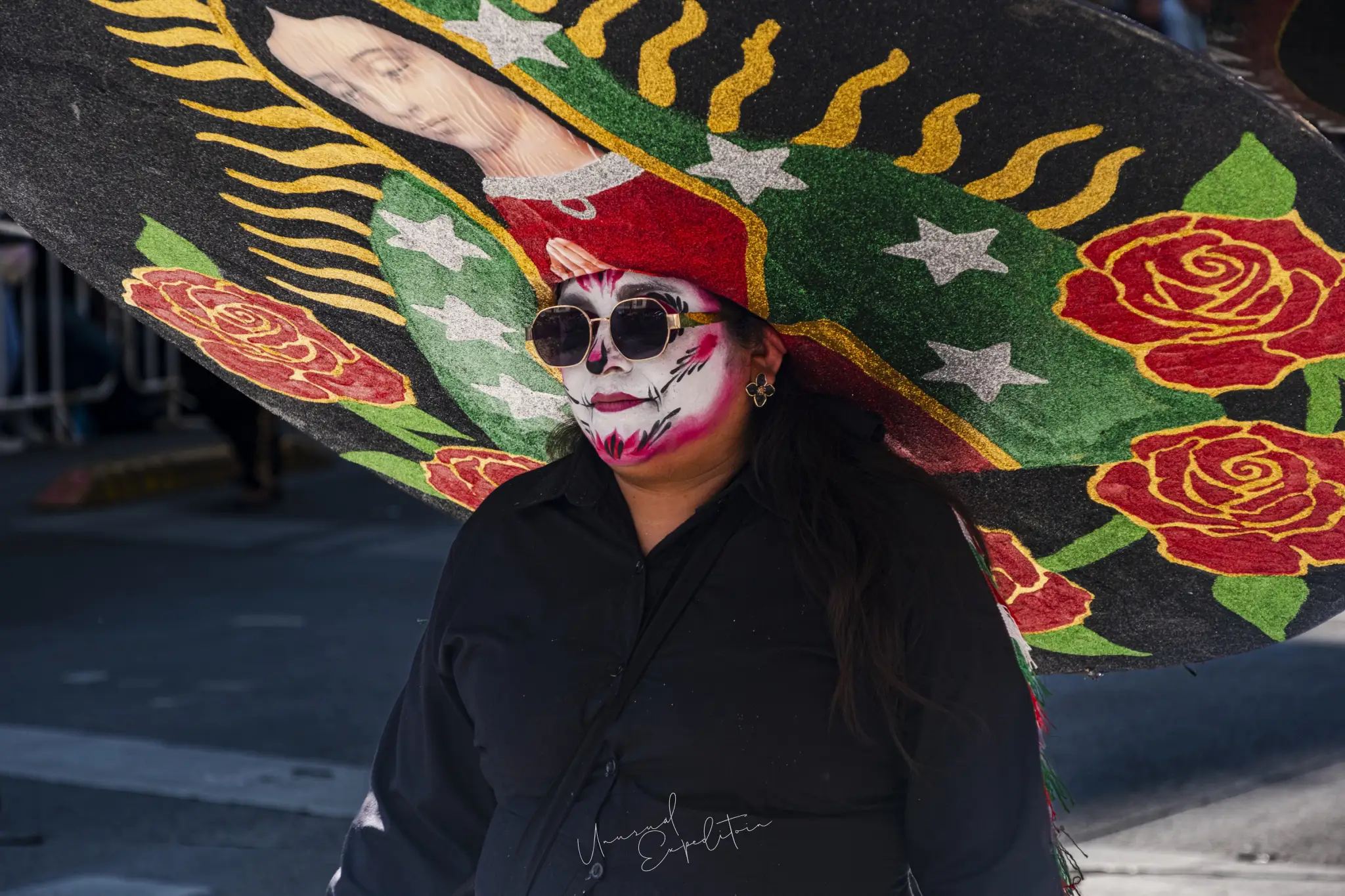
Catrina costume ideas: the hat
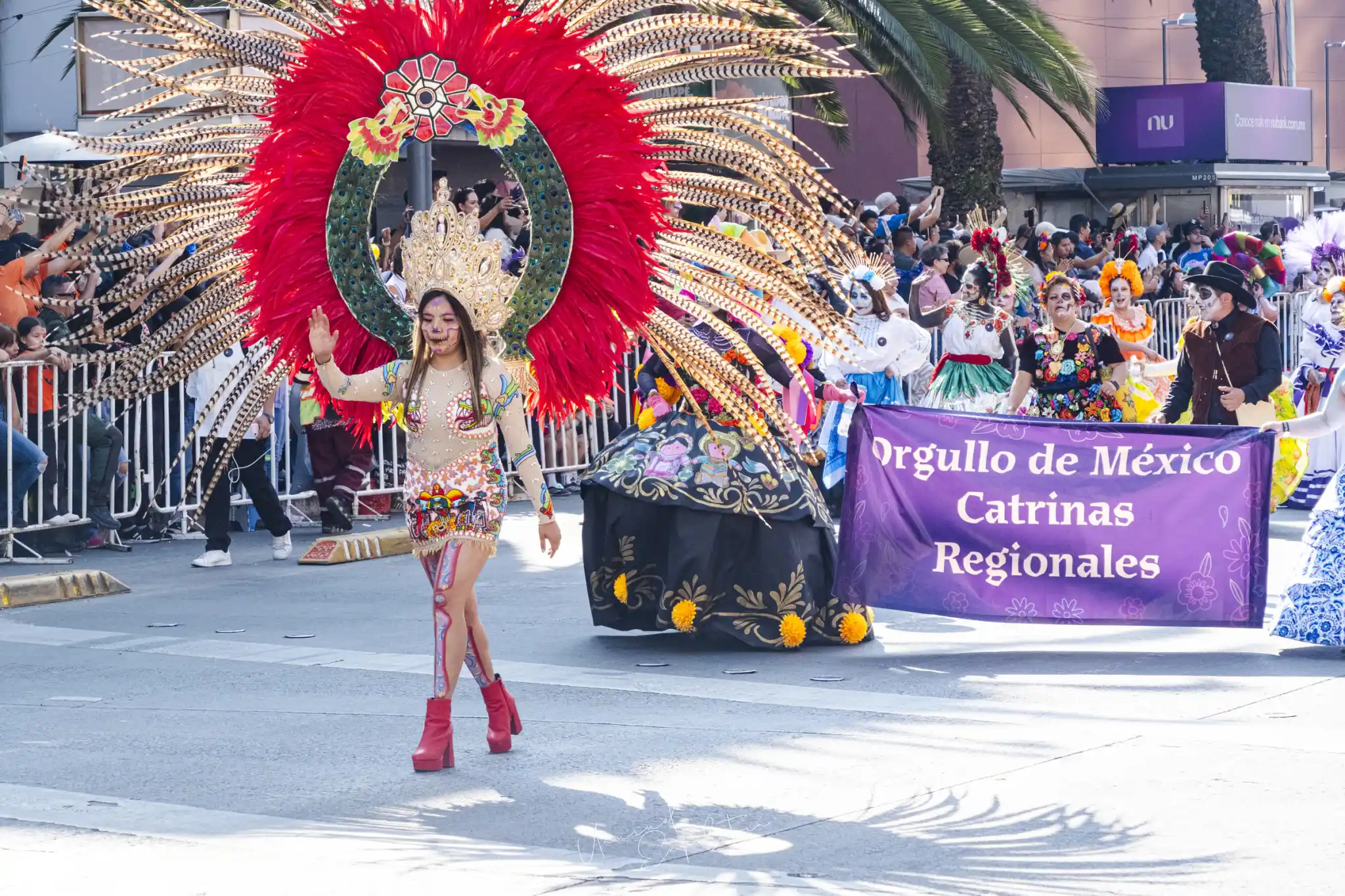
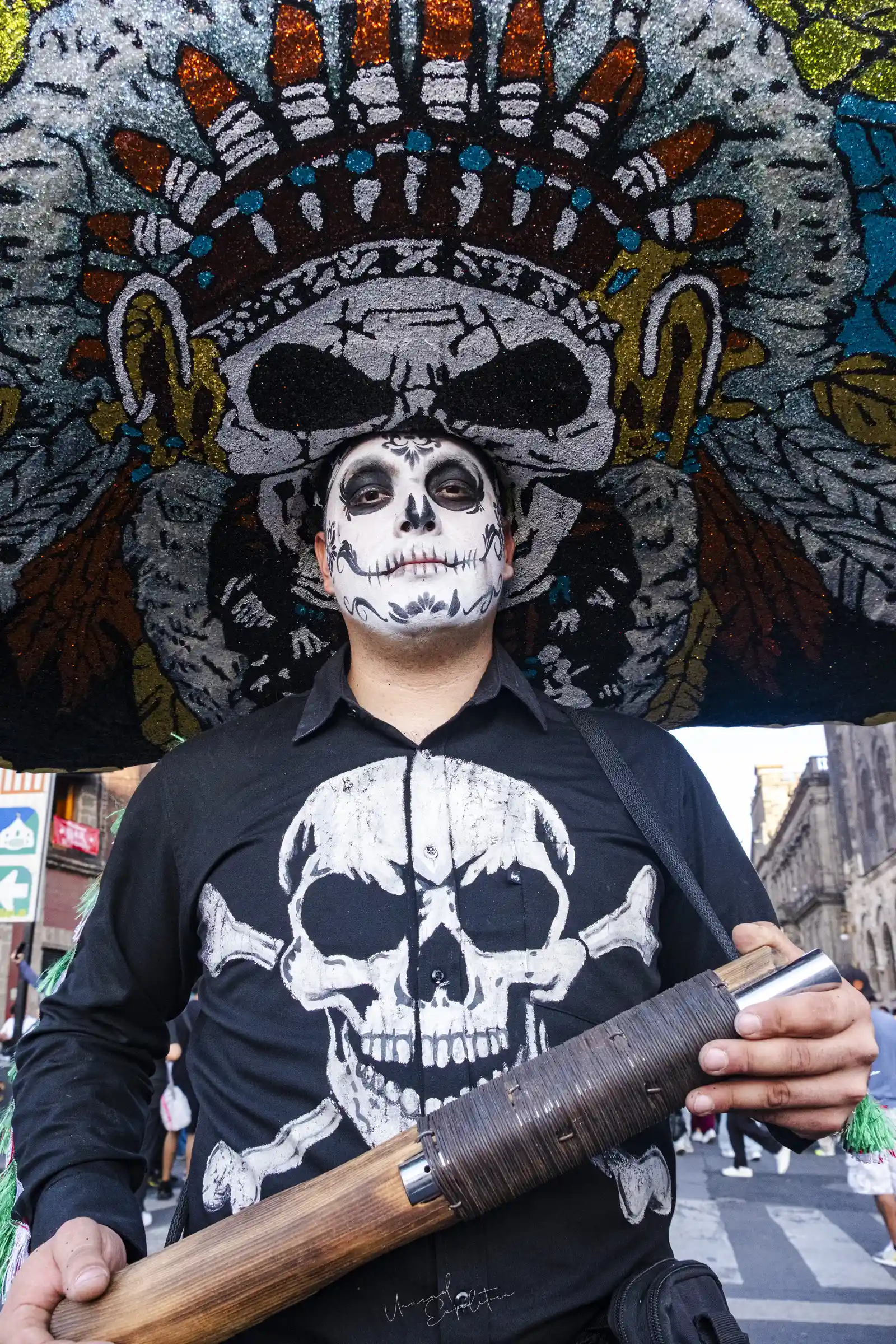
The hat is the costume. Posada's Catrina wore a wide brim heaped with ostrich plumes, and every version since starts from that brim and goes further. At the Mexico City parade we photographed sombreros so wide their owners had to turn sideways at the barriers: one painted with the Virgin of Guadalupe and red roses, one in black lace hung with marigold pompoms, one crowned with marigolds in orange and yellow. Hats are where people put religion, national pride, family flowers and pure showing off, and they photograph best from slightly below, so the brim frames the face.
Catrina dress and the Catrín
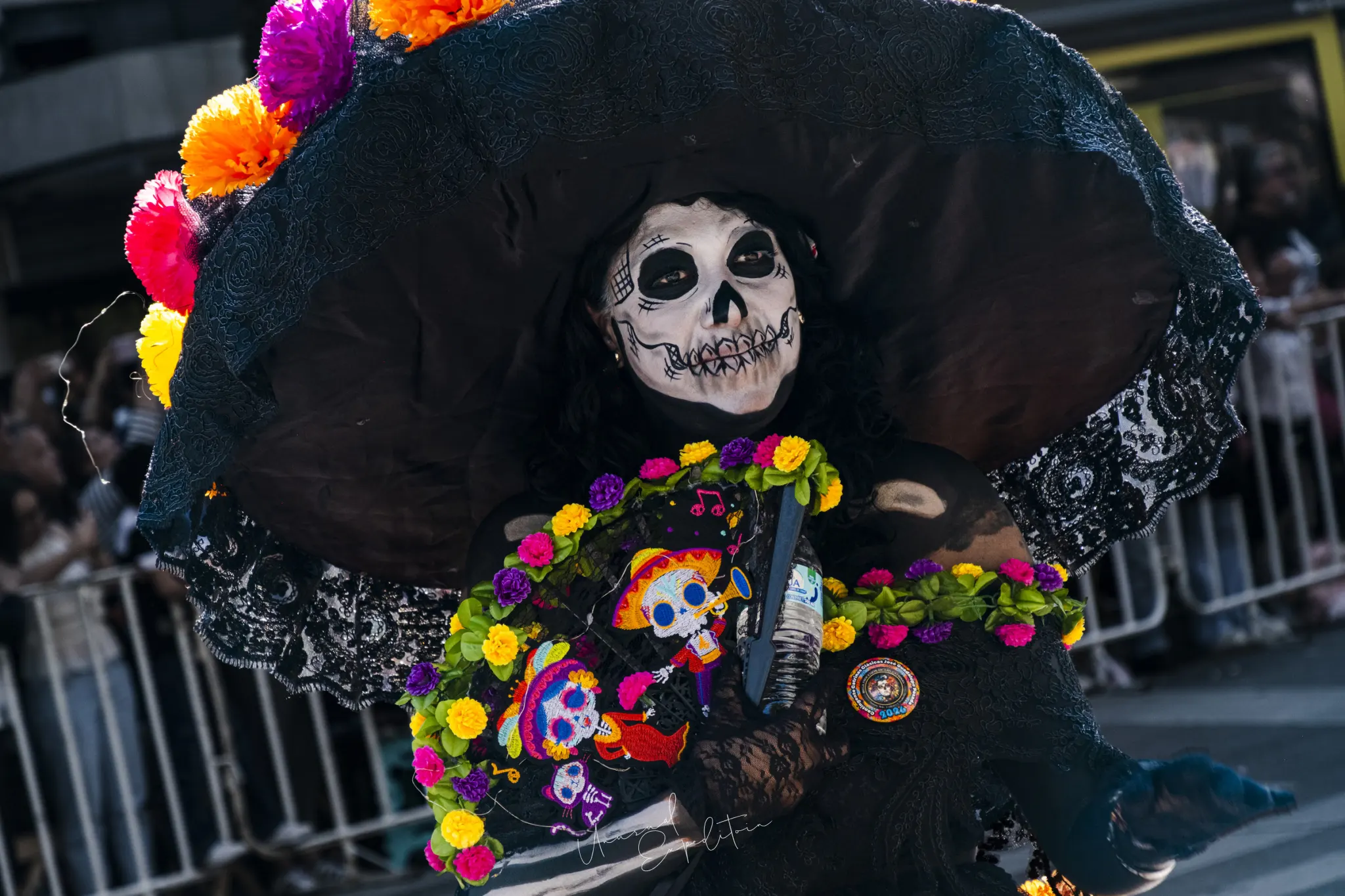
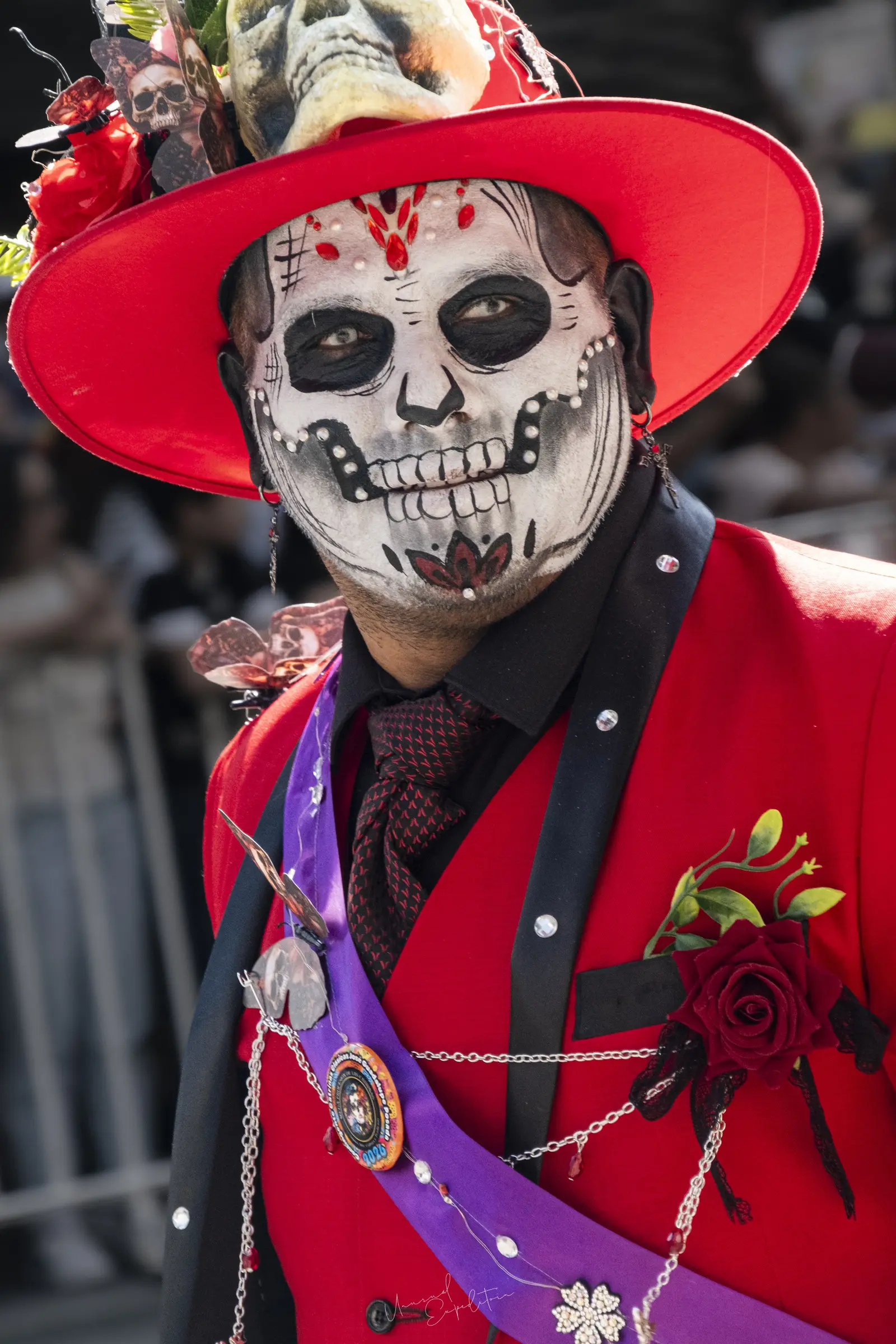
Under the hat the dress is usually long, fitted at the waist and either black, white or deep red: Victorian lace, velvet with gold embroidery, or a regional dress from Oaxaca, Jalisco or Veracruz with a skull face added. The Catrín wears the same palette in a suit: a red tailcoat, a sash, a rose in the buttonhole, a painted grin. Couples dress to match, and a matched pair turning together in the street is one of the parade's reliable pictures.
The face: Catrina make-up
The painted face is a skull drawn over a living face: white base, black sockets round the eyes, a stitched grin across the mouth, and then whatever the wearer adds, which is where the variety lives. Flowers and swirls on the cheeks and forehead, glitter, a red heart on the chin, coloured sockets to match the dress, sunglasses, pearls. In the festival week make-up artists set up in the streets and plazas of the centre, and anyone can sit down, have a face painted and watch the parade in costume.
For photographers the face sets the exposure. White paint in sun is about a stop brighter than everything around it, so expose for the face and let the background go dark.
"The Catrinas want to be photographed. That is the whole idea of the costume. Make eye contact, lift the camera a little, and nine times out of ten she stops at the barrier and gives you a pose. Say gracias after. It is a conversation, not a hunt."
Joseph Mak, tour leader, Unusual Expedition
Day of the dead parade in Mexico City: more than Catrinas
The parade, organised by the Mexico City government, mixes Catrinas with floats, brass bands, giant puppets and dance groups from the regions. A contingent of "Catrinas Regionales" marched under one banner, each in the traditional dress of a different state; Aztec dancers came in feather headdresses so tall they caught the wind. Others went darker: a skull mask under a headdress of more skulls, a skeleton shirt and a drum. The costumes change every year, which is why photographers go back.
How to photograph Catrina costumes
A parade costume is a portrait and a moving subject at once. A few things help:
- Lens: a 70-200mm from the barrier for faces as they come towards you; a 24-70mm when a Catrina stops close and the whole hat needs to fit.
- Shutter: 1/500 of a second or faster for walking figures, faster again for dancers turning their skirts.
- Background: shoot slightly upwards to put the hat against sky or trees rather than the crowd on the far side.
- Light: the shaded side of the avenue gives even light on the face; full sun on white paint burns out.
- Details: after the full figure, go in close on the hands, the earrings, the flowers on the brim.
| Costume element | What we saw | How to frame it |
|---|---|---|
| Hat | Wide sombreros painted, laced or crowned with marigolds | From slightly below, brim around the face |
| Dress | Black lace, red velvet, regional dress | Full figure, 24-70mm, when she stops |
| Face | White skull base, flowers, glitter, colour | Close, 70-200mm, expose for the paint |
| Catrín | Tailcoat, sash, top hat, rose | With his Catrina, as a pair |
| Headdresses | Feathers, skulls, flowers | Vertical frame, leave room above |
The hat decides the frame more often than the face does.
Where else to see Catrinas in Mexico City
Beyond the parade, Catrinas appear on the Zócalo around the mega-ofrenda, in the streets of the centre throughout the festival week, and at the night market in Mixquic on 1 November, where families and teenagers dress up for each other rather than for an audience. That quieter side of the festival is in Mixquic Día de Muertos photos. The rest of the city's photo spots are in Mexico City photo spots.
Come to the parade with us
Our Day of the Dead trips put photographers on the parade route in Mexico City with a plan for the light and the lens. Photographers join from any country. The Mexico photography tours page shows the next departure when it is scheduled.
Mexico City photography tours
The next Mexico City departure is announced on the Mexico City photography tours page, with previous expeditions and all the planning guides.
Explore Mexico City in depth
- Mexico City Photography Tour: The Complete GuideMexico
- Mixquic Día de Muertos Photos: the Vigil and the Night MarketMexico
- Basilica of Guadalupe Photos: the Old and New Basilica in Mexico CityMexico
- Teotihuacán at Sunrise: Photos, the Balloons and How to Get ThereMexico
- Mexico City Photo Spots: The Best Places to Take PicturesMexico
- Photographing the Day of the Dead Parade in Mexico CityMexico
- Mixquic: Photographing the Day of the Dead Cemetery at NightMexico
Upcoming Photo Tours
- Egypt Photo Tour – EgyptEgypt 12 Dec 2026 To 20 Dec 2026
- Inner Mongolia Winter Owl Photo Tour – ChinaChina 01 Jan 2027 To 04 Jan 2027
- Inner Mongolia Winter Photo Tour – ChinaChina 05 Jan 2027 To 11 Jan 2027
- Mekong And Central Highland Vietnam Photo Tour - VietnamVietnam 16 Jan 2027 To 24 Jan 2027