
Mixquic Día de Muertos Photos: the Vigil and the Night Market
Mixquic Día de Muertos photos: families at the candlelit graves of La Alumbrada and the 1 November night market, and how we shot them.
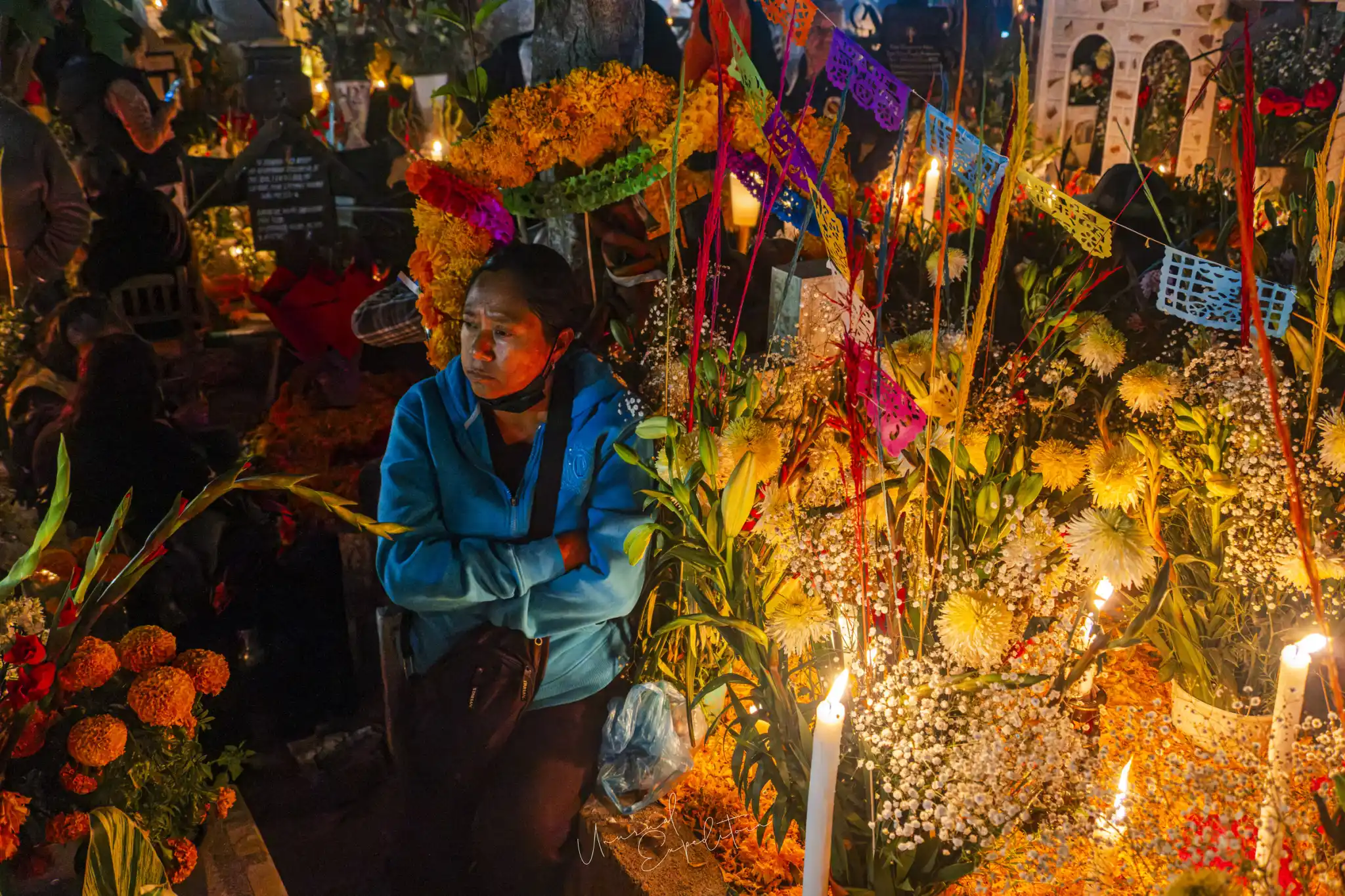
Mixquic Día de Muertos photos are pictures of families, not of a show. In San Andrés Mixquic, a village in the Tláhuac borough on the southern edge of Mexico City, people spend the night of 2 November beside their family graves among candles, marigolds and copal smoke, a vigil called La Alumbrada; the night before, the streets around the church turn into a market of masks, costumes and sweets. These are the faces and scenes we photographed there, and what each one teaches.
Mixquic sits inside our Mexico City photography tour guide. The technical side, exposure by candlelight, lenses, conduct and how to get there, is in Mixquic: photographing the cemetery at night. This piece is the photo essay that goes with it.
Día de muertos en Mixquic: what the night looks like
Día de Muertos in Mixquic is a family reunion held at the grave. In the afternoon of 2 November families clean the tombs, lay carpets of cempasúchil petals, set out bread, fruit, drinks and photographs of the dead, and fill clay burners with copal. As the light goes the candles are lit, one by one at first and then by the hundred, until the churchyard is a field of small flames with smoke drifting through it and a family sitting at each fire. UNESCO describes the festival as a yearly reunion between the living and their ancestors, and at Mixquic you can see exactly what that means.
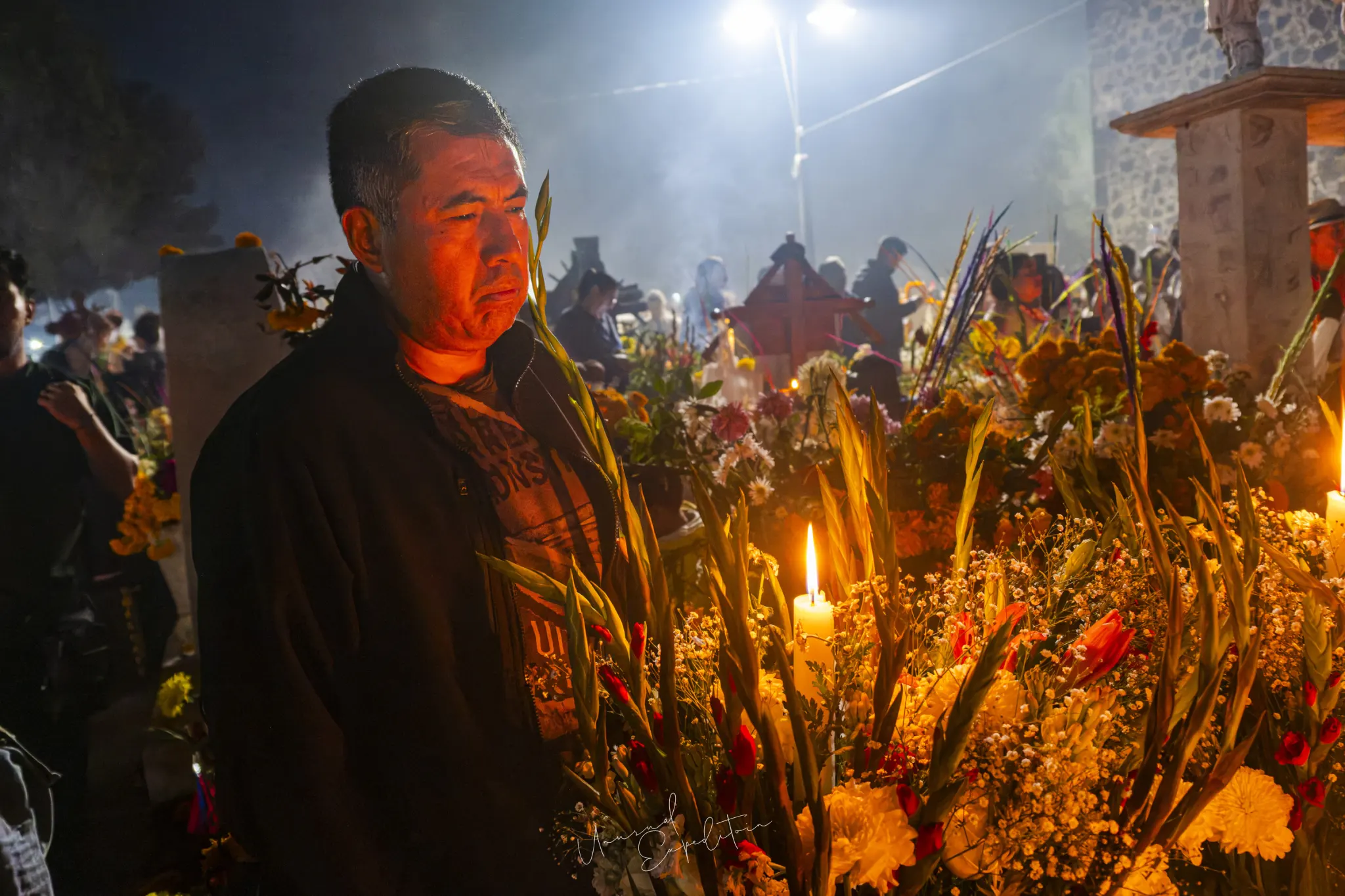
Mixquic day of the dead: the people at the graves
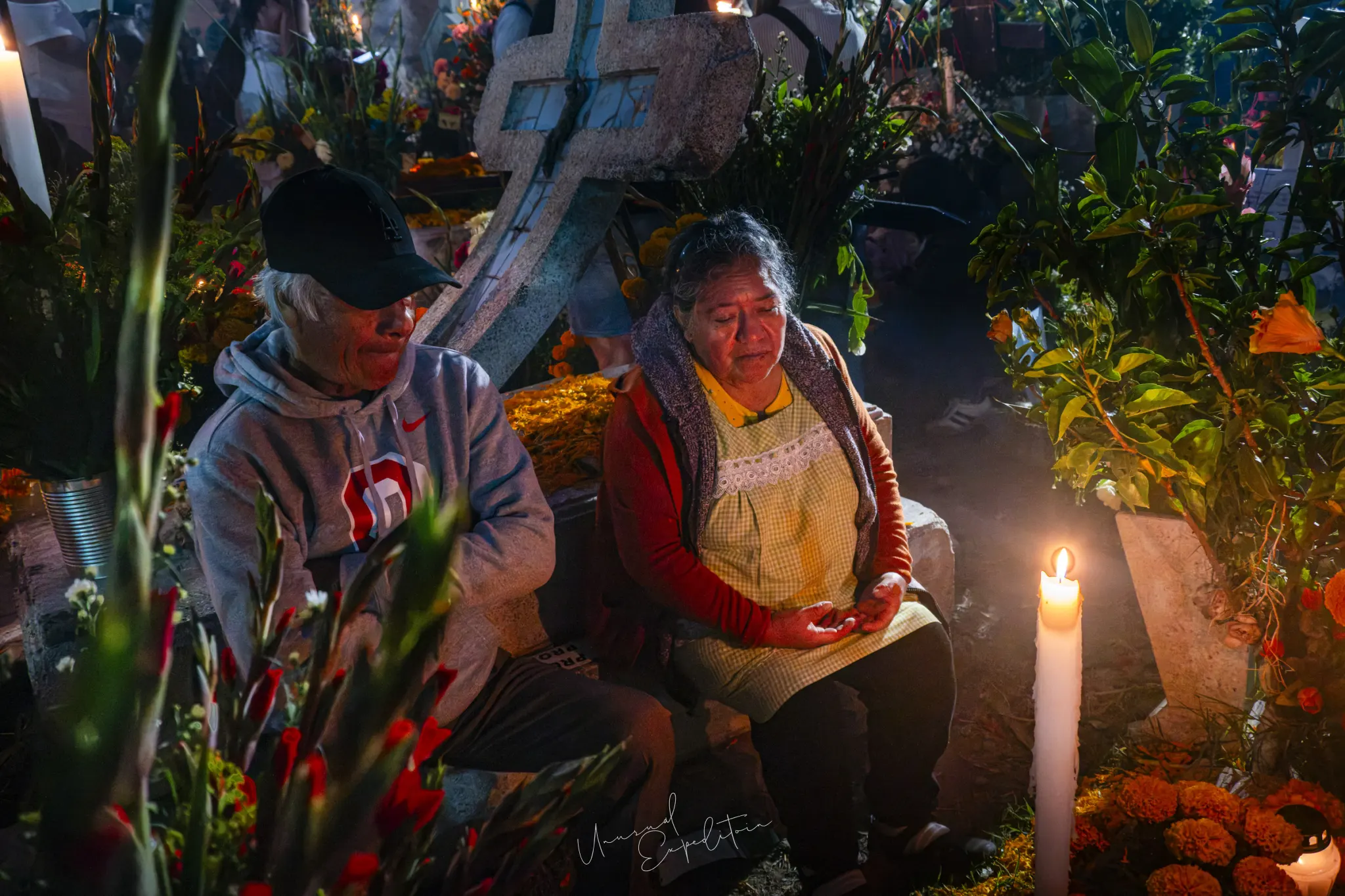
Most of our Mixquic frames are portraits made at a distance of one grave. A man standing behind the candles he has just lit, the flames throwing orange up into his face. An older man sitting on a folding chair beside a tomb, a shopping bag of supplies at his feet, waiting out the night. A couple side by side on the edge of the grave, a single tall candle between them. A woman in a blue jacket among a mass of flowers, looking past the camera.
None of these are candid. Each started with a nod, the camera half raised, and a yes; sometimes the conversation came first and the photograph much later. The families of Mixquic have had visitors with cameras for decades, and most are generous with them, but it is their night and their dead. A no is accepted at once, and anyone praying or weeping is left alone.
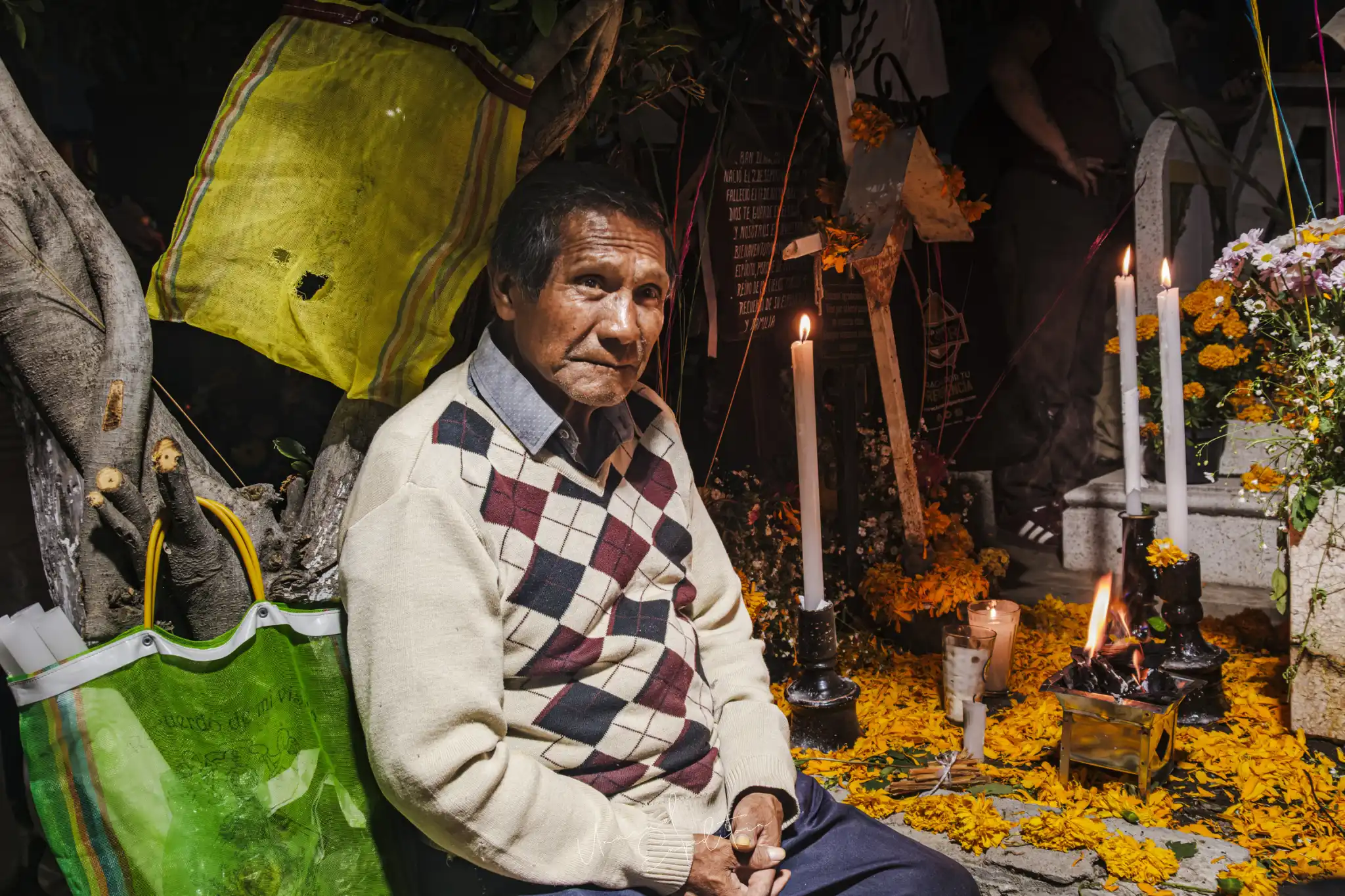
"In Mixquic the families are the picture, and they owe you nothing. I sit down, I ask about the person in the photograph on the grave, and very often I am offered bread before I am offered a portrait. That is the right order."
Joseph Mak, tour leader, Unusual Expedition
Mixquic CDMX: the light, from dusk to candlelight
The cemetery changes colour as the night comes on. At dusk the sky behind the crosses is still blue or pink, the smoke catches the last light and the candles are only just visible. This is the richest light of the night for wide frames of the whole churchyard. Once the sky goes black the pictures shrink to pools of candlelight: one face, one grave, flowers glowing orange and yellow, and darkness around them. A woman in a bright jacket stands out against that darkness without any help from you.
The candles are the only light we use. No flash, no head torch, no video light: they would flatten the faces, kill the atmosphere and offend the families. A fast lens, a high ISO and a steady stance do the work.
1 November: the Mixquic night market
The night before the vigil is a different village. The streets that lead to the church of San Andrés fill with stalls selling masks, costumes, sugar skulls, pan de muerto and hot food; music comes from every direction, and families walk up and down in fancy dress. Young people paint their faces as Catrinas and pose for each other with flower crowns and skeleton gloves. Here the camera is welcome in a looser way: people dress up to be seen, and a raised camera often gets a pose.
For the market we work with a fast wide prime close to the subject, the stall lights doing the job of a studio. The pictures are brighter, louder and funnier than the cemetery frames, and a good Mixquic set needs both.
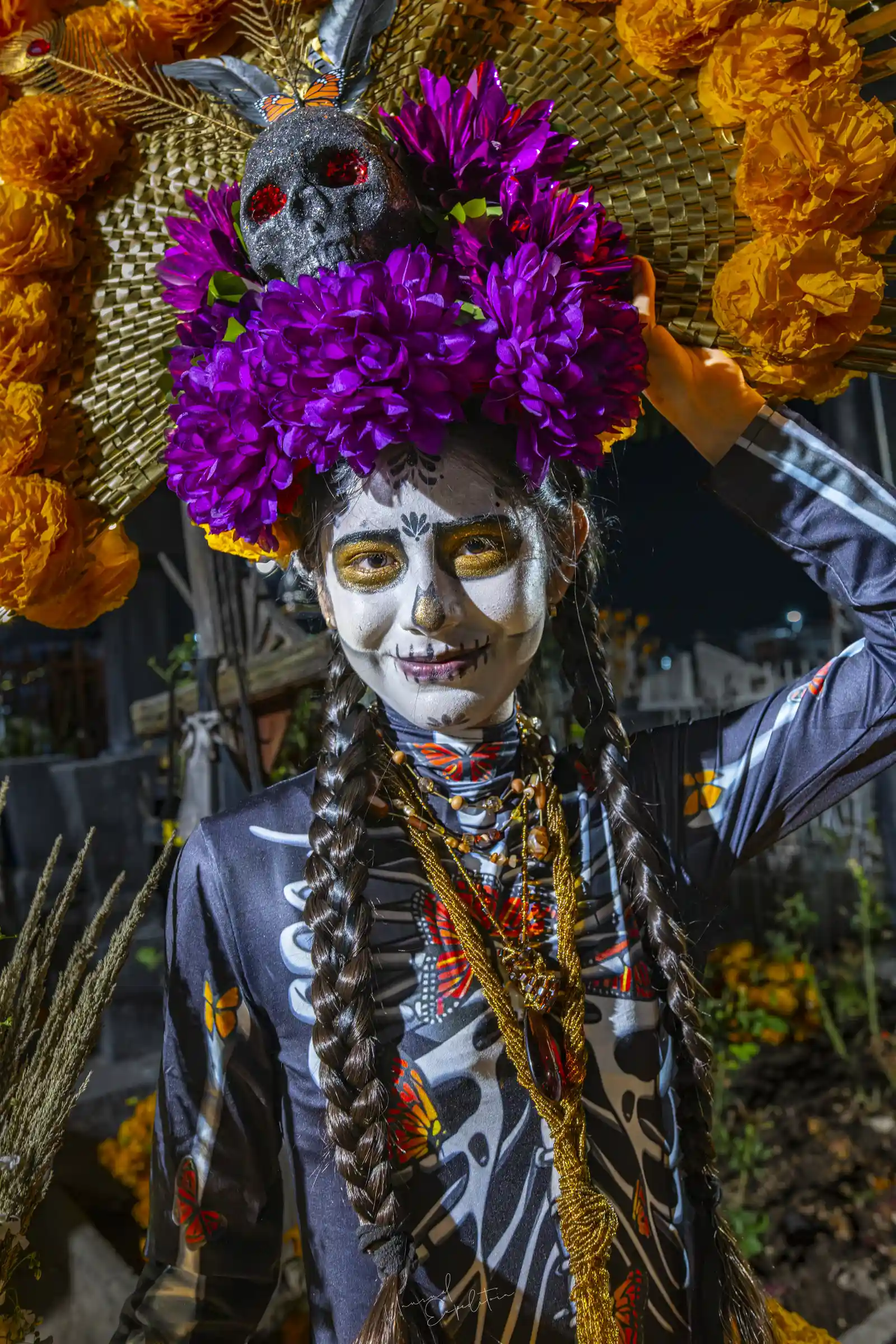
What do these Mixquic photos have in common?
| Scene | Night | Light | Approach |
|---|---|---|---|
| Churchyard wide view | 2 November | Dusk sky with candles | From the path, 24-70mm wide end |
| Portrait at a grave | 2 November | Candles only | Ask first, one grave away, fast lens |
| Family seated at the vigil | 2 November | Candles only | Sit with them before shooting |
| Costumes and masks | 1 November | Stall lights | Close, wide prime, playful |
The cemetery pictures are slow and quiet; the market pictures are quick and loud, and both depend on the people agreeing to them.
Is Mixquic better than Janitzio for Día de Muertos photos?
Janitzio, the island in Lake Pátzcuaro in Michoacán, is the more famous name, and its night of 1 November with candlelit canoes is spectacular. It is also crowded, reached by boat and climbed by one steep lane. Mixquic is on flat ground at the edge of the capital, the cemetery wraps around the church, and a photographer can come and go without a ferry queue. We photograph Janitzio by day and give the festival nights to Mixquic; the reasons are in the cemetery article above.
How do you get permission to photograph at Mixquic?
There is no permit and no ticket for the cemetery. Permission is personal and given grave by grave. The local custom we follow, and recommend, is to buy candles or flowers from the stalls at the gate and leave them on an untended grave. It costs little, the families notice, and it puts you on the right side of the night. Dress warmly: the high-altitude night in early November is cold, and you will be standing still for a long time.
Where Mixquic fits in Mexico City
The vigil closes the festival week that opens with the parade on Paseo de la Reforma. The costumes of that public side are in Catrina costumes at the Day of the Dead parade, and the morning of Xochimilco's canals, close to Mixquic, is in Mexico City photo spots.
Spend the night at Mixquic with us
Our Day of the Dead trips are at Mixquic on both festival nights, with time to arrive before dark and meet the families. Photographers join from any country. The Mexico photography tours page lists the next departure as soon as it is scheduled.
Mexico City photography tours
The next Mexico City departure is announced on the Mexico City photography tours page, with previous expeditions and all the planning guides.
Explore Mexico City in depth
- Mexico City Photography Tour: The Complete GuideMexico
- Catrina Costumes at the Day of the Dead Parade in Mexico CityMexico
- Basilica of Guadalupe Photos: the Old and New Basilica in Mexico CityMexico
- Teotihuacán at Sunrise: Photos, the Balloons and How to Get ThereMexico
- Mexico City Photo Spots: The Best Places to Take PicturesMexico
- Photographing the Day of the Dead Parade in Mexico CityMexico
- Mixquic: Photographing the Day of the Dead Cemetery at NightMexico
Upcoming Photo Tours
- Egypt Photo Tour – EgyptEgypt 12 Dec 2026 To 20 Dec 2026
- Inner Mongolia Winter Owl Photo Tour – ChinaChina 01 Jan 2027 To 04 Jan 2027
- Inner Mongolia Winter Photo Tour – ChinaChina 05 Jan 2027 To 11 Jan 2027
- Mekong And Central Highland Vietnam Photo Tour - VietnamVietnam 16 Jan 2027 To 24 Jan 2027