
Best Ghats in Varanasi for Photography, Ghat by Ghat
Best ghats in Varanasi for photography: Dashashwamedh, Assi, Kedar and the north, why Manikarnika is famous and the customs there.
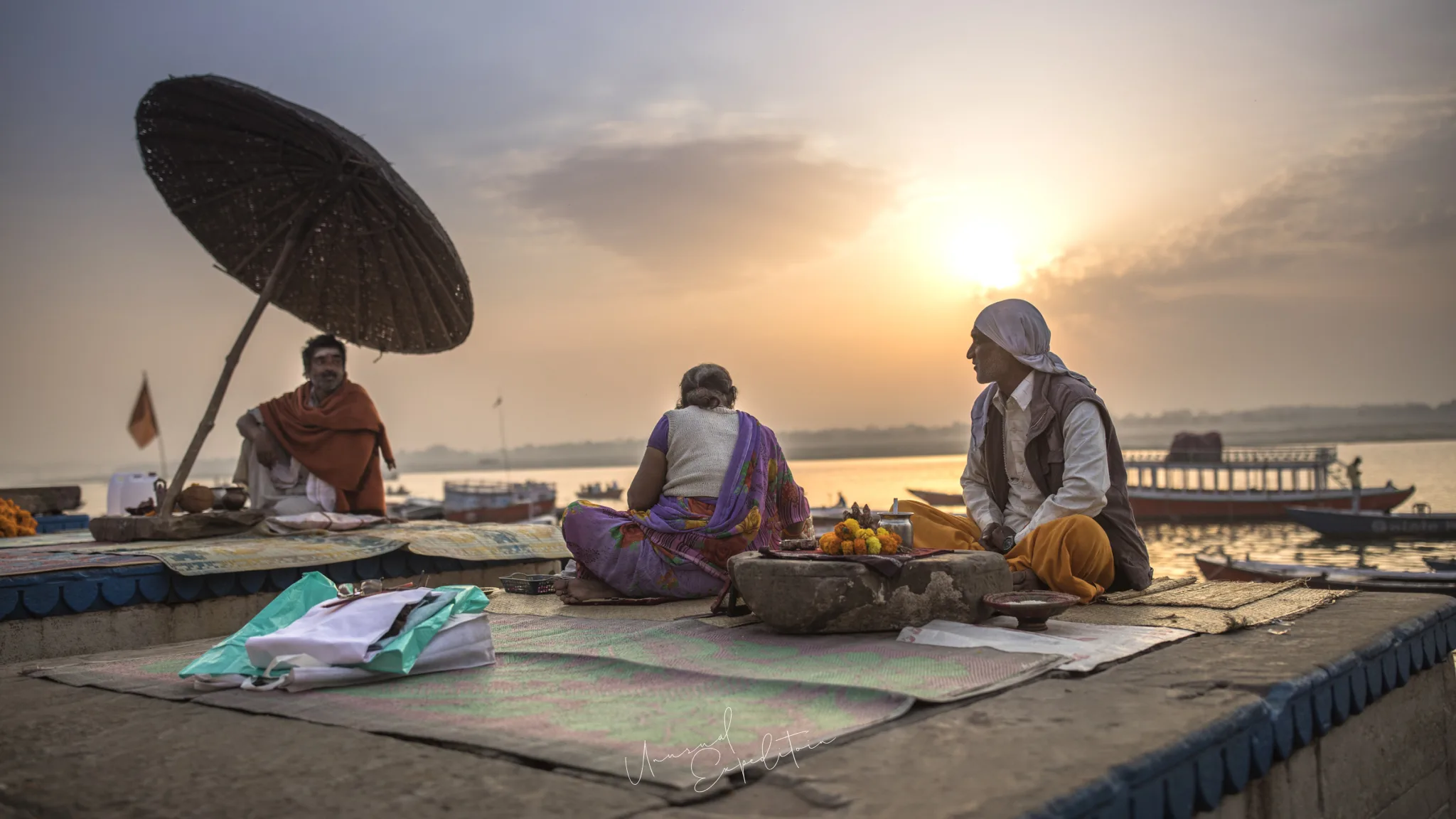
The best ghats in Varanasi for photography are Dashashwamedh for the evening aarti and the morning crowds, Assi for the dawn ceremony and space to work, Kedar for its painted steps and bathers, and the stretch between them for everyday life on the river. Wikivoyage counts 84 ghats along the west bank of the Ganges, and you can walk most of them in a morning. Two of them, Manikarnika and Harishchandra, are cremation grounds, where the custom is to watch quietly and not take photographs.
This guide is part of our Varanasi photography tour guide. It goes ghat by ghat, south to north, with what each one gives a photographer and when.
What a ghat is
A ghat is a flight of stone steps leading down into the river. In Varanasi they run almost without a break along the crescent of the Ganges, each with its own name, temples and story, and most are backed by tall palaces, ashrams and guest houses. The steps face east across the water to a wide sand bank on the far shore, so they catch the first sun of the day full on. People use the ghats for everything: bathing and prayer at dawn, washing clothes, yoga, cricket, rites for the dead, and in the evening the aarti. The lowest steps change with the season: in the monsoon the river climbs over them, and in the dry months a strip of mud and boats appears below.
Best ghats in Varanasi: a list from south to north
| Ghat | What it is known for | Best time | Photograph? |
|---|---|---|---|
| Assi | Southern end; Subah-e-Banaras morning aarti, music and yoga | Dawn | Yes |
| Tulsi | Associated with the poet Tulsidas; a well-known akhara nearby | Early morning | Yes, ask at the akhara |
| Harishchandra | Cremation ghat | Not applicable | No |
| Kedar | Red and white striped steps, bathers | Morning | Yes |
| Dashashwamedh | The main ghat; evening Ganga aarti | Dawn, and after sunset | Yes |
| Manikarnika | Main cremation ghat; leaning Ratneshwar temple | Not applicable | No photographs of cremations |
| Scindia | Next to Manikarnika; palaces and temple spires above the river | From a boat, morning | Yes, the temple, not the pyres |
| Panchganga | Northern ghats, quieter, older lanes above | Early morning | Yes |
Any full list of ghats in Varanasi runs to dozens of names; these are the ones we would send a photographer to. The northern ghats past Manikarnika see far fewer visitors, which makes them the easiest place to photograph daily life without a crowd of other cameras.
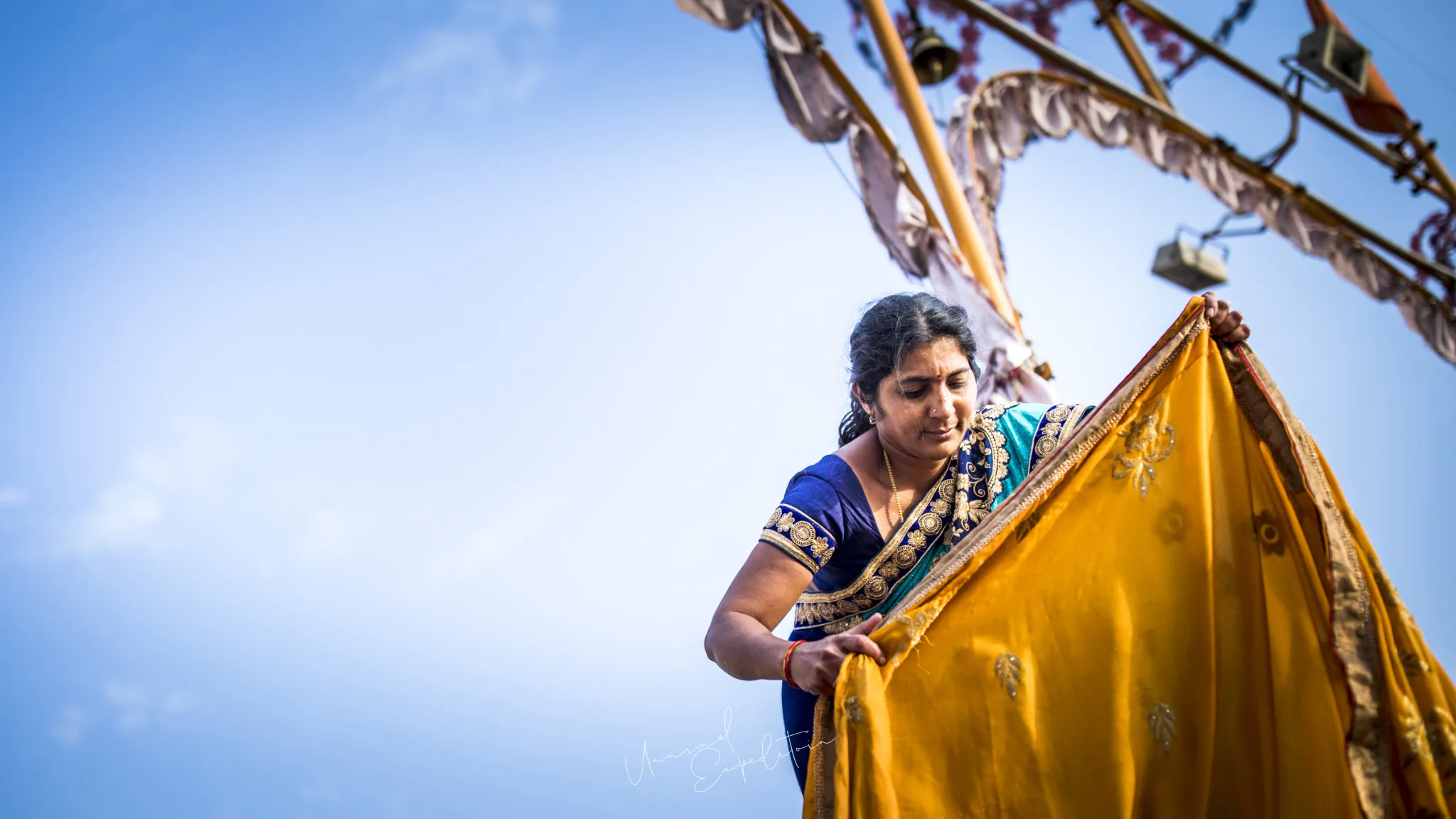
Dashashwamedh Ghat
Dashashwamedh is the main ghat of Varanasi and the one most visitors see first. Incredible India calls it one of the oldest and most sacred ghats in the city and ties its name to a legend in which Brahma performed ten horse sacrifices here. In the morning the priests sit under their bamboo parasols on low wooden platforms, offering blessings and rites to pilgrims who have just bathed; the boatmen gather at the foot of the steps; flower sellers and tea stalls work the top. In the evening it is the stage for the Ganga aarti, covered in our Ganga aarti in Varanasi article. For photographs, the parasols and platforms are the signature of this ghat, best from the steps at first light, before the crowd thickens.
Assi Ghat and the southern ghats
Assi Ghat marks the southern end of the main waterfront, where the small Assi river meets the Ganges. Incredible India describes its Subah-e-Banaras as a sunrise gathering of yoga, music and devotion, and it is a gentler alternative to the evening aarti, with more room to move and softer light. Walking north from Assi you pass Tulsi Ghat, linked with the poet Tulsidas and known for its akhara, and then Kedar Ghat, which Wikivoyage describes as brightly painted in stripes and busy with bathers. Between them are long quiet stretches where people wash clothes, bathe and pray without an audience. These southern ghats are where we would start a first morning: easy to reach, wide, and full of everyday life on the river.
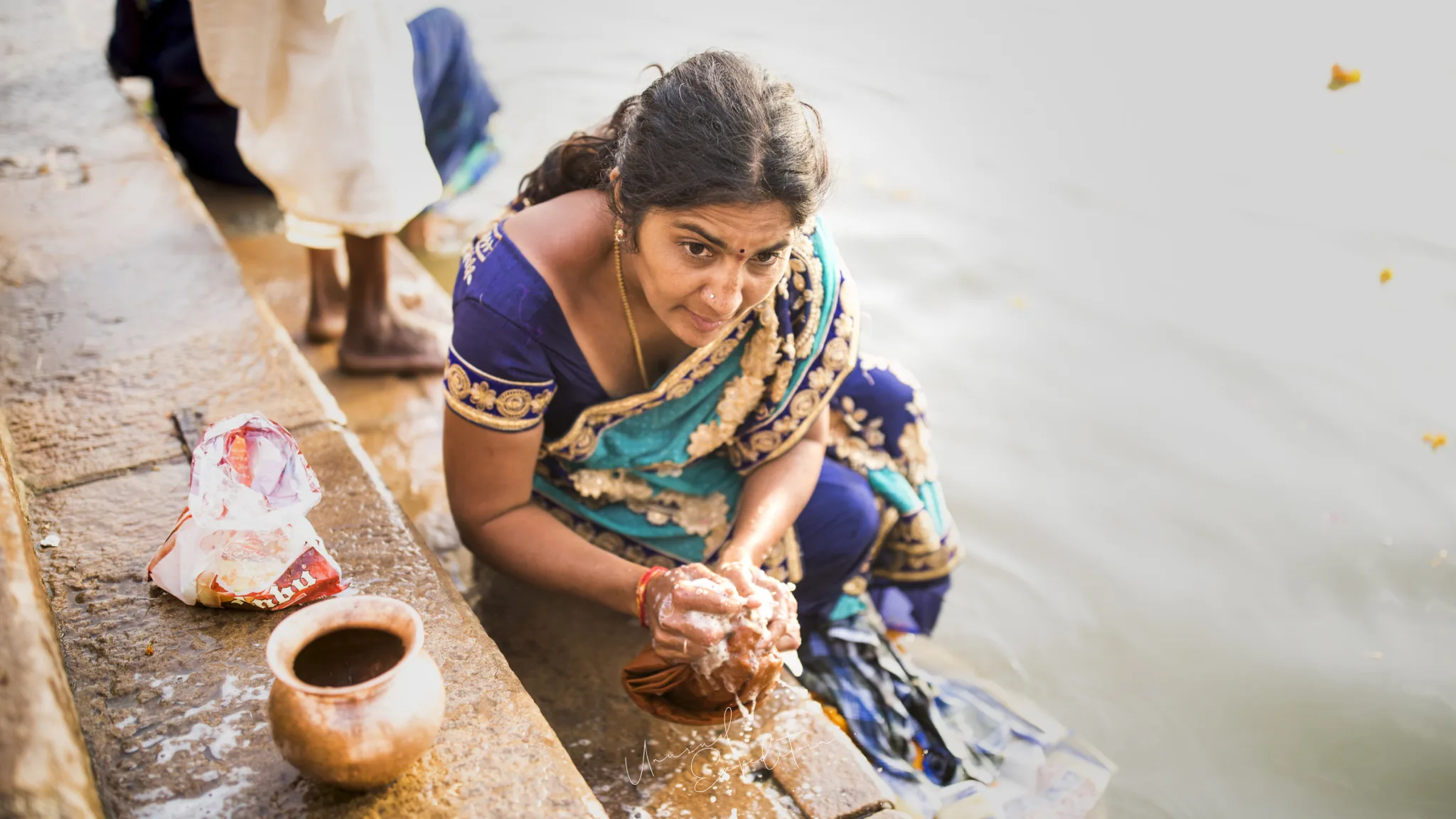
"Do not try to see all the ghats in one morning. Walk a short stretch slowly, then come back the next day to the one that gave you the best light. The ghat does not change, but the people on it do, and that is the picture."
Joseph Mak, tour leader, Unusual Expedition
Why Manikarnika Ghat is famous
Manikarnika is the main cremation ghat of Varanasi, and it is famous because of what Varanasi means to Hindus: many believe that to die and be cremated in Kashi brings release from the cycle of rebirth. Wood is stacked high in the lanes above it, and cremations go on through the day and into the night. Below the ghat stands the Ratneshwar temple, which leans markedly and, Wikivoyage notes, has its sanctum under water for most of the year. Harishchandra Ghat, further south, is the second cremation ghat. Both are funerals, with families in mourning. Wikivoyage asks visitors not to take photographs of cremations, even from the river, and Lonely Planet says photography at Manikarnika is strictly prohibited. We do not photograph either cremation ghat, and we ask the same of anyone who travels with us.
How to visit the cremation ghats with respect
If you pass Manikarnika on foot or by boat, keep your camera down and your voice low, stay out of the way of the families and the men carrying wood, and do not linger as if at a spectacle. Do not accept the offer of a stranger who wants to show you a good viewpoint and explain the rites: Wikivoyage describes the request for money for wood that follows as a well-known scam. On the river, ask your boatman to keep a respectful distance and to carry on past. The leaning temple and the palaces of Scindia Ghat next door can be photographed from the water without pointing a lens at a funeral.
Washing, boats and the life of the ghats
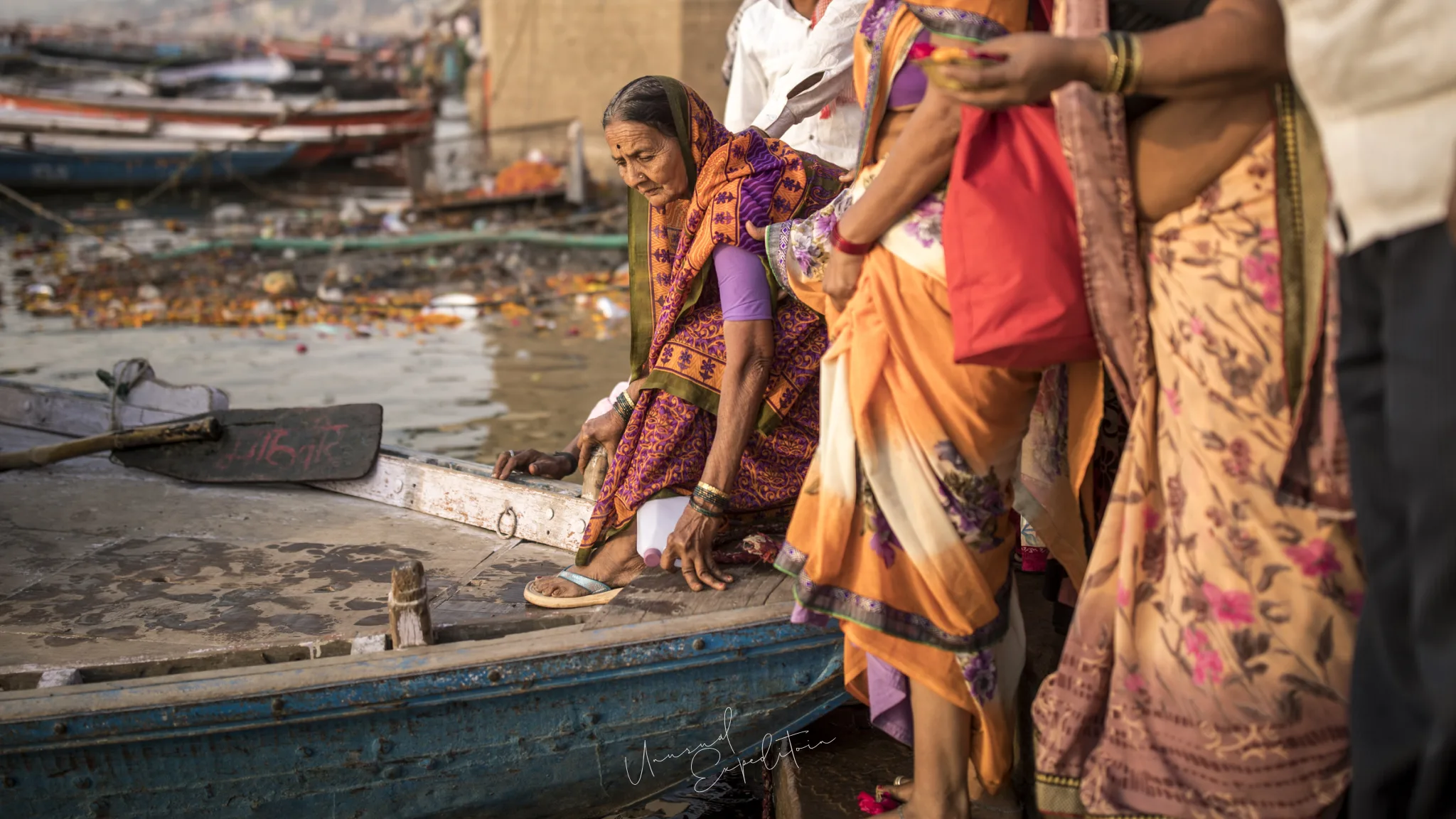
Beyond the famous names, the ghats of Varanasi are working places. Washermen beat clothes on stone slabs, boatmen repair and paint their boats on the mud, pilgrims climb in and out of the rowing boats at the bottom step, and saris dry on the steps in long ribbons of colour. These are the pictures that show how people actually use the river, and they are best made slowly, on foot, with a greeting first. Our Varanasi photos article has more of them, and the Varanasi sunrise and sunset article shows the ghats from the water.
Walk the ghats with us
We run Varanasi as a private trip on request, with the mornings on the ghats and the evenings at the aarti planned around your pace and what you want to photograph. We arrange the logistics, and a photographer or photography coaching can be added at extra cost. See private tours and our India photography tours page.
Ask us about the ghats of Varanasi
Varanasi photography tours
The next Varanasi departure is announced on the Varanasi photography tours page, with previous expeditions and all the planning guides.
Explore Varanasi in depth
- Varanasi Photography Tour Guide: the Ghats, the Aarti and the Old CityIndia
- Varanasi Sunrise and Sunset: Boats on the Ganges at Both Ends of the DayIndia
- Varanasi Street Photography: the Old City Lanes and Their PeopleIndia
- Varanasi Photos: the River, the Lanes and the PeopleIndia
- Is Varanasi Worth Visiting? Getting There and What to KnowIndia
- Ganga Aarti in Varanasi: Where to Watch and How to Photograph ItIndia
- Best Time to Visit Varanasi: Weather, Festivals and Light by MonthIndia
Upcoming Photo Tours
- Egypt Photo Tour – EgyptEgypt 12 Dec 2026 To 20 Dec 2026
- Inner Mongolia Winter Owl Photo Tour – ChinaChina 01 Jan 2027 To 04 Jan 2027
- Inner Mongolia Winter Photo Tour – ChinaChina 05 Jan 2027 To 11 Jan 2027
- Mekong And Central Highland Vietnam Photo Tour - VietnamVietnam 16 Jan 2027 To 24 Jan 2027