
Varanasi Photography Tour Guide: the Ghats, the Aarti and the Old City
Photography in Varanasi: what the city is famous for, the ghats at dawn, the Ganga aarti, the lanes, the light and the customs to respect.
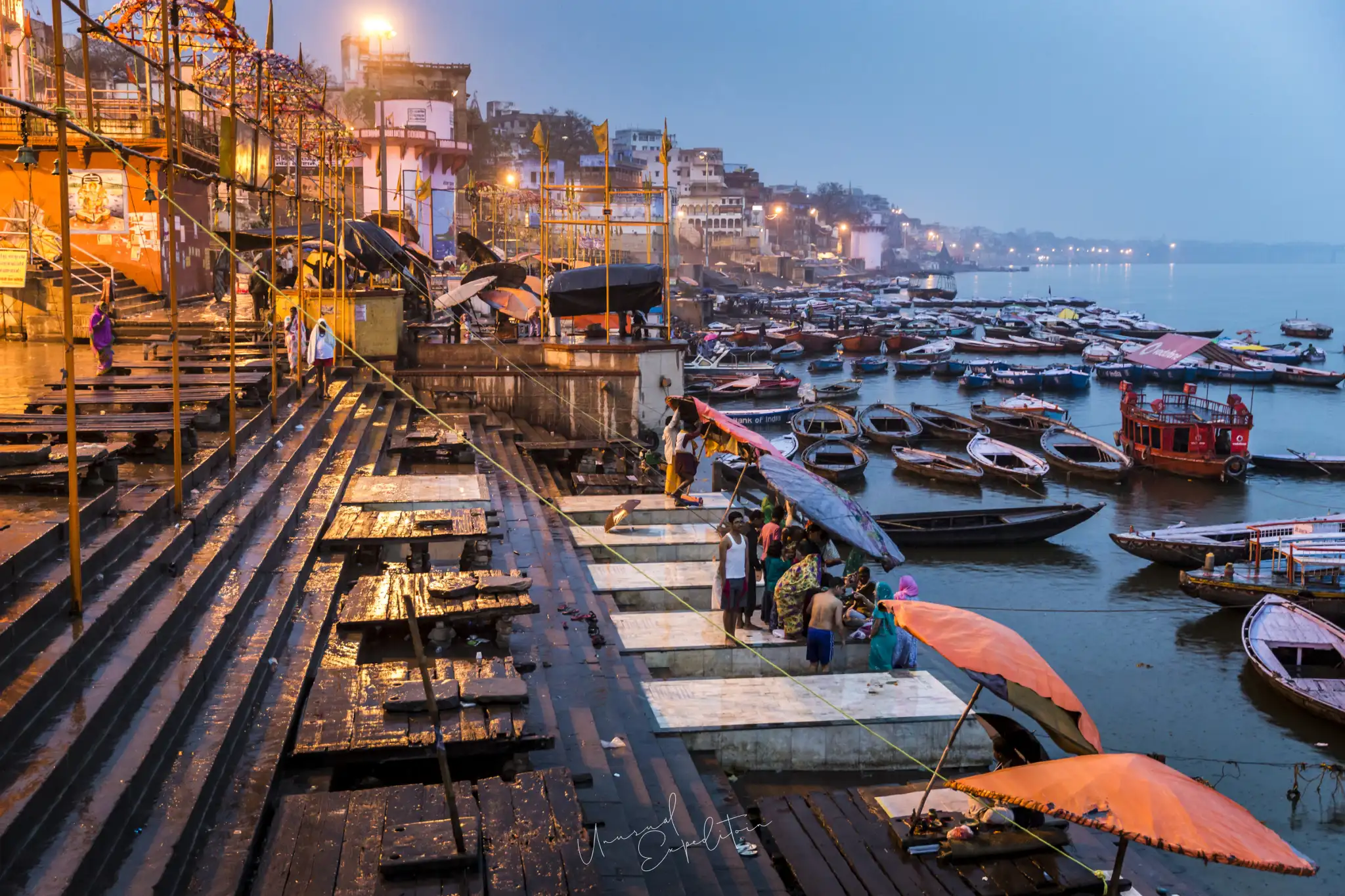
Photography in Varanasi is about the river and the people who come to it. The city sits on a crescent of stone ghats along the west bank of the Ganges, and from first light to late evening those steps fill with bathers, priests, boatmen, pilgrims and holy men. The two best times are dawn on the water, when the sun rises over the far bank and lights the ghats, and dusk, when the evening Ganga aarti fills the air with fire, smoke and bells.
This is the Varanasi area guide within our India photography tour guide, which covers visas, money, flights and the rest of the country. We photographed Varanasi on our Holi trips, in the late-winter weeks around the festival. The photographs in this guide are our own, taken on those trips; we hold the rights to them, and the notes come from knowing the place first hand.
What Varanasi is famous for
Varanasi, also called Banaras and Kashi, is the holiest city of Hinduism and, in the words of Incredible India, the Government of India's tourism site, one of the world's oldest living cities. Wikivoyage counts 84 ghats along the river, from Assi in the south to Panchganga and beyond in the north, most of them backed by old palaces, temples and ashrams built by rulers who wanted to end their days beside the Ganges. Pilgrims come to bathe, to perform rites for their ancestors, and in some cases to die here, because many Hindus believe that dying in Kashi brings release from the cycle of rebirth. For a photographer, Varanasi is famous for the dawn bathers, the evening aarti, the boats, the cremation ghats that you should not photograph, and a maze of lanes behind the river.
Photography in Varanasi: where to stand
| Place | Subject | Best light | Lens |
|---|---|---|---|
| The river, by boat | The whole waterfront, bathers, sunrise | Dawn | 24-70mm, 70-200mm |
| Dashashwamedh Ghat | Evening aarti, priests, pilgrims | Blue hour and after dark | 24-70mm, a fast prime |
| Assi Ghat | Morning aarti, music, yoga | First light | 24-70mm |
| Kedar and the southern ghats | Painted steps, bathers, washing | Early morning | 24-70mm |
| The old city lanes | Shops, shrines, cows, portraits | Any time, soft at dawn and dusk | 24-70mm, 35mm |
| Manikarnika and Harishchandra | Cremation ghats: watch quietly, no photographs | Not applicable | None |
The table leaves out the cremation ghats on purpose: they are a place to be quiet, not a subject.
The ghats and the Ganges at dawn
Morning is the reason to come to Varanasi. Before sunrise the ghats are already busy, and by the time the sun clears the sand bank on the east shore there are men praying waist-deep in the river, women washing at the water's edge and priests opening their parasols on the platforms. The sun rises across the river from the ghats, so the light falls straight onto the steps and the faces of the bathers, warm and low, for a short while. From a rowing boat you can work along the whole waterfront; from the steps you can stay with one ghat and let the scene come to you. Our best ghats in Varanasi guide goes ghat by ghat, and the Varanasi sunrise and sunset article covers the river and the boats.
The evening Ganga aarti
Every evening after sunset, priests on Dashashwamedh Ghat offer fire to the river: tiered brass lamps, incense, conch shells and bells, in front of a crowd on the steps and a fleet of boats on the water. Incredible India describes the ceremony at Dashashwamedh as lasting about forty-five minutes. It is the most photographed event in the city, and the hardest to photograph well, because the light is mostly fire and the crowd is dense. Our Ganga aarti in Varanasi article explains where to stand, from the steps or from a boat, and how to expose for the flames.
The lanes and the people
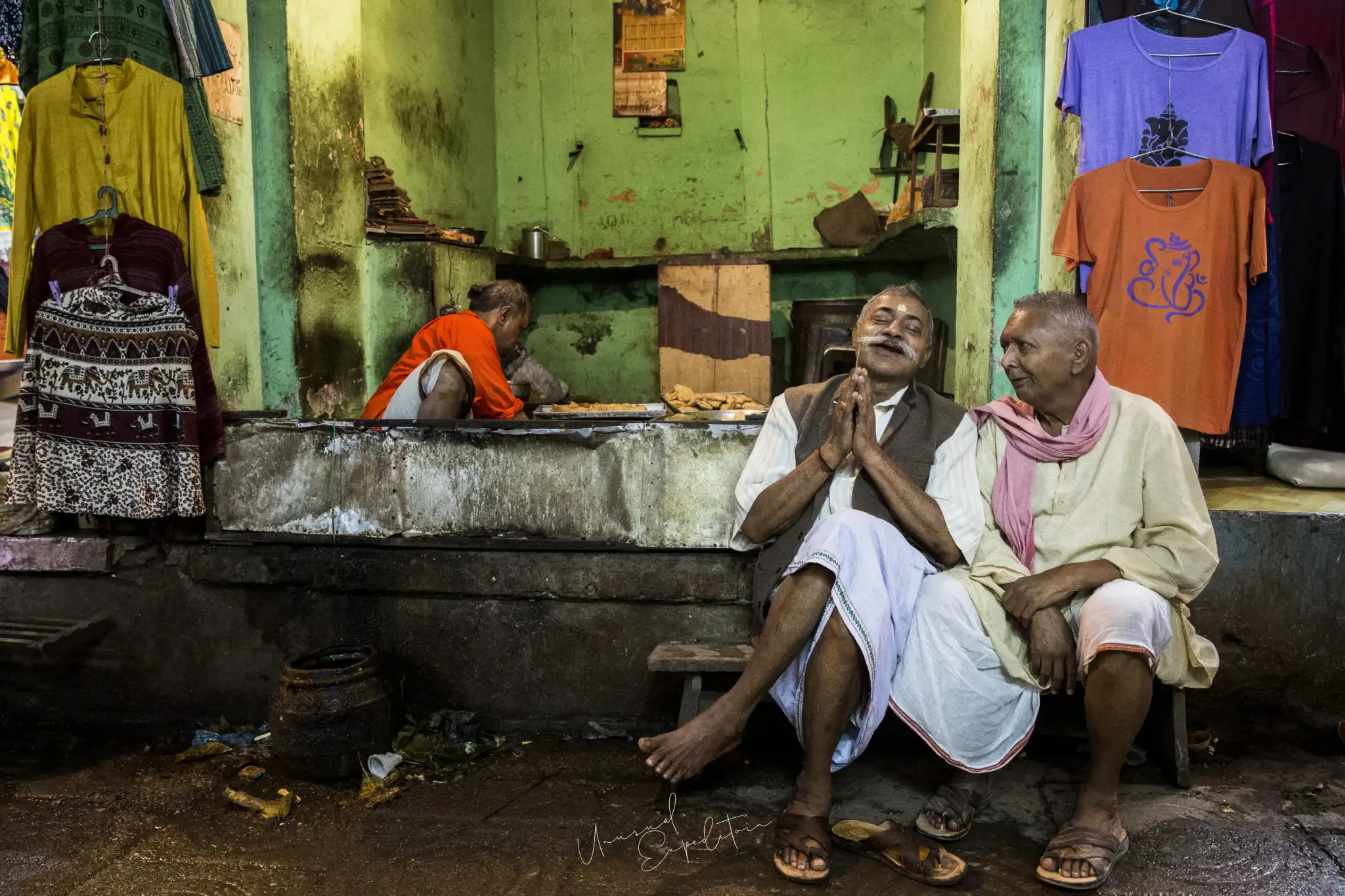
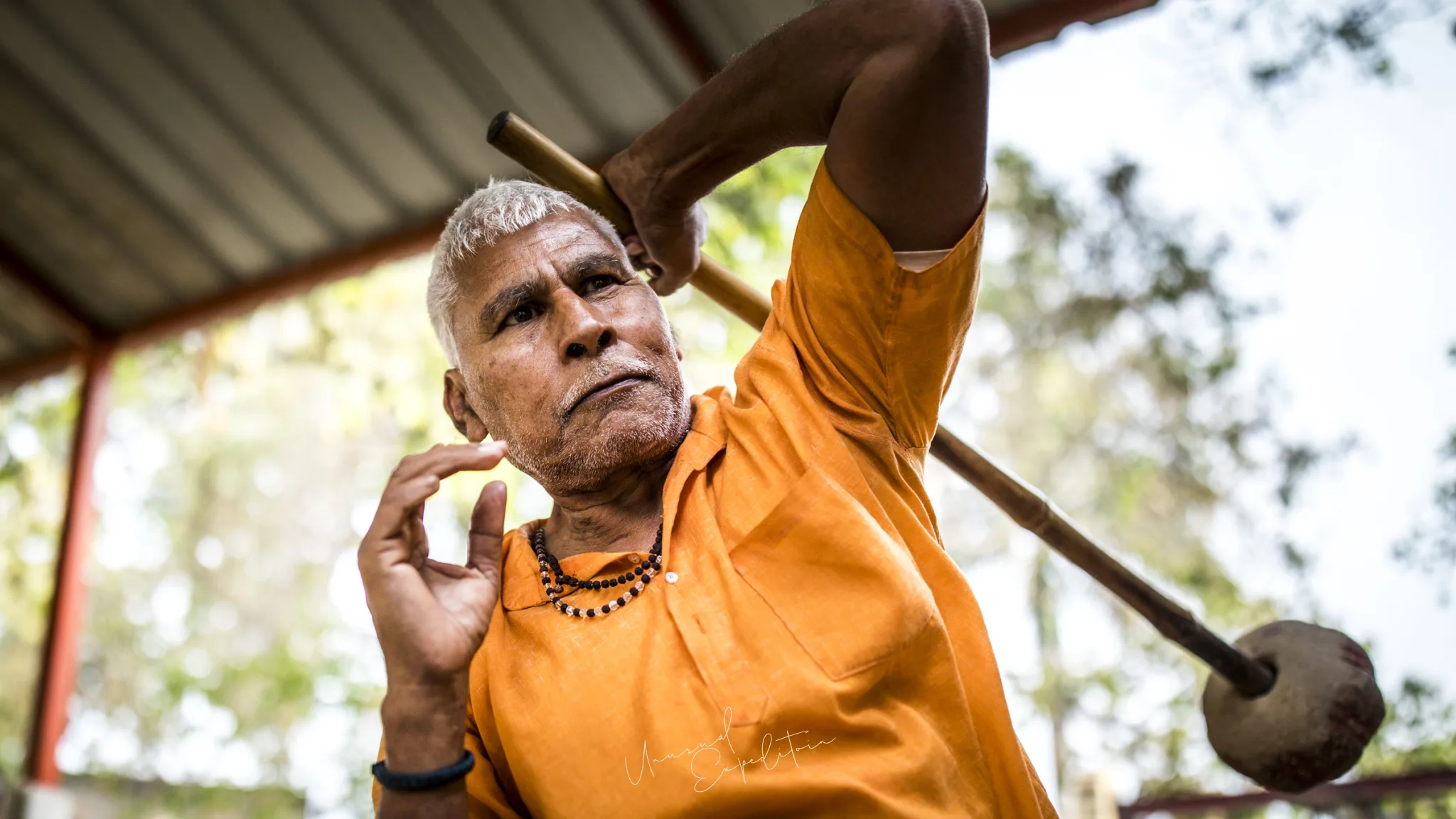
Behind the ghats lies the old city, a maze of lanes too narrow for cars, where cows, motorbikes and pilgrims share the stone paving with tea stalls, sweet shops, barbers and tiny shrines. Wikivoyage singles out the lanes behind Dashashwamedh, Man Mandir and Meer ghats. This is street photography at close range: a shopkeeper on his step, a holy man in a doorway, a barber at work under a tarpaulin. Away from the river there are also the akharas, the traditional wrestling grounds, where men train on soft earth in the early morning. The Varanasi street photography article covers the lanes and how to approach people there, and Varanasi photos shows what the city looks like through the lens.
"Varanasi rewards the photographer who stops moving. Pick one ghat, sit on the steps before sunrise and stay. By the second morning the boatmen know you, the priests nod, and the pictures start to come without you chasing them."
Joseph Mak, tour leader, Unusual Expedition
The cremation ghats: respect first
Manikarnika and Harishchandra are the cremation ghats of Varanasi, and cremations go on there through the day and into the night. They are part of the life of the city and you will pass them on foot or by boat, but they are funerals, attended by families in mourning. Wikivoyage asks visitors to behave respectfully and not to take photographs of cremations, even from the river, and Lonely Planet says photography there is strictly prohibited. We follow that: we do not photograph the cremation ghats, not from the steps and not from a boat, and none of the photographs in these guides shows a cremation or a mourning family. If someone at Manikarnika offers to explain the rites and then asks for money for wood, Wikivoyage describes it as a known scam: decline politely.
When to go to Varanasi
Incredible India calls October to March the most pleasant time to explore the city. Winter mornings in December and January are often foggy, which can turn the river into a soft grey stage or hide it completely; spring brings clearer air, the Holi season and warmer days, and by April and May the heat is intense. In the monsoon the river rises over the lower ghats, and in recent years the district administration has stopped boats for a time. Dev Deepawali, on the full moon of Kartik fifteen days after Diwali, lights the ghats with earthen lamps and is the city's most photographed festival night. The best time to visit Varanasi article sets out the months.
Photographing people with respect
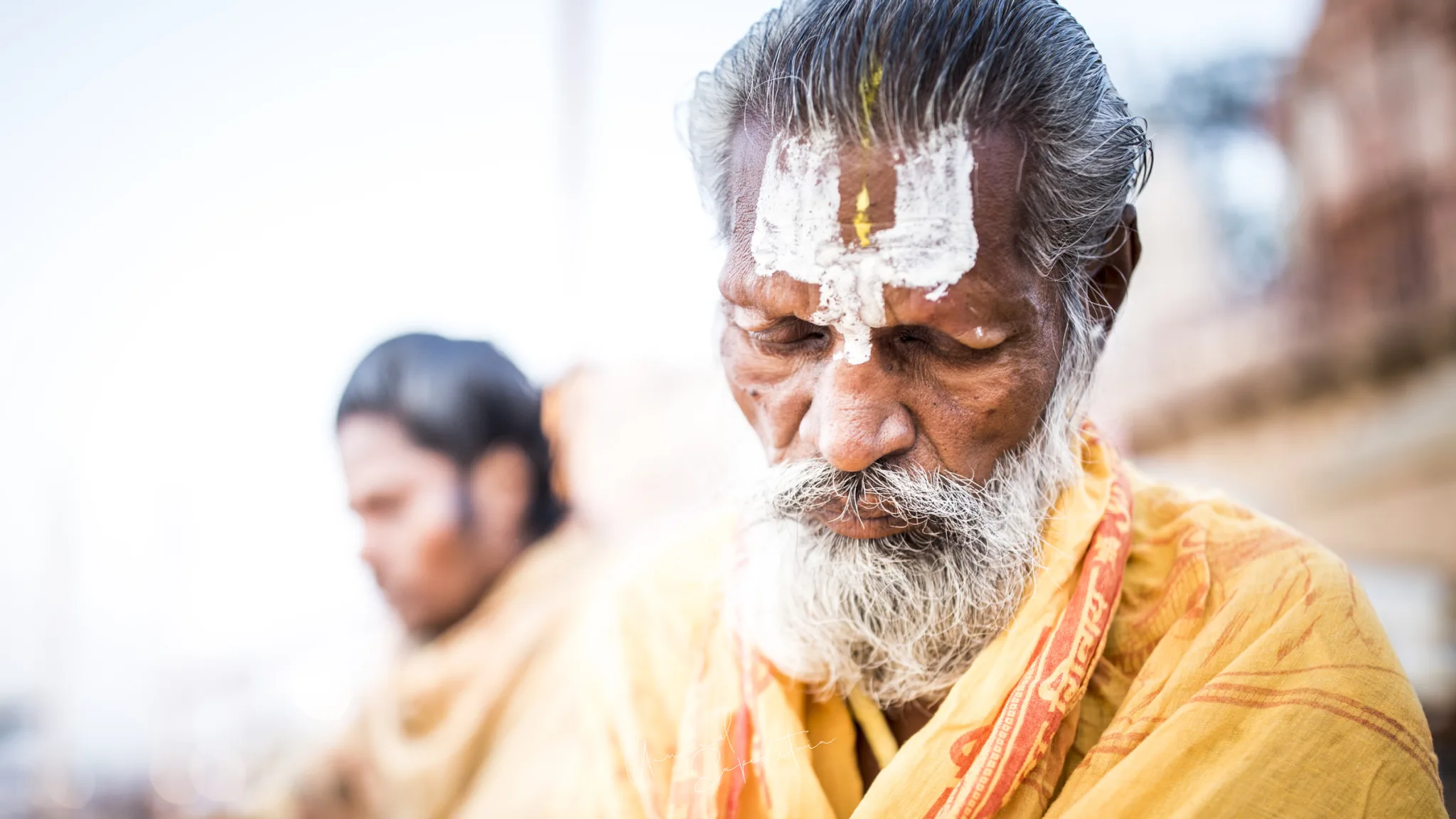
Bathing in the Ganges is an act of prayer, and many of the people you see on the ghats are pilgrims who have travelled far for this moment. Photograph bathers from a respectful distance, never anyone changing clothes, and ask before a close portrait. Sadhus will sometimes ask for a donation for a photograph; agree first or move on. Inside temples, follow the posted rules: phones and cameras are not allowed inside the main Kashi Vishwanath temple, for example. We do not photograph children on our trips, and we suggest you do not either. The is Varanasi worth visiting article answers the practical questions, from getting there to safety in the lanes after dark.
Explore Varanasi in depth
- Ganga aarti in Varanasi: where to watch and how to photograph it
- Best ghats in Varanasi for photography
- Varanasi sunrise and sunset: boats on the Ganges
- Varanasi photos: the river, the lanes and the people
- Best time to visit Varanasi, month by month
- Varanasi street photography: the old city lanes
- Is Varanasi worth visiting? Getting there and what to know
Varanasi pairs naturally with Holi in Mathura and Vrindavan, which is how we have always combined them.
Photograph Varanasi with us
We run Varanasi as a private trip on request, on its own or with Holi in Braj, for individuals, families, couples and photographers who want to work at their own pace. We arrange all the logistics around what you want to photograph, the cost can be lower than a group tour because no tour leader travels, and a photographer or photography coaching can be added at extra cost. Ask at least two months ahead if you can; last-minute trips can also be arranged. See private tours and our India photography tours page.
Varanasi photography tours
The next Varanasi departure is announced on the Varanasi photography tours page, with previous expeditions and all the planning guides.
Explore Varanasi in depth
- Varanasi Sunrise and Sunset: Boats on the Ganges at Both Ends of the DayIndia
- Varanasi Street Photography: the Old City Lanes and Their PeopleIndia
- Varanasi Photos: the River, the Lanes and the PeopleIndia
- Is Varanasi Worth Visiting? Getting There and What to KnowIndia
- Ganga Aarti in Varanasi: Where to Watch and How to Photograph ItIndia
- Best Time to Visit Varanasi: Weather, Festivals and Light by MonthIndia
- Best Ghats in Varanasi for Photography, Ghat by GhatIndia
Upcoming Photo Tours
- Egypt Photo Tour – EgyptEgypt 12 Dec 2026 To 20 Dec 2026
- Inner Mongolia Winter Owl Photo Tour – ChinaChina 01 Jan 2027 To 04 Jan 2027
- Inner Mongolia Winter Photo Tour – ChinaChina 05 Jan 2027 To 11 Jan 2027
- Mekong And Central Highland Vietnam Photo Tour - VietnamVietnam 16 Jan 2027 To 24 Jan 2027