
The Best Time to Visit Kamchatka for Photography
Best time to visit Kamchatka for photography: July to September for bears and volcanoes, month by month, plus winter.
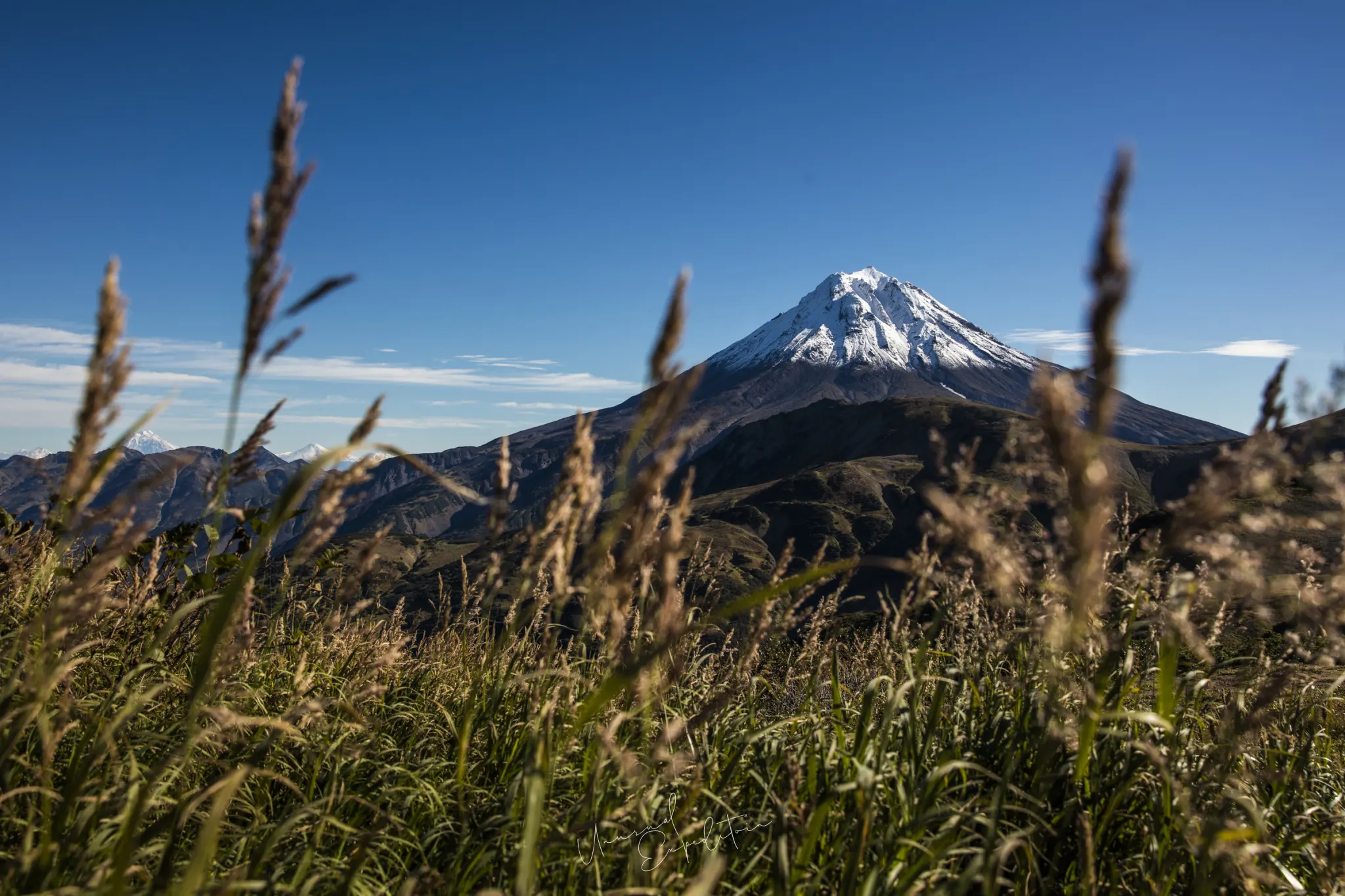
The best time to visit Kamchatka for photography is July to September. July brings the first sockeye and bears to Kuril Lake with snow still on the high ground; August is the peak of the salmon run and the warmest weather; September adds red tundra, gold birch and fresh snow on the volcanoes while the bears are at their heaviest. Winter, December to April, is a different trip of deep snow, sled dogs and heli-skiing. Here is each season, month by month, for a photographer.
For the full trip, read our Kamchatka photography tour guide.
Kamchatka in summer: June and July
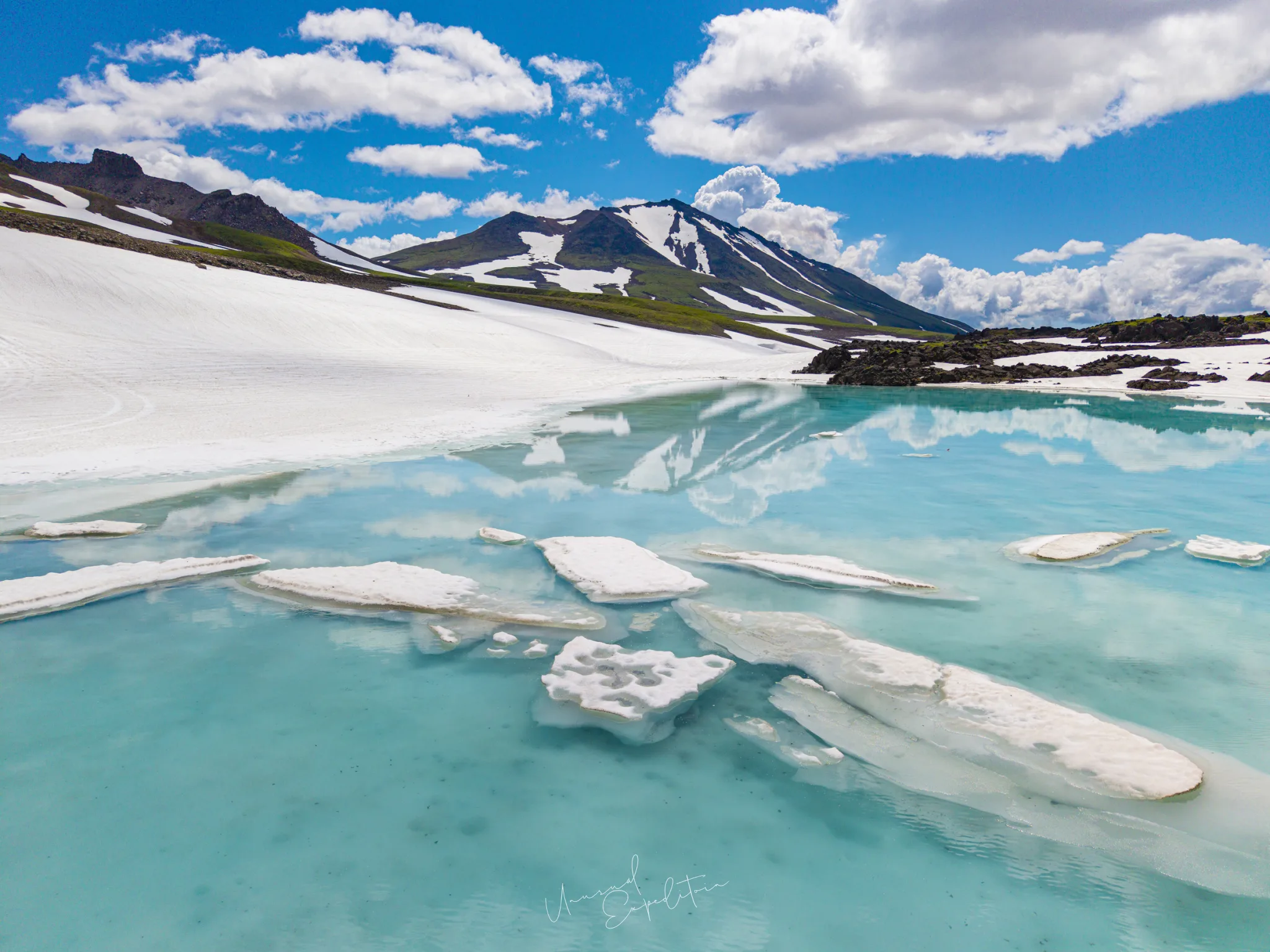
June is early. Snow lies deep on the volcanoes and many roads to the high ground are still closed, but the lowlands turn green fast and the light lasts long into the evening. Meltwater lakes form at the edge of the snowfields, turquoise with floating ice, and they make some of the best landscape frames of the year. July is when the season opens properly: the first sockeye arrive at Kuril Lake, the bears follow, and the tracks to the volcanoes open. This is when our Kuril Lake trip runs, with green grass behind the bears and the snow line still low on the cones.
Kamchatka in August
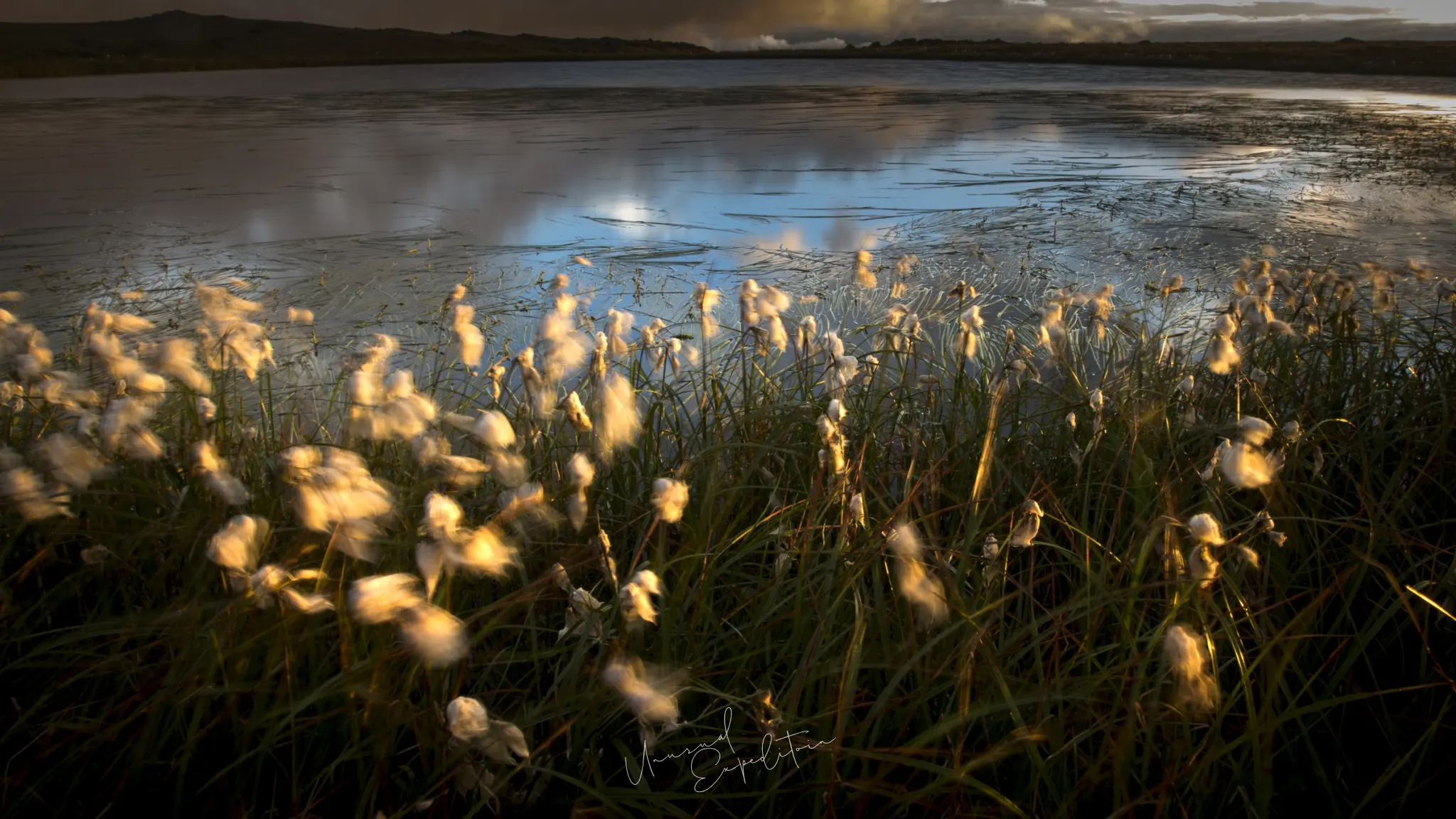
August is the warmest month and the peak of the sockeye run, so Kuril Lake holds the most bears and the most action. The tundra is in full flower, cotton grass shines along the pools, and the long dusk gives slow sunsets over the volcanoes. It is also the busiest month for visitors and helicopters, and mosquitoes are at their worst in the lowlands. Fog on the coast can sit for days, then clear completely.
Kamchatka in September: colour and big bears
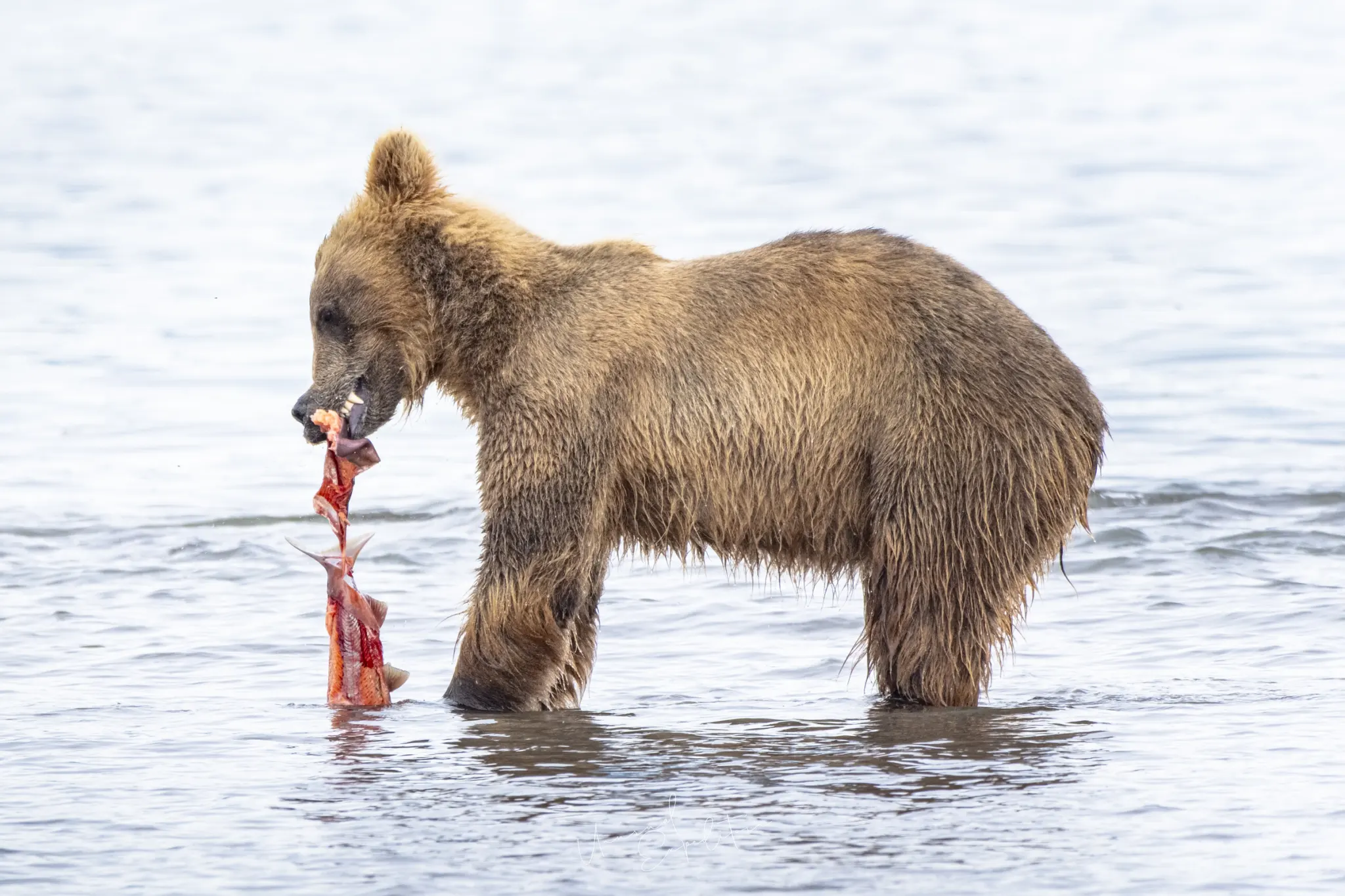
For many photographers September is the best month of all. The tundra turns red and orange, the stone birch forests go gold, and the first snow lands on the volcanoes, so a single frame can hold autumn colour below and winter above. The bears are at their heaviest, feeding hard on salmon and berries before the den, and the crowds thin out. The weather becomes less predictable as autumn storms arrive, and the days shorten quickly, but the light is lower and warmer all day.
Kamchatka bear watching season
Bears are at Kuril Lake from about July, when the sockeye arrive, into October, with the most activity in August and the heaviest bears in September. Earlier in the summer bears graze on grass and coastal plants; later they move to berries on the hills. Bears hibernate from roughly November until April or May, so there is no bear photography in winter. More on that in how big are Kamchatka bears, and are they dangerous.
"If someone can only go once, I tell them to go when the salmon are running. Every other subject in Kamchatka is there for months; the bears in the river are there only while the fish are. Plan around them and fit the volcanoes around the weather."
Joseph Mak, tour leader, Unusual Expedition
Kamchatka winter photos: December to April
Winter in Kamchatka is long and snowy. Petropavlovsk-Kamchatsky can be buried under heavy snowfalls, the volcanoes are white from base to summit, and the main activities are dog sledding, snowmobiles, heli-skiing in spring and ski touring on the volcanoes. It is beautiful and very cold inland, but the bears are asleep, helicopter days are fewer, and the light is short. We do not run photography trips in winter; if snow is your subject, plan around March and April when days are longer.
| Month | Bears | Landscape | Weather |
|---|---|---|---|
| June | Few, grazing | Snow on the volcanoes, meltwater lakes | Cool, long days |
| July | Arriving with the first salmon | Green, snow line still low | Mild, fog on the coast |
| August | Peak activity | Flowers, cotton grass, long dusks | Warmest, mosquitoes |
| September | Heaviest bears | Red tundra, gold birch, first snow | Changeable, autumn storms |
| October | Last bears before the den | Late colour, more snow | Cold, short days |
| December to April | Hibernating | Deep snow everywhere | Cold, snowstorms |
July to September covers every subject at once, which is why we schedule there.
Light and daylight through the year
Petropavlovsk-Kamchatsky sits at about 53 degrees north, so the days swing a long way. Around midsummer there are roughly seventeen hours of daylight and a long twilight, which gives slow sunsets and a soft blue hour that suits volcanoes and reflections. By late September the day is down to about twelve hours and the sun stays lower, which keeps the light warm well into the morning. In midwinter there are only around seven to eight hours of daylight. For bear sessions the long summer days matter less than you might expect, because the rangers run the outings in the morning and the afternoon whatever the hours of light.
Combining subjects in one trip
A July to September trip can cover bears, volcanoes, the coast and the villages, but not all of them on every day. The usual pattern is to keep Kuril Lake fixed, because the reserve and the rangers set those days, and to fit volcano and helicopter days around the forecast. A sea trip needs a calm day; a volcano needs a clear one. If a day goes wrong, the forest, the rivers and the people are good fallbacks, as our Kamchatka photos show.
Weather and how to plan around it
Weather is the main constraint in every month. Fog and low cloud ground helicopters and hide the volcanoes, rain can last for days on the coast, and storms come off the Pacific without much warning. Build spare days into any plan, keep volcano and helicopter days flexible, and treat every clear morning as a gift. The volcano side of this is covered in Kamchatka volcanoes.
Come in the best season
Our Kuril Lake trip runs in July, when the salmon and bears arrive together. Future departures and private dates are on the Russia photography tours page.
Kamchatka photography tours
The next Kamchatka departure is announced on the Kamchatka photography tours page, with previous expeditions and all the planning guides.
Explore Kamchatka in depth
- Kamchatka Photography Tour: The Complete GuideRussia
- Kuril Lake Bears: Photographing Kamchatka's Brown Bears and SalmonRussia
- Kamchatka Wildlife Beyond the Bears: Orcas, Sea Lions and SalmonRussia
- Kamchatka Volcanoes: How Many, Which Are Active, and How to Photograph ThemRussia
- Kamchatka Tour from Singapore: How to Get ThereRussia
- Kamchatka Photos: What the Peninsula Really Looks LikeRussia
- Kamchatka Photography Trip FAQRussia
- Kamchatka Helicopter Tour: Photographing from the Mi-8Russia
- How Big Are Kamchatka Bears, and Are They Dangerous?Russia
Upcoming Photo Tours
- Egypt Photo Tour – EgyptEgypt 12 Dec 2026 To 20 Dec 2026
- Inner Mongolia Winter Owl Photo Tour – ChinaChina 01 Jan 2027 To 04 Jan 2027
- Inner Mongolia Winter Photo Tour – ChinaChina 05 Jan 2027 To 11 Jan 2027
- Mekong And Central Highland Vietnam Photo Tour - VietnamVietnam 16 Jan 2027 To 24 Jan 2027