
Kamchatka Photography Tour: The Complete Guide
Kamchatka photography tour guide: Kuril Lake bears, volcanoes, helicopter days, the coast, the seasons and getting there from Singapore.
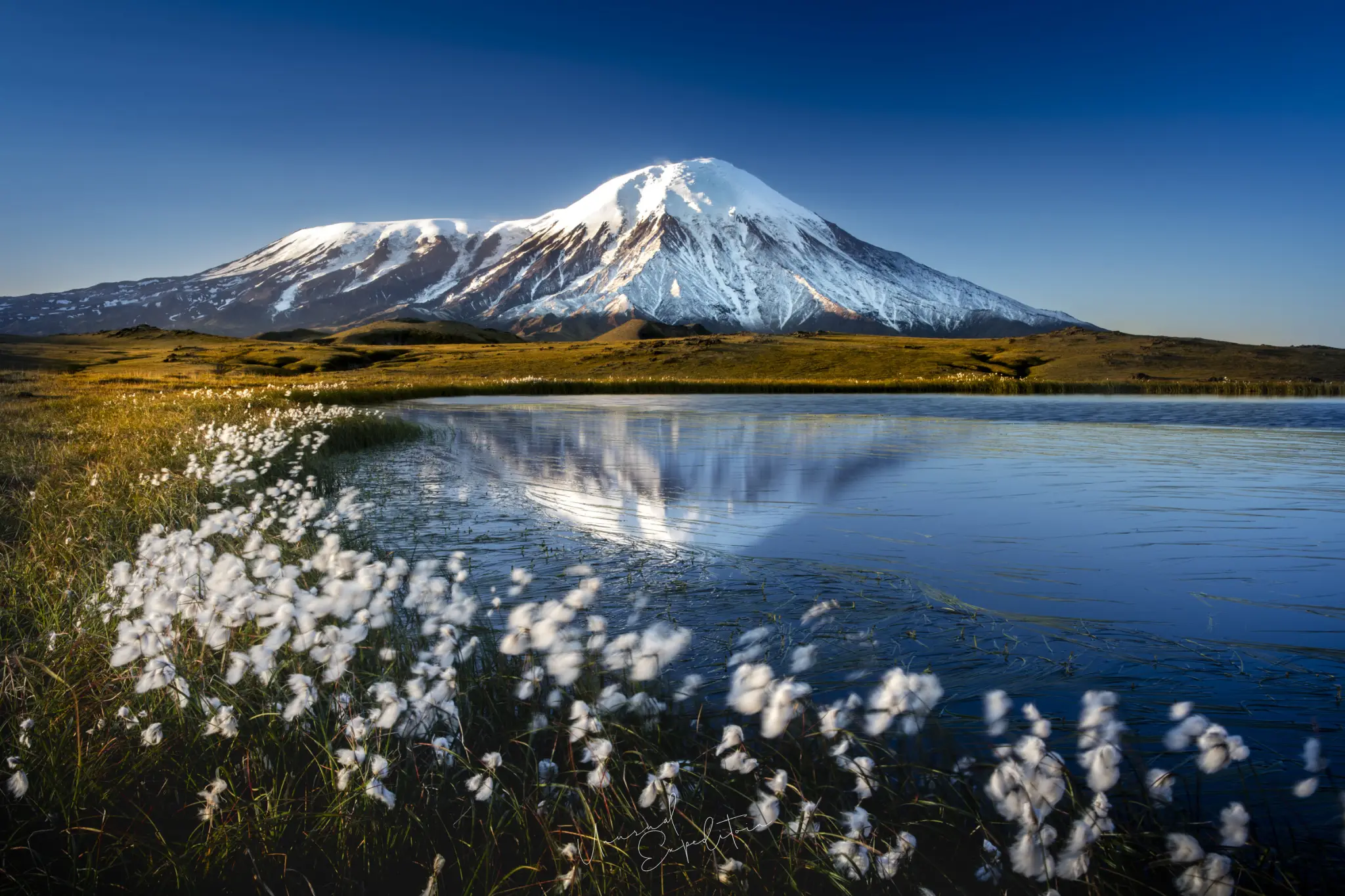
A Kamchatka photography tour takes you to the far east of Russia for two subjects that meet nowhere else: brown bears catching sockeye salmon at Kuril Lake, and a peninsula of about 300 volcanoes. Our trips start in Petropavlovsk-Kamchatsky, reach the lake overland and by boat or by helicopter, and add the lava fields, the indigenous villages and the sea. Every picture on this page is our own, from three trips to the peninsula.
Kamchatka is one of the regional guides inside our Russia photography tour guide, which covers entry, money and flights for the whole country. Here the focus is the peninsula itself: what there is to photograph, how the days are shaped, and where the detailed articles go further.
Kamchatka photography: what you actually photograph
Three things fill the cards. The first is bears: Kamchatka brown bears, among the largest brown bears on earth, wading into the Ozernaya river and the shallows of Kuril Lake after salmon. The second is volcanoes, from snow cones reflected in tundra pools to steaming craters and, with luck, an eruption at night. The third is the edge of the land: the Avacha Bay coast with its orcas and sea lions, and the villages where Itelmen and Koryak hosts drum and dance. Between those sit the quieter pictures: autumn rowan, birch forest, cotton grass at dusk and river meanders seen from a helicopter window.
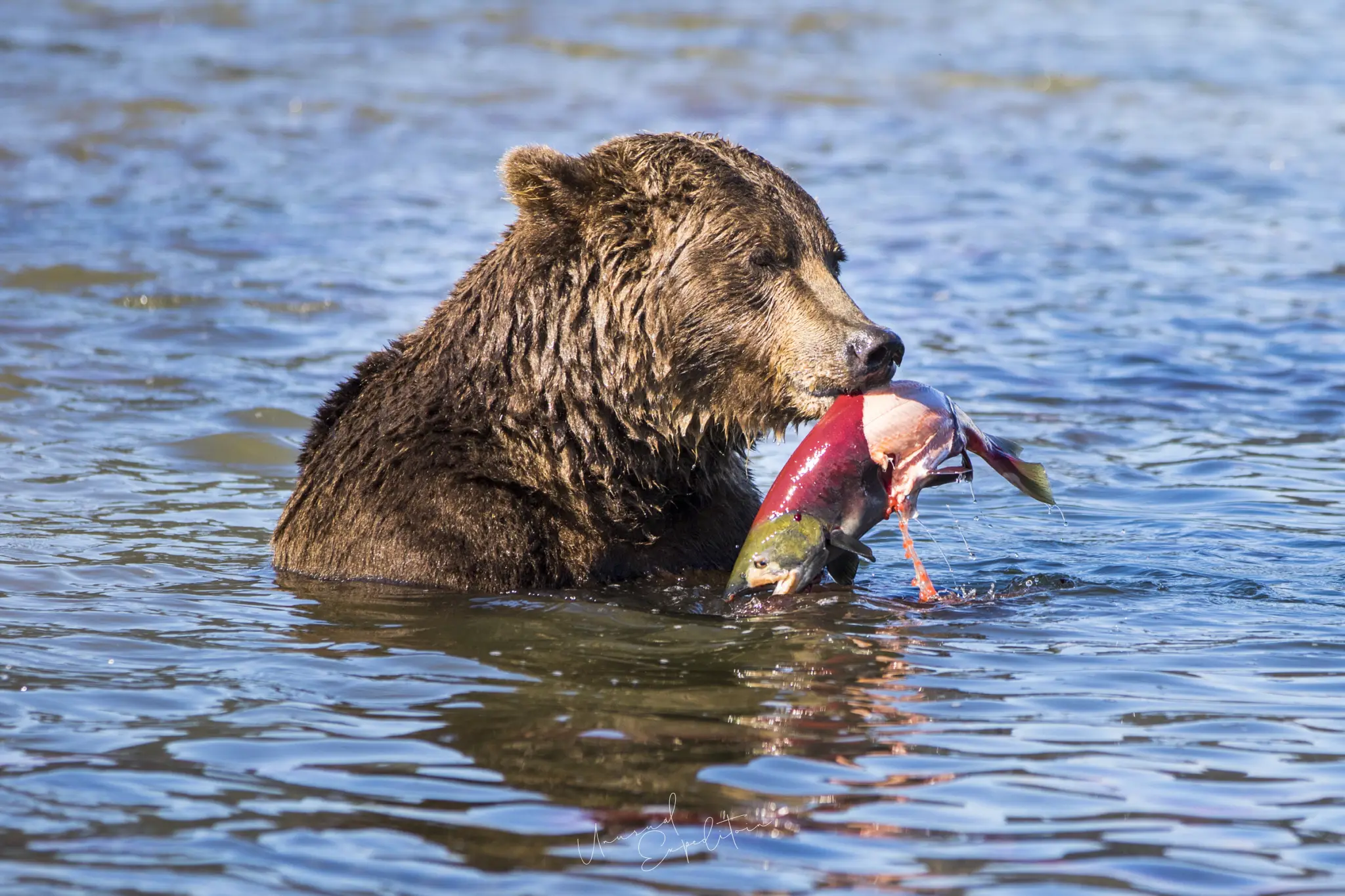
Kamchatka photo tour: the bears of Kuril Lake
Kuril Lake sits in a volcanic caldera in the South Kamchatka Sanctuary. Every summer the sockeye run up the Ozernaya river into the lake, and the bears follow them. From the ranger station at the outflow, a boat takes small groups to the shore spots where bears fish, and the rangers decide how close anyone goes. The light is usually soft, the water is shallow and clear, and the bears are too busy with salmon to care much about people standing still. The full approach, lenses and settings are in Kuril Lake bears photography, and the questions everyone asks about size and safety are answered in how big are Kamchatka bears, and are they dangerous.
Kamchatka volcanoes: lava fields, craters and ice caves
The peninsula holds about 300 volcanoes, around 30 of them active, and UNESCO lists the "Volcanoes of Kamchatka" as a World Heritage Site. The photography ranges from wide and calm to dramatic: a cone reflected in a tundra pool, the black lava fields of Tolbachik, the dead forest killed by its 1975 eruption, fumaroles steaming in a crater, and tunnels melted under snowfields that glow blue inside. Which volcanoes are erupting changes from year to year; on one of our trips the Klyuchevskaya group put on a night show with lava on the cone. The detail, including how to shoot an eruption from a safe distance, is in Kamchatka volcanoes.
The helicopter and the sea
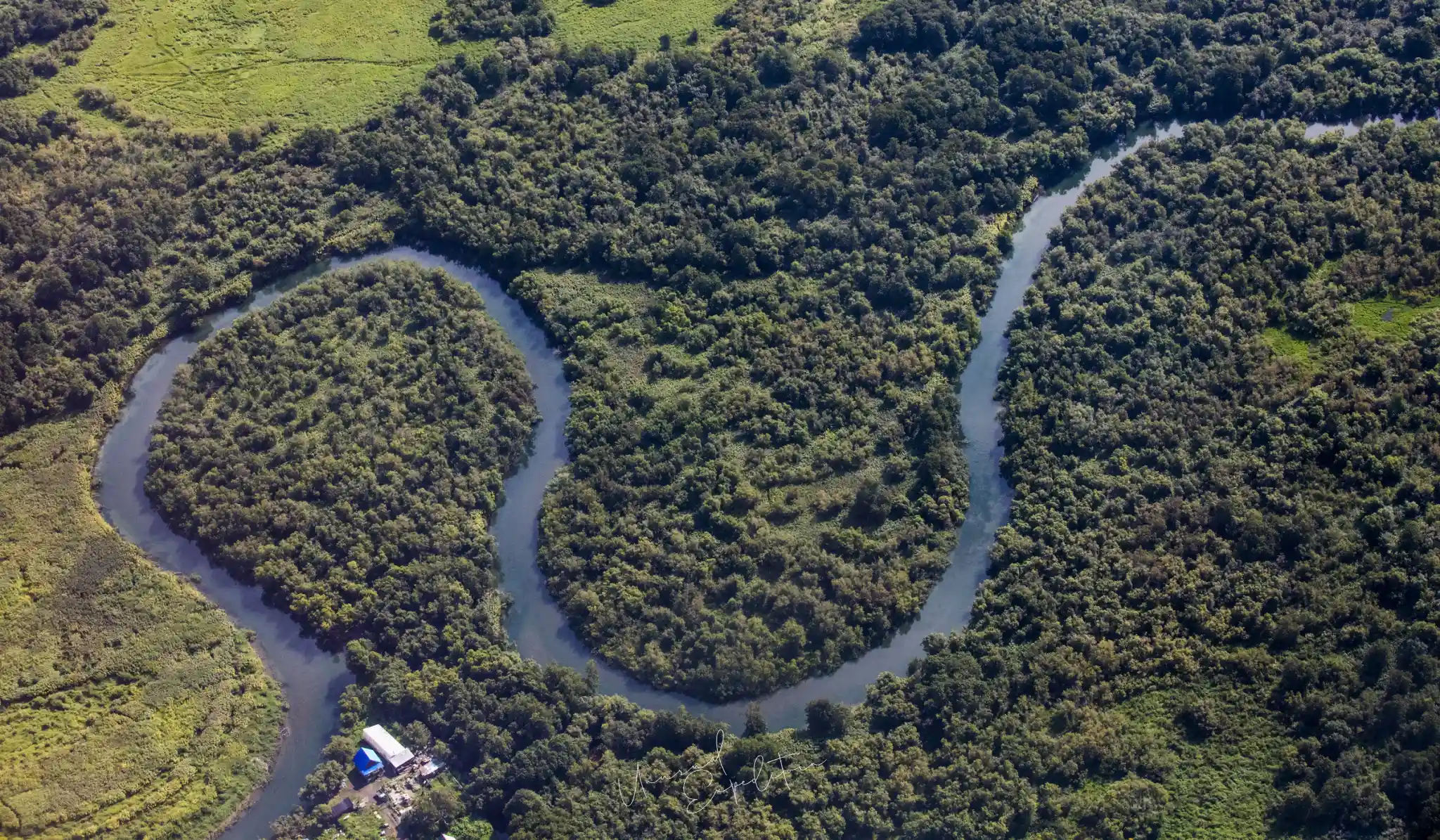
Much of Kamchatka has no roads, so the Mi-8 helicopter is part of the photography rather than just transport. From the windows you photograph tundra lakes, river meanders and volcano flanks; on the ground it opens geothermal valleys and lakes you could not otherwise reach. We cover window technique and what to expect in Kamchatka helicopter tour photography. On the coast, a boat out of Avacha Bay finds orcas, Steller sea lions and seabird cliffs, covered in Kamchatka wildlife beyond the bears.
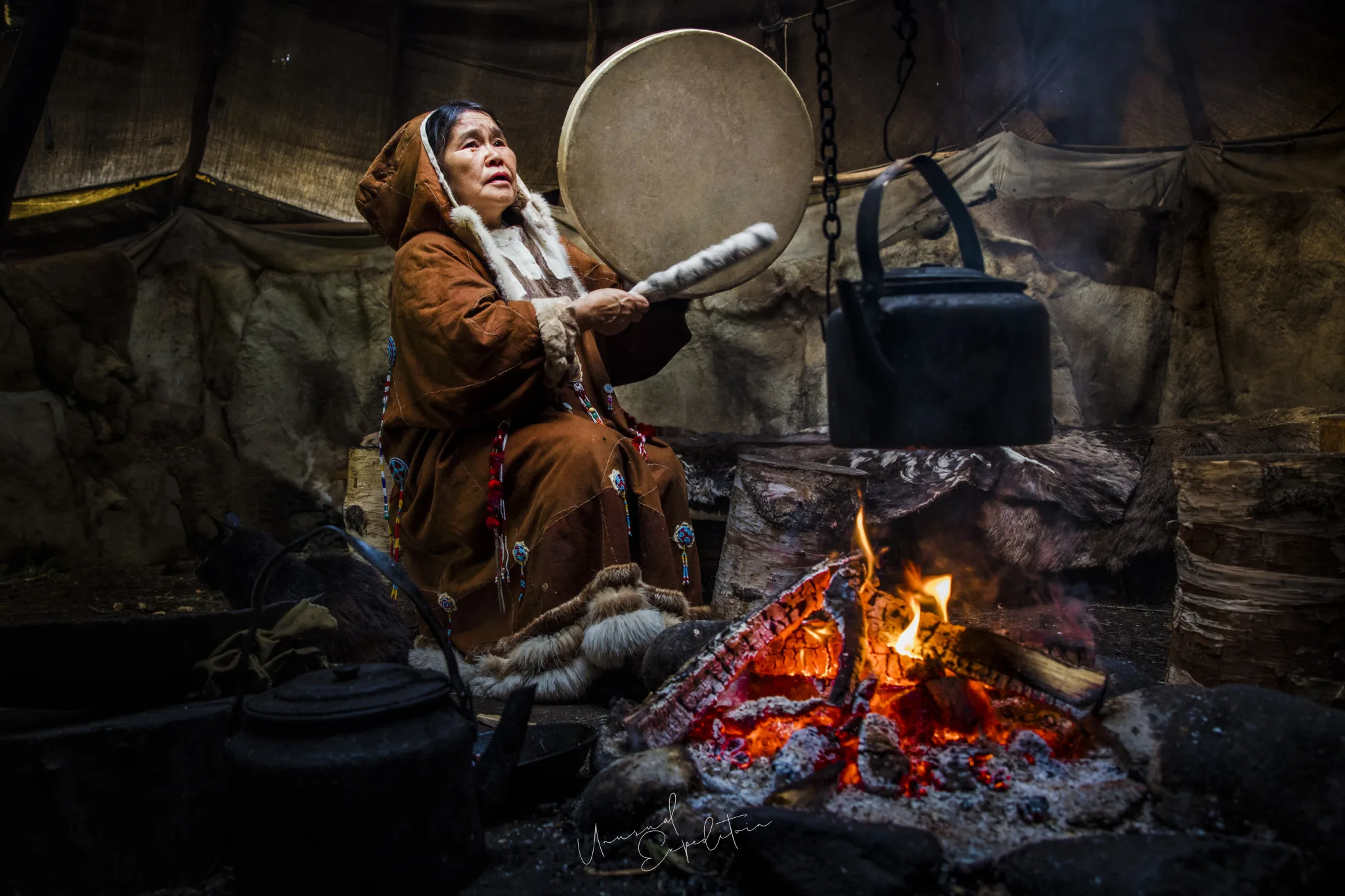
People: the indigenous villages
Kamchatka is home to Itelmen, Koryak and Even communities, and ethno-cultural villages near the city welcome visitors with drumming, songs and food cooked over a fire. These are performances, and the hosts expect to be photographed, which makes them one of the easiest portrait sessions of the trip. Firelight inside a dark dwelling is the challenge: raise the ISO, expose for the faces and let the background fall into shadow.
"Kamchatka is the only place I know where I can photograph a bear with a salmon in the morning and a volcano breathing steam in the same frame. You need patience with the weather and respect for the bears, and the peninsula pays you back for both."
Joseph Mak, tour leader, Unusual Expedition
How our Kamchatka tour works
Our July Kuril Lake trip begins in Petropavlovsk-Kamchatsky with the villages and volcano country around the city. A six-wheeled Kamaz shift truck then takes the group along the Sea of Okhotsk coast to Pauzhetka, at the edge of the South Kamchatka reserve, and on to the ranger station at Kuril Lake. Accommodation at the lake is permanent tents inside an electric fence, and a motor catamaran carries the group to the bear spots for morning and afternoon sessions. The return runs the same way, and a sea trip off the city closes the trip. Weather sets the pace throughout, so expect the plan to move by a day when fog or rain grounds a boat or a helicopter.
| Subject | Where | Best light | Lens |
|---|---|---|---|
| Bears and salmon | Kuril Lake, Ozernaya river | Morning and late afternoon, soft overcast | 100-400mm or 150-600mm |
| Volcano landscapes | Tolbachik, Mutnovsky, Avachinsky area | Dawn, dusk, clearing storms | 16-35mm, 24-70mm |
| Aerials | Helicopter flights | Any clear spell | 24-70mm |
| Marine wildlife | Avacha Bay and the open coast | Calm sea, side light | 100-400mm |
| People | Ethno-cultural villages | Firelight, open shade | 35mm, 24-70mm |
Most of the trip's best frames come from the long lens, so bring the longest one you can hand-hold from a boat.
When to go and how to get there
The main window is July to September: bears and salmon from July into October, the first autumn colour and snow on the peaks in September. Winter is a different trip of snow, dogs and heli-skiing, and we explain the trade-offs in the best time to visit Kamchatka for photography. There are no direct flights from Singapore; you fly to Moscow and then about eight to nine hours east on Aeroflot, or connect through Vladivostok or Khabarovsk. The routing, the Russian e-visa and why you need cash are in Kamchatka tour from Singapore, and the practical questions are collected in the Kamchatka photography trip FAQ.
Explore Kamchatka in depth
- Kuril Lake bears: photographing Kamchatka's brown bears and salmon
- How big are Kamchatka bears, and are they dangerous?
- Kamchatka volcanoes: how many, which are active, and how to photograph them
- Kamchatka photos: what the peninsula really looks like
- Kamchatka helicopter tour photography
- Kamchatka wildlife beyond the bears: orcas, sea lions and salmon
- Kamchatka tour from Singapore: how to get there
- The best time to visit Kamchatka for photography
- Kamchatka photography trip FAQ
Join us in Kamchatka
Our Kuril Lake trip runs in July, when the salmon and the bears arrive together, with Joseph on the boat and the shore beside you. Upcoming departures and private dates are listed on the Russia photography tours page; write to us there if you want to plan your own.
Kamchatka photography tours
The next Kamchatka departure is announced on the Kamchatka photography tours page, with previous expeditions and all the planning guides.
Explore Kamchatka in depth
- Kuril Lake Bears: Photographing Kamchatka's Brown Bears and SalmonRussia
- Kamchatka Wildlife Beyond the Bears: Orcas, Sea Lions and SalmonRussia
- Kamchatka Volcanoes: How Many, Which Are Active, and How to Photograph ThemRussia
- Kamchatka Tour from Singapore: How to Get ThereRussia
- Kamchatka Photos: What the Peninsula Really Looks LikeRussia
- Kamchatka Photography Trip FAQRussia
- Kamchatka Helicopter Tour: Photographing from the Mi-8Russia
- How Big Are Kamchatka Bears, and Are They Dangerous?Russia
- The Best Time to Visit Kamchatka for PhotographyRussia
Upcoming Photo Tours
- Egypt Photo Tour – EgyptEgypt 12 Dec 2026 To 20 Dec 2026
- Inner Mongolia Winter Owl Photo Tour – ChinaChina 01 Jan 2027 To 04 Jan 2027
- Inner Mongolia Winter Photo Tour – ChinaChina 05 Jan 2027 To 11 Jan 2027
- Mekong And Central Highland Vietnam Photo Tour - VietnamVietnam 16 Jan 2027 To 24 Jan 2027