
Kamchatka Helicopter Tour: Photographing from the Mi-8
Kamchatka helicopter tour photography: the Mi-8, shooting through windows, aerials, Kuril Lake and the geothermal valleys.
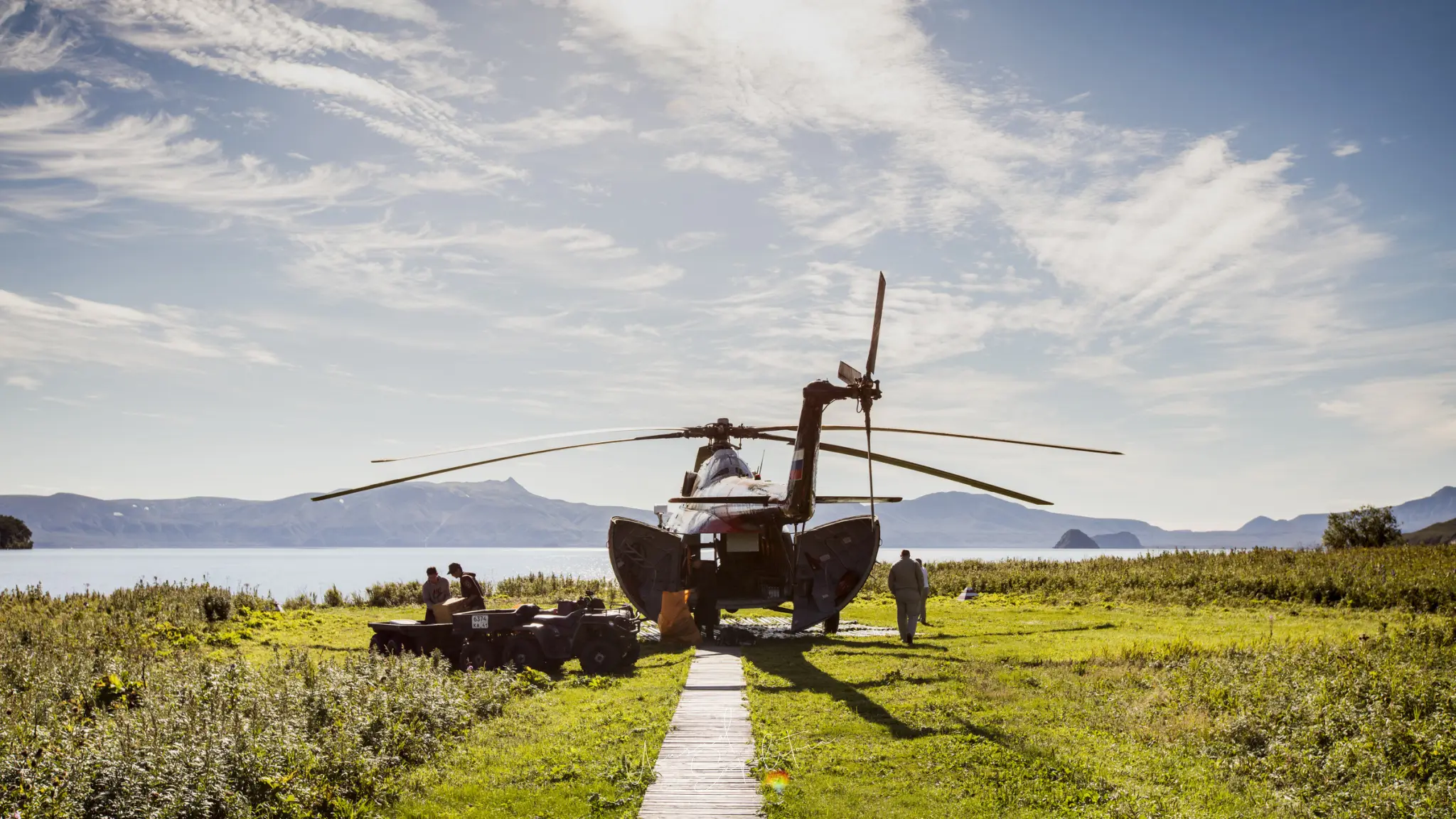
A Kamchatka helicopter tour is the fastest way into a peninsula with very few roads. The workhorse is the Mi-8, a big twin-engine helicopter with round windows that open, and it flies groups to Kuril Lake, the Valley of Geysers, the Uzon caldera and the volcano fields. For a photographer it is both an aerial platform for tundra, rivers and volcanoes and the door to places you could not otherwise reach. Here is how to photograph from it and what the landings give you.
Helicopter days sit inside a wider trip; for the bears, the coast and the season, see our Kamchatka photography tour guide.
Kamchatka helicopter tour: what the Mi-8 is like
The Mi-8 seats around twenty passengers along the sides, with round windows at shoulder height. On sightseeing flights the crew often allow a window or two to be opened for photography, and sometimes the rear doors on the ground for a group picture, but that is always their call. The cabin is loud and vibrates, so earplugs help and fast shutter speeds are essential. Flights depend entirely on weather: low cloud or wind at the landing site keeps the helicopter on the ground, sometimes for days, and every helicopter plan in Kamchatka has a fallback.
Photographing through the windows
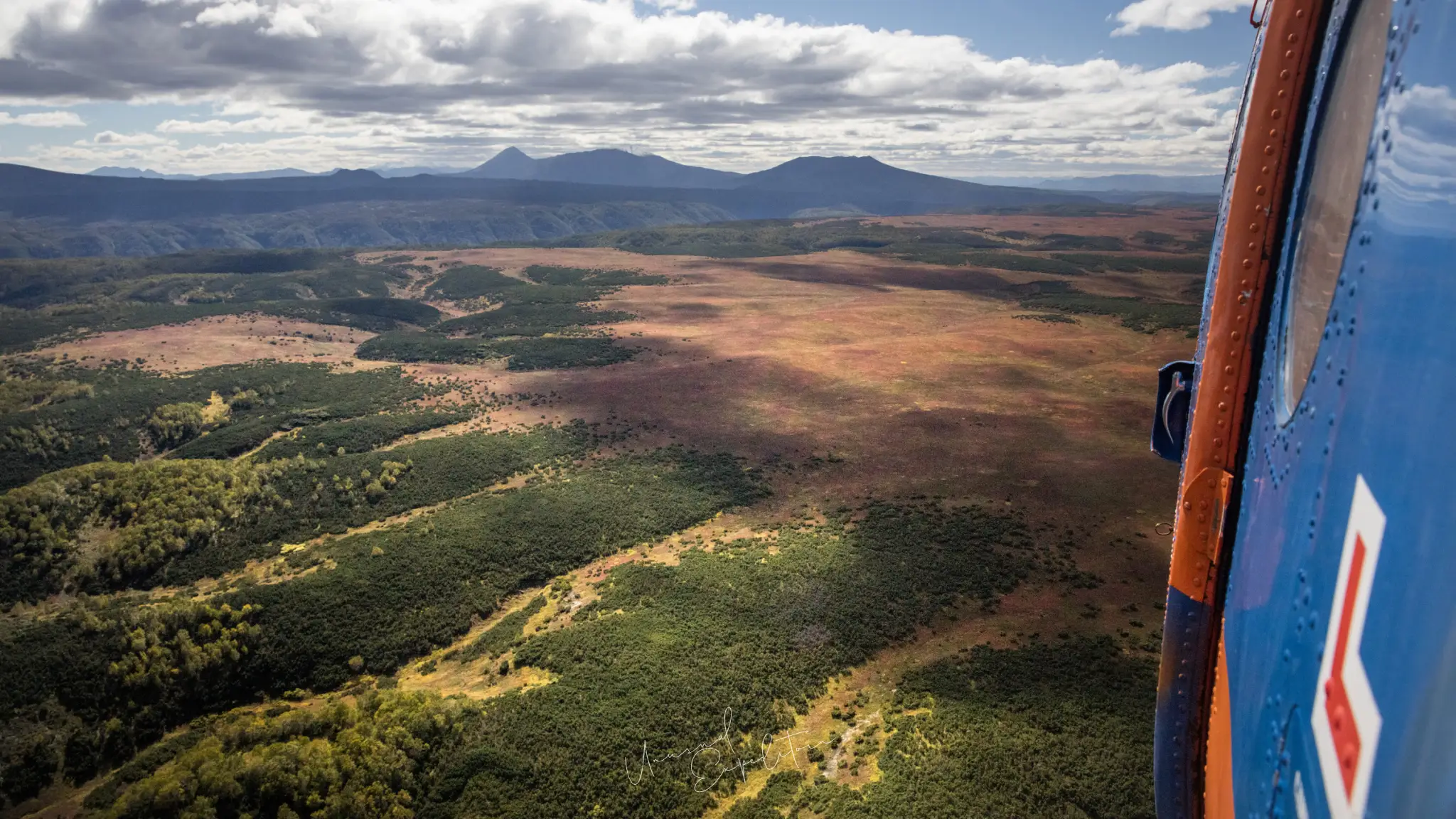
Sit on the side the pilot will turn towards, which the crew can usually tell you, and get a window seat before boarding. Put the lens hood or a rubber lens skirt against the glass to kill reflections, but do not rest the lens on the frame, because the vibration comes straight through. Shutter speeds of 1/1000 second or faster freeze both the engine shake and the ground below. A 24-70mm covers most aerials; a wider lens shows the window edge and the rotor shadow, which can tell the story of the flight.
What you see from the air
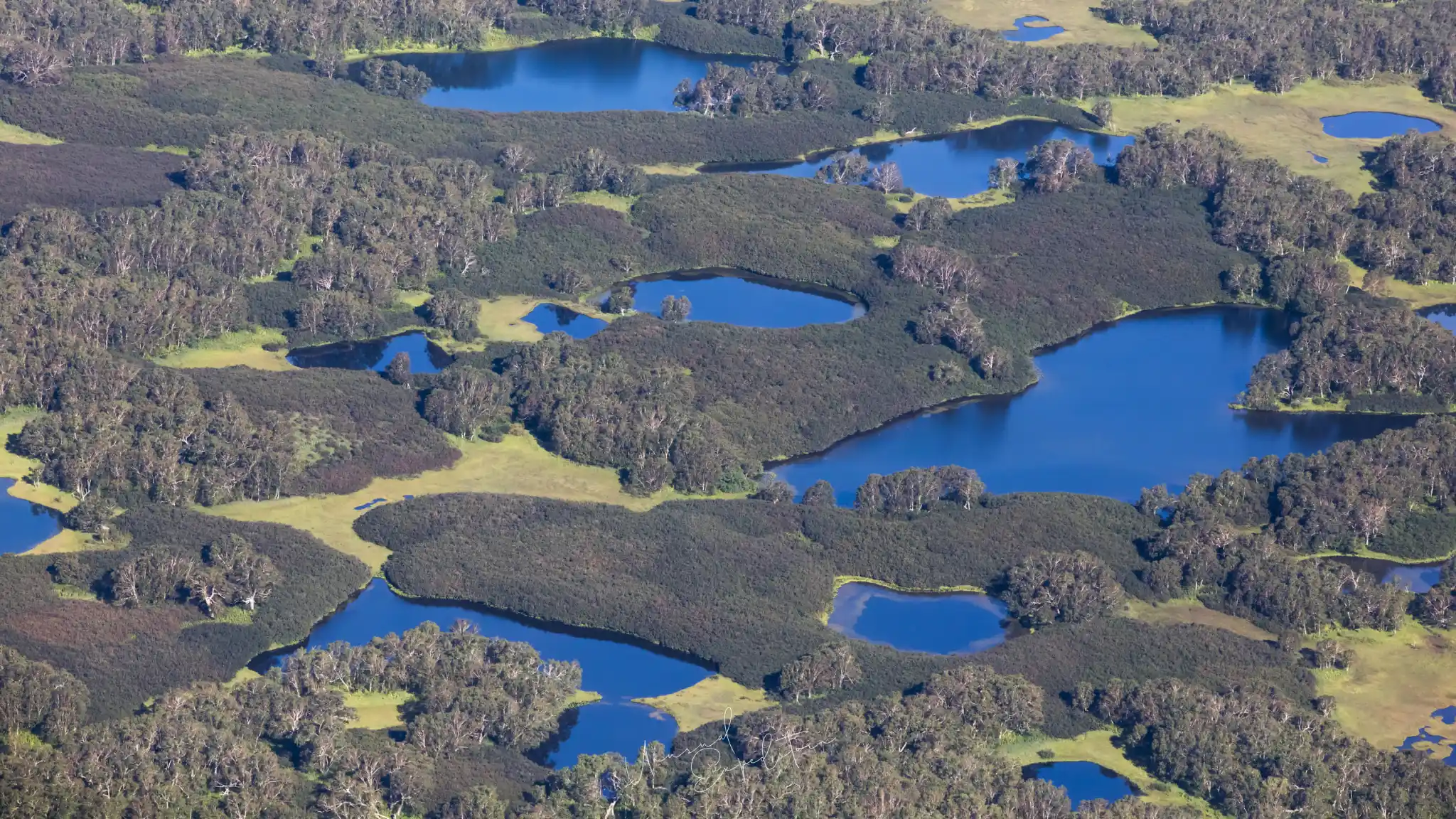
South of Petropavlovsk-Kamchatsky the land opens into tundra dotted with hundreds of small lakes, blue against brown and green. Rivers meander through it in loops that only make sense from above. Closer to the volcanoes the colours change to black ash, snowfields and the yellow of sulphur. In September the tundra turns red and gold, which is the best month for aerial colour. Shoot more than you think: the view changes every few seconds and a slight bank of the helicopter can line everything up. Look for a single strong shape rather than a wide sweep: one lake shaped like a comma, a river doubling back on itself, a ridge of snow cutting across black ash. Those simple frames survive the haze and the window glass better than a busy panorama, and they read well small on a phone.
Kuril Lake by helicopter
A helicopter can land near the ranger station at Kuril Lake, which turns a long overland journey into a short flight. We flew in this way on earlier trips; our July trip now goes overland through Pauzhetka instead, which adds the coast. Either way, the bear photography is the same once you are there, and it is covered in Kuril Lake bears photography.
Geothermal valleys: hot pools and mud pots
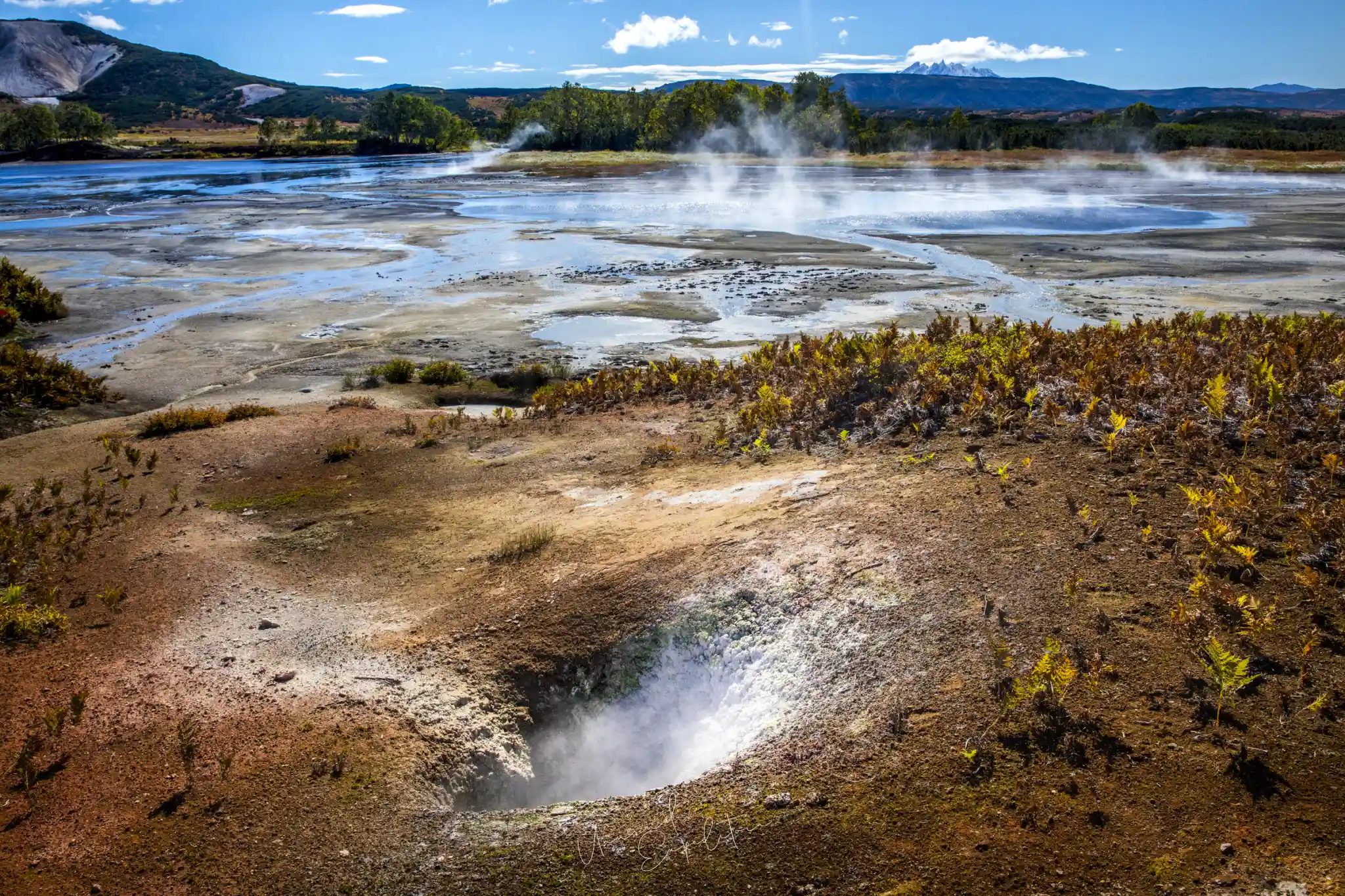
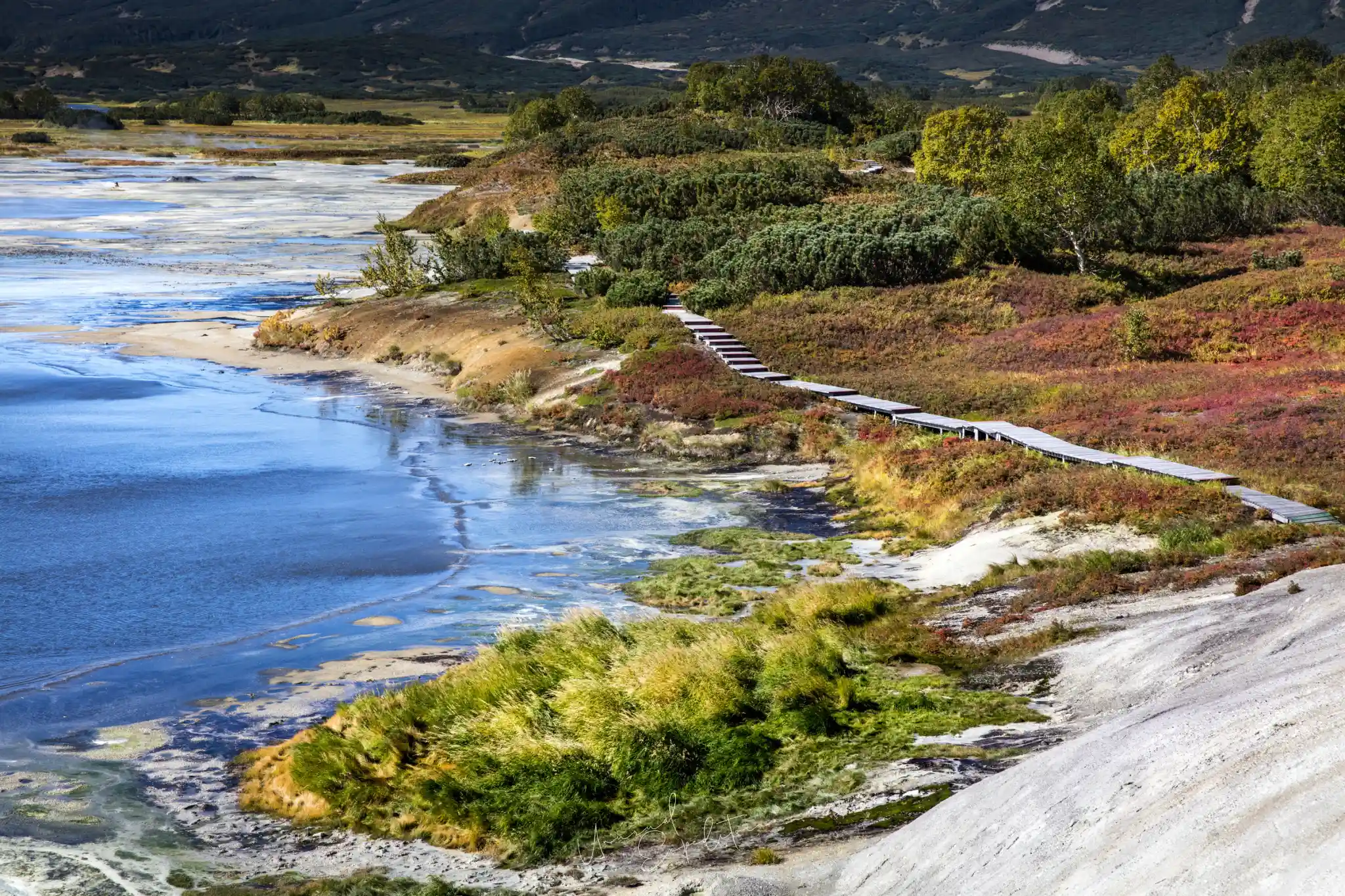
Helicopter excursions also reach the geothermal areas of the Kronotsky reserve, best known for the Valley of Geysers, discovered in 1941 and partly buried by a landslide in 2007, and the Uzon caldera next to it. They are reached only by helicopter with the reserve's permission, and visitors walk on boardwalks. The pictures are about colour and steam: turquoise pools edged with orange algae, grey mud pots bubbling, plumes drifting across autumn tundra. A polariser deepens the water colour; a short telephoto picks out a single mud bubble at the moment it bursts.
"The helicopter is where people take their most and worst pictures. Get a window, press the hood to the glass, keep the shutter fast and stop worrying about the vibration. The frames you love will be the ones where the land lined up as the pilot banked."
Joseph Mak, tour leader, Unusual Expedition
Settings for helicopter photography
| Situation | Shutter | Lens | Note |
|---|---|---|---|
| Aerials through glass | 1/1000 s or faster | 24-70mm | Lens hood or skirt against the window |
| Aerials through an open window | 1/2000 s | 24-70mm | Strap round the wrist, nothing loose |
| Helicopter on the ground | 1/250 s | 16-35mm | Wait for the rotor to stop |
| Geothermal pools | 1/500 s | 24-70mm, 70-200mm | Polariser for the water colour |
Set the camera before take-off; there is no time to change settings once the land starts sliding past.
What to carry on a helicopter day
Luggage space is limited and weight counts, so a helicopter day is a small-bag day. One body with a 24-70mm for the air, a 70-200mm or 100-400mm for anything on the ground, spare batteries in an inside pocket, and a cloth for the window and for steam on the lens. Wear layers: the cabin is cold at altitude and the geothermal valleys are warm and humid. Waterproof boots matter on boardwalks wet with spray. If the weather turns, the crew may cut a landing short or skip it, so photograph the first stop as if it were the only one.
Safety and rules
Follow the crew's instructions about doors and windows without argument, stay clear of the tail rotor, and keep straps, caps and lens caps secured. In the reserves, stay on boardwalks: the crust over hot ground can be thin. Drones need the reserve's written permission and are often refused near the geysers. For when helicopters fly most reliably, see the best time to visit Kamchatka for photography, and for the volcanoes you will see from the air, Kamchatka volcanoes.
Fly over Kamchatka with us
We add helicopter flights to Kamchatka trips when the plan and the weather allow. Future departures and private dates are on the Russia photography tours page.
Kamchatka photography tours
The next Kamchatka departure is announced on the Kamchatka photography tours page, with previous expeditions and all the planning guides.
Explore Kamchatka in depth
- Kamchatka Photography Tour: The Complete GuideRussia
- Kuril Lake Bears: Photographing Kamchatka's Brown Bears and SalmonRussia
- Kamchatka Wildlife Beyond the Bears: Orcas, Sea Lions and SalmonRussia
- Kamchatka Volcanoes: How Many, Which Are Active, and How to Photograph ThemRussia
- Kamchatka Tour from Singapore: How to Get ThereRussia
- Kamchatka Photos: What the Peninsula Really Looks LikeRussia
- Kamchatka Photography Trip FAQRussia
- How Big Are Kamchatka Bears, and Are They Dangerous?Russia
- The Best Time to Visit Kamchatka for PhotographyRussia
Upcoming Photo Tours
- Egypt Photo Tour – EgyptEgypt 12 Dec 2026 To 20 Dec 2026
- Inner Mongolia Winter Owl Photo Tour – ChinaChina 01 Jan 2027 To 04 Jan 2027
- Inner Mongolia Winter Photo Tour – ChinaChina 05 Jan 2027 To 11 Jan 2027
- Mekong And Central Highland Vietnam Photo Tour - VietnamVietnam 16 Jan 2027 To 24 Jan 2027