
Kuril Lake Bears: Photographing Kamchatka's Brown Bears and Salmon
Kurile Lake bears in Kamchatka: how the bear watching works, the fish fence, lenses and settings, rules, and when the salmon run.
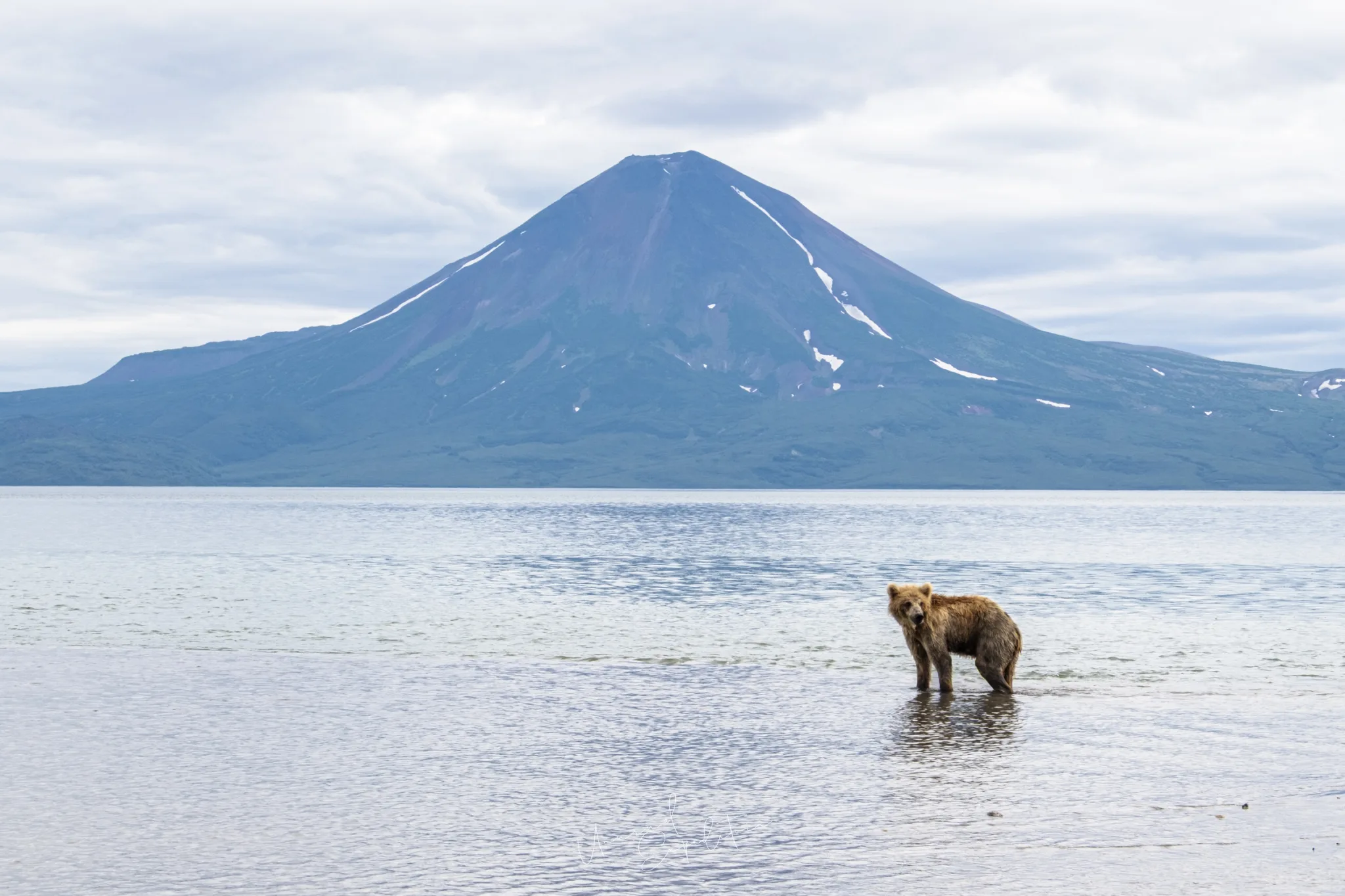
Kurile Lake bears are the reason most photographers go to Kamchatka. Every summer sockeye salmon run up the Ozernaya river into Kuril Lake, a volcanic caldera in the South Kamchatka Sanctuary, and brown bears gather along the shore and in the shallows to catch them. With rangers alongside and a boat to reach the fishing spots, you photograph bears at a working distance, in soft light, doing what they came for. Here is how it works and how to photograph it.
For the wider trip, including volcanoes, the coast and getting there, start with our Kamchatka photography tour guide.
Kuril Lake, Kamchatka: where it is and why the bears come
Kuril Lake lies near the southern tip of the peninsula, inside a caldera left by a huge eruption about 8,400 years ago. Ilyinsky volcano rises from its shore, and other cones ring the basin. The lake is one of the largest spawning grounds for sockeye salmon in Asia, and from July into October millions of fish push up the river and spread into the lake's streams. Bears follow the fish. On a good day you can see a dozen or more from one spot, from young bears sharing the shallows to big males that claim the best pool. The area is a federal reserve, and access is controlled by the reserve and its rangers.
Kuril Lake tour: how you get there and where you stay
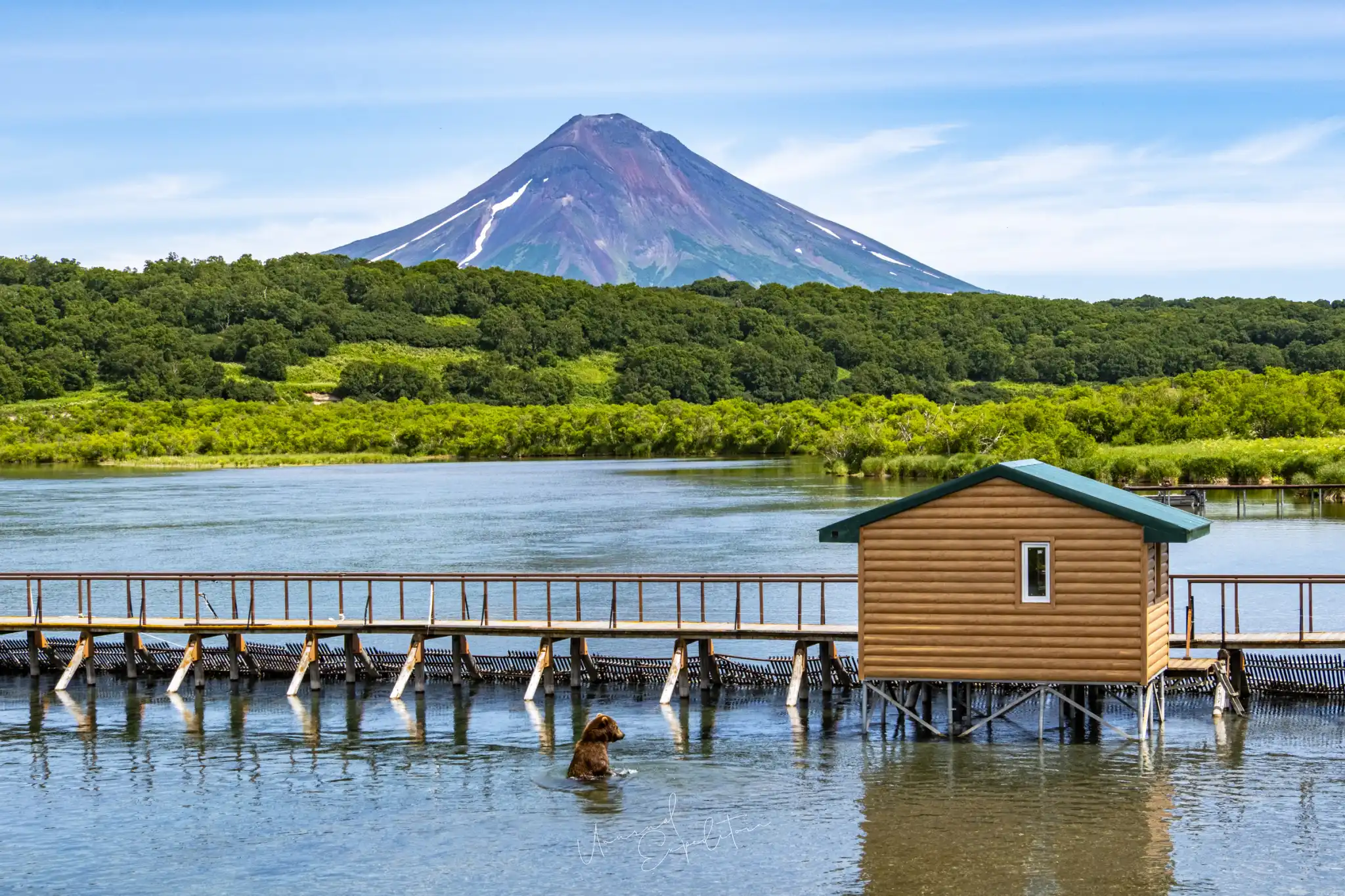
There are two ways in. A helicopter from Petropavlovsk-Kamchatsky lands near the ranger station, which is how we went on our earlier trips. On our July trip the group goes overland instead: a six-wheeled Kamaz truck along the Sea of Okhotsk coast to Pauzhetka, then on to the Ozerny cordon at the lake's outflow. Guests sleep in permanent tents inside an electric fence, and a motor catamaran crosses the lake to the bear-watching spots. The overland route costs more time and less money than flying, and it adds the coast to the photography.
Kamchatka bear watching: what a session looks like
Sessions run in the morning and the afternoon. The rangers choose the spot by where bears are fishing and how the wind sits, land the group, and set a line nobody crosses. You then stand or sit still and let the bears come and go. Some walk straight past at a few dozen metres; a mother with cubs will keep wider. Movement and noise are what change a bear's behaviour, so the best pictures come to the people who stay put, keep voices low and leave the lens on the bear rather than swinging it around. Between sessions the camp is behind the fence, and the rangers handle any bear that wanders too close.
Kamchatka bear photography: the shots to work for
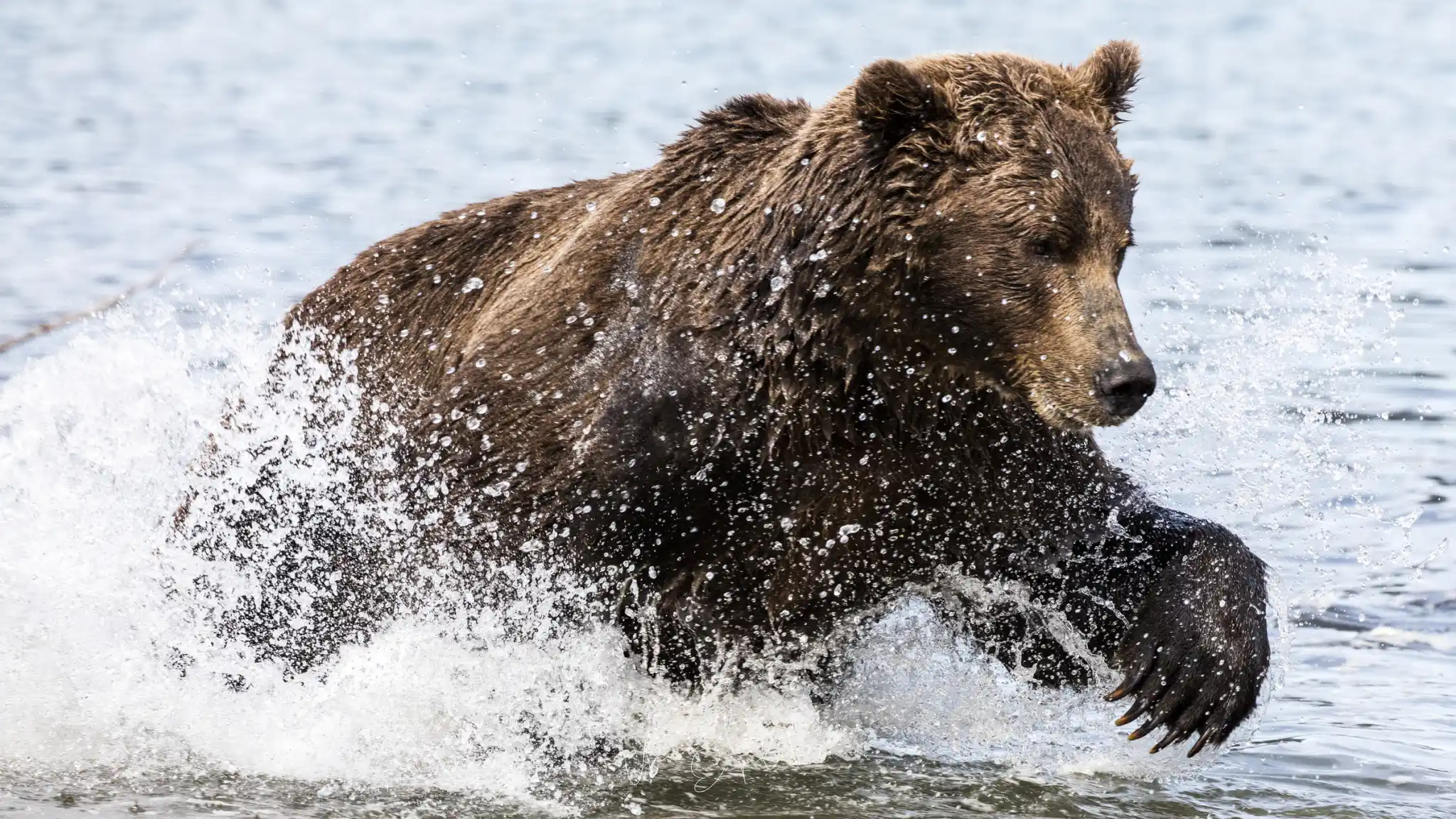
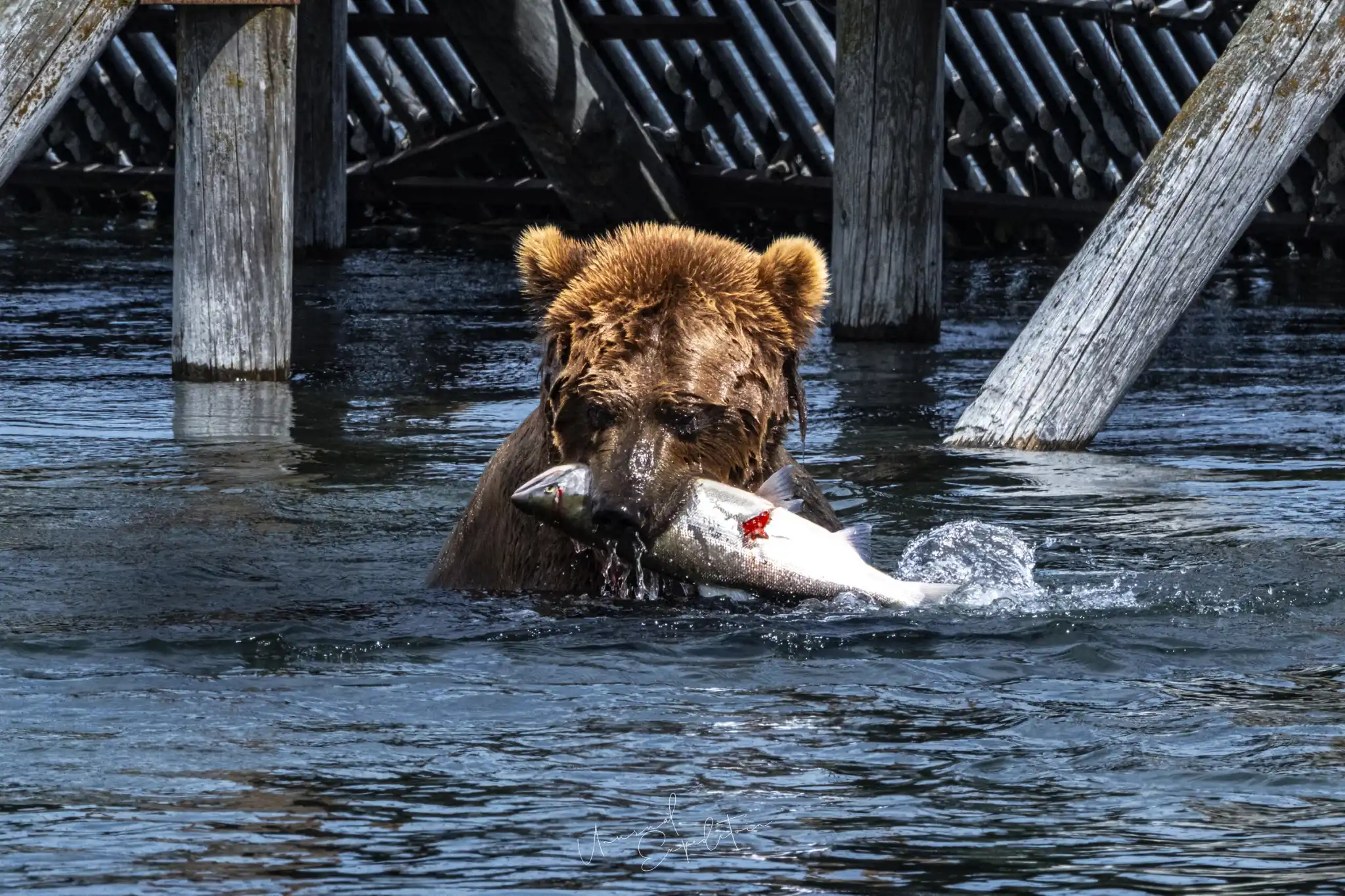
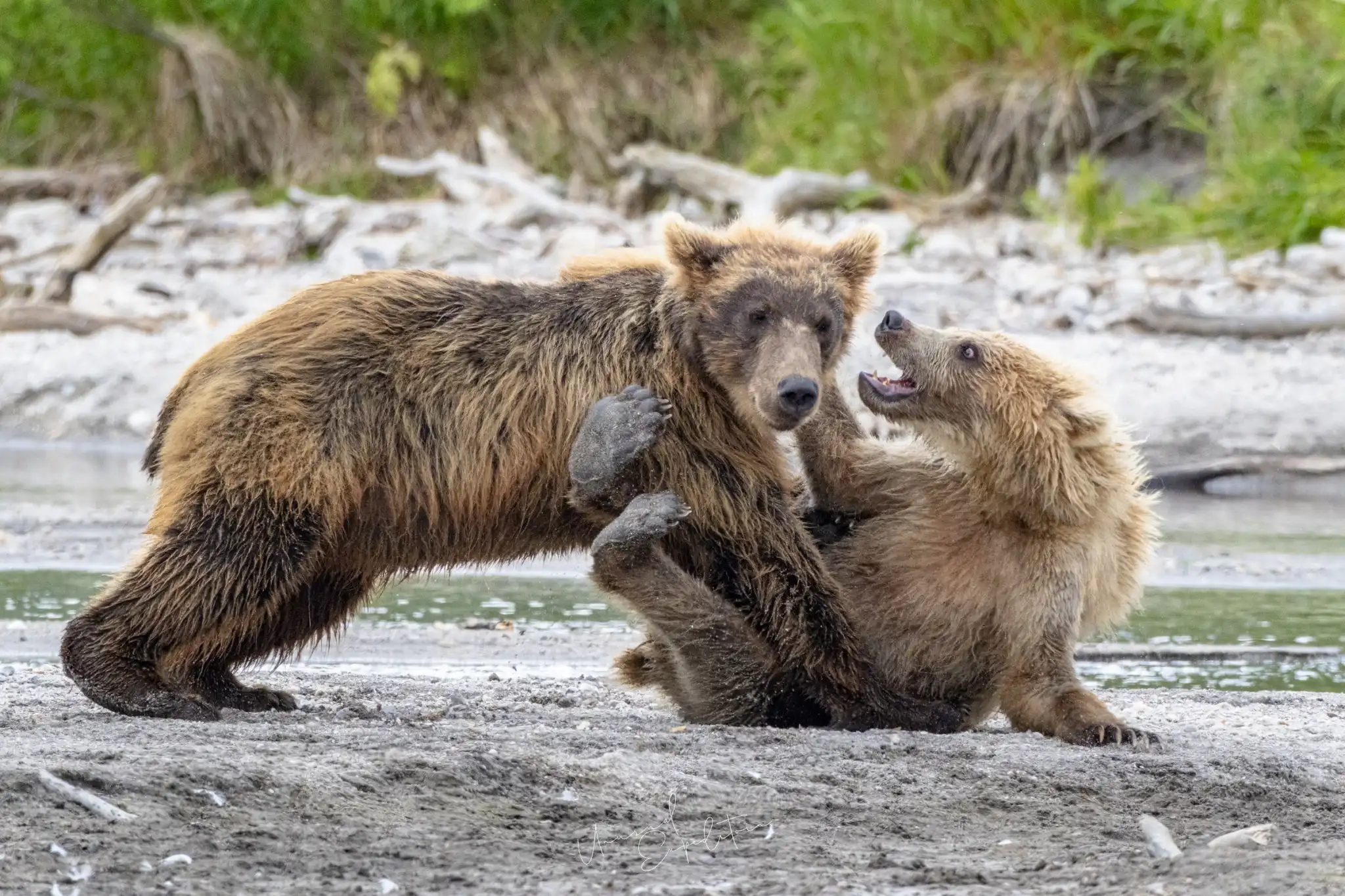
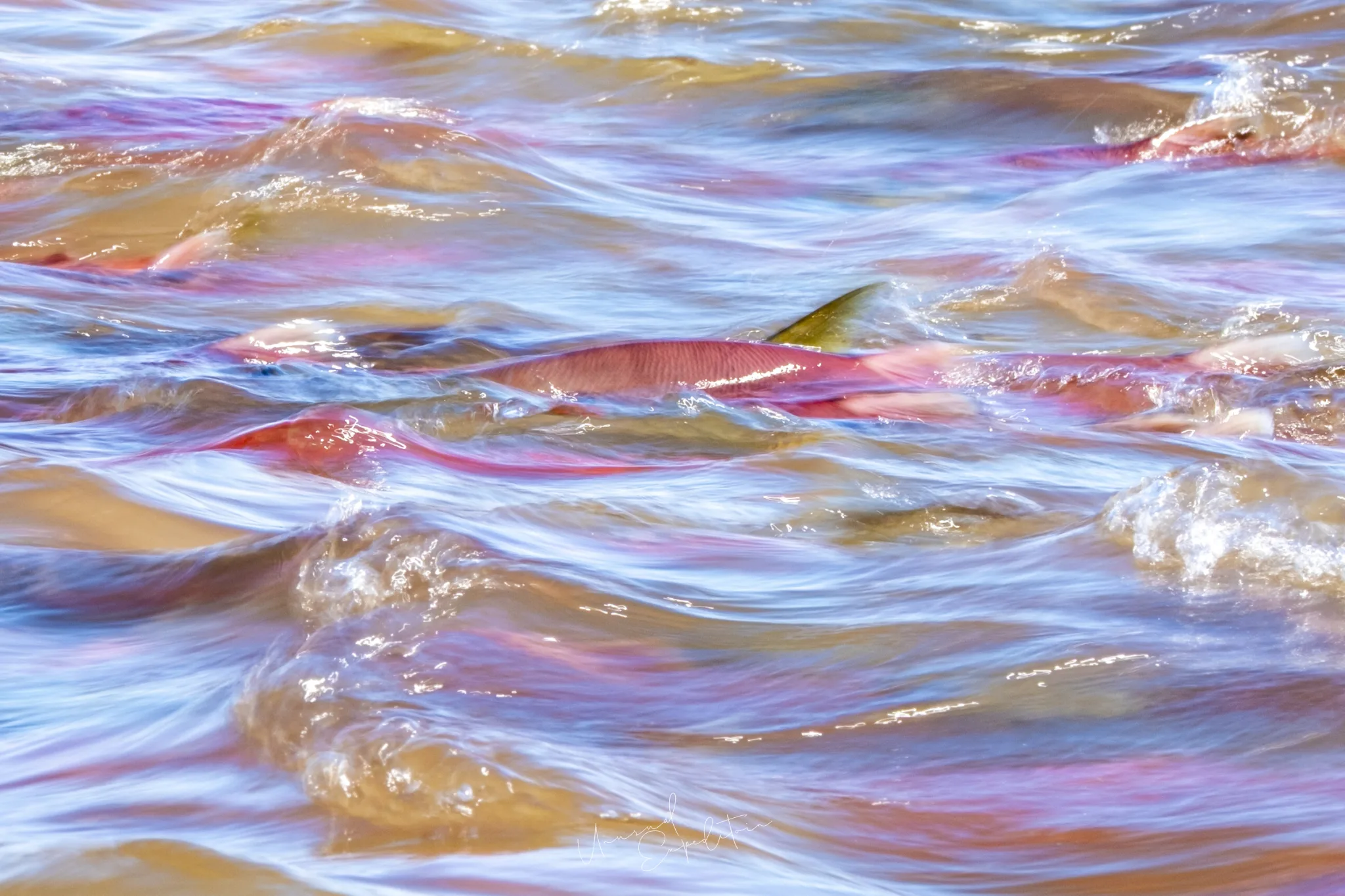
The classic is a bear lunging into the water with spray around it, which needs a fast shutter and a bear that commits. Sit low, pre-focus on the patch of water it is watching, and fire a burst as it moves. The second is the catch: a sockeye in the jaws, bright red against brown fur. The third is behaviour on the shore: young bears play-fighting on the gravel, a bear standing upright to look across the water, a mother leading cubs. Do not ignore the fish themselves. In clear water the red backs of spawning sockeye make an abstract picture in their own right.
Kurile lake salmon: the fence and the river
At the outflow, a fish-counting fence crosses the Ozernaya river so the reserve can count the sockeye entering the lake. Bears have learned that fish bunch up against it, and some work the fence every day. It makes an odd backdrop, wooden posts and wire behind a bear, but it gives you bears at eye level in the water and very close. Upstream and along the lake shore the background is cleaner: grass, gravel and the volcano.
"The best bear picture I have from Kuril Lake came after forty minutes of doing nothing. The bear had been watching the same patch of water the whole time, and when it finally went in I was already pointed there. Pick the bear, pick the water, and wait."
Joseph Mak, tour leader, Unusual Expedition
Lenses and settings for Kuril Lake
A long zoom does almost everything here: a 100-400mm on full frame, or a 150-600mm on a crop body, which is what Joseph used on the July trip. A second body with a 24-70mm catches a bear in its landscape, with the lake and Ilyinsky behind. For action, start around 1/2000 second and let the ISO rise; for a bear standing still, drop to 1/500 and keep the ISO low. Overcast days are common and good: the light is even and the white water does not blow out. A rain cover and a cloth live on the camera.
| Shot | Shutter | Lens | Tip |
|---|---|---|---|
| Bear lunging into water | 1/2000 s or faster | 100-400mm | Pre-focus on the water it watches |
| Bear with salmon | 1/1000 s | 100-400mm | Wait for the head to turn towards you |
| Cubs playing on the shore | 1/1000 s | 100-400mm | Shoot low, from a seated position |
| Bear in its landscape | 1/500 s | 24-70mm | Put the volcano in the top third |
| Salmon in the water | 1/250 s | 70-200mm | Use a polariser to cut the glare |
Shutter speed matters more than aperture at Kuril Lake; the backgrounds fall away on their own at these focal lengths.
Bears, rules and the reserve
The South Kamchatka Sanctuary sets the rules and the rangers enforce them: stay with the group, keep behind the line, no food outside the fenced camp, no drones without the reserve's written permission. Rangers carry flares and firearms, and they are good at their job. For more on how large these bears are and why the lake is safer than it sounds, read how big are Kamchatka bears, and are they dangerous. For the salmon and the other animals around the coast, see Kamchatka wildlife beyond the bears.
When the bears are at Kuril Lake
Bears are at the lake from about July, when the first sockeye arrive, into October. July brings fresh fish and green grass; August is the peak of the run; September adds autumn colour and bears at their heaviest before winter. Weather is the wildcard in every month. For the season in detail, see the best time to visit Kamchatka for photography.
Photograph Kuril Lake with us
We run Kuril Lake as a July trip, overland to the lake with the rangers and a catamaran for the bear sessions. Future departures and private dates are on the Russia photography tours page.
Kamchatka photography tours
The next Kamchatka departure is announced on the Kamchatka photography tours page, with previous expeditions and all the planning guides.
Explore Kamchatka in depth
- Kamchatka Photography Tour: The Complete GuideRussia
- Kamchatka Wildlife Beyond the Bears: Orcas, Sea Lions and SalmonRussia
- Kamchatka Volcanoes: How Many, Which Are Active, and How to Photograph ThemRussia
- Kamchatka Tour from Singapore: How to Get ThereRussia
- Kamchatka Photos: What the Peninsula Really Looks LikeRussia
- Kamchatka Photography Trip FAQRussia
- Kamchatka Helicopter Tour: Photographing from the Mi-8Russia
- How Big Are Kamchatka Bears, and Are They Dangerous?Russia
- The Best Time to Visit Kamchatka for PhotographyRussia
Upcoming Photo Tours
- Egypt Photo Tour – EgyptEgypt 12 Dec 2026 To 20 Dec 2026
- Inner Mongolia Winter Owl Photo Tour – ChinaChina 01 Jan 2027 To 04 Jan 2027
- Inner Mongolia Winter Photo Tour – ChinaChina 05 Jan 2027 To 11 Jan 2027
- Mekong And Central Highland Vietnam Photo Tour - VietnamVietnam 16 Jan 2027 To 24 Jan 2027