
The Best Time for Day of the Dead Photography in Mexico
When is Day of the Dead and when to be where: the ten days from 25 October to 2 November, parade Saturday, Mixquic, weather and light.
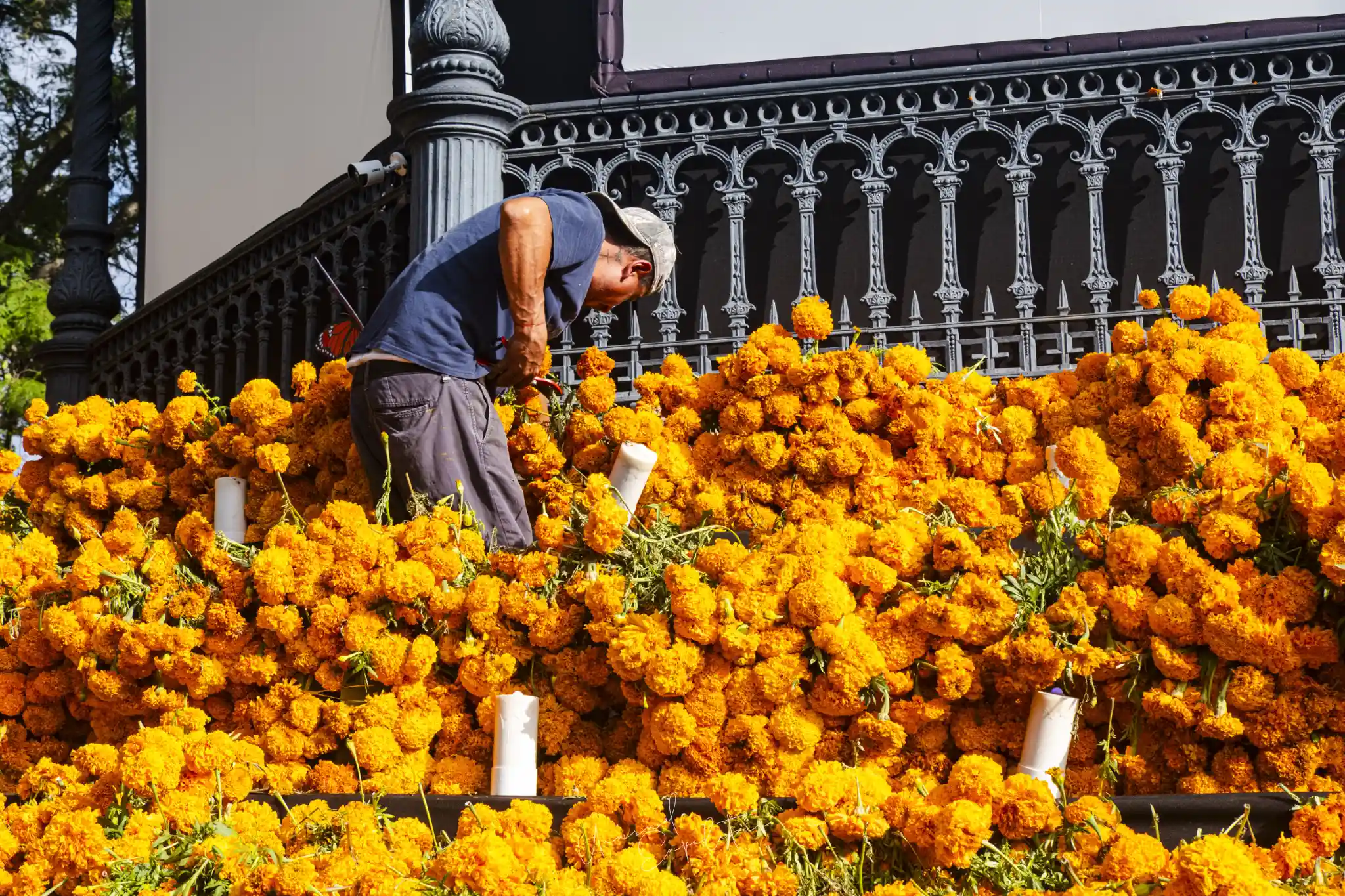
The best time for Day of the Dead photography in Mexico is the ten days from about 25 October to 2 November, arranged in the right order: the colonial towns while the decorations go up, Michoacán as the graves are dressed, Mexico City for the Saturday parade, and a village cemetery on the night of 2 November. The festival itself is only 1 and 2 November, but the pictures start a week earlier and the weather in the central highlands at that time is the best of the year. This article is the calendar behind the Mexico festival of the dead photography tour.
When is Day of the Dead in Mexico?
1 and 2 November, every year. 1 November, Día de los Angelitos, is for children who have died; 2 November, Día de Muertos proper, is for adults. In many places the vigil begins on the evening of 31 October or 1 November and the cemeteries are at their fullest on the night of 2 November. In 2027 the dates fall on a Monday and a Tuesday. The Mexico City parade is a separate, modern event held on a Saturday near the dates, Saturday 31 October in 2026 and Saturday 1 November in 2025.
What happens on each day of the festival week?
| Date | What happens | Where we were in 2026 | Pictures |
|---|---|---|---|
| Around 25 Oct | Mega Procesión de Catrinas, Mexico City; decorations go up nationwide | In transit | Catrina procession on Reforma (not on our route) |
| The last week of October | Towns dressed, giant Catrinas on the squares, sugar-skull markets | San Miguel de Allende, Dolores Hidalgo, Guanajuato | Blue hour streets, papel picado, markets |
| Two or three days before | Graves cleaned and covered in marigolds, ofrendas built in public buildings | Pátzcuaro, Janitzio, Morelia | Marigold graves, butterfly nets, ofrenda construction |
| Saturday near 1 Nov | Grand parade, Zócalo mega-ofrenda lit | Mexico City | Catrinas, floats, the Zócalo from above |
| 1 Nov | Children's vigil, night markets | Mixquic | Masks, costumes, stalls at night |
| 2 Nov | Cemetery vigil, candles through the night | Xochimilco by day, Mixquic by night | Candlelight, copal smoke, families |
Miss the first half and you see the festival without the build-up; miss 2 November and you have seen the parade but not Día de Muertos.
Why the last week of October matters as much as the two days
The festival is a public event for two days and a domestic one for a fortnight. The marigold fields around Mexico City are cut in the last ten days of October, the markets fill with sugar skulls and pan de muerto, the giant Catrinas are built on the squares of Dolores Hidalgo and Guanajuato, and public ofrendas are assembled in the colonial centres: Morelia was building one from thousands of marigold heads when we walked through, three days before the festival. A photographer who arrives on the eve of the festival sees the finished product; one who arrives five days earlier sees it being made, in towns that are not yet crowded.

What is the weather like in Mexico at the end of October?
In the central highlands, the dry season has just begun. Mexico City, Guanajuato, Pátzcuaro and Puebla, all between 1,900 and 2,250 metres, give clear mornings, afternoons of 20 to 24 degrees Celsius and nights down to 6 to 10 degrees. The sky is blue most of the day, which suits the painted churches and is hard on faces at noon. Rain is possible but short. In Yucatán, where the tour ends, it is 30 degrees and humid, with the hurricane season tailing off. Pack for both: a fleece and a shell for the cemetery nights, light cotton for the coast.
What is the light like, and when are the good hours?
Sunrise in Mexico City at the end of October is a little after seven and sunset a little after six, with a short twilight at this latitude. The good hours are the first and last ninety minutes of daylight and the forty minutes of blue hour after sunset, when the colonial facades are lit and the sky still holds colour: San Miguel's Calle Aldama, the Zócalo ofrenda, the Cholula fair. The cemetery at Mixquic goes from dusk to candlelight in about forty minutes, which is why we arrive before sunset.
"The festival is on 2 November and the photographs are on 2 November, but the trip is won in the week before, in towns where the Catrinas are still being painted and nobody is in your way."
Joseph Mak, tour leader, Unusual Expedition
How crowded is it, and does that change the dates?
Mexico City on parade day is a crowd of more than a million along the route, and the Zócalo after dark is the densest place in the country; Janitzio on the night of 1 November now has managed access because the island cannot hold the visitors who come. The colonial towns in the week before are busy with Mexican families and not with tour buses, and Mixquic on 2 November, though it draws tens of thousands, spreads them through a village and a cemetery on flat ground. The dates cannot move, so the answer to the crowds is the choice of place on each date, which is what the route above does.
Is the parade weekend enough on its own?
For the parade, yes. For Día de Muertos, no. The parade is a city spectacle and gives Catrinas and floats in daylight; the cemeteries give candlelight, families and silence. If you have only three days, make them the parade Saturday, 1 November in a village market and 2 November in a cemetery. If you have ten, do what the tour does and start in Guanajuato. The parade itself is covered in Photographing the Day of the Dead parade in Mexico City.
What about the rest of the year?
The same route works for photography from November to April, when the highlands are dry and the Yucatán is cooler, but without the festival. December brings the Guadalupe pilgrimage on 12 December to the Basilica, and Easter week fills the colonial towns with processions. For the pictures in this cluster, there is one window a year, and it is the one the tour is built on. What to bring for the conditions above is in Camera gear for Day of the Dead photography in Mexico.
Come and photograph it with us
The next Mexico Festival of the Dead departure is announced on the Mexico photography tours page, timed so that the group reaches Mexico City the day before the parade and Mixquic on 2 November.
Mexico photography tours
The next Mexico departure is announced on the Mexico photography tours page, with previous expeditions and all the planning guides.
Explore Mexico in depth
- Mexico Festival of the Dead Photography Tour: The Complete GuideMexico
- Mexico Tour from Singapore: Flights, Visa and What to ExpectMexico
- Puebla, Cholula and Taxco for PhotographersMexico
- Guanajuato and San Miguel de Allende at Day of the DeadMexico
- Camera Gear for Day of the Dead Photography in MexicoMexico
- Mexico Day of the Dead Photo Tour: Your Questions AnsweredMexico
- Photographing the Day of the Dead Parade in Mexico CityMexico
- Mexico's Pyramids: Tula, Teotihuacán, Chichén Itzá, Ek Balam and TulumMexico
- Mixquic: Photographing the Day of the Dead Cemetery at NightMexico
- Janitzio and the Butterfly Fishermen of Lake PátzcuaroMexico
Upcoming Photo Tours
- Egypt Photo Tour – EgyptEgypt 12 Dec 2026 To 20 Dec 2026
- Inner Mongolia Winter Owl Photo Tour – ChinaChina 01 Jan 2027 To 04 Jan 2027
- Inner Mongolia Winter Photo Tour – ChinaChina 05 Jan 2027 To 11 Jan 2027
- Mekong And Central Highland Vietnam Photo Tour - VietnamVietnam 16 Jan 2027 To 24 Jan 2027