
Mexico Festival of the Dead Photography Tour: The Complete Guide
Mexico festival of the dead photography tour guide: parade, Mixquic cemetery, Janitzio, Guanajuato, pyramids, fares, flights from Singapore.
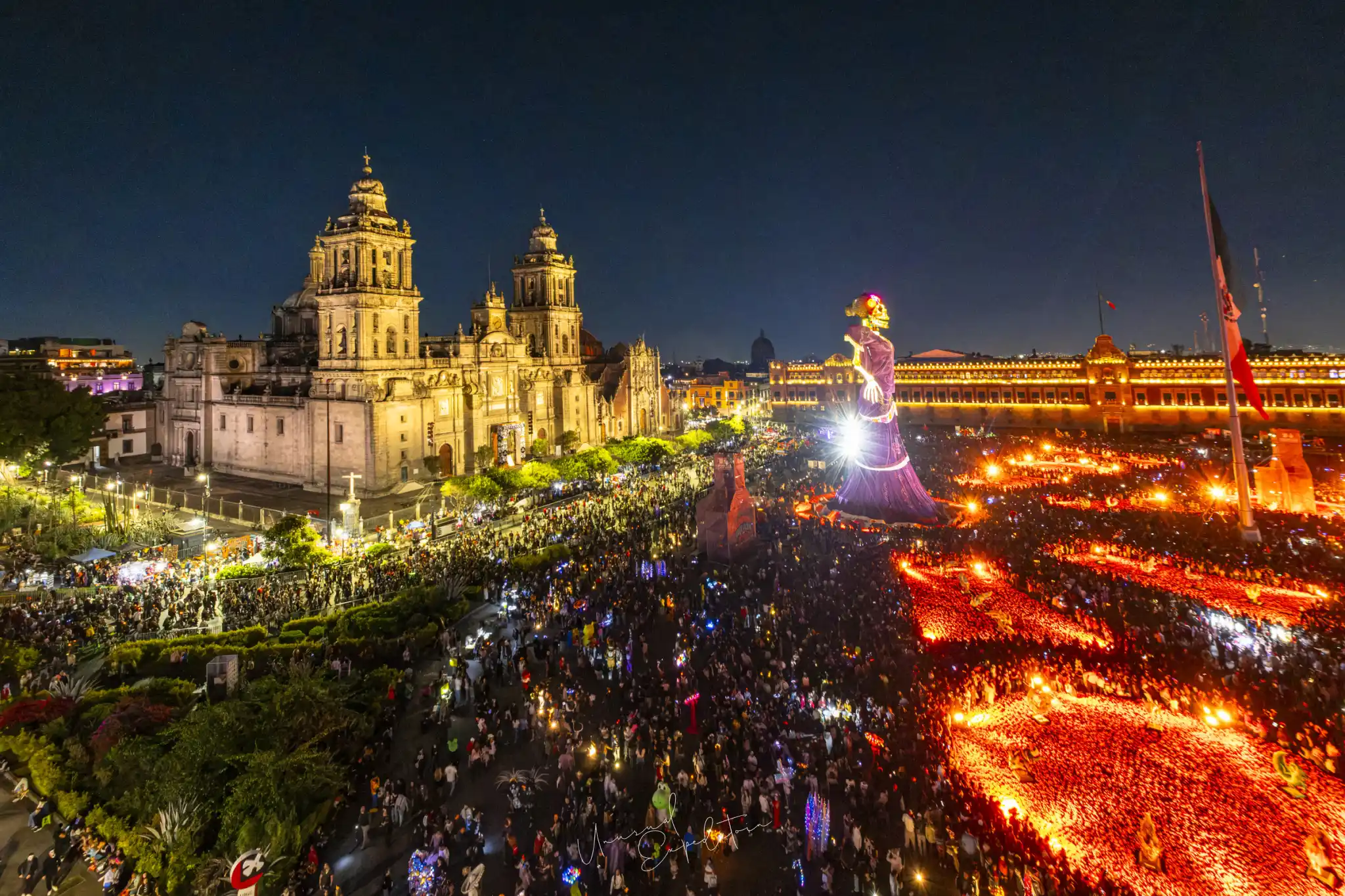
A Mexico festival of the dead photography tour is two trips in one: a week in the colonial highlands as Día de Muertos builds, from San Miguel de Allende and Guanajuato to Lake Pátzcuaro and the parade in Mexico City, and then a cemetery vigil at San Andrés Mixquic on 2 November, before the pyramids and the Caribbean coast of Yucatán. Unusual Expedition's departure runs from late October to early November, fourteen days from Singapore via Tokyo, so the camera is in the right town on each of the days that matter. This guide is the complete picture: route, light, the festival calendar, gear, fares and how to get there.
What is the Mexico festival of the dead?
Día de Muertos is the Mexican tradition of welcoming the dead home for two days each year. Families build ofrendas, altars with photographs, candles, food, sugar skulls and cempasúchil marigolds, at home and on graves. The night of 1 November is for children who have died, 2 November for adults, and in villages such as Mixquic and on Janitzio island the cemetery fills with candles through the night. UNESCO inscribed the festival on its list of intangible cultural heritage in 2008. Mexico City added a Grand Day of the Dead Parade in 2016, and in 2026 it ran on Saturday 31 October from the Diana Cazadora along Paseo de la Reforma to the Zócalo. "Festival of the dead" is what many people in Singapore and Malaysia type into Google; Mexicans say Día de Muertos.
Where does the tour go, in order?
The route, as photographed on the 2026 departure: Mexico City arrival; Tula and its Atlantean warriors; San Miguel de Allende at blue hour and again at sunrise; Dolores Hidalgo and Guanajuato; Lake Pátzcuaro and Janitzio in Michoacán; Morelia; back to Mexico City for the Basilica of Guadalupe, the parade and the Zócalo mega-ofrenda; the Mixquic night market on 1 November and the Mixquic cemetery vigil on 2 November, with Xochimilco's trajineras that morning; Puebla and Cholula; Taxco; a flight to Cancún for Valladolid, Ek Balam, Chichén Itzá, a cenote and Tulum. Each stop has its own article: Guanajuato and San Miguel de Allende, Janitzio and the butterfly fishermen of Lake Pátzcuaro, the Day of the Dead parade in Mexico City, the Mixquic cemetery at night, Puebla, Cholula and Taxco and the pyramids from Tula to Tulum.
When is the best time for a Day of the Dead photography tour?
The last week of October and the first two days of November, and the order matters more than the dates. The decorations go up in the colonial towns from about 25 October, the parade in Mexico City falls on a Saturday close to the end of the month, 1 November belongs to the children's vigils and the night markets, and 2 November is the great cemetery night. A tour that reaches Mexico City only on 1 November misses the parade; one that leaves on 1 November misses Mixquic. Our departure is built around that sequence. The full calendar, with weather and what each day gives a photographer, is in The best time for Day of the Dead photography in Mexico.
Day of the Dead in Mexico City: the parade, the Zócalo and the Basilica
The parade is four and a half hours of Catrinas, floats, dancers and giant skeletons moving down Reforma behind crowd barriers; we take a position well before it reaches us and work a 70-200mm and a 24-70mm from one spot rather than chasing it. That evening the Zócalo mega-ofrenda is lit, and the view from a rooftop over the cathedral, a 10-24mm on a tripod once the lights are on, is the picture that defines the trip. The morning of parade day goes to the Basilica of Guadalupe, the most visited Catholic shrine in the Americas, where the old basilica leans beside the new one and pilgrims arrive all day.

Michoacán: Janitzio, Pátzcuaro and Morelia
Lake Pátzcuaro is the place most Mexicans associate with Día de Muertos, and the island of Janitzio is its centre. The butterfly-net fishermen raise their nets for the boats in early afternoon; the graves in Pátzcuaro's cemeteries are already dressed in marigolds days before the festival; Morelia's historic centre was building a marigold ofrenda the size of a room when we walked through. This is the Purépecha heart of the festival, quieter than Mexico City and far more intimate.
The colonial towns: San Miguel de Allende, Dolores Hidalgo, Guanajuato
Three towns in two days. San Miguel de Allende is photographed twice: Calle Aldama at blue hour on arrival, when the pink spires of the Parroquia light up at the end of the street, and again at sunrise when it is empty. Dolores Hidalgo has a yellow parish church with a giant Catrina playing a violin in front of it, and a market where the sugar skulls are made. Guanajuato is a city poured into a ravine, every house a different colour, with the yellow Basilica at the bottom and lanes that climb away from it. "Guanajuato day of the dead" is the single query that already brings this site the most impressions, which tells you how many people are planning around it.
Mixquic: the cemetery at night
San Andrés Mixquic, in the south of Mexico City, is where the tour spends the two nights that matter. On 1 November the streets around the church are a night market of masks, costumes and children in papier-mâché pumpkin heads, lit by stalls and worked with an 18mm f/1.4. On 2 November families arrive at dusk to clean and dress the graves, light hundreds of candles and burn copal, and the cemetery glows until the small hours. We photograph from dusk into full dark, without flash, and with the courtesy the place demands. The technique and the conduct are in the Mixquic article.
After the festival: Puebla, Taxco and the Maya coast
The second week is for the pictures Día de Muertos leaves no time for. Puebla's talavera facades and the gold interior of the Capilla del Rosario; Cholula, where a church sits on top of the largest pyramid by volume in the world; Taxco, a silver town stacked down a mountainside under strings of papel picado. Then a domestic flight to Cancún for the Yucatán: the Acrópolis at Ek Balam in late light, El Castillo at Chichén Itzá at opening time, a cenote at midday, and Tulum, the one Maya site on a cliff above the sea, on the last morning.
"I built this route backwards from 2 November. Everything before it is about getting the group to Mixquic with the festival already in their eyes, and everything after it is the Mexico you would be sorry to have flown past."
Joseph Mak, tour leader, Unusual Expedition
How much does a Mexico festival of the dead tour cost?
Indicatively S$8,000 to S$10,000 per person depending on the plan, for fourteen days with hotels, all meals, ground transport, the domestic flight to Cancún, entries and the photography leadership. International flights from Singapore are extra. The current departure and its fare are on the Mexico photography tours page, which also lists what is and is not included.
Getting there from Singapore
Singapore to Tokyo overnight, then ANA from Narita arriving in Mexico City in the early afternoon of the same calendar day, with the hotel across a covered bridge from the terminal. Singapore passport holders enter Mexico without a visa for up to 180 days. Mexico City is at 2,240 metres, and the first two days are deliberately gentle for it. The flights, the time difference, the altitude and the packing list are in Mexico tour from Singapore.
What camera gear do you need?
Two bodies, a 24-70mm, a 70-200mm or a long zoom for the parade and the fishermen, a fast wide prime for the night market and the cemetery, a 10-24mm or 16-35mm for the Zócalo rooftop and the churches, and a travel tripod. ISO 1800 to 3200 is normal after dark. The full list, with a table of what each item is for, is in Camera gear for Day of the Dead photography in Mexico.
The festival week at a glance
| When | Where | What happens | Photographic subject |
|---|---|---|---|
| The week before | Tula, San Miguel de Allende, Dolores Hidalgo, Guanajuato | Decorations going up | Blue hour streets, giant Catrinas, sugar skulls |
| Two days before | Lake Pátzcuaro, Janitzio, Morelia | Graves dressed, ofrendas built | Butterfly nets, marigolds, Purépecha towns |
| Parade Saturday | Mexico City | Grand parade, Zócalo ofrenda lit | Catrinas, floats, the Zócalo from above |
| 1 Nov | Mixquic | Children's night, street market | Masks, costumes, stalls after dark |
| 2 Nov | Xochimilco, Mixquic | Cemetery vigil | Candles, copal, families at the graves |
Dates shift by a day or two each year with the parade's Saturday; the sequence does not.
Explore Mexico in depth
- The best time for Day of the Dead photography in Mexico
- Photographing the Day of the Dead parade in Mexico City
- Mixquic: the Day of the Dead cemetery at night
- Janitzio and the butterfly fishermen of Lake Pátzcuaro
- Guanajuato and San Miguel de Allende at Day of the Dead
- Puebla, Cholula and Taxco for photographers
- Mexico's pyramids: Tula, Teotihuacán, Chichén Itzá, Ek Balam and Tulum
- Camera gear for Day of the Dead photography
- Mexico Day of the Dead photo tour: your questions answered
- Mexico tour from Singapore: flights, visas and what to expect
Come and photograph it with us
The next Mexico Festival of the Dead departure, its dates and fare are on the Mexico photography tours page. Small group, one photographer leading, and a route that puts you in Mixquic on the night of 2 November.
Mexico photography tours
The next Mexico departure is announced on the Mexico photography tours page, with previous expeditions and all the planning guides.
Explore Mexico in depth
- Mexico Tour from Singapore: Flights, Visa and What to ExpectMexico
- Puebla, Cholula and Taxco for PhotographersMexico
- Guanajuato and San Miguel de Allende at Day of the DeadMexico
- Camera Gear for Day of the Dead Photography in MexicoMexico
- Mexico Day of the Dead Photo Tour: Your Questions AnsweredMexico
- Photographing the Day of the Dead Parade in Mexico CityMexico
- Mexico's Pyramids: Tula, Teotihuacán, Chichén Itzá, Ek Balam and TulumMexico
- Mixquic: Photographing the Day of the Dead Cemetery at NightMexico
- Janitzio and the Butterfly Fishermen of Lake PátzcuaroMexico
- The Best Time for Day of the Dead Photography in MexicoMexico
Upcoming Photo Tours
- Egypt Photo Tour – EgyptEgypt 12 Dec 2026 To 20 Dec 2026
- Inner Mongolia Winter Owl Photo Tour – ChinaChina 01 Jan 2027 To 04 Jan 2027
- Inner Mongolia Winter Photo Tour – ChinaChina 05 Jan 2027 To 11 Jan 2027
- Mekong And Central Highland Vietnam Photo Tour - VietnamVietnam 16 Jan 2027 To 24 Jan 2027