
Mexico's Pyramids: Tula, Teotihuacán, Chichén Itzá, Ek Balam and Tulum
Photographing Mexico's pyramids: Tula's Atlantes, Teotihuacan, Ek Balam in late light, Chichen Itza at opening, a cenote and Tulum.
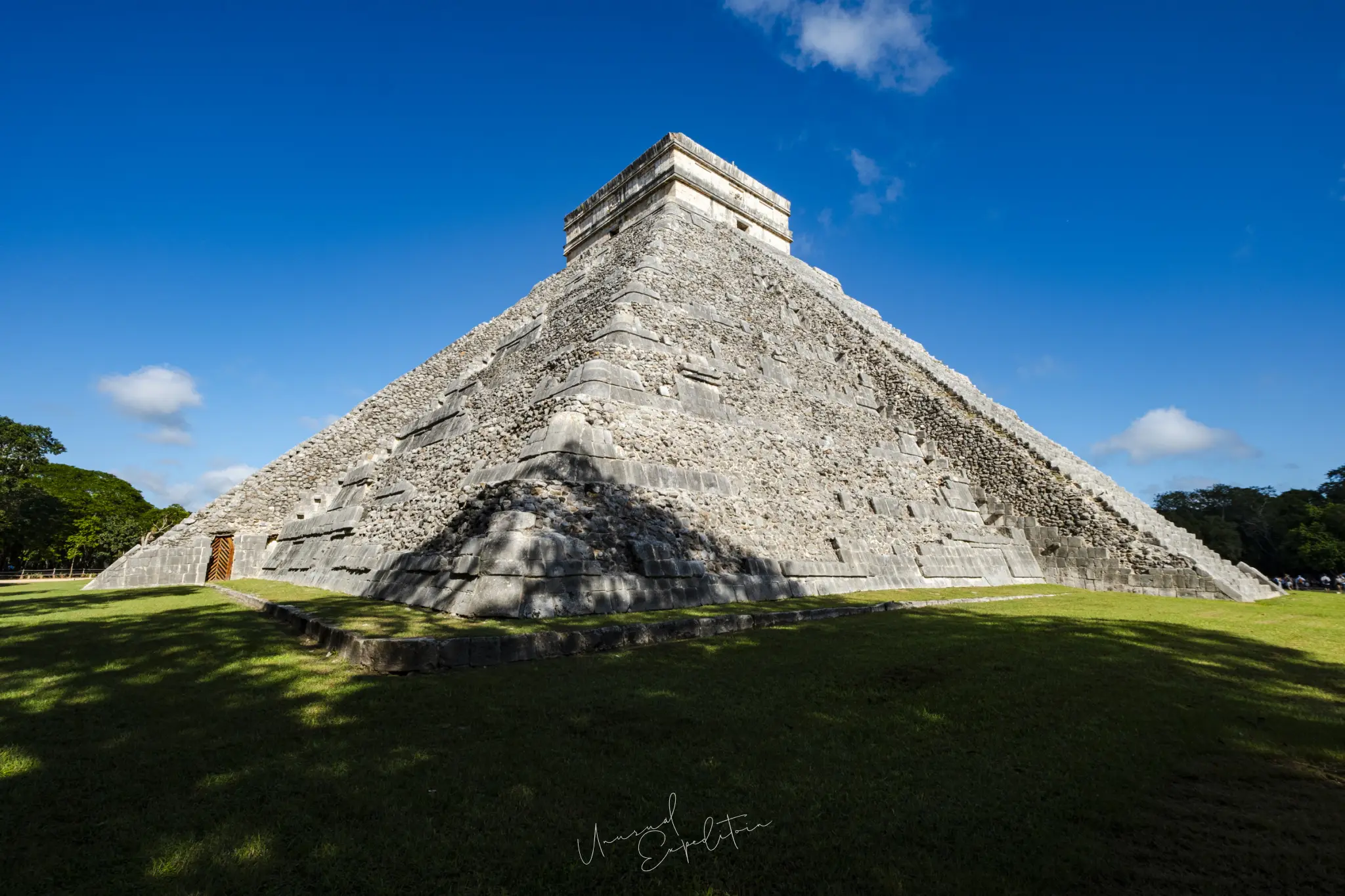
Mexico's pyramids on this route are five sites across two civilisations: the Toltec warriors of Tula and the Pyramid of the Sun at Teotihuacán near Mexico City, then in Yucatán the Maya cities of Ek Balam, Chichén Itzá and Tulum, with a cenote between them. Each is photographed at a different time of day for a reason, and the rules are the same at all of them: be at the gate at opening, work the stone against the sky, and leave when the coaches arrive. This is the archaeology chapter of the Mexico festival of the dead photography tour, from the 2026 departure.
Tula: the Atlantean warriors
Tula de Allende, 90 minutes north of Mexico City, was the Toltec capital around the year 1000. On Pyramid B stand four basalt warriors, the Atlantes, each about 4.6 metres tall, with feathered headdresses and spear-throwers, and in front of the pyramid a field of carved columns, the remains of the Burnt Palace. We were there on the first morning: the black stone takes side light well, the columns give a foreground for the pyramid, and the ball court and the Coatepantli wall of carved serpents fill the rest of an hour. It is the quietest of the five sites and the best introduction.

Teotihuacán: the Pyramid of the Sun
Teotihuacán is the largest ancient city in the Americas, 50 kilometres north-east of Mexico City, with the Pyramid of the Sun, the Pyramid of the Moon and the two-kilometre Avenue of the Dead between them. The pyramids can no longer be climbed. We visited the morning after the parade, under a hard blue sky: the picture is the scale of the Avenue from the Moon end, the Sun pyramid with people for size, and the carved heads of the Temple of the Feathered Serpent in the Ciudadela. A 24-70mm covers it; take a hat, there is no shade.
Ek Balam: the Acrópolis in late light
Ek Balam, 30 minutes north of Valladolid in Yucatán, is the Maya site that photographers prefer to Chichén Itzá, because it is quiet, the jungle presses in, and the Acrópolis, one of the largest Maya buildings at 160 metres long and 30 high, can still be climbed. Halfway up, under a thatched roof, is the stucco monster-mouth doorway with its winged figures, intact after 1,200 years. We arrived in mid afternoon and worked until the light went flat: the low sun lit the west face of the Acrópolis, the steps threw long shadows, and the view from the top takes in the whole site and the flat green to the horizon. A 10-24mm for the doorway, a 24-70mm for the stairs, and water for the climb.
Chichén Itzá: El Castillo at opening time
Chichén Itzá opens at 08:00 and within two and a half hours the coaches from Cancún have arrived and the stalls have set up along every path. We were at the gate at opening and photographed El Castillo for two hours: the pyramid alone on its lawn with nobody in front of it, the nine terraces and the serpent heads at the foot of the north stairway, the Temple of the Warriors and its columns, the Great Ball Court, the round El Caracol observatory. The east face is lit first, so start there. A 16-35mm or 10-24mm for the whole pyramid from close, a 70-200mm for the carved detail, and a polariser for the sky, which in the November morning is a deep blue. The vendors' masks and carved calendar stones make good details once they are open; the people in them need asking.
A cenote between the sites
The Yucatán has no rivers; the Maya drank from cenotes, limestone sinkholes open to the sky or hidden in caves. We spend the hot middle of the Chichén Itzá day in one near Valladolid, a cave cenote with a stone platform reaching into still water and a shaft of light from a hole in the roof. In the early and late afternoon the light was artificial plus the shaft; 1/60 of a second at ISO 1000 to 1700 on a 10-24mm, with a person on the platform for scale. Swim first, photograph after, and keep the camera in a dry bag between.
Tulum: the only Maya city on the sea
Tulum stands on a 12-metre cliff above the Caribbean, the only major Maya site with that setting, and the El Castillo temple above the little beach is the picture that ends the trip. It opens at 08:00; we were inside for the first hour, before the heat and the tour groups, and the afternoon before we photographed the same temple from the water, from a boat off the beach with a 70-200mm. Morning light is on the sea side, so the boat view belongs to the afternoon and the land view to the morning. Iguanas pose on every wall.
"Every archaeological site in Mexico has two versions, the one at opening and the one two hours later. Pay for the first with an early alarm. The second is free and worth exactly that."
Joseph Mak, tour leader, Unusual Expedition
Rules at the sites
INAH, the national institute that manages the sites, allows hand-held photography with a standard ticket, charges a permit fee for tripods and video rigs, and prohibits drones. Climbing is banned at Teotihuacán and Chichén Itzá and allowed at Ek Balam and at Tula's Pyramid B. Hats and water are not optional in Yucatán in November, at 30 degrees by mid morning.
Five sites, five times of day
| Site | When we photographed | Why then | Lens |
|---|---|---|---|
| Tula | Mid morning | Side light on black basalt, no crowds | 24-70mm |
| Teotihuacán | Late morning | Scale under a clear sky, between parade and Mixquic | 24-70mm |
| Ek Balam | Mid to late afternoon | Low sun on the Acrópolis, climbable | 10-24mm, 24-70mm |
| Chichén Itzá | Opening, first two hours | El Castillo empty before the coaches | 10-24mm, 70-200mm |
| Tulum | Opening hour, and mid afternoon from a boat | Land side in the morning, sea side in the afternoon | 24-70mm, 70-200mm |
The times are the reason the route runs the way it does.
Come and photograph it with us
The archaeological week follows the festival on every departure of the Mexico Festival of the Dead tour. The colonial towns between the two are in Puebla, Cholula and Taxco for photographers, and the flights and heat in Mexico tour from Singapore.
Mexico photography tours
The next Mexico departure is announced on the Mexico photography tours page, with previous expeditions and all the planning guides.
Explore Mexico in depth
- Mexico Festival of the Dead Photography Tour: The Complete GuideMexico
- Mexico Tour from Singapore: Flights, Visa and What to ExpectMexico
- Puebla, Cholula and Taxco for PhotographersMexico
- Guanajuato and San Miguel de Allende at Day of the DeadMexico
- Camera Gear for Day of the Dead Photography in MexicoMexico
- Mexico Day of the Dead Photo Tour: Your Questions AnsweredMexico
- Photographing the Day of the Dead Parade in Mexico CityMexico
- Mixquic: Photographing the Day of the Dead Cemetery at NightMexico
- Janitzio and the Butterfly Fishermen of Lake PátzcuaroMexico
- The Best Time for Day of the Dead Photography in MexicoMexico
Upcoming Photo Tours
- Egypt Photo Tour – EgyptEgypt 12 Dec 2026 To 20 Dec 2026
- Inner Mongolia Winter Owl Photo Tour – ChinaChina 01 Jan 2027 To 04 Jan 2027
- Inner Mongolia Winter Photo Tour – ChinaChina 05 Jan 2027 To 11 Jan 2027
- Mekong And Central Highland Vietnam Photo Tour - VietnamVietnam 16 Jan 2027 To 24 Jan 2027