
Jaisalmer Photography: the Golden Fort, the Havelis and Bada Bagh
Jaisalmer photography guide: who built Jaisalmer Fort, the golden lanes, the havelis, Bada Bagh at sunset, and is Jaisalmer worth visiting.
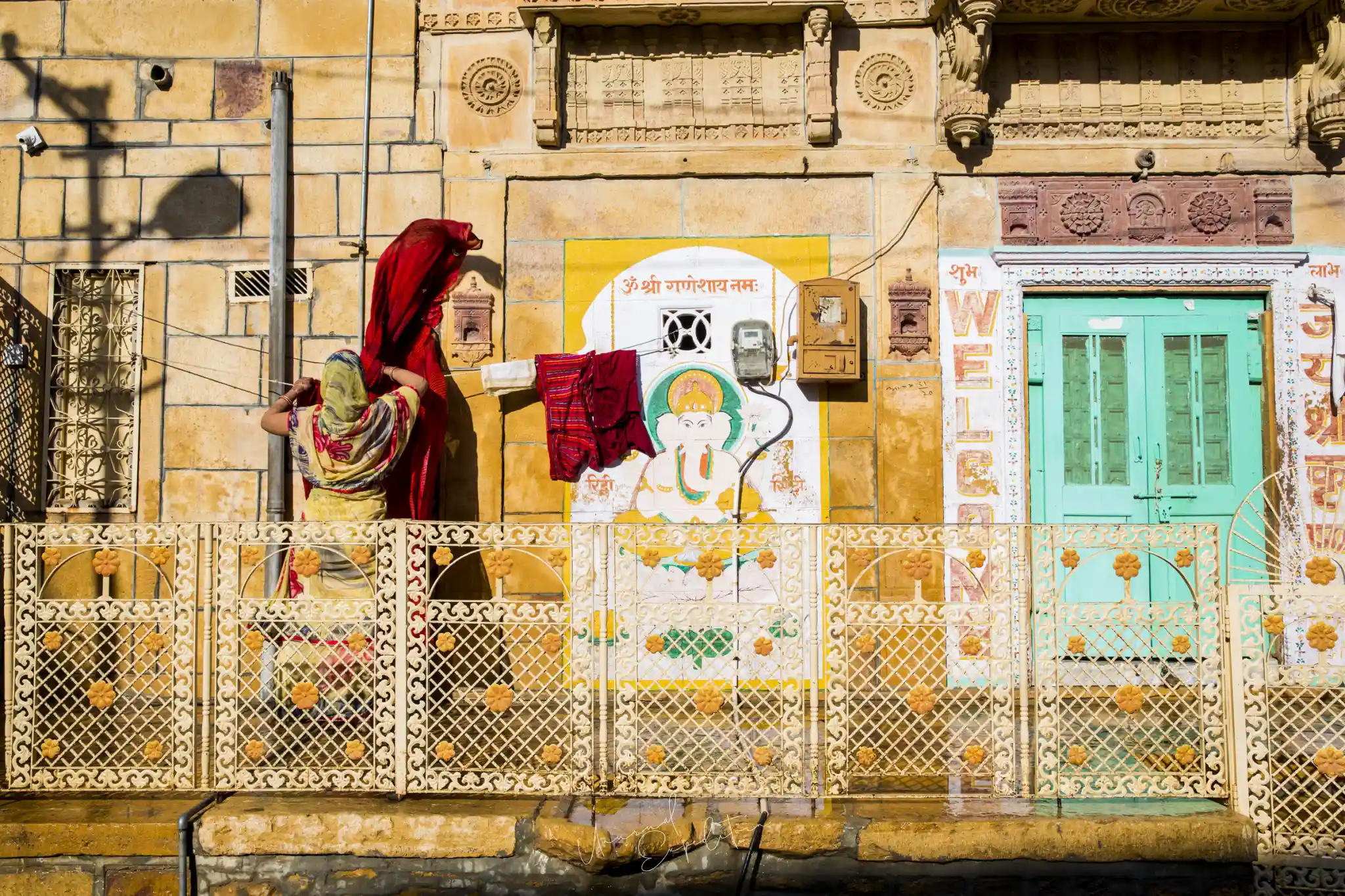
Jaisalmer photography is all about golden stone in low light. The whole town, its fort, its carved merchants' houses and its lanes, is built of yellow sandstone from the Thar Desert, and in the first and last hours of the day it glows. The best subjects are the fort that people still live in, the lace-like havelis below it, the life of the golden lanes and the royal cenotaphs of Bada Bagh at dusk on the edge of the desert.
Jaisalmer is the desert city in our Rajasthan photography tour guide. The photographs in this guide are our own, taken on our Jaisalmer trip; we hold the rights to them, and the notes come from knowing the town first hand.
What Jaisalmer is famous for
Jaisalmer is famous for its golden fort, Sonar Qila, which rises from a hill above the town, and for being one of the last great forts in India still lived in. It is also known for the havelis of its merchant families, carved in sandstone as finely as wood, and for the Thar Desert around it, with camel rides on the dunes and the desert festival in winter. The city grew rich on the caravan trade, and the houses show it. For a photographer, everything here is one colour, which is a gift: a red turban or a green door stands out against the stone like nothing else in Rajasthan.
Who built Jaisalmer Fort?
Rawal Jaisal, a Bhati Rajput ruler, founded Jaisalmer Fort in 1156, according to Wikipedia's history of the fort, and the town took his name. In 2013 UNESCO inscribed it with Amber and four other forts as the World Heritage site "Hill Forts of Rajasthan". Inside the walls, a few thousand people still live in houses, run guesthouses and shops, and worship in the fort's Jain and Hindu temples, which makes it a neighbourhood as much as a monument. That life brings strain, and UNESCO's monitoring reports have flagged the need for conservation work at the fort. Treat it as someone's home when you photograph inside.
Jaisalmer photography: the golden lanes
The lanes of the fort and the old town below it are narrow, shaded and full of carved balconies, painted doorways and small shops. In the morning, sunlight bounces from wall to wall and turns the shadows gold, so even the shade is warm. Look for the painted house fronts, where families paint Ganesh and welcome messages beside the door, often for a wedding, and for the people who sit on the doorsteps. A 24-70mm covers nearly everything; the lanes are too tight for anything longer. Greet people before you photograph them, and give way to the cows and motorbikes.
The havelis of Jaisalmer
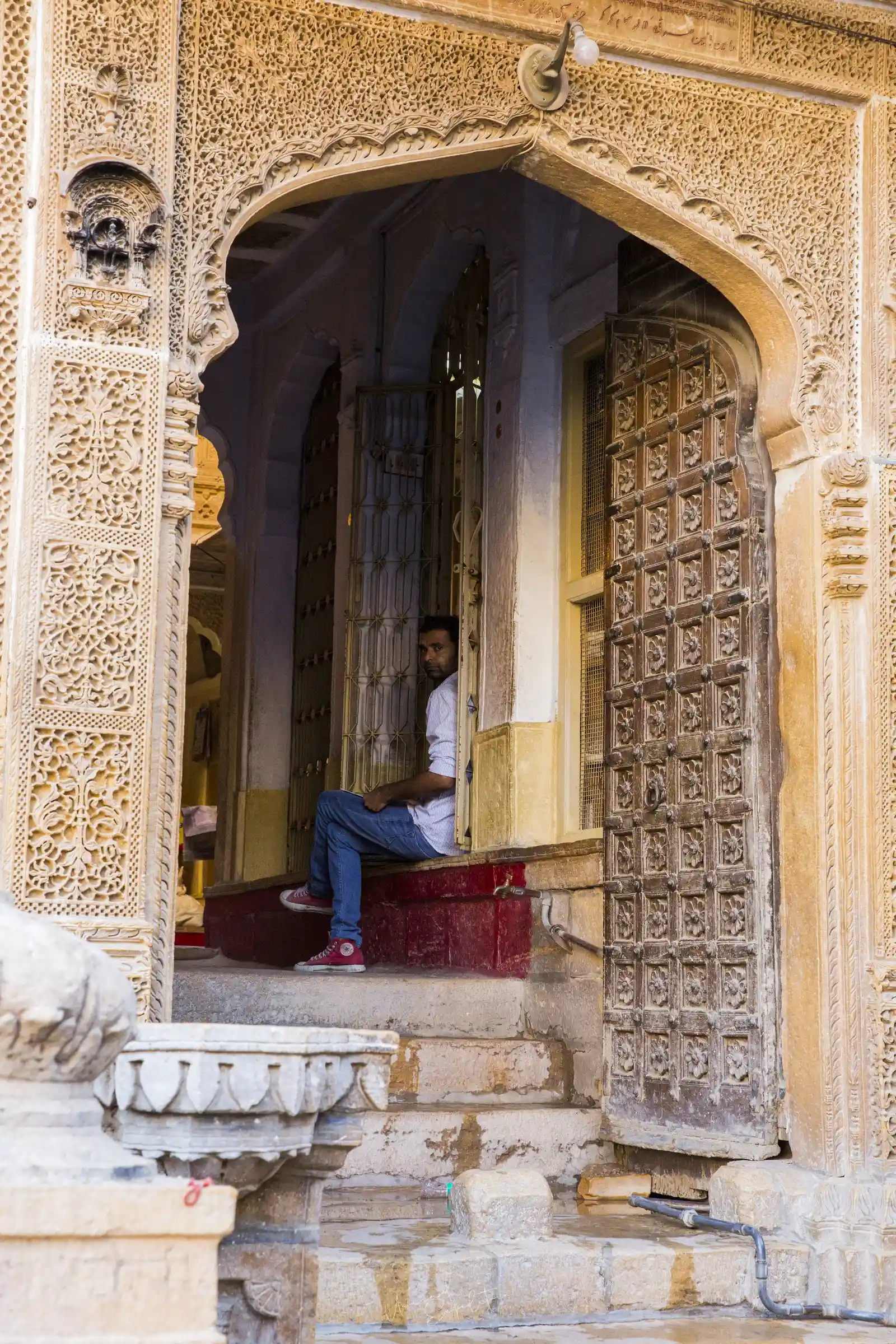
Jaisalmer's havelis are the town houses of its old merchant families, and their facades are carved into screens, balconies and brackets so fine that the stone looks like lace. The best known, Patwon ki Haveli, is a cluster of houses built by one merchant family, and Salim Singh ki Haveli and Nathmal ki Haveli are close by. The doorways are a subject in themselves: deep carved arches, heavy studded doors and steps worn smooth. Photograph the facades in soft or side light; in hard midday sun the carving goes flat. Some havelis are museums with an entry ticket, others are private homes, so check before you go in.
| Subject | Best light | Lens | Note |
|---|---|---|---|
| Fort walls from below | Sunrise and sunset | 24-70mm or 70-200mm | The whole fort turns gold |
| Lanes and doorways | Morning | 24-70mm | Warm bounce light in the shade |
| Havelis | Soft or side light | 16-35mm or 24-70mm | Carving goes flat at midday |
| Rooftops from the walls | Afternoon | 70-200mm | Patterns of flat roofs and water tanks |
| Bada Bagh | Sunset and dusk | 24-70mm | Cenotaphs on the open desert |
Jaisalmer is small enough that you can work the lanes in the morning and be at Bada Bagh for the evening.
Bada Bagh at sunset
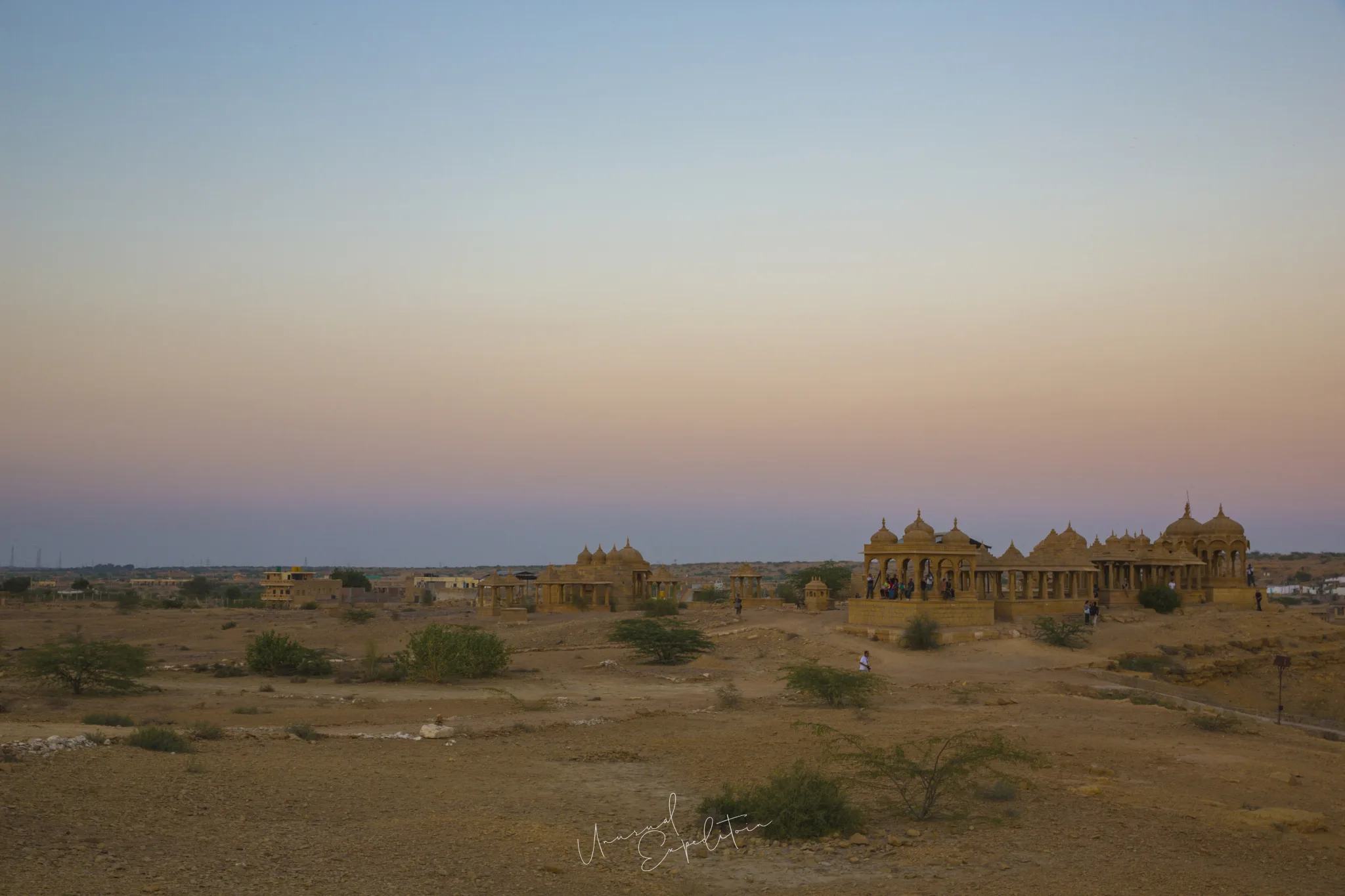
Bada Bagh is a garden of royal cenotaphs, the domed chhatris of Jaisalmer's rulers, standing on a low ridge a short way north of the town. Wikipedia's account notes that the last of them, begun for Maharawal Jawahar Singh, was never finished. At sunset the domes stand in a line against the sky, and after the sun has gone the desert turns pink and blue and the silhouettes sharpen. Arrive early to find your angle, stay well after sunset, and bring a tripod for the dusk. It is also the easiest place near town to see what the open Thar looks like.
People and trades in Jaisalmer
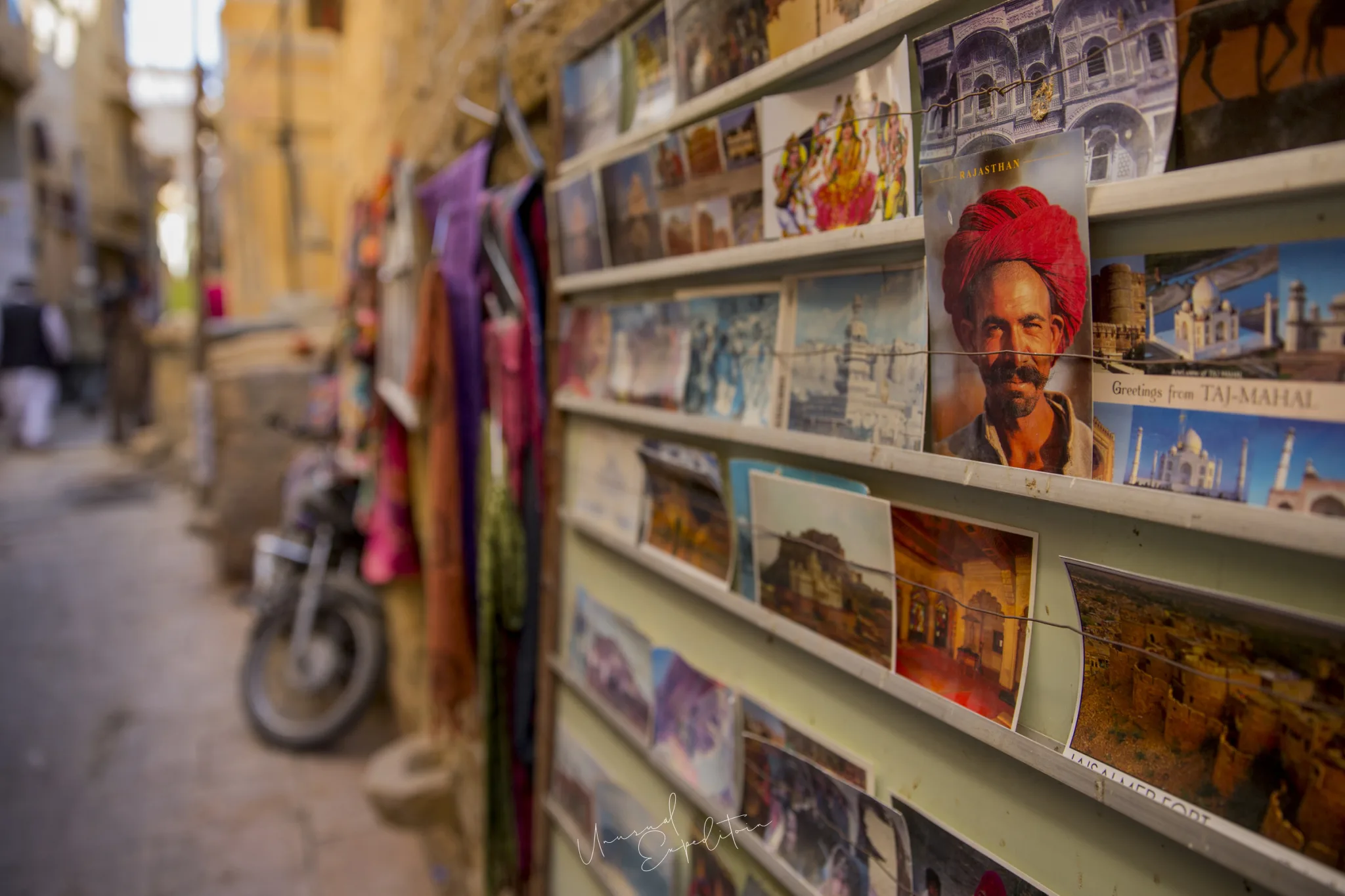
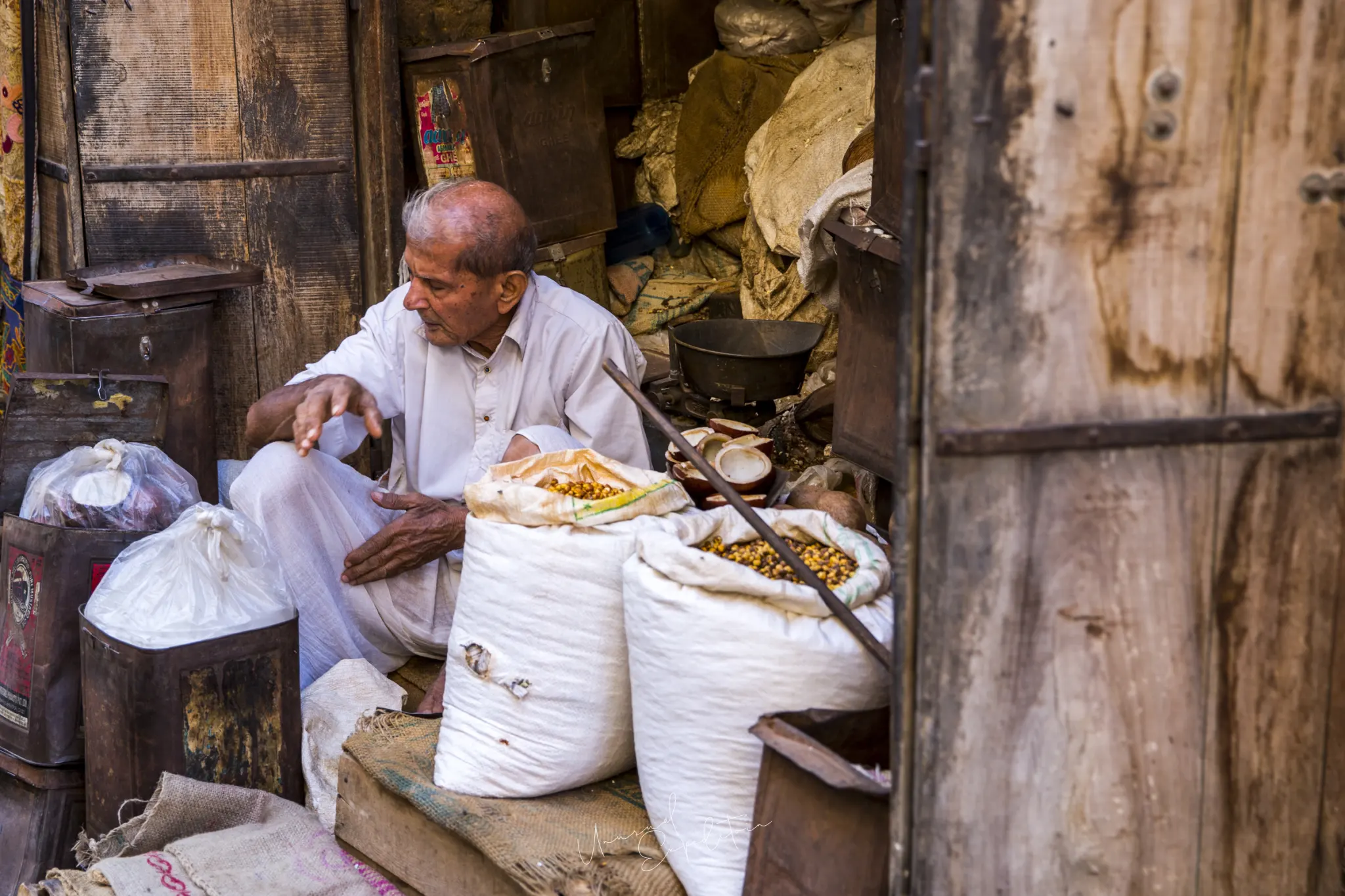
The old town works for a living, and the trades make good pictures: grain and spice sellers sitting among their sacks, tailors and jewellers, and the sellers of postcards and cloth in the lanes up to the fort. Light inside the small shops is dim and warm, so open up and raise the ISO. Ask first, buy something if you take your time, and show people the picture. As everywhere in Rajasthan, we do not photograph children.
"In Jaisalmer you only get two good windows a day, early and late, and both are short. In between, I send people into the shade of the lanes, where the stone throws the light back at you and everything is warm."
Joseph Mak, tour leader, Unusual Expedition
Is Jaisalmer worth visiting?
Jaisalmer is worth visiting if you want the desert and a town unlike any other in India; it is further out than the other Rajasthan cities, so give it a few days, not a quick stop. People often ask whether to choose Jodhpur or Jaisalmer: Jodhpur has the grander fort and the blue city, Jaisalmer the lived-in fort, the havelis and the desert. If you can, do both. Jaisalmer is on the railway network, and its airport has had domestic flights in the travel season; check current routes before you plan. The desert west of town runs towards the Pakistan border, where the UK Foreign, Commonwealth and Development Office advises against all travel within 10km of the frontier, so keep desert trips to the recognised dune areas. Our Jodhpur blue city guide shows what the other choice looks like.
Best time to visit Jaisalmer
The best time to visit Jaisalmer is the cool season, from November to February, when the days are warm and clear and the desert nights are cold. Summer here is extreme. The Desert Festival is held over a few days in the Hindu month of Magh, ending on its full moon, usually in February; check the Rajasthan Tourism calendar for the year's dates. Our best time to visit Rajasthan guide has the full year.
Photograph Jaisalmer with us
We include Jaisalmer in private Rajasthan trips on request, with the early and late light planned in and all arrangements made for you; a photographer or photography coaching can be added at extra cost. See private tours and our India photography tours page.
Rajasthan photography tours
The next Rajasthan departure is announced on the Rajasthan photography tours page, with previous expeditions and all the planning guides.
Explore Rajasthan in depth
- Rajasthan Photography Tour Guide: Jaipur, Jodhpur, Udaipur and JaisalmerIndia
- Udaipur Photography: Lake Pichola, the City Palace and the Old TownIndia
- Ranakpur Jain Temple: Marble, Light and the Villages of the Aravalli HillsIndia
- Mehrangarh Fort, Jodhpur: Sunset from the Walls and Jaswant ThadaIndia
- Jodhpur Blue City: the Lanes, the People and Why the Houses Are BlueIndia
- Best Time to Visit Rajasthan: Months, Light and FestivalsIndia
- Amber Fort Jaipur and the Hawa Mahal: Where to Stand and WhenIndia
Upcoming Photo Tours
- Egypt Photo Tour – EgyptEgypt 12 Dec 2026 To 20 Dec 2026
- Inner Mongolia Winter Owl Photo Tour – ChinaChina 01 Jan 2027 To 04 Jan 2027
- Inner Mongolia Winter Photo Tour – ChinaChina 05 Jan 2027 To 11 Jan 2027
- Mekong And Central Highland Vietnam Photo Tour - VietnamVietnam 16 Jan 2027 To 24 Jan 2027