
Mehrangarh Fort, Jodhpur: Sunset from the Walls and Jaswant Thada
Mehrangarh Fort Jodhpur for photographers: who built it, sunset on the ramparts, the palace courtyards, Jaswant Thada and Mandore.
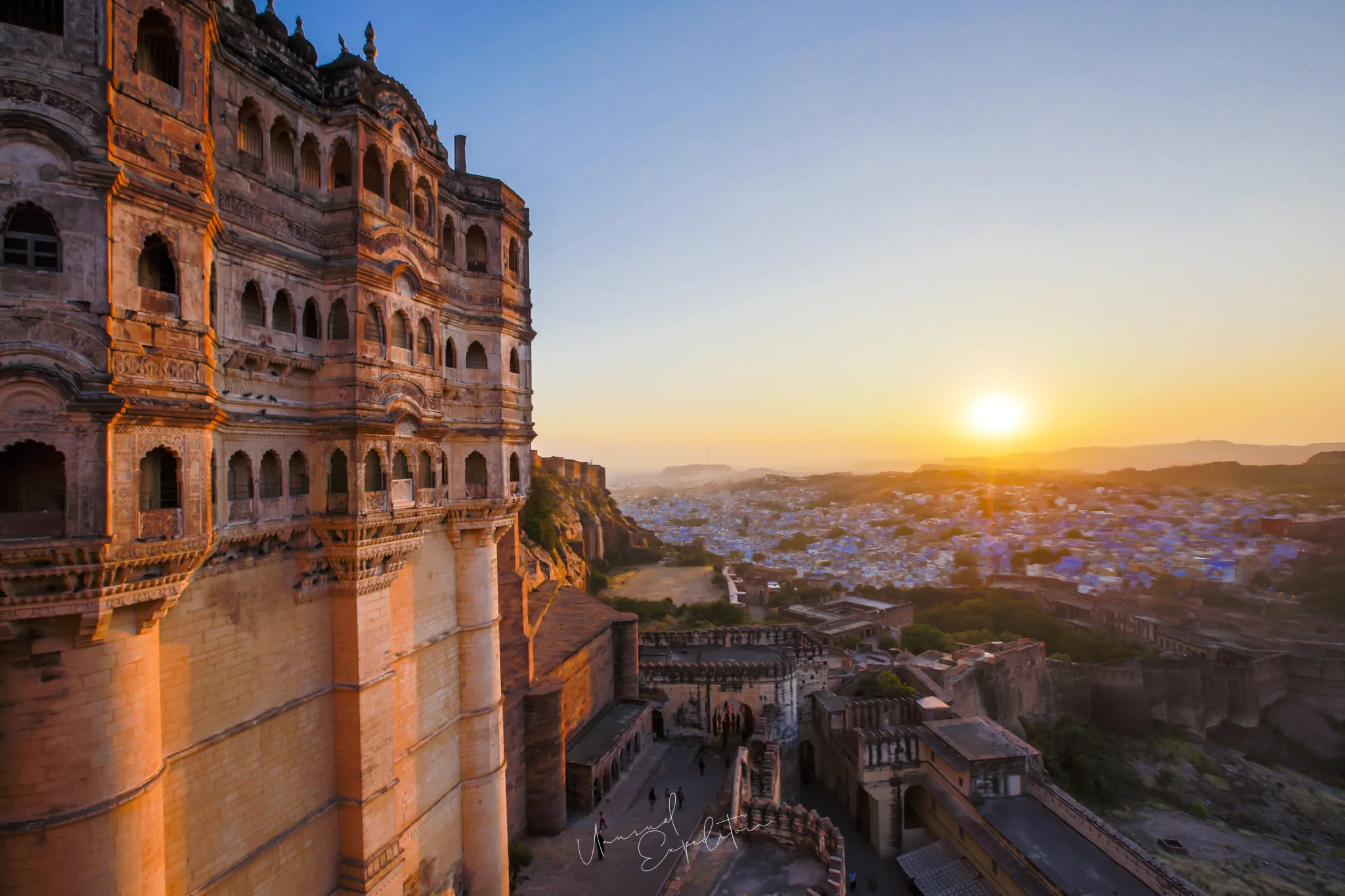
Mehrangarh Fort, Jodhpur, stands on a sheer rock ridge above the blue old town, and its best photographs come late in the day: the sandstone walls glowing orange as the sun sets beyond the old town, the white marble of Jaswant Thada below the ridge in the last light, and the fort itself seen from the rocks around it. In the morning, the palace courtyards and the approach through the gates give quieter, more intimate pictures.
Mehrangarh is the centrepiece of Jodhpur in our Rajasthan photography tour guide. The blue lanes at its foot have their own Jodhpur blue city guide; this one covers the fort, Jaswant Thada and the old capital of Mandore.
Who built Mehrangarh Fort?
Rao Jodha, the Rathore ruler of Marwar, founded Mehrangarh in 1459, when he moved his capital from Mandore to this rock and founded the city of Jodhpur below it. Wikipedia's history of the fort notes that much of what stands today was built later, as successive Maharajas added palaces, courtyards and gates over the following centuries. The fort is now run by the Mehrangarh Museum Trust, which looks after the palace rooms and their collections and publishes the visiting arrangements on its website. Little of that history needs explaining once you are under the walls: they rise straight out of the rock, and the scale does the talking.
Mehrangarh Fort Jodhpur at sunset
The sunset is the reason to time a visit to Mehrangarh Fort, Jodhpur, carefully. From the ramparts, the sun goes down beyond the old town and the plain to the west, and the carved palace walls above you turn from yellow to deep orange. A wide lens takes in the fort wall, the roofs and the sun together; a 70-200mm picks out blue houses below the walls in the side light. The densest blue, the Brahmpuri quarter, lies below the north side of the fort, so look down on it in the late afternoon before you settle on your sunset spot. Arrive with time to spare: the fort closes in the evening, and the last good light can come close to closing time, so check the hours on the Mehrangarh Museum Trust website before you plan the evening. The view of the old town from these walls is covered in more detail in the Jodhpur blue city guide.
Mehrangarh Fort photos: inside the palace
Inside the gates, the palace courtyards are a lesson in carved sandstone: screens of stone lattice, balconies stacked one above the other, and doorways opening into painted rooms. The light is best in the morning, when the courtyards are in soft shade and the crowds are thinner. The museum galleries hold palanquins, howdahs, armour and miniature paintings; check the trust's rules on photography inside the galleries, which can differ from the courtyards. Shoot the lattice screens from inside looking out, so the pattern is backlit, and from outside looking up, so it becomes a texture.
| Spot | Best light | Lens | Picture |
|---|---|---|---|
| Ramparts at sunset | Sunset | 16-35mm and 70-200mm | The fort wall and the old town in orange light |
| Palace courtyards | Morning | 24-70mm | Stone lattice, balconies, doorways |
| Jaswant Thada | Morning or late afternoon | 24-70mm | White marble, the lake, the fort behind |
| Rocks around the ridge | Morning | 24-70mm | The fort on its ridge with old pavilions in front |
| Mandore | Late afternoon | 24-70mm | Red sandstone cenotaphs and temples |
The walls want the sunset; the courtyards, the ridge and the lanes want the morning.
Jaswant Thada and Mehrangarh Fort
Jaswant Thada is the white marble memorial on the ridge below Mehrangarh. Maharaja Sardar Singh commissioned it in 1899 in memory of his father, Maharaja Jaswant Singh II, and Wikipedia's account notes that its marble sheets are thin enough to glow when the sun shines through them. Incredible India, the Government of India's tourism site, lists it as one of the main sights of the city. For photographers it works in two ways: seen from the fort walls above, a white jewel in brown rock beside its small lake, and seen from the lakeside, with the marble reflected in the water and the hills behind. Inside the gardens, the smaller cenotaphs make a frame for the main building.
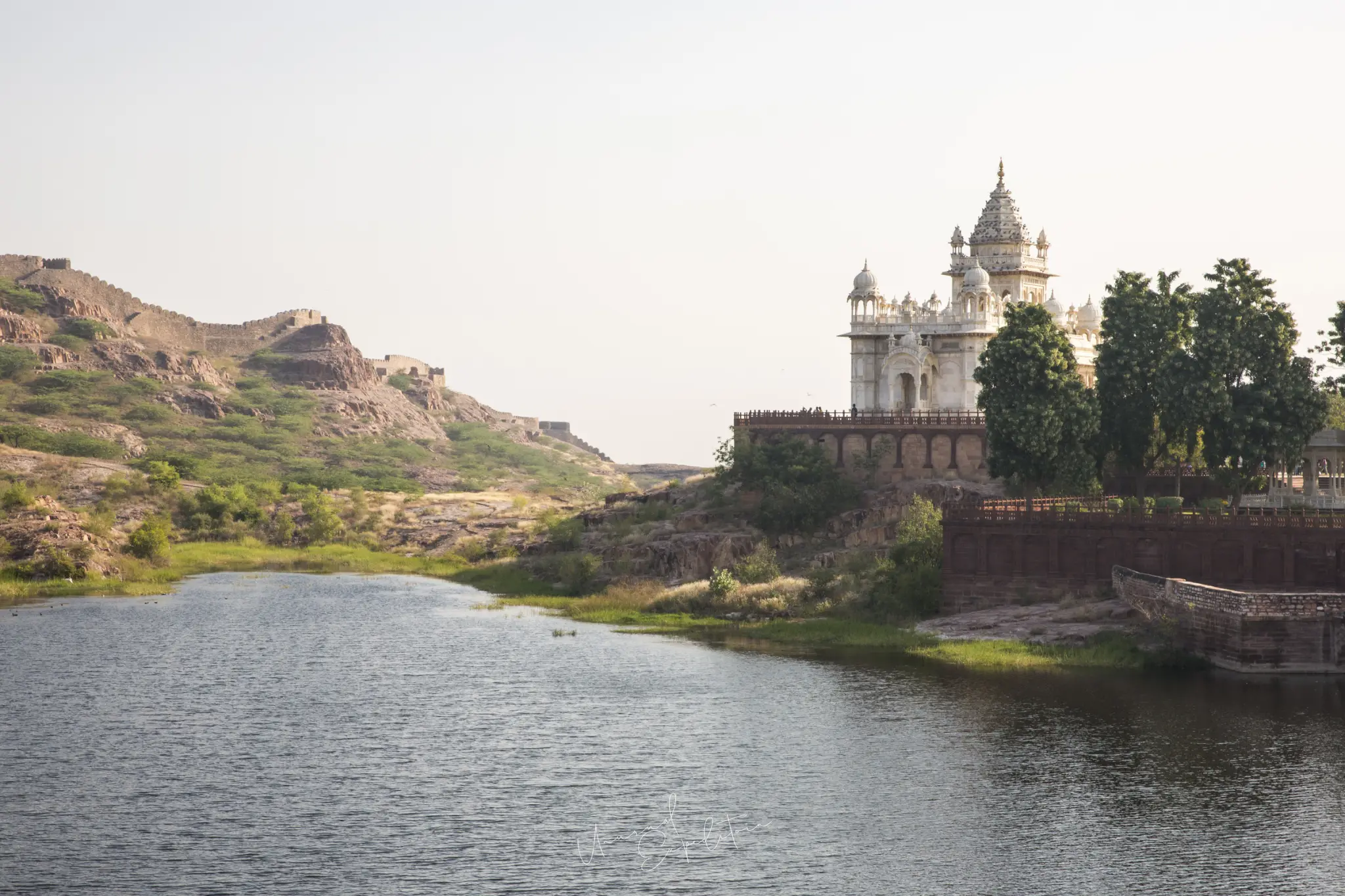
The fort from the ridge
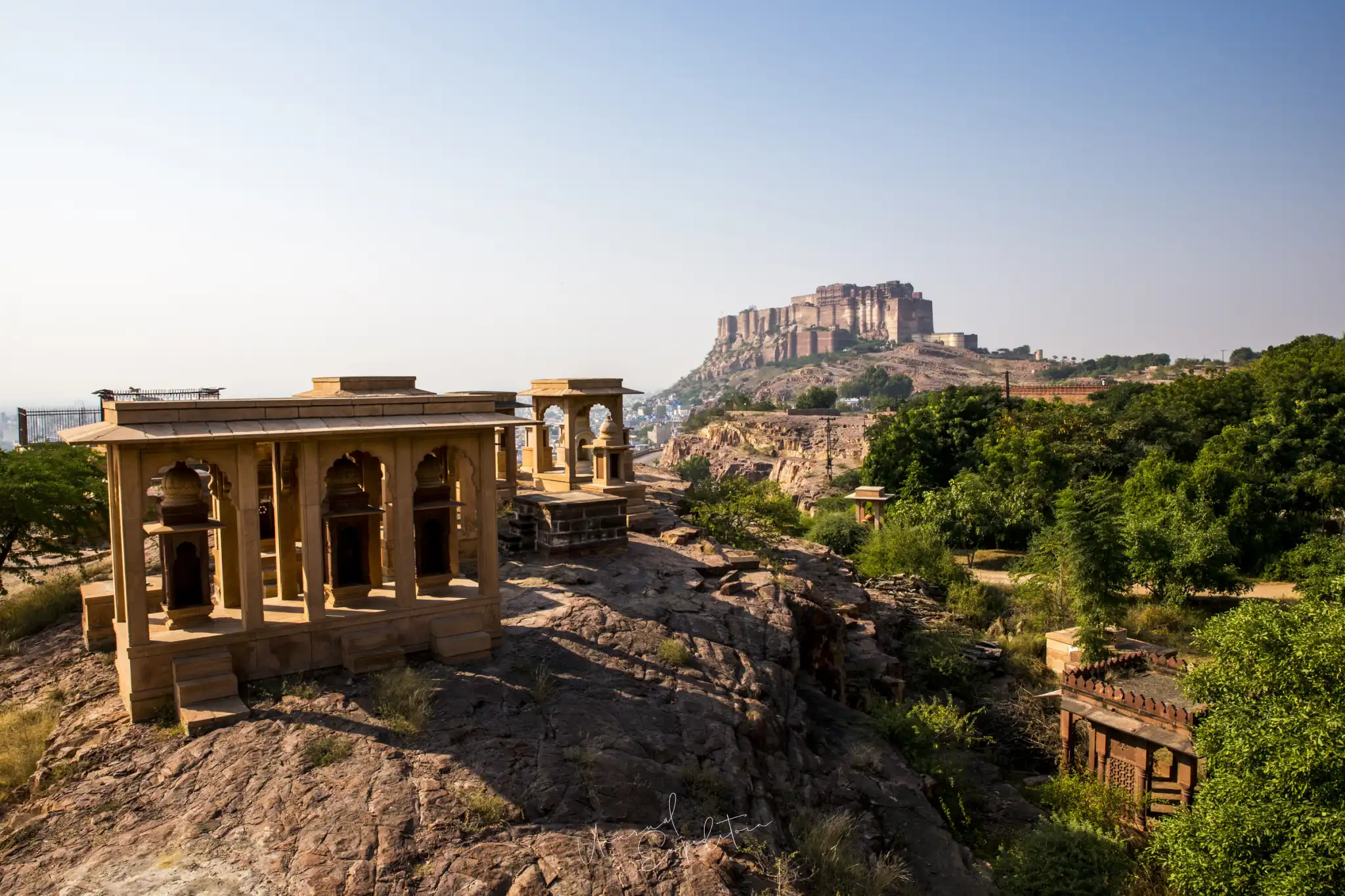
Do not spend all your time inside the walls. The rocky ground around the ridge, near Jaswant Thada, is scattered with small sandstone pavilions, and from here Mehrangarh sits on the skyline above the trees, the whole length of its walls visible at once. Seen from here, north-east of the fort, the morning sun from the east lights the fort's face and warms the rock in front of it; by late afternoon the sun has moved behind the fort and the walls fall into silhouette. Our frame was made in the middle of the morning. This is the picture that explains the fort: a palace grown out of a cliff, standing over a city.
"I plan the whole Jodhpur visit around one sunset on the fort walls. Get that right and everything else in the city can be done in the mornings, in the lanes, with no hurry."
Joseph Mak, tour leader, Unusual Expedition
Life around the fort
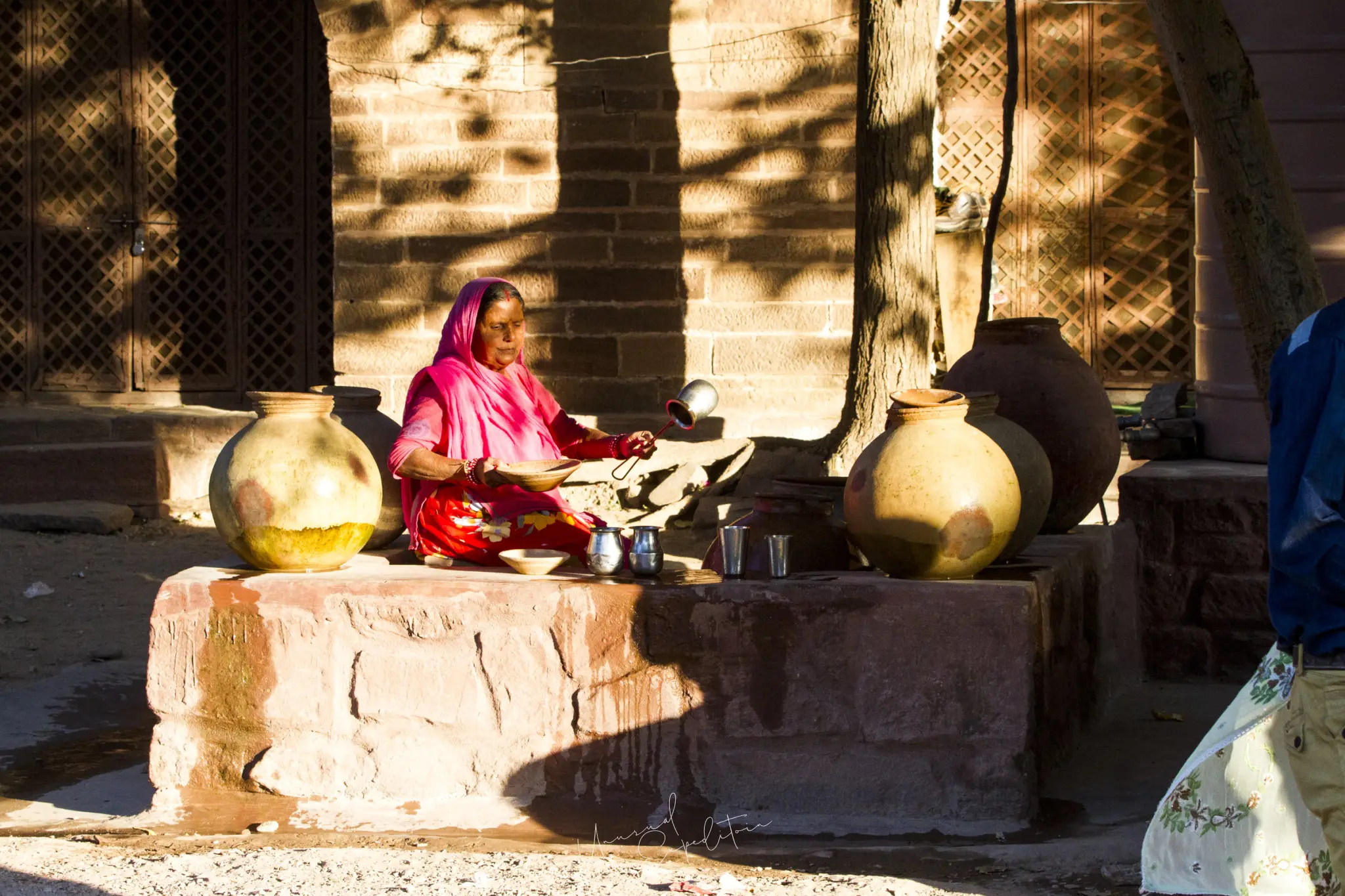
The approach to Mehrangarh climbs through a series of gates, and at the foot of the fort the old town begins straight away, so daily life is never far from the walls. Under a big tree in Jodhpur we photographed a woman keeping a public water stand, pouring water for passers-by from big clay pots: a small scene, and a good reminder to look at the people around a monument as well as the monument itself. Ask before you photograph anyone working, and accept a no.
Mandore, the old capital
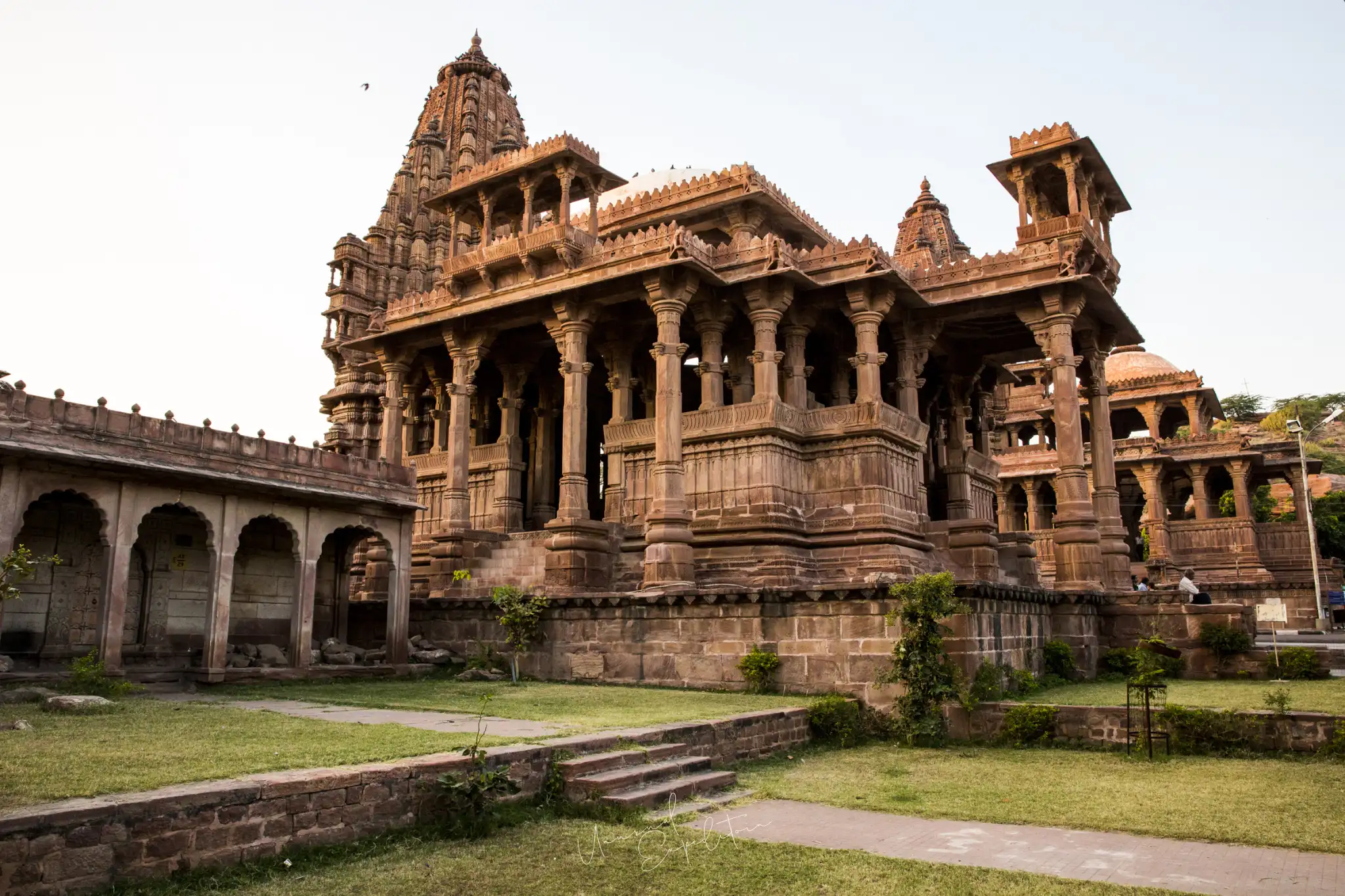
Mandore was the capital of Marwar before Rao Jodha moved to Mehrangarh. Today it is a garden on the edge of Jodhpur, filled with the cenotaphs and temples of the Rathore rulers in dark red sandstone, their spires and pillared halls carved as finely as any palace. It is quieter than the fort and the stone glows in the late afternoon. Mandore makes a good half day when the fort and the lanes are done.
Practical notes for Mehrangarh
Mehrangarh is ticketed, with separate arrangements for the museum; prices and opening hours are published by the Mehrangarh Museum Trust, and they change, so check the official source before you travel. Jaswant Thada and Mandore are separate visits with their own entry. Wear shoes you can climb in: the ramp is steep and the stone can be slippery. The cool months from November to February are the most comfortable; our best time to visit Rajasthan guide has the full year.
Photograph Mehrangarh with us
We run Jodhpur as part of private Rajasthan trips on request, timed for the sunset on the walls and the mornings in the old town, with all logistics arranged; a photographer or photography coaching can be added at extra cost. See private tours and our India photography tours page.
Ask us about Jodhpur and Mehrangarh
Rajasthan photography tours
The next Rajasthan departure is announced on the Rajasthan photography tours page, with previous expeditions and all the planning guides.
Explore Rajasthan in depth
- Rajasthan Photography Tour Guide: Jaipur, Jodhpur, Udaipur and JaisalmerIndia
- Udaipur Photography: Lake Pichola, the City Palace and the Old TownIndia
- Ranakpur Jain Temple: Marble, Light and the Villages of the Aravalli HillsIndia
- Jodhpur Blue City: the Lanes, the People and Why the Houses Are BlueIndia
- Jaisalmer Photography: the Golden Fort, the Havelis and Bada BaghIndia
- Best Time to Visit Rajasthan: Months, Light and FestivalsIndia
- Amber Fort Jaipur and the Hawa Mahal: Where to Stand and WhenIndia
Upcoming Photo Tours
- Egypt Photo Tour – EgyptEgypt 12 Dec 2026 To 20 Dec 2026
- Inner Mongolia Winter Owl Photo Tour – ChinaChina 01 Jan 2027 To 04 Jan 2027
- Inner Mongolia Winter Photo Tour – ChinaChina 05 Jan 2027 To 11 Jan 2027
- Mekong And Central Highland Vietnam Photo Tour - VietnamVietnam 16 Jan 2027 To 24 Jan 2027