
Jodhpur Blue City: the Lanes, the People and Why the Houses Are Blue
Jodhpur blue city for photographers: why the houses are blue, where the blue is, the view from the fort and a blue city walk in the lanes.
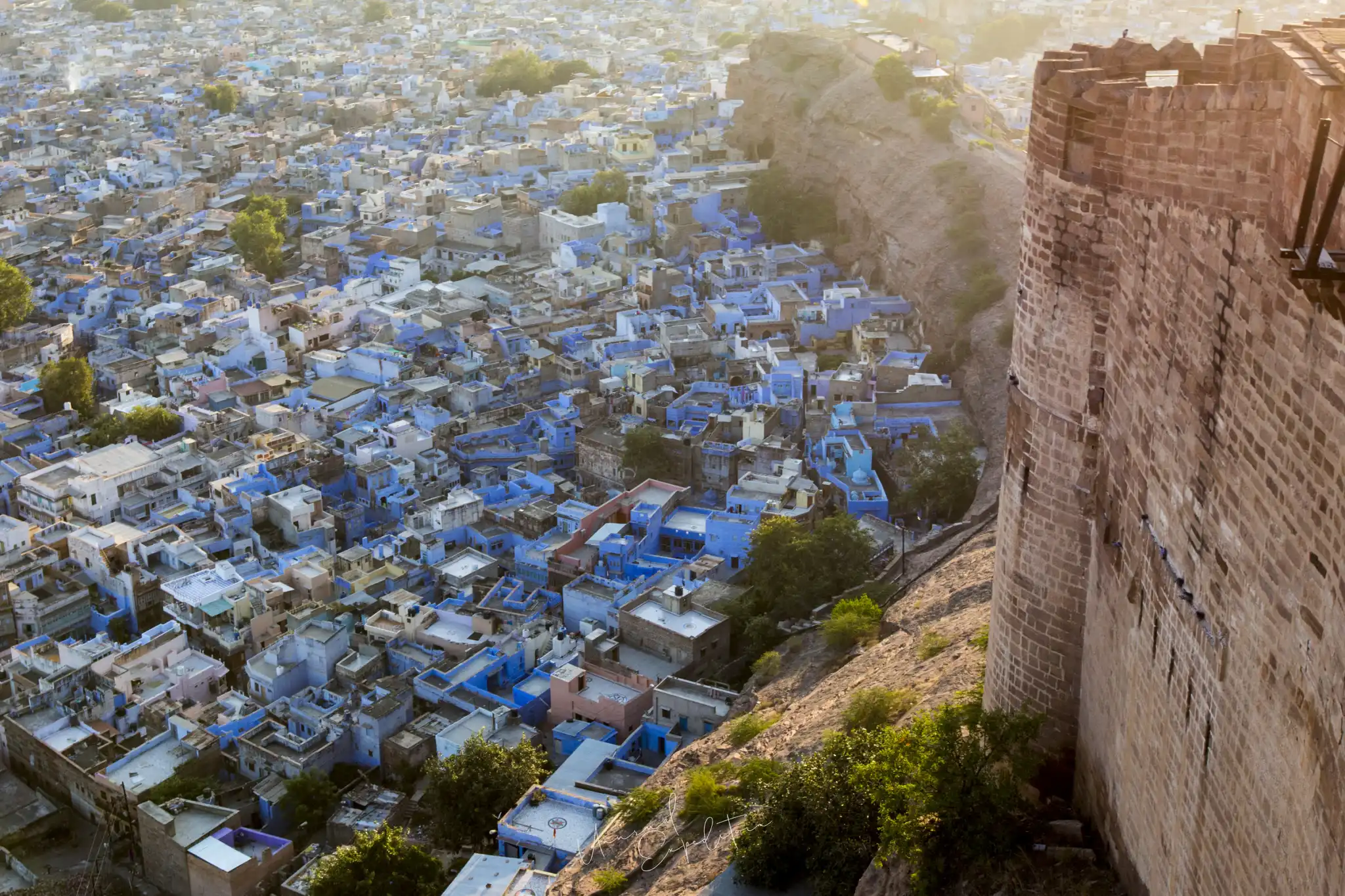
The Jodhpur blue city is the old town packed below Mehrangarh Fort, where house after house is washed in shades of indigo, sky blue and turquoise. For photographers it gives two pictures: the view straight down into a sea of blue cubes from the fort's ramparts, and the lanes themselves, where blue walls, painted doors and the people who live behind them make some of the best street photography in Rajasthan.
Jodhpur as a whole sits in our Rajasthan photography tour guide, and the fort above the old town has its own Mehrangarh Fort guide. Down here, in the blue lanes, the subject is the people.
Why is Jodhpur called blue city?
Jodhpur is called the blue city because of the colour of its old town, and nobody knows for certain why the houses are blue. Atlas Obscura sets out the usual explanations. The best known is that Brahmin families, the priestly caste, painted their homes blue to mark them out, and that other families followed until the colour spread across the old quarter. Another holds that copper sulphate added to the lime wash kept termites away and turned the walls blue. Others say the blue keeps houses cooler in the heat, or link the colour to Shiva. Whatever the reason, the colour is a living habit: walls are repainted, and the blues range from almost white to deep ultramarine, often on the same street.
Where is the blue in the Jodhpur blue city?
The blue belongs to the old walled town, not to modern Jodhpur. The densest blue lies on the slopes directly below Mehrangarh, in the old Brahmin quarter known as Brahmpuri and the lanes around it; Wikipedia's entry on Brahmpuri describes it as the heart of the blue city. Walk away from the fort and the blue thins out into yellows, pinks and plain plaster. That matters for planning: you do not need to cross the city to find the colour. Start at the foot of the fort and work downhill, and the best of the blue is all within walking distance.
The blue city from the fort walls
The most famous picture of the Jodhpur blue city is taken from above. From the ramparts of Mehrangarh you look straight down onto flat roofs, stairways and courtyards, all in blue, with the city fading into haze towards the horizon. A 70-200mm compresses the houses into a pattern; a wider lens takes in the wall of the fort beside you, as in the photograph at the top of this page. We go up in the late afternoon, when the low sun picks out the roofs and stairways, and stay for the sunset; the Mehrangarh Fort guide covers the sunset from the walls.
A blue city walk in Jodhpur
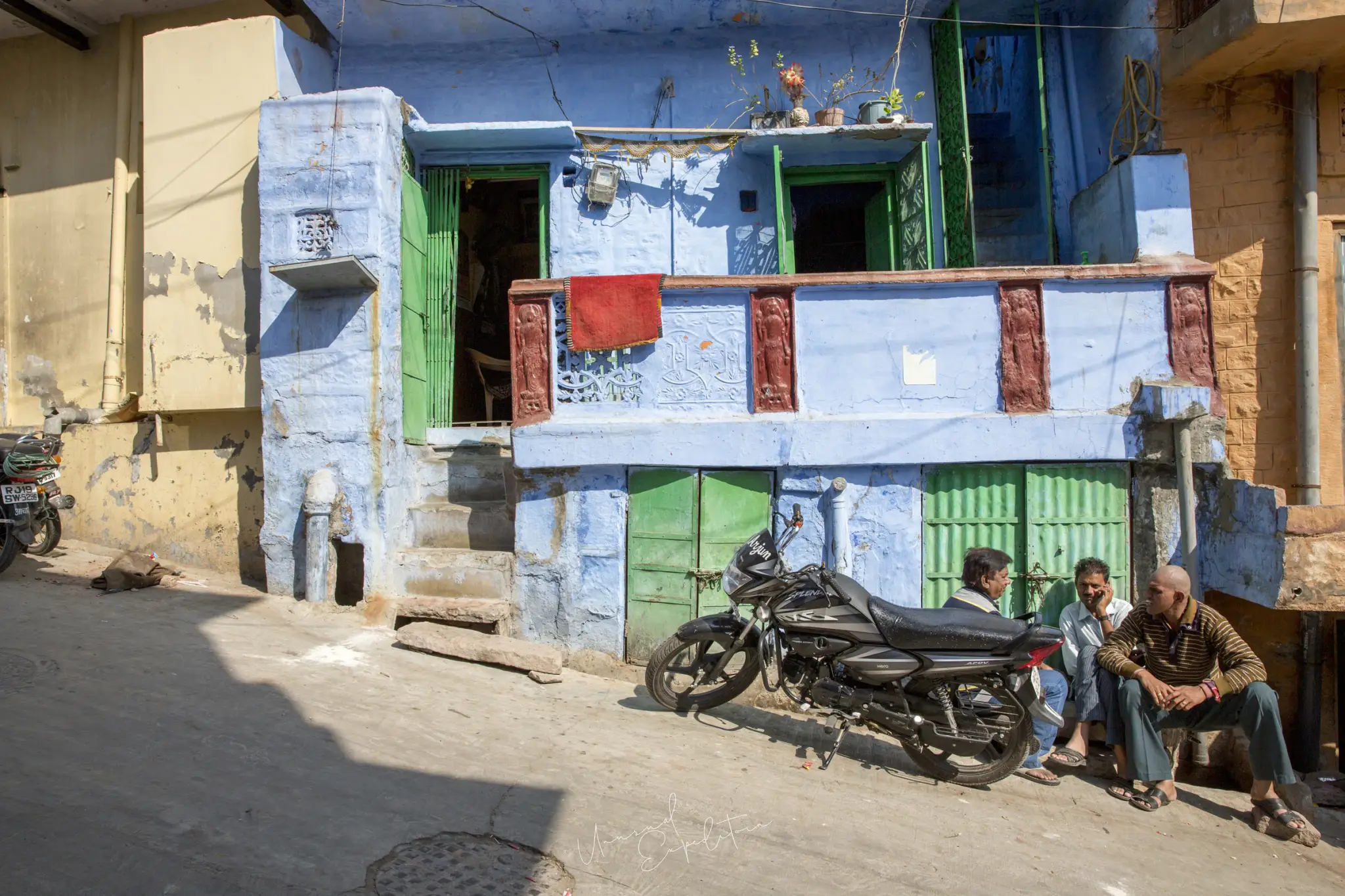
A blue city walk in Jodhpur is best in the morning, when the lanes are in soft shade and daily life is at the doorsteps. The lanes are narrow, steep in places and shared with motorbikes, cows and handcarts, so carry one body and one lens: a 24-70mm does nearly everything. Blue walls bounce a cool light into shaded faces and doorways, which makes portraits easy, and the sun finds its way into the wider lanes by mid morning. Walk slowly, look up at the balconies and painted window frames, and come back along the same lanes on another day. Local guides offer blue city walks if you want company and introductions.
| Where | What to photograph | Best light |
|---|---|---|
| Mehrangarh ramparts | The blue roofs from above | Late afternoon to sunset |
| Brahmpuri and the lanes below the fort | Blue walls, doors, stairways, daily life | Morning shade |
| Shop fronts and workshops | Tailors, basket makers, shopkeepers | Mid morning, open shade |
| The clock tower bazaar | Market life, spices, crowds | Morning and late afternoon |
The lanes and the ramparts want opposite ends of the day, so give the blue city a morning and an evening.
The people of the blue city
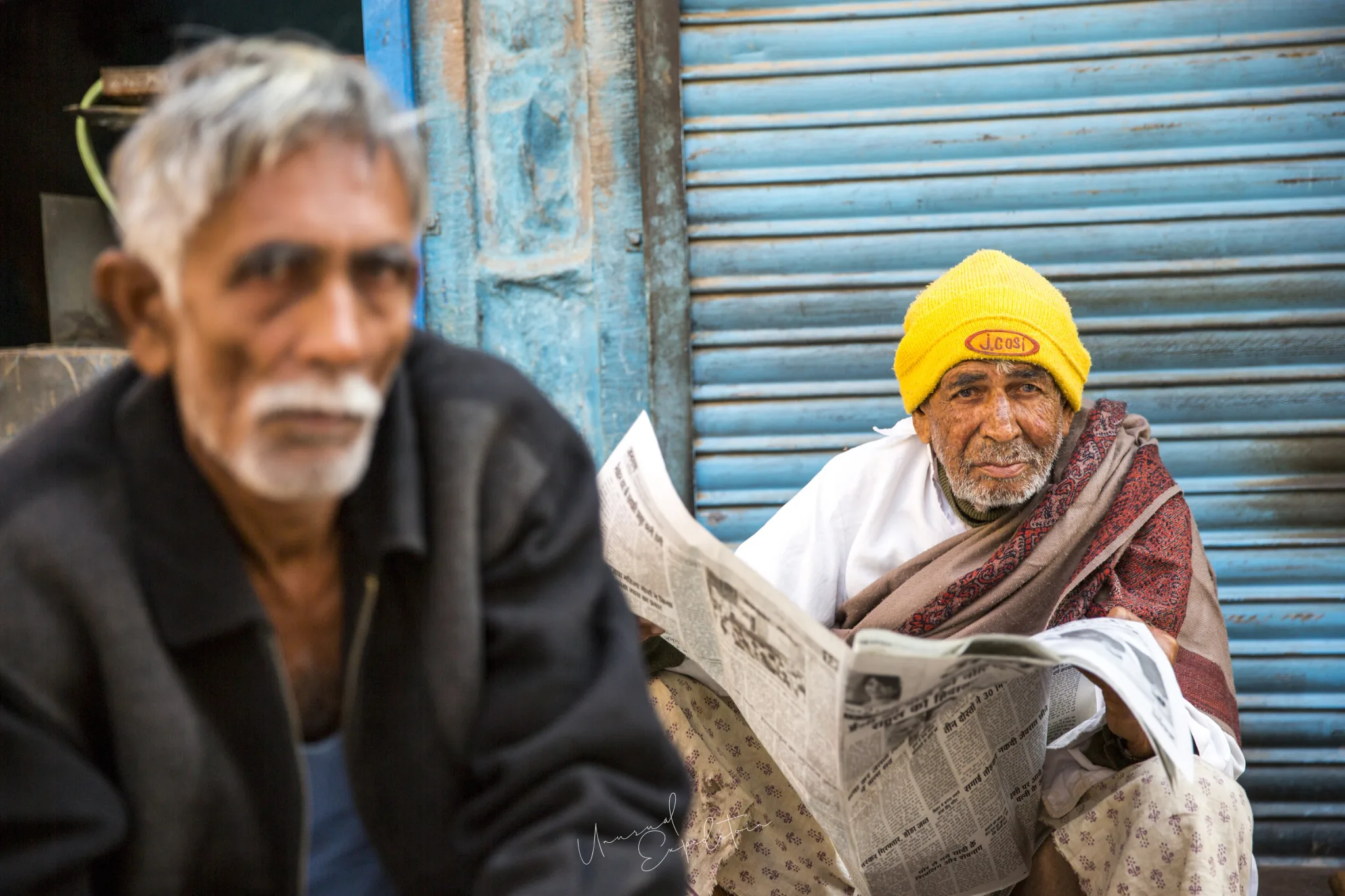
The people are what turn the blue into pictures. Old men sit on the steps outside their doors reading the newspaper, shopkeepers wait in the shade of their shutters, and women carry water and shopping up the lanes. Most people in the old town are used to cameras and many enjoy being photographed, but always greet first and ask with a gesture. Show the picture afterwards. Some will say no, and women in particular may turn away; respect it and move on. We do not photograph children, and we suggest you do not either.
Crafts and shops in the lanes
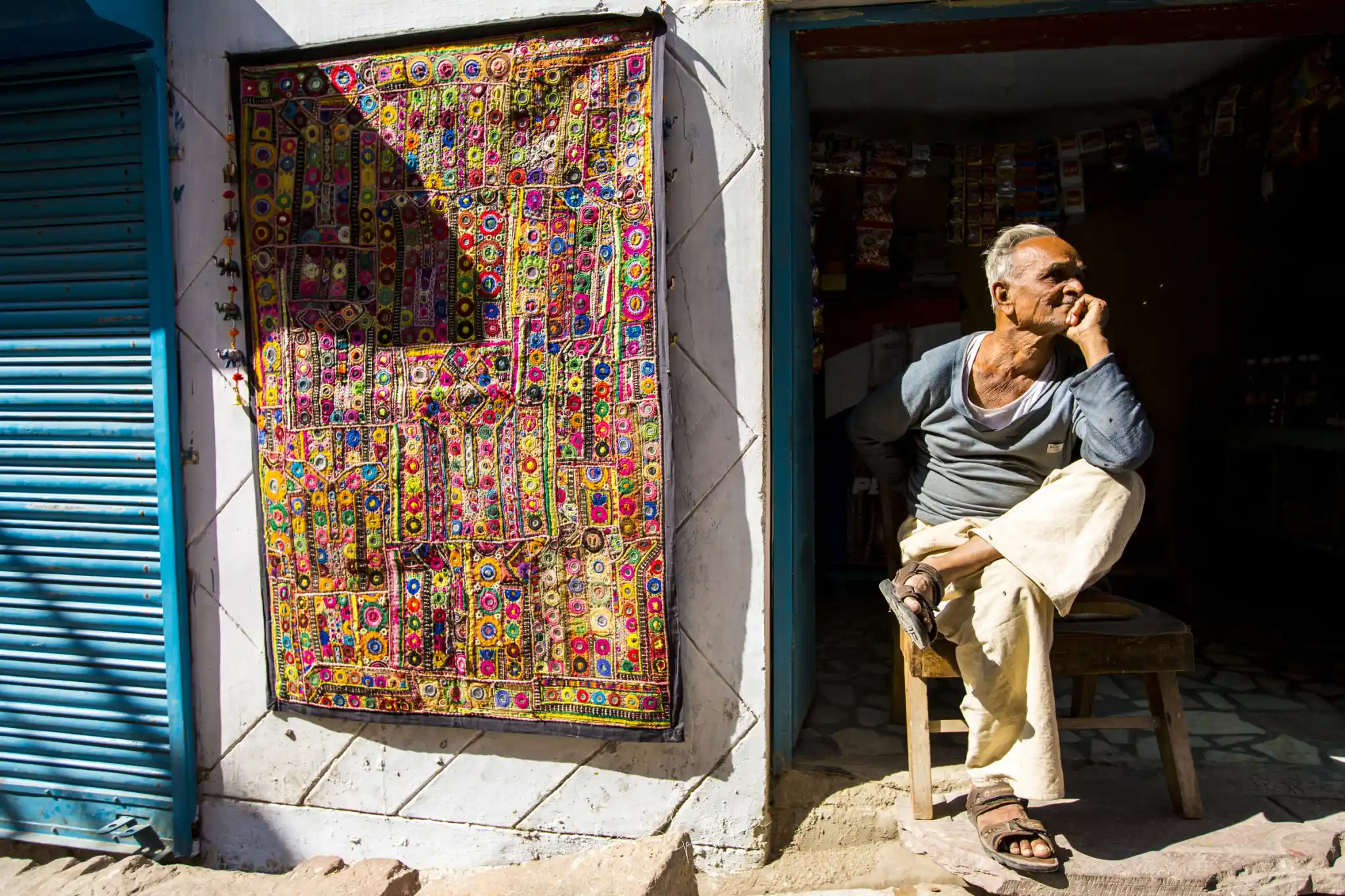
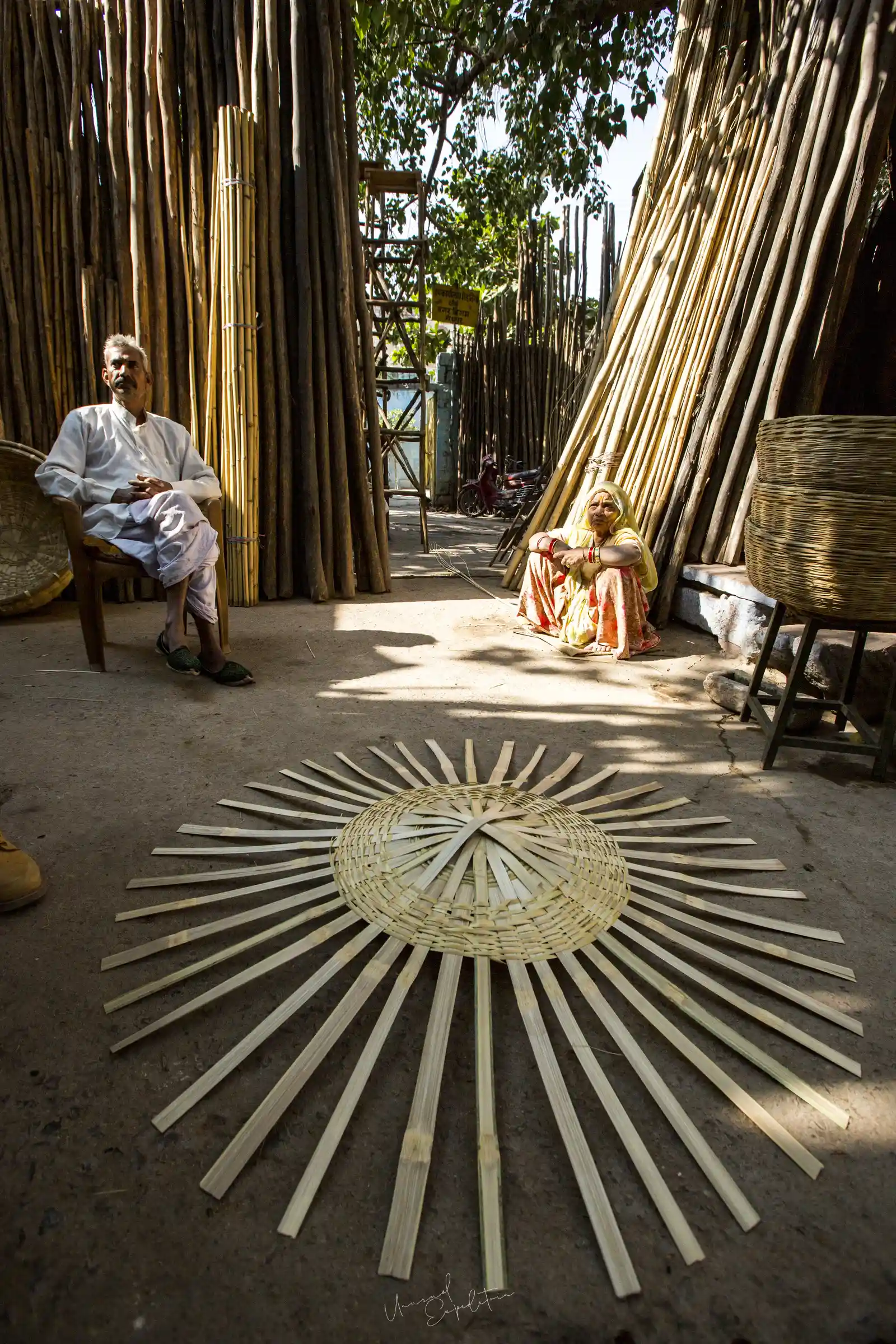
The old town still works. Tailors sit at their machines in open-fronted rooms, small shops hang embroidered cloth in their doorways, and in one lane we found basket makers laying out bamboo strips in a star on the ground. These workshops make good pictures in open shade, where the light is even and the colours hold. Buy something small if you spend time in a shop: it is the easiest way to say thank you. The embroidery and mirror-work hangings sold here make strong backdrops for a portrait of the person selling them.
"The blue city is not a postcard, it is a neighbourhood. The first morning people watch you; by the second they nod; by the third the man with the newspaper is waving you over. That is when Jodhpur starts to give you pictures."
Joseph Mak, tour leader, Unusual Expedition
What Jodhpur is famous for
Jodhpur is famous for Mehrangarh, one of the most imposing forts in India; for its blue old town; for the white marble memorial of Jaswant Thada; and as the old capital of Marwar, the kingdom of the Rathore rulers. It gave its name to the riding breeches, and its spice and textile bazaars around the clock tower are busy from morning to night. Incredible India, the Government of India's tourism site, lists the fort and Jaswant Thada among the city's sights. For photographers, the combination of a great fort and a lived-in old town directly below it is what sets Jodhpur apart from Jaipur.
When to photograph the blue city
The cool months from November to February are the most comfortable for long walks in the lanes, and the low winter sun keeps the light gentle for longer. Summer is very hot, and the old town is hard work in the middle of the day at any time of year. Our best time to visit Rajasthan guide has the months in detail, and the Udaipur photography guide covers the other old town in Rajasthan that rewards a slow walk.
Walk the blue city with us
We include Jodhpur in private Rajasthan trips on request, with mornings in the lanes and evenings on the fort walls, and all arrangements made for you; a photographer or photography coaching can be added at extra cost. See private tours and our India photography tours page.
Rajasthan photography tours
The next Rajasthan departure is announced on the Rajasthan photography tours page, with previous expeditions and all the planning guides.
Explore Rajasthan in depth
- Rajasthan Photography Tour Guide: Jaipur, Jodhpur, Udaipur and JaisalmerIndia
- Udaipur Photography: Lake Pichola, the City Palace and the Old TownIndia
- Ranakpur Jain Temple: Marble, Light and the Villages of the Aravalli HillsIndia
- Mehrangarh Fort, Jodhpur: Sunset from the Walls and Jaswant ThadaIndia
- Jaisalmer Photography: the Golden Fort, the Havelis and Bada BaghIndia
- Best Time to Visit Rajasthan: Months, Light and FestivalsIndia
- Amber Fort Jaipur and the Hawa Mahal: Where to Stand and WhenIndia
Upcoming Photo Tours
- Egypt Photo Tour – EgyptEgypt 12 Dec 2026 To 20 Dec 2026
- Inner Mongolia Winter Owl Photo Tour – ChinaChina 01 Jan 2027 To 04 Jan 2027
- Inner Mongolia Winter Photo Tour – ChinaChina 05 Jan 2027 To 11 Jan 2027
- Mekong And Central Highland Vietnam Photo Tour - VietnamVietnam 16 Jan 2027 To 24 Jan 2027