
Ranakpur Jain Temple: Marble, Light and the Villages of the Aravalli Hills
Ranakpur Jain temple for photographers: the pillared marble halls, light and lenses, rules for visitors, and village life on the road.
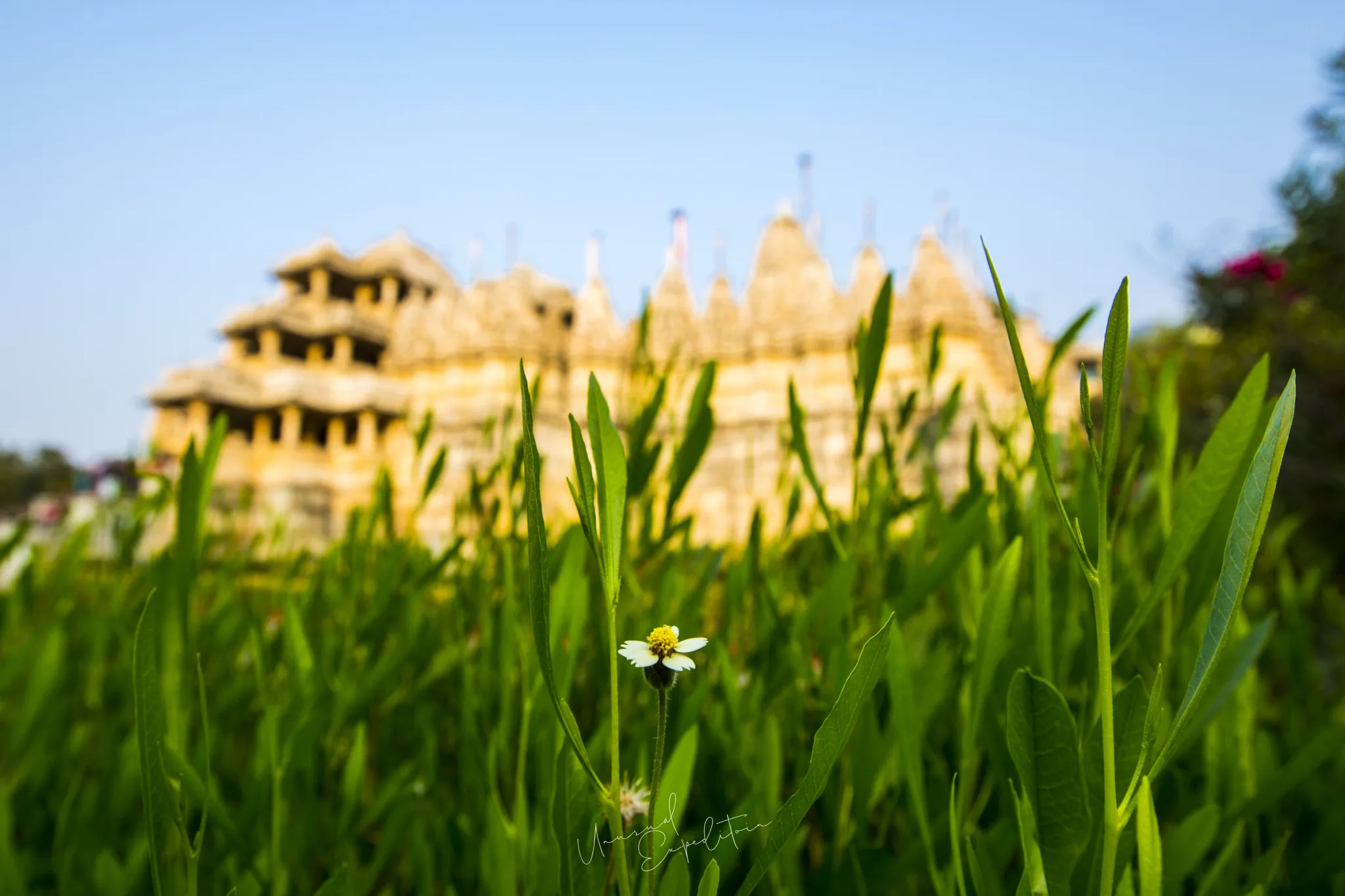
The Ranakpur Jain temple is a fifteenth-century temple of white marble in the Aravalli hills of southern Rajasthan, famous for its forest of carved pillars, said to number 1,444 and no two alike. For photographers it is a study in light and stone: sun falling through open domes onto marble floors, worshippers among the columns, and carving at every scale. It sits on the country roads between Udaipur and Jodhpur, and the villages on the way are worth photographing too.
Ranakpur is part of our Rajasthan photography tour guide, which covers the four cities around it. The temple is a place of worship first, so how you photograph it matters as much as where; the villages on the same roads come at the end.
Ranakpur Jain temple history
The main temple at Ranakpur is the Chaumukha, or Chaturmukha, temple, dedicated to the first Jain Tirthankara, Adinatha, and built with four faces, one to each direction. Wikipedia's account of the temple says that construction began in the fifteenth century under a Jain merchant, Dharna Shah, with the support of Rana Kumbha, the ruler of Mewar, and that the temple stands on 1,444 carved marble pillars. Incredible India, the Government of India's tourism site, describes the carving as among the finest in the country. The temple is a living place of worship, not a museum: Jain pilgrims come to pray, and the morning is kept for worship before visitors are let in.
Ranakpur Jain temple pillars: photographing the halls
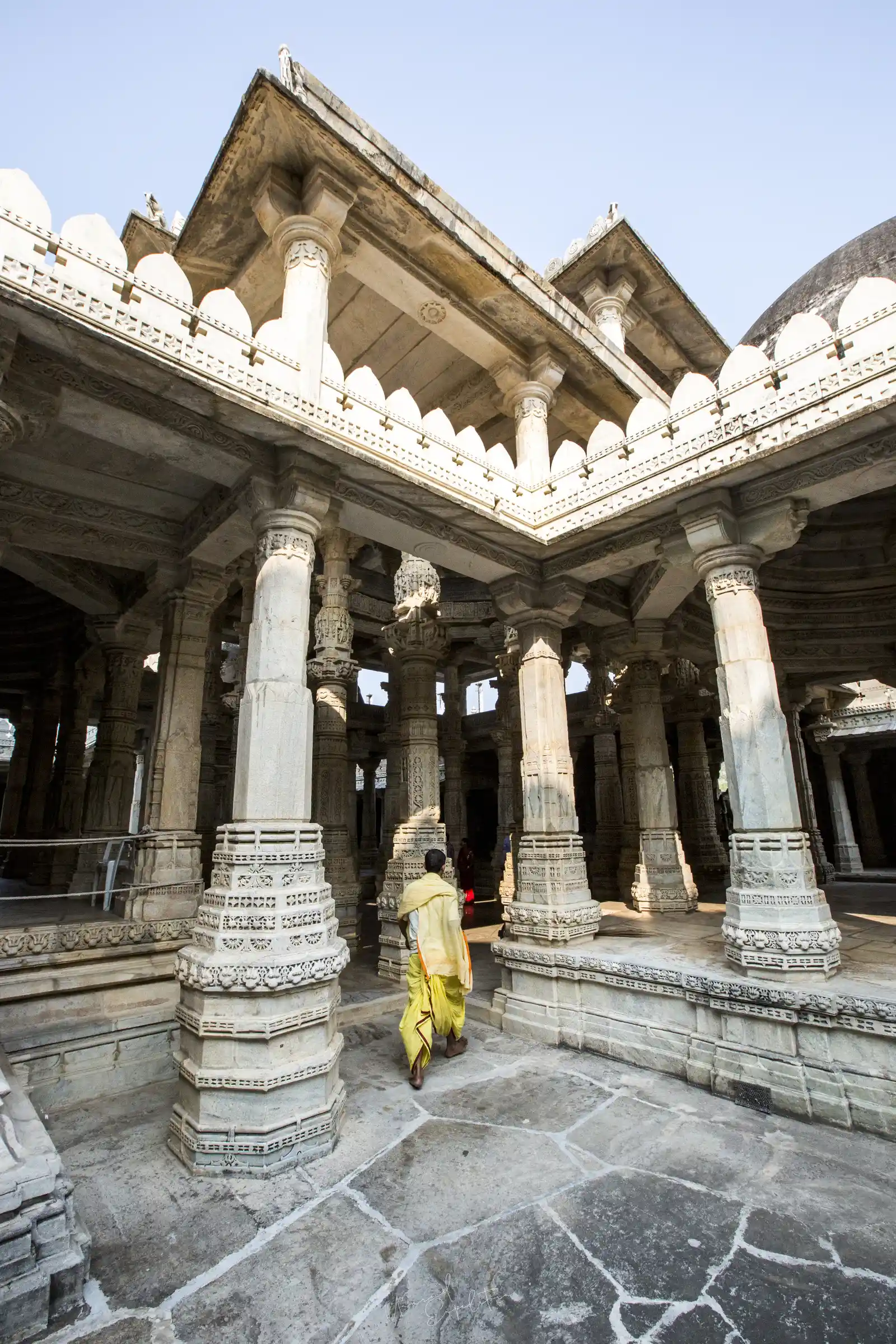
Inside, the temple opens out into halls and courtyards, and every view is a corridor of pillars. The light is what makes the pictures. Open domes and courtyards let the sun fall in shafts onto the white marble, and the floors and columns bounce it into the shadows, so the light inside is soft and even, with bright pools where the sun reaches. A 24-70mm or a wider lens takes in the rhythm of the columns; look for a figure in coloured clothes among them to give the scale and the only colour in the frame. Expose for the bright marble and let the darker corners fall away.
Ranakpur Jain temple timings and rules for visitors
Ranakpur is a Jain temple, and the rules follow Jain practice. Visitors dress modestly, with shoulders and knees covered; leather goods such as belts, bags and camera straps are not allowed inside, so carry a fabric strap and bag. Shoes are left at the entrance. Visiting hours for non-Jains are limited and travel guides disagree on them, and cameras and phones may need a ticket: check the visiting hours and the camera rules at the temple before you go. Inside, never photograph a person at prayer without permission, keep away from the inner sanctum, and keep your voice down. A tripod is likely to be refused.
| Subject | Light | Lens | Note |
|---|---|---|---|
| Pillared halls | Afternoon sun through the domes | 16-35mm or 24-70mm | Expose for the marble |
| Carved ceilings and pillars | Open shade | 24-70mm | Look straight up into the domes |
| Worshippers | Soft light at the doorways | 70-200mm | Only with permission, never in the sanctum |
| The temple exterior | Late afternoon | 24-70mm | Spires against the hills |
| Villages on the road | Morning | 24-70mm | Wells, fields, celebrations |
The temple is an afternoon subject for visitors, which leaves the mornings for the countryside.
Worship at Ranakpur
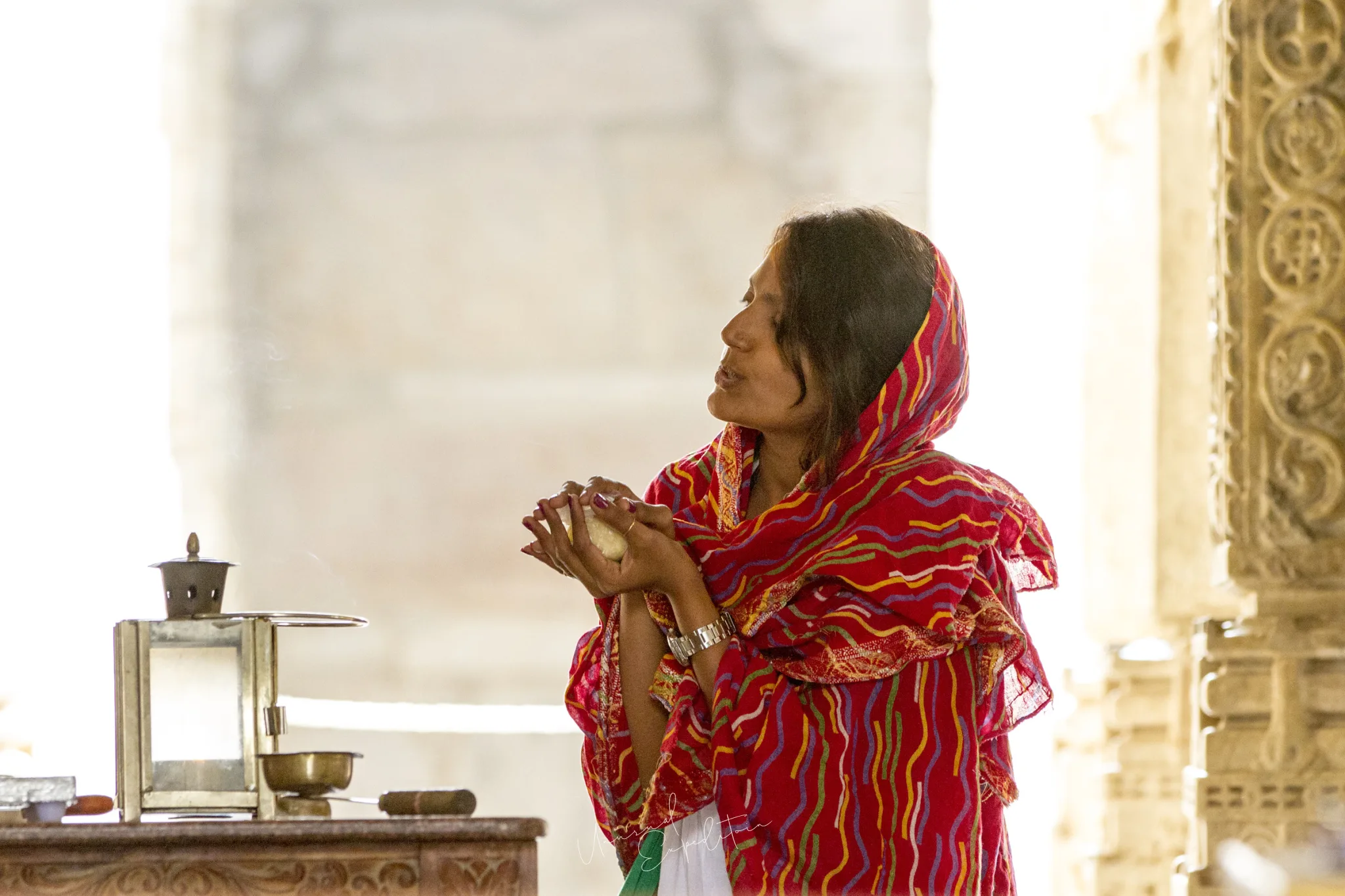
The most moving pictures at Ranakpur are of the temple in use. Pilgrims bring offerings, light lamps and pray among the columns, and some will let you photograph them once they have finished, if you ask quietly. The frame below, of a woman praying beside a lamp in a side hall, was taken from a respectful distance with a 70-200mm, which keeps you out of the way. Do not follow anyone with a camera, and if you are unsure, put it down.
The temple from outside
From outside, the Chaumukha temple is a hill of stepped roofs, domes and spires in pale stone, set in a green valley. The grounds give you room to work it from several sides, and a low angle through the grass or the trees softens the foreground. Late afternoon light warms the stone. Other, smaller temples stand close by, including a temple to the sun god, if you have time after the main temple.
"Ranakpur is the quietest hour of a Rajasthan trip. After the noise of the cities, people go inside and just stop. I tell them to put the camera down for a while and look at the light moving across the marble, then start."
Joseph Mak, tour leader, Unusual Expedition
Village life on the road to Ranakpur
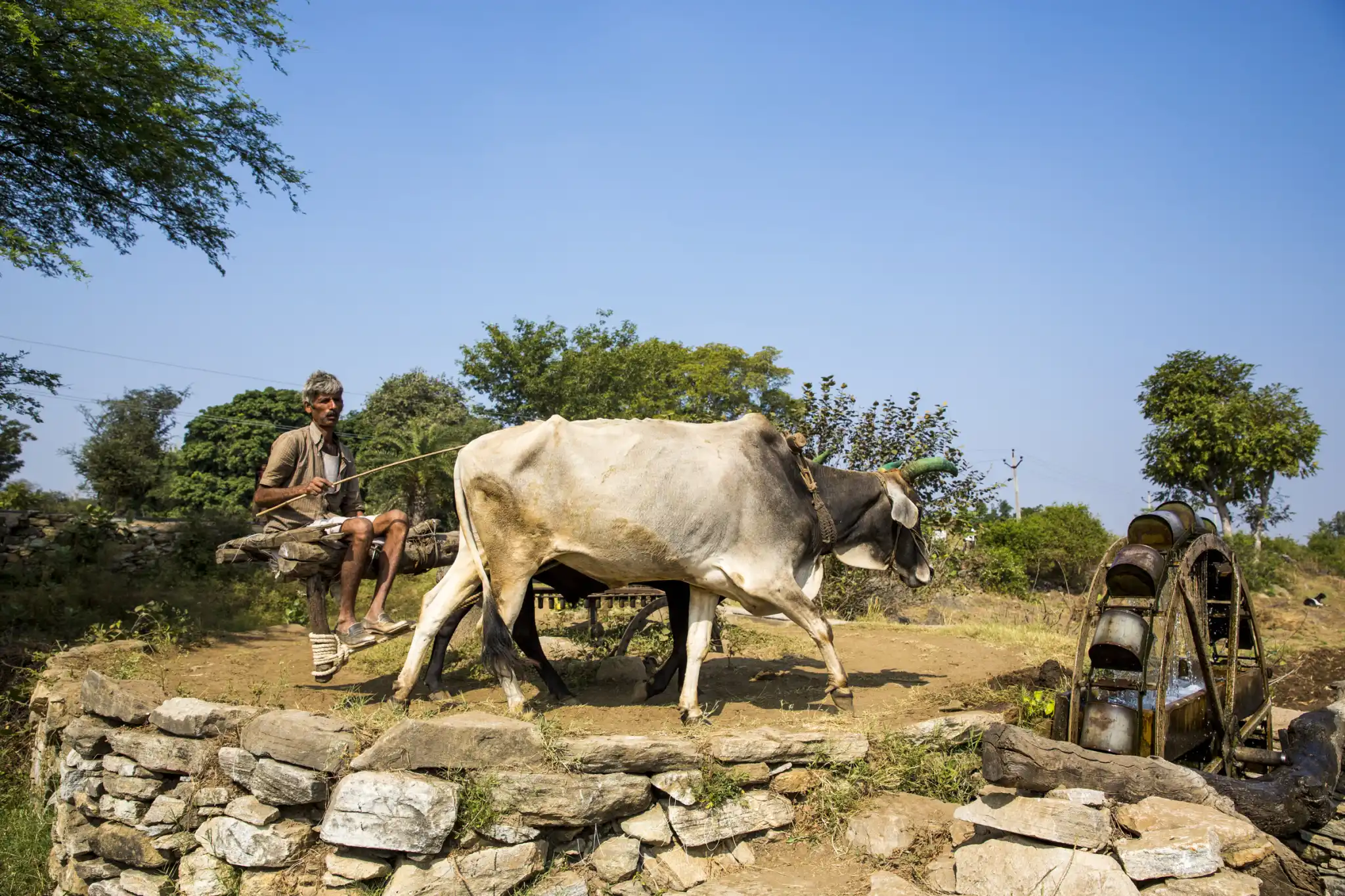
The country around Ranakpur is the Rajasthan of small farms and stone-walled fields. On our way to the temple we photographed a farmer driving an ox round an old water wheel, lifting water from a well into the fields in the old way. On the same morning, in a village on the road, a celebration filled the square with drummers and cymbal players in bright turbans, and women danced in a circle in their best saris. Village celebrations are open, but they are private occasions: stand at the edge, smile, wait to be waved in, and never photograph anyone who turns away. The best time to visit Rajasthan guide has more on the wedding and festival seasons.
How to get to Ranakpur
Ranakpur lies in the Pali district of Rajasthan, in the hills between Udaipur and Jodhpur, and most visitors come by road on the way from one city to the other. There is no airport or main railway station in the village itself; Udaipur and Jodhpur have the nearest airports. Many visitors combine it with Kumbhalgarh, another of the UNESCO hill forts, in the same hills. For the cities on either side, see our Udaipur photography and Mehrangarh Fort guides.
Visit Ranakpur with us
We include Ranakpur and the villages of the Aravalli hills in private Rajasthan trips on request, planned around the temple's visiting hours, with all arrangements made for you; a photographer or photography coaching can be added at extra cost. See private tours and our India photography tours page.
Rajasthan photography tours
The next Rajasthan departure is announced on the Rajasthan photography tours page, with previous expeditions and all the planning guides.
Explore Rajasthan in depth
- Rajasthan Photography Tour Guide: Jaipur, Jodhpur, Udaipur and JaisalmerIndia
- Udaipur Photography: Lake Pichola, the City Palace and the Old TownIndia
- Mehrangarh Fort, Jodhpur: Sunset from the Walls and Jaswant ThadaIndia
- Jodhpur Blue City: the Lanes, the People and Why the Houses Are BlueIndia
- Jaisalmer Photography: the Golden Fort, the Havelis and Bada BaghIndia
- Best Time to Visit Rajasthan: Months, Light and FestivalsIndia
- Amber Fort Jaipur and the Hawa Mahal: Where to Stand and WhenIndia
Upcoming Photo Tours
- Egypt Photo Tour – EgyptEgypt 12 Dec 2026 To 20 Dec 2026
- Inner Mongolia Winter Owl Photo Tour – ChinaChina 01 Jan 2027 To 04 Jan 2027
- Inner Mongolia Winter Photo Tour – ChinaChina 05 Jan 2027 To 11 Jan 2027
- Mekong And Central Highland Vietnam Photo Tour - VietnamVietnam 16 Jan 2027 To 24 Jan 2027