
Rajasthan Photography Tour Guide: Jaipur, Jodhpur, Udaipur and Jaisalmer
Rajasthan photography guide: what Rajasthan is famous for, Jaipur and Amber, Jodhpur, Udaipur, Jaisalmer, the best months and etiquette.
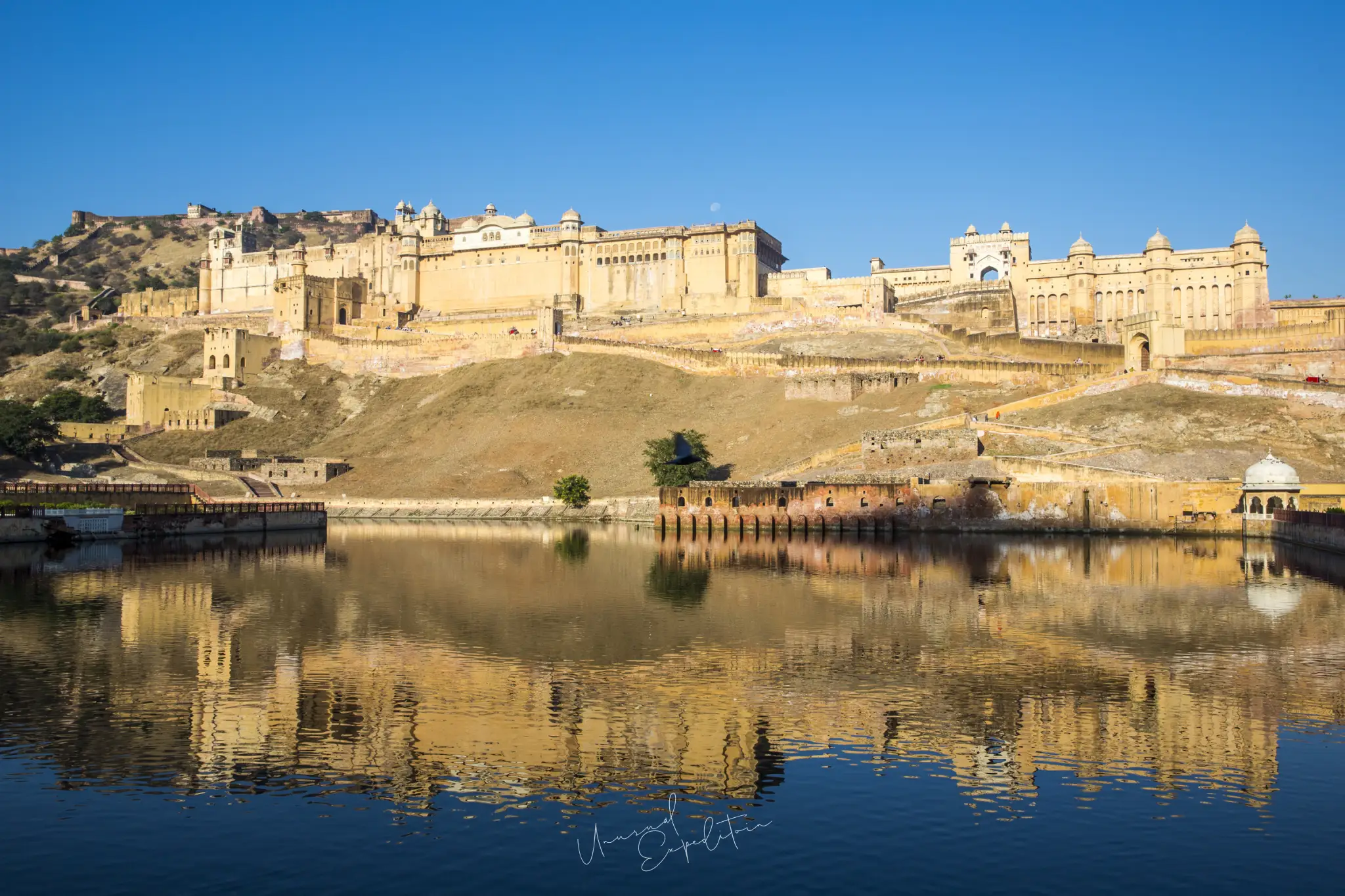
Rajasthan photography is about four cities and the country between them: the forts and pink facades of Jaipur and Amber, the blue old town under Mehrangarh in Jodhpur, the palaces and lakes of Udaipur, and the golden sandstone of Jaisalmer on the edge of the Thar Desert. Add the people, dressed in the strongest colours in India, and the cool, clear months from November to February, and you have the most photogenic state in the country for a first trip.
This is the Rajasthan area guide within our India photography tour guide, which covers visas, money, flights and the rest of the country. Pushkar and its camel fair have their own Pushkar photography tour guide. The photographs in this guide are our own, taken on our trips through Rajasthan; we hold the rights to them, and the notes come from knowing these places first hand.
What Rajasthan is famous for
Rajasthan is famous for its Rajput forts and palaces, its desert and its colour. The state was a patchwork of princely kingdoms, and each capital built a fort on the nearest hill and a palace by the nearest water. Six of those hill forts, Amber and Jaisalmer among them, were inscribed together by UNESCO as the World Heritage site "Hill Forts of Rajasthan", and the walled city of Jaipur has its own listing. For a photographer that means grand architecture with lived-in old towns below it. It is also famous for its textiles and turbans, its camel fairs and festivals, and the clean light of the dry season.
Rajasthan photography: the cities at a glance
Each city rewards a different kind of picture. The table sums up what we photograph where, and which guide covers it.
| Place | What to photograph | Best light | Guide |
|---|---|---|---|
| Jaipur and Amber | Amber Fort over Maota Lake, the elephant ramp, the Hawa Mahal facade | Early morning at Amber, morning sun on the Hawa Mahal | Amber Fort and Hawa Mahal |
| Jodhpur | The blue old town, Mehrangarh, Jaswant Thada, street portraits | Late afternoon and sunset from the fort walls | Jodhpur blue city; Mehrangarh Fort |
| Udaipur | Lake Pichola, the Lake Palace, the City Palace, the old town lanes | Blue hour on the lake, morning in the lanes | Udaipur photography |
| Jaisalmer | The living fort, carved havelis, golden lanes, the Bada Bagh cenotaphs | Low sun on the sandstone, dusk at Bada Bagh | Jaisalmer photography |
| Ranakpur and the villages | Marble Jain temple, rural life, village celebrations | Soft light inside the temple, mornings in the villages | Ranakpur Jain temple |
If you only have time for two cities, Jodhpur and Udaipur give the widest range of pictures between them.
Jaipur and Amber Fort
Jaipur is the Pink City, its old town painted in terracotta pink, by the usual story for a royal visit in the nineteenth century. Its best known face is the Hawa Mahal, the Palace of the Winds, a five-storey screen of latticed windows built so that the women of the court could watch the street without being seen. A short way out of town, Amber Fort climbs the hill above Maota Lake, and in still morning air the whole fort hangs upside down in the water. Our Amber Fort and Hawa Mahal guide covers both, with the debate over the elephant rides on the ramp.
Jodhpur: the blue city and Mehrangarh
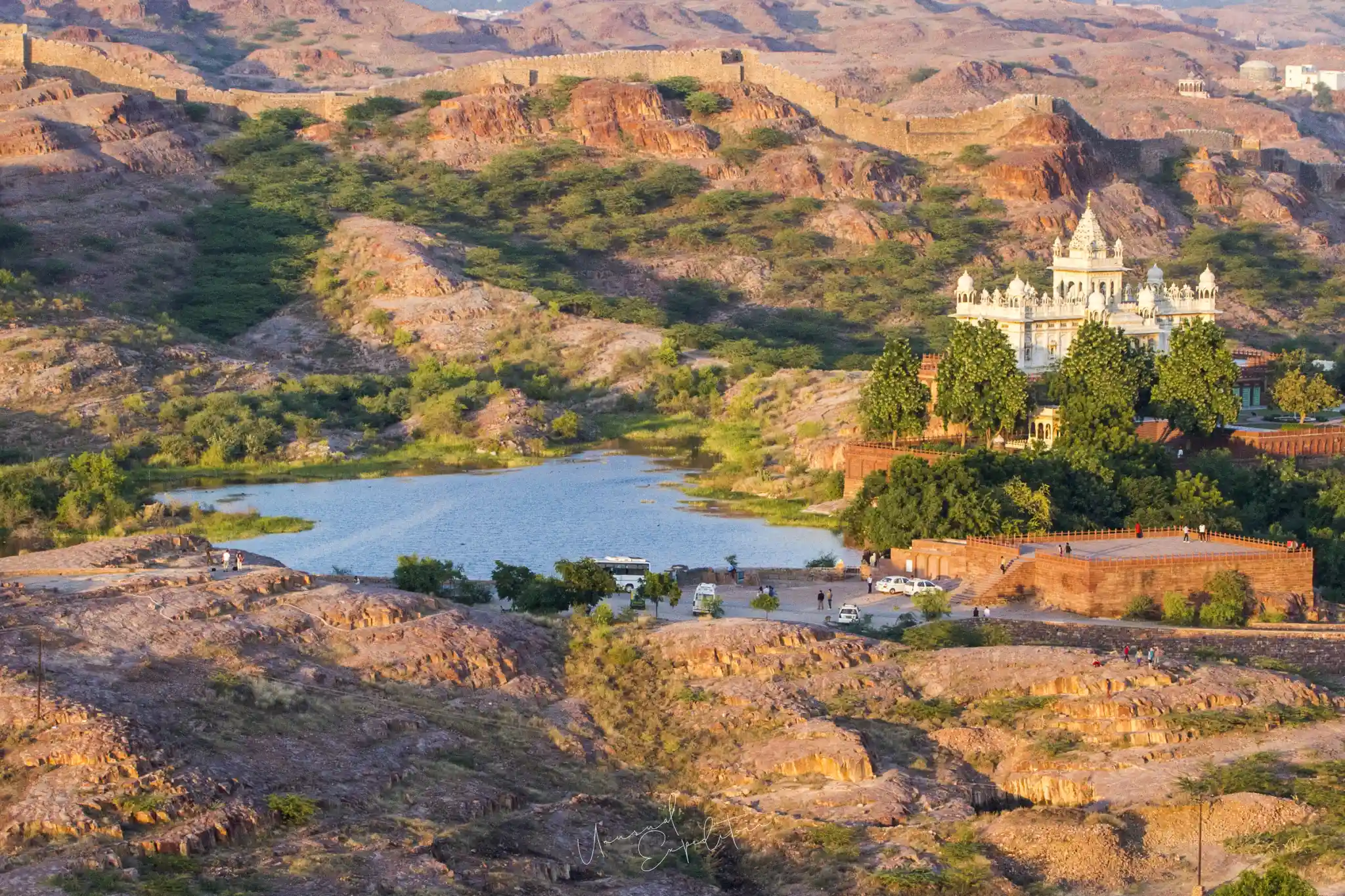
Jodhpur is the city we would choose if we could photograph only one in Rajasthan. Mehrangarh, founded by Rao Jodha in the fifteenth century, rises sheer out of a rock ridge, and the old town of blue houses fills the ground below it. From the ramparts you look straight down into the blue; in the lanes you pass blue doorways, tailors and old men reading the paper. The Jodhpur blue city guide is about the lanes and the people, and the Mehrangarh Fort guide about the fort, the sunset from its walls and the white marble of Jaswant Thada.
Udaipur and its lakes
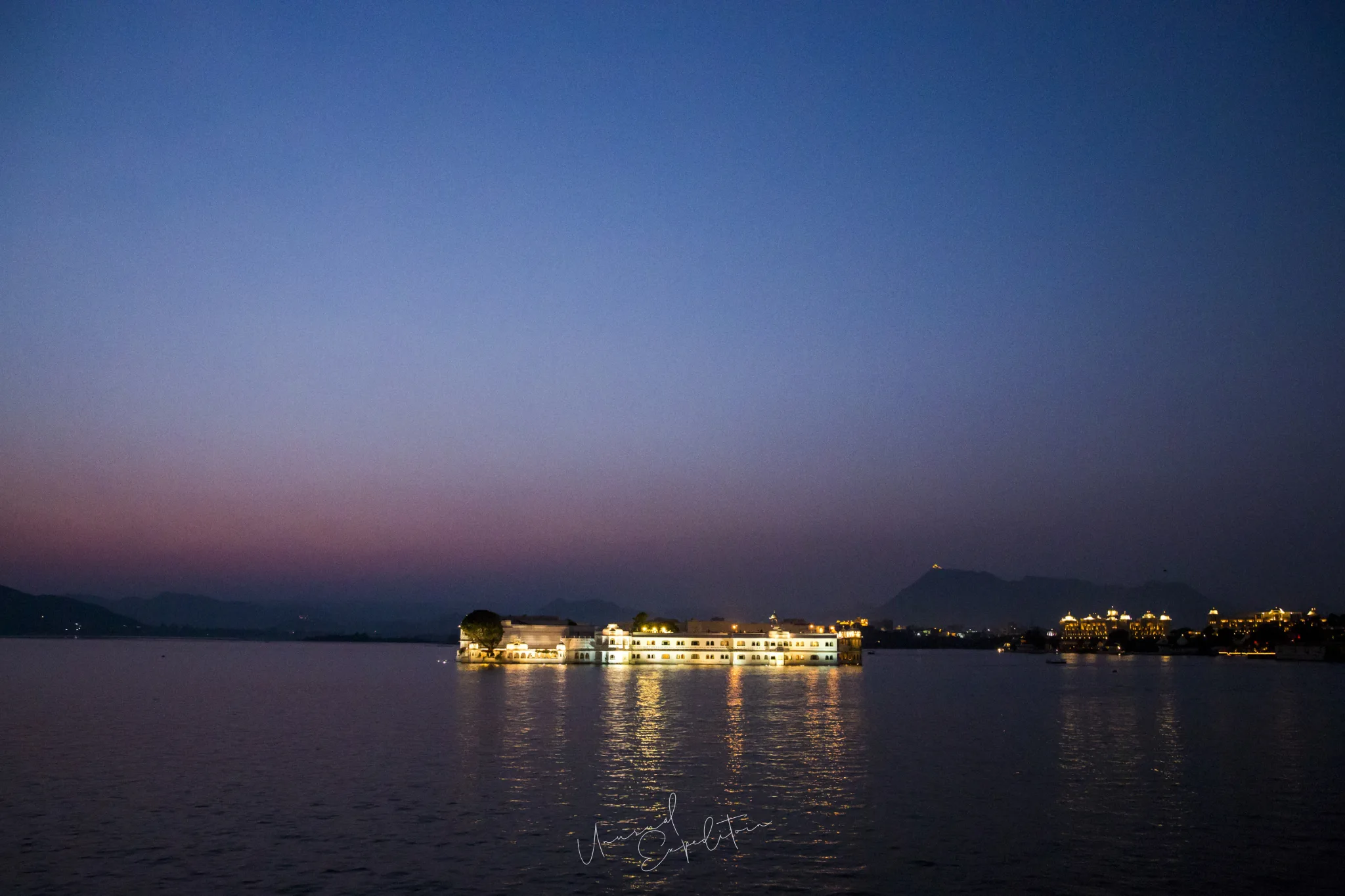
Udaipur is the softest of the four cities. The old capital of Mewar is built around man-made lakes, and Lake Pichola carries most of the pictures: the City Palace along its eastern shore, the white Lake Palace on its island, and the Monsoon Palace on the hill behind. The best time on the water is the blue hour, when the palaces light up and the sky is still deep blue. Away from the lake, the lanes around the Jagdish Temple are full of barbers, tailors and sadhus. Our Udaipur photography guide covers where to stand for each of these.
Jaisalmer, the golden city
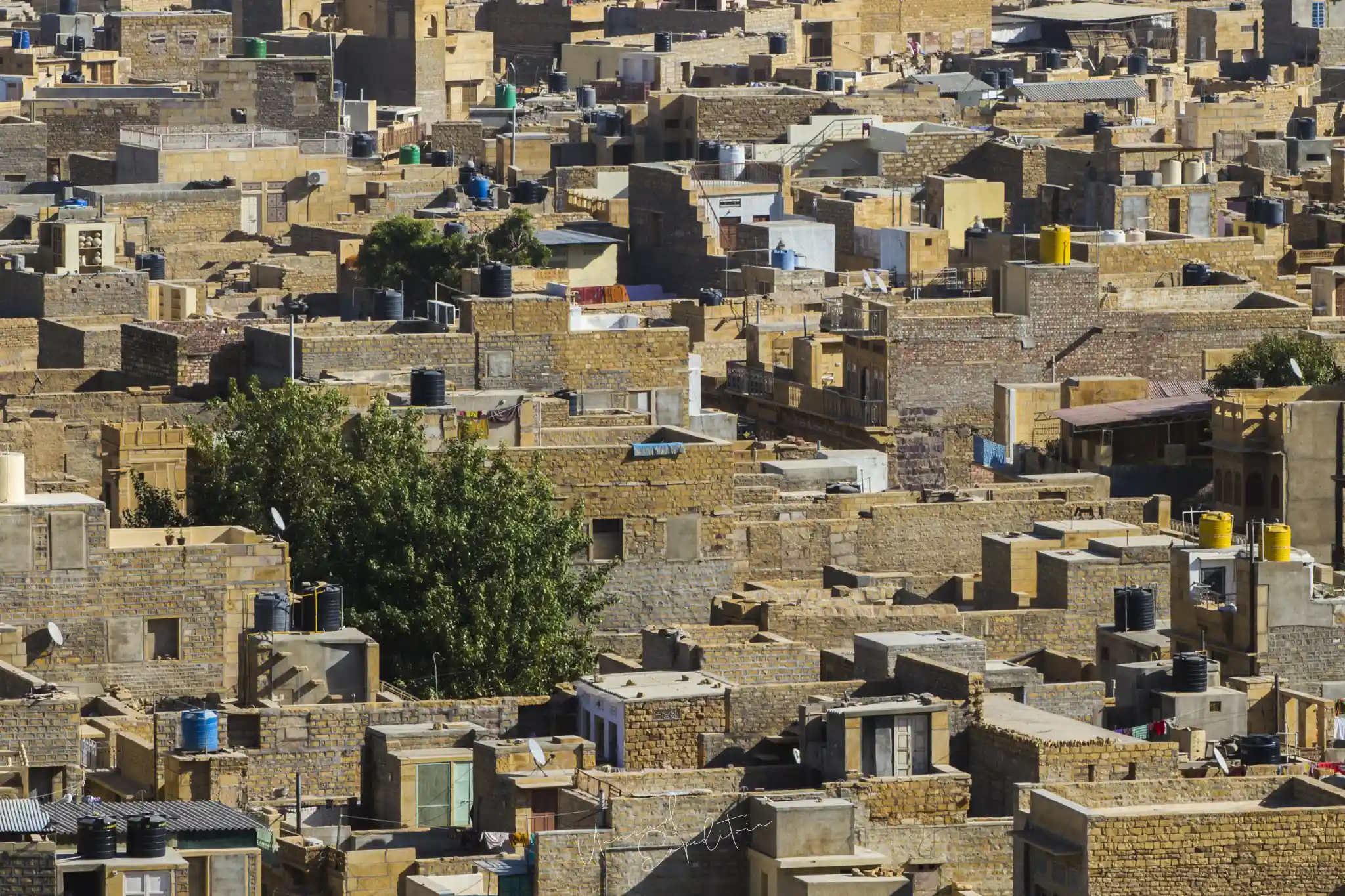
Jaisalmer is built of yellow sandstone, and in low sun the whole town turns gold. Its fort, founded in the twelfth century, is one of the few in India that people still live in, with houses, temples and shops inside the walls. Below the fort the merchants' havelis are carved like lace, and north of town the royal cenotaphs of Bada Bagh stand on the open desert. Our Jaisalmer photography guide covers the fort, the havelis and the light.
Ranakpur, Pushkar and the villages
In the Aravalli hills between Udaipur and Jodhpur stands the Jain temple of Ranakpur, a forest of carved white marble pillars; our Ranakpur Jain temple guide covers it with the village life we met on the same roads. In the villages of Marwar, around Jodhpur, women still wear the full-skirted dress and bright veils of the region, and a wedding or a temple celebration can fill a dusty square with drums. Pushkar, in the middle of the state, is a world of its own in the month of its camel fair, and its guide covers it fully.
"Rajasthan spoils you for colour. The trick is to stop shooting everything. In Jodhpur I spend one evening on the fort walls and the next mornings in the lanes, and the best frames come on the second or third walk, when people have seen you before."
Joseph Mak, tour leader, Unusual Expedition
Best time to visit Rajasthan for photography
The cool, dry months are the season. Wikivoyage's Rajasthan guide calls winter cool and pleasant and November to February the most comfortable months for travel, and warns that summers are very hot, especially in the desert. October and March are good shoulder months, with the Pushkar fair in Kartik in late October or November and Holi and Gangaur in spring. The monsoon brings green hills around Udaipur but grey skies. Our best time to visit Rajasthan guide has the month table and the festival calendar.
Photographing people in Rajasthan
Rajasthan is generous to street photographers. Greet people before you lift the camera, show them the picture, and accept a no; some will ask for a small payment at tourist spots, so decide your own rule and keep it. Women in villages often cover their faces from strangers, and that is an answer in itself. We do not photograph children, and we suggest you do not either. At temples, shoes come off at the entrance, and at Jain temples leather stays outside too.
Getting around Rajasthan and staying safe
The cities are linked by road and rail, with airports at Jaipur, Jodhpur and Udaipur; our guide to planning a photography trip to India covers visas, flights and money. The UK Foreign, Commonwealth and Development Office advises against all travel within 10km of the India-Pakistan border and notes that the border in Rajasthan is unmarked in places. None of the cities in this guide is in that zone, but the desert west of Jaisalmer runs towards the border, so keep desert trips to the recognised dune areas.
Explore Rajasthan in depth
- Amber Fort Jaipur and the Hawa Mahal: where to stand and when
- Jodhpur blue city: the lanes, the people and why the houses are blue
- Mehrangarh Fort: sunset from the walls and Jaswant Thada
- Udaipur photography: Lake Pichola, the palaces and the old town
- Jaisalmer photography: the golden fort, havelis and Bada Bagh
- Ranakpur Jain temple and the villages of the Aravalli hills
- Best time to visit Rajasthan: months, light and festivals
- Pushkar photography tour guide: the camel fair, the lake and the town
Photograph Rajasthan with us
We run Rajasthan as a private trip on request, for individuals, families, couples and photographers who want to travel at their own pace. We arrange all the logistics around what you want to photograph, and a photographer or photography coaching can be added at extra cost. A private trip can cost less than a group tour, because no tour leader travels with you. Ask at least two months ahead if you can, though shorter notice can often be arranged. See private tours and our India photography tours page.
Rajasthan photography tours
The next Rajasthan departure is announced on the Rajasthan photography tours page, with previous expeditions and all the planning guides.
Explore Rajasthan in depth
- Udaipur Photography: Lake Pichola, the City Palace and the Old TownIndia
- Ranakpur Jain Temple: Marble, Light and the Villages of the Aravalli HillsIndia
- Mehrangarh Fort, Jodhpur: Sunset from the Walls and Jaswant ThadaIndia
- Jodhpur Blue City: the Lanes, the People and Why the Houses Are BlueIndia
- Jaisalmer Photography: the Golden Fort, the Havelis and Bada BaghIndia
- Best Time to Visit Rajasthan: Months, Light and FestivalsIndia
- Amber Fort Jaipur and the Hawa Mahal: Where to Stand and WhenIndia
Upcoming Photo Tours
- Egypt Photo Tour – EgyptEgypt 12 Dec 2026 To 20 Dec 2026
- Inner Mongolia Winter Owl Photo Tour – ChinaChina 01 Jan 2027 To 04 Jan 2027
- Inner Mongolia Winter Photo Tour – ChinaChina 05 Jan 2027 To 11 Jan 2027
- Mekong And Central Highland Vietnam Photo Tour - VietnamVietnam 16 Jan 2027 To 24 Jan 2027