
Lake Eyasi Tanzania Photo Spots: Six Places and How to Photograph Them
Lake Eyasi Tanzania photo spots: Hadzabe rock shelters and camps, the hunt, a Datoga homestead, baobabs and the lake shore.
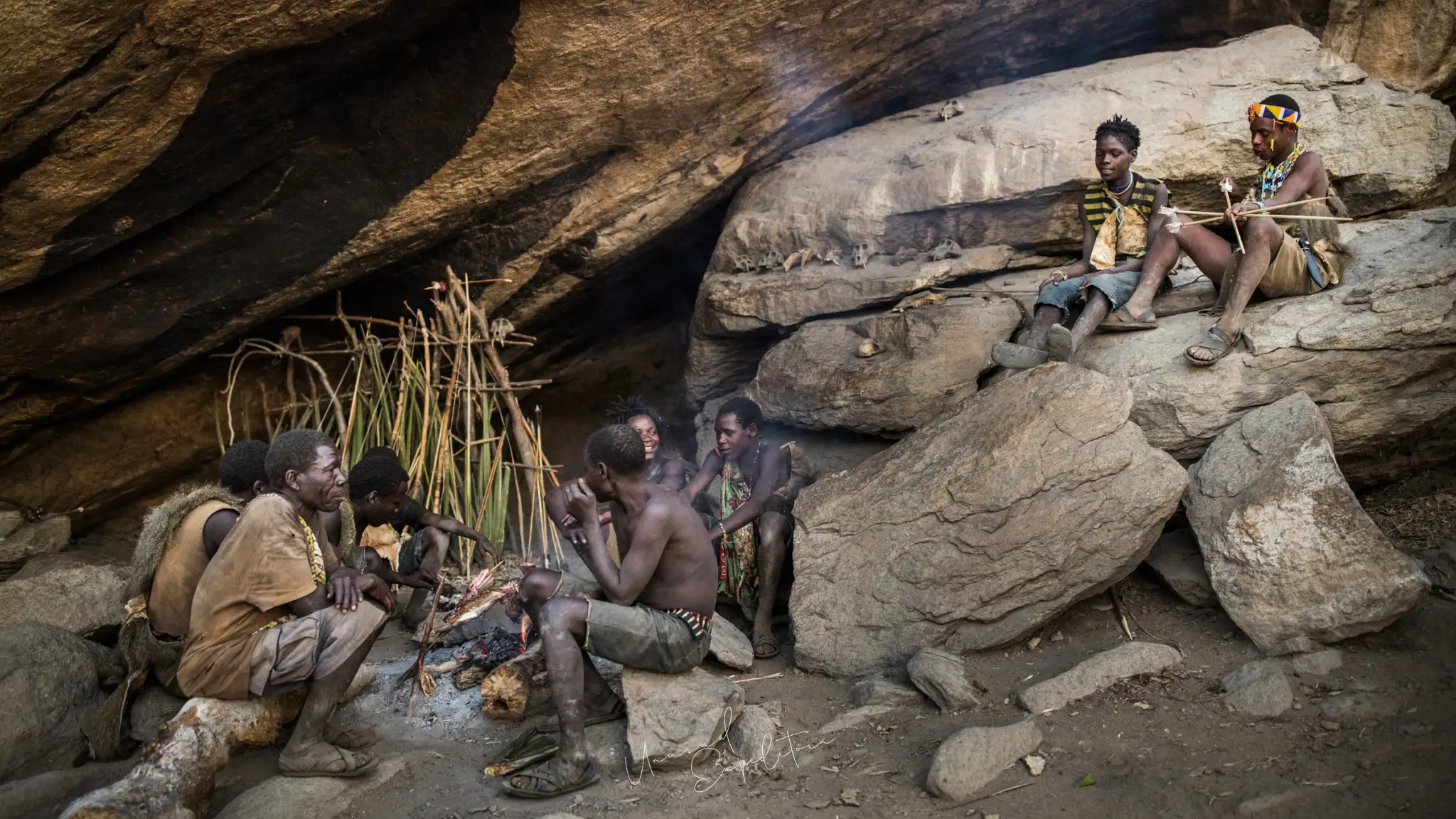
The Lake Eyasi Tanzania photo spots that matter are the Hadzabe rock shelters, a Hadzabe camp at either end of the day, the bush where the hunters walk, a Datoga homestead, the baobab groves and the lake shore itself. Lake Eyasi is a seasonal salt lake on the Rift Valley floor, south-west of the Ngorongoro highlands, and most of its pictures are of people and their dry country. Every spot below is reached with a local guide, and every picture of a person starts with asking.
The places belong to our Lake Eyasi photography tour guide, which explains the area, its peoples and how visits work. Here we take them one at a time: where to stand, the light, the lens and the etiquette. The photographs are our own, from our visits near Lake Eyasi.
Lake Eyasi Tanzania photo spots: how visits work
Three peoples live around the lake: the Hadzabe, who still hunt and gather; the Datoga, Nilotic herders; and the Mbulu farmers, as the Tanzania Tourist Board puts it. Visits to Hadzabe and Datoga families are arranged through local guides and the Lake Eyasi Cultural Tourism Programme in Mang'ola, a government-registered office set up there in 2011, according to Yatsuka's study of Hadza tourism, and a fee goes to the community. Survival International has criticised many Hadza tours, so keep groups small, follow the camp's rules, ask before every portrait and leave children out of your pictures. Bring a 24-70mm for most of it, a 16-35mm for the rock shelters and a 70-200mm for portraits at a respectful distance.
The Hadzabe rock shelters
Granite boulders lie scattered through the bush around the lake, and the overhangs beneath them are where Hadzabe groups rest, eat and shelter from the midday sun. A rock shelter is one of the most striking places to photograph near Lake Eyasi: warm stone above, people small in the shade below. The light is the challenge. Outside it is hard and bright, inside the overhang it is dim and reflected off the rock, which gives a soft orange glow on faces. Expose for the people in the shade and let the sky outside go white, or step back and use a 16-35mm to show the whole boulder with the group in it, as on our card. Never use flash in a shelter.
A Hadzabe camp at dawn and dusk
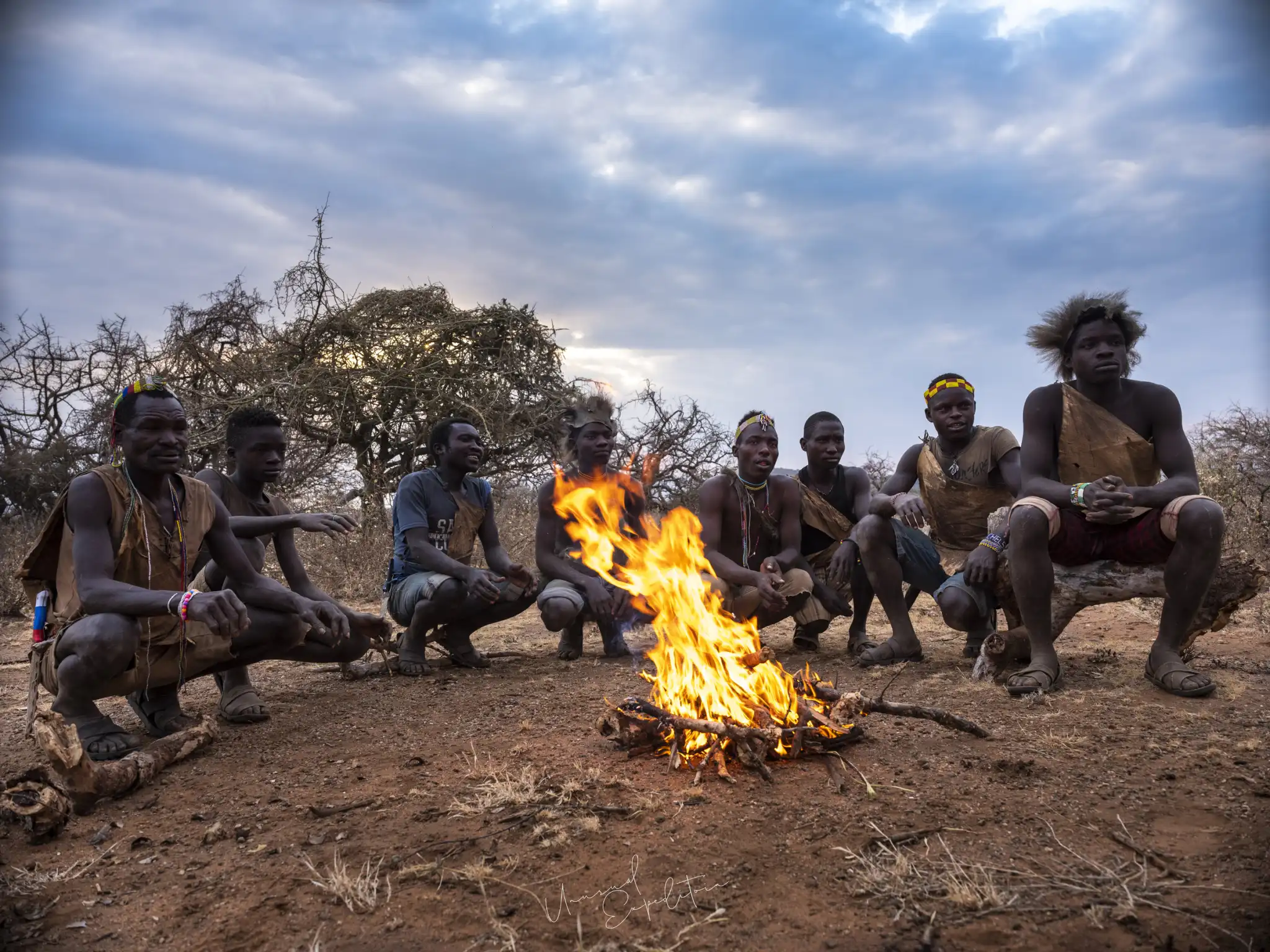
Hadzabe camps are simple, grass shelters among the bushes, and the best times to be there are dawn, when the men sit round the fire before going out to hunt, and dusk, when they come back to it. The sky turns blue at both ends of the day, and the fire gives a warm point in the middle of the frame. Arrive with the guide, and stand back at first. A 24-70mm at the wide end with the sky in the frame, and a steady hand or a high ISO for the fire. Our Hadzabe camp fire photography guide covers the evening fires and the low-light settings.
The bush where the hunters walk
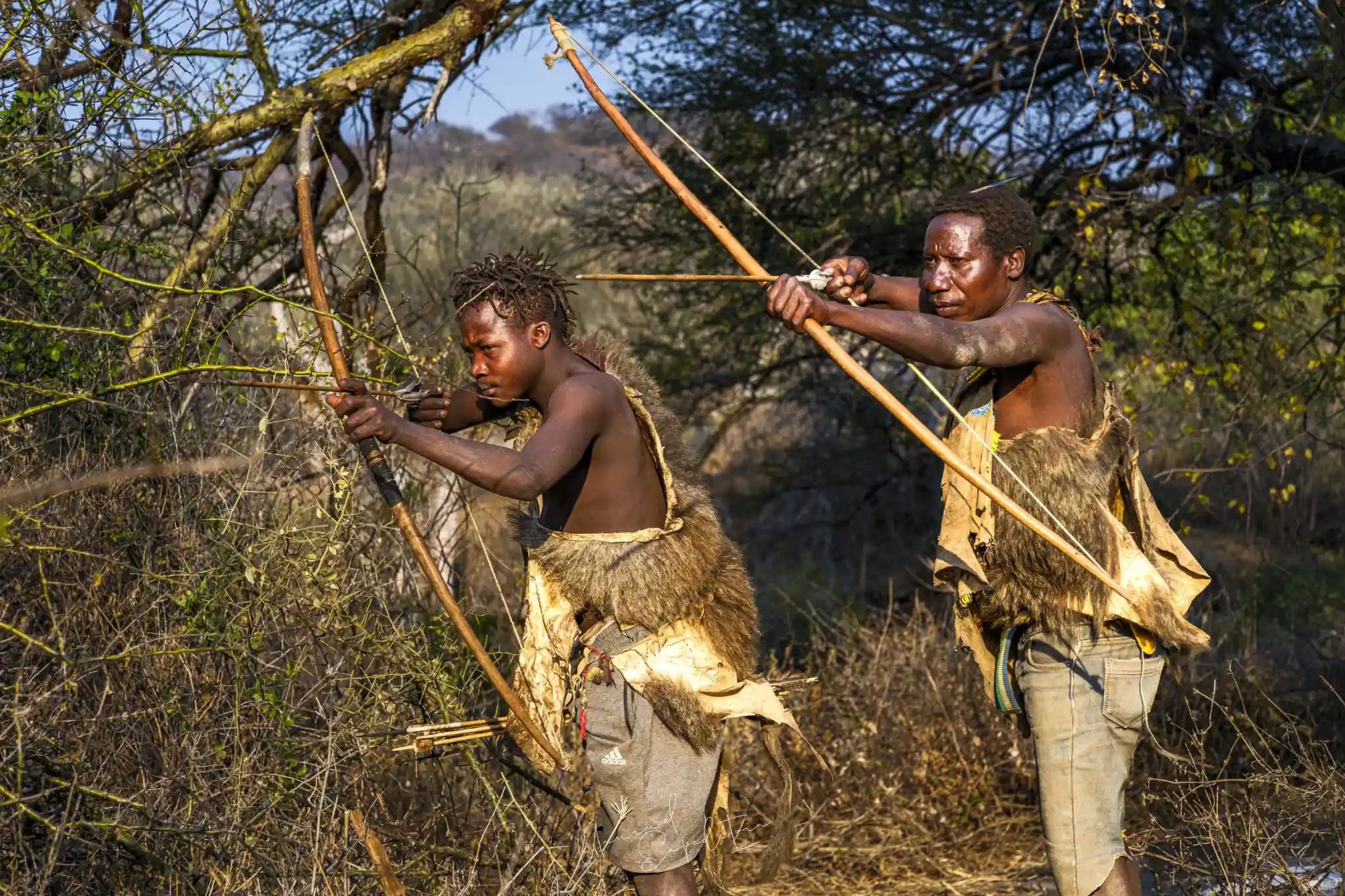
A Hadzabe hunt moves fast and quietly through thorn scrub and dry riverbeds, and following it is the most demanding photography near Lake Eyasi. You walk behind, keep up, and stay silent. The light under the scrub is broken, so look for the moments when the hunters step into an opening or draw a bow against the sky. Use a 24-70mm, a fast shutter, and no long lens: you are too close and moving too much. Wear plain clothes and good shoes. Our Hadzabe tribe hunting guide covers what a hunt involves and how to behave on one.
"Near Lake Eyasi the spot is never the place, it is the moment someone lets you in. The first hour I hardly lift the camera. Once people are used to you, the shelter, the fire and the bush all become pictures."
Joseph Mak, tour leader, Unusual Expedition
A Datoga homestead
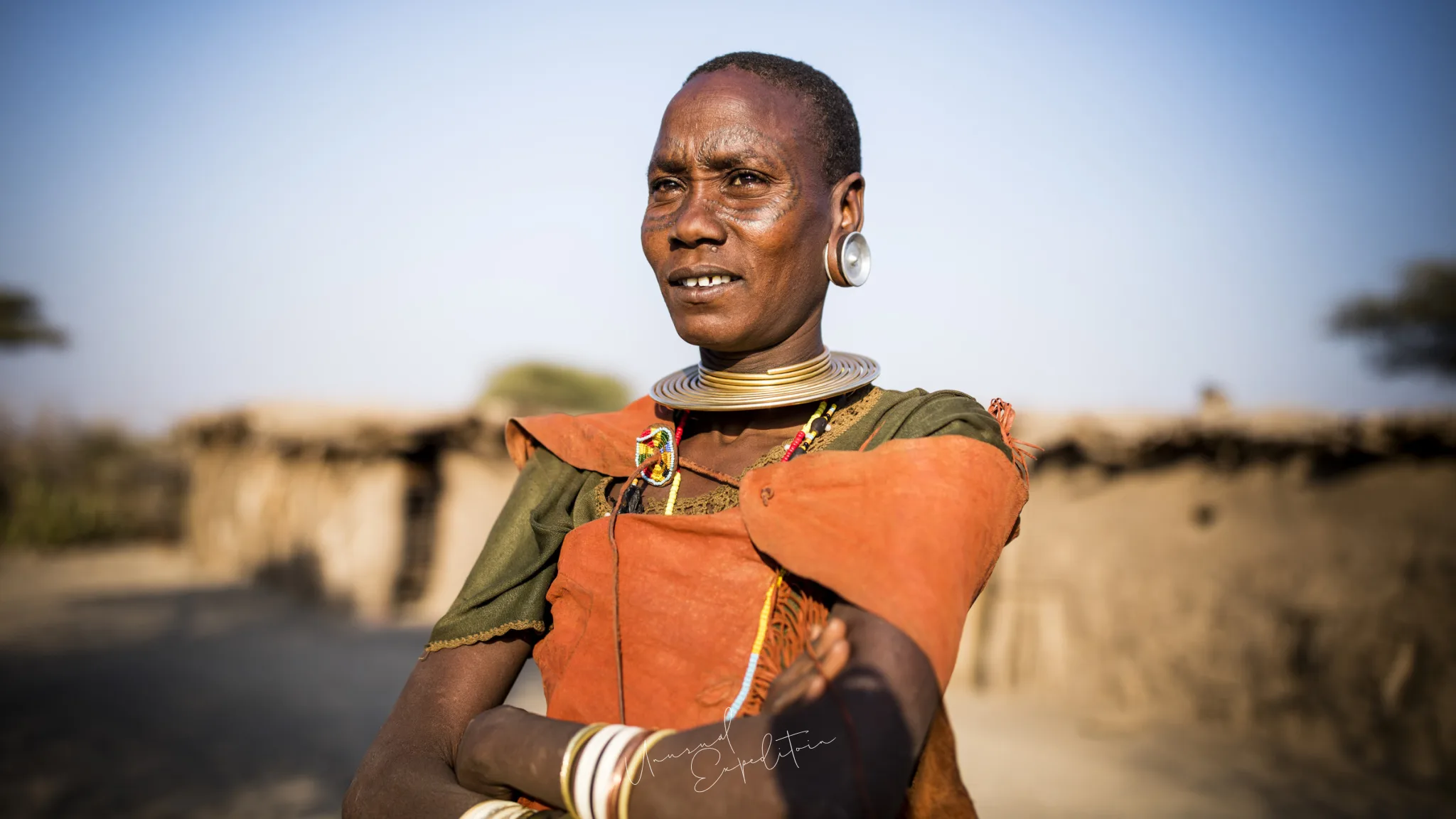
The Datoga are herders, and a visit to a homestead means cattle and goats, houses of mud and branches, and women in tanned leather with beadwork and coiled brass. Datoga smiths are known for turning scrap metal into arrowheads, knives and bracelets, and some visits include the forge. The light inside the houses is very low, so portraits work best in the doorway or in open shade outside, with the light falling from one side. A 70-200mm lets you work at a distance once people are comfortable; a 24-70mm for the homestead and the forge. Our Datoga tribe in Tanzania guide has more on the people and the visit.
The baobab groves
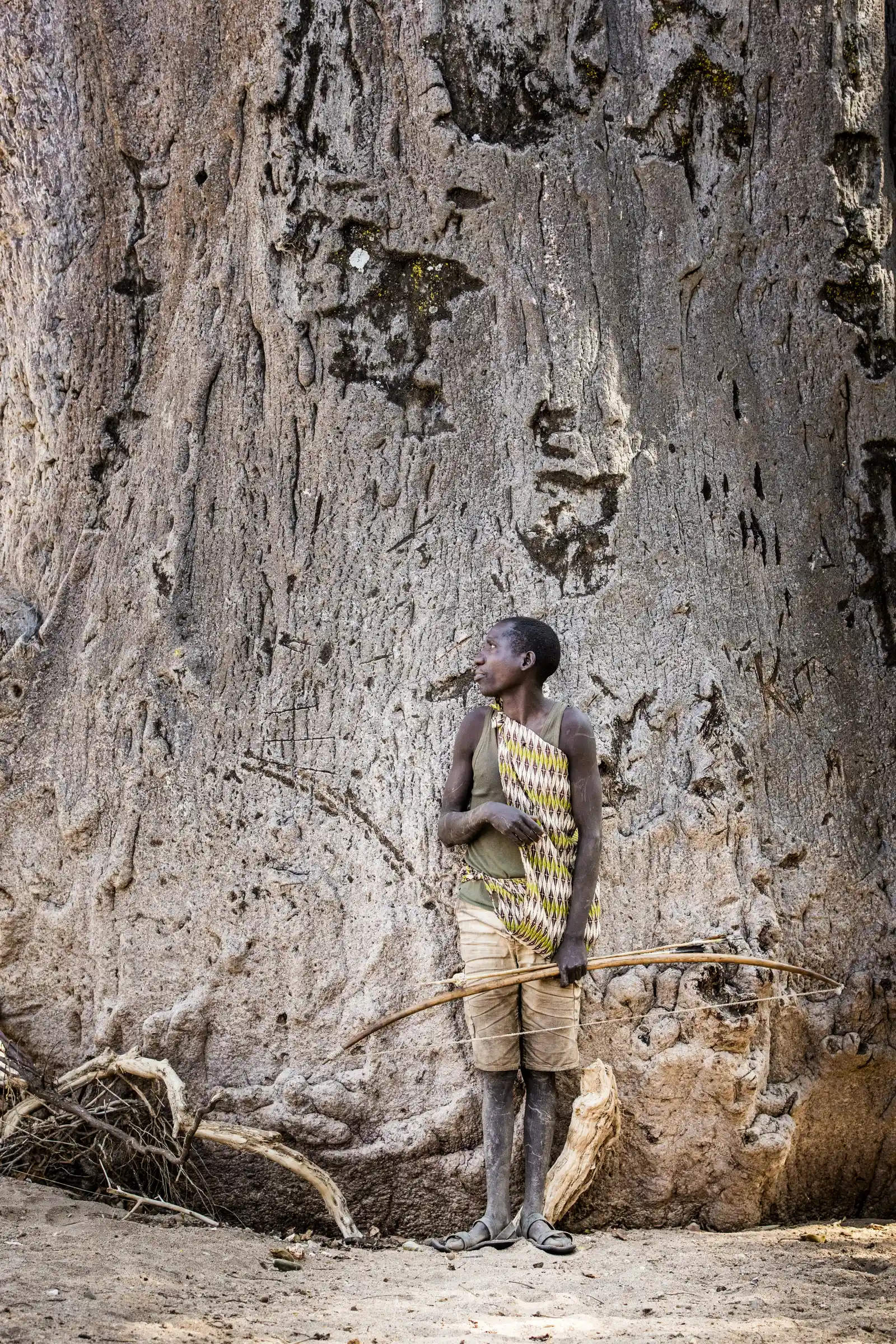
African baobabs grow through the dry woodland around the lake, huge grey trunks that lose their leaves in the dry season. They give the people pictures a scale and a place: a hunter beside a trunk many times his width, a group resting in the shade. The trunks look best in low side light, early or late, when the bark shows its folds. Use a 16-35mm or 24-70mm to get the whole tree with people at its foot. For the trees on their own, see our guide to the baobab trees of Lake Eyasi.
The lake shore
The lake itself changes more than any other spot. The Tanzania Tourist Board describes it as a seasonal, shallow salt lake that is almost gone in the dry season, so in some months you find a wide white flat and in others shallow water with flamingos and pelicans. The shore is a place for wide, quiet pictures at either end of the day: the pale flat, the escarpment behind, the colour in the sky. A 24-70mm and a 70-200mm for birds if the water is in. We have photographed the basin mostly from the high ground at sunset, so ask your guide how much water there is before planning a shore visit.
Mang'ola, the base
Mang'ola, near the lake's eastern end, is the village where guides, the cultural tourism office and most camps are found, and where visits start. The village itself, with its irrigated fields and market, is worth a walk with the camera, asking as you go. It also decides your timing: leaving Mang'ola before dawn is what gets you to a Hadzabe camp at first light.
Which Lake Eyasi spot for which picture
| Spot | Main subject | Best light | Lens |
|---|---|---|---|
| Hadzabe rock shelters | People under the boulders | Midday shade | 16-35mm, 24-70mm |
| Hadzabe camp | The fire | Dawn and dusk | 24-70mm |
| The bush | The hunt | Morning | 24-70mm |
| Datoga homestead | Portraits, the forge | Open shade, side light | 70-200mm, 24-70mm |
| Baobab groves | Trees with people for scale | Early or late | 16-35mm, 24-70mm |
| Lake shore | Salt flat or water, birds | Sunrise and sunset | 24-70mm, 70-200mm |
The people spots set the day; the lake and the baobabs fill the soft light at its ends.
Photograph Lake Eyasi with us
Our scheduled Serengeti Photo Tour includes Lake Eyasi, with visits to the Hadzabe and the Datoga. The current departure and every destination guide for the country are on the Tanzania photography tours page.
Join the Lake Eyasi photography tour
Serengeti Photo Tour – Tanzania 2027 departs 21 Aug 2027 To 01 Sep 2027. Small group, photography first. All Lake Eyasi photography tours.
Explore Lake Eyasi in depth
- Lake Eyasi Photography Tour Guide: Hadzabe, Datoga and BaobabsTanzania
- Lake Eyasi Photography FAQ: Where the Hadzabe Live, Language, Heat and GearTanzania
- Hadzabe Tribe Tour: How to Get to Lake Eyasi and Whether It Is Worth ItTanzania
- Hadzabe Tribe in Tanzania: Who the Hadza Are and How to Photograph ThemTanzania
- Hadzabe Tribe Hunting: Bows, Honey and Photographing the HuntTanzania
- Hadza People Culture at the Fire: Photographing Evenings near Lake EyasiTanzania
- Datoga Tribe in Tanzania: Herders and Smiths of Lake EyasiTanzania
- The Baobab Tree in Tanzania: Photographing Baobabs around Lake EyasiTanzania
Upcoming Photo Tours
- Egypt Photo Tour – EgyptEgypt 12 Dec 2026 To 20 Dec 2026
- Inner Mongolia Winter Owl Photo Tour – ChinaChina 01 Jan 2027 To 04 Jan 2027
- Inner Mongolia Winter Photo Tour – ChinaChina 05 Jan 2027 To 11 Jan 2027
- Mekong And Central Highland Vietnam Photo Tour - VietnamVietnam 16 Jan 2027 To 24 Jan 2027