
Litang Monastery Photos: Gold Roofs, Monks and Yaks at 4,000 Metres
Litang monastery photos: Litang Chode above the town, white stupas, monks, prayer flags, altitude tips and where to stand.
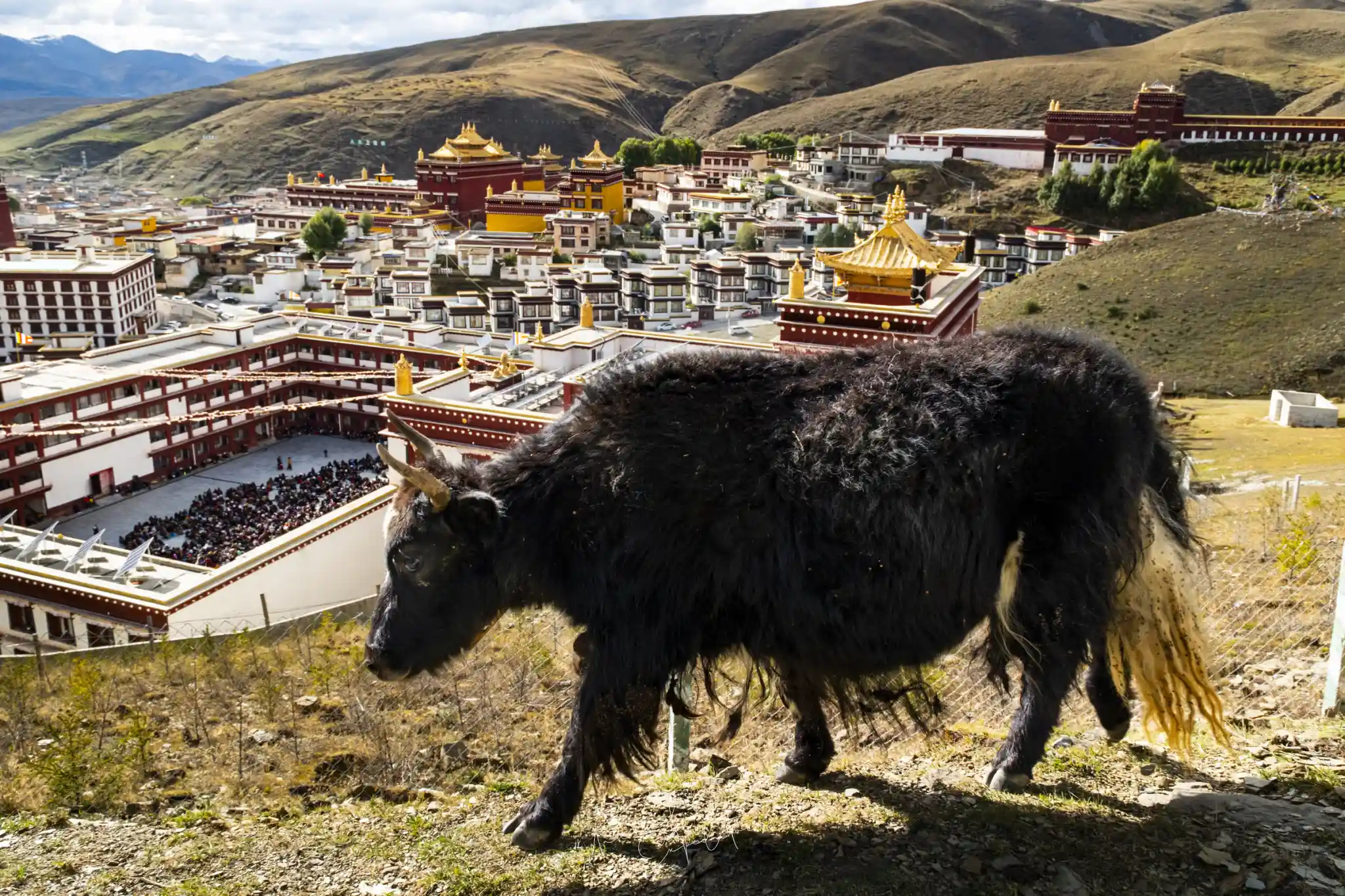
Litang monastery photos are about gold roofs and red robes on bare grassland at about 4,000 metres: the great Geluk monastery of Litang Chode spread over the slope above the town, white stupas below its walls, monks crossing the courtyards and yaks grazing up to the gates. This guide shows what we photographed in Litang on our October western Sichuan trip, where we stood, and how to work in a town this high.
Litang is one stop on a longer journey through Garze prefecture. For permits, altitude and the wider route, start with the western Sichuan photography tour guide; this article is the close look at one town.
Litang monastery: what Litang Chode is
Litang Chode, also written Litang Chokhor Ling, is the largest monastery in Litang and one of the most important Geluk monasteries in Kham. The Treasury of Lives, a biographical encyclopedia of Tibetan Buddhism, records that it was founded in 1580 by the Third Dalai Lama, Sonam Gyatso, on his way back from Mongolia, and travel sources say it stands on the site of an older Bon monastery. Litang is also linked with the Seventh and Tenth Dalai Lamas; local accounts describe one or both as born or resident here, so we keep that as a local tradition rather than a fact we can source. For a photographer, what matters is scale: halls with gilded roofs, rows of monks' houses and courtyards rise up the hill above the county town, so you can frame the whole complex from the slopes around it or work in close among the walls.
Litang altitude: why it shapes every picture
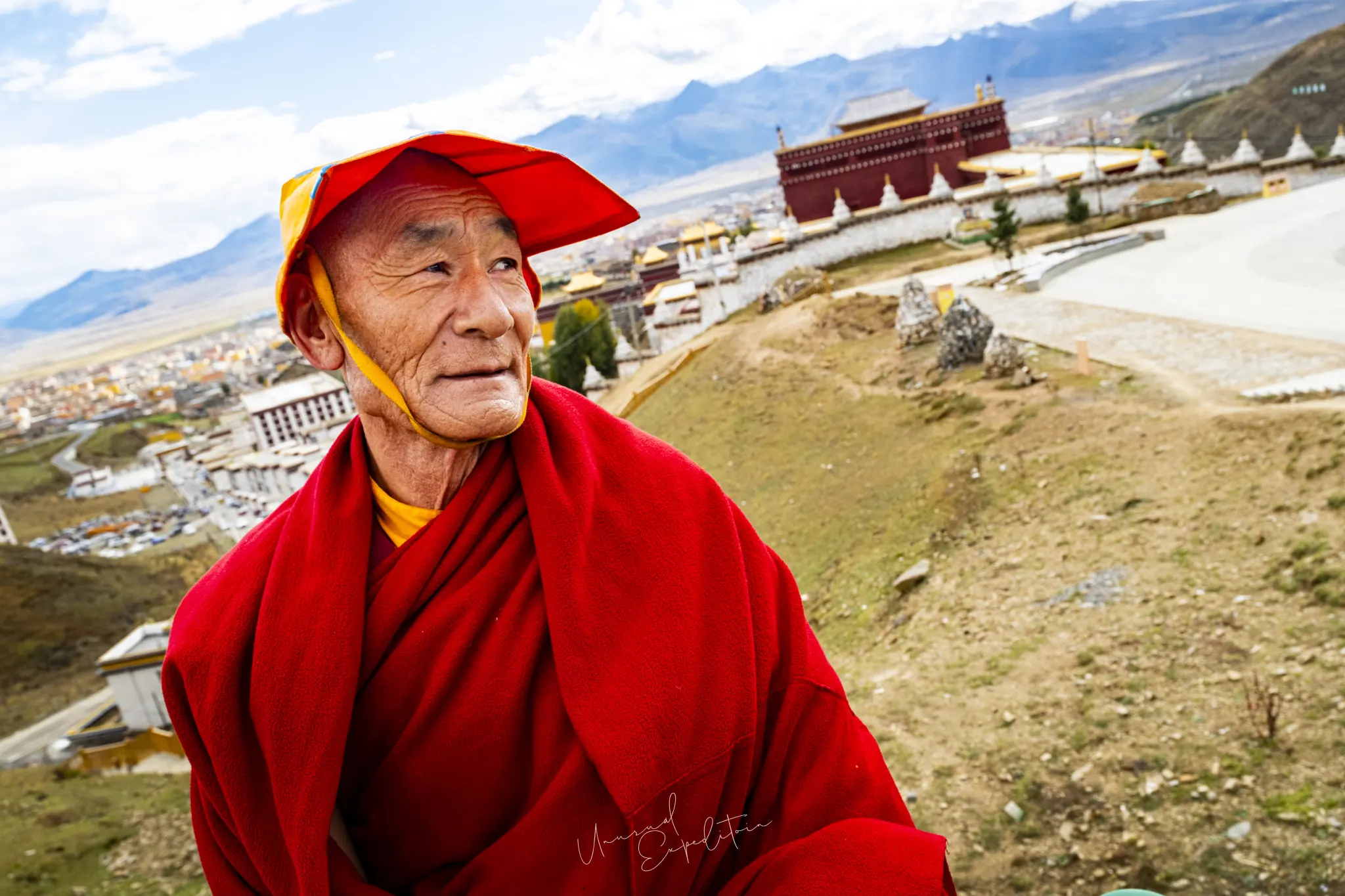
Litang altitude is the first thing to plan around. Wikipedia gives the town at 4,014 metres, which puts Litang among the highest towns in the world, and the monastery sits higher still on the slope. At this height the air is thin and clear, the sky turns a deep blue by mid morning, and the sun is hard on white walls, so the good light is early and late. It also means everyone walks slowly: carrying a long lens up the hill behind the monastery takes real effort on the first day. Arrive in Litang after some nights lower down, keep the first afternoon gentle, and save the climb to the viewpoints for the following morning. The best time to visit western Sichuan covers the seasons and why autumn gives the clearest skies.
Where to stand for the classic view
The classic Litang monastery photo is taken from the grassy hills on the flank of the complex, looking across the gold roofs with the town and the open plateau beyond. The higher you go, the more the halls stack into one picture; lower down you get the roofs against the hills instead. A 24-70mm covers the whole spread, and a 70-200mm pulls out a single roof, a line of prayer flags or a monk on a rooftop terrace. On our visit a yak was grazing on the slope in front of the monastery, and waiting for it to walk clear of the buildings gave us the picture at the top of this page. Early sun lights the eastern faces of the buildings; in late afternoon the light comes across the slope and the gold turns warm.
Stupas, walls and the kora
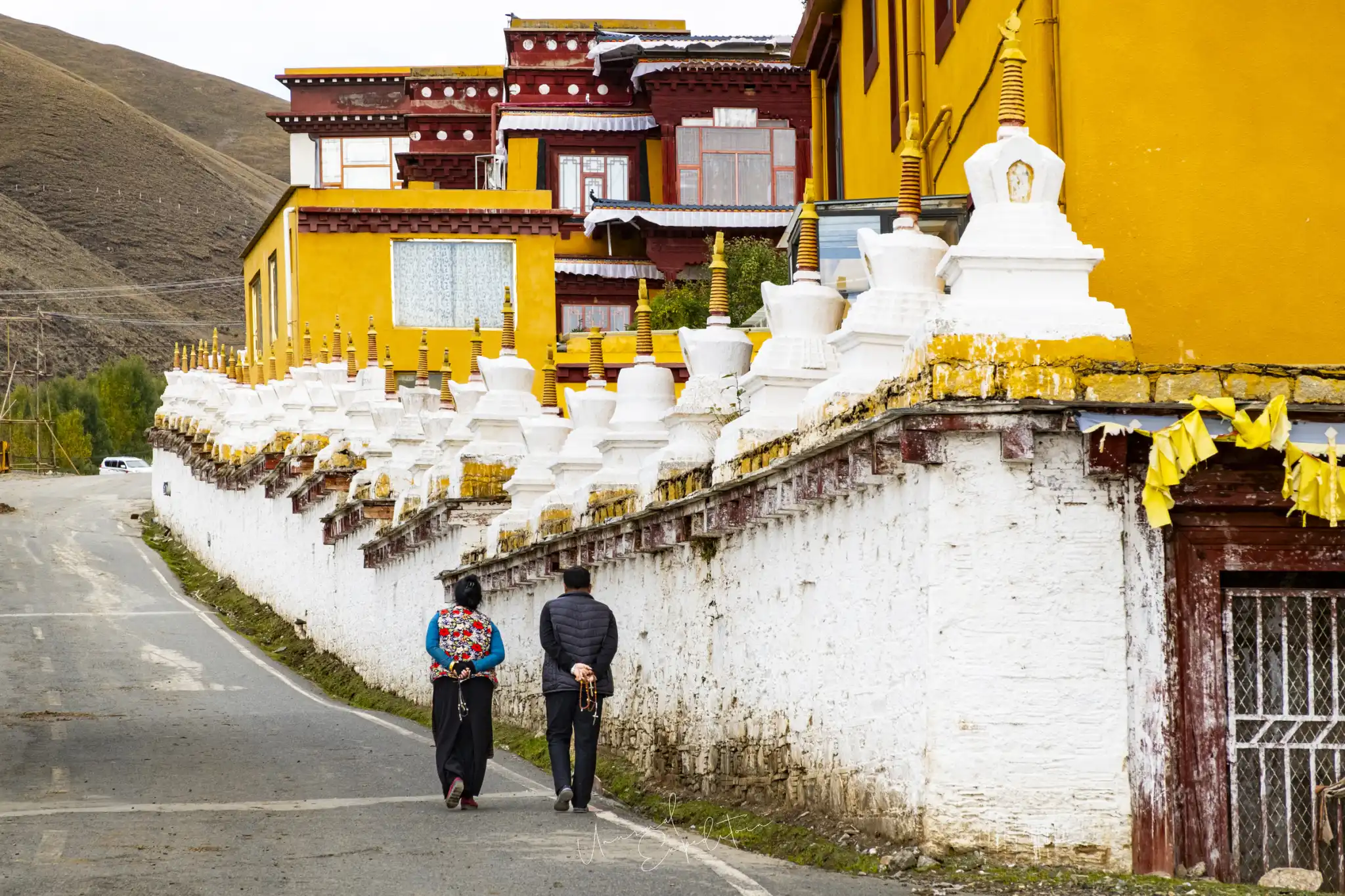
Below the monastery walls, rows of whitewashed stupas line the road, and local people walk the kora, the clockwise circuit around the monastery, through the day. These walls give you some of the simplest strong frames in Litang: white stupas, a yellow or red wall, a strip of blue sky and one or two walkers for scale. Shoot from the outside of the road and let the people walk into the frame rather than stepping into their path; on the kora, walk in the same direction as everyone else. The prayer wheels along the circuit are turned by hand as people pass, and a slow shutter of around a thirtieth of a second shows the movement without losing the person.
Photographing monks in Litang
Monks in Litang are used to visitors, but the monastery is a place of study and prayer first. We photograph monks wide, in their setting, or as a portrait only when someone clearly agrees to one. Ask with a gesture, accept a no, and show people the picture on the back of the camera if they want to see it. Inside the assembly halls photography is often not allowed, and signs or a monk will tell you; respect that even when others ignore it. Debates, assemblies and festival days bring crowds of monks into the courtyards, and those are the moments to stand back with a longer lens.
Prayer flags above the town
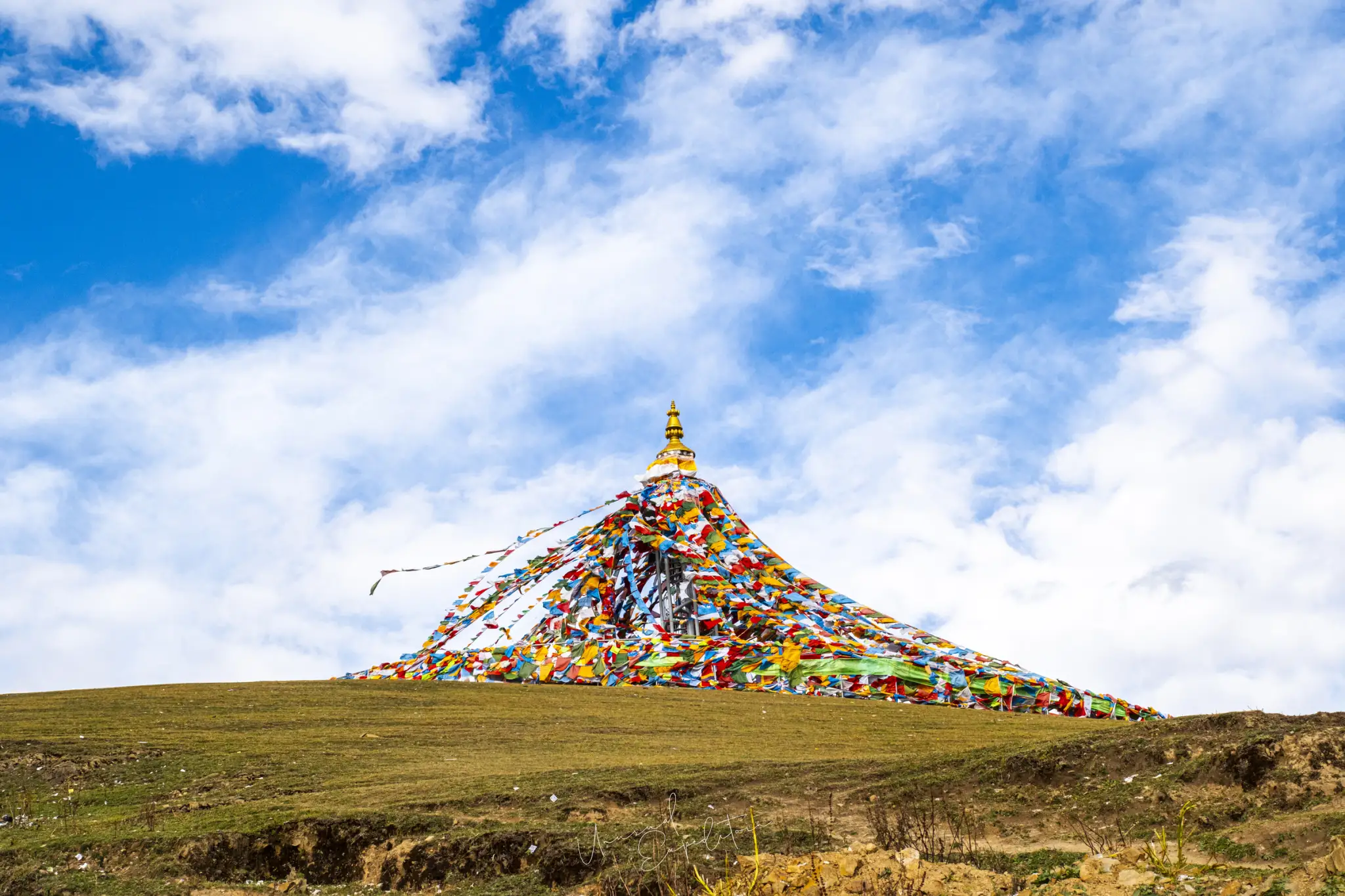
The hills around Litang carry mounds of prayer flags, strung from a central pole and pegged out in every direction like a tent of colour. On a windy day they make a strong subject against a clear sky, especially from low down with a wide lens, and they give a sense of how open and high the plateau is. Do not walk on the flags or pull at the lines; step around them. The same hills give you views back over the monastery and town, so a walk up for the flags often turns into the best overview of the morning.
Litang monastery photos at a glance
| Subject | Where | Best light | Lens |
|---|---|---|---|
| Whole monastery and town | Grass hills on the flank | Early morning | 24-70mm |
| Gold roofs in detail | Higher slope, looking down | Late afternoon | 70-200mm |
| Stupas and kora walkers | Road below the walls | Morning, side light | 24-70mm |
| Prayer flag mounds | Hills above town | Windy, clear days | Wide end of 24-70mm |
| Monks and pilgrims | Courtyards and kora | Any, open shade | 70-200mm |
Litang is the place where I tell everyone to slow down. The light is beautiful early, the yaks wander right up to the monastery, and if you rush up the hill with all your gear you will have a headache by lunchtime. Walk the kora once without the camera first. You will see where the pictures are.
Joseph Mak, tour leader, Unusual Expedition
Litang horse festival
The Litang horse festival is held on the grassland outside the town in summer, with riding displays, racing and families in their finest traditional dress. It is a very different trip from an autumn visit: greener grass, more people, more cloud on the hills and a busier town. The dates follow local decisions and have moved from year to year, so check the county's announcement before building a trip around it. In autumn, when we go, the grassland is golden and quiet and the skies are clearer for landscape work.
Practical notes for Litang
Garze prefecture, Litang included, needs no special permit for Singapore passport holders as at our last trip, and Singapore passports currently have a 30-day visa exemption for mainland China according to Singapore's Immigration and Checkpoints Authority; check both before you go, because rules in Tibetan areas can change at short notice. Nights are freezing even in autumn, so carry a down jacket, gloves you can work a camera in, and spare batteries in an inside pocket. Dust from the roads gets into everything; change lenses inside the vehicle. For the other places on the road, read our western Sichuan photo spots and, nearer Kangding, the Tagong grassland photos guide.
Photograph Litang with us
We include Litang on our autumn western Sichuan trips and on private trips on request. Current departures and all our China guides are on the China photography tours page.
Join the Sichuan photography tour
Inner Mongolia Winter Owl Photo Tour – China departs 01 Jan 2027 To 04 Jan 2027, led by Joseph Mak. Small group, photography first. All Sichuan photography tours.
Explore Sichuan in depth
- Western Sichuan Tour: A Photography Guide to Tibetan SichuanChina
- Sichuan Opera Face Changing in Chengdu: How to Photograph the ShowChina
- Tagong Grassland Photos: Zhara Lhatse, Tagong Monastery and YaksChina
- Western Sichuan Photo Spots: Litang, Tagong, the Passes and DanbaChina
- Larung Gar Photos: The Buddhist Academy at Seda, and Whether You Can Go NowChina
- Chengdu Teahouse Photos: Old Teahouses and Sichuan OperaChina
- Best Time to Visit Western Sichuan for PhotographyChina
Upcoming Photo Tours
- Egypt Photo Tour – EgyptEgypt 12 Dec 2026 To 20 Dec 2026
- Inner Mongolia Winter Owl Photo Tour – ChinaChina 01 Jan 2027 To 04 Jan 2027
- Inner Mongolia Winter Photo Tour – ChinaChina 05 Jan 2027 To 11 Jan 2027
- Mekong And Central Highland Vietnam Photo Tour - VietnamVietnam 16 Jan 2027 To 24 Jan 2027