
Tagong Grassland Photos: Zhara Lhatse, Tagong Monastery and Yaks
Tagong grassland photos: Zhara Lhatse (Yala) snow peak, Tagong monastery, yaks in streams, altitude and weather tips.
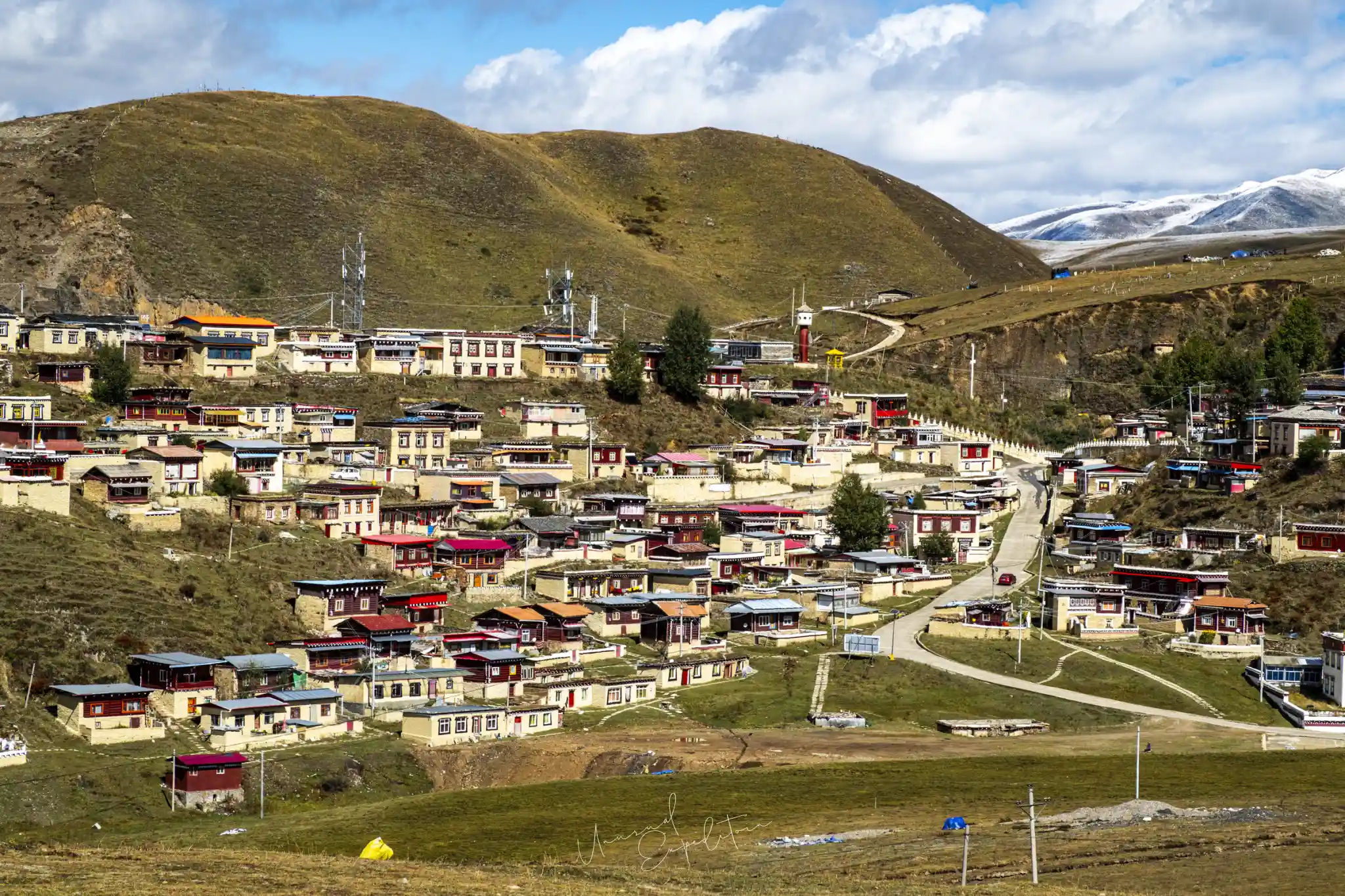
Tagong grassland photos are wide and simple: open golden pasture at about 3,700 to 3,900 metres, a small Tibetan town and its Sakya monastery, scattered stone houses, yaks in the streams, and on a clear day the snow pyramid of Zhara Lhatse, also called Yala, standing over everything. This guide shows what we photographed on the Tagong grassland on our October western Sichuan trip, where we stood, and when the mountain shows itself.
Tagong is one of the places covered in our western Sichuan photography tour guide, which explains permits, altitude and how the region fits together; here we go in close on the grassland itself.
Tagong grassland: where it is and why photographers go
The Tagong grassland lies in Kangding county in Garze prefecture, on the high road west of Kangding, and the small town of Tagong, Lhagang in Tibetan, sits at its centre. Wikipedia gives the grassland at around 3,900 metres and the town a little lower. Photographers come for the combination you rarely get in one place: a working Tibetan town, a monastery with white stupas and gold roofs, open pasture with nomad tents and yaks, and one of the sacred snow peaks of Kham rising straight out of it. Zhara Lhatse reaches 5,820 metres according to Wikipedia and is counted among the holy mountains of the region in the Gesar epic. When the peak is clear, almost any frame on the grassland has a strong background; when it is in cloud, the town and its people carry the pictures.
Tagong grassland altitude and weather
Tagong grassland altitude, close to 3,900 metres, means cold mornings and strong sun. Even in October the grass is often white with frost at first light, and fresh snow can dust the lower hills overnight, as it had on our visit, which is what makes the stone houses stand out against a white slope. Tagong grassland weather changes fast: a clear dawn can turn to cloud on the peak by mid morning, then clear again late in the day. Plan the mountain pictures for early morning and late afternoon and use the middle of the day for the town and monastery. If you come up from Chengdu, Kangding is lower and makes a sensible first stop before sleeping this high. Our best time to visit western Sichuan explains why autumn gives the clearest skies.
Zhara Lhatse from the grassland
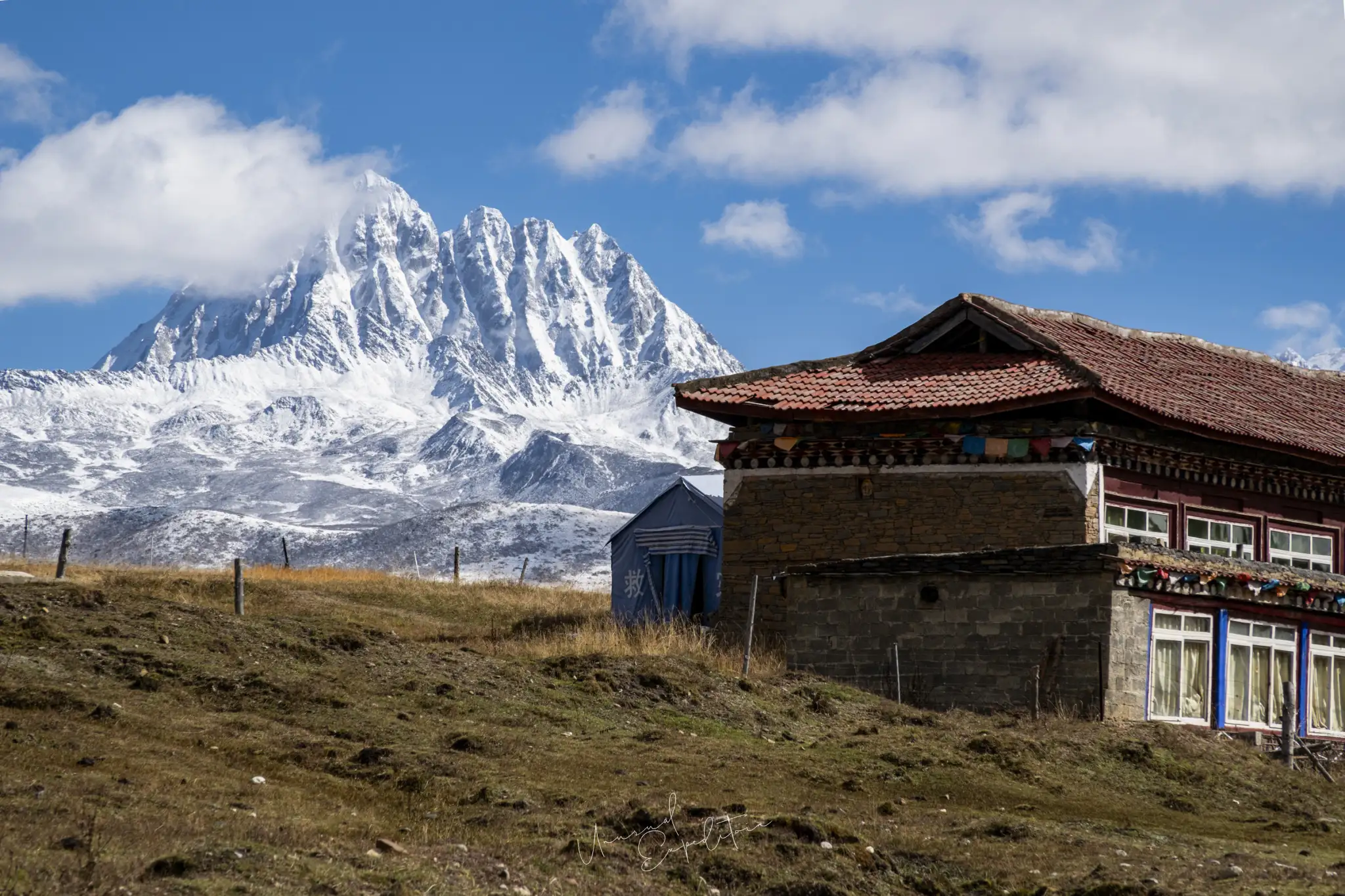
The best views of Zhara Lhatse come from the open ground west and north of the town, where you can put a stone house, a line of stupas or a herd of yaks in front of the peak. A longer focal length compresses the mountain behind a single building, as in the picture below; a 24-70mm shows how small the houses are on the huge pasture. The peak is a sharp pyramid with its glaciers facing the grassland, and it takes the first pink light before sunrise. On clear evenings the last sun turns it gold while the grassland below is already in shadow, so expose for the snow and let the foreground go dark.
Tagong monastery
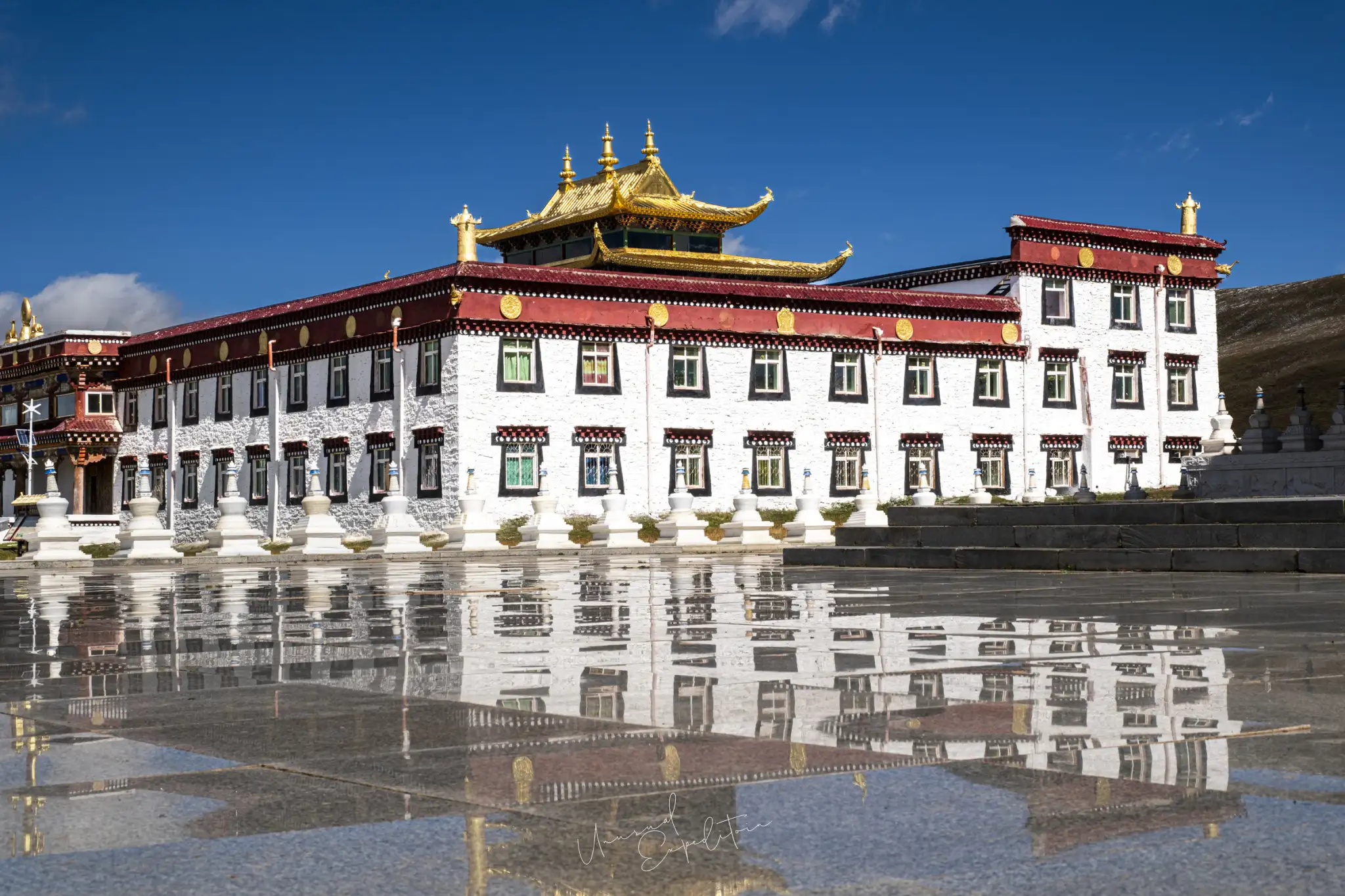
Tagong monastery, also called Lhagang Gompa, stands at the heart of the town and belongs to the Sakya school of Tibetan Buddhism. Local tradition gives it a history of more than a thousand years and connects it with the journey of Princess Wencheng to Lhasa; we repeat that as tradition rather than verified history. Rows of white stupas, a long corridor of prayer wheels and gold roofs make the monastery a full morning of pictures. After rain, the paved square in front of one of the halls held a sheet of water that reflected the white walls and gold roofs; low down with a wide lens, the reflection doubles the building.
Yaks, streams and herders
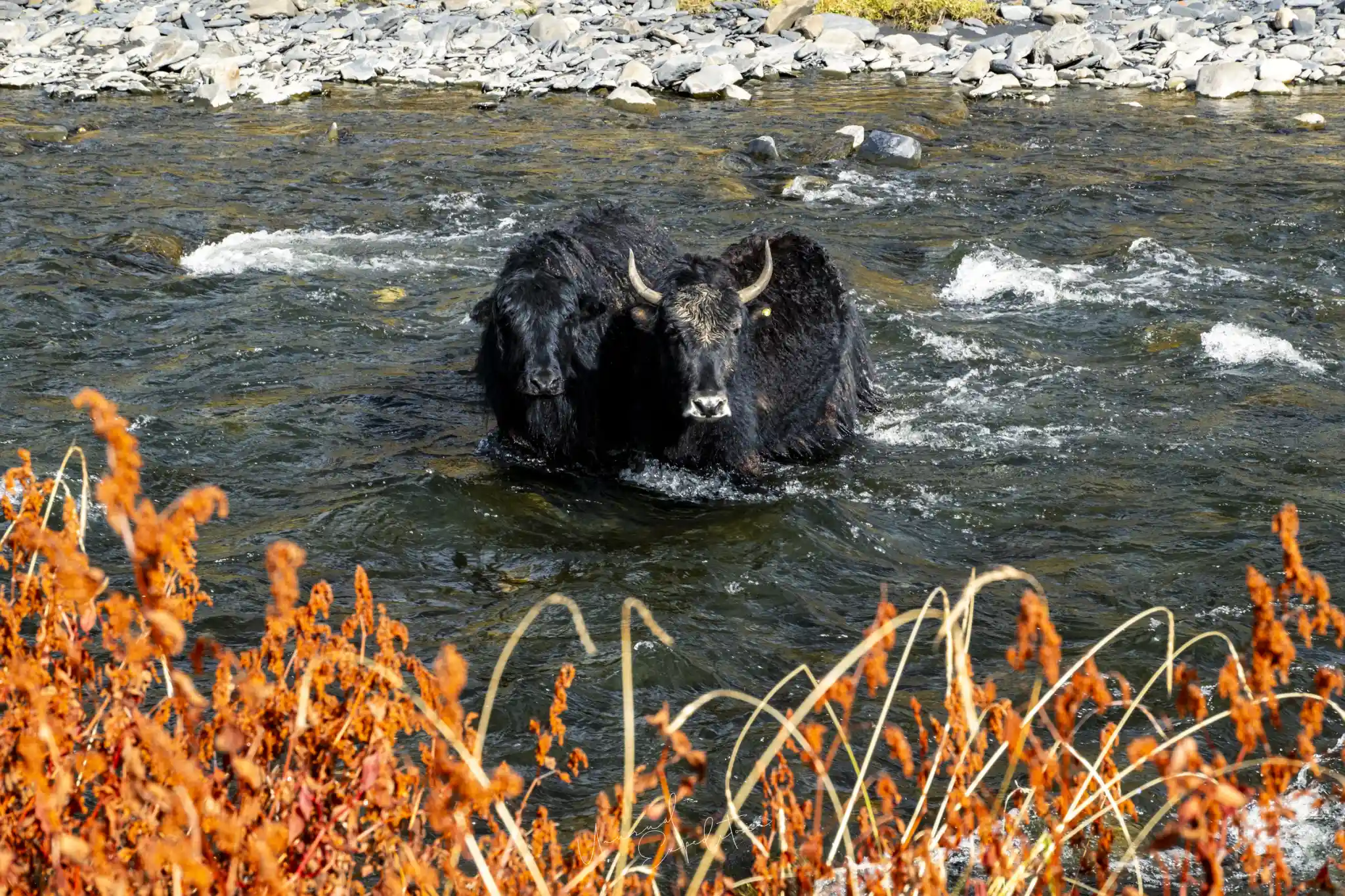
Streams wind across the Tagong grassland, and in autumn the shrubs along the banks turn orange and red. Yaks wade and graze in the shallows, and from the bank a 70-200mm lets you fill the frame with a single animal in the water without disturbing the herd. Keep your distance from bulls and from any herder's dogs, which guard the camps seriously. Herders' tents appear on the pasture in the warmer months; ask before walking up to a camp, and accept that some families do not want visitors.
People of Tagong
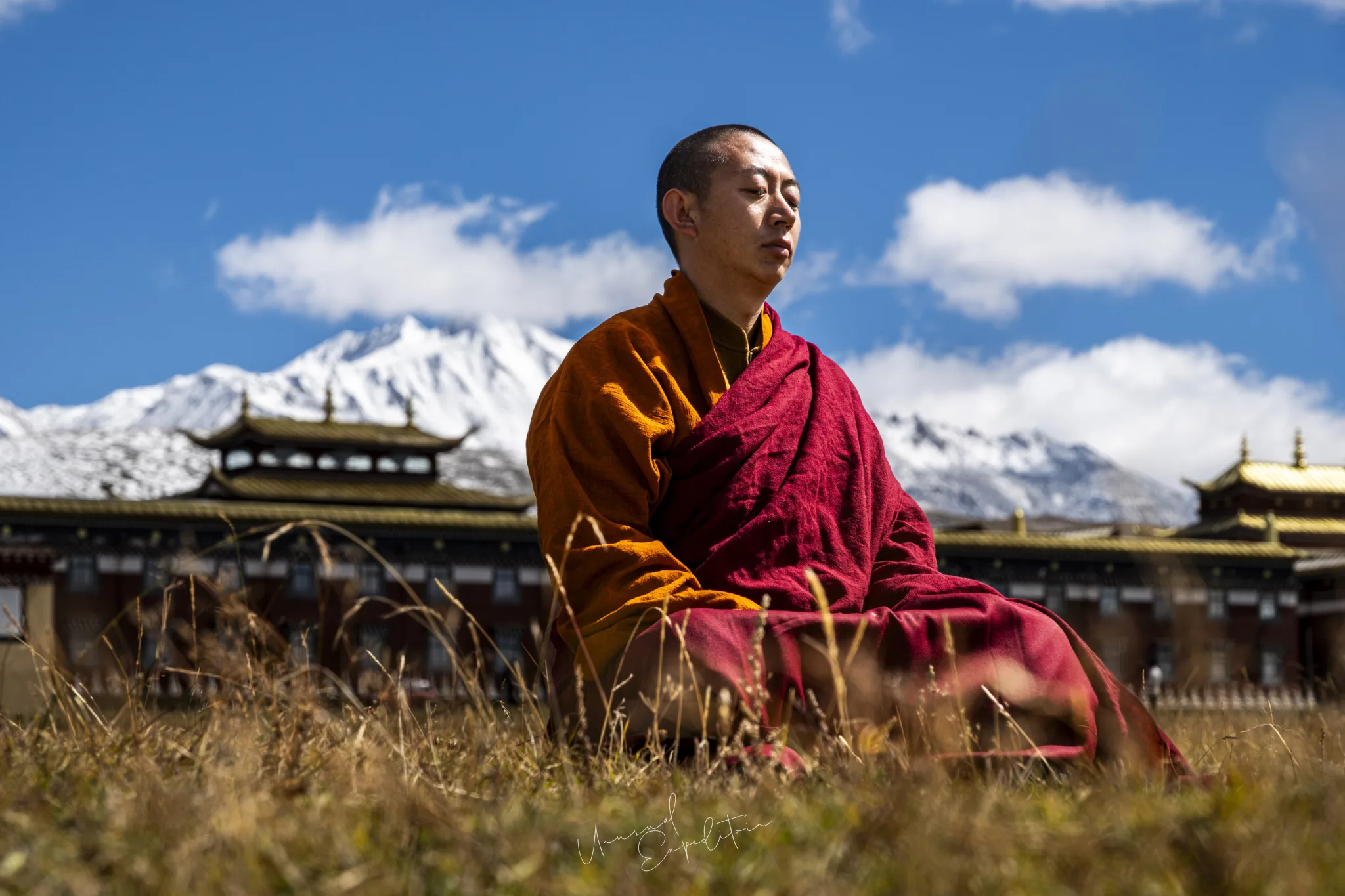
Tagong is a market town for the herding families of the grassland, and the main street and the monastery kora are busy with people in traditional dress, monks, and pilgrims turning prayer wheels. We photograph people wide in their setting, or as portraits only when someone clearly agrees. A portrait like the young monk in the grass below the snow peaks comes from taking time to talk, through a guide or with gestures, before lifting the camera.
Tagong grassland photos at a glance
| Subject | Where | Best light | Lens |
|---|---|---|---|
| Zhara Lhatse with houses | Open pasture west and north of town | First and last light | 70-200mm |
| Town on the grassland | Hills behind the town | Morning | 24-70mm |
| Monastery and stupas | Town centre | Morning, after rain | 24-70mm |
| Yaks in streams | Stream banks on the pasture | Low sun | 70-200mm |
| People and pilgrims | Main street, kora | Open shade | 70-200mm |
We had fresh snow overnight at Tagong, and in the morning the mountain came out of the cloud only briefly. Everyone was in position because we had walked out early. On the plateau you do not chase the mountain. You wait for it, and you are already standing in the right place.
Joseph Mak, tour leader, Unusual Expedition
Practical notes for Tagong
Garze prefecture needs no special permit for Singapore passport holders as at our last trip, and Singapore's Immigration and Checkpoints Authority lists a 30-day visa exemption for mainland China; check both before you travel, because rules in Tibetan areas can change at short notice. Nights are well below freezing in autumn: carry a down jacket, warm gloves and spare batteries close to your body. Walk the monastery kora clockwise, do not climb on stupas or mani stone walls, and ask before photographing inside any hall. For more places on the same road, read our western Sichuan photo spots and the Litang monastery photos guide.
Photograph the Tagong grassland with us
We include Tagong on our autumn western Sichuan trips and on private trips on request. Current departures and all our China guides are on the China photography tours page.
Join the Sichuan photography tour
Inner Mongolia Winter Owl Photo Tour – China departs 01 Jan 2027 To 04 Jan 2027, led by Joseph Mak. Small group, photography first. All Sichuan photography tours.
Explore Sichuan in depth
- Western Sichuan Tour: A Photography Guide to Tibetan SichuanChina
- Sichuan Opera Face Changing in Chengdu: How to Photograph the ShowChina
- Litang Monastery Photos: Gold Roofs, Monks and Yaks at 4,000 MetresChina
- Western Sichuan Photo Spots: Litang, Tagong, the Passes and DanbaChina
- Larung Gar Photos: The Buddhist Academy at Seda, and Whether You Can Go NowChina
- Chengdu Teahouse Photos: Old Teahouses and Sichuan OperaChina
- Best Time to Visit Western Sichuan for PhotographyChina
Upcoming Photo Tours
- Egypt Photo Tour – EgyptEgypt 12 Dec 2026 To 20 Dec 2026
- Inner Mongolia Winter Owl Photo Tour – ChinaChina 01 Jan 2027 To 04 Jan 2027
- Inner Mongolia Winter Photo Tour – ChinaChina 05 Jan 2027 To 11 Jan 2027
- Mekong And Central Highland Vietnam Photo Tour - VietnamVietnam 16 Jan 2027 To 24 Jan 2027