
Namib Desert Photography: Camelthorn Trees, Gemsbok and Sunset Plains
Namib Desert photography beyond the dunes: camelthorn trees, gemsbok, gravel tracks, dawn colour and sunsets on the plains.
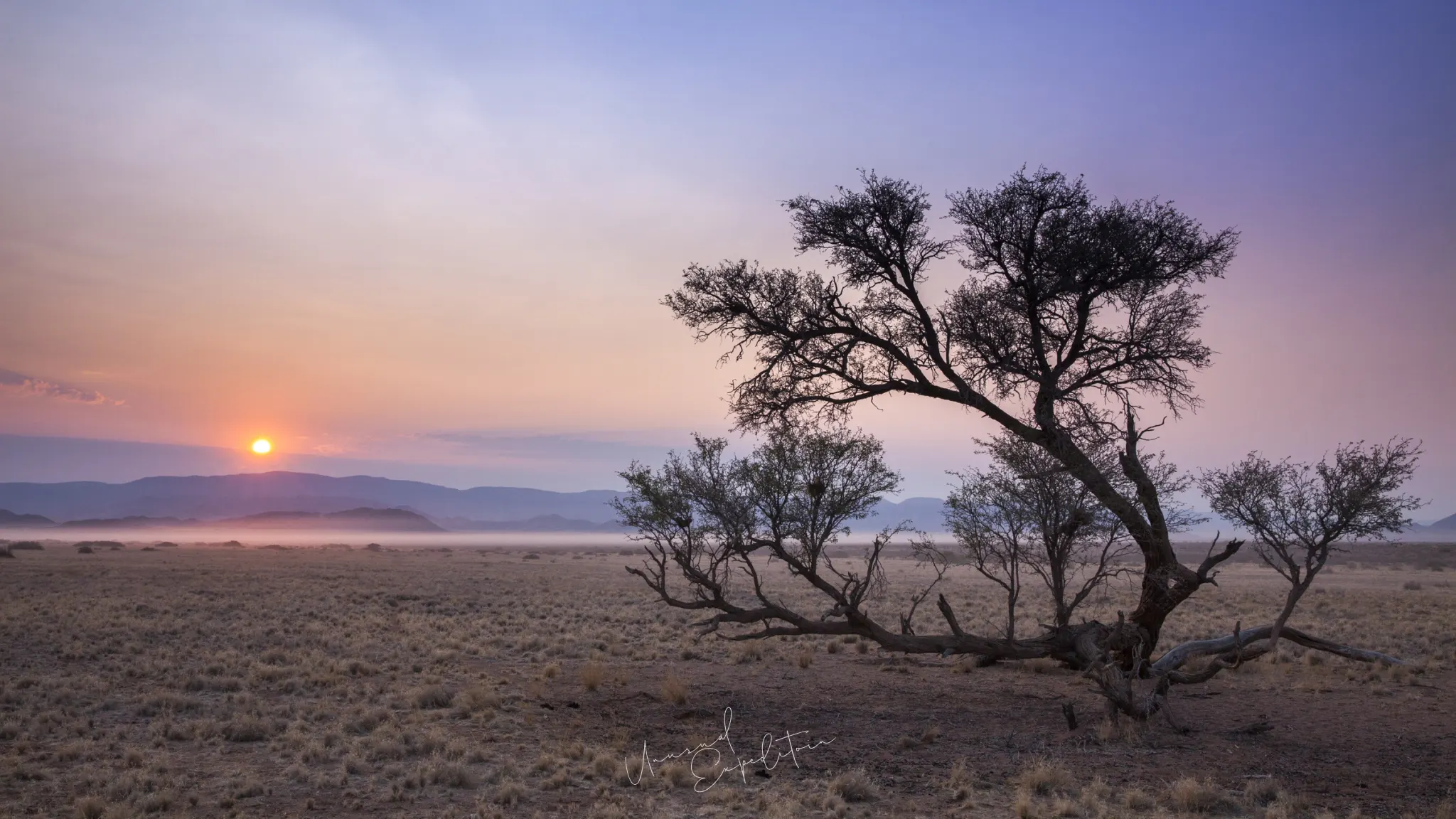
Namib Desert photography is more than the dunes. Between the famous sand and the escarpment lie grassland and gravel plains, red ridges, lone camelthorn trees and herds of gemsbok, and at dawn and dusk they give some of the quietest and most graphic pictures in Namibia. The Namib is one of the oldest deserts in the world, and the plains reward a photographer who slows down.
These plains are part of the Namibia photography tour guide, and they sit beside the dunes covered in our Sossusvlei photography tour guide. The photographs in this article are our own, taken on our trips across the desert; we hold the rights to them, and the notes come from knowing these places first hand.
What is the Namib Desert, and what does it look like?
The Namib is a coastal desert that stretches along most of Namibia's Atlantic shore, with the cold Benguela Current to the west. Inland it gives way to the escarpment and the highlands. Much of it is gravel plain and dry grassland rather than sand, with red rock ridges breaking the horizon, and dunes only in certain areas. Rain is scarce and irregular, but fog from the sea gives some plants and animals a living. For a photographer, that means long views, pale ground and a sky that dominates the frame.
Namib Desert photography: where does the track lead?
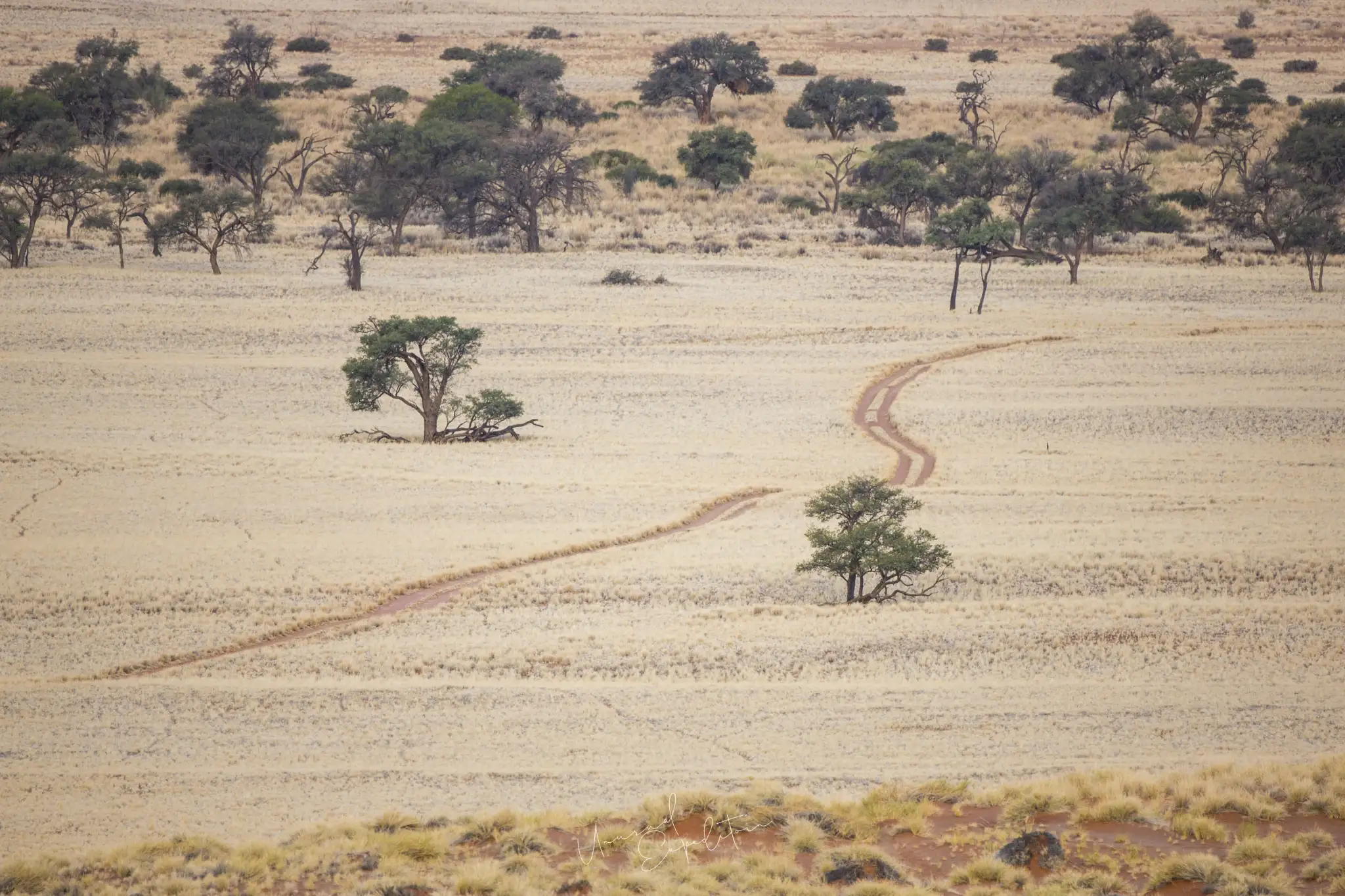
A gravel track across a pale plain is one of the most useful compositional tools in the desert. It gives a leading line, a sense of scale and a story of travel. Camelthorn trees dot either side, and the track curves toward the horizon. Shoot from a slightly raised position, if you can, so that the track unrolls into the frame, and wait for light to catch the trees. A 24-70mm covers it, and a 70-200mm compresses the distance. Keep the horizon level; with no vertical lines, a tilt shows at once.
The camelthorn tree: alive, dead and silhouetted
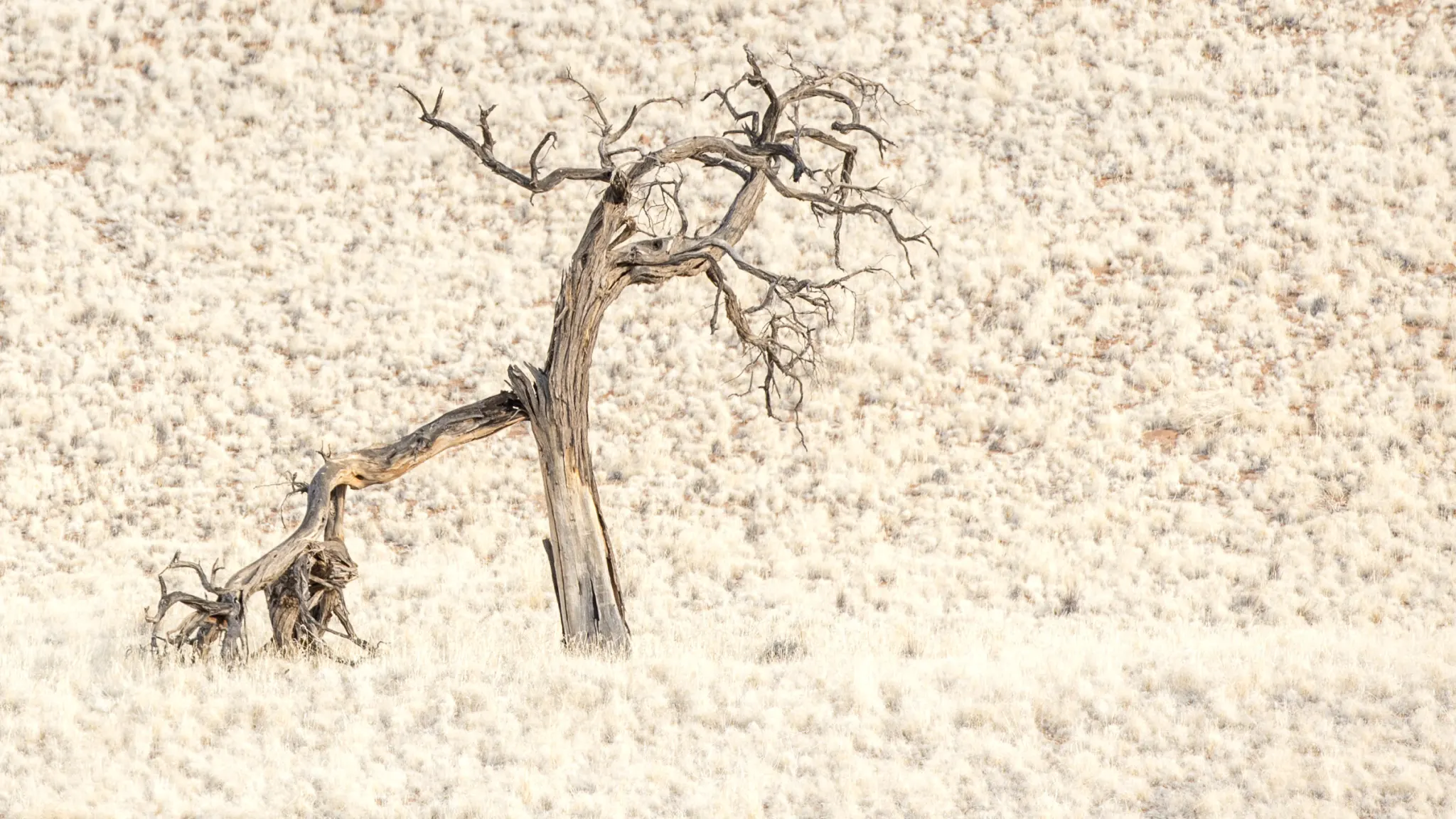
Camelthorn is the tree of the Namib, and it appears in every stage of life. Green ones hold the plains together, dead ones lean on bleached ground like sculpture, and a silhouette at sunset is a classic. For a dead tree, look for a plain background and use soft light to keep the texture. For a living one, use a clean horizon and give it space. The same species stands in Deadvlei, covered in our Deadvlei photography article, but out on the plains it has room to be a lone figure.
Namib Desert sunrise: what does dawn do to the plains?
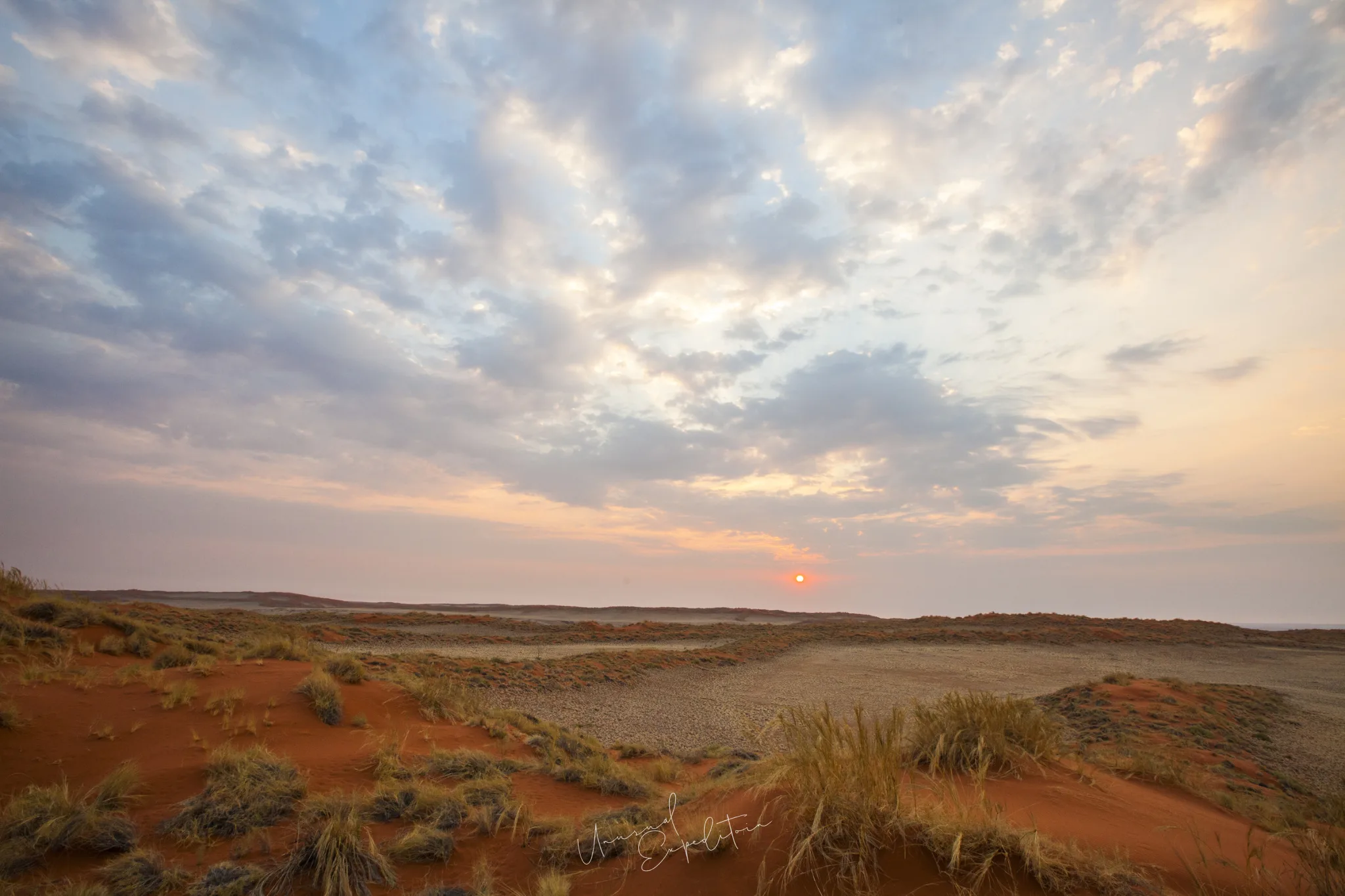
At dawn the sky does the work. Warm colour builds in the cloud above a red dune edge or gravel plain, and the ground below holds the last of the night's blue. Be in position early and shoot through the colour change rather than waiting for a single moment. A tripod helps with the low light, and a graduated filter or bracketed exposures balance the bright sky against the dark ground. After the sun clears the horizon the colour fades quickly, so make the most of the minutes before.
Gemsbok on the plains
The gemsbok, or oryx, is the desert's characteristic large animal, adapted to dry country, with long straight horns and a pale coat with black markings. They stand in loose groups on the golden grass and watch you with steady attention, and a vehicle used as a hide gets you reasonably close. Use a 70-200mm or 100-400mm, shoot at eye level, and look for a background of grass or scrub that does not cut through the animals. Early and late light turn the coat and the grass gold.
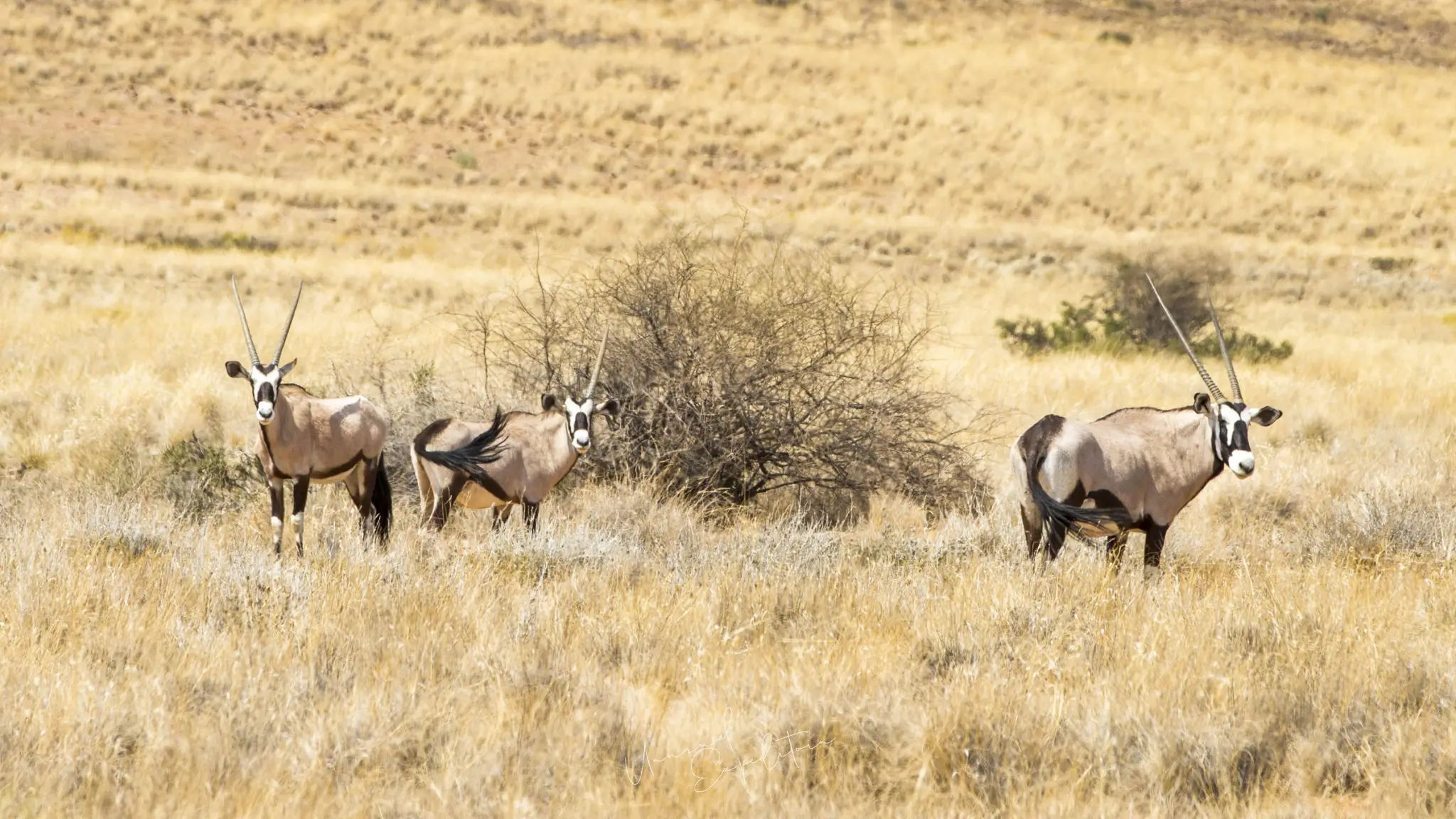
On the plains I take more pictures of nothing than of anything: a tree, a track, some cloud. In the desert the less there is in the frame, the more the picture says.
Joseph Mak, tour leader, Unusual Expedition
Sunset and the low red sun
The plains work as well at sunset as at dawn, and the dusty air can turn the sun a deep red. A camelthorn tree against a hazy sun is the classic frame, and a fence or track can add a line. Expose for the sky and let the tree go to silhouette, then bracket for a version with more detail. The last light fades quickly, so stay in place until the sky has finished changing, which is often after the sun has gone.
What kit and settings work on the plains?
A 24-70mm and a 70-200mm cover almost everything, with a 16-35mm for sky-heavy frames and a 100-400mm for animals. A tripod is worth carrying for the low-light shoots. Use a small aperture for depth when a tree sits in the foreground, and expose to the right so you do not lose the bright sky. Keep a cloth and a blower with you, because dust is constant on gravel roads, and keep the camera bag zipped when you drive.
Driving and safety on the gravel
The plains are crossed by gravel roads, and the UK Foreign Office advises avoiding driving outside towns at night because of wildlife and livestock. Distances are long, so carry plenty of water, check the vehicle and tell someone your route. Do not leave the track, which damages fragile ground. Nights can be close to freezing in winter, according to the climate sources we checked, so warm clothing is useful. Check the official source for any road conditions or permits before you travel.
Where does this fit in a Namibia trip?
The plains fill the long driving days between the big sites, and the best pictures often come from unplanned stops. For the dunes and pans, see Sossusvlei dunes photography; for the seasons, best time to photograph Namibia. We plan so that you are on the plain for the light, not stuck in a vehicle at the wrong time.
Photograph the Namib with us
We run Namibia as a private trip on request and plan the long days around the light. The pace and dates are yours, we arrange the logistics, and a photographer or photography coaching can be added at extra cost. Ask at least two months ahead. See private tours and the Namibia photography tours page.
Namibia photography tours
The next Namibia departure is announced on the Namibia photography tours page, with previous expeditions and all the planning guides.
Explore Namibia in depth
- Namibia Photography Tour: Dunes, Deadvlei, Etosha and the CoastNamibia
- Namibia Photography Trip FAQ: Safety, Visa, Driving and KitNamibia
- How to Plan a Photography Trip to Namibia: Self Drive or GuidedNamibia
- Best Time to Visit Namibia for Photography, Month by MonthNamibia
Upcoming Photo Tours
- Egypt Photo Tour – EgyptEgypt 12 Dec 2026 To 20 Dec 2026
- Inner Mongolia Winter Owl Photo Tour – ChinaChina 01 Jan 2027 To 04 Jan 2027
- Inner Mongolia Winter Photo Tour – ChinaChina 05 Jan 2027 To 11 Jan 2027
- Mekong And Central Highland Vietnam Photo Tour - VietnamVietnam 16 Jan 2027 To 24 Jan 2027