
Ngorongoro Crater View: Rim Viewpoints and Photo Spots on the Crater Floor
Ngorongoro crater view from the rim, then the floor: rhino grassland, pools, swamps, Lerai forest, a Maasai boma, Oldupai.
The best Ngorongoro Crater view is from the rim, where viewpoints along the rim road look about 600 metres down onto the whole caldera floor, and the best photo spots below are the open grassland where the black rhinos graze, the springs and pools, the swamps, Lake Magadi and the Lerai forest. Add a Maasai boma in the highlands and Oldupai Gorge to the west. Each has its own light and its own rules, set by the Ngorongoro Conservation Area Authority.
All of them sit inside our Ngorongoro photography tour guide, which explains the conservation area, the seasons and how a visit runs. Here we go place by place: where to stand, which way the light falls, the lens and the crowds. The photographs are our own, from our trips through the crater and the highlands.
Ngorongoro Crater view: how the spots work
Ngorongoro Crater is the caldera of a volcano that collapsed two to three million years ago, about 600 metres deep with a floor of roughly 260 square kilometres. It lies inside the Ngorongoro Conservation Area, a UNESCO World Heritage Site where Maasai herders live alongside the wildlife. The NCAA's published regulations shape every spot: keep to authorised roads and tracks, no more than five vehicles around an animal or a kill, a licensed guide in the crater and at Oldupai Gorge, and one-way roads for the descent and the climb out. Operators work to a limit of about six hours on the floor per descent, so check the current rule. Bring a 100-400mm or 200-400mm, a 70-200mm and a 24-70mm.
Ngorongoro crater rim viewpoints
The rim road runs along the top of the crater wall, and from the viewpoints and lodges along it you see the floor as one picture: the grassland, the shine of Lake Magadi, the dark patch of the Lerai forest and the far wall. The rim is high and often in cloud early in the day, which can mean mist pouring over the edge, or nothing at all. Late afternoon usually gives the clearest view, with the low sun lighting the floor and the far wall. Use a 24-70mm for the whole caldera, and a 70-200mm to pick out the lake or a herd as specks for scale. The rim is where everyone stops, so walk a little along the viewpoint for a clean foreground.
The descent road
The NCAA runs the roads into the crater one way: the Seneto road for the descent only, the Lerai road for the climb out, and the Lemala road both ways. The Seneto descent gives the second great view, with the floor opening below you as the vehicle drops. The first vehicles down after the gates open have the floor in the soft early light, before the dust and the crowd. Have the 24-70mm ready through the window; there is no stopping just anywhere on the way down.
The grassland of the crater floor
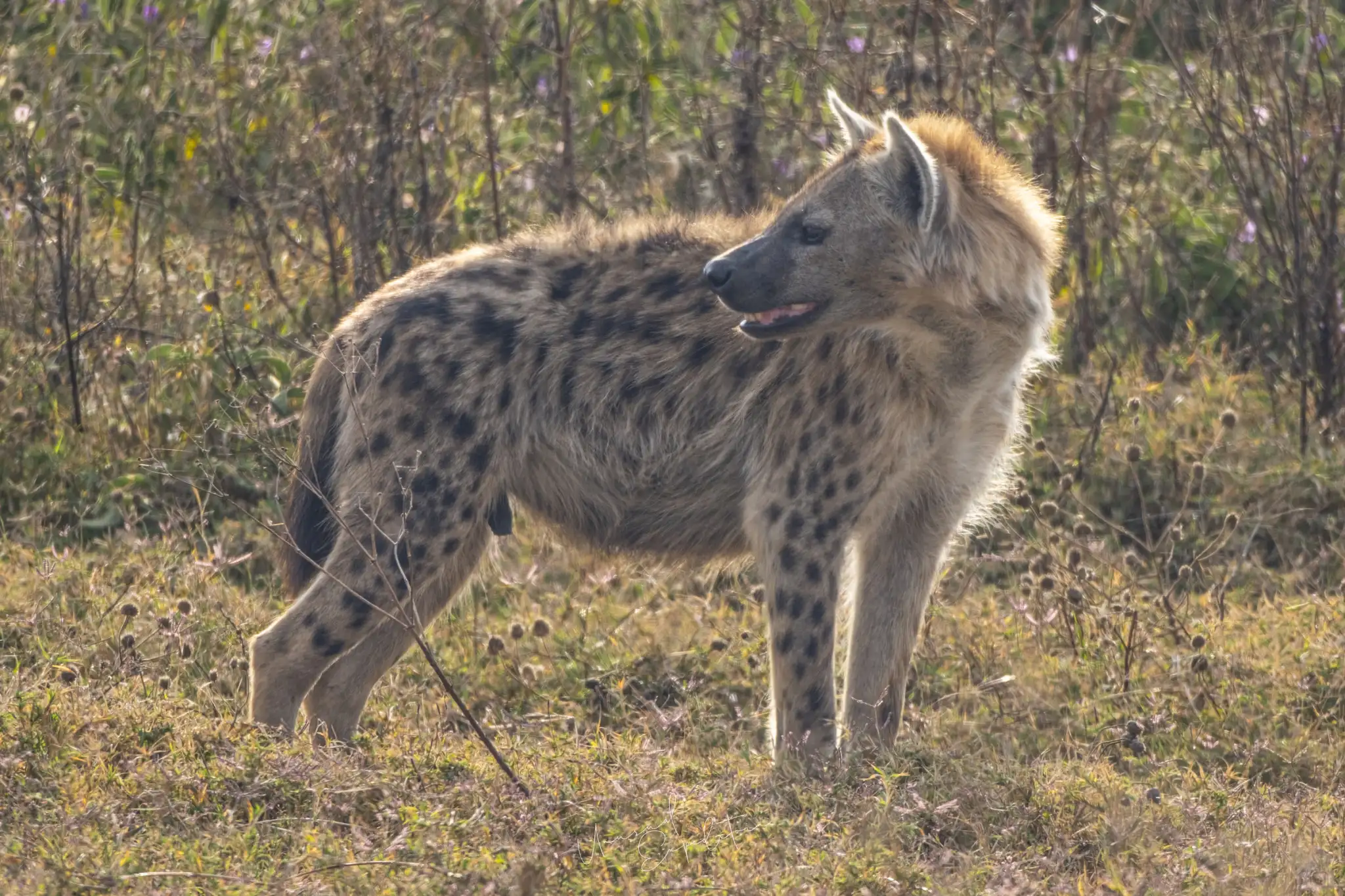
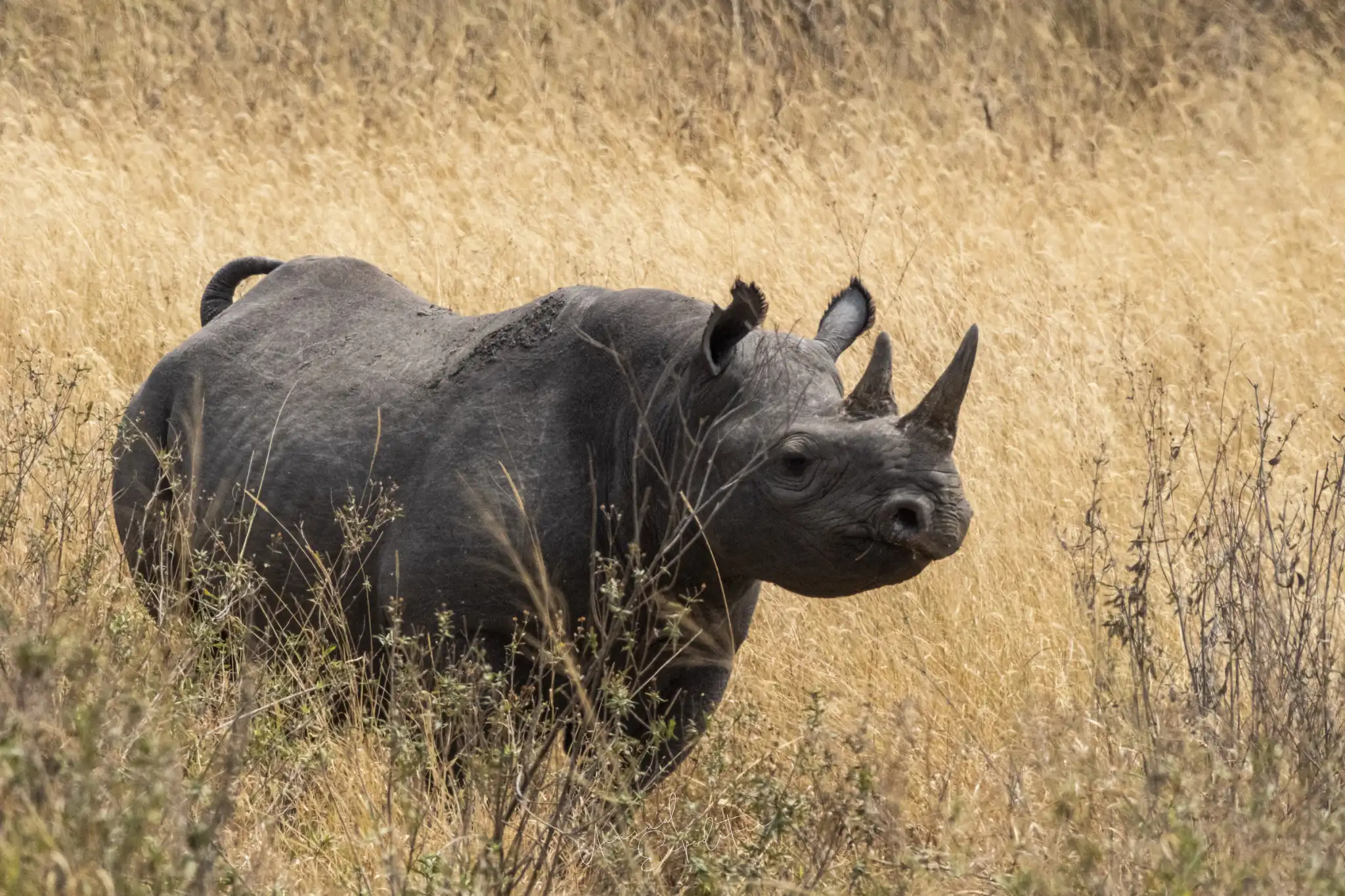
Most of the floor is open short grass, and this is where you find the zebra and wildebeest herds, the hyenas, the lions resting in the open and, with luck, the black rhinos. The rhinos are a small, closely protected population and often keep their distance, so a long lens is essential. The light is best in the first hours after the descent, with the sun behind you and the crater wall as a backdrop. A spotted hyena in that early light, the frame on our card, is typical of the floor in the morning. Use a 200-400mm or 100-400mm, and accept that heat haze softens anything far away by midday. Our Ngorongoro Crater animals guide covers what lives on the floor and what does not.
The springs and pools
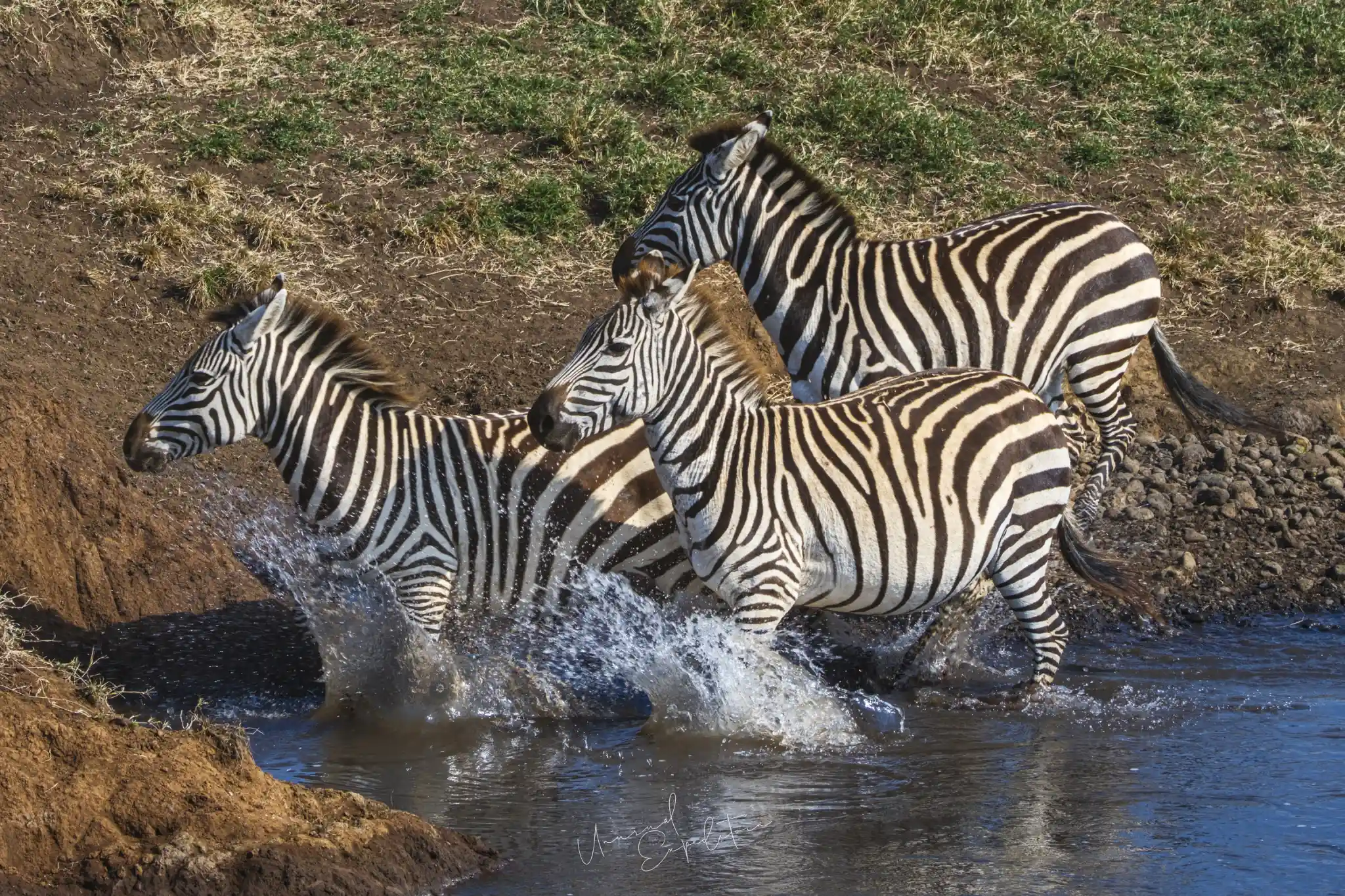
Water on the crater floor comes from springs and streams off the wall, and the pools they feed, the Ngoitokitok springs among them, draw zebras, buffalo, hippos and birds. A pool is a good place to wait: animals come to drink, splash across and sometimes fight. Shoot from the side so the light falls across the water and shows the spray, and use a fast shutter. A 100-400mm for the action, a 24-70mm when the herd crosses close to the vehicle. Some pools are popular stops, so arrive early or late.
The swamps and Lake Magadi
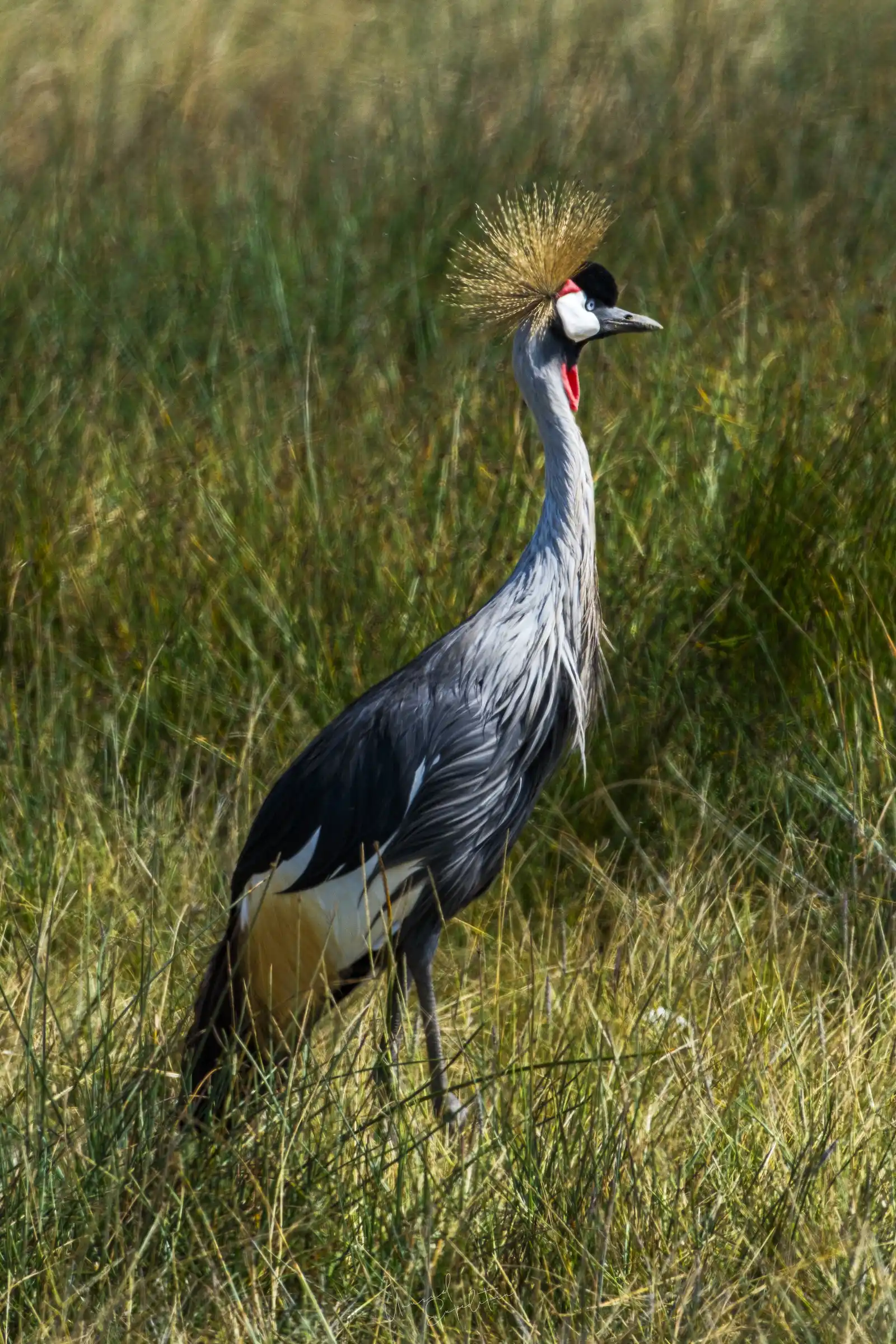
The swamps on the crater floor stay green with reeds when the grassland dries, and they hold buffalo, waterbuck, elephants and a great many birds: grey crowned cranes, egrets, herons. Lake Magadi, the shallow soda lake in the middle of the floor, often holds flamingos, mostly lesser flamingos, when the water suits them. Both are best in the morning, with the low sun on the reeds and the water still. Long lenses here, and look for the crane against the green rather than the sky. Our best time to visit Ngorongoro Crater guide covers how the floor changes through the year.
The Lerai forest
The Lerai forest, a stand of yellow fever trees on the floor, is the shaded corner of the crater. The pale yellow-green trunks make an unusual background for elephants and baboons, and the light under the canopy is soft even at midday. The NCAA does not allow entry to the Lerai forest on foot, so you photograph it from the road along its edge. A 70-200mm frames an elephant against the trunks; expose for the animal and let the bright gaps go.
"The rim view is the one everyone remembers, but I tell people to look back up at the wall from the floor. The crater only makes sense when you see an animal with that wall behind it. Get down early, keep the sun behind you, and use the wall as your backdrop."
Joseph Mak, tour leader, Unusual Expedition
A Maasai boma in the highlands
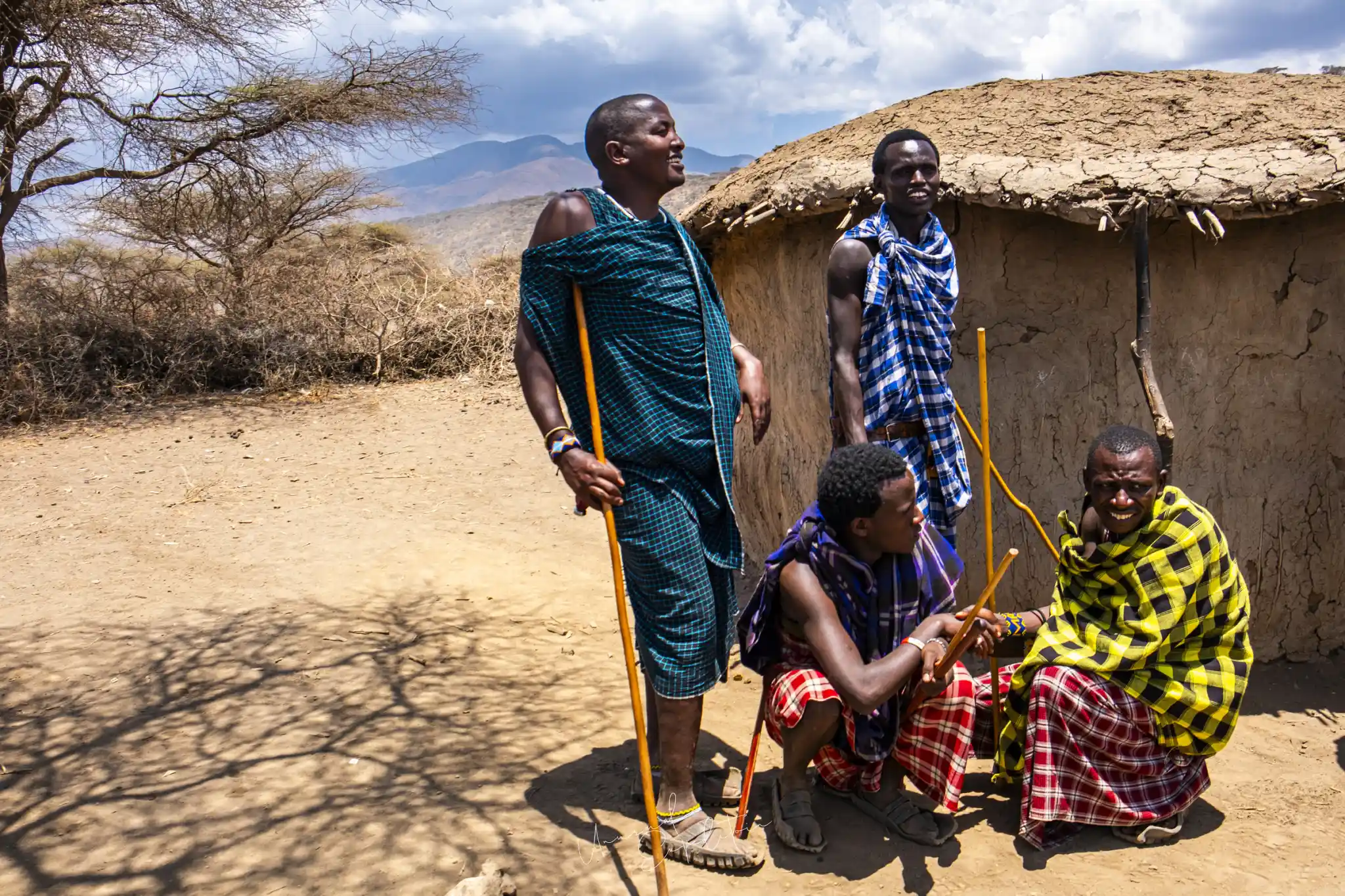
The Ngorongoro highlands around the crater are Maasai grazing land, and some bomas welcome visitors for a fee to the community. Here you can leave the vehicle and photograph people: the welcome song, the jumping dance, the houses of mud and sticks inside the thorn fence. Ask before photographing anyone, and leave children out of your pictures. The highland light is clear and hard by midday, so the morning is kinder to faces and to the colour of the shukas. A 24-70mm covers it. Our Maasai village in Ngorongoro guide covers the visit and the etiquette.
Oldupai Gorge
Oldupai Gorge, often written Olduvai, lies in the conservation area between the crater highlands and the Serengeti plains and is one of the best-known early human sites in the world. The museum and the view over the gorge make a short stop on the road west, with a licensed guide as the NCAA requires. The layered walls of the gorge photograph best in low side light, so a stop late in the day suits it. A 24-70mm for the gorge, a 70-200mm for the layers.
Which Ngorongoro spot for which picture
| Spot | Main subject | Best light | Lens |
|---|---|---|---|
| Crater rim viewpoints | The whole caldera | Late afternoon, mist early | 24-70mm, 70-200mm |
| Seneto descent road | The floor opening below | First light | 24-70mm |
| Crater floor grassland | Rhinos, hyenas, lions, herds | Morning | 200-400mm, 100-400mm |
| Springs and pools | Zebras, buffalo, hippos | Morning, side light | 100-400mm, 24-70mm |
| Swamps and Lake Magadi | Cranes, flamingos, buffalo | Morning | 100-400mm |
| Lerai forest | Elephants among fever trees | Any time | 70-200mm |
| Maasai boma | People, dance, houses | Morning | 24-70mm |
| Oldupai Gorge | Gorge walls, museum | Late in the day | 24-70mm, 70-200mm |
The rim and the descent give the view; the floor gives the animals; the highlands give the people.
Photograph Ngorongoro with us
Our scheduled Serengeti Photo Tour crosses the Ngorongoro Conservation Area, with Oldupai Gorge and the crater rim views on the way. The current departure and every destination guide for the country are on the Tanzania photography tours page.
Join the Ngorongoro photography tour
Serengeti Photo Tour – Tanzania 2027 departs 21 Aug 2027 To 01 Sep 2027. Small group, photography first. All Ngorongoro photography tours.
Explore Ngorongoro in depth
- Ngorongoro Crater Photography: The Complete GuideTanzania
- Ngorongoro Photography FAQ: Fees, Opening Hours and Crater RulesTanzania
- Ngorongoro Crater vs Serengeti: Which to Photograph, and Is the Crater Worth ItTanzania
- Ngorongoro Crater Photos: What the Crater Really Looks LikeTanzania
- Ngorongoro Crater Animals: Black Rhino, Buffalo, Hyena and the RestTanzania
- Maasai Village Ngorongoro: Visiting and Photographing with RespectTanzania
- Lake Natron Photos: The Soda Lake and Ol Doinyo LengaiTanzania
- Best Time to Visit Ngorongoro Crater for PhotographyTanzania
Upcoming Photo Tours
- Egypt Photo Tour – EgyptEgypt 12 Dec 2026 To 20 Dec 2026
- Inner Mongolia Winter Owl Photo Tour – ChinaChina 01 Jan 2027 To 04 Jan 2027
- Inner Mongolia Winter Photo Tour – ChinaChina 05 Jan 2027 To 11 Jan 2027
- Mekong And Central Highland Vietnam Photo Tour - VietnamVietnam 16 Jan 2027 To 24 Jan 2027