
Photos of Greenland People and Villages: Ittoqqortoormiit as It Is Lived
Ittoqqortoormiit in photos: why the houses are painted, the church, the working shore, the sled dogs, and photographing people with care.
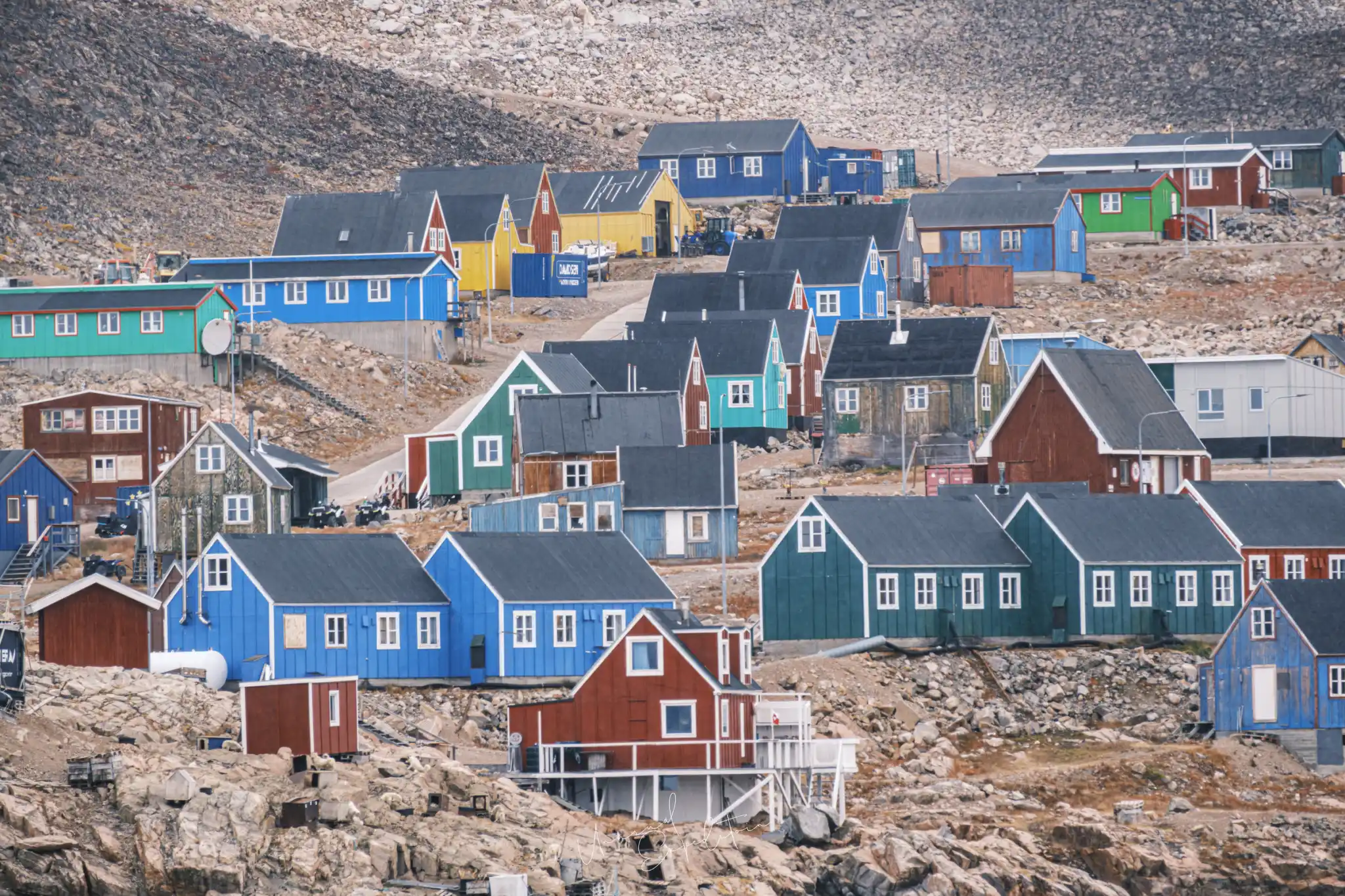
Photos of Greenland people and villages from the east coast show one place: Ittoqqortoormiit, a hunting community of about 350 people on the north shore of the Scoresby Sund entrance, and the only settlement for some 800 kilometres of coast. The painted wooden houses, the small church, the workshops on the shore, the sled dogs on the slopes and the people who live among them are the human side of the Greenland photography tour we run from Reykjavik, and these frames show what that side looks like and how we photograph it without being a nuisance.
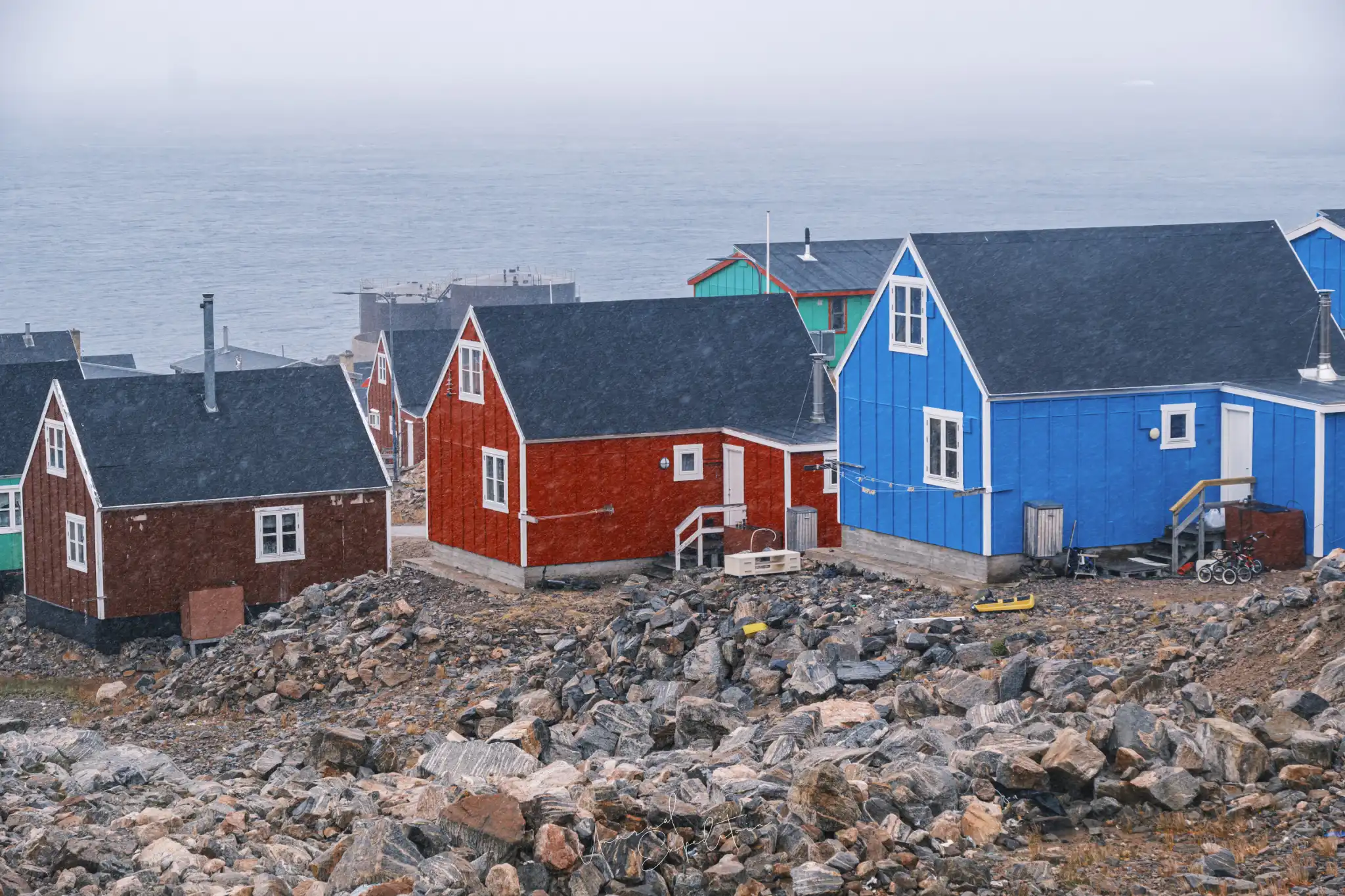
Greenland village photos: why the houses are those colours
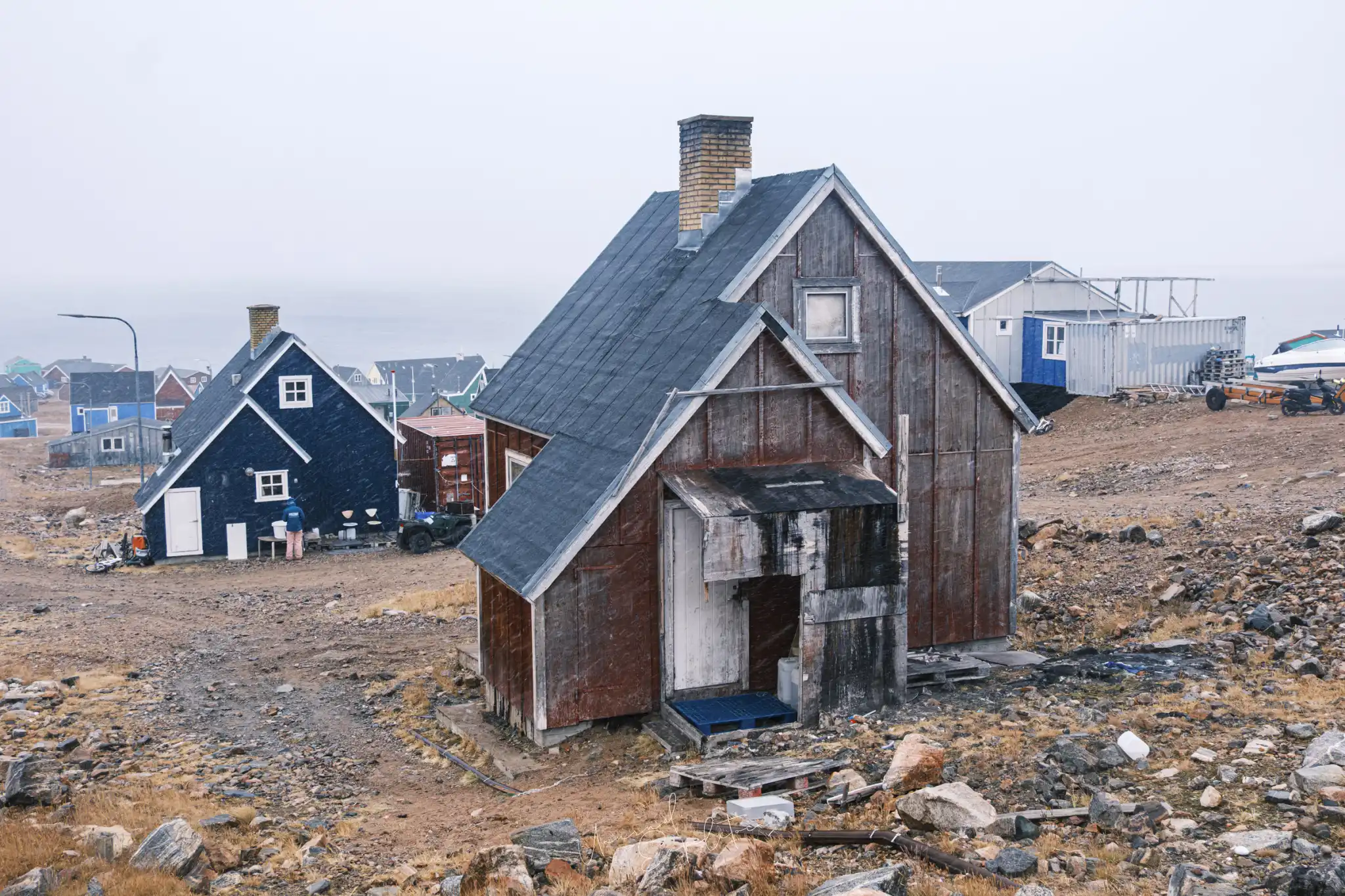
The first thing anyone notices in photos of Greenland towns is the paint. Red, blue, yellow, green and black houses stand on rock with no gardens and no fences, and the colour is not decoration. In the Danish colonial period the colours signalled a building's use: red for shops and trading posts, yellow for hospitals, blue for fish factories, green for communications, black for the police. The code has loosened over the decades and people now paint as they like, but the habit of strong colour against grey rock has stayed, and in Ittoqqortoormiit it is what makes the town photograph so well in flat light. Visit Greenland tells the same story for every town on the coast. The houses are timber kits shipped in by sea, raised on posts above the permafrost, which is why they look as if they had been set down, not built.
Photos of Greenland people: who lives in Ittoqqortoormiit
Ittoqqortoormiit is a Greenlandic Inuit community founded in 1925, when families from Ammassalik further south were settled at the fjord mouth. Today around 350 people live there. Hunting is still the base of life: seal, musk ox, and under a strict quota, polar bear, taken for food and skins, with the dog sled still a working vehicle on the sea ice in winter. There is a school, a church, a supermarket, a guesthouse, a weather station, a small museum, and a health post. People work for the municipality, the school and the shop as well as hunting. The town sees a handful of expedition ships each summer and is used to visitors in small doses. We are one of those doses for a few hours, and the pictures we come away with depend almost entirely on how we behave in them.
The church and its interior
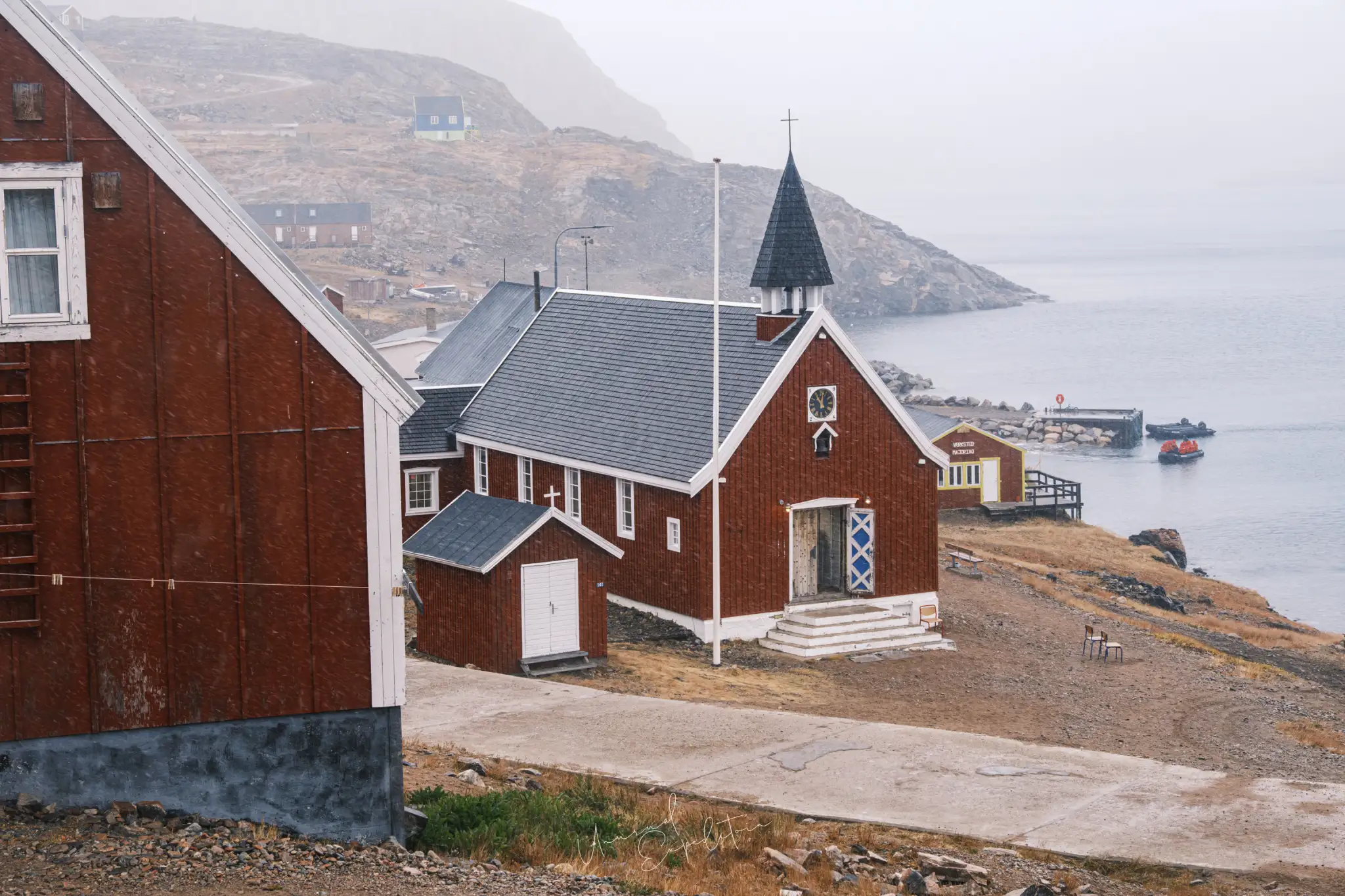
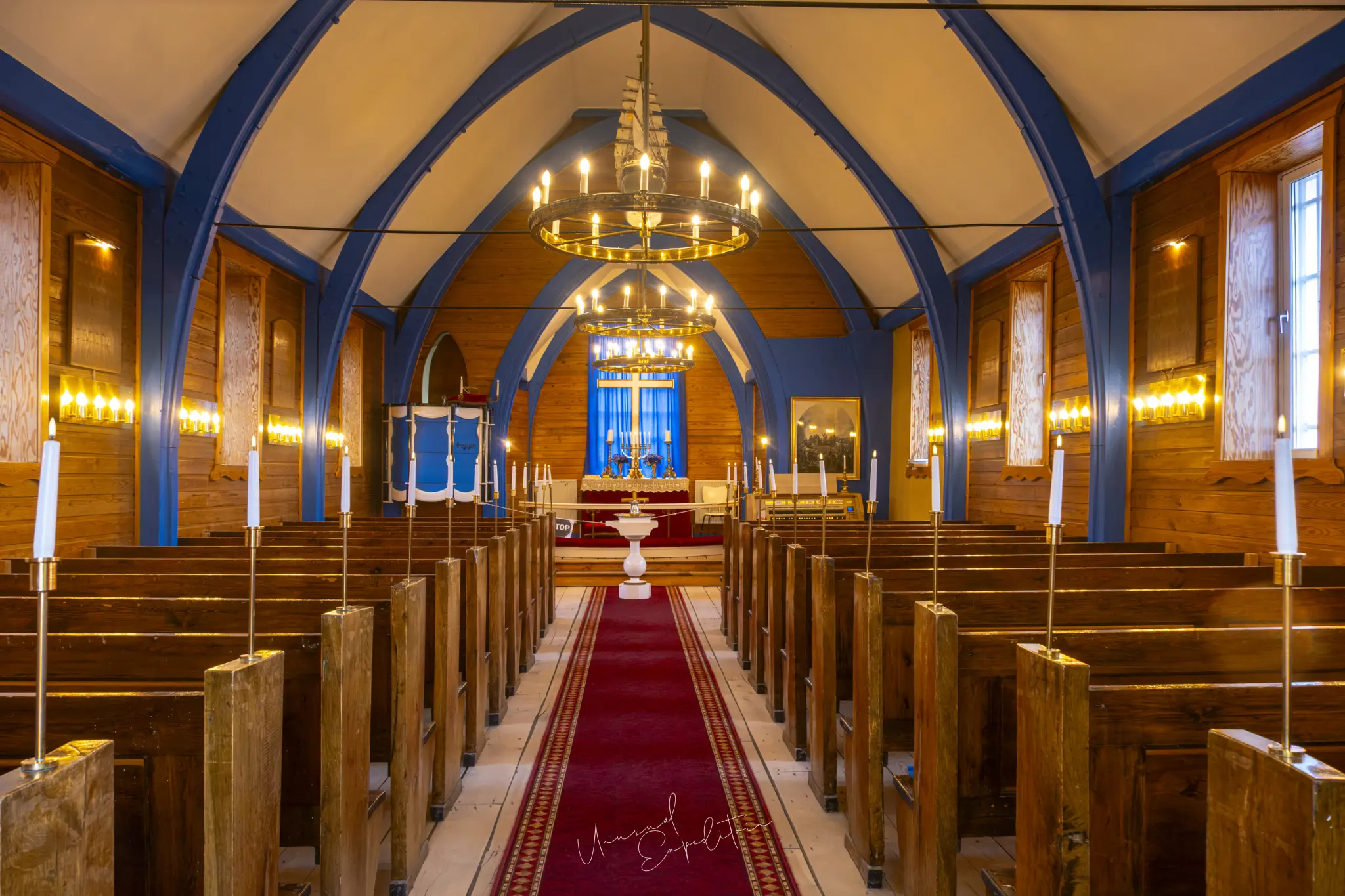
The church is the one building in town most visitors can enter, and inside it is a surprise after the plain exterior: a timber nave painted in blue and white, a red runner down the aisle, model ships hung from the ceiling as in Danish seafaring churches, and a brass chandelier. A wide lens from the back pew takes the whole room; expose for the windows and let the woodwork come up in processing, or wait for an overcast moment outside when the contrast drops. Take your hat off, keep your voice down, and leave if a service or a funeral is in progress. The exterior, white with a short tower, photographs best with the fjord mouth behind it from the track above the town.
The shoreline: workshops, boats and the harbour
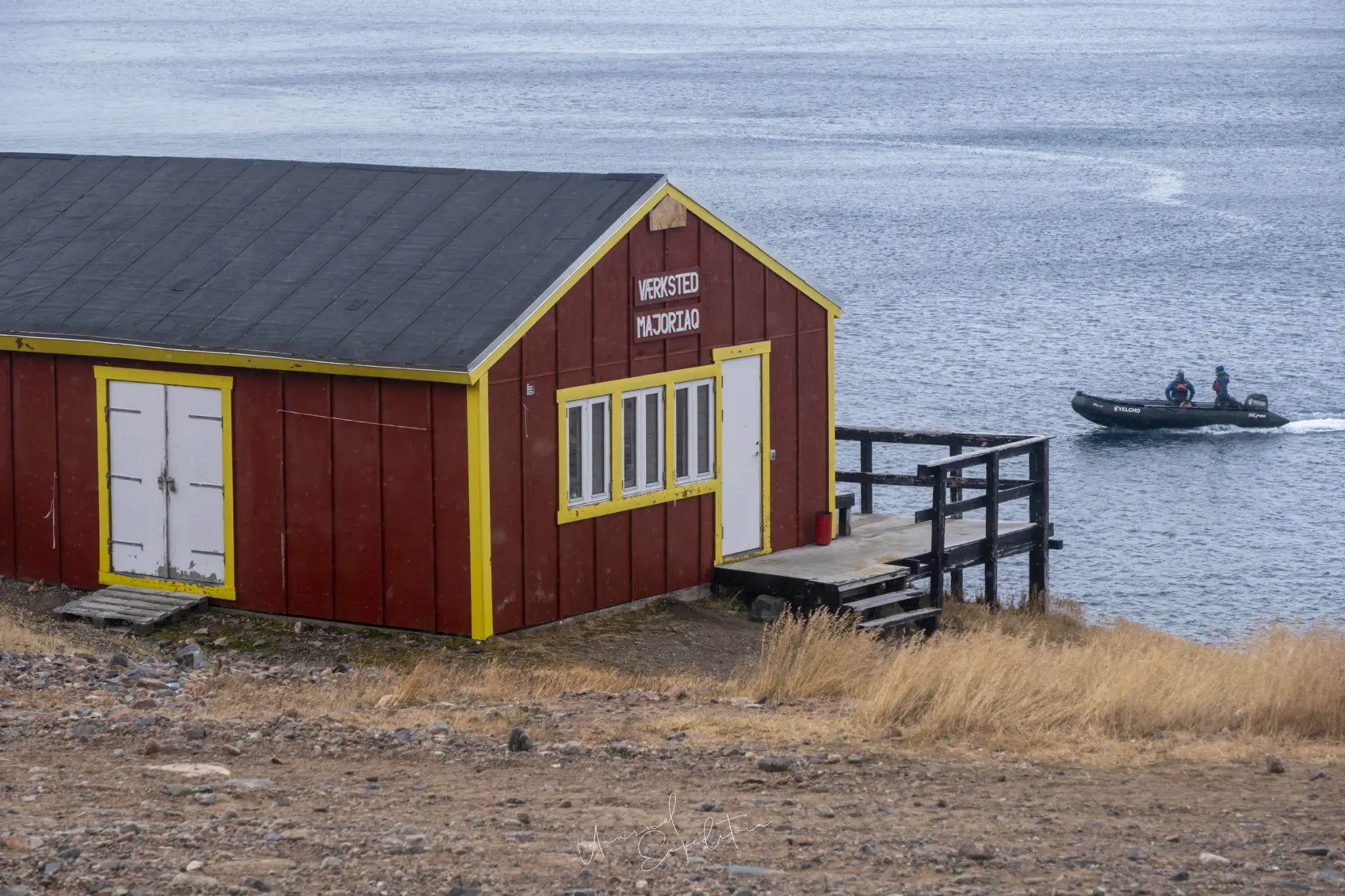
The working edge of the town is the shore. A red workshop building with yellow trim stands beside the water with a wooden jetty in front, boats are pulled up on the gravel, and the hunters' skiffs come and go from the harbour. In autumn there are skins stretched on frames and fish on drying racks. This is where the pictures of daily life are, and it is also where you are most in people's way, so stand back, use a 70-200mm lens from the beach instead of walking onto the jetty, and do not photograph anyone working unless they have seen you and nodded. The expedition ship's Zodiacs use the same shore, which makes a natural scale cue when one passes behind the workshop.
Greenland old photos: the house that shows the town's age
Among the painted kit houses stands an older building of weathered, unpainted timber with a stone chimney and a steep roof, one of the few that look their age. Buildings from the town's early decades are rare because timber in this climate is either maintained or lost, and this one has been left to grey. It makes a quieter picture than the coloured houses, and a useful one, because it says that Ittoqqortoormiit has a past as well as a palette. Shoot it in soft light with a 24-70mm lens and keep the newer houses in the background to make the point.
Greenland dog photos: the sled dogs on the slope
The Greenland dog is a working animal, bred for pulling sleds over sea ice, and in Ittoqqortoormiit the dogs live outdoors, staked in family groups on the slopes at the edge of town. Puppies run loose; adults do not. They are not pets, they are not approached, and they are never fed by visitors; the Association of Arctic Expedition Cruise Operators, whose guidelines the ship follows, is firm on all three points because a loose dog or a dog that learns to expect food is a problem for its owner. Photograph them with a 70-200mm lens from the track, at their eye level if you can crouch, and give any dog that stands up and watches you more room. In September they are between seasons, idle and shedding, and the pictures are of patience rather than action.
Photographing people in Greenland respectfully
Ask first, with a gesture if you share no language, and accept a no without a second try. Do not pay for photographs; it changes things for every ship that follows. Do not photograph through windows or into homes. Children will often pose happily, but ask the adult with them, and we do not publish children's faces at all. Buy something in the supermarket or the small craft outlet; it is the right way to leave something behind. The pictures that work come after you have put the camera down for ten minutes and walked around, and the ones that do not are the ones taken from the Zodiac ramp. The practical details of the landing, which is conditions permitting, are in photographing Ittoqqortoormiit.
"The best portrait we have from Ittoqqortoormiit was taken after the man had shown us his boat for twenty minutes and asked where we were from. The camera came out last. That is the order it has to go in."
Unusual Expedition tour leaders
Greenland town photos: what to shoot and with what
| Subject | Where | Lens | Light | Manners |
|---|---|---|---|---|
| Painted houses stacked | From the Zodiac or the shore | 70-200mm | Overcast is best | No restrictions |
| Town, harbour and ship | Track above the town | 24-70mm | Afternoon | Stay on the tracks |
| Church interior | Inside the church | 16-35mm | Overcast | Quiet, hat off, leave if in use |
| Workshops and boats | The beach | 70-200mm | Any | Off the jetty, ask before people |
| Sled dogs | Edge of town, from the track | 70-200mm | Low sun for the coats | Never approach or feed |
| Portraits | Wherever a conversation happens | 24-70mm | Open shade | Ask, accept a no, no payment |
The long lens does most of the work in town, and the manners column is the one that decides whether anyone is still happy to see a ship next year.
Meet the people of the east coast with us
The landing at Ittoqqortoormiit is part of the Greenland Arctic Sights and Northern Lights photography tour, which sails from Reykjavik in early September aboard M/V Sea Spirit and spends most of the voyage inside Scoresby Sund. The Greenland photography tour page has the current departure and fare, and the landscape side of the same coast is in photographing Scoresby Sund.
Join the Greenland photography tour
Greenland Arctic Sights and Northern Lights 5 Sep 2027 departs 05 Sep 2027 To 15 Sep 2027. Small group, photography first. All Greenland photography tours.
Explore Greenland in depth
- The Ultimate Guide to a Greenland Photography TourGreenland
- Sunrise and Sunset in Greenland: Daylight by Month at Scoresby SundGreenland
- Greenland Photo Spots: Where to Shoot in Scoresby Sund and IttoqqortoormiitGreenland
- Greenland Photos: What East Greenland Looks Like in SeptemberGreenland
- Greenland Tour from Singapore: How to Get There and What to ExpectGreenland
- Greenland Photography Trip FAQGreenland
- The Best Time to Visit Greenland for PhotographyGreenland
- Greenland Photography Season, Month by MonthGreenland
- Greenland Arctic Wildlife Photography: What You Will Really SeeGreenland
- Camera Gear for Greenland PhotographyGreenland
- East Greenland vs West Greenland for PhotographyGreenland
- Photographing Ittoqqortoormiit, East Greenland's Loneliest TownGreenland
Upcoming Photo Tours
- Egypt Photo Tour – EgyptEgypt 12 Dec 2026 To 20 Dec 2026
- Inner Mongolia Winter Owl Photo Tour – ChinaChina 01 Jan 2027 To 04 Jan 2027
- Inner Mongolia Winter Photo Tour – ChinaChina 05 Jan 2027 To 11 Jan 2027
- Mekong And Central Highland Vietnam Photo Tour - VietnamVietnam 16 Jan 2027 To 24 Jan 2027