
Sunrise and Sunset in Greenland: Daylight by Month at Scoresby Sund
Does Greenland have sunset and night? Daylight hours by month for Scoresby Sund, the midnight sun, polar night and the long September light.
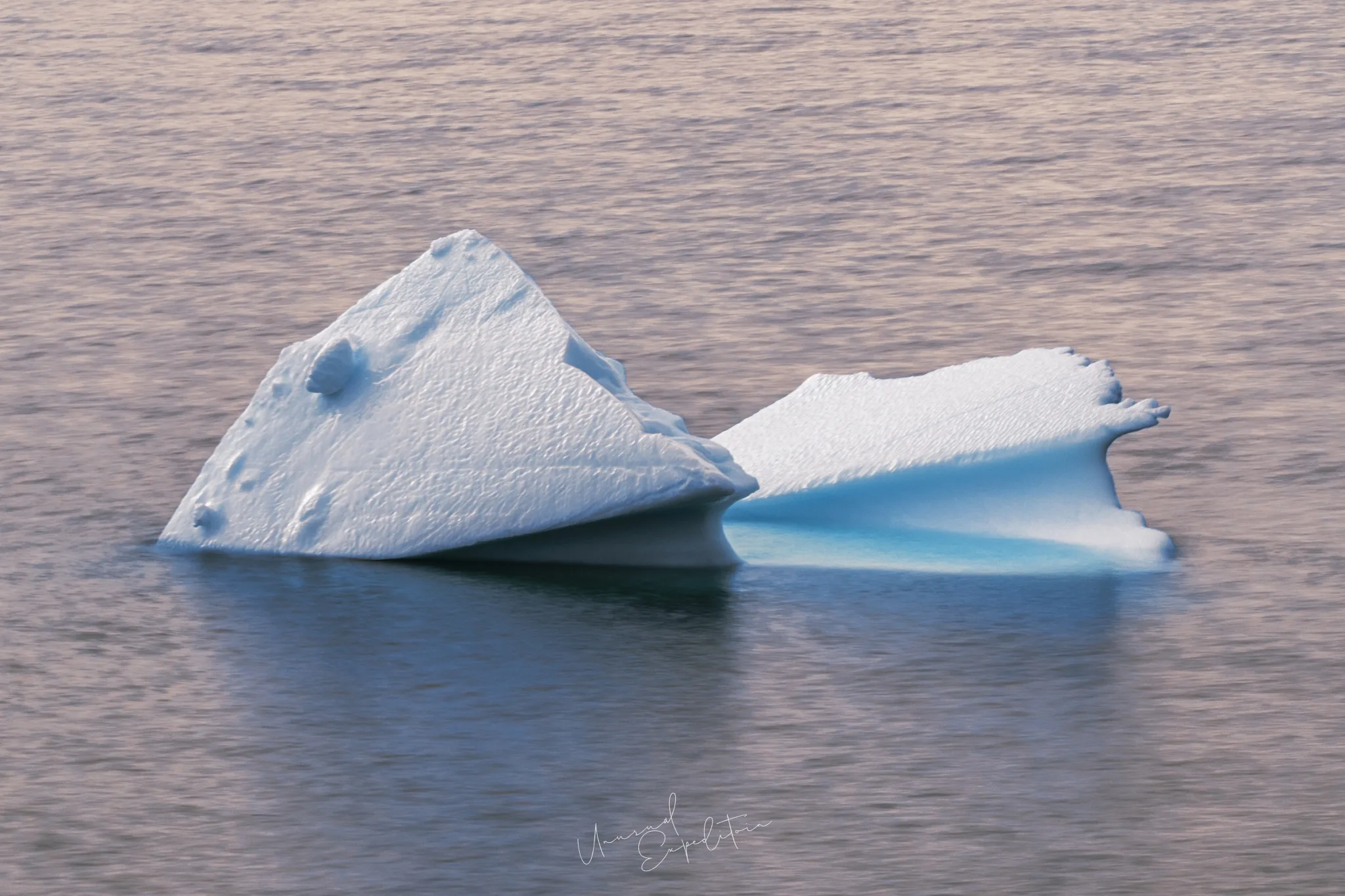
Greenland does have a sunrise and a sunset for most of the year, but at Scoresby Sund and Ittoqqortoormiit, at about 70 degrees north, there are two stretches when it has neither: roughly two months of midnight sun from late May to late July, and roughly two months of polar night from late November to late January. In between, the day length changes faster than anywhere most visitors have lived. Below are approximate daylight hours by month for East Greenland, what the light does at sunrise and sunset in September, when our Greenland photography tour sails, and the questions people type about night and day in Greenland, answered.
Does Greenland have sunset?
Yes, for about ten months of the year at the latitude of Scoresby Sund, and all year in the far south of the country. The whole of Greenland lies north of 59 degrees, and everything north of the Arctic Circle, at about 66.5 degrees, has at least one day a year when the sun does not set and one when it does not rise. Ittoqqortoormiit, at roughly 70.5 degrees north, sits well inside that zone, so its sun stays up continuously for about two months around midsummer and stays down for about two months around midwinter. Nuuk, the capital, at 64 degrees, is south of the circle and has a sunset every day of the year, though in June it is very late and very short. What follows is written for the east coast, where the ship goes.
Greenland daylight hours by month
The figures are approximate hours between sunrise and sunset for Ittoqqortoormiit in the middle of each month, calculated from standard solar tables for 70.5 degrees north. Twilight adds to them at both ends, and at this latitude twilight is long because the sun crosses the horizon at a shallow angle.
| Month | Approximate daylight | Sunrise and sunset | What it means for a photographer |
|---|---|---|---|
| January | None until the last week, then under 2 hours | Sun returns around the third week | Polar night, blue twilight at midday, aurora any hour |
| February | About 6 hours | Late morning to mid afternoon | Pink low light on snow all day |
| March | About 11 to 12 hours | Early morning to early evening | Sled season, firm sea ice, aurora still good |
| April | About 16 to 17 hours | Early morning to late evening | Long days, sky no longer fully dark |
| May | About 22 hours, then continuous | Midnight sun from the last ten days | No night, no aurora |
| June | 24 hours | No sunrise or sunset | Sun circles the sky, lowest around midnight |
| July | 24 hours until the last week | First sunset around the third week | Ships begin to enter the fjord |
| August | About 17 to 18 hours | Early morning to late evening | Sky dark enough for aurora only from mid month |
| September | About 14 hours at the start, 11 at the end | Early morning to mid evening | Real golden hours, dark nights, our season |
| October | About 8 to 9 hours | Mid morning to late afternoon | Long nights, new sea ice, ships leave |
| November | About 3 hours, then none | Sun sets for the winter around the last week | Polar night begins |
| December | None | No sunrise | A few hours of blue twilight at midday |
The day shortens by roughly seven minutes every day through September, so a voyage in the first half of the month gets nearly two hours more daylight than one at the end.
Does Greenland have 24 hours of daylight?
At Scoresby Sund, yes, from about the third week of May to about the third week of July. During those two months the sun never drops below the horizon; it swings low across the northern sky around midnight and climbs to a little over 40 degrees at midday. Further north the period is longer, and at the northern tip of Greenland the midnight sun lasts from April to September. The practical consequence is that there is no darkness at all for night photography and no Northern Lights, because the aurora is present but invisible against a bright sky. The reason ships do not simply go in June is sea ice: the fjord does not open until late July, as the best time to visit Greenland for photography explains.
Does Greenland have night?
From late July onwards, yes, and the nights lengthen quickly. In early August the sun sets but the sky stays in twilight, and true darkness only returns in the second half of the month. By early September the night is properly dark from mid evening until early morning, which is the window our tour is built around. By late November the sun no longer rises at all at Ittoqqortoormiit, and the town lives in polar night until late January, with a few hours of deep blue twilight around midday and the aurora visible at any hour the sky is clear. The month by month picture for ice, colour and wildlife as well as light is in Greenland photography season, month by month.
Greenland sunset time in September
In the first half of September the sun sets in mid evening at Scoresby Sund and rises in the early morning, with about fourteen hours between them. The exact minute matters less than the shape of the light. Because the sun approaches the horizon at a shallow angle, the golden hour that lasts twenty minutes in Singapore lasts well over an hour here, and the colour after sunset carries on through a long civil twilight before the sky goes dark. The sun also stays low all day: at midday in early September it reaches only about 26 degrees above the horizon, which is lower than a Singapore sun an hour after dawn. Ice photographed at noon in Greenland still has shadow and texture in it. The ship runs on the same clock as Iceland in September, so there is no time change once you are aboard, a detail covered in Greenland tour from Singapore.
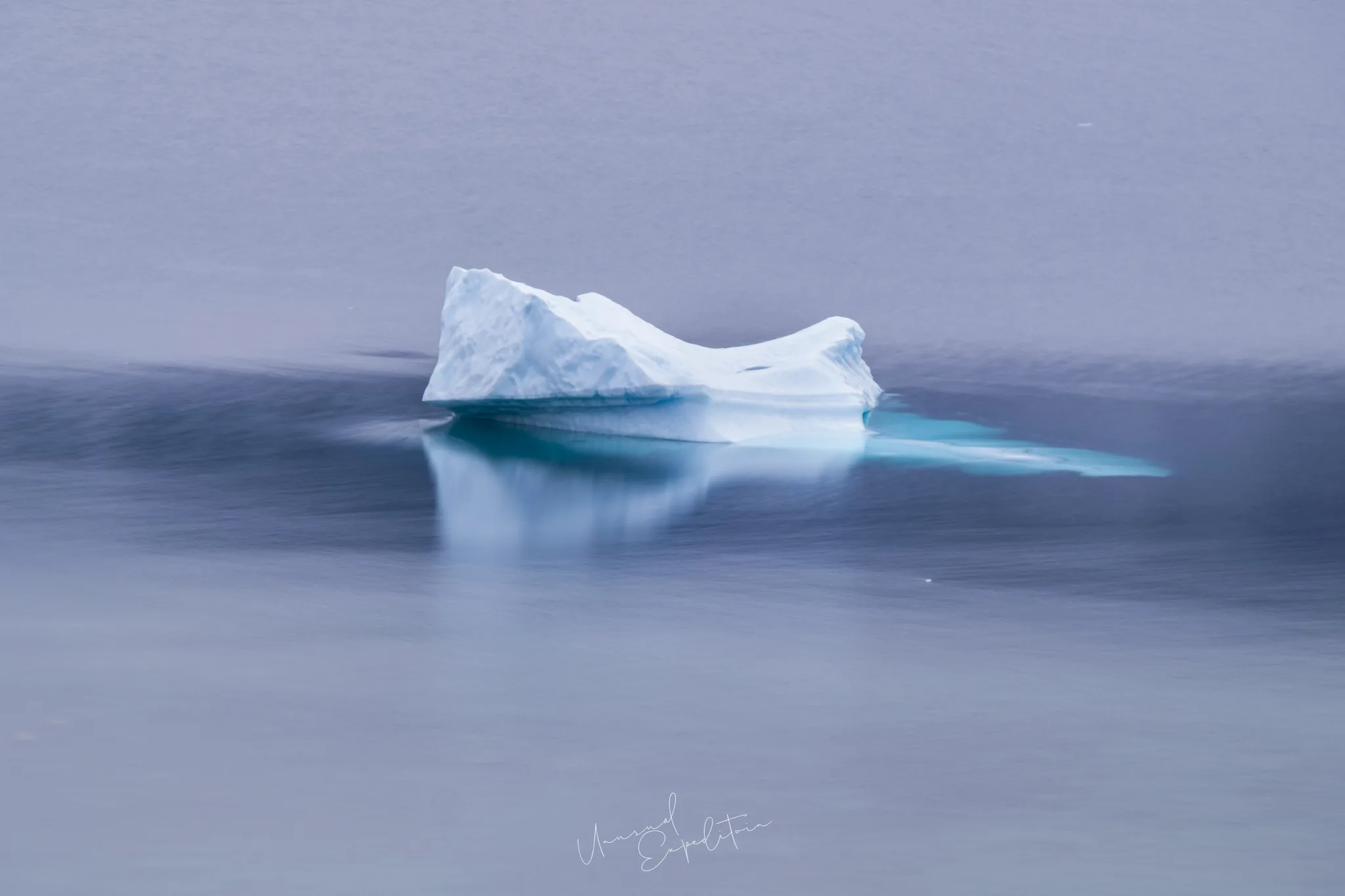
Greenland sunrise sunset times: why the midday light is still good
Photographers from the tropics plan around sunrise and sunset because the midday sun at home is vertical and ugly. At 70 degrees north that rule weakens. The September sun never gets high enough to flatten the landscape, so a clear midday is usable for icebergs, mountains and the town, and overcast midday light is better still for the painted houses of Ittoqqortoormiit. The real difference between the ends of the day and the middle is colour temperature, not shadow. Plan to be on deck or ashore at both ends of the day for the warm light, and do not put the camera away in between.
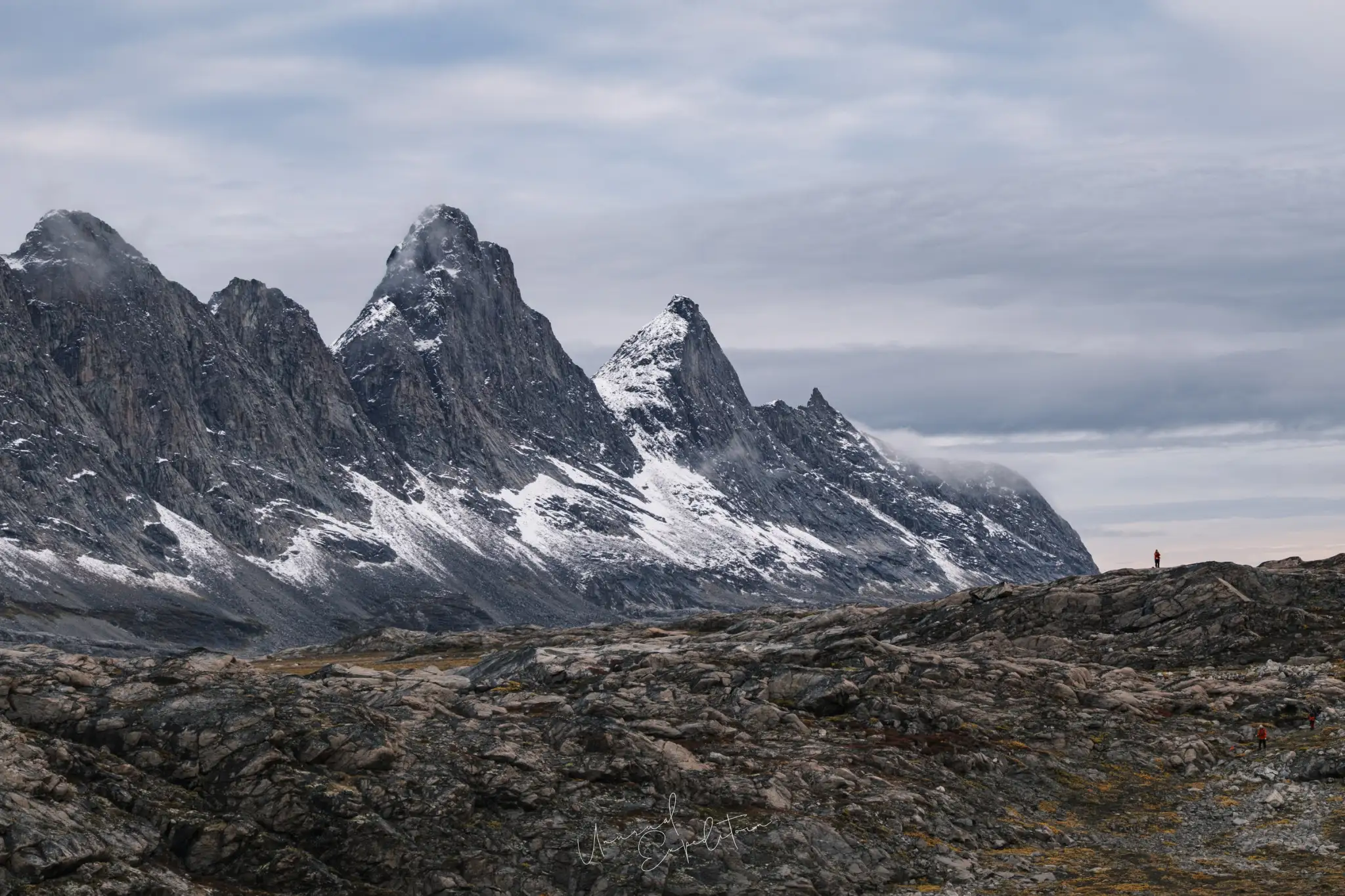
Greenland night photos: what darkness gives you in September
With the sun down for roughly ten hours in early September, the night splits into three usable parts. The long blue hour after sunset is for long exposures of icebergs from the shore or at anchor, when the water goes to silk and the ice holds its colour. The dark middle of the night is for the Northern Lights, if the cloud allows, shot handheld from the deck at high ISO. And the blue hour before sunrise, which almost nobody is awake for, is the mirror-fjord hour, when the wind has not yet started. On grey nights there is nothing, and grey nights are common. The odds, settings and the Iceland comparison are in photographing the Northern Lights in Greenland.
"The thing that surprises people from Singapore is not the cold, it is the length of the sunset. At home the light is gone in a quarter of an hour. In Scoresby Sund in September you can shoot the same iceberg in gold, then pink, then blue, and still be out there an hour and a half after the sun went."
Unusual Expedition tour leaders
Sunset in Greenland: the view from Nuuk and the west
Most published Greenland sunset times refer to Nuuk or Ilulissat on the west coast, and they differ from the east. Nuuk, at 64 degrees, never loses the sun entirely and has a sunset even in June, though a late one. Ilulissat, at 69 degrees, has midnight sun and polar night of similar length to Scoresby Sund but runs on a different clock from the east coast. If you are checking an app before the trip, set it to Ittoqqortoormiit, not Nuuk, and remember that the ship's clock follows Iceland in September. The east and west coasts differ in more than light, as East Greenland vs West Greenland for photography sets out.
Be there for the long sunsets
The Greenland Arctic Sights and Northern Lights photography tour sails from Reykjavik in early September, when East Greenland has about fourteen hours of daylight, golden hours that last, and nights dark enough for the aurora. The Greenland photography tour page carries the current departure and fare.
Join the Greenland photography tour
Greenland Arctic Sights and Northern Lights 5 Sep 2027 departs 05 Sep 2027 To 15 Sep 2027. Small group, photography first. All Greenland photography tours.
Explore Greenland in depth
- The Ultimate Guide to a Greenland Photography TourGreenland
- Photos of Greenland People and Villages: Ittoqqortoormiit as It Is LivedGreenland
- Greenland Photo Spots: Where to Shoot in Scoresby Sund and IttoqqortoormiitGreenland
- Greenland Photos: What East Greenland Looks Like in SeptemberGreenland
- Greenland Tour from Singapore: How to Get There and What to ExpectGreenland
- Greenland Photography Trip FAQGreenland
- The Best Time to Visit Greenland for PhotographyGreenland
- Greenland Photography Season, Month by MonthGreenland
- Greenland Arctic Wildlife Photography: What You Will Really SeeGreenland
- Camera Gear for Greenland PhotographyGreenland
- East Greenland vs West Greenland for PhotographyGreenland
- Photographing Ittoqqortoormiit, East Greenland's Loneliest TownGreenland
Upcoming Photo Tours
- Egypt Photo Tour – EgyptEgypt 12 Dec 2026 To 20 Dec 2026
- Inner Mongolia Winter Owl Photo Tour – ChinaChina 01 Jan 2027 To 04 Jan 2027
- Inner Mongolia Winter Photo Tour – ChinaChina 05 Jan 2027 To 11 Jan 2027
- Mekong And Central Highland Vietnam Photo Tour - VietnamVietnam 16 Jan 2027 To 24 Jan 2027