
Taj Mahal Sunrise and Sunset: Where to Be and Which Way the Light Falls
Taj Mahal sunrise inside the garden, sunset from Mehtab Bagh across the Yamuna, winter mist and full moon nights: where and when.
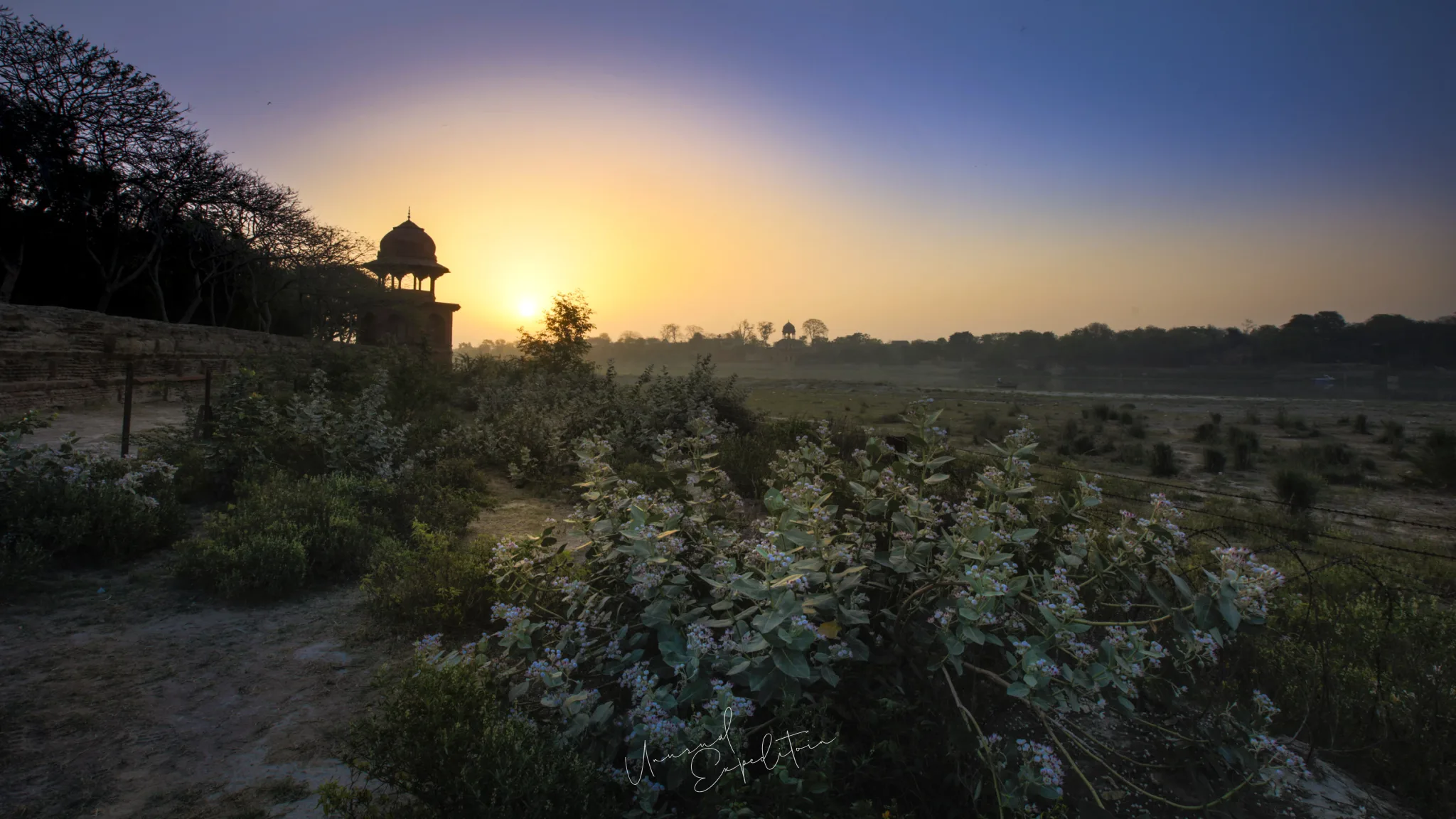
For a Taj Mahal sunrise, be at the gate when it opens: the official visiting hours begin 30 minutes before sunrise, so you can watch the first light reach the marble from inside the garden. Sunset is different. The complex closes 30 minutes before sunset, so the evening light belongs to Mehtab Bagh, the Mughal garden directly across the Yamuna, where you photograph the river face of the Taj. Plan one morning inside and one evening on the far bank.
This guide is part of our Agra photography tour guide. It explains where to stand at each end of the day, which way the light falls through the year and what the winter mist does to the river.
Taj Mahal sunrise inside the garden
The Taj Mahal stands at the north end of its garden and faces south, so from the great gate and the central channel the sun rises on your right. The official Taj Mahal site, run by Uttar Pradesh's Department of Tourism, describes the early morning Taj as milky white in soft light, and that is what you are there for: a few minutes of pink and gold on the dome, then a long, gentle hour before the glare. Go through the security check early, walk straight to the channel or the central platform, and take the classic frame before the crowd builds. Then turn to the east side of the complex, the guest hall platform, where the morning sun is behind you and lights the east face of the mausoleum. Our Taj Mahal photography article maps these positions in more detail.
Which way the light falls through the year
Agra lies at about 27 degrees north, so the sun's rising and setting points swing widely between winter and summer. In the winter months the sun rises well south of east, and its first light reaches the main, south face of the Taj at a low angle from your right. Around midsummer it rises north of east, and the main face stays in side light while the east face takes the sun. In the evening the same swing works on the far bank.
| Season | Sunrise, from the garden | Sunset, from Mehtab Bagh | Notes |
|---|---|---|---|
| Winter, December to February | Low sun from your right, on the main face | Sun sets ahead and to your right; the river face stays in shade under a warm sky | Fog on many mornings |
| Spring, March to May | Sun from your right, rising higher, quickly harsh | Sun sets to your right, side light on the river face | Clearer air, rising heat |
| Monsoon, June to September | Side light, often diffused by cloud | Sun sets behind your right shoulder, warm light on the river face when the sky clears | The river can rise over the bank |
| Autumn, October and November | Low sun from your right again | Sun moving back towards the Taj | Haze on some days |
The evening rule of thumb: in summer the setting sun lights the river face, in winter the river face stays in shade under a coloured sky.
Taj Mahal at sunset from Mehtab Bagh
Mehtab Bagh, the Moonlight Garden, is a square Mughal charbagh on the left bank of the Yamuna, directly opposite the Taj Mahal. The Agra district administration says it was laid out by Babur and later aligned by Shah Jahan with the Taj, and calls it the finest vantage point for viewing and photographing the Taj, especially at sunset. The district site lists it as open from sunrise to sunset on all days. From the riverside edge of the garden you look south across the water at the mausoleum's north face, its riverfront terrace and the minarets, with nobody in front of you. A 70-200mm is the right lens; at the long end it stacks the dome, the terrace and the river into one frame. The official Taj Mahal site also describes a viewpoint developed by the Agra Development Authority on the riverbank near Mehtab Bagh, open on Fridays, when the Taj itself is closed.
"Our best Taj picture was not taken inside at all. It was a winter morning across the river, in fog so thick the building was only a rumour. We waited, and when it came through it was grey on grey, soft as a pencil drawing. Nobody else had stayed."
Joseph Mak, tour leader, Unusual Expedition
Sunrise view of Taj Mahal from across the Yamuna
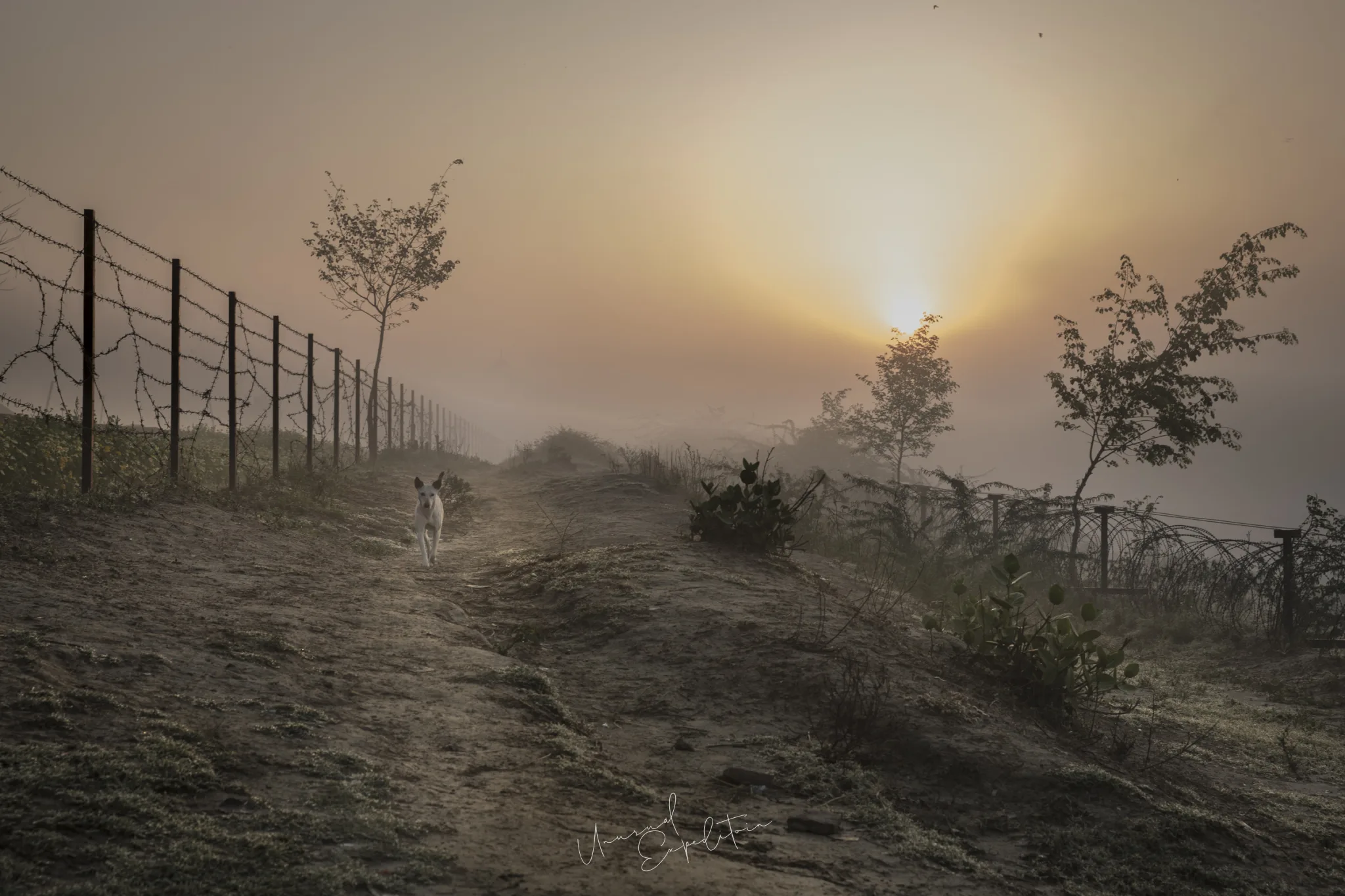
A sunrise view of the Taj Mahal from the far bank is the quieter alternative to the garden. Mehtab Bagh opens at sunrise, and from the riverbank you see the sun come up to your left, over the floodplain, with the Taj ahead of you across the water. In winter this is where the mist matters most. The India Meteorological Department counts January and February as the winter season, and on many winter mornings the river and the fields beside it lie under fog that turns the sun into a pale disc and the Taj into an outline. Sometimes the fog never lifts. Allow two mornings if the misty Taj is the picture you want, and keep the long lens on, because the building sits well across the river.
Taj Mahal in moonlight: the night viewing
The official site sets out the night viewing rules. The Taj Mahal opens for night viewing on the full moon night and on the two nights before and after it, except on Fridays and during the month of Ramzan. Visitors go in small batches for a limited time, and tickets are bought in advance. For photographers the key line is in the official list of rules: a still camera is permitted after the security check for night viewing, while video cameras and extra batteries are prohibited. Tripods are not allowed at any time, so a moonlit Taj is a handheld exercise at high ISO, viewed from a distance. Treat it as an experience first and a photograph second.
Sunset light inside Agra
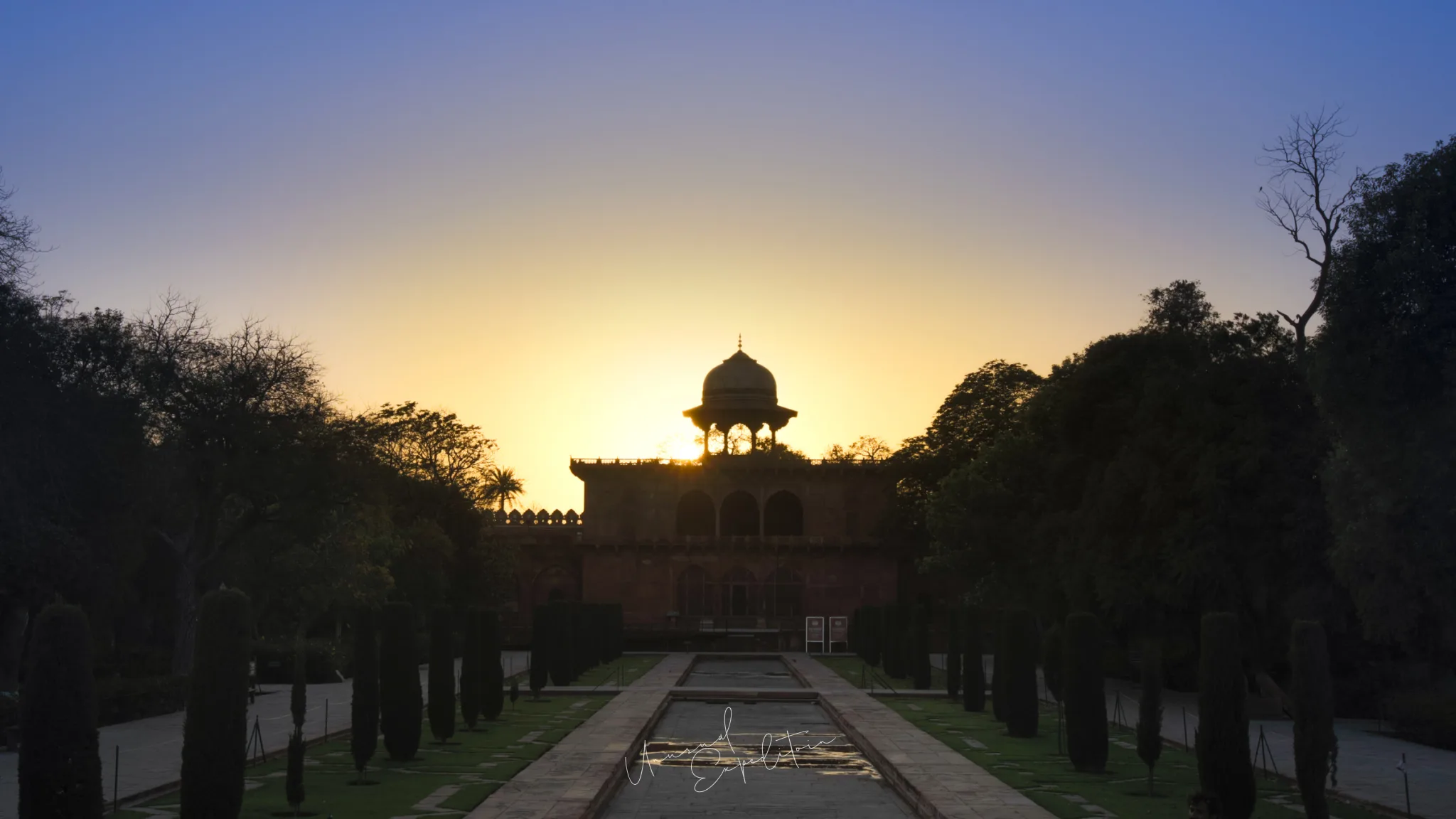
When you cannot cross the river, the old Mughal gardens and monuments of Agra still give you a sunset. Pavilions at the ends of cypress-lined water channels make strong silhouettes against an evening sky, and the red sandstone of the city's tombs and gateways holds the last warm light. Agra Fort, on the same bank as the Taj and upstream of it, is open on all days according to the Agra district site, and its riverside pavilions look downstream towards the Taj. See our Agra Fort photos guide.
Planning the two ends of the day
For a sunrise and sunset plan in Agra, the Friday closure is the first thing to check, then the moon if you want the night viewing, then the season. Winter gives you mist and a low sun on the main face; spring gives you clearer air but harsher light by mid-morning. Our best time to visit Taj Mahal article covers the months, and Taj Mahal rules for photographers covers what you can bring through the gate.
See the Taj at both ends of the day with us
We run Agra as a private trip on request, timed for the light you want: a winter morning in the mist, a spring evening on the far bank or a full moon. We arrange the logistics around your photography, and coaching can be added at extra cost. See private tours and our India photography tours page.
Ask us about sunrise at the Taj Mahal
Agra photography tours
The next Agra departure is announced on the Agra photography tours page, with previous expeditions and all the planning guides.
Explore Agra in depth
- Agra Photography Tour Guide: the Taj Mahal, Agra Fort and the YamunaIndia
- Taj Mahal Rules for Photographers: Tripods, Drones and the MausoleumIndia
- Taj Mahal Photography: Where to Stand, the Light and Photo IdeasIndia
- Is Agra Worth Visiting? What to See Beyond the Taj MahalIndia
- Best Time to Visit Taj Mahal: the Month, the Day and the HourIndia
- Agra Fort Photos: What to Photograph Inside the Red Fort of AgraIndia
Upcoming Photo Tours
- Egypt Photo Tour – EgyptEgypt 12 Dec 2026 To 20 Dec 2026
- Inner Mongolia Winter Owl Photo Tour – ChinaChina 01 Jan 2027 To 04 Jan 2027
- Inner Mongolia Winter Photo Tour – ChinaChina 05 Jan 2027 To 11 Jan 2027
- Mekong And Central Highland Vietnam Photo Tour - VietnamVietnam 16 Jan 2027 To 24 Jan 2027