
Morondava Photos: Sunset, the Fishing Village and the Beach
Morondava photos: where to shoot the sunset, the Vezo fishing village of Betania, the market and pousse-pousse streets, with sunset times.
Morondava photos divide into three sets: the sunset over the Mozambique Channel from the town beach, the Vezo fishing village of Betania across the channel, and the markets and pousse-pousse streets of the town itself. Most visitors treat Morondava as the airport for the Avenue of the Baobabs and see none of it. It is a flat, sandy, slow town of around fifty thousand people on Madagascar's west coast, and it has a day's photography in it before you ever drive out to the trees.
The baobabs have their own pages, Avenue of the Baobabs photo spots and photographing the Avenue. This one is the town and the coast, as part of the complete Madagascar photography tour guide.
Morondava what to see: the shape of the place
Morondava sits where the Morondava river meets the sea, on a low sandy shore with a long beach facing west. The town centre is a grid of sandy streets around the market, with pousse-pousse, the bicycle rickshaws, as the main traffic. To the north-west a sand spit, Nosy Kely, holds the beach hotels. Across the river mouth to the south is Betania, a Vezo fishing village reached by pirogue in a few minutes. The airport is on the edge of town with flights from Antananarivo in about an hour. The Avenue of the Baobabs is twenty kilometres north on the road towards Belo sur Tsiribihina. Nothing is far, and the light is the only reason to hurry.
Morondava fishing village: Betania
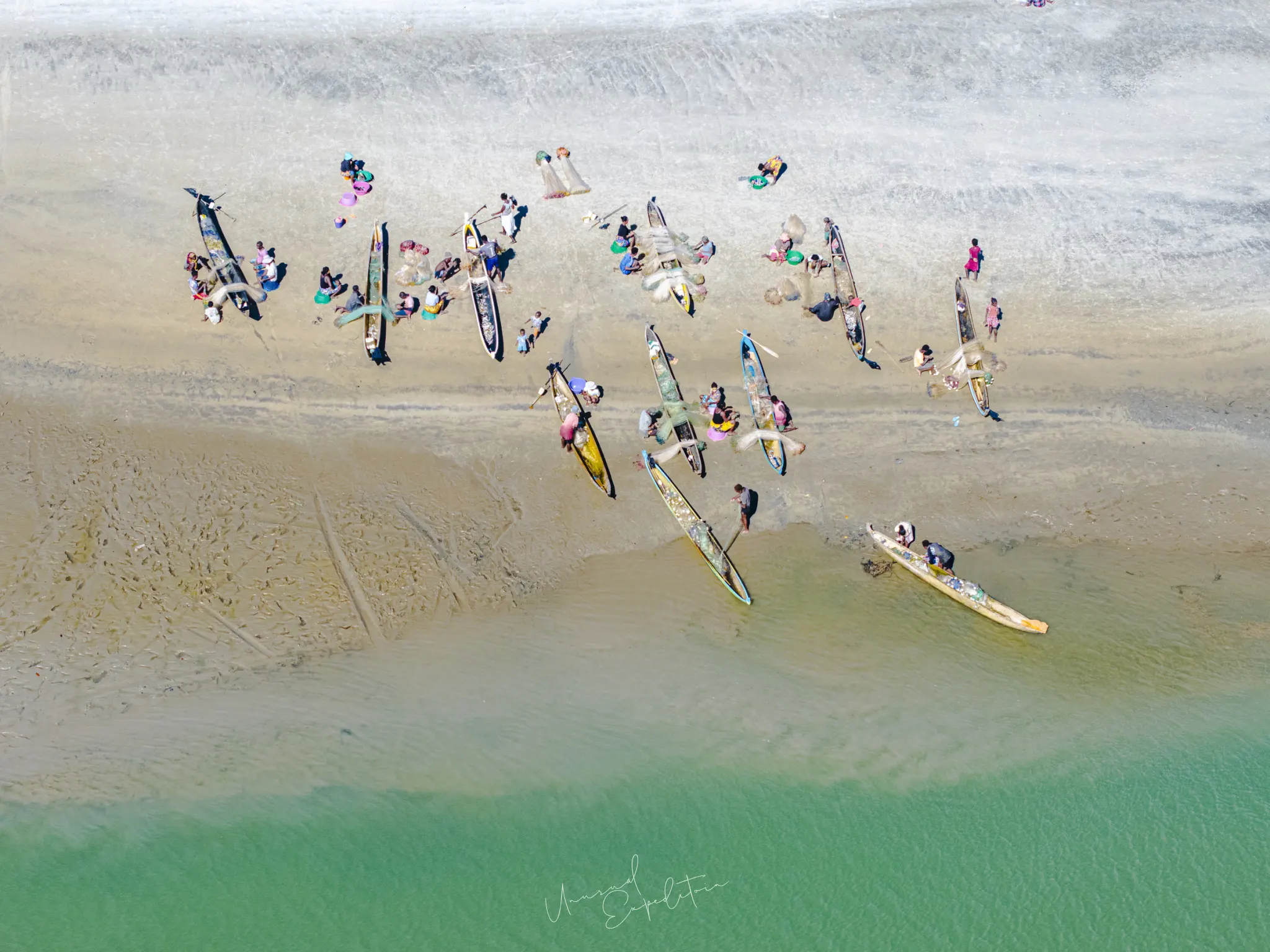
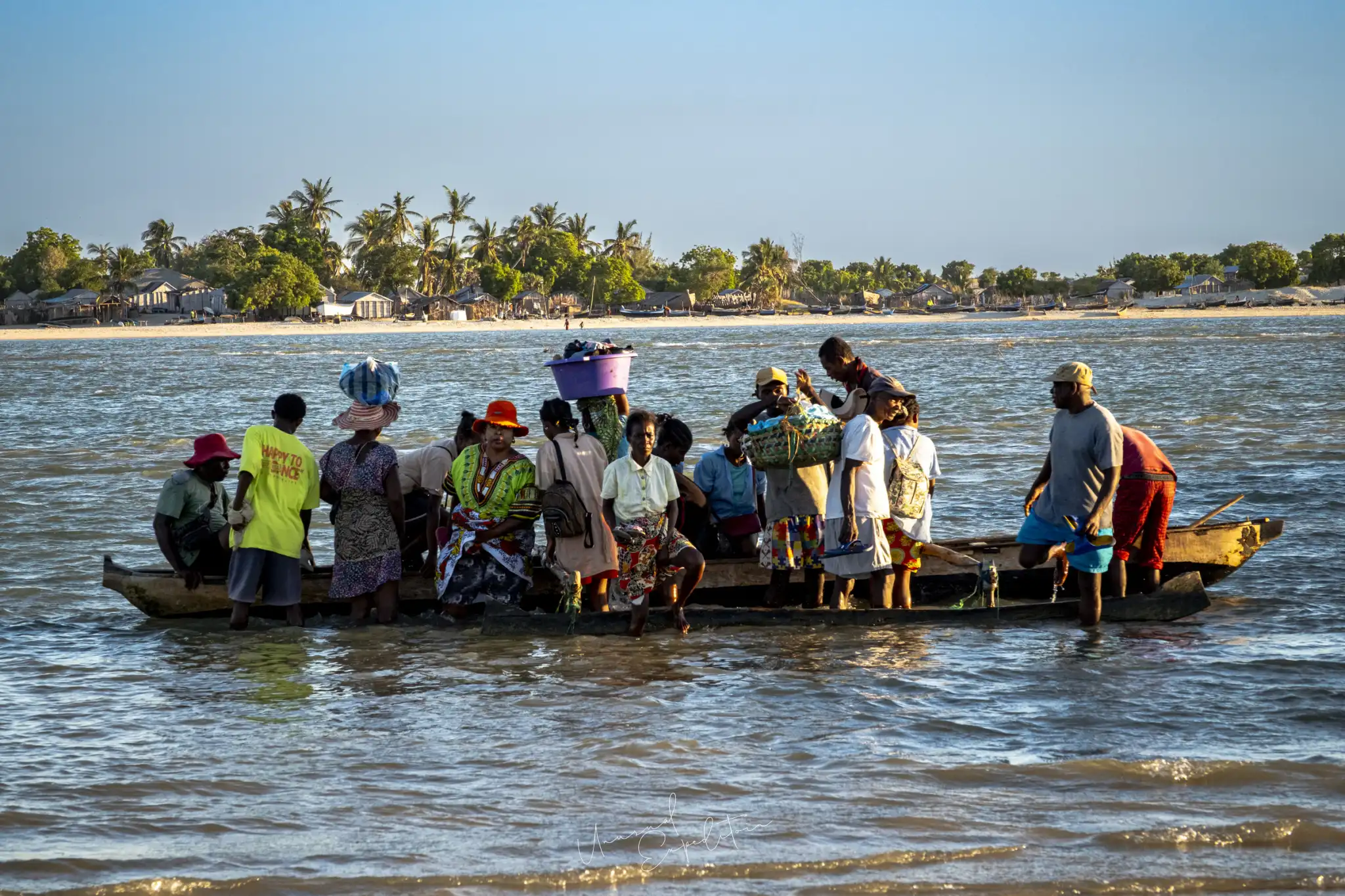
Betania is the picture most people miss. It is a village of palm-thatch houses on the sand with a beach that fills in the morning as the pirogues come in: outrigger canoes hauled through the shallows, the catch sorted into basins by the women, children everywhere, dogs and the occasional pig on the sand. The pirogue crossing from the town is itself a frame, a long dugout loaded with twenty people and their goods. Shoot it from the beach as it lands with a 70-200mm, then walk the sand with a 24-70mm. The beach is busiest once the sun is already high, so this is a session for action and colour, not mood, and the bright sand bounces light into faces at any hour. From above, the pattern of boats and people on the white beach is as graphic as anything on the coast.
Morondava sunset: where to stand
The beach faces due west with nothing between it and Mozambique, so the sun sets into the sea on every clear evening of the dry season and the haze near the horizon turns it into a soft orange disc. The town beach and the Nosy Kely spit are the places to stand. The frame is a pirogue or a dhow against the disc, so walk until a boat lines up, and shoot long. After the sun has gone the sky stays coloured for twenty minutes and the wet sand mirrors it; that is the time for a wide lens low to the water. Most evenings on our trip the sunset belongs to the Avenue, which is the same sun from a better foreground, so the beach sunset is for the arrival evening or a spare one. The pousse-pousse ride back through town in the dark, with the stalls lit by single bulbs, is worth a high ISO.
Morondava sunset time and sunrise time
At 20 degrees south the day barely changes length. The sun sets around six in April, nearer half past five in June and July, and a little before seven in December. Sunrise is a little after six for most of the year, half past six in the southern winter and before half past five in the summer. Sunrise is over the land, so it is a soft event seen from the beach; the drama at dawn is inland at the baobabs, where the trees come up out of blue shadow. Sunset is over the water. The practical result for a photographer is dawn at the trees and dusk on either the trees or the beach, with the town in between. The daylight table in Belo sur Mer photos: where to shoot applies to Morondava as well; the two are on the same latitude.
Morondava beach and the town streets
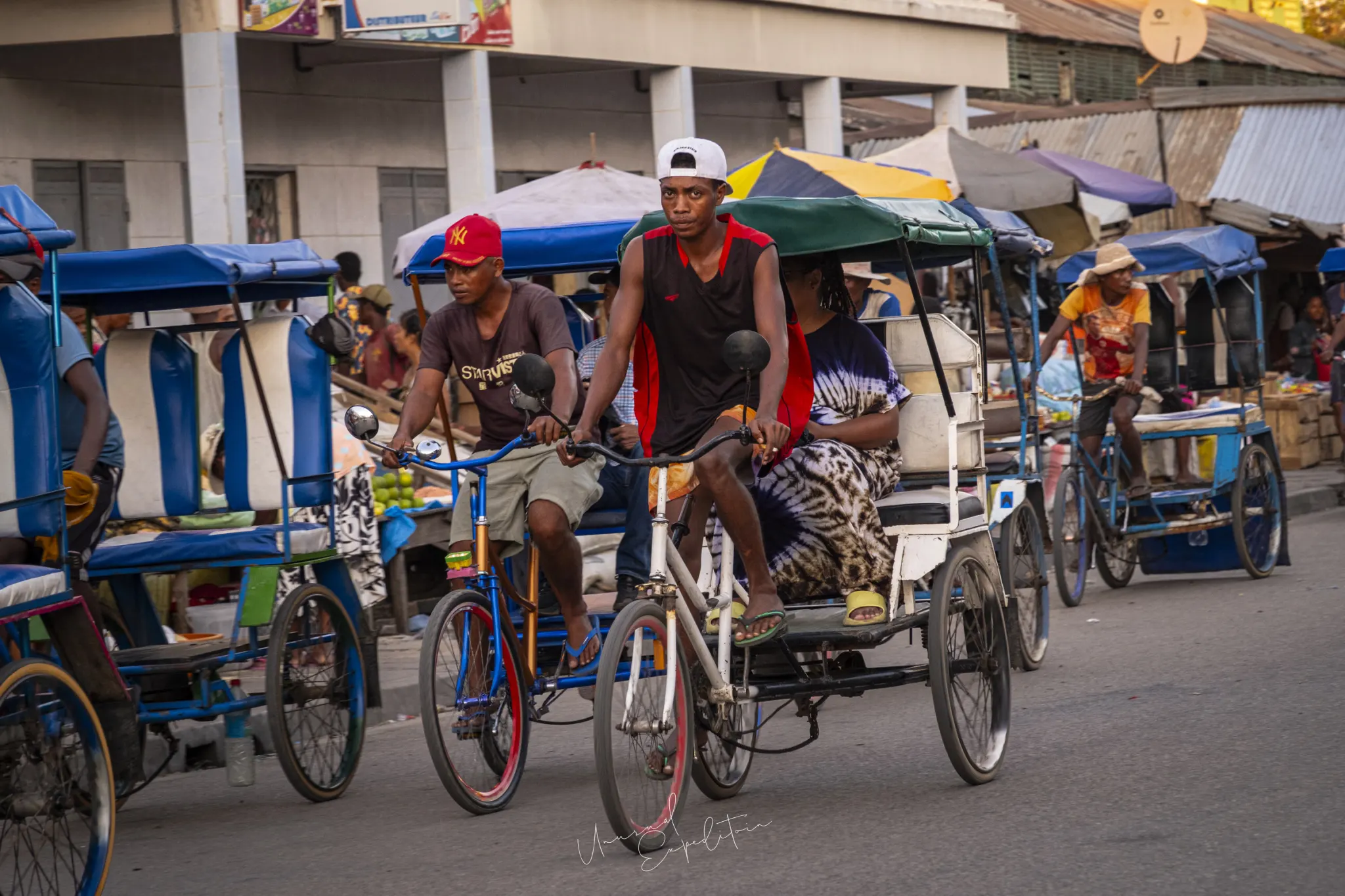
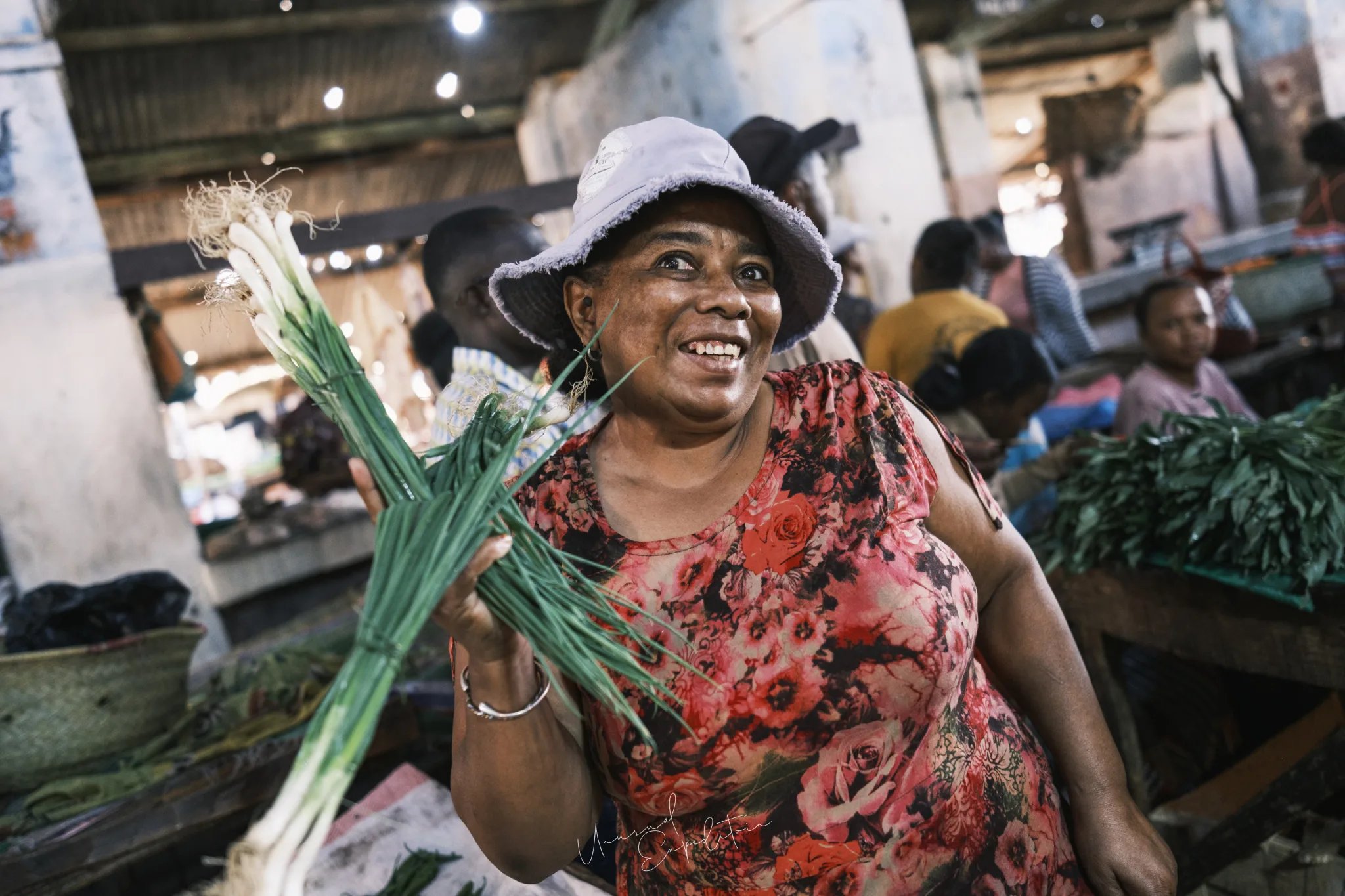
The beach is long, flat and quiet by day, with dhows anchored off the river mouth and fishermen mending nets under the casuarinas. The town is the better daytime subject. The pousse-pousse drivers wait in lines outside the market and will pose with their decorated rickshaws for the price of a conversation; the market itself is a covered maze of dried fish, charcoal, vegetables and meat, dark inside, with shafts of light where the roof is open. Work it with a fast prime or the 24-70mm wide open and the ISO high. The women selling poultry and greens are the portraits; ask, then wait for the laugh. Morondava is a safe, relaxed town to walk with a camera in daylight, which is not true of every Malagasy town.
Morondava things to do for a photographer
- Cross to Betania in the morning for the beach and the boats.
- Walk the market and the pousse-pousse stands in the middle of the day, when the beach light is useless.
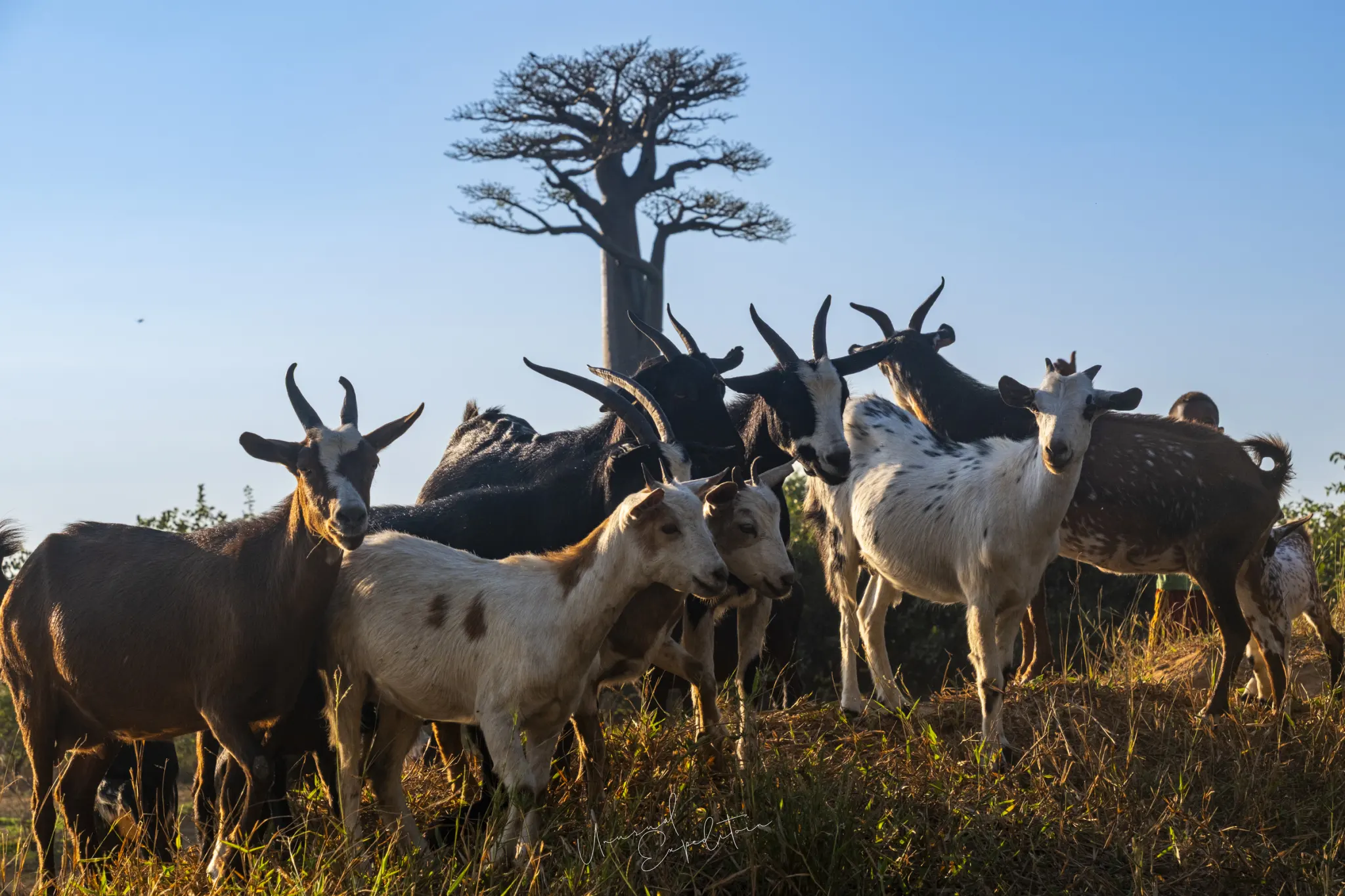
- Drive the baobab road in the late afternoon: lone trees, goats and zebu under them, villages of the Sakalava farmers, then the Avenue for sunset.
- Keep one evening for the sea sunset from the town beach.
- From July to September, whale-watching boats go out for humpbacks off the coast; outside our season, but worth knowing.
"Everyone lands in Morondava thinking about the trees. I send them across the water to Betania first. Twenty minutes in a pirogue and you are in a working Vezo village with the whole beach in motion, and the baobabs are still there at five."
Joseph Mak, tour leader, Unusual Expedition
Morondava weather by month
| Months | Weather | For photography |
|---|---|---|
| December to March | Hot and wet, cyclone season, roads south close | Dramatic skies but unreliable access; not our season |
| April and May | Rains end, days in the low thirties, nights mild, air still clear | Green paddies behind the baobabs, reflections, our April departure |
| June to August | Driest and coolest, nights in the teens, dusty | Hazy orange sunsets, dust in the air, no water in the paddies |
| September to November | Heating up, still dry, humpbacks offshore until September | Hot afternoons, good sunsets, first storms by November |
April is the compromise between water in the landscape and a road you can drive, which is why the tour is built around it.
How to get to Morondava
Fly. The domestic flight from Antananarivo takes about an hour and runs most days. The road is two days each way and no photography itinerary uses it. From the airport the hotels on the spit are a few minutes. Belo sur Mer, the dhow-building village to the south, is a separate day by 4x4 along the sand. What the whole trip involves for a traveller from Singapore, flights and visa included, is in Madagascar tour from Singapore.
See the west coast with us
Morondava, Betania, the Avenue and Belo sur Mer are the west-coast half of the Madagascar photography tour, our April departure led by Joseph Mak. Fares are indicatively S$6,000 to S$7,000 per person depending on the room; the tour page carries the current rate.
Join the Madagascar photography tour
Madagascar Photo Tour – Madagascar departs 11 Apr 2027 To 19 Apr 2027, led by Joseph Mak. Small group, photography first. All Madagascar photography tours.
Explore Madagascar in depth
- The Complete Guide to a Madagascar Photography TourMadagascar
- Andasibe: Is It Worth Visiting, How to Get There, Lemurs and the Night WalkMadagascar
- Avenue of the Baobabs Photo Spots: Location and the Best PositionsMadagascar
- Belo sur Mer Photos: Where to Shoot, the Beach and the WeatherMadagascar
- Madagascar Photos: What the Island Really Looks LikeMadagascar
- What to Pack for a Madagascar Photo TourMadagascar
- The Milky Way over the Baobabs: Night Photography in MadagascarMadagascar
- Madagascar Tour from Singapore: Flights, Visa and What to ExpectMadagascar
- Is Madagascar Safe? Health, Roads and Drones for PhotographersMadagascar
- What a Madagascar Photo Tour Costs, Line by LineMadagascar
- Twelve Questions Before You Book a Madagascar Photo TourMadagascar
- Madagascar or an African Safari for Wildlife Photography?Madagascar
Upcoming Photo Tours
- Egypt Photo Tour – EgyptEgypt 12 Dec 2026 To 20 Dec 2026
- Inner Mongolia Winter Owl Photo Tour – ChinaChina 01 Jan 2027 To 04 Jan 2027
- Inner Mongolia Winter Photo Tour – ChinaChina 05 Jan 2027 To 11 Jan 2027
- Mekong And Central Highland Vietnam Photo Tour - VietnamVietnam 16 Jan 2027 To 24 Jan 2027