
Antsirabe, Madagascar: Pousse-Pousse, Markets and Crater Lakes
Antsirabe, Madagascar for photographers: pousse-pousse rickshaws, covered markets, workshops and the crater lakes near town.
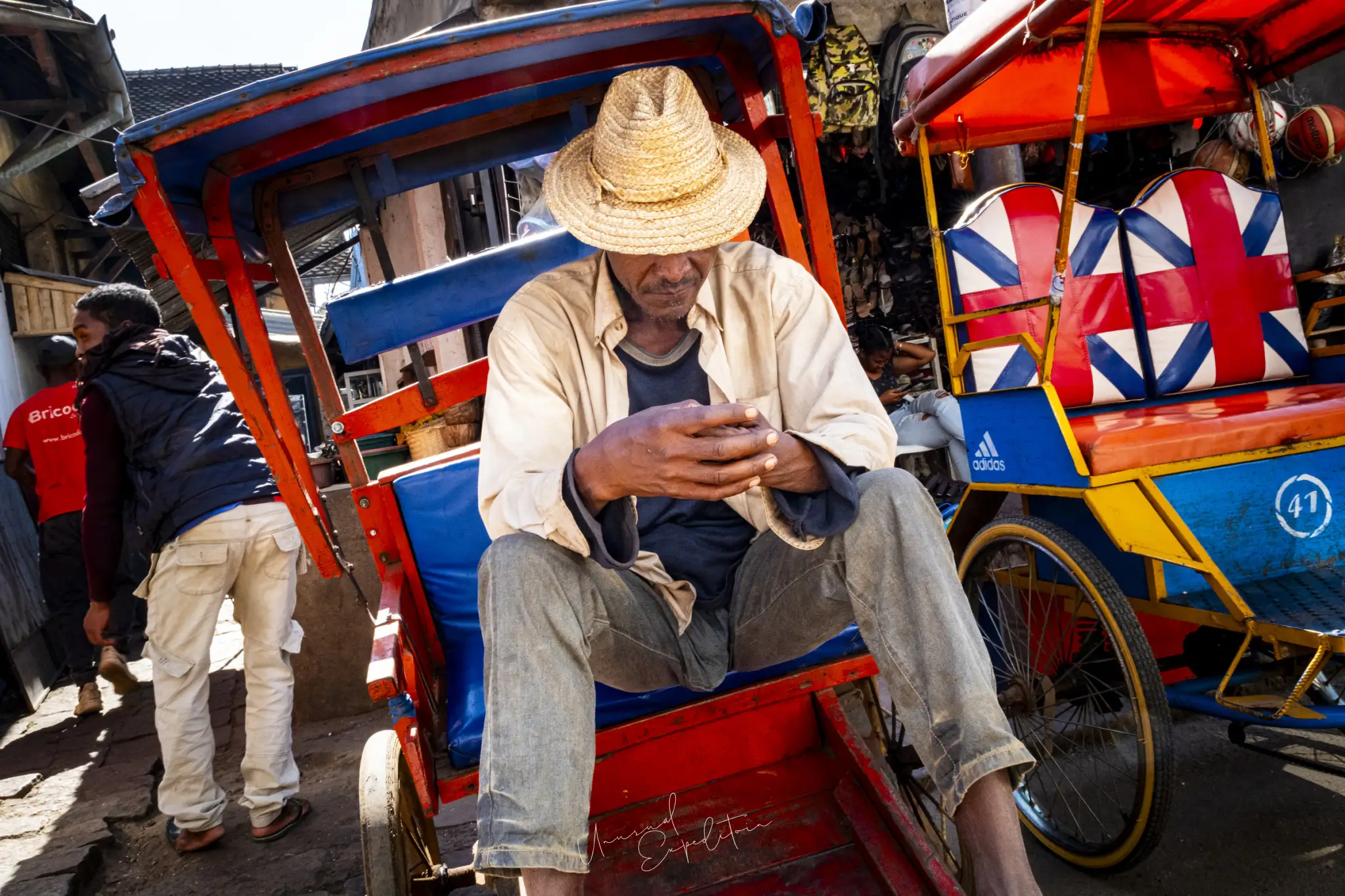
Antsirabe, Madagascar, is the highland town to photograph for pousse-pousse rickshaws, busy covered markets and the crater lakes in the hills just outside it. It sits at about 1,500 metres on the RN7 south of Antananarivo, so mornings are cool and the light stays soft longer than on the coast. A day here gives you street portraits, colour and movement in town, and quiet water and terraced slopes at the lakes, all within easy reach of each other.
Antsirabe is one of the places covered in our RN7 Madagascar photography guide, which explains how the town fits into the wider road south.
What is Antsirabe known for?
Antsirabe was founded in 1872 by the Norwegian missionary T. G. Rosaas as a hill station, a retreat from the heat of the lowlands, according to its Wikipedia entry. Its thermal springs earned it the names "ville d'eau" and "le Vichy malgache", and a spa building still stands in the old colonial quarter. Today it is a working regional town known for three things a photographer notices at once: the pousse-pousse rickshaws that fill its streets, its markets, and its workshops. Wikipedia records 5,600 registered pousse-pousse in 2006, and on a weekday morning it is easy to believe the figure has not fallen.
Pousse pousse Madagascar: photographing the rickshaws of Antsirabe
The pousse pousse is the image of Madagascar's highland towns, and Antsirabe is where you see the most of them. The name comes from the French for "push push". Many are now pulled by bicycle, but the classic two-wheeled carts with shafts are still everywhere, and their canopies are painted with flags, football clubs and slogans. The Union Jack turns up surprisingly often.
The best pictures come from waiting at a rank where drivers rest between fares. A 24-70mm lets you include the cart, the canopy and the street behind; a 35mm equivalent forces you close enough for the driver's face to carry the frame. Ask first: most drivers are happy to pose and some will want to show you their cart. Taking a short ride is the easiest way to say thank you and gives you a moving point of view down the street.
Antsirabe markets: colour, crowds and portraits
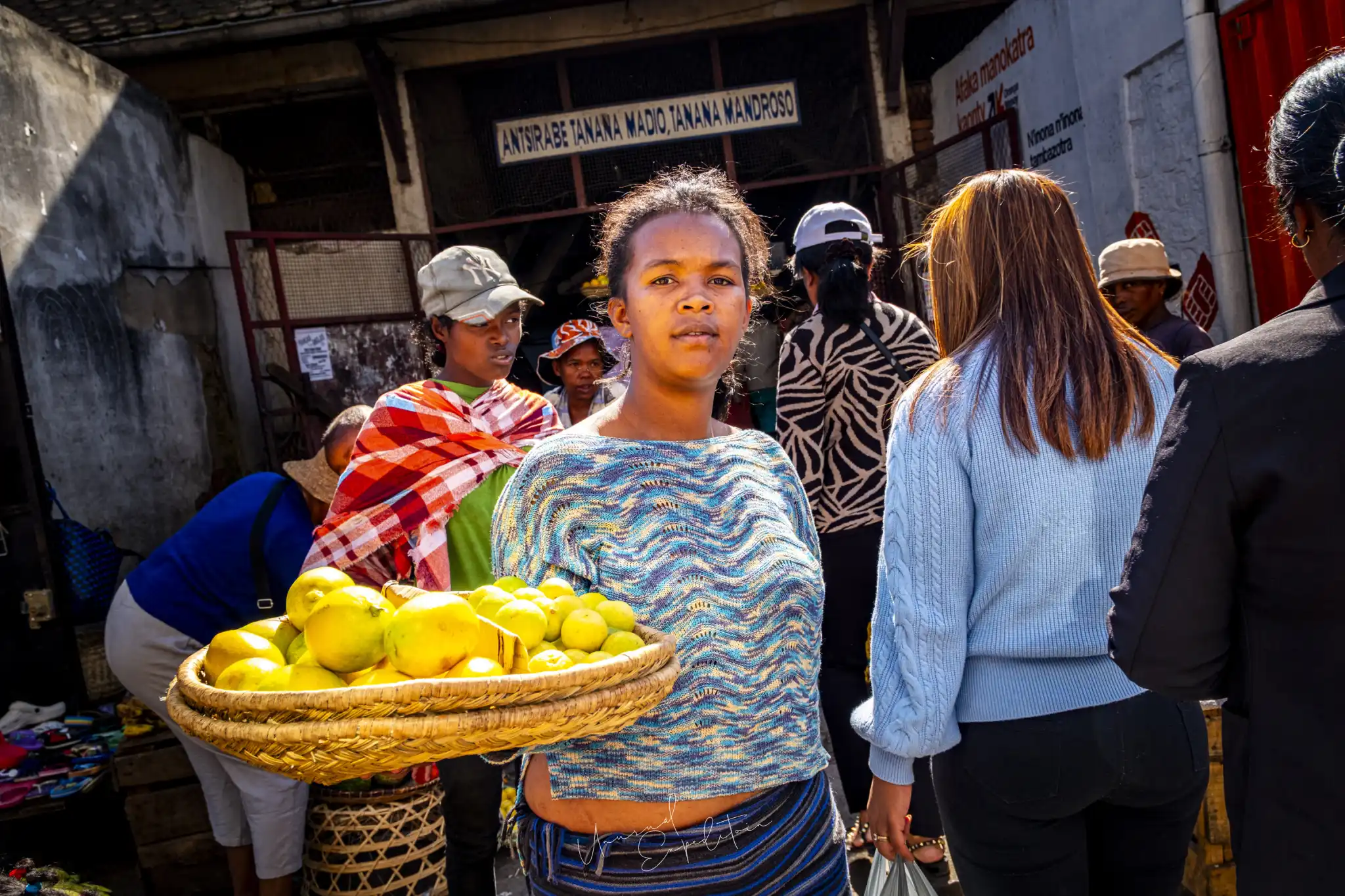
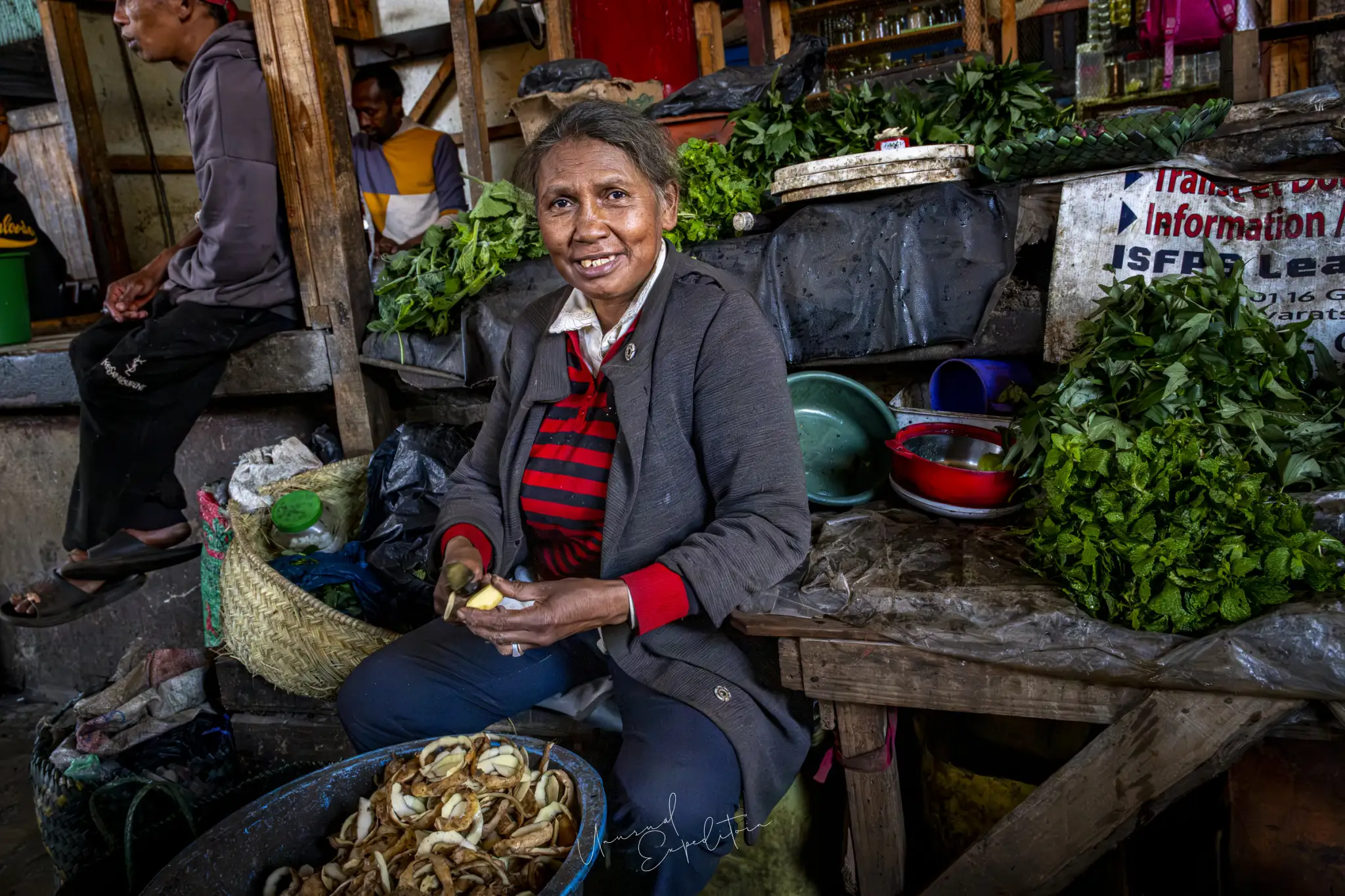
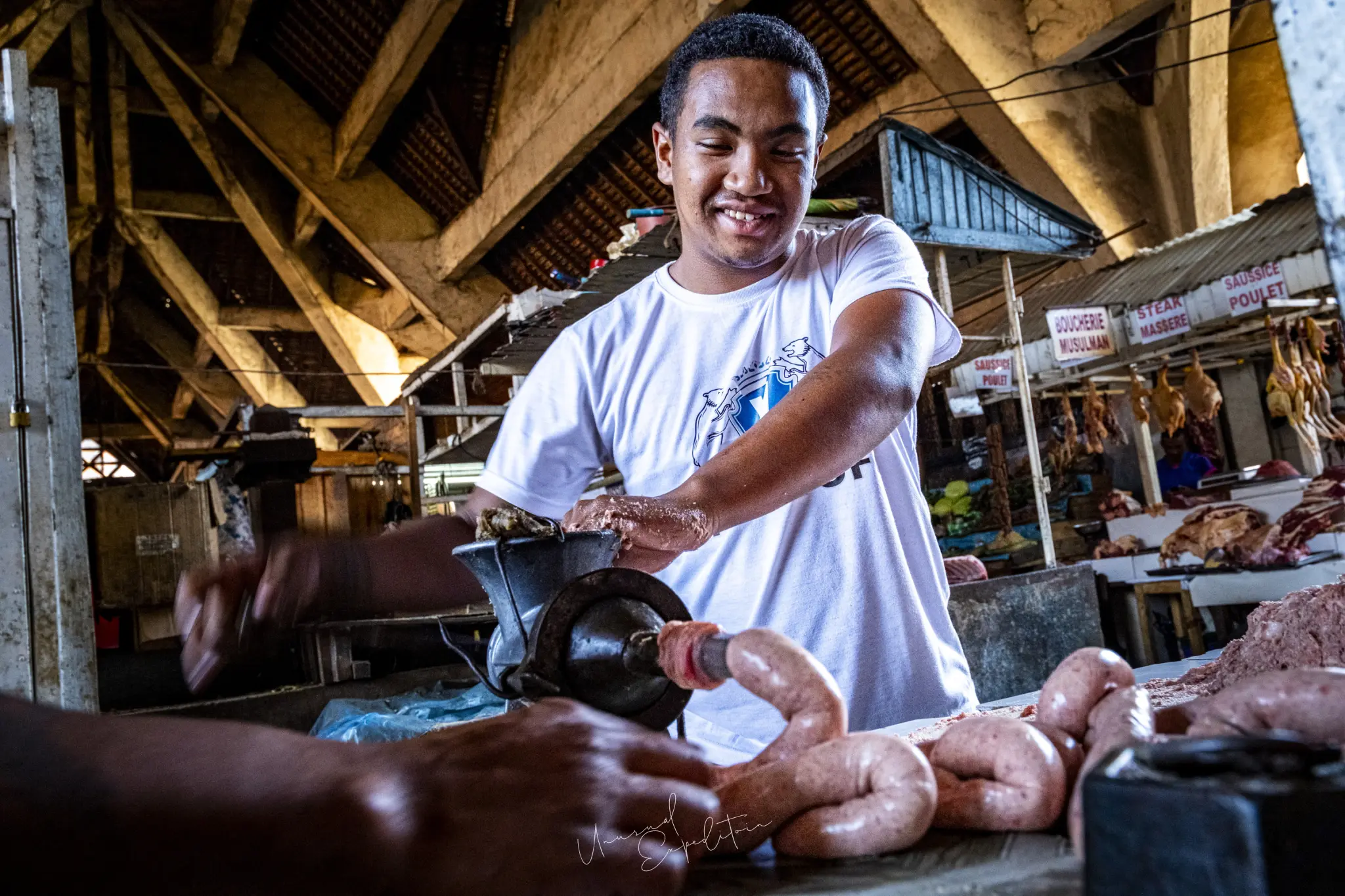
The covered markets of Antsirabe are where the town's day starts. Vegetables, citrus and herbs come in from the surrounding farms, butchers work under the roof beams, and sellers walk the aisles with baskets balanced on their heads. The light inside is mixed: bright shafts from the openings and deep shade under the stalls, so expose for faces and let the background go dark.
Two habits help. Move slowly and stay a while in one section, because people stop noticing you after a few minutes and the natural moments begin. And buy something: fruit, a bag of peanuts, anything that makes you a customer rather than a spectator. A 24-70mm covers most situations; a fast prime helps when the shade gets deep.
The crater lakes near Antsirabe
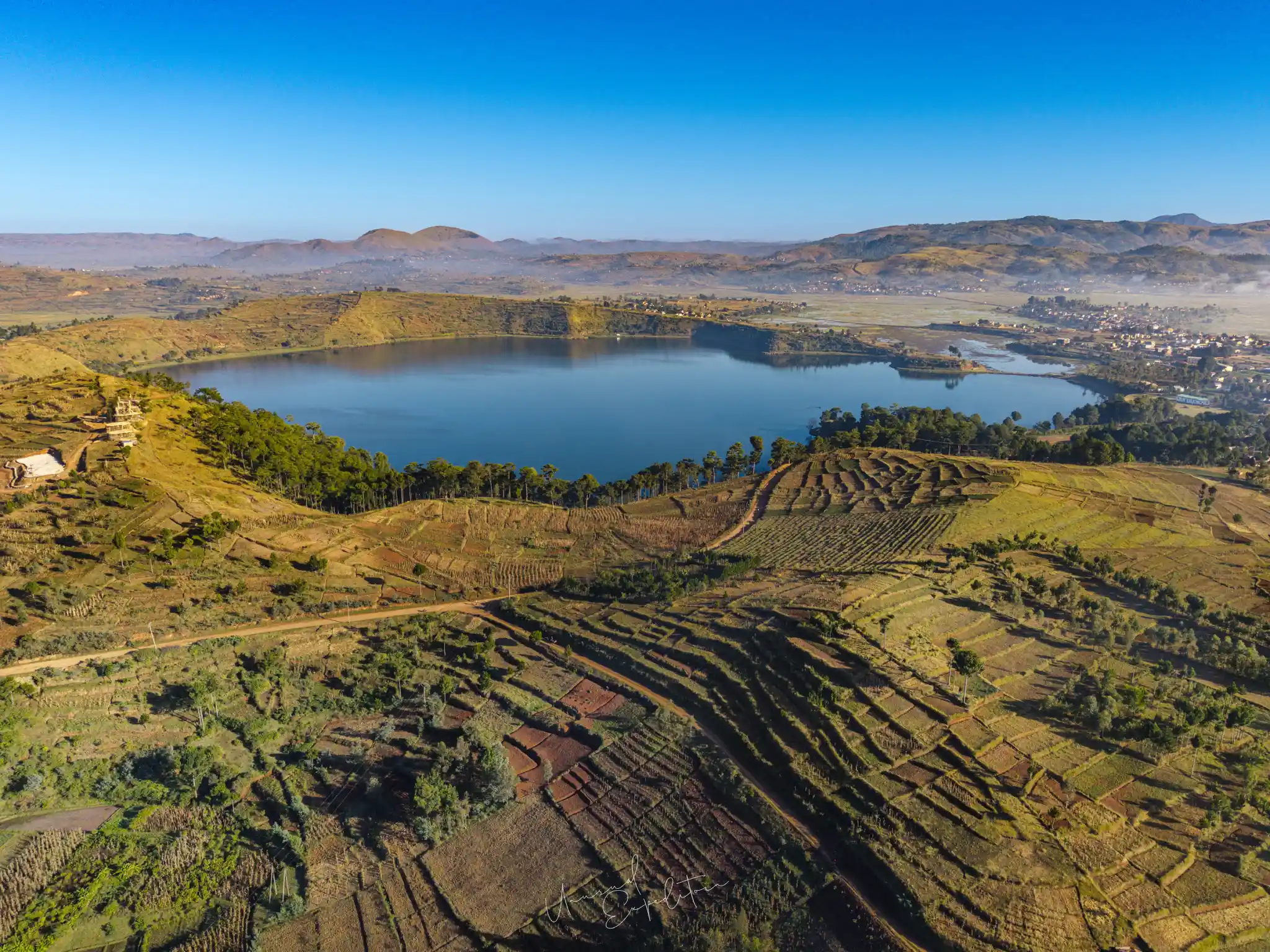
The volcanic hills around Antsirabe hold several crater lakes. Wikipedia places Lake Andraikiba about 7 kilometres from town and Lake Tritriva about 15 kilometres away. Andraikiba is the larger and more open, ringed by terraced slopes and eucalyptus; Tritriva is small, deep and enclosed by steep walls, and local legend attaches a pair of lovers to it.
For photographs, go early. Mist settles over the water and the low ground at first light and lifts as the sun climbs, which gives you layers of hills, town and lake. A drone, where permitted, shows the round shape of a crater lake against the patchwork of fields; from the ground, a 70-200mm picks out terraces and figures on the rim. Check the current drone rules before you fly: our page on safety, health and drones in Madagascar covers the permit situation.
Antsirabe workshops and crafts
Antsirabe has a long list of small workshops that welcome visitors. Lonely Planet lists a family workshop that builds miniature bicycles and rickshaws from recycled materials and a zebu horn workshop where you watch the whole process, and the town's tourism office adds embroiderers and gem cutters. They are good places for environmental portraits because the work keeps people's hands busy and their attention on the job. Ask before you shoot, buy something if you can, and use a wide aperture to separate the craftsman from a cluttered bench. The wider craft traditions of the region, including the woodworking of the Zafimaniry people, are in Madagascar central highlands photography.
Antsirabe is the first place on the road south where people have time to talk to you. Sit with the pousse-pousse drivers for ten minutes before you raise the camera and the pictures change completely.
Joseph Mak, tour leader, Unusual Expedition
Antsirabe Madagascar at a glance for photographers
| Subject | Best light | Lens | Note |
|---|---|---|---|
| Pousse-pousse ranks | Morning, late afternoon | 24-70mm | Ask, then take a ride |
| Covered markets | Morning, when trade is busiest | 24-70mm, fast prime | Expose for faces |
| Crater lakes | First light, for mist | 16-35mm, 70-200mm | Drone rules apply |
| Workshops | Any time, window light | 24-70mm | Buy something |
Mornings carry the town: markets, ranks and lakes are all at their best before the light hardens.
Is Antsirabe worth a stop for photographers?
Antsirabe is worth a stop for anyone who likes people pictures. It is not a landscape destination in the way Isalo is, but it gives the highland part of an RN7 trip its human centre, and the crater lakes add one strong landscape session. After Antsirabe, the road south leads into the rice country of the highlands and, further on, to the forest of Ranomafana National Park, a complete change of subject. The cool climate is worth remembering: at 1,500 metres the dry-season mornings are cold, so bring a warm layer.
Photograph Antsirabe with us
We include Antsirabe on private photography trips along the RN7 and time the town for its mornings. Ask us about a southern trip, and see the current departures on our Madagascar photography tours page.
Join the RN7 photography tour
Madagascar Photo Tour – Madagascar departs 11 Apr 2027 To 19 Apr 2027, led by Joseph Mak. Small group, photography first. All RN7 photography tours.
Explore RN7 in depth
- RN7 Madagascar Photography Guide: the Road SouthMadagascar
- Ranomafana National Park Photography: Lemurs, Geckos and StreamsMadagascar
- Madagascar Central Highlands: Rice Harvest, Brick Villages and Craft TownsMadagascar
- Isalo National Park Photography: Sandstone, Pools and WildlifeMadagascar
- Ilakaka, Madagascar: Photographing the Sapphire TownMadagascar
- Ifaty and the Spiny Forest: Baobabs, Tortoises and Night SkiesMadagascar
- Anja Community Reserve: Photographing Ring-Tailed LemursMadagascar
Upcoming Photo Tours
- Egypt Photo Tour – EgyptEgypt 12 Dec 2026 To 20 Dec 2026
- Inner Mongolia Winter Owl Photo Tour – ChinaChina 01 Jan 2027 To 04 Jan 2027
- Inner Mongolia Winter Photo Tour – ChinaChina 05 Jan 2027 To 11 Jan 2027
- Mekong And Central Highland Vietnam Photo Tour - VietnamVietnam 16 Jan 2027 To 24 Jan 2027