
Ifaty and the Spiny Forest: Baobabs, Tortoises and Night Skies
Ifaty and the spiny forest Madagascar: baobabs in golden light, Didiereaceae, radiated tortoises, couas and night walks.
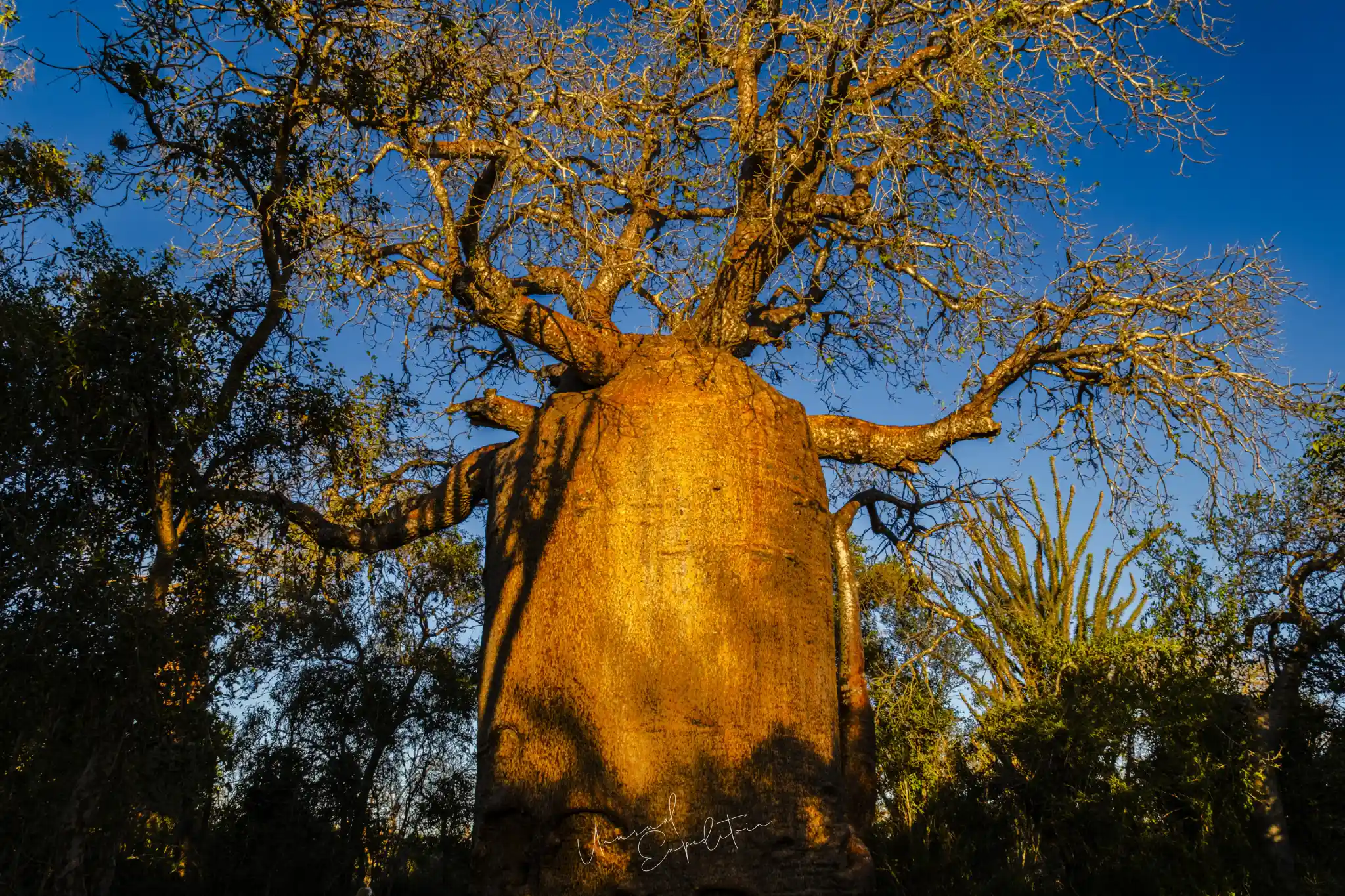
Ifaty is a fishing village and beach on the southwest coast of Madagascar, north of Toliara at the end of the RN7, and for photographers its draw is the spiny forest behind the shore: a dry thicket of spiny Didiereaceae, octopus trees and squat baobabs found nowhere else. Photograph the baobabs in the last golden light, look for radiated tortoises and couas on the sand, and stay out after dark for chameleons and a dark coastal sky.
Ifaty closes the road in our RN7 Madagascar photography guide: after the highlands and the sandstone of Isalo, the landscape turns flat, sandy and spiny.
Spiny forest madagascar: what grows at Ifaty
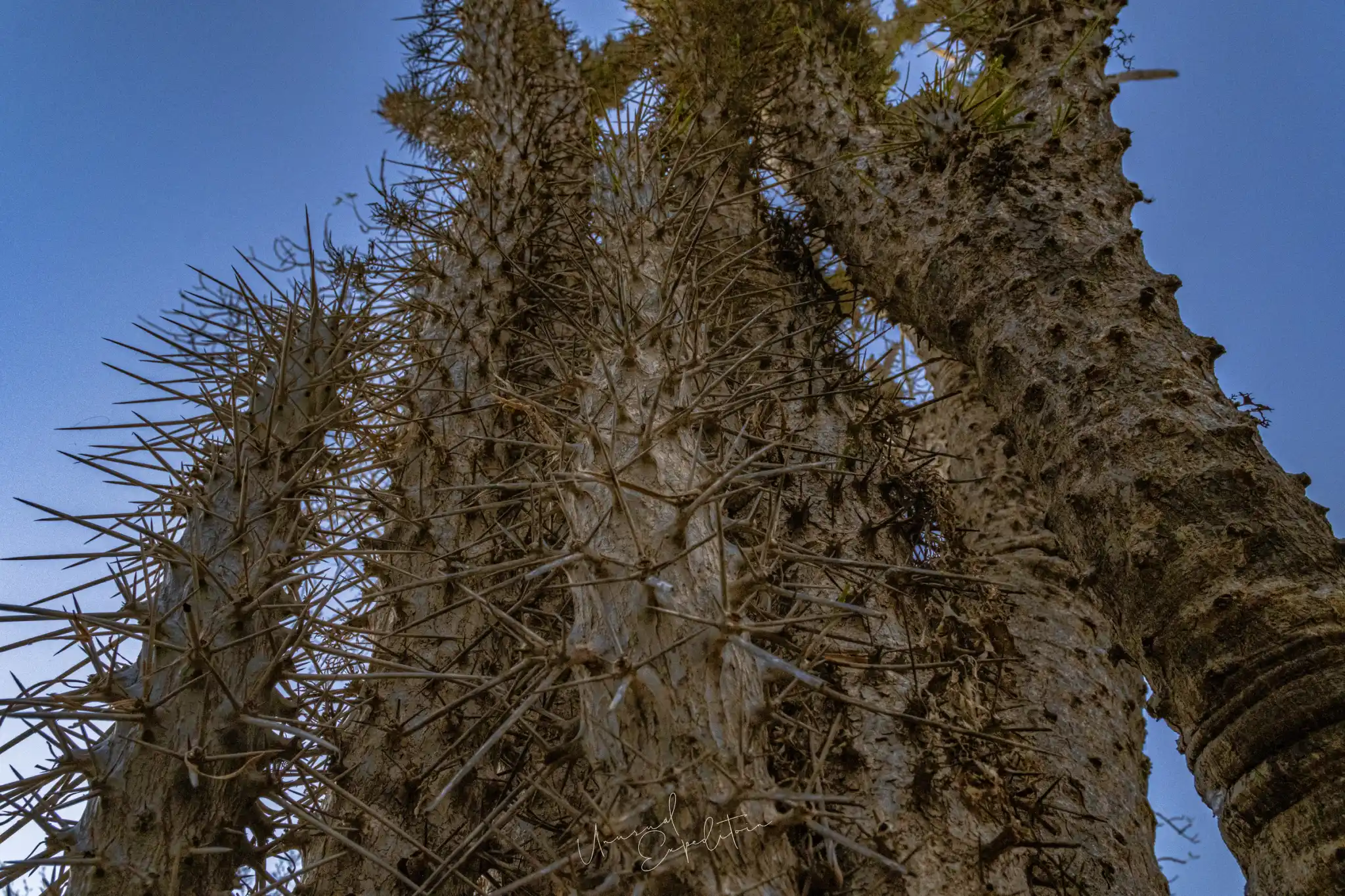
The spiny forest of Madagascar, which WWF classes as its own ecoregion, the Madagascar spiny thickets, covers the dry south and southwest. Its signature plants are the Didiereaceae, a family found only in Madagascar, which look like New World cacti but are woody: tall grey stems armed with spines and small leaves, some rising in clusters like candelabra, some bending into the octopus shapes that give the octopus tree its name. Among them grow baobabs with swollen, bottle-shaped trunks, euphorbias and aloes. WWF notes that the thicket regrows very slowly once cut, and that charcoal making and collection for the plant and animal trade are among its threats. Around Ifaty and Mangily, patches of this forest are protected in small reserves such as Reniala, which Lonely Planet lists near Mangily, with marked trails and local guides.
Ifaty: baobabs in the spiny forest
The Ifaty baobabs are not the tall, straight trees of the Avenue near Morondava. They are shorter and fatter, often bottle shaped, with a crown of twisted branches above a trunk that glows orange when the low sun reaches it through the thicket. That is the picture to wait for: in the last light of the day the trunk lights up while the forest around it falls into shade, and a polariser deepens the blue of the sky behind the branches. Earlier in the afternoon, work in the shade of the thicket with a wide lens, close to the spines and textures of the bark. A 16-35mm or 24-70mm covers the trees; the forest is dense, so there is rarely room to step back with anything longer. Look for the young baobabs too, thin trunks no thicker than a leg standing among the spiny stems, and for the bark itself, grey and folded like elephant skin, which makes a quiet abstract when the light is flat.
Radiated tortoises and couas
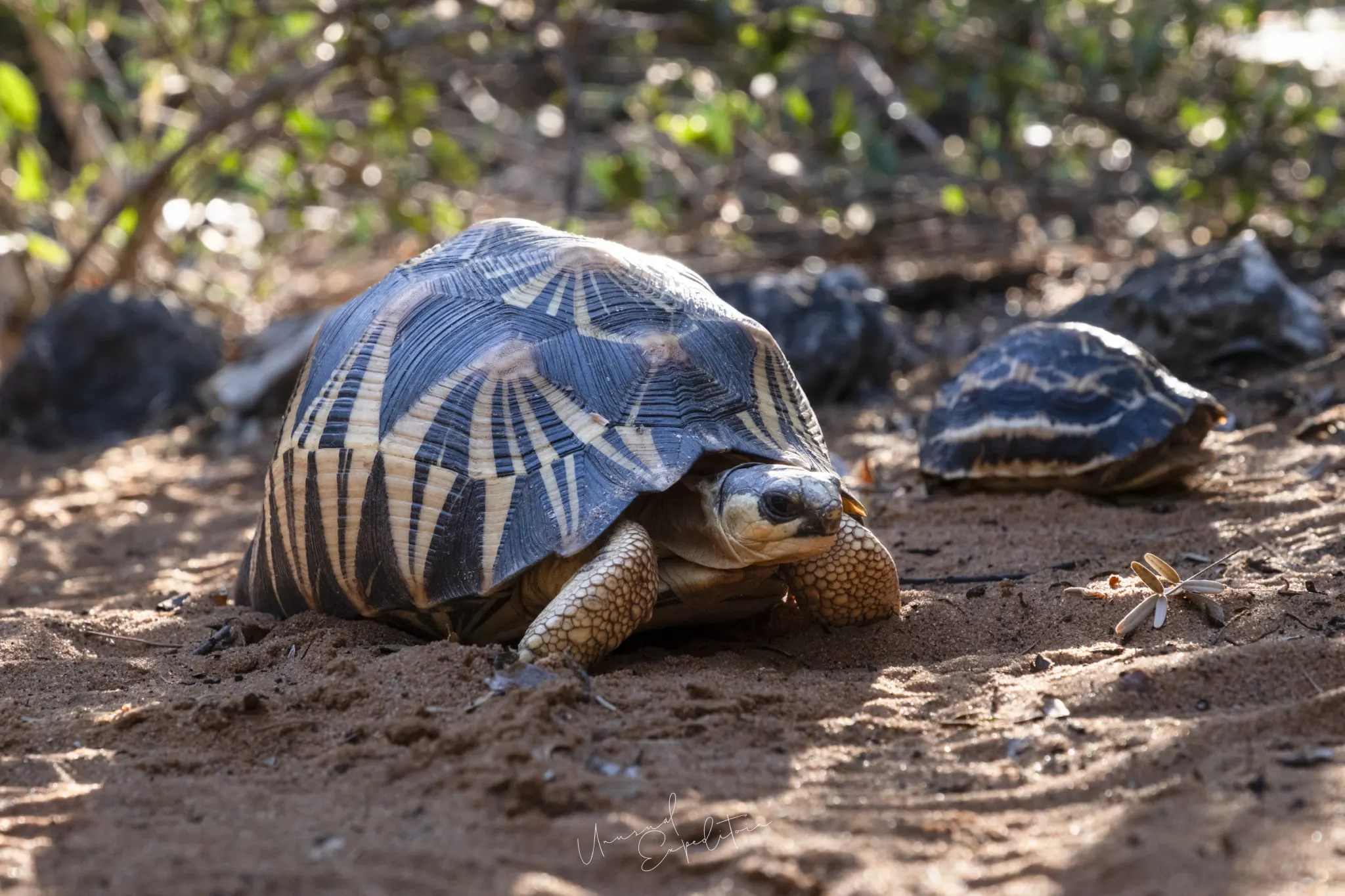
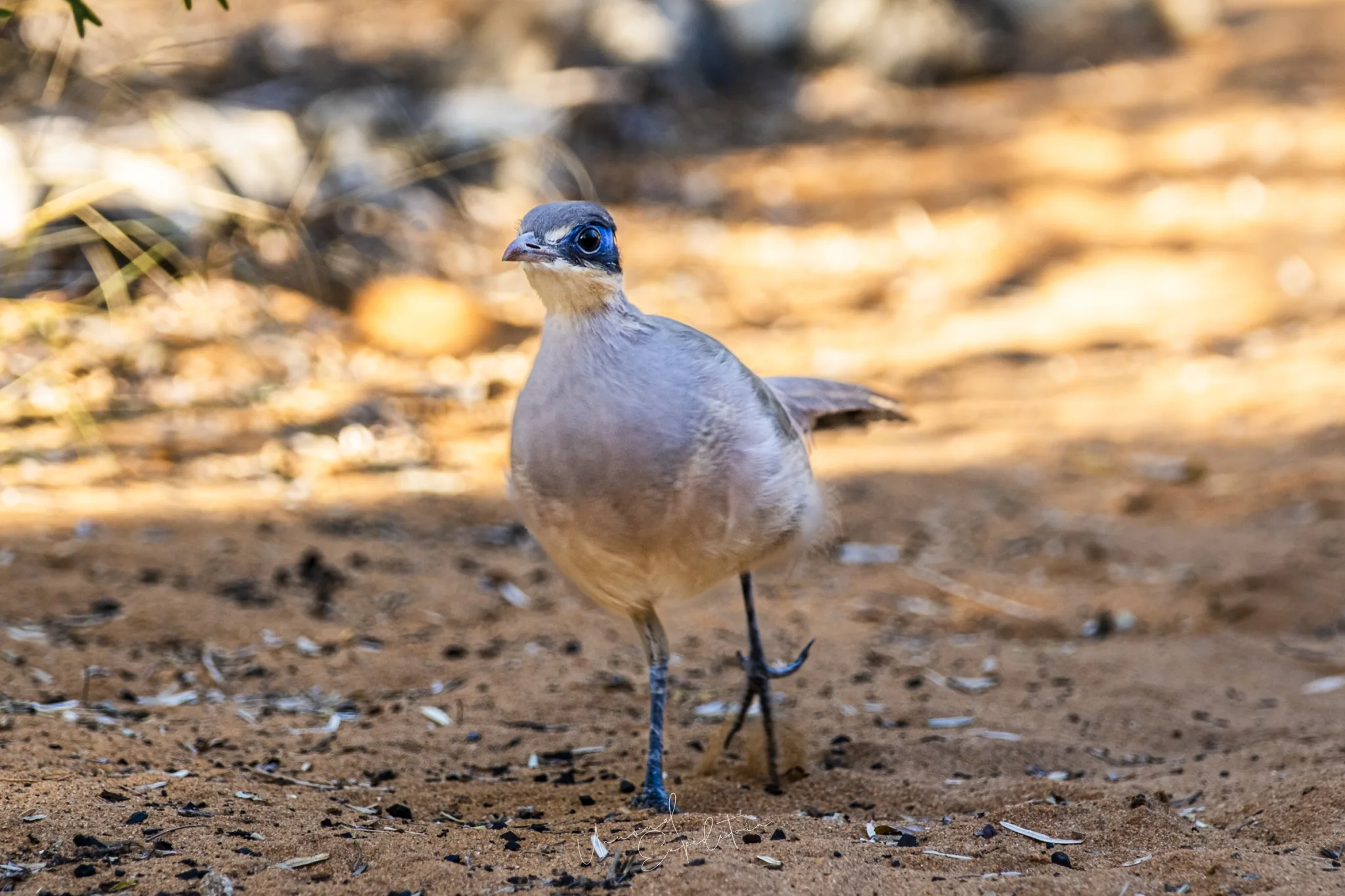
The radiated tortoise, with its star-patterned shell, is one of the animals of the southwestern spiny forest. It is listed as Critically Endangered on the IUCN Red List and on Appendix I of CITES, which bans international commercial trade, because of collection for food and the pet trade and the loss of its habitat. Around Ifaty you are most likely to see them in protected enclosures and reserves; photograph them at their level, lying on the sand with a 70-200mm or a short macro. Couas, Madagascar's endemic ground cuckoos, walk and run across the sandy floor of the thicket with a patch of bare blue skin around the eye. They are shy, so let the guide position you along a path and wait.
Ifaty after dark
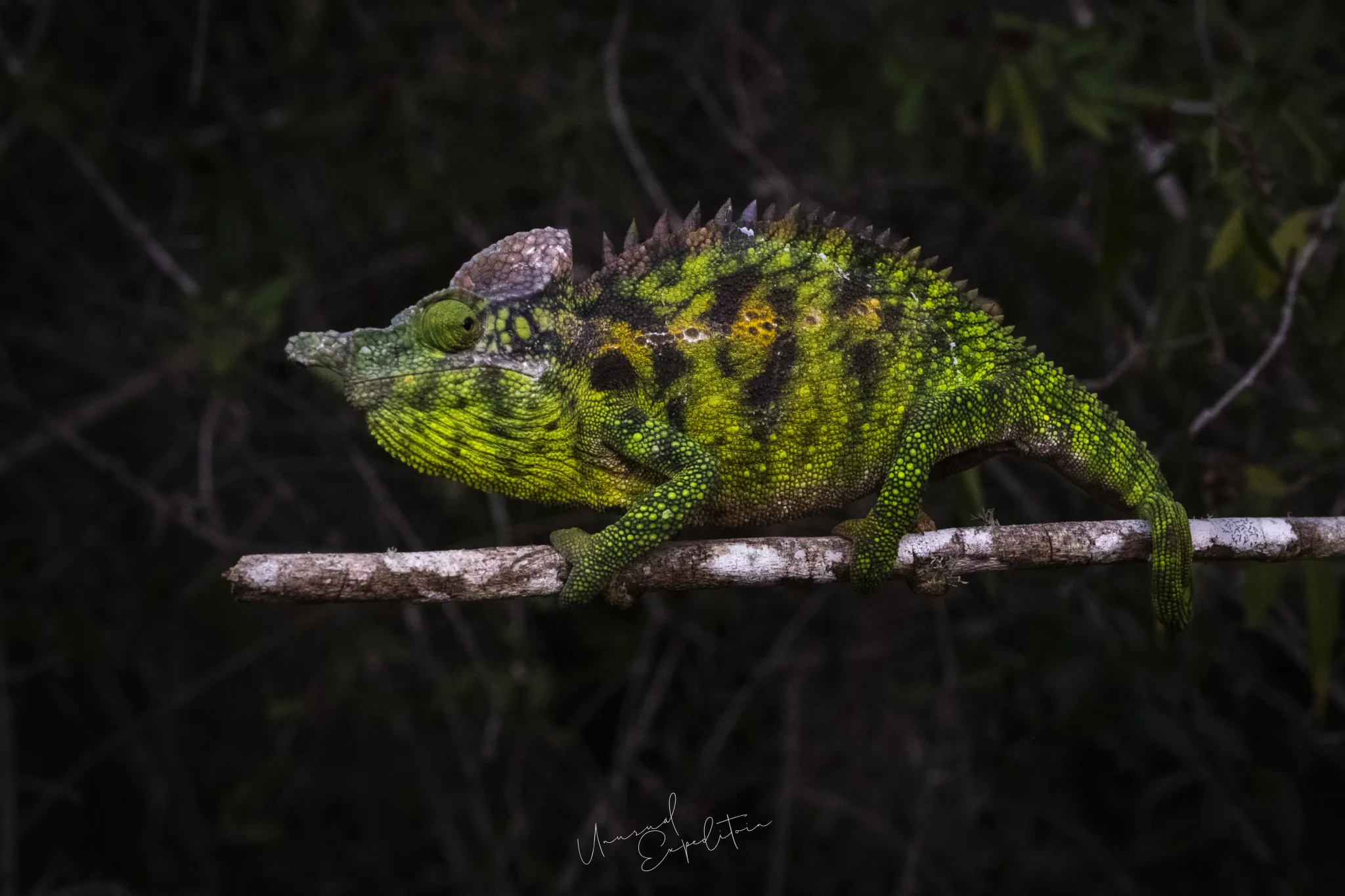
When the light goes, the spiny forest at Ifaty becomes a different subject. With a guide and a torch, chameleons are found sleeping on thin branches, pale and easy to spot in the beam, and small lizards and insects come out on the stems. Use a flash or a small LED panel off to one side, a macro lens or a 70-200mm that focuses close, and keep the light brief so the animal is not disturbed. Away from the forest, the coast here has a dark sky, and on a clear evening the Milky Way rises high over the trees; settings and timing for night skies are in The Milky Way over the baobabs.
Ifaty photography at a glance
| Subject | Best light | Lens |
|---|---|---|
| Baobabs in the thicket | Last golden light | 16-35mm, 24-70mm |
| Didiereaceae and spines | Afternoon, blue sky | 16-35mm, close and low |
| Radiated tortoises | Soft light, shade | 70-200mm, macro |
| Couas | Morning or late afternoon | 70-200mm, 100-400mm |
| Chameleons at night | Torch or flash | Macro, 70-200mm close focus |
| Night sky over the coast | Clear, moonless evenings | Fast wide prime |
The forest is small and dense, so a wide lens and a close-focusing telephoto do nearly everything.
People come to Ifaty for the beach and walk past the most extraordinary forest in Madagascar. Every plant in there looks like it was designed by someone who had never seen a tree.
Joseph Mak, tour leader, Unusual Expedition
The village and the people
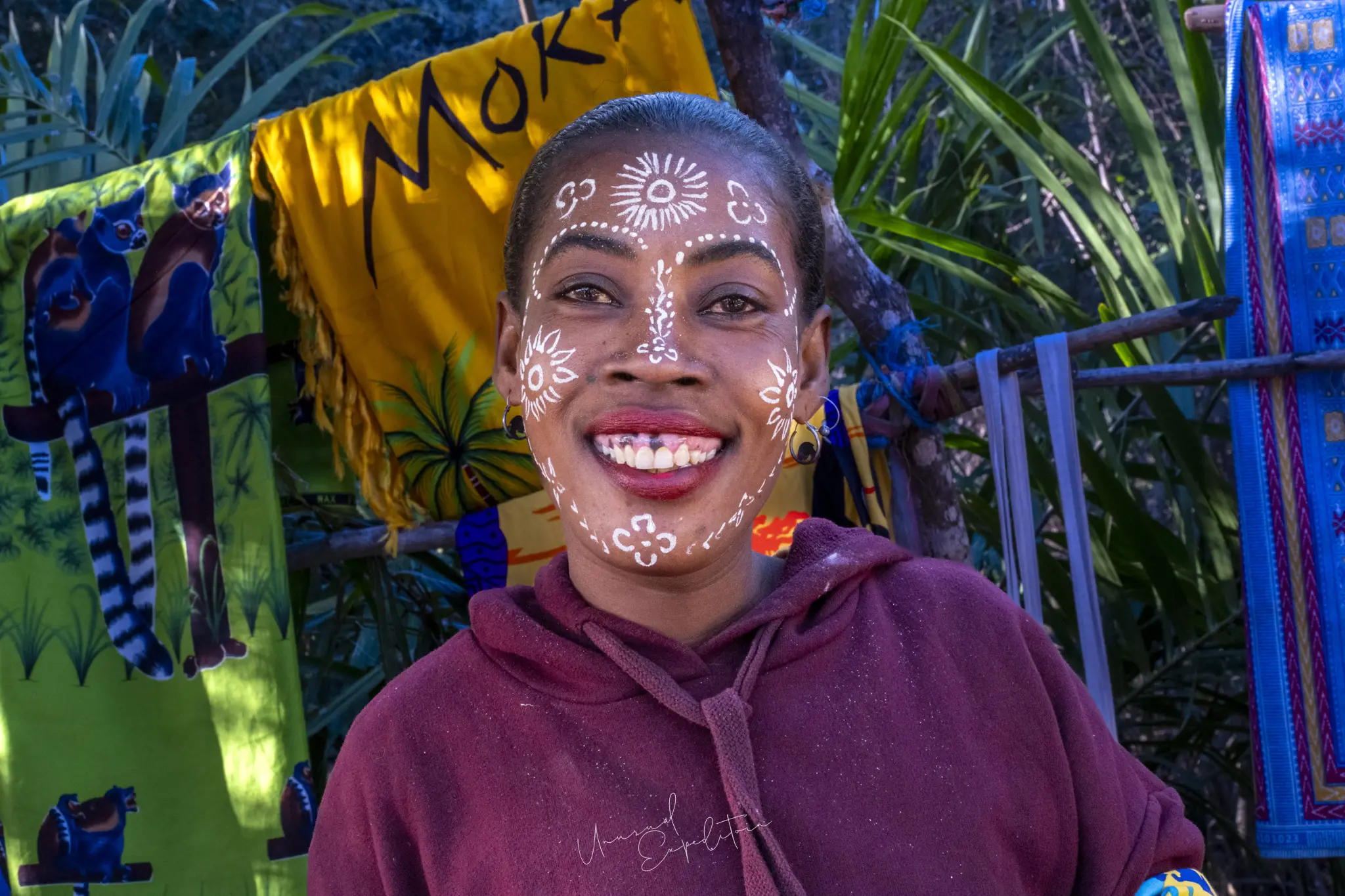
Ifaty and neighbouring Mangily are Vezo fishing villages, and the beach in front of them is lined with outrigger pirogues. Women here, as along much of the west coast, often wear masonjoany, a paste made from ground wood that protects the skin from the sun and is painted on in patterns. Stall holders selling cloth and crafts by the forest and the beach are often happy to be photographed if you ask; a portrait against the bright printed lamba cloths behind them makes a colourful end to a trip that is otherwise all spines and sand. The Vezo coast further north is covered in our guides to Belo sur Mer.
Ifaty at the end of the RN7
The RN7 runs from the capital to Toliara, and Ifaty lies a short way up the coast from the city, which makes it the natural last stop of a trip south. Before it come the sandstone of Isalo National Park and the sapphire town of Ilakaka, and further back the lemurs of Anja.
Walk the spiny forest with us
We run the RN7 and Ifaty as a private photography trip for small groups on request, with local guides for the forest by day and by night. See our scheduled Madagascar departures and every Madagascar guide on the Madagascar photography tours page.
Join the RN7 photography tour
Madagascar Photo Tour – Madagascar departs 11 Apr 2027 To 19 Apr 2027, led by Joseph Mak. Small group, photography first. All RN7 photography tours.
Explore RN7 in depth
- RN7 Madagascar Photography Guide: the Road SouthMadagascar
- Ranomafana National Park Photography: Lemurs, Geckos and StreamsMadagascar
- Madagascar Central Highlands: Rice Harvest, Brick Villages and Craft TownsMadagascar
- Isalo National Park Photography: Sandstone, Pools and WildlifeMadagascar
- Ilakaka, Madagascar: Photographing the Sapphire TownMadagascar
- Antsirabe, Madagascar: Pousse-Pousse, Markets and Crater LakesMadagascar
- Anja Community Reserve: Photographing Ring-Tailed LemursMadagascar
Upcoming Photo Tours
- Egypt Photo Tour – EgyptEgypt 12 Dec 2026 To 20 Dec 2026
- Inner Mongolia Winter Owl Photo Tour – ChinaChina 01 Jan 2027 To 04 Jan 2027
- Inner Mongolia Winter Photo Tour – ChinaChina 05 Jan 2027 To 11 Jan 2027
- Mekong And Central Highland Vietnam Photo Tour - VietnamVietnam 16 Jan 2027 To 24 Jan 2027